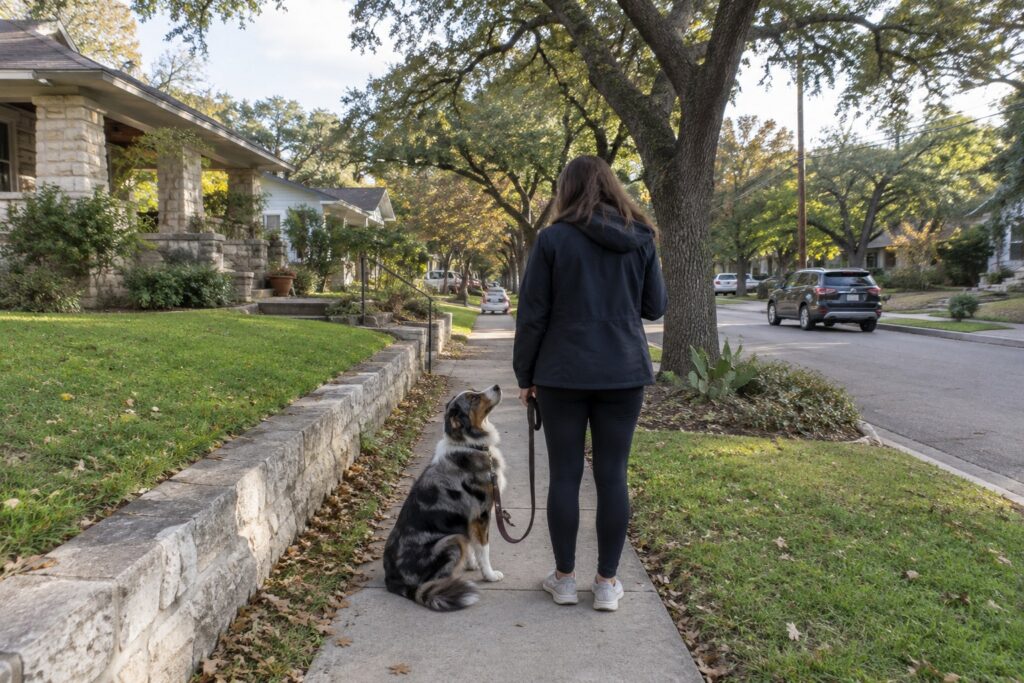

Catahoula leopard dog training looks a little different from training a Lab or a Golden, and Bossier City owners usually figure that out within the first month. Louisiana’s official state dog was bred to find, gather, and hold hogs and cattle in thick swamp and woods country, and that working brain comes home with every puppy and rescue.
At All Dogs Unleashed Dog Training Bossier City, we work with strong-minded, high-drive dogs every week. Below we break down what makes Catahoulas tick, where families tend to get stuck, and how structure, exercise, and clear communication turn a pushy young Catahoula into a dog you can take anywhere in Bossier Parish.
Have questions about your Catahoula? Our team is happy to talk through your dog’s habits and goals.
Key Takeaways
- The Louisiana Catahoula Leopard Dog has been the official state dog of Louisiana since 1979, under Louisiana Revised Statute 49:165.
- Catahoulas were bred as hog and cattle dogs, so drive, independence, and a strong opinion are normal and need to be channeled, not punished.
- Daily physical exercise plus mental work, like structured walks and impulse-control drills, prevents most of the chewing, digging, and fence-running owners complain about.
- Early, careful socialization matters because many Catahoulas are naturally reserved or wary with strangers.
- A fixed two-week Board and Train program gives a Catahoula daily structured sessions and ends with handler transition training so the results carry over at home.
Meet Louisiana’s State Dog
Louisiana lawmakers made it official in 1979. Under Louisiana Revised Statute 49:165, the official state dog is the Louisiana Catahoula Leopard Dog, as registered by the National Association of Louisiana Catahoulas. The breed takes its name from Catahoula Parish in central Louisiana, and for generations it has been the dog people in our part of the state relied on to work stock in rough terrain.
That history is more than trivia. It explains nearly everything you will see from your dog at home, from the way a Catahoula circles the kids in the backyard to the way it stares down the neighbor’s cat through the fence.
A Working Dog First
The American Kennel Club describes the Catahoula Leopard Dog as a multi-purpose working dog that is powerful, agile, and built for endurance, serious on the job and playful at home. Traditionally Catahoulas have worked as stock dogs and bay dogs. A bay dog’s job is to find a hog or cow, hold it in place by barking and pressuring it, and wait for the handler to arrive.
That job required a dog that could think on its own, keep going for hours, and stand its ground. Those are great traits in the woods and challenging ones on a cul-de-sac.
Looks Are Not the Point
Catahoulas are famous for merle and leopard coats and for light, glass, or mismatched eyes. Breeders who still work their dogs care far more about drive and stock sense than color. When you bring one home, plan for the working dog under the pretty coat.
Catahoula Traits That Shape Training
Every dog is an individual, but certain patterns show up again and again with this breed. Knowing them ahead of time keeps you from taking normal Catahoula behavior personally.
| Trait | What You See at Home | Training Focus |
|---|---|---|
| High working drive | Chasing cats, squirrels, bikes, and kids; nipping or circling | Impulse control, a reliable “leave it,” and outlets for that drive |
| Big energy and endurance | Restlessness, digging, chewing, fence-running | Daily exercise plus mental work, not just a big yard |
| Independence | Ignoring cues when something more interesting appears | Consistency, clear rewards, and practice around distractions |
| Reserve with strangers | Barking at guests, standoffish or guarding the doorway | Calm socialization and polite greeting routines |
| Vocal bay instinct | Barking to “hold” something in place | A “quiet” cue and fewer chances to rehearse barking |
Drive and Prey Interest
A dog bred to pressure hogs often wants to pressure anything that moves. In Bossier City that might be the family cat, the neighbor’s chickens, or kids running through a sprinkler. Herding-style nipping and circling are not aggression in most cases, but they need to be redirected early before they become a habit.
Independence Is Not Stubbornness
Owners often call Catahoulas stubborn. In reality the breed was selected to make decisions without waiting for a handler. When your dog hears “come” and pauses to weigh its options, that is the working brain doing exactly what it was bred to do. Training teaches the dog that checking in with you pays better than freelancing.
Wariness With Strangers
Many Catahoulas are devoted to their own family and cool toward everyone else. Some are protective of the house and yard. That can be managed well with early socialization and good routines at the door, but it should not be ignored, especially in homes with frequent visitors.
Catahoula Leopard Dog Training Basics for Bossier Homes
Good Catahoula leopard dog training starts with the same foundations as any dog, then layers in extra structure for drive and independence. The goal is a dog that can switch from busy to calm on cue.
Start With Structure
Catahoulas do best when life is predictable. Set regular times for meals, walks, training, and rest. Use a crate or a defined resting spot so your dog learns how to settle. Our crate training steps for a calm routine are a good place to begin.
Build the Core Cues
Focus first on a handful of cues you will use every day: “sit,” “down,” “place,” “come,” “leave it,” and “heel.” Keep sessions short, five to ten minutes, two or three times a day. Reward generously at first, then gradually ask for more duration and more distraction before rewarding.
Practice in your living room, then the driveway, then a quiet street, then busier spots. Catahoulas often learn a cue quickly indoors and then act like they have never heard it once they smell something outside. That is normal, and it is why practice in many places matters.
Teach an Off Switch
The most valuable skill for this breed is calm. Teach “place” on a raised bed or mat and build up to longer stays while the household moves around. A dog that can lie down and relax while dinner is cooked or guests arrive is far easier to live with than one that only knows tricks.
Leash Manners Matter
A strong Catahoula pulling toward a squirrel can knock an adult off balance. Work on loose-leash walking early, before your puppy reaches full size. Our tips on teaching a dog to walk on a leash in Bossier cover the step-by-step process.
If your Catahoula already has habits that are hard to break, a structured program with daily professional sessions can reset the foundation quickly.
Energy, Exercise, and Mental Work
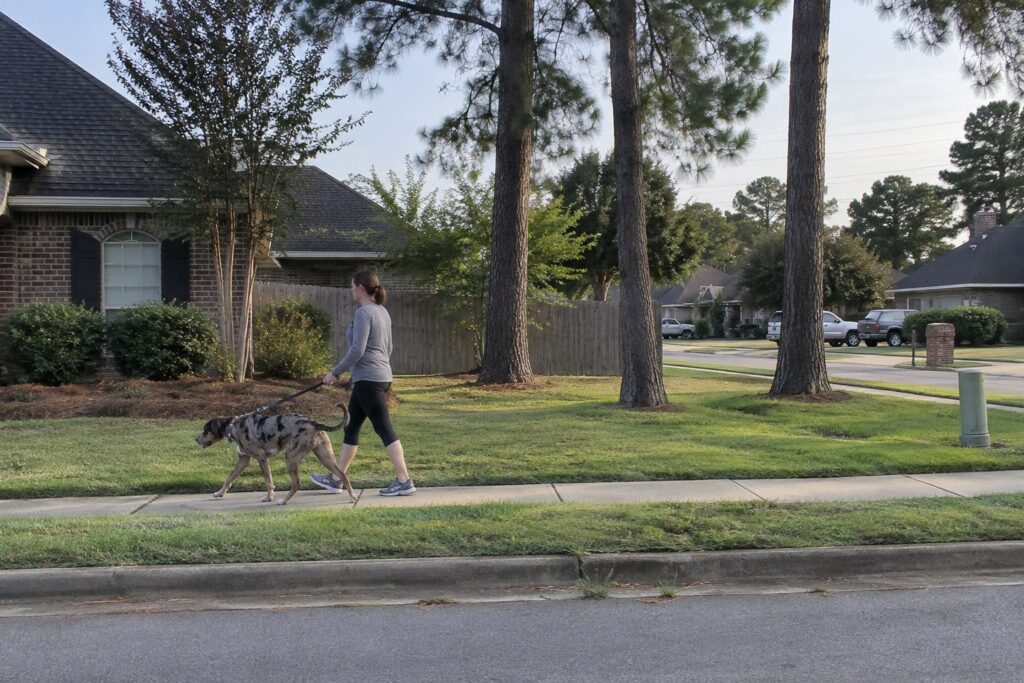
A tired Catahoula is usually a well-behaved one, and tired means mentally worked as well as physically worn out. A big fenced yard alone rarely does it. Many Catahoulas simply patrol the fence line, which can build frustration and barking rather than burning it off.
Physical Outlets
Plan on real daily exercise: brisk structured walks, jogging once your veterinarian confirms your dog’s joints are mature, fetch, or hiking. Bossier Parish has good options, and our list of dog-friendly parks in Bossier City is a handy starting point.
Louisiana heat and humidity are a real concern for an athletic dog that will keep going long after it should stop. Exercise early in the morning or in the evening during warm months, bring water, and watch for heavy panting, stumbling, or lagging behind. Call your veterinarian right away if you suspect overheating.
Mental Outlets
Give the working brain a job. Ideas that suit Catahoulas well include:
- Scent games, such as hiding treats or a favorite toy around the yard and asking your dog to find it.
- Food puzzles and stuffed chew toys for downtime.
- Short training sessions sprinkled through the day instead of one long one.
- Structured fetch with rules, like a “wait” before the throw and a “drop” before the next one.
Sample Daily Plan
| Time | Activity | Why It Helps |
|---|---|---|
| Morning | 30 to 45 minute structured walk or jog | Burns energy before the household leaves |
| Midday | Food puzzle or chew in the crate | Teaches settling while alone |
| Afternoon | Two short training sessions | Builds focus and reliability |
| Evening | Fetch or scent game, then “place” | Ends the day with work followed by calm |
Adjust the plan for age and health. Puppies need shorter sessions and lots of rest, and older dogs may need gentler exercise. Your veterinarian can help you set safe limits.
Common Catahoula Challenges and How to Handle Them
Most problems we hear about from Catahoula owners fall into a few groups. The fixes share a theme: prevent rehearsal, teach a better behavior, and meet the dog’s needs.
Chasing and Nipping
Do not let your dog practice chasing kids, cats, or cars. Use a leash or long line in situations where it might happen, and reward your dog for looking away from movement and back to you. Teach children not to run and squeal around a young Catahoula until the dog has better control.
Escaping and Fence-Running
Catahoulas are athletic and determined. Check fencing for gaps, loose boards, and spots where a dog could dig under. Our steps to dog-proof your yard in Bossier City walk through the most common weak points. Supervise yard time rather than leaving the dog out for hours.
Guarding and Reactivity
Some Catahoulas bark and lunge at other dogs or people on walks, or guard the doorway. Increase distance from triggers, reward calm looking, and avoid putting the dog in situations it cannot handle yet. If you see growling, snapping, or escalating reactivity, get professional help early. Our article on aggression training for reactive dogs in Bossier explains what that process looks like.
Socialization Done Right
Quality beats quantity. Let your dog watch people, dogs, traffic, and new places from a comfortable distance and reward calm behavior. Forcing a wary Catahoula to accept petting from strangers can backfire. Short, positive outings several times a week work better than one overwhelming trip.
How Board and Train Helps a Catahoula
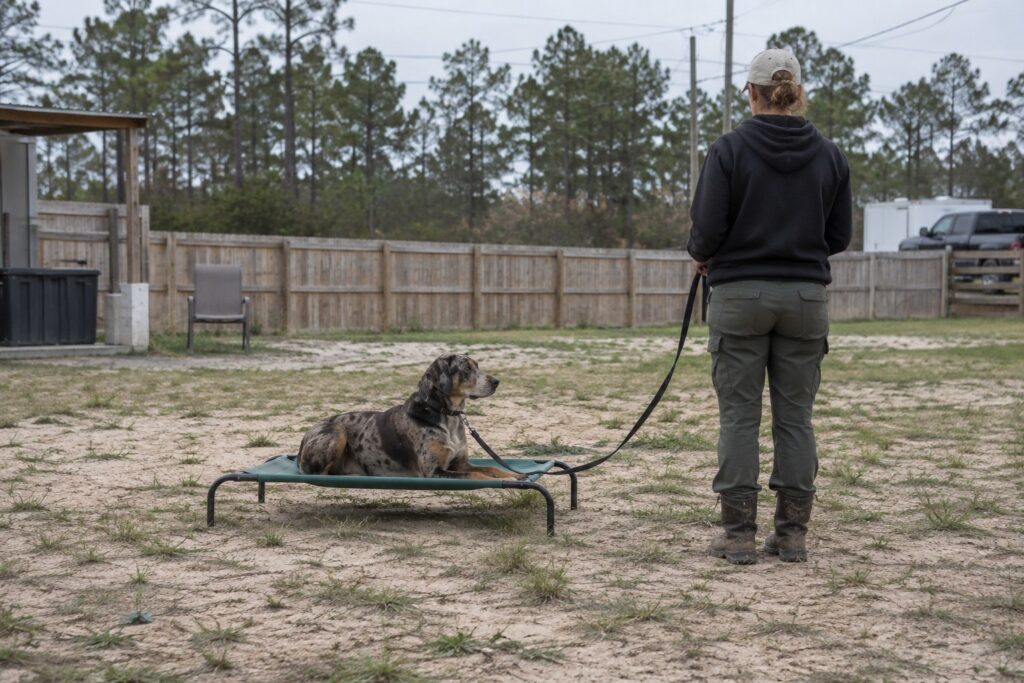
Busy Bossier families often love the breed but struggle to give a young Catahoula the daily repetition it needs. That is where our Board and Train program fits. It is a fixed two-week program, and in the vast majority of cases dogs complete it within that timeframe.
What Happens During the Program
Your dog stays at our facility and receives multiple structured training sessions every day. Our trainers vary the exercise contexts so new skills generalize across different environments and situations, which is exactly what an independent dog like a Catahoula needs. Supervised socialization is incorporated based on your dog’s individual temperament and comfort level.
Visits are discouraged early in the program so your dog can settle into the routine. In the final days, we dedicate substantial time to handler transition training, teaching you the technique, timing, and communication that keep the results going at home.
After Graduation
Dogs that complete our Board and Train program are backed by guaranteed results and lifetime support at no additional cost. Financing through Affirm is available. When you drop off, bring your dog’s regular food, any medications, and vaccination records. Our guide to preparing your dog for Board and Train covers the rest.
Comparing Your Options
| Option | Best For | What to Expect |
|---|---|---|
| Board and Train | Busy households, high-drive dogs, habits that need a reset | Fixed two-week program, daily structured sessions, handler transition training |
| Private lessons | Owners who want to learn hands-on and address specific issues | One-on-one sessions at our facility or in your home |
If you prefer to work alongside a trainer, our private and in-home lessons are another good fit. Ready to talk about your Catahoula? Call us at (318) 562-6536.
About All Dogs Unleashed Dog Training Bossier City
All Dogs Unleashed Dog Training Bossier City helps families across Bossier City, Shreveport, and the Ark-La-Tex build reliable, well-mannered dogs. Our fixed two-week Board and Train program gives high-drive breeds like the Catahoula daily structured sessions, supervised socialization based on temperament, and handler transition training before they go home. Graduates are backed by guaranteed results and lifetime support at no additional cost. We also offer private and in-home lessons, boarding, and refresh training for dogs that need a tune-up.
Frequently Asked Questions
Are Catahoula leopard dogs hard to train?
Catahoulas are smart and learn quickly, but they were bred to think independently, so they test rules and ignore cues that do not seem worth following. They are not a great match for owners who want a dog that trains itself. With consistency, daily exercise, and clear rewards, most Catahoulas become responsive, dependable companions.
Is the Catahoula really the Louisiana state dog?
Yes. Louisiana Revised Statute 49:165 names the Louisiana Catahoula Leopard Dog, as registered by the National Association of Louisiana Catahoulas, as the official state dog. The designation dates to 1979. The breed is named after Catahoula Parish in central Louisiana, where it was used for generations to work hogs and cattle.
How much exercise does a Catahoula need?
Most adult Catahoulas need substantial daily exercise plus mental work, such as structured walks, jogging, fetch, scent games, and short training sessions. A yard alone is rarely enough. Puppies need shorter, gentler activity while their joints develop, so ask your veterinarian how much running and jumping is safe for your dog’s age.
Are Catahoulas good with kids and other pets?
Many Catahoulas are loyal and playful with their own families, but their herding and chasing instincts can lead to nipping or circling running children and chasing cats. Supervise interactions, teach kids to stay calm around the dog, and train impulse control early. Introductions to other dogs should be gradual and closely watched.
At what age should I start training my Catahoula?
Start the day your dog comes home. Puppies can learn name recognition, crate routines, and simple cues like “sit” right away, and gentle socialization is most valuable while they are young. Adult and rescue Catahoulas can learn too. They may simply need more structure and patience to replace old habits.
Can Board and Train help an adult Catahoula?
Yes. Our fixed two-week Board and Train program works for adult dogs as well as younger ones. Your dog receives multiple structured sessions daily at our facility, and the final days include handler transition training so you can maintain the results. Graduates receive guaranteed results and lifetime support at no additional cost.
The right Catahoula leopard dog training plan turns Louisiana’s hardworking state dog into a calm, reliable member of your Bossier City household. If you would like help, call (318) 562-6536 or reach out online, and visit our facility at 4500 Benton Rd in Bossier City.
Ready to Get Started with All Dogs Unleashed Dog Training Bossier City?
Give your Catahoula the structure and outlet it was bred for. Call (318) 562-6536 to talk with our team about Board and Train or private lessons.