
If your dog growls, lunges, or snaps at other dogs or strangers, you are not alone, and it is not hopeless. Dog aggression training is what we do every day at All Dogs Unleashed. We are based in Bossier City at 4500 Benton Rd Suite 200, and we work with reactive dogs throughout the Bossier area every week.
Whether your dog loses it on Airline Drive or goes into overdrive near the Red River levee trail, we can help you turn it around with a plan tailored to your dog’s specific triggers. Ready to stop the lunging, growling, and stress? Let’s get your dog on track.
Key Takeaways
- Dog aggression training can correct growling, lunging, and snapping in dogs of any breed or age.
- Reactive dogs in the Bossier area face real triggers like heavy traffic corridors, jet noise, and busy walking trails.
- Anxiety is one of the most common root causes of aggressive behavior, and it is fully addressable with the right training.
- Our well-balanced programs are customized to your situation, not a one-size-fits-all fix.
- Off-leash control is an achievable goal, even for dogs with a history of aggressive behavior.
Understanding Dog Aggression in Bossier City
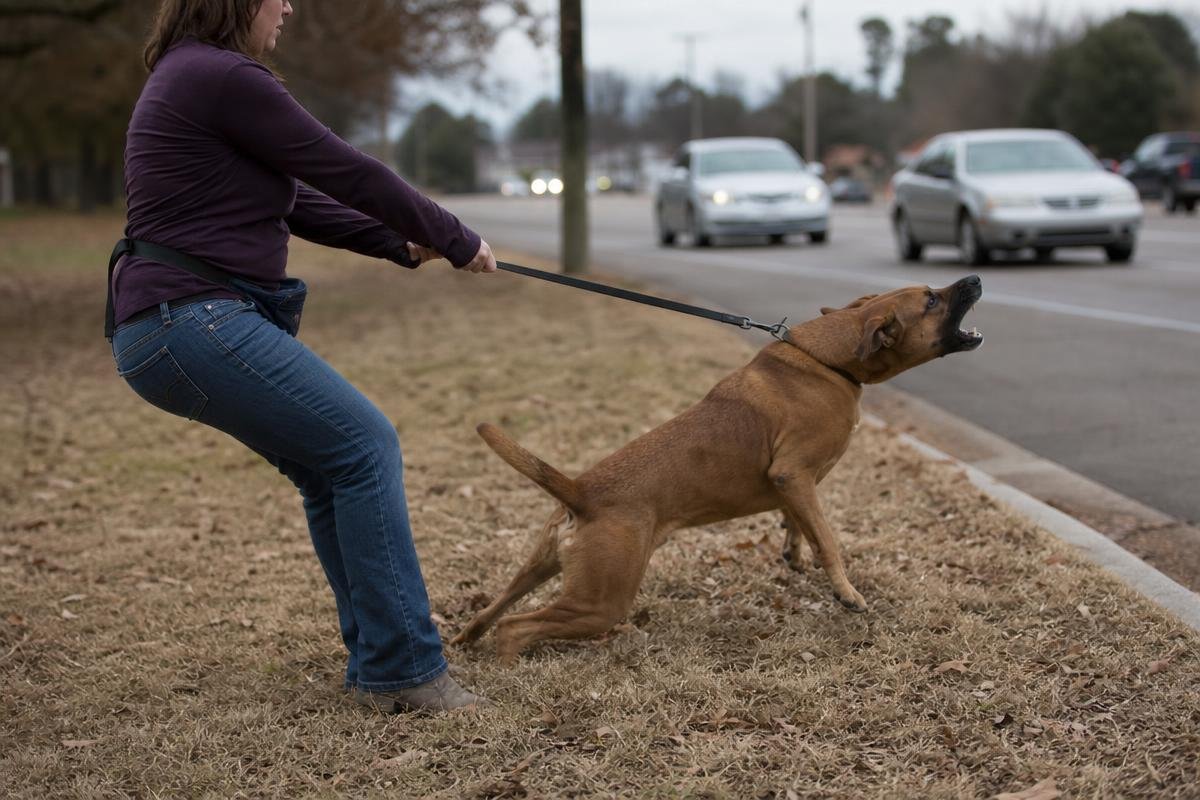
Your dog lunges at a jogger on Barksdale Boulevard. He barks and snaps at guests the moment they walk through your front door. You dread every walk near the riverfront trail. If this sounds familiar, you are not alone, and you are not out of options. Dog aggression training exists for exactly this situation.
It is stressful. It is embarrassing. And honestly, it can be scary. But aggressive behavior in dogs is treatable, and our trainers work with these cases every single week.
You will learn what actually causes aggression, how to spot the warning signs early, the difference between reactivity and true aggression, and how professional training fixes it. Check out our dog training programs to see what we offer.
Why Do Dogs Become Aggressive? The Root Causes Owners Miss
Most owners assume aggressive dog behavior means their dog is dominant or “bad.” That is almost never true. The vast majority of aggression we see comes from fear, anxiety, or a gap in early development. Understanding the real cause is the first step toward fixing it.
Fear and Anxiety
Anxiety-driven aggression is the most common type we work with. A dog that feels threatened will growl, lunge, or snap before the threat gets closer. It is a survival response, not a personality flaw.
Dogs in the Bossier area face real environmental pressure. Jet noise from Barksdale AFB, heavy traffic on Airline Drive and Shed Road, and crowds near the Pierre Bossier Mall all create the kind of sudden, unpredictable stimuli that push anxious dogs over the edge. Even a quiet walk can become a flashpoint when your dog rounds a corner and meets another dog head-on.
- Lunging or snapping at strangers on walks
- Growling at loud sounds or sudden movement
- Reactive barking at other dogs through fences or car windows
Territorial Behavior and Resource Guarding
This is different from fear aggression and requires a different correction approach. Dogs guard food, toys, resting spots, and even their owners. If your dog stiffens when someone walks near his bowl, that is resource guarding, not dominance.
Getting the diagnosis right matters because the wrong training method can make guarding behavior worse. Our trainers assess this carefully before any hands-on work begins, and it is one of the reasons a professional read on your dog matters more than a video you found online.
Lack of Socialization
The window between 8 and 16 weeks is when puppies learn what is safe in the world. Miss that window and your dog is far more likely to react to unfamiliar people, dogs, or environments with fear-based aggression. We see this often in the Bossier area, where dogs adopted mid-pandemic or brought home during Louisiana’s long hot summers never got structured exposure to other dogs, joggers, or busy environments early on.
This is not permanent, but it does require consistent training to address dog-to-dog reactivity. Our approach rebuilds that missed foundation through controlled introductions, gradually increasing exposure while keeping your dog under its stress threshold so it can actually learn instead of panic. The sooner you address it, the better the outcome. Not sure what is driving your dog’s behavior? Book a free behavior assessment and we will help you find out.
What Are the Warning Signs Your Dog Needs Aggression Training?
Some signs are obvious. Others are easy to miss. Either way, catching them early is the difference between a manageable problem and a dangerous one.
Body Language Red Flags
Your dog’s body tells you what’s coming before any bite ever happens. These signals show up on leash walks near busy corridors, in your backyard, and anywhere your dog feels threatened.
- Stiff, rigid body posture
- Hard stare or whale eye (showing the whites of the eyes)
- Raised hackles along the back
- Low growl or snarl
- Snapping at air
- Lunging on leash toward people or other dogs
- Baring teeth
- Pinned ears with a forward lean
Any one of these is a signal. Several together mean your dog needs professional dog training programs now, not later.
Behaviors That Escalate
Reactive behaviors left unchecked get worse over time. A dog that growls today may bite tomorrow. That is not an exaggeration. It is how aggression works.
- Growling at guests who enter your home
- Leash reactivity toward other dogs on walks
- Snapping near food or toys
- Charging at the fence when people pass
- Biting without any visible warning
If your dog shows any of these signs, do not wait.
Reactivity vs. Aggression: What Is the Difference and Why It Matters
Reactivity and aggression are not the same thing, but one can absolutely become the other. This is one of the most common points of confusion we see from dog owners across the Bossier area, and getting it wrong can cost you time, money, and your dog’s safety.
What Reactive Dogs Look Like
A reactive dog overreacts to a trigger. Another dog on a leash, a cyclist along the levee, a jogger near the East Texas Street corridor, or even a sudden flyover from Barksdale Air Force Base can send your dog into a barking, lunging, pulling frenzy. The reaction is disproportionate to the actual threat. Your dog is not trying to cause harm. It is overwhelmed and does not know how to cope. This is leash reactivity, and it is extremely common. It is also very trainable when you address it early with structured dog training programs customized to your situation.
When Reactivity Crosses Into True Aggression
True aggression is different. When your dog snaps with intent, makes contact, or bites, that is no longer just an overreaction. That is a dog communicating through force. Left unaddressed, a reactive dog can absolutely escalate to this point. Repeated exposure to triggers without proper guidance builds frustration and anxiety over time.
The good news is that both conditions respond well to professional intervention. The training approach does differ, which is exactly why an accurate read on your dog’s behavior matters before you start. If you are unsure where your dog falls, our Board and Train program gives us the time to assess and address the real issue.
How Professional Dog Aggression Training Actually Works
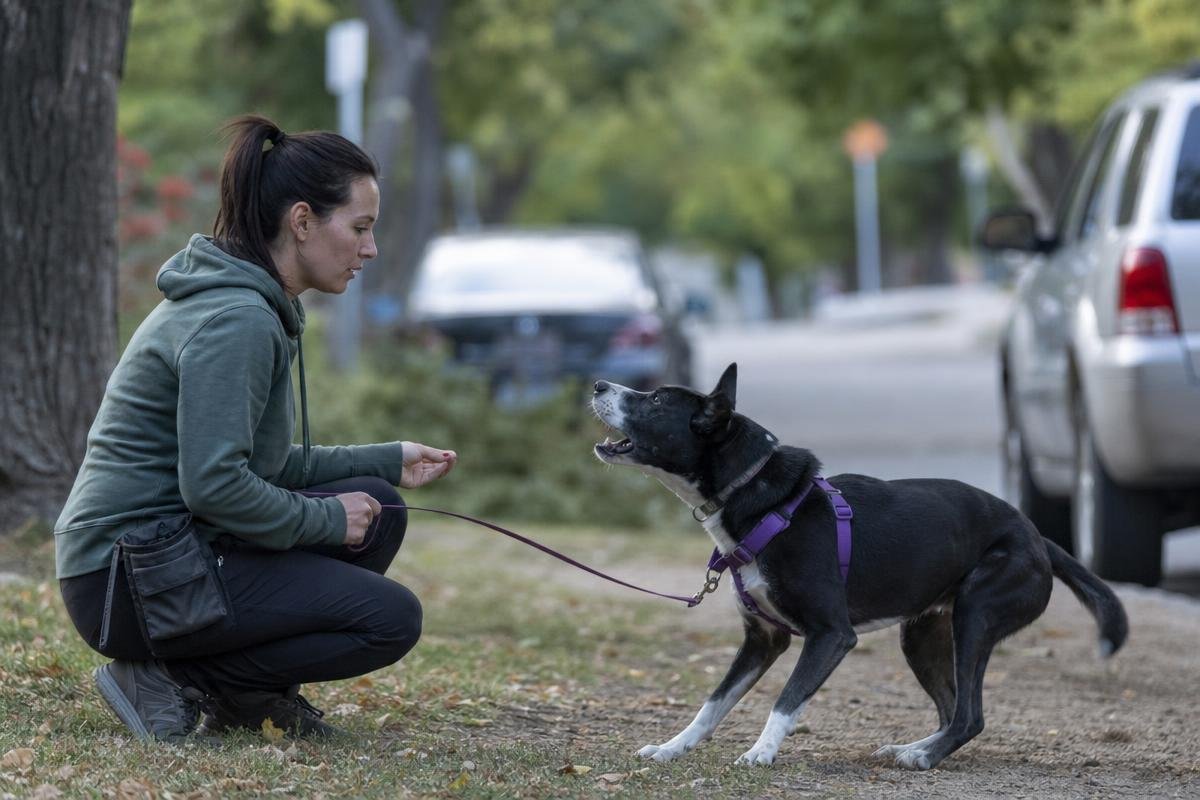
Professional dog aggression training is not one-size-fits-all. It starts with understanding your dog. Every aggressive dog has specific triggers, and a qualified trainer identifies those triggers before any training begins.
Assessment
The first step is a thorough assessment. We look at exactly what sets your dog off. Other dogs? Strangers at the door? Food? Loud sounds? For dogs near the base, jet noise is a real trigger we see regularly. So is leash reactivity in high-traffic areas where joggers and cyclists appear without warning.
That assessment shapes everything. Without it, you are guessing. With it, we build a plan that targets your dog’s actual problem.
Structured Correction and Positive Reinforcement
We use a balanced, two-pronged approach. Clear, consistent corrections communicate to your dog where the boundary is. Positive reinforcement rewards your dog the moment it makes the right choice. We also use threshold work, keeping your dog just below its trigger point so it can learn without going over the edge. Counter-conditioning changes how your dog feels about a trigger over time. Leash pressure communication gives your dog clear, calm direction through the leash before a reaction starts.
This is not guesswork. It is a structured process our trainers refine on real reactive cases day in and day out.
Board and Train vs. In-Home Training
Choosing the right format matters. Here is how to think about it:
- Board and Train: Your dog lives and trains at our facility with intensive daily work. Best for severe aggression cases that need a fast reset. Located right here in Bossier City at 4500 Benton Rd Suite 200.
- In-Home Training: Our trainer works with your dog in its actual environment. Ideal for territorial aggression tied to your home, your yard, or your street. A strong fit for dogs in neighborhoods where the home is the primary trigger zone.
Not sure which fits your situation? We can help you decide. Ready to stop the aggression and start seeing real results? Call us at (318) 562-6536 and let’s talk about the right training plan for your dog.
What Can You Do Right Now to Manage Your Dog’s Aggression at Home?
While you wait to start training, there are steps you can take today to keep your dog and your neighbors safe. These are not permanent fixes. But they reduce risk and set you up for faster progress once professional work begins.
Immediate Safety Steps
Start with equipment and environment. Small changes make a real difference in controlling aggressive behavior before your first session.
- Fit your dog with a properly fitted no-pull harness or head halter for all walks. This gives you physical control without a fight.
- Skip the dog park entirely. Off-leash areas are unpredictable, and a reactive dog can escalate fast around unfamiliar dogs.
- Create distance from triggers on walks. Cross the street. Change direction. Do not wait for your dog to react.
- Never punish a growl. A growl is a warning. Take it away through punishment and you remove your dog’s signal before a bite.
- Use a crate or baby gate when guests arrive. This removes the pressure before your dog hits a threshold.
- If your dog reacts to foot traffic in busier areas, shift your walks to early morning or after 7 p.m. Fewer people, fewer triggers.
Dogs near the base also deal with jet noise and sudden loud sounds. These are real anxiety triggers. A structured training program addresses that anxiety directly.
Daily Habits That Lower Your Dog’s Stress
Consistent feeding times, daily exercise, and clear household rules all lower your dog’s baseline stress. Less stress means less anxiety-driven reactivity. In Louisiana’s heat, mental enrichment like puzzle feeders and short indoor training drills matters even more when outdoor exercise is limited during the hottest hours. These steps help. But they are not a substitute for professional leash reactivity dog training.
Why Bossier City Dog Owners Trust All Dogs Unleashed
Our trainers work reactive and aggression cases every week at our facility at 4500 Benton Rd Suite 200, Bossier City, LA 71111. Dog owners from zip codes 71111, 71112, and 71113 bring us their toughest cases, including dogs with serious dog-to-dog aggression, and they leave with real results.
Real Results from Real Dogs
We have worked with Catahoula mixes, Dogos, and everything in between. Leash aggression, reactive barking, jumping, dog-to-dog aggression. If a professional dog trainer near Bossier City is what you need, our team handles it. Our programs are built around your dog’s specific triggers, not a one-size-fits-all class.
- Catahoula mixes with leash pulling, jumping, and aggressive barking
- Dogos with serious behavioral issues
- Reactive dogs that could not pass another dog on a walk
What Our Customers Say
We hold a 4.9-star Google rating from over 200 reviews. Our customers call trainers Keldon and Laurel “extremely sweet” and “so accommodating.” One owner wrote: “We brought our 4 yo catahoula mix to All Dogs Unleashed for training for leash pulling, jumping and aggressively barking. This place is AMAZING!!!!! Keldon did an awesome job.”
Ziva’s owner said “they did an absolutely amazing job… till today she’s doing amazing.” Read more on our customer testimonials page. See how our programs match your dog’s needs and schedule your free evaluation today.
Dog Aggression Training in Bossier City: What Local Owners Should Know
Yes, we absolutely serve dog owners across the Bossier area. Our facility at 4500 Benton Rd Suite 200, Bossier City, LA 71111 is easy to reach, just a quick trip across the bridge. We work with dogs from zip codes 71111, 71112, and 71113 every week.
Why the Bossier Area Creates Unique Reactivity Triggers
Living near Barksdale Air Force Base means your dog deals with sudden jet noise, sirens, and low flyovers that spike anxiety fast. That anxiety turns into aggression quickly, especially on leash. Most owners never connect the two.
The suburban corridors around Shed Road are high-traffic zones. Joggers, cyclists, and off-leash dogs appear without warning. That constant exposure, without proper training, builds reactive behavior over time. Add Louisiana’s heat keeping dogs cooped up indoors for long stretches, and you get a dog that explodes the moment it steps outside.
- Jet noise and sirens near the base trigger anxiety-driven aggression
- Busy sidewalks and trails create daily leash reactivity flashpoints
- Indoor confinement during hot months builds frustration
Getting Started Is Simple
Contact our team and describe what your dog is doing. A trainer will recommend the right program. Intensive cases do best with our Board and Train program. Environment-specific aggression often calls for in-home work instead. We are open Monday through Friday, 7 a.m. to 6:30 p.m., and Saturday and Sunday, 9 a.m. to 3 p.m. Visit our Bossier City training team to get started today.
Frequently Asked Questions
Can any dog be trained to stop being aggressive?
Most dogs can make significant improvement with the right program and consistent follow-through. Some severe cases require ongoing management alongside training. But the vast majority of reactive dogs can learn to respond calmly to their triggers instead of reacting to them.
How long does dog aggression training take?
Mild reactivity often shows real improvement in 2 to 4 weeks. Moderate to severe aggression typically needs 4 to 8 weeks of structured work. A Board and Train program speeds that process because your dog is working every single day.
What is the difference between Board and Train and In-Home training for aggression?
Board and Train is intensive. Your dog trains daily, builds new habits, and comes home with those behaviors already established. In-Home dog training works best when the aggression is tied to a specific environment, like reacting to visitors at your front door.
Is positive reinforcement enough to fix dog aggression?
Positive reinforcement is a valuable tool. But it is rarely enough on its own for true aggression. Your dog needs to understand both what to do and what not to do. Clear, consistent boundaries have to be part of the picture.
How much does dog aggression training cost?
Pricing depends on the program and the severity of your dog’s behavior. We do not post a flat rate because the right answer varies. Contact our team and describe what you are seeing. We will point you to the right fit from our dog training programs.
Is my dog too old to be trained for aggression?
There is no age limit. Puppies benefit from early work to prevent aggression from developing. Adult and senior dogs can still make meaningful progress. If you have a young dog just starting out, a strong obedience foundation makes every step easier.
Your dog does not have to stay stuck in that pattern. Call All Dogs Unleashed at (318) 562-6536, describe what you are seeing, and our team will point you toward the right program. We are at 4500 Benton Rd Suite 200, Bossier City, LA 71111. Hours are Monday through Friday 7 a.m. to 6:30 p.m. and Saturday through Sunday 9 a.m. to 3 p.m. The first step is a conversation.
Ready to Get Started with All Dogs Unleashed?
Call (318) 562-6536 to speak with our team directly. We’re ready to answer your questions, walk you through your options, and help you find the right solution for your needs. Whether you’re just starting to plan or ready to move forward, we’ll make the process simple and stress-free.
Reach out today and let’s talk about how we can help.