
Good pit bull training starts with understanding the dog in front of you: a strong, athletic, people-focused companion who needs clear rules, steady exercise, and calm guidance around distractions. Get those pieces right and you end up with a dog who is a pleasure to walk through your neighborhood and a great example of the breed.
At All Dogs Unleashed Dog Training Shreveport, our fixed two-week Board and Train program is our core offering. Your dog stays with us, works through multiple structured sessions every day, and comes home with reliable foundations. Below you will find the habits we focus on and how to keep them going at home.
Want a plan built around your dog’s strength and energy? Talk with our team today.
Key Takeaways
- “Pit bull” describes a type of dog rather than a single breed, so train the individual dog you have instead of relying on labels.
- Strength and enthusiasm make loose-leash walking and impulse control the two most important skills to build first.
- Socialization should be gradual and selective, with calm neutral exposure valued over crowded off-leash play.
- Louisiana heat and humidity mean exercise belongs in the cooler parts of the day, with water, shade, and attention to hot pavement.
- Our two-week Board and Train program includes guaranteed results and lifetime support at no additional cost for graduates.
Understanding the Pit Bull Type Before You Train
The term “pit bull” is used loosely. It often refers to the American Pit Bull Terrier, the American Staffordshire Terrier, the Staffordshire Bull Terrier, and mixes that share their look. The American Kennel Club recognizes the American Staffordshire Terrier and the Staffordshire Bull Terrier as breeds, and its overview of the bully breeds explains how these dogs share a common history.
That history matters less than the dog living in your house. Two dogs with the same build can have very different personalities, energy levels, and comfort around other animals. Good training starts by watching your own dog closely and adjusting to what you see.
Traits That Shape the Training Plan
Most dogs of this type share a few physical and behavioral tendencies that affect how we teach them. They tend to be muscular for their size, which means pulling on a leash is felt immediately. They are often enthusiastic, which means greetings can be bouncy. And many are strongly focused on their people, which is a real advantage once you learn to use it.
| Common Tendency | What It Means for Training | Where to Focus |
|---|---|---|
| Muscular, powerful build | Pulling or lunging is hard to manage by strength alone | Loose-leash walking and a solid “heel” |
| High energy and stamina | Under-exercised dogs look for their own outlets | Daily structured exercise and mental work |
| Strong people focus | Attention and praise are powerful motivators | Engagement games and a reliable “look” cue |
| Enthusiastic greetings | Jumping on guests or strangers | “Sit” for greetings and calm arrivals |
| Possible selectivity with other dogs | Not every dog enjoys every other dog | Careful, gradual socialization and distance |
Why Labels Should Not Drive Your Expectations
You will hear plenty of opinions about these dogs, both flattering and harsh. Veterinary and animal welfare groups urge owners to look at the individual. The American Veterinary Medical Association has reported that breed alone is not a reliable predictor of bite risk, and the ASPCA’s position statement on pit bulls emphasizes judging each dog on its own behavior.
For training, that means you do not assume problems that are not there, and you do not ignore signs that are. If your dog is relaxed around other dogs, great. If your dog stiffens or fixates, you plan for it. Either way, your job is to build calm, reliable behavior one skill at a time.
Leash Manners for a Strong, Eager Dog
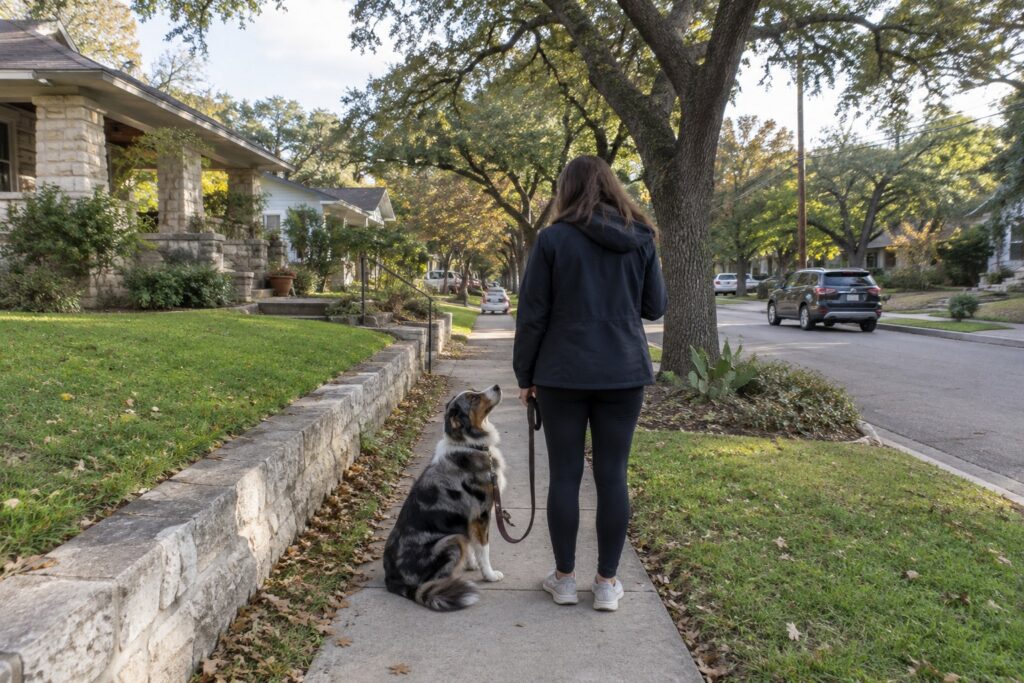
Loose-leash walking is usually the first skill we build, because it affects everything else. A dog who pulls hard is tiring to walk, harder to keep safe, and more likely to get worked up around distractions. A dog who walks politely goes more places, gets more exercise, and stays calmer.
Start in Low-Distraction Places
Begin in your driveway, backyard, or a quiet street in the morning. Reward your dog for staying near your leg, and stop moving the moment the leash goes tight. When the leash loosens, move forward again. The lesson is simple: pulling stops the walk, and a loose leash keeps it going.
Once your dog understands the idea, add the “heel” cue for short stretches. Keep sessions brief and upbeat. Five focused minutes teach more than thirty minutes of frustrated tugging.
Build Up to Real-World Distractions
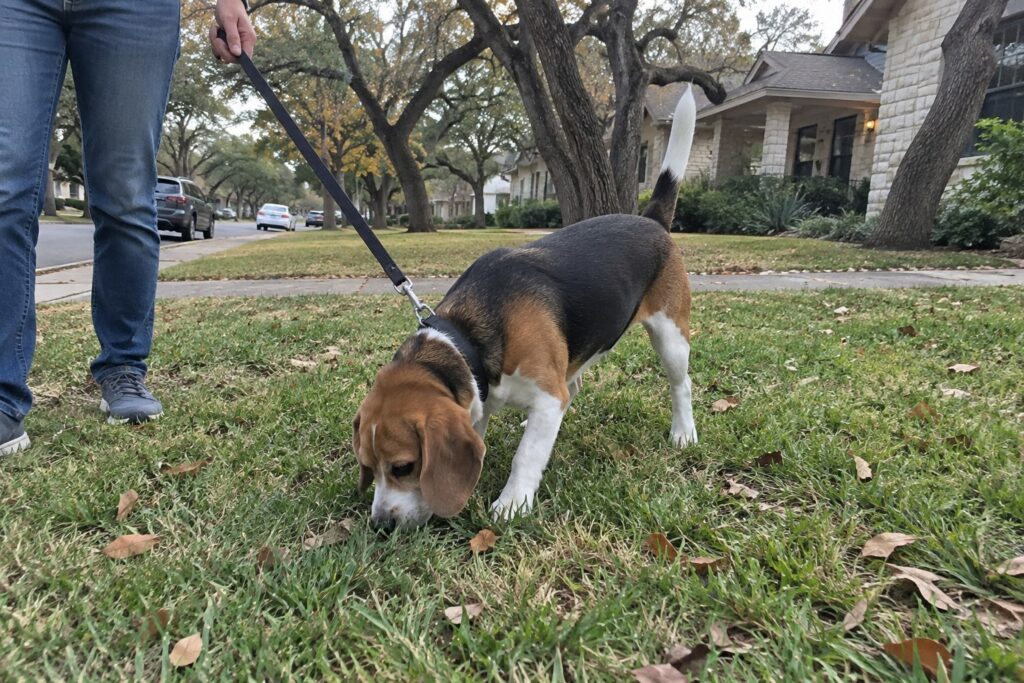
Squirrels, joggers, bicycles, and other dogs are where leash skills are really tested. Add them gradually. Work at a distance where your dog can still take food and respond to “look,” then shrink that distance over days and weeks. If your dog cannot eat or respond, you are too close.
During Board and Train, our trainers vary exercise contexts on purpose. Practicing the same cue in different places helps your dog understand that “heel” means the same thing everywhere, not just in one familiar spot.
Choose Equipment That Fits Your Dog
A well-fitted flat collar or harness and a standard six-foot leash cover most needs. Retractable leashes give a strong dog too much momentum and too little control, so we suggest leaving them at home. If you are unsure what suits your dog, ask our trainers and we will talk through options that match your dog’s size and habits.
Impulse Control and Calm Behavior at Home
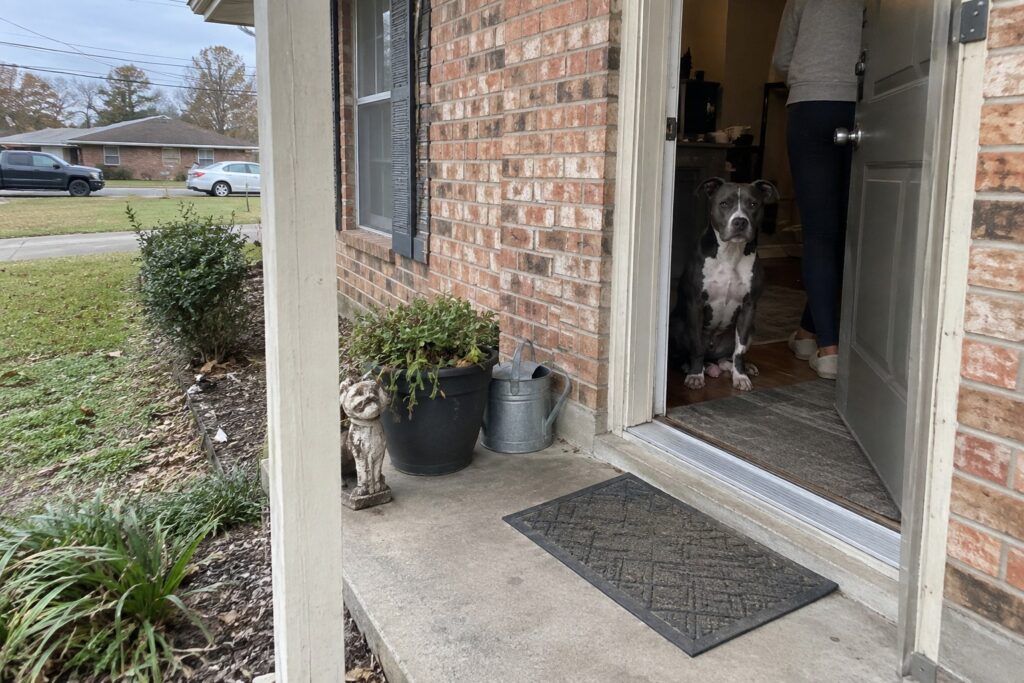
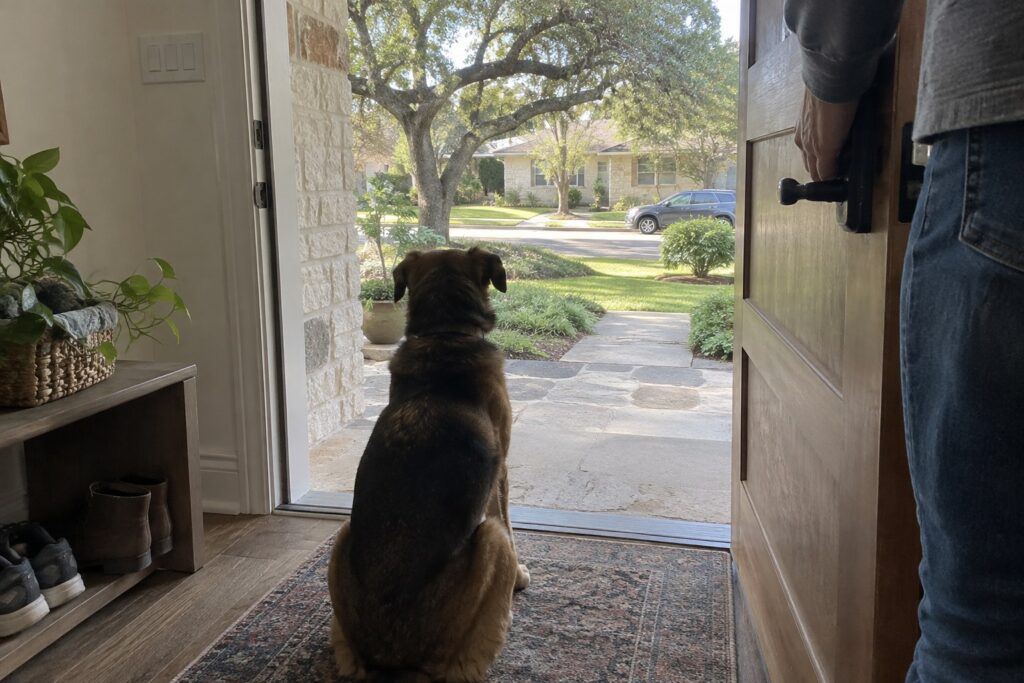
Enthusiasm is one of the most charming things about these dogs, and it is also the thing that most needs shaping. A strong dog who launches at the door, grabs food from the counter, or jumps on visitors can knock someone over without meaning any harm. Impulse control teaches your dog to pause and wait for permission.
Core Impulse Control Skills
We focus on a handful of cues that carry into every part of daily life. Practice each one in short sessions, reward calm choices, and raise the difficulty only when your dog is succeeding most of the time.
| Cue | Everyday Use | Simple Practice Idea |
|---|---|---|
| “Sit” | Greeting guests, waiting for the leash | Ask for “sit” before every door, meal, and toy |
| “Wait” | Doorways, car doors, gates | Open the door a few inches and close it if your dog moves |
| “Place” | Calm settling when people arrive | Reward your dog for staying on a bed while you walk around |
| “Leave it” | Dropped food, trash, distractions on walks | Cover a treat with your hand and reward when your dog backs off |
| “Off” | Jumping on people or furniture | Turn away from jumping and reward four paws on the floor |
Channel Energy Into Structured Play
Tug and fetch are great outlets when they come with rules. Your dog should “drop” the toy on cue, wait for the game to restart, and stop when you say the game is over. These rules turn play into impulse control practice and keep excitement from spilling over.
Mental work matters too. Food puzzles, short training sessions, and “find it” games tire a dog out in ways a walk alone may not. A dog with an outlet for energy is far easier to live with.
If you would rather have professionals build these foundations for you, our two-week program is designed for exactly that.
Socialization Done Carefully
Socialization does not mean your dog must love every dog and person it meets. It means your dog learns to stay calm and manageable around the sights, sounds, people, and animals of everyday life. For a strong dog who may be selective with other dogs, that distinction is important.
Neutral Exposure Over Crowded Play
The most useful socialization is often quiet. Sitting on a bench while people walk by, watching another dog at a comfortable distance, or walking past a busy parking lot builds calm habits. A packed, unstructured play session can do the opposite, especially if your dog becomes overaroused or another dog is pushy.
If your dog does enjoy other dogs, pick playmates you know well and keep sessions short and supervised. Interrupt play for a quick “sit” now and then so your dog learns that excitement can be turned down on cue.
Read Your Dog’s Body Language
Watch for early signs of stress or tension: a stiff body, hard stare, raised hackles, lip licking, or a tightly closed mouth. When you see them, calmly create distance and reward your dog for looking at you. Stepping away early is a skill, not a failure.
If your dog barks, lunges, or fixates on other dogs, our post on reactive dog training in Shreveport goes deeper on that topic. For young dogs, see our puppy training tips for new Shreveport owners, and if you recently brought home a rescue, read about the training mistakes to avoid with an adopted dog.
How We Handle Socialization in Board and Train
During our residential program, supervised socialization is based on each dog’s temperament. Dogs are not thrown into group situations they are not ready for. The goal is a dog who can stay composed in public, not a dog who must greet everyone.
Exercise and Training in Louisiana Heat
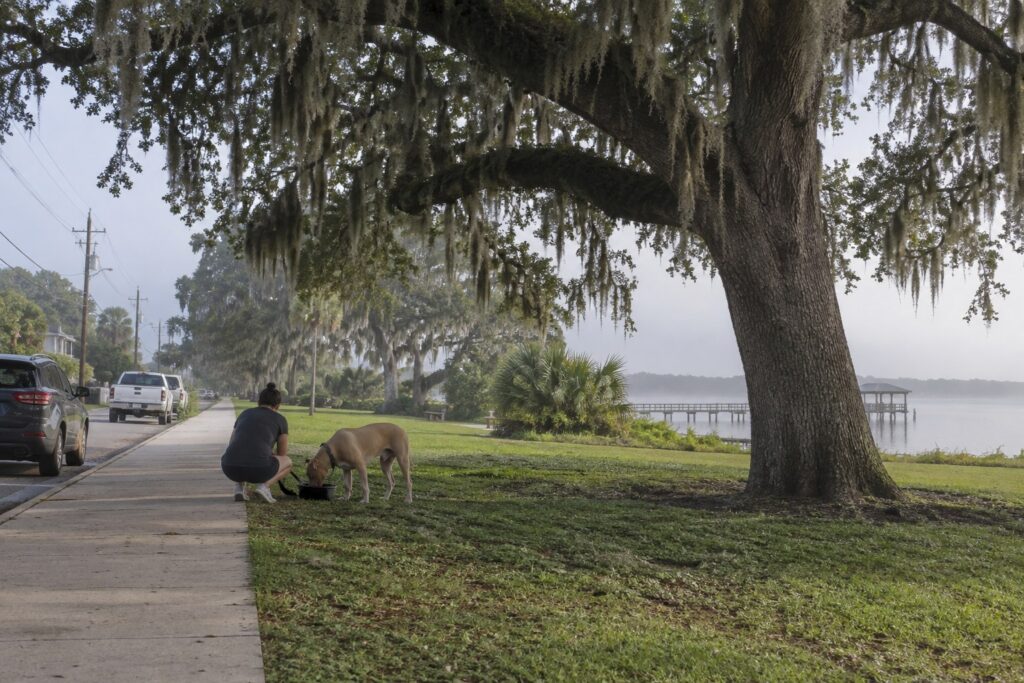
Athletic, short-coated dogs need daily exercise, but Northwest Louisiana summers and humid shoulder seasons call for planning. Heat stress can develop quickly, and hot pavement can burn paw pads. The AVMA’s warm-weather pet safety guidance recommends avoiding hot surfaces and knowing the signs of heat stress.
Heat-Smart Habits
- Walk and train early in the morning or later in the evening when temperatures drop.
- Press the back of your hand to the pavement for several seconds. If it is uncomfortable for you, it is too hot for your dog’s paws.
- Bring water on every outing and offer shade breaks often.
- Swap long midday walks for short indoor training sessions and puzzle toys.
- Never leave your dog in a parked car, even for a few minutes.
Heavy panting, drooling, weakness, stumbling, or vomiting are reasons to stop immediately, move to a cool area, and call your veterinarian. Muscular dogs can push through discomfort out of enthusiasm, so it is on you to set the pace.
Indoor Work That Still Tires Your Dog Out
On the hottest days, training is exercise. A 10-minute session of “sit,” “down,” “place,” and “leave it” with a few “find it” games in between works your dog’s brain and body. Rotate puzzle toys so they stay interesting, and practice calm settling on a mat afterward so your dog learns that rest follows activity.
Being a Good Breed Ambassador in Public
Fair or not, a well-behaved dog of this type changes minds every time it walks calmly past a stranger. Your dog does not need to be perfect, but predictable, polite behavior in public makes outings easier for you and more comfortable for everyone around you.
Public Manners Checklist
| Situation | What Good Manners Look Like | Skill to Practice |
|---|---|---|
| Passing people on a sidewalk | Loose leash, dog stays at your side | “Heel” and “look” |
| A stranger asks to pet your dog | Dog sits calmly or you politely decline | “Sit” and handler advocacy |
| Another dog approaches | You create space before your dog reacts | “Let’s go” turn and “look” |
| Sitting at an outdoor patio | Dog settles under the table | “Place” or “down” with duration |
| Vet or store waiting area | Dog stays close and quiet | “Down” and calm settling |
Advocate for Your Dog
You are allowed to say no. If someone wants to rush up to your dog, or another owner lets an off-leash dog approach, step in, create space, and keep walking. Protecting your dog from uncomfortable situations prevents problems and builds trust between the two of you.
When your dog is ready for more, dog-friendly patios are a great test of manners. Our list of dog-friendly restaurants in Shreveport for well-trained dogs offers ideas for practice outings.
How Professional Pit Bull Training Fits Your Schedule
Consistency is what makes all of these skills stick, and consistency is hard when work and family life are busy. We offer two paths so you can choose what fits your dog and your household. You can compare options on our Shreveport dog training programs page.
| Feature | Two-Week Board and Train | In-Home Lessons |
|---|---|---|
| Where training happens | Your dog stays at our facility | In your home and neighborhood |
| Session structure | Multiple structured sessions every day | Scheduled lessons with you and your dog |
| Your role | Handler transition training in the final days | You practice alongside the trainer each lesson |
| Guaranteed results and lifetime support | Yes, for graduates at no additional cost | Board and Train graduates only |
| Best fit | Busy owners who want strong foundations quickly | Owners working on specific household habits |
Two-Week Board and Train
In our Board and Train program, your dog lives with us and trains through several structured sessions each day. In the vast majority of cases, dogs complete the program within the two-week timeframe. We discourage visits early on so your dog can settle into the routine, and in the final days we teach you how to handle your dog so the results carry over at home. Graduates receive guaranteed results and lifetime support at no additional cost, and Affirm financing is available.
Getting ready to enroll? Our checklist on how to prepare your dog for Board and Train covers what to bring, including your dog’s regular food, any medications, and vaccination records.
In-Home Lessons
If you prefer to work alongside a trainer in your own space, in-home dog training in Shreveport focuses on the doors, visitors, and routines your dog deals with every day. It is a good option for owners who want hands-on coaching in the exact places where problems show up.
Ready to talk through your dog’s needs? Call us at (318) 593-7321.
About All Dogs Unleashed Dog Training Shreveport
All Dogs Unleashed Dog Training Shreveport helps owners across Northwest Louisiana raise calm, reliable dogs, including strong and energetic dogs who need clear structure. Our fixed two-week Board and Train program combines daily structured sessions, supervised socialization based on temperament, and handler transition training so you know exactly how to keep the progress going. Graduates receive guaranteed results and lifetime support at no additional cost. We also offer in-home lessons, boarding, and refresh training.
Frequently Asked Questions
Are pit bulls easy to train?
Many dogs of this type are people-focused and eager for attention, which helps a lot in training. Their strength and energy mean you need to be consistent, especially with leash manners and impulse control. Every dog is an individual, so progress depends on your dog’s temperament, age, and history as well as how often you practice at home.
At what age should I start training my pit bull puppy?
You can start teaching simple habits like name recognition, “sit,” and calm handling as soon as your puppy comes home. Keep sessions short and positive. Early exposure to new sounds, surfaces, and people should be gentle and gradual. Ask your veterinarian when your puppy is protected enough by vaccinations to visit public places and meet other dogs.
How do I stop my pit bull from pulling on the leash?
Stop moving whenever the leash goes tight and move forward again when it loosens. Reward your dog for staying near your leg, and start in quiet places before adding distractions. Keep sessions short. A well-fitted collar or harness and a standard six-foot leash give you better control than a retractable leash with a strong dog.
Can a pit bull get along with other dogs?
Some do very well with other dogs, while others are more selective, and that can change as a dog matures. Watch your own dog’s body language and introduce new dogs slowly, on neutral ground, with plenty of space. Calm neutral exposure is often more valuable than crowded play. If your dog reacts strongly, get professional help early.
How much exercise does a pit bull need in hot weather?
These dogs usually need daily physical and mental exercise, but in Louisiana heat you should shift walks to early morning or evening. Check pavement with your hand, carry water, and take shade breaks. On very hot days, replace long walks with indoor training and puzzle toys. Call your veterinarian if you see heavy panting, weakness, or stumbling.
Is Board and Train a good fit for a pit bull?
Board and Train works well for strong, energetic dogs because they get multiple structured sessions every day with consistent handling. Trainers practice in varied settings so skills carry over. In the final days, we teach you how to handle your dog at home. Graduates of our two-week program receive guaranteed results and lifetime support at no additional cost.
Thoughtful pit bull training gives you a dog who walks politely, stays calm around distractions, and represents the breed well wherever you go. If you want expert help building those habits, call (318) 593-7321 or reach out online to learn about our two-week Board and Train program at our location at 1220 Shreveport Barksdale Hwy, Shreveport, LA 71105.
Ready to Get Started with All Dogs Unleashed Dog Training Shreveport?
Give your strong, loving dog the structure to thrive. Call us at (318) 593-7321 to talk with our team about Board and Train or in-home lessons.