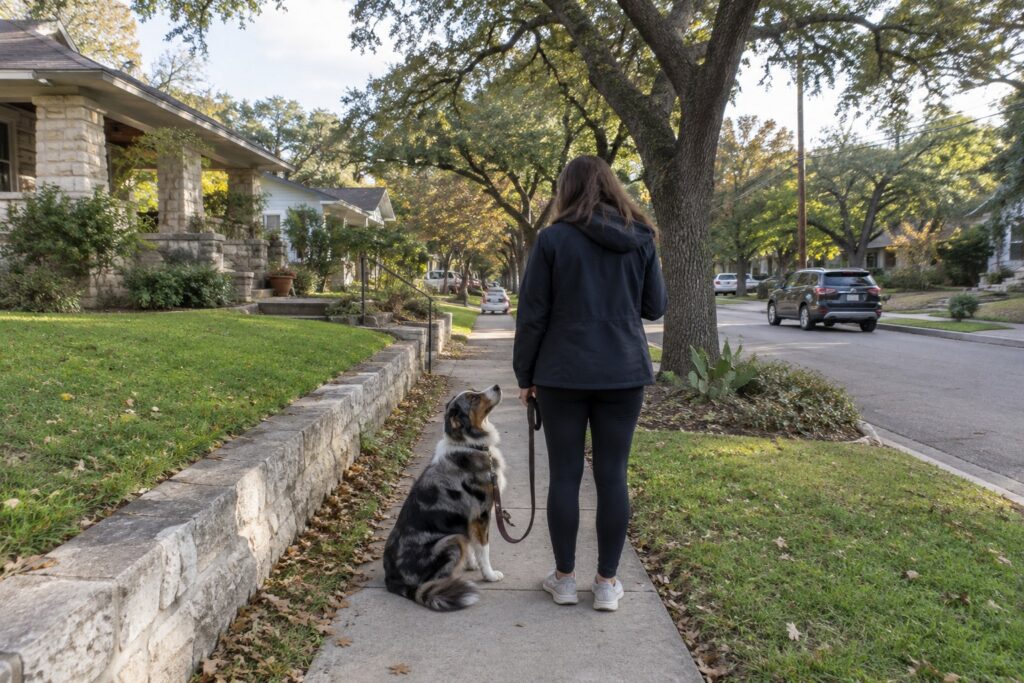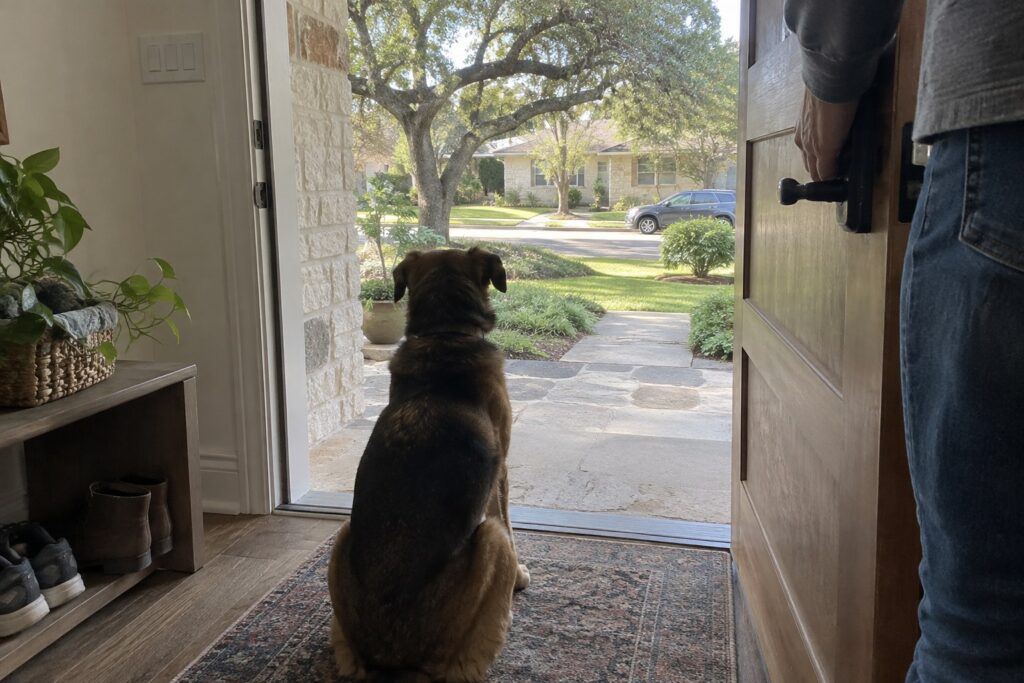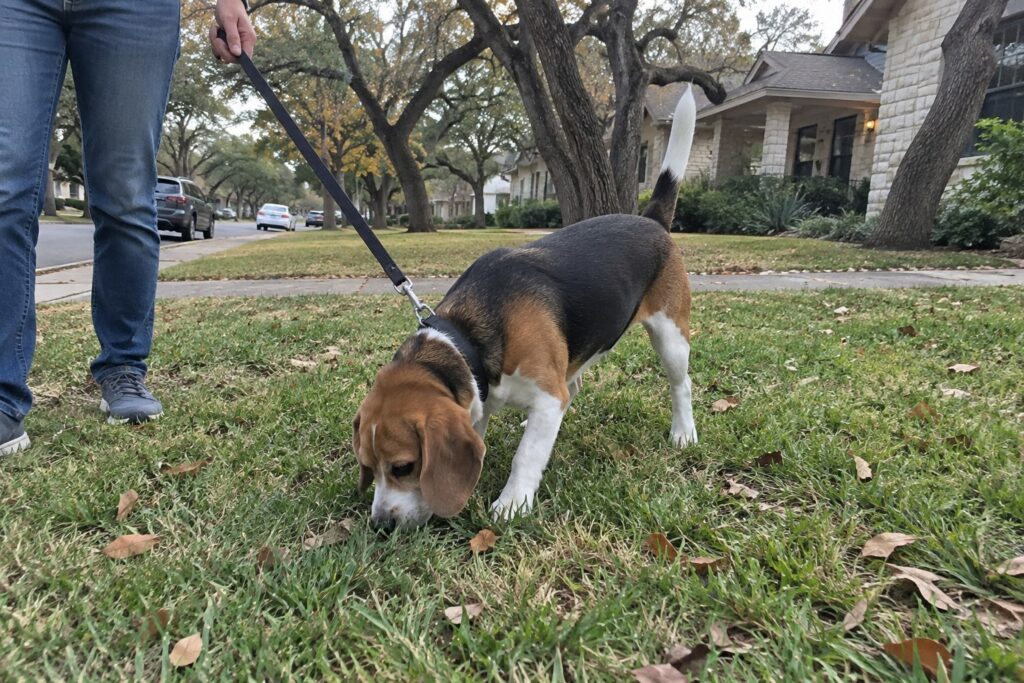

Rescue dogs adopted through the Ark-La-Tex transport network often arrive in Bossier City carrying habits shaped by inconsistent handling, unknown trauma histories, and abrupt transitions. The first seven days in a new home establish the behavioral baseline your dog will carry for years, making structured, consistent guidance critical from day one.
All Dogs Unleashed Dog Training Bossier City serves families across Bossier City and Bossier Parish, and our rescue dog training gives adopting families a clear, professional path through the most consequential week of their dog’s transition. Your rescue dog’s first week is happening right now. Don’t navigate it alone. Contact our Bossier City trainers today for a behavioral assessment.
Key Takeaways
- The first week after adoption sets the conditioned behaviors that determine long-term compliance and stability in rescue dogs.
- Rescue dog training should address fear, anxiety, and reactivity before advancing to foundational obedience commands.
- Bossier City’s proximity to Barksdale Air Force Base means rescue dogs may encounter sudden loud aircraft noise requiring desensitization work.
- Structured daily instruction accelerates behavioral results compared to unsupported owner-led approaches.
- If your dog regresses on a trained behavior, consult a qualified trainer about appropriate next steps during the first-week adjustment period.
Why Does the First Week Define Your Rescue Dog’s Behavioral Foundation?
The rescue dog adjustment period begins the moment your dog crosses your threshold, and the responses learned during these first seven days carry significant weight for months of training ahead. Cortisol elevation from a shelter stay suppresses a dog’s true temperament, meaning the quiet, still dog you brought home is not necessarily an easy dog. That shutdown posture is a stress response, and misreading it as a calm personality is one of the most common errors newly adopting families make.
Dogs arriving through a regional rescue network frequently present with compounded cortisol loads because they have passed through several holding facilities before reaching a Bossier Parish home. Extended decompression timelines are the predictable result. Our trainers account for that multi-stop transport history when assessing where a dog actually stands behaviorally.
What Is the 3-3-3 Rule for Rescue Dogs?
The 3-3-3 rule means three days to decompress, three weeks to learn the household routine, and three months to feel genuinely at home. Each phase carries distinct behavioral markers. In the first 72 hours, refusal to eat, excessive stillness, and avoidance of eye contact are normal cortisol responses, not personality indicators. Families who begin obedience demands during this window routinely set back the foundation they are trying to build.
By weeks two and three, adopted dog behavior problems begin surfacing as cortisol normalizes and your dog’s actual temperament emerges. This is the phase where resource guarding, leash reactivity, and separation distress become visible. Our dog training programs are structured to address these emerging behaviors before they calcify into fixed habits.
What Behavior Problems Appear in the First Week?
Families across Bossier City and Bossier Parish should anticipate a specific cluster of adopted dog behavior problems during the first seven days. Housebreaking regression is nearly universal in recently adopted dogs regardless of prior training history. Barrier frustration, leash reactivity, and separation distress are equally common, and families living near Barksdale Air Force Base flight operations should specifically prepare for fear-based reactivity triggered by sudden, high-decibel aircraft noise. Dogs with unknown trauma histories have no established coping response to that acoustic stimulus.
Resource guarding and separation distress in particular warrant early attention because both escalate without structured intervention. For a detailed breakdown of guarding behavior, our resource guarding guide for Bossier City owners covers identification and early management. Families observing distress during alone time should monitor changes and seek professional behavioral guidance when challenges persist beyond the first week.
The 8 First-Week Rescue Dog Training Steps
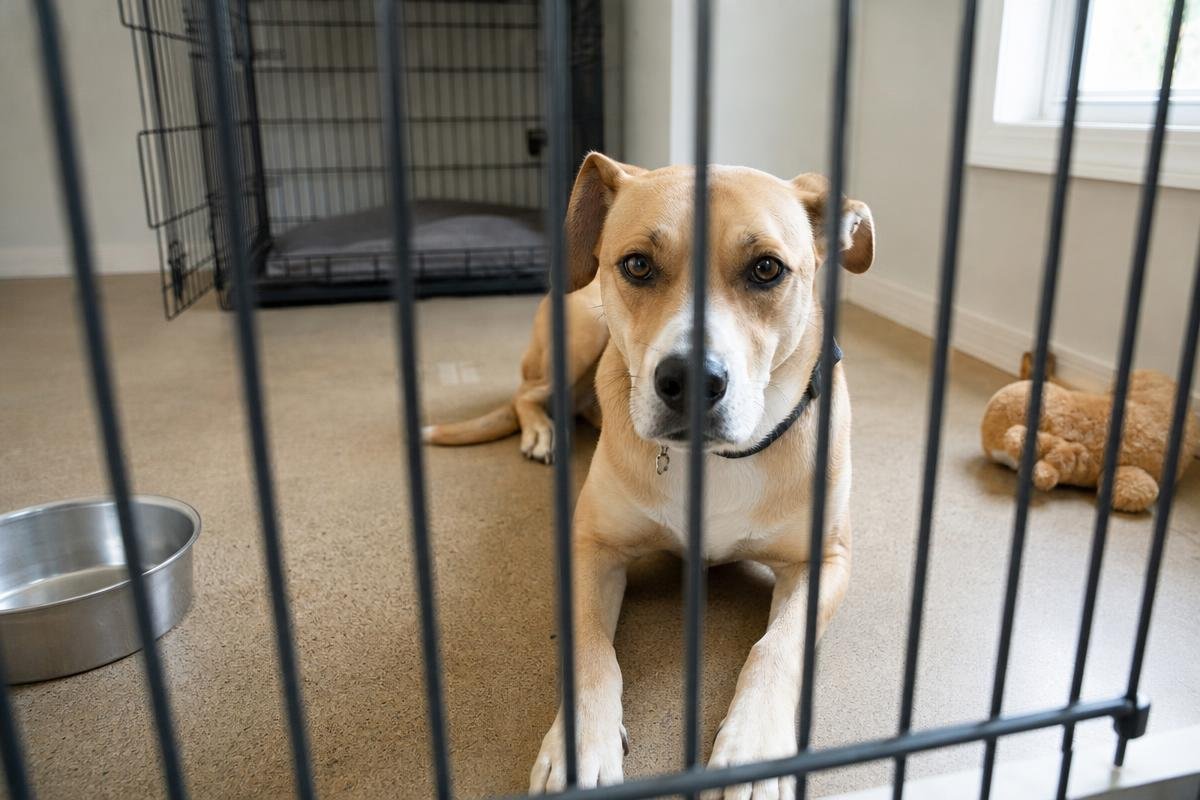
Rescue dogs often carry learned responses shaped by multiple placements, inconsistent handling, and unresolved trauma. The first seven days in your home are not a settling-in period to be managed passively. They are an active training window that sets the conditioned behaviors your dog will carry forward. Each step below is sequenced deliberately, and each builds on the one before it.
Step 1: Establish a Contained Starting Territory
Assign your dog one room away from high-traffic areas of the home. Open floor plans common across Northwest Louisiana neighborhoods benefit from baby gates that define a clear boundary without creating visual isolation. Full-house access in week one overwhelms a dog with an unknown stress baseline and delays the development of spatial security.
Step 2: Build a Fixed Daily Schedule
Set fixed times for feeding, walks, and rest and repeat them without variation. Predictability reduces cortisol levels in dogs with anxiety histories, and the effect is measurable within days. This principle is the same one that drives the structured daily instruction model used in our board and train program, where every hour of the dog’s day is accounted for.
Step 3: Introduce the Crate as a Behavioral Anchor
Place the crate in the dog’s designated room with the door open and a high-value food item inside. Do not force entry. Allow your dog to investigate and enter voluntarily across multiple sessions before closing the door. Crate acclimation is a foundational component of behavioral modification and prevents the anxiety-based habits that develop when confinement is introduced abruptly.
Step 4: Begin Foundational Rescue Dog Obedience Commands
Use lure-reward methodology to introduce “sit” and “stay” in two five-minute sessions daily. Sessions must occur in a low-distraction environment, not near windows, other pets, or active household areas. This command-first approach forms the entry point for every program we offer. Struggling to keep a consistent daily routine while your rescue dog decompresses? Ask about our board and train program, where every hour is structured for you. Call (318) 562-6536.
Step 5: Structure Early Leash Exposure
Limit early walks to 10 to 15 minutes on familiar, low-traffic terrain. Families near the Red River corridor or Cypress Black Bayou Recreation Area have access to routes with minimal vehicle and pedestrian density, which are appropriate for a dog still mapping its stress thresholds. Avoid high-stimulation routes until baseline leash behavior is established. Use a calm, consistent approach as your dog adjusts to leash exposure.
Step 6: Catalog Triggers and Reactivity Thresholds
Document every stimulus that produces a fear or reactive response, including traffic noise, children, other dogs, and sudden loud sounds. Dogs adopted into homes near the base are frequently exposed to sudden high-decibel aircraft noise that can produce acute fear responses in dogs with unknown trauma histories. Record both the trigger and the distance at which the response begins. This log becomes the foundation of any subsequent behavioral modification plan. Monitor your dog’s response to sudden sounds and adjust exposure as needed.
Step 7: Enforce Meal Boundaries to Prevent Resource Guarding
Place the food bowl in a fixed location and keep children and other pets away from your dog during every meal. Resource guarding is a conditioned behavior that develops quickly when a dog with a scarcity history perceives competition at the bowl. Consistent meal boundaries prevent this pattern from becoming established before it requires formal intervention.
Step 8: Conduct a Day-Seven Behavioral Assessment
On day seven, evaluate your dog across four categories: housebreaking compliance, crate acceptance, basic command response, and reactivity level. Two or more categories showing no measurable improvement indicate that home-based training alone is insufficient for this dog’s needs. The assessment at day seven is the natural point to determine whether board and train or in-home intervention is the appropriate next step.
When Home Training Is Not Enough: Recognizing the Need for Professional Intervention
Most rescue dogs respond to the structured first-week steps covered in the decompression sections above. Some do not. Dogs placed through a multi-state transport pipeline may have passed through several holding facilities before reaching your home, accumulating learned responses that a new household environment alone cannot resolve. Knowing when to call for professional evaluation is not a failure of ownership. It is the correct clinical decision.
Behavioral Red Flags That Warrant Professional Evaluation
Adopted dog behavior problems exist on a spectrum. The following five indicators signal that behavioral modification has moved beyond the scope of structured home training and requires experienced handler assessment.
- Unprovoked growling or snapping directed at household members or visitors, with no identifiable trigger.
- Inability to settle after 72 hours. Persistent pacing, vocalization, or destructive behavior that does not reduce as the dog acclimates suggests anxiety levels that require structured intervention.
- Refusal to eat for more than 48 hours. Brief appetite suppression is normal. Extended food refusal indicates stress beyond typical adjustment.
- Escape attempts that risk injury. Dogs that repeatedly breach fencing or bolt through doors present an immediate safety concern that home management alone will not correct.
- Any bite incident. A single bite event warrants immediate professional evaluation, regardless of severity.
Families in the Northwest Louisiana area should also note that flight operations at the air base produce sudden, high-decibel aircraft noise that can trigger acute fear responses in dogs with unknown trauma histories. If your dog’s reactivity spikes unpredictably, the cause may be environmental rather than behavioral in origin, and professional assessment can distinguish between the two.
How Board and Train Programs Accelerate Results for Rescue Dogs
The primary variable that undermines home training for severely anxious or reactive rescue dogs is environmental inconsistency. A new home presents unfamiliar sounds, scents, routines, and people simultaneously, all of which reinforce avoidance and fear patterns rather than replacing them. Our board and train program removes that variable entirely.
Our facility at 4500 Benton Rd Suite 200, Bossier City, LA 71111 provides structured daily instruction in a controlled environment with experienced handlers. The consistency of that environment, the same spaces, the same routines, the same trained responses from staff, is precisely what produces accelerated results for behavioral modification cases involving fear aggression and trauma-based reactivity. Families across the Red River in Bossier City have access to this facility-based program, where experienced handlers provide structured daily instruction.
If your rescue dog is showing any of the red flags above, do not wait for the behavior to escalate. Call our team at (318) 562-6536 to schedule a professional evaluation this week.
Rescue Dog Training in Bossier City: Local Conditions That Affect Behavioral Adjustment
Behavioral modification here involves more than standard obedience protocols. The physical environment, regional climate, and the rescue networks serving the area each create conditions that extend the rescue dog adjustment period beyond what most adoption guides anticipate. Families working through shelter dog training tips drawn from national resources may find those frameworks insufficient without accounting for these local variables.
Environmental Factors Unique to Northwest Louisiana
Flight operations at the nearby base produce sudden, high-decibel aircraft noise that registers without warning across neighborhoods east of Barksdale Boulevard. For rescue dogs with unknown trauma histories, this is a predictable and recurring trigger. Families should monitor their dog’s response to sudden sounds throughout the first week.
The subtropical climate compounds outdoor training logistics. Average summer highs above 93°F compress usable outdoor windows to early morning and evening hours, directly limiting the leash exposure work outlined in Step 5 of the first-week protocol. Red River floodplain geography further reduces fenced yard availability across many residential areas, making structured leash work the primary outdoor training modality rather than a supplement to yard-based exercise. Low-traffic corridors near the river offer viable early-week exposure environments when timing is managed carefully.
Community Resources and Adoption Context in Bossier Parish
Regional rescue transport draws dogs from high-intake shelters across a wide multi-state area. Many dogs placed with local families have passed through several holding facilities before reaching their adoptive home. This history compounds the standard decompression timeline. The 3-3-3 framework, which estimates three days to decompress, three weeks to learn routine, and three months to feel settled, frequently underestimates the baseline of transport dogs with layered shelter exposure.
Families adopting through these networks should extend that timeline and consider professional support earlier rather than waiting for behavioral problems to solidify. A consistent routine can support the first-week adjustment period. Our team serves the region from our training facility at 4500 Benton Rd Suite 200, Bossier City, LA 71111, and our in-home dog training program brings structured instruction directly to households where the dog’s adjustment period requires work in the actual living environment rather than an off-site setting.
Frequently Asked Questions
How long does it take to train a rescue dog?
Foundational compliance improvements, including sit, stay, and leash manners, typically emerge within two to four weeks of consistent, structured instruction. Trauma-based reactivity or aggression rooted in prior shelter experience may require eight to twelve weeks of professional behavioral modification before durable results are established.
Should I start rescue dog training immediately after adoption?
Basic structure, routine, crate introduction, and foundational commands begin on day one. Intensive obedience drilling waits until after the initial decompression window, which runs approximately 72 hours to one full week, giving your dog time to regulate before formal instruction begins.
What is the best training method for a fearful rescue dog?
Lure-reward methodology combined with systematic desensitization is the professional standard for fear-based behavioral modification. Sessions should be brief, conducted in low-distraction environments, and ended before visible stress signs appear. Pushing past stress thresholds slows progress and can entrench avoidance behaviors.
Can a board and train program work for rescue dogs with severe anxiety?
A board and train program is particularly effective for rescue dogs with anxiety because the structured facility environment removes the inconsistency of a new home during the adjustment period. Dogs from a regional rescue network, many of whom have passed through several holding facilities, often respond faster to structured daily instruction than to home-based management alone.
How do I know if my rescue dog’s behavior problems require professional help?
Professional evaluation is warranted when your dog displays unprovoked aggression, cannot settle after 72 hours, refuses food beyond 48 hours, or shows escalating reactivity despite consistent home management. These are not adjustment-period variations. They are clinical indicators that adopted dog behavior problems exceed what home training can safely address.
Does All Dogs Unleashed Dog Training Bossier City serve Bossier City families?
Yes. Our team serves families across the region, including those in Bossier City and surrounding communities, from our training facility at 4500 Benton Rd Suite 200, Bossier City, LA 71111. In-home dog training is also available for families whose dogs cannot yet travel comfortably.
If your rescue dog reaches day seven with two or more unresolved behavioral categories, that is not a failure of effort. It is a signal that structured professional intervention will produce faster and more durable results than continued home management alone. Call our team at (318) 562-6536 to discuss your dog’s specific behavioral profile. Our trainers work with local families every week on exactly these cases.
Ready to Get Started with All Dogs Unleashed Dog Training Bossier City?
Call (318) 562-6536 to speak with our team directly. We’re ready to answer your questions, walk you through your options, and help you find the right solution for your needs. Whether you’re just starting to plan or ready to move forward, we’ll make the process simple and stress-free. Reach out today and let’s talk about how we can help.