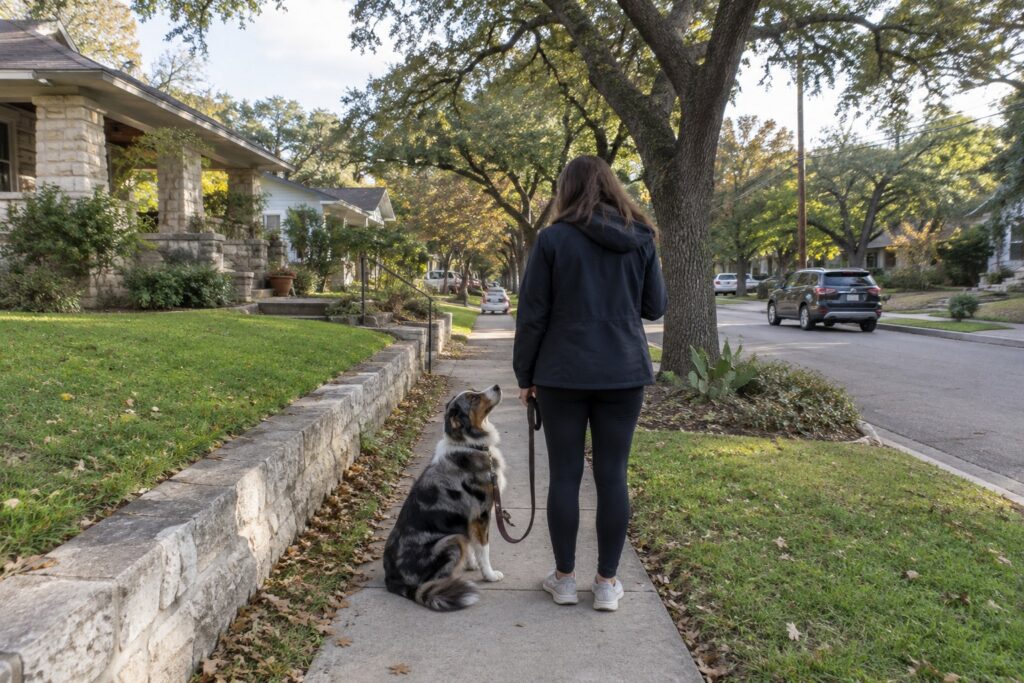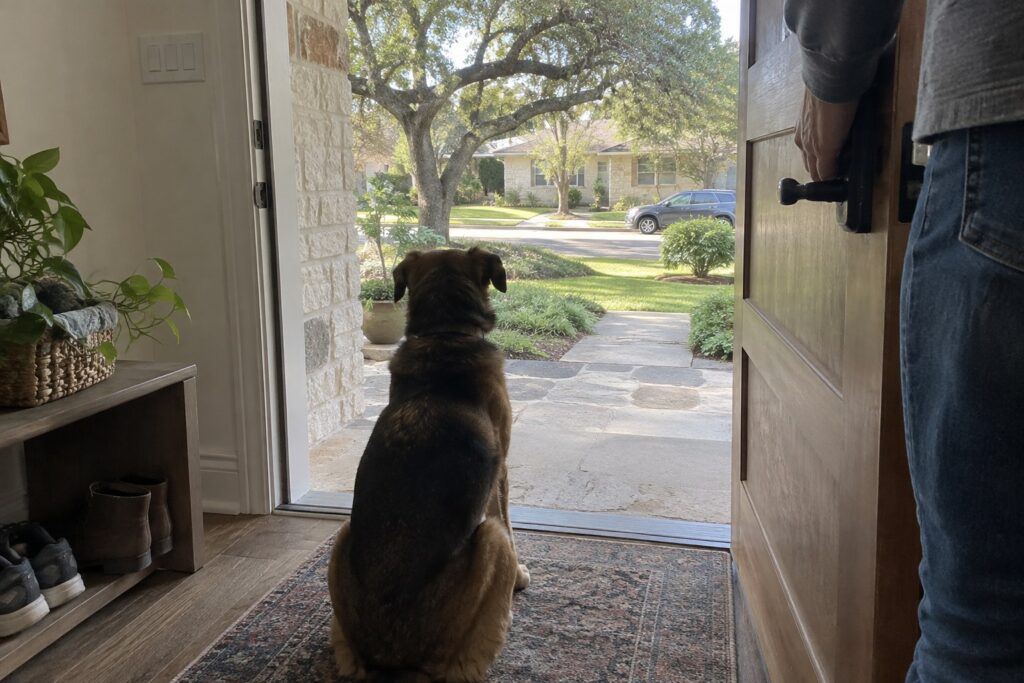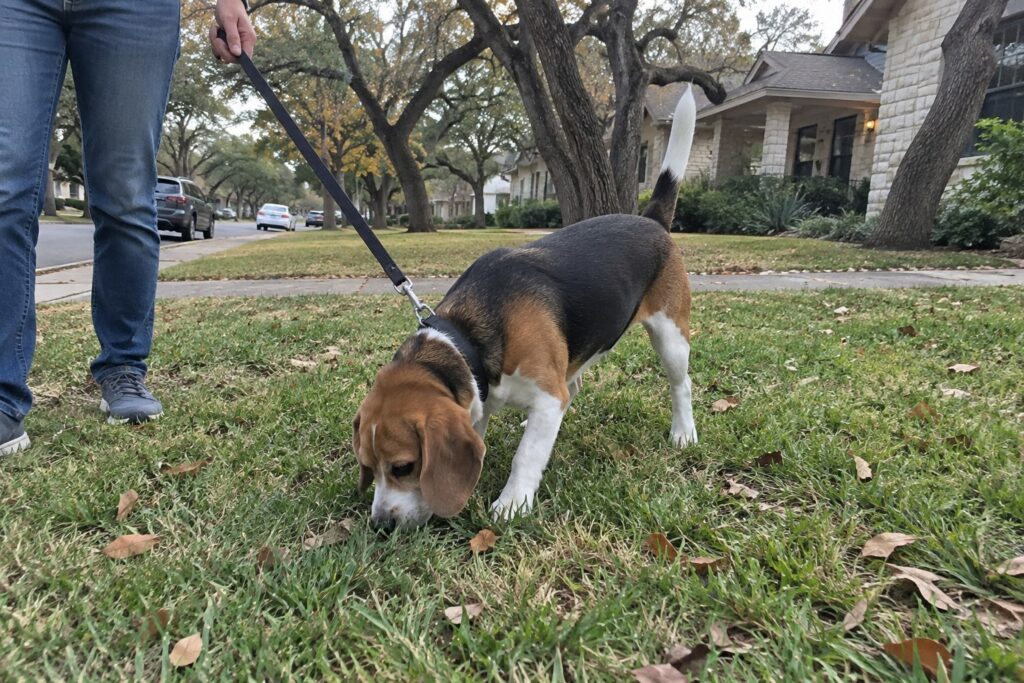

Pulling, lunging, and zigzagging across the sidewalk are among the most common behavioral complaints we hear from dog owners in Bossier City. Knowing how to train a dog to walk on a leash correctly, using structured technique rather than repeated correction, produces measurable results that hold up in real-world environments. All Dogs Unleashed Dog Training Bossier City provides step-by-step leash instruction backed by our written training guarantee, serving Bossier City residents from our facility at 4500 Benton Rd Suite 200, Bossier City, LA 71111.
Our Bossier City facility serves dog owners throughout Bossier Parish. Ready to stop the pulling and start walking with control? Our trainers can help you get there.
Key Takeaways
- Teaching a dog to walk on a leash without pulling requires consistent technique applied in short, structured sessions.
- Busy corridors and the Red River trail make real-world distraction proofing a necessary part of walking work in this area.
- Northwest Louisiana’s summer heat limits productive outdoor sessions to early morning or evening windows of 10 to 15 minutes.
- Professional board-and-train programs accelerate leash compliance faster than owner-only practice in most cases.
- Foundational leash obedience carries over to every walk your dog takes for the rest of its life.
Why Leash Manners Matter for Bossier City Dog Owners
Uncontrolled leash behavior is not a minor inconvenience. It is a documented source of physical injury, legal exposure, and failed outings that erode the relationship between a dog and its owner over time.
What Are the Real Risks of Uncontrolled Leash Behavior?
The real risks include physical injury to the handler and legal liability. Sustained pulling places significant strain on the shoulder, rotator cuff, and wrist, and a sudden lunge on uneven pavement can cause a fall with serious consequences. These are not edge-case outcomes. They occur regularly when dogs have not been taught to maintain loose leash position under real-world stimulus.
Louisiana dog owner liability statutes can hold a handler civilly responsible if a lunging or reactive dog causes injury to a third party. A dog that charges toward a cyclist or knocks a pedestrian to the ground creates legal exposure that foundational training directly prevents. Our in-home dog training in Bossier City addresses these behaviors in the actual environments where your dog walks, not just in a controlled yard.
What Does Bossier City’s Walking Environment Demand?
The Arthur Ray Teague Parkway trail along the Red River, the Airline Drive commercial corridor, and quiet residential streets near the Barksdale Air Force Base gate present layered distractions that no backyard session can replicate. Vehicle noise, cyclists, unfamiliar pedestrians, and other dogs appear in rapid sequence. A dog that pulls at home will pull harder in these conditions. On-leash obedience here must account for this environment specifically, because the margin for error in a dense pedestrian corridor is far smaller than in a quiet neighborhood yard.
Understanding Why Dogs Pull on the Leash
Why Does My Dog Pull on the Leash?
Your dog pulls because pulling works. Leash pulling is not a dominance display or an act of defiance. It is a self-reinforcing operant conditioning outcome: your dog pulls forward, forward motion follows, and the behavior is rewarded and repeated with every walk. The leash itself becomes a conditioned cue for excitement rather than structure when pulling consistently produces forward progress.
Threshold plays a critical role in this pattern. Threshold refers to the distance at which your dog begins reacting to a stimulus, whether that stimulus is another dog, a cyclist, or a passing vehicle. As your dog approaches threshold, arousal increases, and leash pressure intensifies. Building consistent loose-leash compliance requires addressing arousal levels before they escalate, not after the behavior has already occurred.
Do High-Drive Breeds Need Different Leash Training?
Yes. High-drive working breeds generate significantly greater leash pressure than lower-drive pet-line breeds, and they respond best to more structured protocols. Labrador Retrievers, German Shepherds, and Belgian Malinois were selectively bred for sustained physical output and environmental engagement, and that genetic programming does not switch off during a neighborhood walk.
This is especially relevant across the area’s working-line dog population, where task-oriented breeds are common. Teaching walking compliance to a dog from working-line genetics requires higher-value reinforcement and more deliberate threshold management than standard obedience work. Our trainers address these breed-specific variables directly, and dogs requiring more intensive behavioral modification often benefit from our board and train program in Bossier City, which provides structured daily instruction under experienced handlers.
Have a strong, high-drive dog that outmuscles you on every walk? Our board-and-train program builds reliable leash manners under professional handling in weeks, not months.
The Step-By-Step Leash Training Method That Works
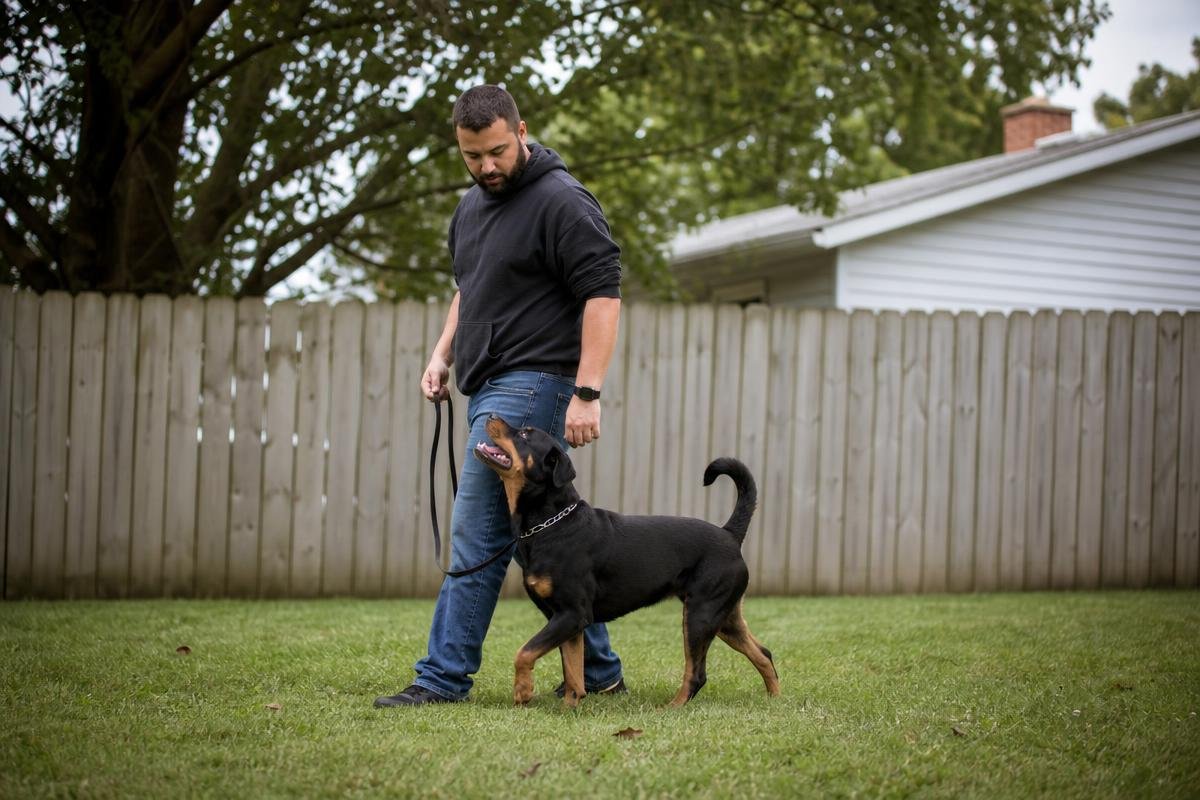
Teaching loose leash walking requires a structured sequence, not a single technique applied at random. Each step below builds on the previous one, and your dog must demonstrate reliable behavior at each stage before you advance. This progression applies whether you are working on quiet residential streets in Bossier Parish or preparing for higher-distraction environments like the Parkway trail along the water.
Step 1: Condition Calm Leash Attachment
Before the walk begins, your dog must associate the leash clip with stillness rather than excitement. Clip the leash, then wait. Reward only when your dog settles and holds calm behavior. This single step interrupts the excitement loop that causes pulling from the first moment you step outside.
Step 2: Load the Heel Position Before Moving
Teach heel position while stationary before you take a single step. Your dog’s shoulder should align with your left leg, with attention directed toward you. Use a food lure to place and hold that position for three to five seconds. Forward motion does not begin until the position is held.
Step 3: Apply the Stop-and-Wait Technique
The instant leash tension occurs, stop all forward motion and wait. Forward movement resumes only when the leash goes slack. This technique only produces results when every person walking your dog applies it consistently. One household member who allows pulling will reset the dog’s expectations entirely.
Step 4: Build Duration Before Adding Distraction
Begin sessions at five to ten minutes in a low-distraction environment. Your dog must demonstrate reliable loose-leash behavior in quiet settings before you introduce the Airline Drive corridor or any busy commercial area. Advancing too quickly is the most common reason this method stalls. Our structured dog training programs in Bossier City follow this same progressive framework, with lifetime support included.
Common Leash Training Mistakes Bossier City Owners Make
Most owners who struggle to build consistent leash manners are not failing because their dog is stubborn. They are failing because of correctable errors in how training is structured and applied. Identifying these patterns early prevents weeks of setback.
Inconsistent Responses Across Household Members
If one household member stops and waits when the dog pulls while another continues walking, the dog receives a variable reinforcement schedule. Variable reinforcement actually strengthens a behavior rather than extinguishing it. Every person in the home must respond to pulling identically, every single walk, without exception.
Advancing to High-Distraction Environments Too Quickly
Bossier City and Bossier Parish owners frequently take an undertrained dog to the riverfront trail or a busy retail corridor before foundational loose leash walking is stable in low-distraction settings. Stimulus levels at those locations exceed the dog’s current threshold, and the resulting setback can erase weeks of progress made in quieter environments. Proofing in busy locations is a final stage, not an early one.
Relying on Equipment Instead of Behavioral Modification
No-pull harnesses and head halters manage the symptom. They do not teach the dog to choose a loose leash. A dog conditioned only to equipment will revert to pulling the moment that equipment is removed, because no behavioral modification has occurred.
Equipment serves a legitimate function as a management tool during the training process. It should reduce injury risk while the dog learns, not replace the learning itself. Consistent walking compliance is the prerequisite before advancing to off-leash training. Owners who want structured guidance on building that foundation can review our structured dog training programs in Bossier City.
Weeks of effort should produce results. If your dog is still pulling, our trainers can identify exactly where the process is breaking down. Call (318) 562-6536 to speak with our team.
When to Seek Professional Leash Training Help in Bossier City
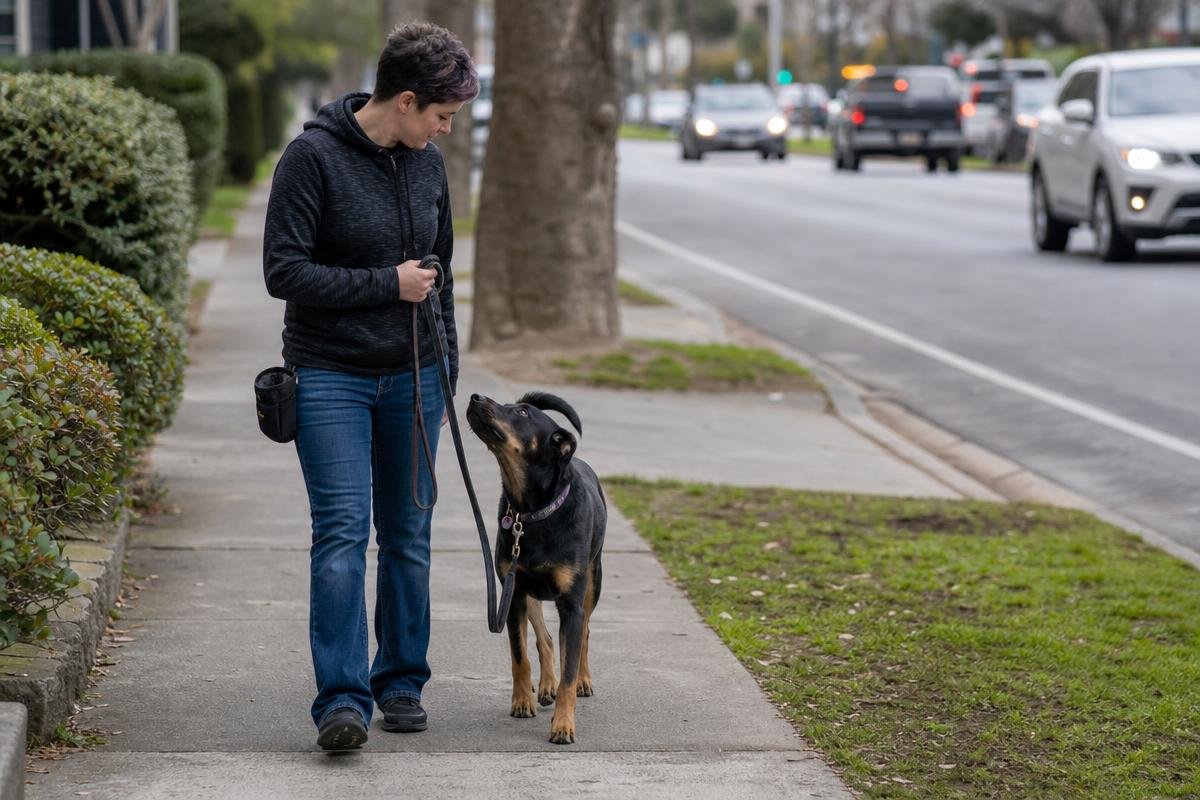
Owner-led training resolves most pulling and distraction issues when applied consistently, but certain behavioral patterns signal that the problem has moved beyond what repetition and patience alone can correct. Recognizing that threshold early prevents the behavior from becoming more deeply ingrained.
When Has Owner-Led Training Reached Its Limit?
Owner-led training has likely reached its limit when leash reactivity escalates over weeks or months rather than diminishing. If your dog cannot maintain a loose-leash position in a low-distraction setting after consistent effort, or if pulling has created a physical safety risk for you or others on shared trails, professional behavioral modification is warranted.
Additional indicators include a dog that redirects frustration onto the handler, aggression directed at cyclists or other dogs along high-traffic corridors, or a dog whose drive level exceeds what standard reward-based methods can regulate. The area’s working-line dogs frequently require structured intervention beyond basic dog walking training tips.
How Our Team Approaches Leash Training
Our trainers assess the specific behavioral pattern before recommending a program. For dogs requiring intensive work, our board and train program in Bossier City delivers accelerated results through structured daily instruction in a controlled environment. For owners who want to build leash skills within their dog’s actual walking environment, in-home dog training in Bossier City addresses real-world distractions directly.
Our work is backed by a written training guarantee and lifetime support, meaning we continue working with you while you work toward reliable trained behaviors until the trained behaviors are reliable. Our facility at 4500 Benton Rd Suite 200, Bossier City, LA 71111 sits minutes from the Bossier City line. With a 4.9-star Google rating across more than 200 reviews, our team has a documented record of resolving the leash challenges that Ark-La-Tex dog owners bring to us.
Leash Training in Bossier City: Local Conditions and Considerations
Generic leash training guides do not account for Northwest Louisiana’s climate or the specific walking environments available across the Ark-La-Tex region. Training your dog here requires adjustments that national resources simply do not address. Two factors shape every session: where you train and when you train.
High-Distraction Walking Routes as a Training Ladder
Loose leash walking must be proofed across progressively more demanding environments. Rushing your dog into high-distraction areas before foundational compliance is established produces frustration, not results. Structure your progression deliberately using the environments available in the area.
- Early stage: Quiet residential streets in Haughton or Elm Grove, where traffic and pedestrian density remain low, give your dog room to focus on you without competing stimuli.
- Intermediate stage: The river trail along the waterfront introduces cyclists, joggers, and wildlife, making it a productive environment for dogs that have mastered the basics at home.
- Advanced stage: The busy commercial corridor near Pierre Bossier Mall, with vehicle traffic, shopping carts, and dense foot traffic, serves as the final proofing environment before your dog can be considered reliably trained in real-world conditions.
For dogs that need structured exposure to these environments with an experienced handler present, our structured dog training programs in Bossier City incorporate real-world application as a core component. Choose a low-traffic early-stage location that suits your dog’s current training level.
Heat, Humidity, and Session Length in Northwest Louisiana
From June through September, temperatures across the region routinely exceed 95 degrees Fahrenheit with sustained high humidity. An overheated dog cannot learn effectively. Physiological stress competes directly with cognitive engagement, making midday sessions counterproductive regardless of technique.
Cap summer sessions at 10 to 15 minutes maximum. Schedule training before 9 a.m. or after 7 p.m., and choose grass or shaded surfaces to protect paw pads from hot pavement, which can reach scalding temperatures on asphalt by mid-morning. If your dog is panting heavily within the first few minutes, end the session.
For owners who want to maintain momentum through summer without risking heat-related setbacks, our board and train program in Bossier City provides climate-controlled, structured daily instruction year-round. Dogs working toward reliable trail behavior should wait until fall temperatures drop before advancing to longer outdoor sessions.
Frequently Asked Questions
How long does it take to train a dog to walk on a leash without pulling?
Most dogs show measurable improvement in loose leash walking within two to four weeks of consistent daily practice. Full reliability across high-distraction environments, busy commercial corridors, crowded parks, and similar settings, typically requires six to twelve weeks. Dogs with established pulling habits require significantly more repetitions than puppies starting fresh.
How do I handle leash training with a large, strong dog?
A properly fitted martingale collar or slip lead, used with correct timing, outperforms a flat collar for high-drive or physically powerful dogs. No-pull harnesses redistribute pressure but do not teach the behavior. Equipment selection should match the dog’s drive level, and our trainers can assess which tool fits your dog’s specific profile.
At what age should I start leash training my puppy?
Leash conditioning can begin as early as eight weeks using short three to five minute sessions. Early introduction prevents pulling habits from forming before the dog develops the physical strength to make pulling a management problem. For structured early instruction, ask a qualified trainer what approach suits your puppy’s developmental stage.
What equipment works best for leash training?
A flat collar suits dogs already demonstrating loose-leash behavior. A front-clip harness can reduce pulling force during the learning phase without correcting the root cause. Training collars, including prong and slip leads, should only be used under the direct guidance of an experienced trainer to avoid reinforcing the wrong behavior.
Can I train an older dog that has been pulling for years?
Behavioral modification is effective regardless of history, but overwriting an established reinforcement pattern requires more repetitions and structured consistency than most owners can deliver in brief daily walks. Our board and train program in Bossier City provides the concentrated daily instruction needed, and every program carries our written training guarantee and lifetime support.
Do you offer leash training classes for Bossier City dog owners?
Our facility at 4500 Benton Rd Suite 200, Bossier City, LA 71111 serves the northwest Louisiana region, including residents across the parish line. Both our board and train and in-home dog training in Bossier City programs address leash behavior as a core component of foundational obedience.
If your dog’s leash behavior has not improved despite consistent effort, or if pulling has become a safety concern, call our team at (318) 562-6536. We offer board and train and in-home options backed by our written training guarantee and lifetime support. The walk you want is possible. Let us show you how to get there.
Ready to Get Started with All Dogs Unleashed Dog Training Bossier City?
Call (318) 562-6536 to speak with our team directly. We’re ready to answer your questions, walk you through your options, and help you find the right solution for your needs. Whether you’re just starting to plan or ready to move forward, we’ll make the process simple and stress-free. Every week of pulling makes the habit harder to reverse. Reach out today and let’s build the calm, controlled walk you want.