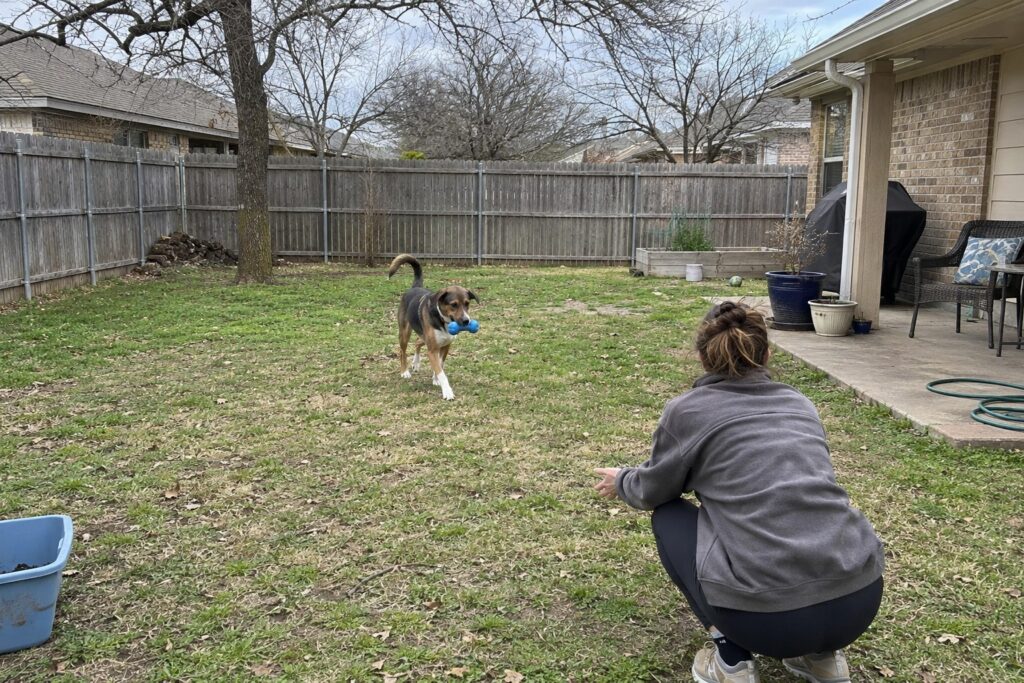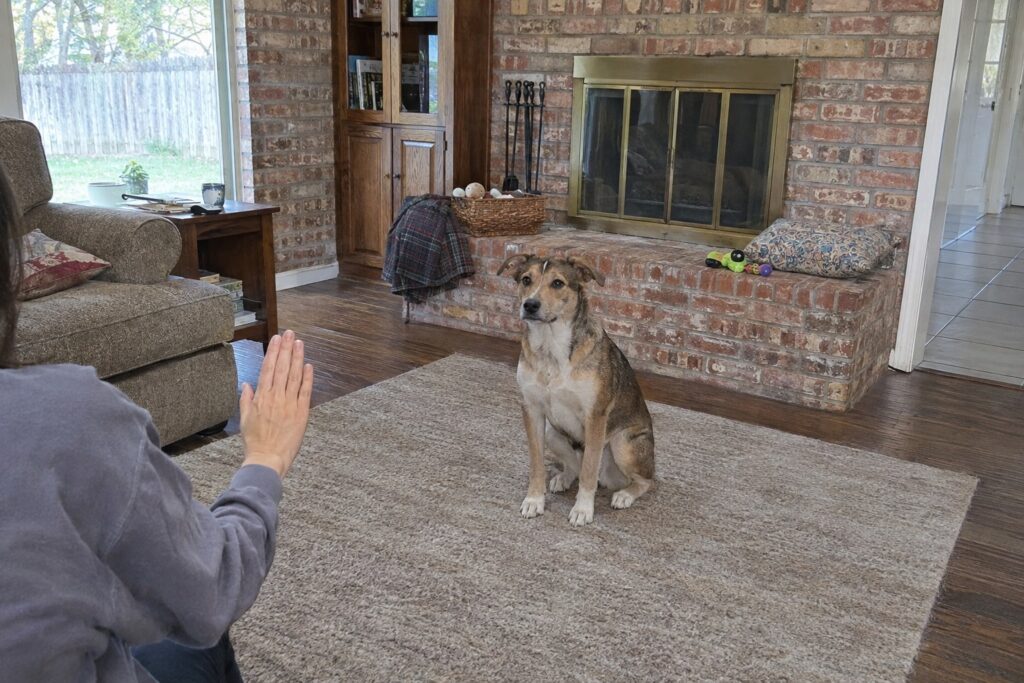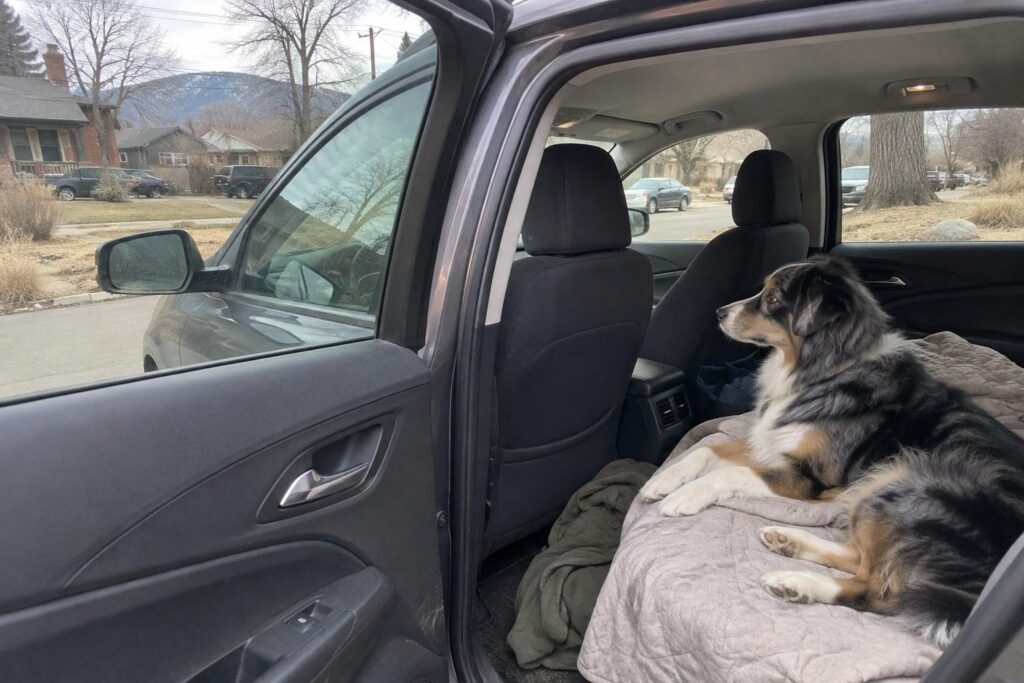

Dog hand signals give you another clear way to ask for a behavior your dog understands. A raised hand can mean sit, a downward movement can mean down, and an open palm can ask your dog to wait. Those gestures are useful around a busy Fort Worth home, but they only work when you teach them consistently instead of assuming your dog knows what a movement means.
At All Dogs Unleashed Dog Training Fort Worth, we help owners build practical communication through everyday obedience. Our two-week Board & Train program develops a foundation that owners continue at home. Visual cues can complement that foundation when they match your dog’s training and your household uses them the same way.
Want clearer communication with your dog? Tell us which everyday situations are causing confusion.
Key Takeaways
- Choose one distinct movement for each behavior and agree on those movements before the whole household starts practicing.
- Teach a gesture in a quiet room first, reward the correct response, and add distractions gradually.
- Food can help introduce a movement, but an empty-hand signal should eventually work without a treat being visible.
- Visual cues need your dog’s attention and a clear line of sight, so they do not replace a leash, a fence, or safe supervision.
- Our two-week Board & Train program and owner transfer sessions can help you develop consistent handling that carries into daily life.
Why a Clear Visual Cue Can Help Your Dog
Dogs notice much more than the words coming out of your mouth. Your shoulders, feet, hands, and position can all become part of the picture they associate with a behavior. If you always lean forward while saying sit, your dog may learn that whole combination rather than the spoken word alone.
Make Your Communication Deliberate
A deliberate gesture takes advantage of that attention to movement. Instead of waving one day and pointing the next, you repeat a recognizable signal. The American Kennel Club explains how body language and hand signals influence training, including how common movements can develop from food lures used to introduce a behavior.
This does not mean that dogs automatically understand human gestures. A new movement still needs a clear connection to a specific action and a reward. Your dog learns through the sequence you repeat, not through the meaning that seems obvious to you.
Keep Spoken Cues Available Too
You may want to ask for a sit quietly while someone is on the phone, or guide your dog into a down without adding more noise to a family gathering. A visual cue can make those moments simpler. A spoken cue remains useful when your dog is looking elsewhere and can hear you.
Teach each cue deliberately if you want it to work on its own. Saying a word and making a gesture together every time does not prove that your dog understands either one separately. Neither form of communication replaces good management when an open door, another animal, or traffic creates a safety risk.
Choosing Dog Hand Signals Your Household Can Repeat
There is no single set of gestures that every family dog must learn. What matters most is that the movements look different from one another, feel comfortable for you, and fit any cues your dog already knows. Ask your trainer before changing signals used in an existing program.
Start With a Small, Useful Set
Choose two or three behaviors that matter in your home rather than introducing a long list at once. Sit and down are practical starting points for a dog that already performs those actions comfortably. Wait or stay can come later, once the underlying behavior and a clear release cue are established.
| Behavior | Possible Visual Cue | Important Detail |
|---|---|---|
| Sit | Move an open hand upward from near your waist | Keep the movement clear without reaching over the dog |
| Down | Move your hand downward toward the floor | Do not use pressure to force the dog into position |
| Stay | Show a still, open palm | Teach duration, distance, and release separately |
| Come | Bring an arm inward toward your body | Practice only in secure spaces or with appropriate leash management |
These are examples, not instructions to replace signals your dog already understands. Avoid using two similar pointing motions for different behaviors. A small change in finger position may be obvious to you but hard for your dog to distinguish from several feet away.
Agree on the Details Before Practicing
Have each adult demonstrate the chosen movements without the dog present. Check the starting position, direction, and endpoint of each gesture. Decide on the spoken cue and the release word too, so one person does not expect the dog to remain seated while another person releases the dog immediately.
Write the choices down in plain language. That short household reference is especially helpful when a sitter or family member joins the routine. Children should practice with adult supervision and should never use training cues to crowd, tease, or repeatedly interrupt a resting dog.
Teaching the Signal Without Creating Confusion
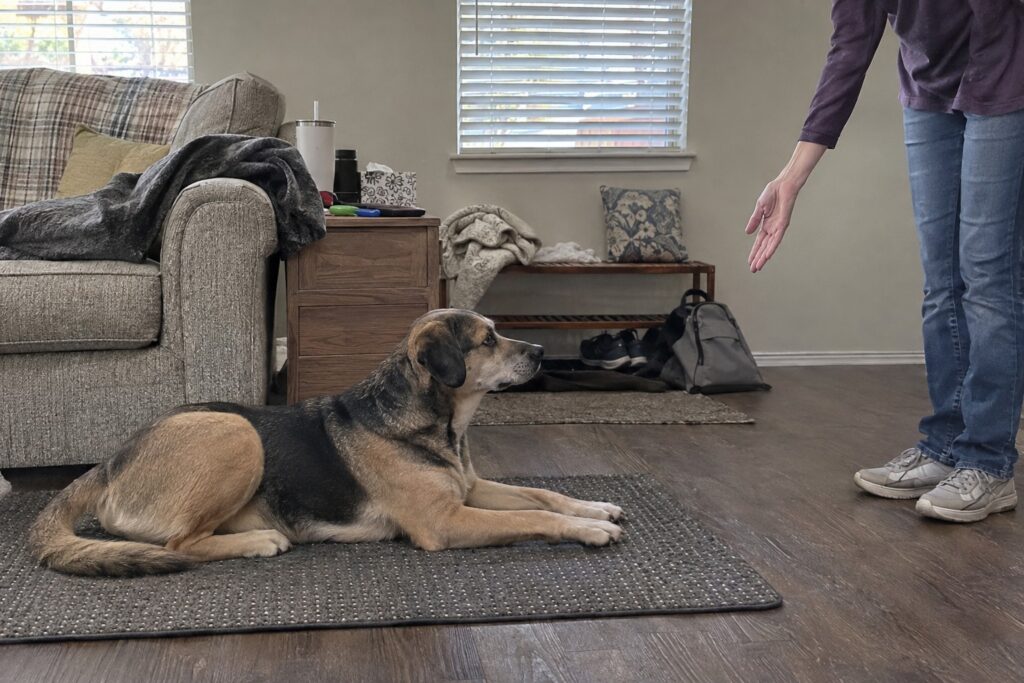
Set up your first practice in a quiet room with enough space for your dog to move comfortably. Use small rewards that fit your dog’s diet and keep them accessible, not permanently displayed in your signaling hand. Several successful repetitions are more useful than a long session that ends in frustration.
Connect the Movement to One Behavior
If your dog already knows sit on a spoken cue, show the new gesture, briefly pause, and then give the familiar word if needed. Mark and reward the sit. Over repeated successful practice, see whether the gesture alone produces the response before adding the word. If not, return to the easier combination rather than making the gesture bigger and faster.
If the behavior itself is new, a food lure can help introduce the movement. Keep it close enough that your dog can follow comfortably, and avoid pushing the head or body. Once your dog follows the movement, practice the same motion with an empty hand and deliver the reward from your other hand or a nearby container.
Reward the Right Moment
Use your familiar reward marker as the requested action happens, then provide the reward. For sit, mark when your dog’s rear reaches the floor, not after the dog has already stood up again. Good timing tells your dog which part of the sequence earned the result.
The AKC’s guidance on verbal cues also emphasizes connecting cues with behaviors the dog can perform successfully. Keep the movement, word, and reward sequence organized. Randomly repeating all three makes it harder to tell what your dog has actually learned.
Check Understanding With an Easy Test
After a few successful sessions, stand in the same position and offer the visual cue once without speaking. Wait briefly. If your dog responds, reward it. If your dog looks puzzled, help with the familiar cue or make the task easier on the next repetition.
Do not turn the test into a standoff. A missed response is information about the training conditions, not proof that your dog is being stubborn. Hunger, fatigue, discomfort, distraction, or an unclear gesture may all change what happens. Finish with something your dog can do comfortably.
Keep a brief record of what worked. Note the room, your distance from the dog, whether a spoken prompt was needed, and how many easy responses you saw. That gives you a practical starting point for the next session instead of relying on a general impression that training went well or badly.
You can also ask another adult to watch a few repetitions or record them for your own review. Look for accidental movements such as reaching into a treat pouch before every cue or stepping backward only when you want a down. Change one unnecessary prompt at a time so the familiar gesture remains understandable.
Need help building that foundation? Our two-week Board & Train program combines daily training with owner transfer sessions so you can practice consistent handling after your dog returns home.
Moving From a Quiet Room to Everyday Life
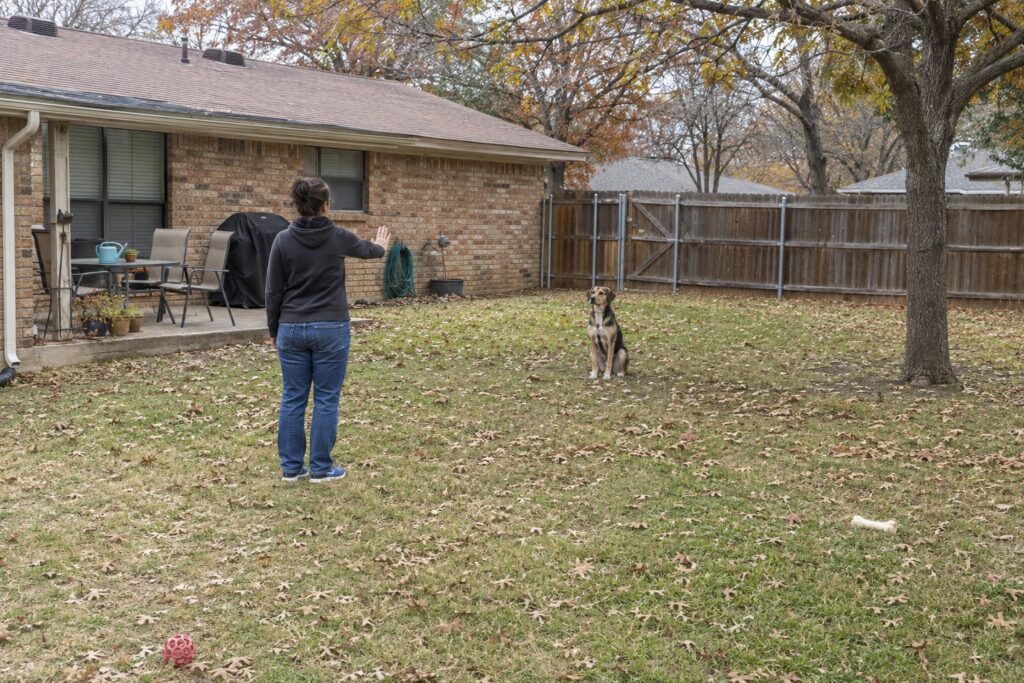
A cue that works beside the kitchen counter may fall apart when a visitor arrives. That does not erase your progress. It means the situation contains new information your dog has not practiced handling yet. Change one part of the exercise at a time so the task remains understandable.
Add Distance in Small Steps
Start close enough that your dog can easily see the gesture. Once the response is dependable there, add a small amount of distance. Keep your shoulders and hands in the same general position so distance is the main thing that changes. Reward success before making the next attempt harder.
Return to a shorter distance if your dog starts guessing or moving toward you instead of performing the behavior. Avoid signaling from behind furniture, through a screen, or with bright light behind your body during early practice. A visual cue must actually be visible to be useful.
Practice Around Manageable Distractions
Next, try a different room, then a quiet enclosed yard if conditions are comfortable. A family member sitting across the room is an easier distraction than someone carrying dinner through the doorway. If your dog cannot disengage from what is happening, increase distance from the distraction and simplify the request.
| Practice Setting | Keep Easy | Add Next |
|---|---|---|
| Quiet living room | Stand nearby and request one familiar behavior | A different starting position |
| Another room | Use the same gesture and reward sequence | A little more distance |
| Secure yard | Choose a quiet moment and maintain supervision | A mild distraction farther away |
| Routine household activity | Ask before activity becomes exciting | Brief duration before a clear release |
Keep Safety Separate From Training Progress
Do not remove a leash because your dog sits when you raise a hand. Do not test a visual recall beside a road or expect a stay to replace a physical barrier at an open gate. Use secure spaces and appropriate equipment while building reliability.
For outdoor practice, our advice on building reliable recall in Fort Worth addresses the broader safety foundation. The visual cue is one part of communication, not a guarantee that your dog will respond in every situation.
Fixing the Most Common Visual Cue Problems
When a signal stops working, look at what changed before assuming your dog forgot everything. Compare the location, your posture, the reward placement, and the amount of activity around you. A small inconsistency can explain a surprising amount of confusion.
Your Dog Only Responds When Food Is Visible
This often means the visible treat is still part of the cue. Practice an empty-hand movement in an easy setting, mark the correct response, and then collect the reward from the other hand or a container. Do not suddenly remove both the visible lure and the reward.
Rewarding a learned action is different from displaying food before your dog will even look at you. Gradually separate those steps. If your dog cannot follow the empty hand yet, make the exercise simpler rather than repeatedly showing and hiding the treat as a challenge.
Your Dog Mixes Up Two Gestures
Check whether the movements really are distinct. A tiny downward point and a tiny forward point may look nearly identical from your dog’s position. Return to one behavior at a time, make the relevant movement consistent, and practice each separately before asking your dog to switch between them.
Also check your feet and torso. If you lean over your dog during down but stand upright during sit, your posture may be doing more of the teaching than your hand. Change unnecessary body movements gradually, not all at once.
Your Dog Stops Responding Suddenly
A sudden change deserves attention, especially if your dog seems uncomfortable moving, startles easily, bumps into objects, or no longer responds to sounds. Talk with your veterinarian about possible pain, hearing changes, or vision changes. Training adjustments cannot diagnose or treat a medical problem.
Older dogs may still enjoy learning when practice fits their comfort and abilities. Our discussion of teaching an older dog new skills offers additional context without treating age alone as a reason to stop training.
When Professional Coaching Makes the Difference
You do not need to teach every cue alone. If your timing feels inconsistent or different family members get different results, a trainer can watch the whole interaction. That includes what happens before the gesture and how the dog is rewarded or released afterward.
Choose Support Around Your Actual Goal
Our in-home training options can help owners work on communication in the setting where it matters. If broader obedience and daily habits need attention, review our Fort Worth training programs and discuss your dog’s current skills with our team.
Board & Train is a fixed two-week program with daily training, an initial evaluation, owner transfer sessions, and written instructions. Guaranteed Training Results and lifetime support apply to that program. Ask which cues your dog will use and how to maintain them, rather than assuming a particular gesture is included automatically.
To discuss your dog’s communication challenges, call (817) 393-6224.
About All Dogs Unleashed Dog Training Fort Worth
All Dogs Unleashed Dog Training Fort Worth helps owners build practical obedience and clearer household routines. Our two-week Board & Train program includes daily training, owner transfer sessions, and written guidance for continuing at home. We also offer private lessons and in-home training options. When you contact us, describe the behaviors your dog already knows and where communication breaks down so we can discuss an appropriate starting point for you and your dog.
Frequently Asked Questions
Are hand signals better than verbal commands for dogs?
Neither is automatically better in every situation. A visual cue can be useful when your dog is watching you, while a spoken cue can help when your dog is looking elsewhere and can hear you. Teach each clearly, check it separately, and keep appropriate safety measures in place regardless of the cue you choose.
What hand signal should I use for sit?
An upward movement of an open hand is one possible choice, but there is no universal requirement for family dogs. Use a movement that feels comfortable and looks different from your other cues. If your dog already has a trained sit signal, keep it consistent or ask your trainer before changing it.
Can I teach an older dog visual cues?
Yes, an older dog can learn new cues when training suits the dog’s comfort and abilities. Keep practice short and use movements the dog can see clearly. If hearing, vision, or mobility has changed, consult your veterinarian and adapt the training plan rather than assuming a missed response is a behavior problem.
Why does my dog only listen when I hold a treat?
The visible food may still be part of the learned cue. In an easy setting, practice the familiar movement with an empty hand, then reward the correct response from your other hand or a container. Keep rewarding learning while gradually removing the need to display food before asking for the behavior.
How long does it take to teach a hand signal?
There is no reliable timeline for every dog. Previous training, the behavior itself, your consistency, and the practice setting all matter. A dog may respond in a quiet room before understanding the same gesture around distractions. Move forward when your dog is succeeding comfortably, and simplify the task when responses become uncertain.
Can hand signals replace a leash during walks?
No. A gesture does not replace appropriate leash use, secure fencing, or supervision. Your dog must be able to see you and respond despite distractions, and even practiced cues can fail. Keep outdoor training in suitable, controlled settings and follow applicable rules rather than using a visual response as permission to remove safety equipment.
Consistent dog hand signals work best as part of clear, patient everyday training. For help choosing a practical starting point, call (817) 393-6224 or reach out online. All Dogs Unleashed Dog Training Fort Worth is located at 4011 Benbrook State Rte, Fort Worth, TX 76116.
Ready to Get Started with All Dogs Unleashed Dog Training Fort Worth?
Tell us what you want your dog to understand more clearly. Call (817) 393-6224 to discuss training options and the next step for your household.