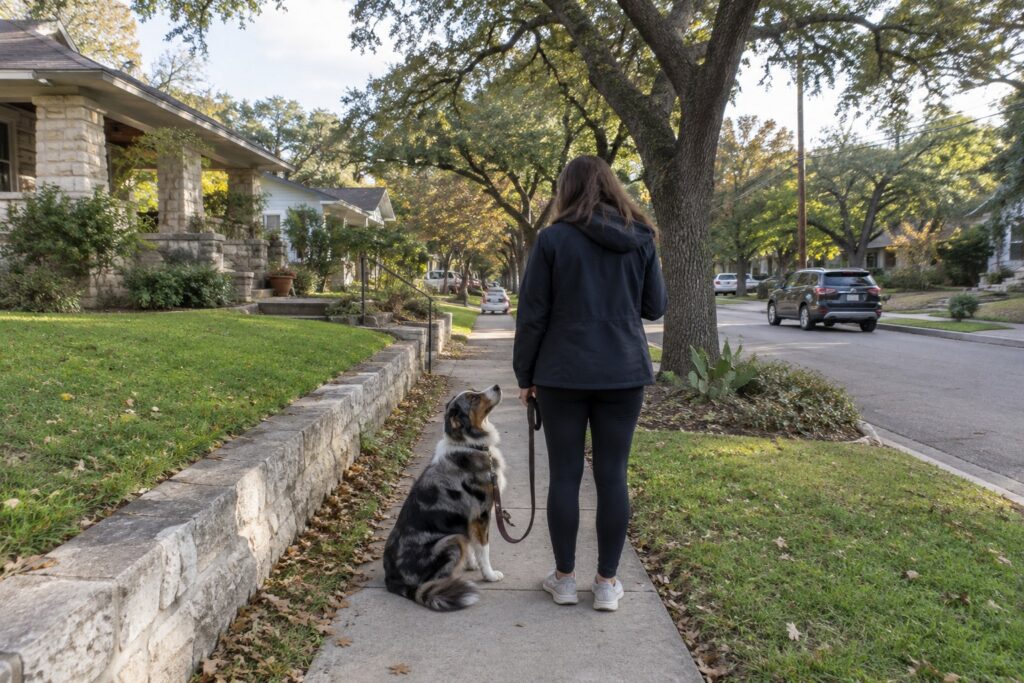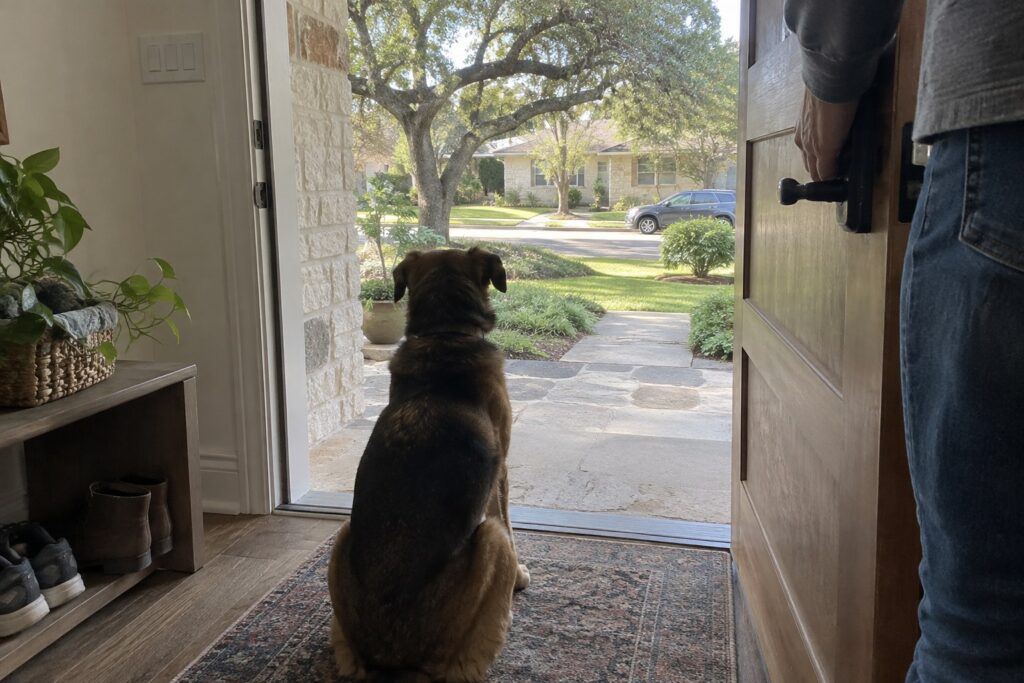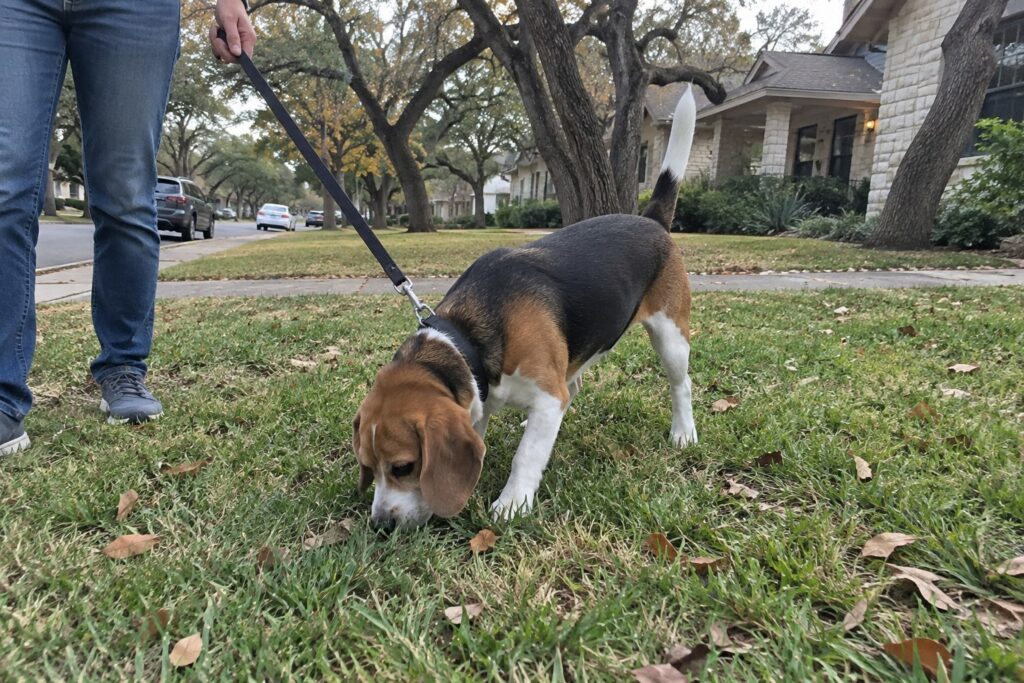

Impulse control for dogs is the skill that separates a dog who bolts out the front door from one who waits for a release word. It is the pause between seeing something exciting and acting on it, and it can be taught through short, fun games you play during your normal day.
At All Dogs Unleashed Dog Training Austin, we work with dogs from downtown apartments to Hill Country homes, and the same pattern shows up again and again. Busy households create constant temptations: doorbells, dropped food, kids running past, and delivery drivers. With trick-or-treaters and Thanksgiving guests on the calendar, now is a smart time to start practicing.
Want a plan built around your dog’s specific habits? Our Austin team can help.
Key Takeaways
- Impulse control is a learned skill, and short daily games of two to five minutes build it faster than occasional long sessions.
- Waiting at doors and food bowls are the two easiest places to start because they happen every single day.
- A clear release word tells your dog exactly when the wait is over, which keeps the game fair and predictable.
- Practice calm greetings with friends before Halloween on Saturday, October 31, and Thanksgiving on Thursday, November 26, 2026.
- If your dog struggles despite consistent practice, our two-week Board and Train program builds these skills with daily professional repetition.
What Impulse Control Really Means for Your Dog
Impulse control is your dog’s ability to choose a calm behavior when every instinct says to grab, jump, or run. A dog with good self-control still feels excitement. The difference is that it has learned that waiting pays off better than lunging.
The American Kennel Club notes that self-control is best trained through games with simple rules. That is good news for busy owners, because games fit into the moments you already have, like feeding time, walks, and opening the door.
Why It Matters More in a Busy Home
Every extra person, schedule, and doorway in a household adds another chance for your dog to make an impulsive choice. A family with kids, roommates, or frequent visitors may open the front door dozens of times a day. Each one is either a training opportunity or a chance for your dog to practice bolting.
Dogs repeat what works. If rushing the door has led to a sniff-fest in the yard before, your dog will try it again. Building patience early prevents those habits from becoming permanent.
Signs Your Dog Needs More Practice
Look for a few common patterns. Your dog may snatch treats from your hand, spin or bark while you prepare dinner, dart through gates, jump on guests, or lunge at squirrels on walks. Reading your dog’s signals helps, too, and our body language guide for Austin dog owners explains what stress and overexcitement look like.
| Everyday Moment | Impulsive Response | Self-Controlled Response |
|---|---|---|
| Front door opens | Bolts outside | Waits until released |
| Food bowl goes down | Dives in before it hits the floor | Sits and waits for the release word |
| Food drops in the kitchen | Grabs it instantly | Responds to “leave it” |
| Guest arrives | Jumps and mouths | Keeps four paws on the floor |
| Squirrel on a walk | Lunges to the end of the leash | Checks back in with you |
Start With a Release Word and a Clear Plan
Before you play any game, pick a release word. Common choices are “okay,” “free,” or “break.” The release word means the wait is over and your dog may move. Without one, your dog has to guess when the rule ends, and guessing leads to breaking position.
Set Your Dog Up to Win
Start in a quiet room with few distractions. Ask for very short waits at first, even one or two seconds, and reward success before your dog has a chance to fail. Then add time, distance, and distraction one at a time. Never raise all three at once.
Keep sessions brief. Two to five minutes, a few times a day, is plenty for most dogs. End while your dog is still succeeding so it finishes every game feeling confident.
Use Rewards Your Dog Actually Wants
Some dogs work happily for kibble. Others need small, soft treats or a favorite toy. The reward for waiting is often the very thing your dog wanted in the first place: going outside, getting dinner, or saying hello. That is what makes these games so effective.
| Training Variable | Easy Level | Harder Level |
|---|---|---|
| Duration | 1 to 2 seconds | 30 seconds or more |
| Distance | You stand next to your dog | You step across the room |
| Distraction | Quiet room | Doorbell, guests, or food on the floor |
| Location | Living room | Front porch or a busy trail |
Five Simple Games That Build Impulse Control for Dogs
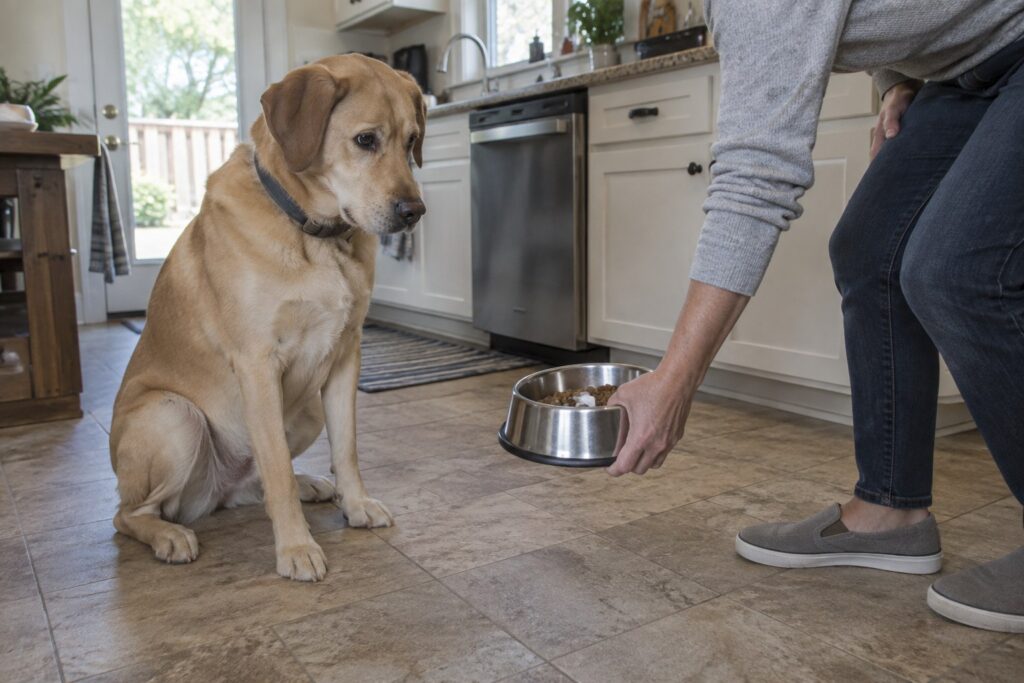
These games use everyday routines, so you do not need special equipment. Practice each one until your dog succeeds about eight times out of ten, then make it slightly harder.
Game 1: The Doorway Wait
Put your dog on a leash and walk to the front door. Ask for a “sit” or simply stand still. Reach for the handle. If your dog stands up or moves forward, take your hand away. When your dog stays put, open the door an inch. If they hold, close it, reward, and repeat.
Slowly work up to a fully open door, then step through yourself before giving the release word. Keep the leash on throughout for safety, especially near a street. This game is the foundation for a dog who does not slip out when trick-or-treaters ring the bell.
Game 2: The Bowl Wait
Hold your dog’s food bowl at chest height and ask for a “wait.” Lower it a few inches. If your dog moves toward it, lift it back up. If they stay, keep lowering. Once the bowl reaches the floor and your dog is still waiting, give the release word and let them eat.
Because dogs eat once or twice a day, this game gives you built-in practice. Over a few weeks, most dogs start offering a calm sit as soon as they see the bowl.
Game 3: It’s Yer Choice
Hold a few treats in a closed fist and let your dog sniff, lick, or paw. Do not say anything. The moment your dog backs off, even briefly, open your hand and give them a treat from the other hand. Repeat until your dog learns that moving away is what opens the hand.
Next, try it with your hand open, closing it if your dog dives in. Finally, place a treat on the floor and cover it with your foot as needed. This game builds the self-control behind a reliable “leave it.”
Game 4: Red Light, Green Light
Walk with your dog on a loose leash. Say “green light” and move forward. Say “red light” and stop. Reward your dog for stopping and staying near you. Mix up the timing so your dog has to pay attention to you rather than charge ahead.
This game pairs well with leash work. If pulling is a bigger issue, read our tips on why dogs pull on the leash and how to stop it.
Game 5: Toy Freeze
Play tug or fetch for a few seconds, then stop moving and hold the toy still. Wait for your dog to let go and settle. The instant they do, say your release word and restart the game. Your dog learns that calming down is what brings the fun back.
Toy Freeze is especially useful for high-energy dogs who struggle to shift from excited to calm. It teaches an off switch you will be glad to have when guests are over.
Want help putting these skills together with professional, daily practice? Our two-week Board and Train program builds obedience and self-control through consistent repetition.
Teaching “Leave It” and “Wait” for Real Life
Games build the foundation, but “leave it” and “wait” are the cues that keep your dog safe in daily life. “Leave it” means do not touch that item. “Wait” means pause right here until I release you. They sound similar, but they solve different problems.
Building a Reliable “Leave It”
Once your dog understands It’s Yer Choice, add the words “leave it” just before you present the closed fist. Gradually practice with treats on the floor, then with less valuable items like a sock, and finally with tempting items on walks. Always reward with something better than the item your dog left alone.
Never chase your dog to get something back. That turns the item into a game of keep-away. Instead, practice trades: offer a treat, and when your dog drops the item, praise and reward.
Using “Wait” Around the House
Use “wait” at the car door, at the top of the stairs, at gates, and before getting out of the crate. Each of these moments adds a little practice without extra time. The more places you use it, the better your dog understands that the cue means the same thing everywhere.
Practicing Around Austin
Once your dog is reliable at home, take the skills on the road. A loop on the Ann and Roy Butler Hike and Bike Trail around Lady Bird Lake offers joggers, cyclists, and other dogs to practice around. Start at quieter times, keep your dog leashed, and bring water. Austin often stays warm well into fall, so plan outings for cooler mornings or evenings. For more spots, see our list of hiking trails and outdoor activities for dogs in Austin.
Calm Greetings Before Halloween and Thanksgiving
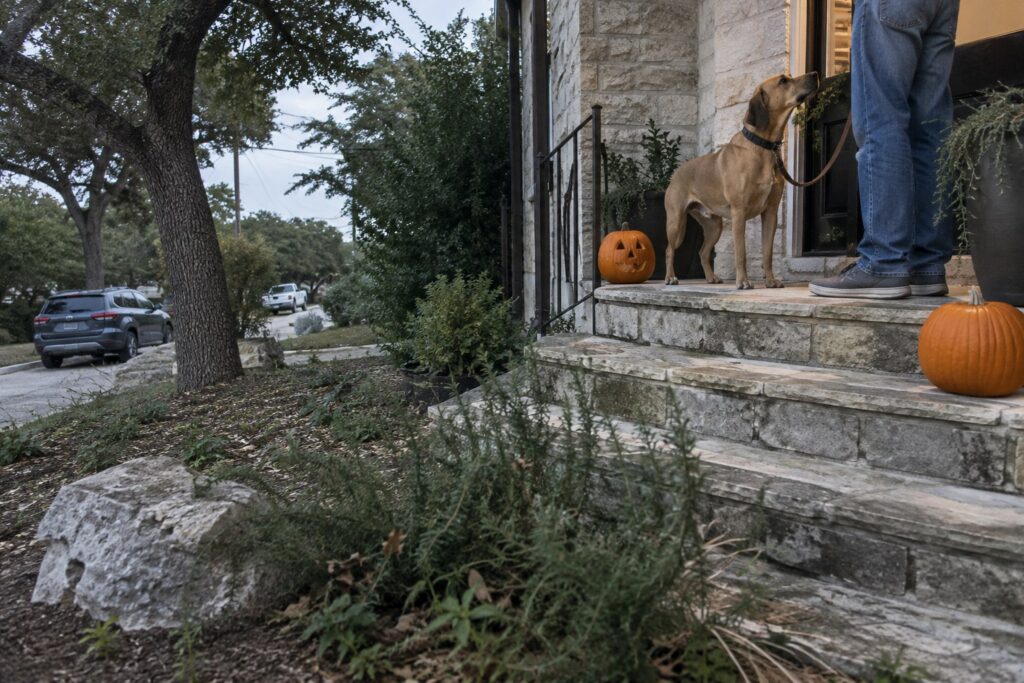
The holiday season puts impulse control to the test. Halloween falls on Saturday, October 31, 2026, which means a weekend evening of doorbells, costumes, and excited kids. Thanksgiving lands on Thursday, November 26, bringing guests, kitchen smells, and plates of food at nose height.
Practice Greetings With a Helper
Ask a friend or neighbor to help with a few practice runs. Keep your dog on a leash. Have your helper approach, and if your dog jumps or pulls, your helper turns away. When your dog keeps four paws on the floor, your helper calmly says hello. Short, repeated arrivals teach your dog that calm behavior earns attention.
Plan for Trick-or-Treaters
Even a well-practiced dog may find a stream of costumed visitors overwhelming. The ASPCA recommends keeping pets away from the front door on Halloween and storing candy out of reach, since chocolate and xylitol can be dangerous for dogs. A crate or closed room with a chew toy is a kind choice for dogs who are nervous or still learning. If your dog eats something toxic, call your veterinarian right away.
Thanksgiving Kitchen Manners
The kitchen is where “leave it” earns its keep. Practice with dropped carrots or bread in the weeks before the holiday. On the day, give your dog a mat or crate away from the cooking, and remind guests not to share scraps. The ASPCA warns that cooked bones and fatty table food can upset or injure dogs, so keep the turkey carcass in a secured trash can.
| Holiday Challenge | Skill to Practice | Management Backup |
|---|---|---|
| Doorbell and costumes | Doorway wait, calm greeting | Crate or quiet room |
| Candy bowls | “Leave it” | Store candy up high |
| Kitchen counters | “Leave it,” mat time | Baby gate at the kitchen |
| Guests at the table | “Wait,” Toy Freeze | Chew toy in another room |
Common Mistakes That Slow Progress
Most setbacks come from the same handful of habits. Fixing them often speeds up progress more than adding new games.
Moving Too Fast
If your dog breaks position over and over, the game is too hard. Go back to the last level where your dog succeeded and build again in smaller steps. Success is what teaches, not repeated failure.
Inconsistent Rules
If one person makes the dog wait at the door and another lets them rush out, your dog learns that the rule only sometimes applies. Agree on cues and release words as a household. Our post on building consistency that gets real results covers how to get everyone on the same page.
Skipping Exercise and Enrichment
A dog with pent-up energy has a harder time staying calm. Daily walks, sniffing time, and puzzle feeders help your dog arrive at training sessions ready to think. Self-control games work best alongside a healthy routine, not instead of one.
Ignoring Underlying Issues
Sometimes what looks like impatience is actually fear, anxiety, or discomfort. If your dog’s behavior changes suddenly or seems tied to pain, talk with your veterinarian first. Fearful dogs need a different approach than simply excited ones.
When to Bring in Professional Help
Many owners make good progress with daily games. Still, some dogs have years of rehearsed habits, and some households simply do not have the time for the repetition needed. That is where structured training helps.
Board and Train for Faster Results
Our two-week Board and Train program places your dog in a supervised residential setting with daily, structured sessions. Every enrollment starts with an evaluation, and the program ends with a turnover session where you learn how to handle your dog and keep the skills going at home. Board and Train is backed by guaranteed results and lifetime support at no additional charge.
In-Home Lessons for Your Specific Doorways
If you prefer to train together at home, private in-home dog training lets a trainer work in the exact spaces where problems happen: your front door, your kitchen, and your yard. You can compare options on our dog training programs page. Ready to talk through your dog’s habits before the holidays? Call our Austin team at (512) 963-6017.
About All Dogs Unleashed Dog Training Austin
All Dogs Unleashed Dog Training Austin helps Central Texas dog owners raise calm, well-mannered companions. Our two-week Board and Train program builds obedience and self-control through daily structured practice, finishes with a turnover session so you can maintain the results, and is backed by guaranteed results and lifetime support. We also offer private in-home lessons, refresh training, and boarding. From door manners to calm greetings, we help your dog make better choices in a busy household.
Frequently Asked Questions
How do I teach my dog impulse control?
Start with short games built into daily routines, such as waiting at the door and waiting for the food bowl. Choose a release word, ask for very brief waits, and reward success before your dog breaks. Increase duration, distance, and distraction one at a time. Practice a few minutes several times a day and stay consistent across your household.
At what age can a puppy start learning impulse control?
Puppies can start simple self-control games as soon as they come home. Keep sessions very short, around one to two minutes, and use easy wins like sitting before the food bowl goes down. Young puppies have short attention spans, so expect gradual progress. Early practice builds habits that make later obedience training much smoother for you both.
How long does it take to improve a dog’s impulse control?
It depends on your dog’s age, energy, history, and how often you practice. Many dogs show noticeable progress at the door and food bowl within a few weeks of daily games. Habits that have been rehearsed for years usually take longer to change. Consistency matters more than session length, so short, regular practice works best for most dogs.
What is the difference between “wait” and “stay”?
Many trainers use “wait” for a brief pause before something happens, such as walking through a door, and the dog may move afterward on a release word. “Stay” usually means holding a position until you return to your dog. The exact meaning matters less than using each cue the same way every time, so everyone in your home stays consistent.
How can I keep my dog calm when guests arrive for the holidays?
Practice greetings with a helper in the weeks before the holiday, keep your dog leashed when the door opens, and reward four paws on the floor. Have guests ignore jumping and greet calmly. Give your dog a crate or quiet room with a chew toy during busy moments, such as trick-or-treating or dinner, so they can rest instead of getting overwhelmed.
Can Board and Train help with impulse control problems?
Yes. Our two-week Board and Train program addresses obedience and behavior through daily, structured sessions in a supervised setting. Skills like waiting, “leave it,” and calm greetings get repeated practice with real distractions. At the end, a turnover session shows you how to keep the results going at home, and the program includes guaranteed results and lifetime support.
Building impulse control for dogs does not require hours of drills. A few minutes of door waits, bowl waits, and “leave it” practice each day can change how your dog handles a busy home and the holiday rush. If you want expert support, call our Congress Ave team at (512) 963-6017 or reach out online, or visit us at 111 Congress Ave. #201 in downtown Austin or at 3704 Mountain View Ave, where you can reach the team directly at (512) 253-8819.
Ready to Get Started with All Dogs Unleashed Dog Training Austin?
Give your dog the self-control they need for a calmer home and a smoother holiday season. Call our Austin team at (512) 963-6017 (Congress Ave) or (512) 253-8819 (Mountain View Ave) to talk about Board and Train, in-home lessons, or refresh training.