
Puppies bite. It is one of the most consistent and universal facts of early puppyhood, and it is one of the first things new Austin dog owners discover after the initial excitement of bringing a puppy home fades. Those small, needle-sharp teeth find fingers, ankles, pants legs, furniture, and sometimes faces with the kind of frequency and intensity that can make new owners question their decision.
The reassuring truth is that puppy biting is developmentally normal. The concerning truth is that it must be addressed deliberately and early. Puppy biting that is not consistently redirected, shaped, and ultimately extinguished becomes increasingly problematic as the puppy grows. A seven-pound puppy’s bite barely breaks the skin. A sixty-pound adolescent dog’s bite is a significantly different situation.
At All Dogs Unleashed, we help Austin dog owners understand why puppies bite and how to respond in ways that shape the behavior toward appropriate play and communication rather than allowing it to escalate into a harder-to-modify pattern.
Why Puppies Bite: The Developmental Context
Puppies explore the world primarily through their mouths. In their early weeks with their littermates, they learn the concept of bite inhibition, the ability to control the force of their bite, through play. When a puppy bites a littermate too hard, the other puppy yelps and stops playing. The biting puppy learns that too much pressure ends the game. Over many repetitions, puppies learn to moderate bite pressure in social play.
When puppies leave their litters between 8 and 12 weeks old, they bring this bite-testing behavior with them into their new human households. They are not being aggressive. They are interacting with their new family using the only communication tool they know. But because human skin is dramatically more sensitive than puppy fur, and because human family members do not respond with the same clear, consistent signal that a littermate would, the lesson often does not transfer on its own.
Additional reasons puppies bite include:
- Teething: From approximately 3 to 7 months old, puppies are losing baby teeth and growing permanent teeth. Chewing and biting relieve the discomfort of gum pressure during this period.
- Overstimulation: Puppies that become overly excited or overtired during play sessions often shift into a frantic, mouthy state. Recognizing this and ending the play session before it escalates is a critical management skill.
- Attention seeking: Puppies that have learned that biting produces a response from their owners, even a negative response like yelping or pulling away, may bite as a deliberate attention-seeking strategy.
- Predatory play instinct: Movement triggers the prey drive in young dogs, which is why ankles and moving hands are frequent bite targets.
The Problem With Letting It Continue
Many Austin dog owners report that they thought their puppy would “grow out of it” without intervention. This is the most common mistake made during early puppyhood and one of the most costly in the long run.
Puppies that continue biting without consistent redirection learn that biting is an acceptable interaction with humans. As they enter adolescence, between 6 and 18 months, their bite pressure increases, their energy levels rise, and their independence grows. A biting behavior that was tolerable at 10 pounds becomes genuinely hazardous at 40 or 60 pounds. Adolescent dogs that bite in play are also much more likely to bite out of frustration, overstimulation, or fear, because they have not learned reliable bite inhibition or impulse control around humans.
The behavioral pattern also has social consequences. Dogs that cannot interact appropriately with humans without mouthing are limited in the environments they can safely participate in: family gatherings, interactions with children, grooming appointments, and veterinary handling all become more challenging for dogs that have not learned appropriate mouth manners.
Effective Strategies for Addressing Puppy Biting Early
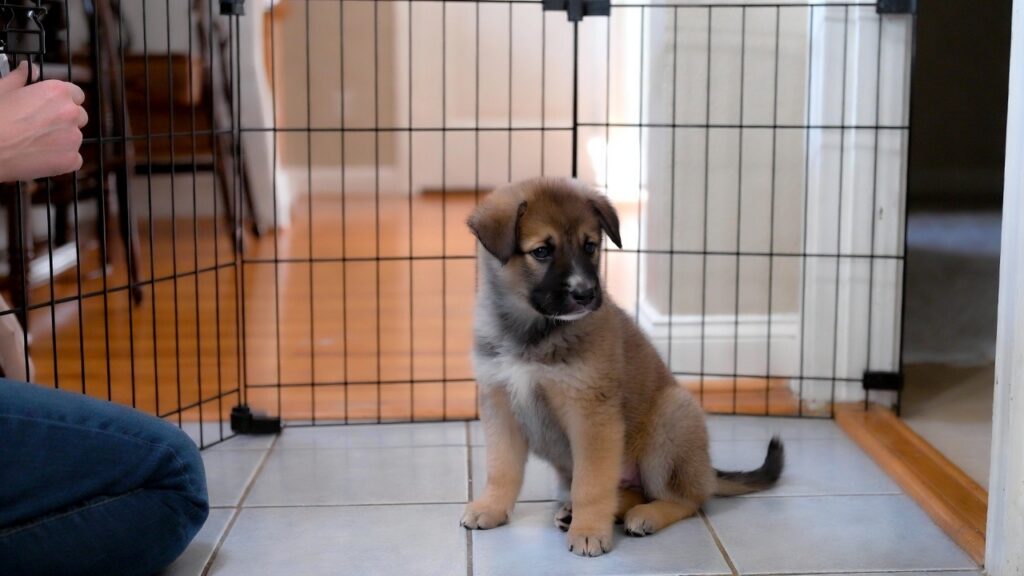
The goal is not simply to stop all mouthing, though that is the ultimate outcome. The intermediate goal is bite inhibition: teaching the puppy to control the pressure of its mouth and eventually to redirect its biting energy entirely to appropriate chew items. These strategies work in sequence.
- Immediate consequence for hard bites: When a puppy bites too hard, a sharp yelp or a firm “ouch” followed by immediately stopping all interaction and turning away communicates the same signal a littermate would give. Do not yell, shake the puppy, or push it away physically, as these responses often increase arousal rather than reducing it.
- Time-out for persistent biting: If yelping and withdrawing does not reduce biting within two to three attempts, a brief time-out of 30-60 seconds in a puppy-safe area teaches the puppy that biting ends the social interaction. Time-outs should be immediate, calm, and consistent rather than emotional.
- Redirect to appropriate chew items: Always have appropriate chew toys accessible during play sessions. When the puppy begins to mouth your hand, redirect immediately to the toy. Praise and encourage interaction with the toy to make it more rewarding than the human hand.
- Manage arousal levels: Schedule play sessions during calmer times of day and end sessions before the puppy becomes overstimulated. Overstimulated puppies are far more likely to bite hard and less able to respond to redirection. Learning to read your puppy’s arousal signals and intervene before they peak is one of the most impactful early skills an Austin puppy owner can develop.
- Teach “leave it” and “off” early: These commands give you verbal tools to interrupt biting before it escalates. “Off” asks the puppy to take its mouth off your body or clothing. “Leave it” addresses objects and approaching behaviors. Both are foundational commands that pay dividends in multiple contexts beyond biting.
- Consistent rules from all household members: Puppy biting is addressed or worsened by consistency. If some family members allow mouthing during play while others correct it, the puppy cannot learn a clear rule. Ensuring everyone in the household responds to biting the same way is non-negotiable for making meaningful progress.
- Appropriate socialization and play with other dogs: Continued exposure to appropriately vaccinated, well-mannered dogs during puppyhood reinforces bite inhibition through peer interaction. Dog daycare at All Dogs Unleashed Austin provides structured socialization in a supervised environment with trained staff managing interactions.
When to Bring In Professional Guidance
Most puppy biting is a developmental behavior that resolves with consistent owner management. However, several patterns warrant professional assessment earlier rather than later:
- Biting that is accompanied by growling, stiff body posture, or fixed eye contact during play interactions. These signals suggest the biting may have a fear or resource-guarding component that requires professional evaluation.
- Biting that is not decreasing in frequency or intensity despite consistent application of the strategies above for several weeks.
- Biting that is hard enough to break skin regularly or that is directed at children.
- Biting that is occurring during handling, grooming, or feeding, rather than just during play.
All Dogs Unleashed offers in-home dog training in Austin that brings a professional trainer to your home to observe the puppy’s actual biting behavior in context, assess the triggers, and build a customized modification plan. Early professional intervention with puppy biting is one of the highest-return investments an Austin dog owner can make.
For puppies that would benefit from an intensive early foundation, our board and train program delivers comprehensive puppy obedience training including bite inhibition, impulse control, and basic commands in an immersive environment.
What Not to Do When Addressing Puppy Biting
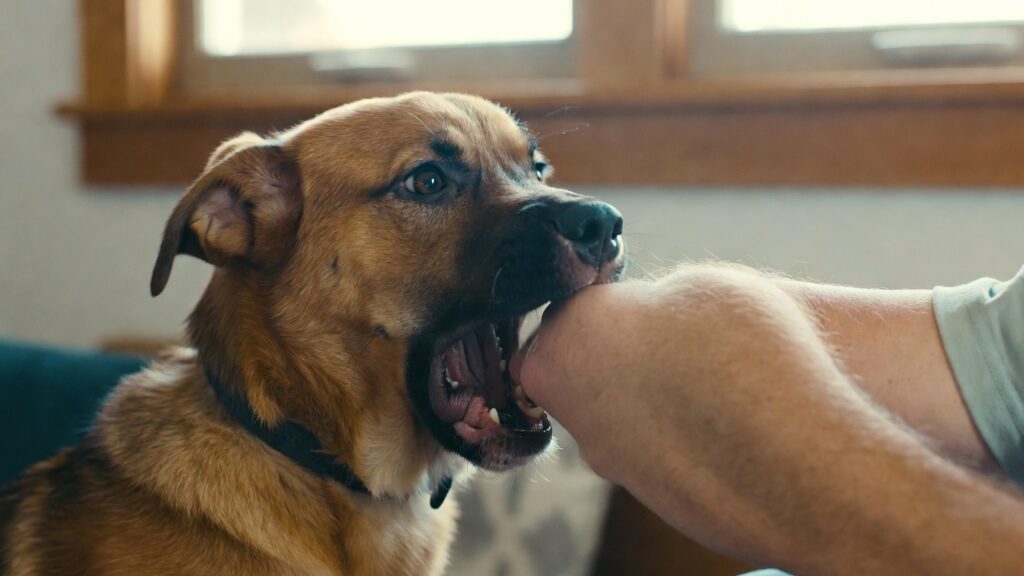
A few approaches are commonly attempted and consistently counterproductive:
- Physical corrections such as tapping or squeezing the snout: These often increase the puppy’s arousal or defensive responses and can contribute to fear-based aggression rather than reducing biting.
- Allowing children to play rough with puppies: Rough physical play with children escalates puppy arousal rapidly, and children are less able to apply consistent redirection. Supervised, calm interaction between children and puppies is the appropriate format.
- Using hands as toys: Never use your hands as play objects, even in play with young puppies. This teaches the puppy that hands are legitimate targets for biting, a lesson that is very difficult to unlearn.
- Waiting to address it: The belief that puppies will simply mature out of biting without consistent intervention is the single most common mistake made in early puppyhood. Early, consistent intervention is significantly more effective than intervention attempted after the behavior has been practiced and reinforced for months.
Start Your Austin Puppy on the Right Path in 2026
Puppy biting is one of the most universal early challenges, and it is completely manageable when addressed early and consistently. The habits established in the first several months of a puppy’s life in Austin form the behavioral foundation everything else is built on.
All Dogs Unleashed is ready to help your Austin puppy develop excellent bite inhibition, impulse control, and the early obedience skills that make every stage of puppyhood easier. Call (512) 963-6017 to schedule a consultation and give your puppy the best possible start.
Frequently Asked Questions
Is my puppy’s biting normal or aggressive?
Most puppy biting is developmental and not aggressive. True aggression involves hard bites paired with growling, stiffening, or fixed staring during interactions that are not play-initiated. If you are uncertain, a professional assessment from All Dogs Unleashed will give you a clear answer and appropriate guidance.
How long does it take to stop puppy biting?
With consistent application of the strategies above, most puppies show meaningful improvement within 4-6 weeks. Complete resolution typically occurs by 4-5 months of age for most dogs, though the teething period (3-7 months) will involve some increase in chewing drive even as social biting decreases.
My puppy bites my kids. What should I do?
Manage all interactions between children and the puppy carefully until biting is under control. Children should never run from or shriek at a biting puppy, as both responses increase arousal. Supervise all child-puppy play sessions and intervene immediately if biting begins. Teaching children to stand still and “be a tree” when the puppy bites is a useful short-term management strategy. Consider working with a professional trainer to create clear protocols for child-puppy interactions.
Does neutering or spaying affect puppy biting?
Hormones can influence adolescent arousal and some impulse-control behaviors, but neutering or spaying is not a reliable solution for puppy biting. Behavioral modification and early training are the appropriate interventions.
Should I let my puppy mouth me gently?
This is a judgment call based on your household and preferences. Allowing gentle, non-pressured mouthing, often called “soft mouthing,” can be appropriate as part of a controlled bite inhibition progression. However, many trainers recommend against any mouthing on humans to avoid confusion about what is acceptable. Consistency is more important than the specific rule chosen, as long as the rule is applied uniformly.
Can old puppies be trained not to bite?
Yes. Adolescent and adult dogs can absolutely learn to stop mouthing and biting with appropriate training. Addressing the behavior earlier is easier and faster, but professional training is effective at any age. Contact All Dogs Unleashed if you are dealing with biting in an older puppy or young adult dog.
About All Dogs Unleashed
All Dogs Unleashed is a professional dog training company located at 111 Congress Ave. #201, Austin, TX 78701 serving the Austin, TX area. We offer a full range of services including dog boarding, daycare, grooming, in-home training, and structured board and train programs.
Business Name: All Dogs Unleashed
Address: 111 Congress Ave. #201, Austin, TX 78701
Phone: (512) 963-6017
Website: https://alldogsunleashed.com/austin/