
Dogs communicate constantly. They use their bodies to express fear, excitement, confidence, discomfort, and everything in between. The challenge is that most people miss these signals entirely, or misread them until a behavior problem or a bite forces the issue. For Austin dog owners, learning to interpret your dog’s body language is one of the most practical skills you can develop, and it makes daily life noticeably better for both of you.
Whether you are navigating the paths along Barton Creek Greenbelt, visiting a dog-friendly patio on South Congress, or simply hanging out at home in Hyde Park, your dog is always talking to you. Here is how to start listening.
Why Body Language Matters
Dogs did not evolve to communicate through words. Their primary language is physical. Posture, ear position, tail movement, eye contact, and facial tension all carry meaning. When you learn to read these signals accurately, you gain insight into your dog’s emotional state in real time, before a behavior escalates into something harder to manage.
Misreading body language is a common source of conflict between dogs and their owners. A dog that is crouched low and panting may look relaxed to an untrained eye, but those same signals together often indicate stress. A dog showing teeth is sometimes playing and sometimes issuing a serious warning. Context and combination of signals matter far more than any single cue in isolation.
Relaxed and Comfortable Body Language
A relaxed dog is easy to spot once you know the signs. The body is loose and slightly wiggly. The mouth is open with a relaxed jaw. The tail hangs naturally or wags in a broad, sweeping motion. Ears are in their neutral position, which varies by breed. Eyes are soft and slightly squinted, not wide or hard.
A dog in this state is comfortable with its surroundings and the people nearby. This is the baseline you are aiming for in most situations, whether you are introducing your dog to a new person, arriving at a dog park, or starting a training session.
Signs of Stress and Anxiety
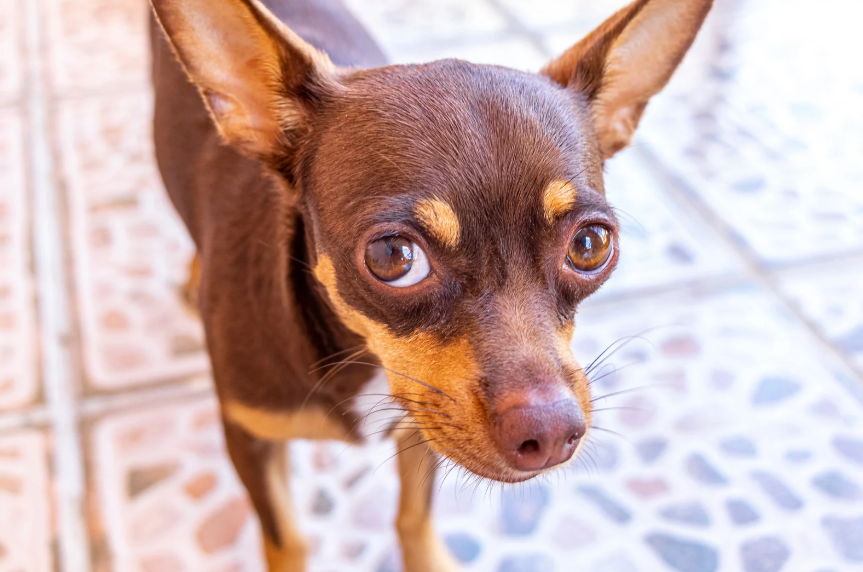
Stress signals are often subtle and easy to overlook. Austin’s summers are intense, and heat stress alone can mimic or amplify anxiety-related signals. Common indicators your dog is feeling stressed include:
- Yawning outside of a sleep context
- Lip licking when no food is present
- Turning the head or body away
- Whale eye (whites of the eyes visible)
- Panting without physical exertion
- Tucked tail or low body posture
- Raised hackles along the back
These are known as calming signals, a term coined by Norwegian trainer Turid Rugaas. Dogs use them to de-escalate tension in themselves and with others. Recognizing them allows you to intervene early, before stress tips into fear or aggression.
Fearful Body Language
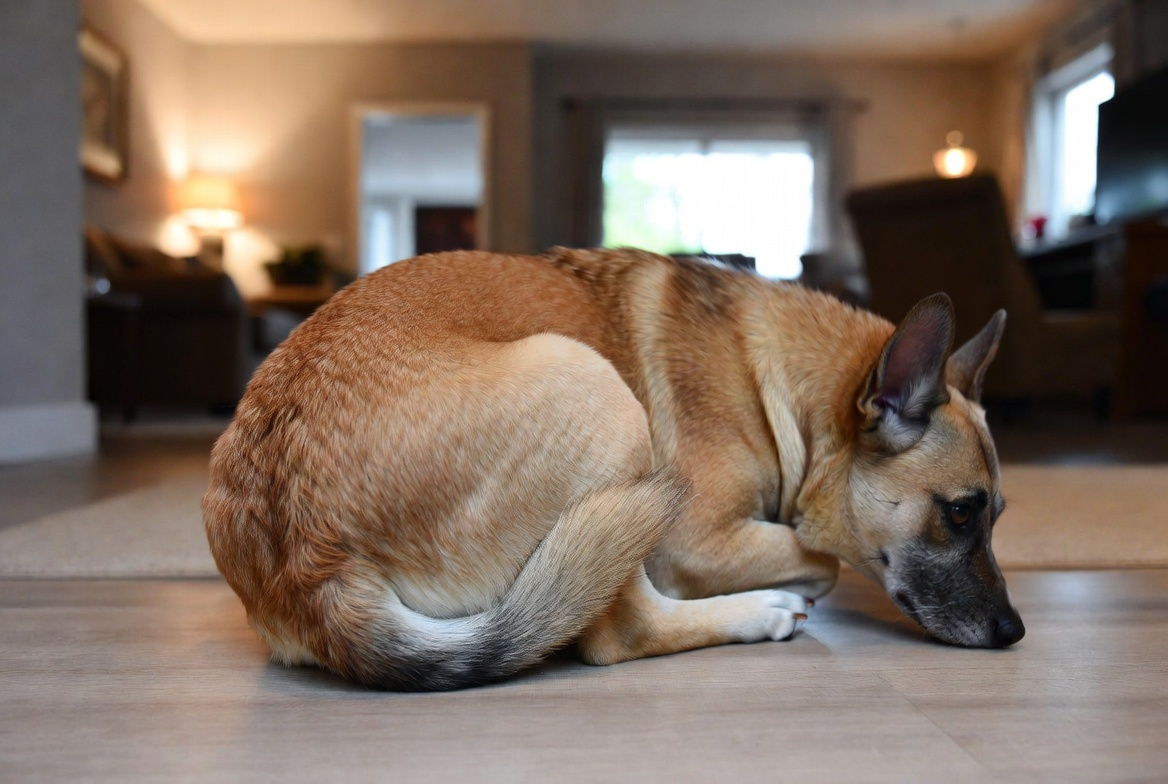
Fear looks different from stress in degree rather than kind. A fearful dog is trying to create distance or avoid a perceived threat. Common fear signals include:
- Body low to the ground or cowering
- Tail tucked between the legs
- Ears flat against the head
- Piloerection (raised hackles)
- Trembling or shaking
- Attempting to hide or escape
It is important to note that fear can shift to aggression quickly. A dog that feels trapped with no escape route will often turn to defensive biting. Giving a fearful dog space, avoiding forced interactions, and working with a qualified trainer is the safest response when fear responses are frequent or severe.
Confident and Alert Body Language
A confident dog stands tall with weight distributed forward. The head is raised, ears are forward or pricked, and the tail is held high, sometimes stiff rather than wagging loosely. Direct eye contact is maintained. This posture is not the same as aggression, but it does indicate arousal and attentiveness.
In neutral contexts like spotting a squirrel or watching a person approach, this is normal. In social situations with other dogs or people, it is worth watching how quickly that alertness resolves. A dog that stays locked in a stiff, forward posture during a greeting is a dog under social pressure, even if it looks confident.
Playful Body Language
Play signals are one of the most recognizable forms of dog body language. The classic play bow, front legs stretched forward and rear end in the air, is a clear invitation to engage. Other play signals include bouncy, exaggerated movement, loose wiggly body, high-pitched vocalizations, and taking turns chasing and being chased.
Play can sometimes escalate into overstimulation, especially at dog parks or in multi-dog households. Watch for moments when one dog is consistently pinning, chasing without reciprocation, or when play stops looking equal. Brief pauses and check-ins between dogs are a healthy sign. Non-stop intensity without natural breaks is a reason to intervene.
Body Language During Boarding and Grooming
Reading body language is especially useful when your dog experiences new or unfamiliar environments. At a grooming appointment, for example, a dog that is panting, lip-licking, and refusing to stay still is not just being difficult. It is communicating genuine discomfort. Understanding this helps you communicate more effectively with groomers and prepare your dog in advance through desensitization.
Similarly, when your dog goes to a boarding facility for the first time, they may display a mix of stress and excitement signals in the initial transition. A good boarding facility will be attentive to those signals and adjust their approach accordingly. If your Austin dog needs grooming or boarding services from staff who understand canine behavior, All Dogs Unleashed Austin offers both with trained, attentive care.
How Training Improves Communication
Training is not just about obedience. It is about building a shared language between you and your dog. A dog that has been through structured training has learned how to offer behaviors and how to read cues from you. You, in turn, have spent time observing your dog closely enough to know what motivates them and when they are ready to engage.
Austin dog owners who invest in professional training consistently report that the biggest change is not in their dog’s behavior alone. It is in how well they understand each other. When you know what your dog is communicating, you can respond more clearly and consistently, which reduces frustration on both sides.
Frequently Asked Questions
What does a dog’s tail position communicate?
Tail position varies in meaning depending on height and movement. A high, stiff tail indicates alertness or arousal. A low or tucked tail signals fear or submission. A loose, mid-height wag typically indicates friendliness. A tail wagging more to the right is often associated with positive emotions, while a left-leaning wag may indicate caution or uncertainty.
What is the difference between a dog that is excited and one that is anxious?
Excitement and anxiety can look similar on the surface, but they differ in body tension and resolution. An excited dog has loose, bouncy movement and typically settles once the trigger is gone. An anxious dog has tight, low body posture, avoidance behaviors, and does not settle easily. Both states can coexist, especially in young dogs or dogs in overstimulating environments like busy Austin patios or dog parks.
Why does my dog growl when it seems fine otherwise?
Growling is communication, not aggression. A dog that growls is giving a warning that it is uncomfortable. Suppressing growling through punishment is dangerous because it removes the warning signal without addressing the underlying discomfort. Instead of stopping the growl, work with a trainer to identify what is causing the discomfort and address that root cause.
Can body language signals mean different things in different breeds?
Yes. Breed-specific anatomy affects how signals are expressed. A Greyhound with a naturally low tail carriage does not carry the same meaning as a German Shepherd with a low tail. Floppy-eared dogs cannot telegraph ear position as clearly as erect-eared breeds. Learning your specific dog’s baseline and normal expressions is more useful than applying a rigid universal template.
How do I know if two dogs are playing or fighting?
Healthy play includes mutual engagement, role reversal between chaser and chased, natural pauses, and loose body posture throughout. Fighting or escalation involves one dog constantly pressuring the other, tight stiff bodies, hard eye contact, snapping with intent, and absence of natural breaks. When in doubt, calling the dogs apart briefly and observing whether they willingly re-engage is a good test.
Should I be concerned if my dog avoids eye contact?
Not necessarily. Averting eye contact is a natural calming signal in dogs. Sustained direct eye contact between dogs can feel threatening, so many dogs default to avoiding it as a polite gesture. If your dog avoids your gaze in specific situations, note what those situations have in common. Consistent avoidance during handling, grooming, or around certain people may indicate discomfort worth addressing.
Learn More About Your Dog in Austin
The better you understand your dog, the better life is for both of you. Body language is a skill that sharpens with attention and practice. Start by observing your dog in low-stakes situations at home, then bring that awareness to walks, visits, and social settings across Austin.
If you want structured support in building that understanding, or if your dog has specific behavioral challenges that body language cues are pointing to, reach out to All Dogs Unleashed Austin at (512) 253-8819. We are located at 3704 Mountain View Ave, Austin, TX 78734 and offer a full range of training, boarding, and grooming services to help Austin dogs and their owners thrive together.