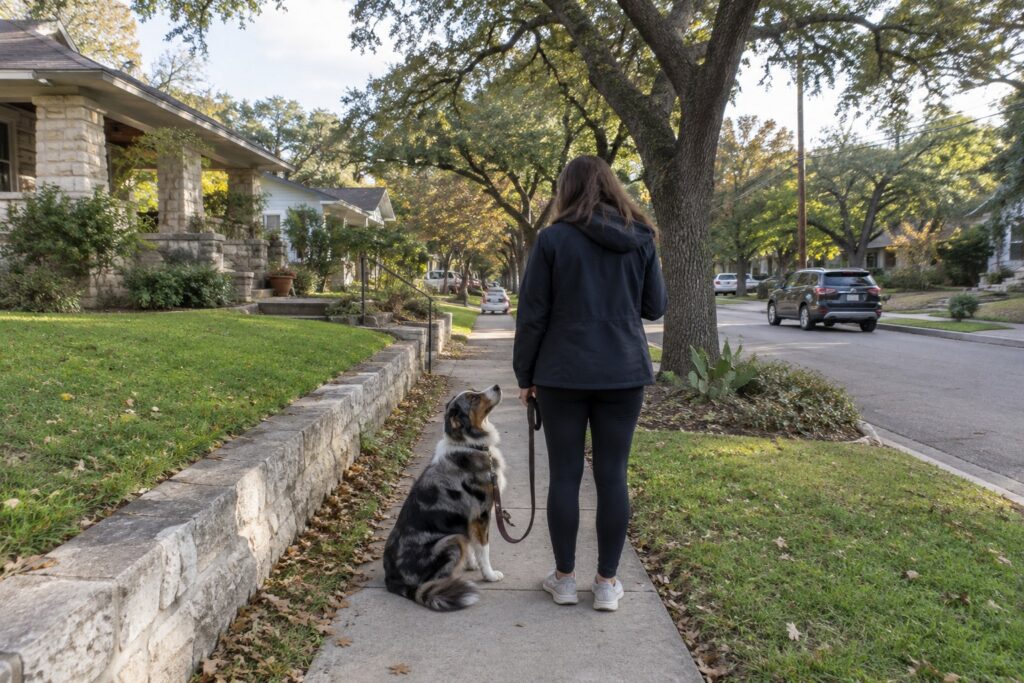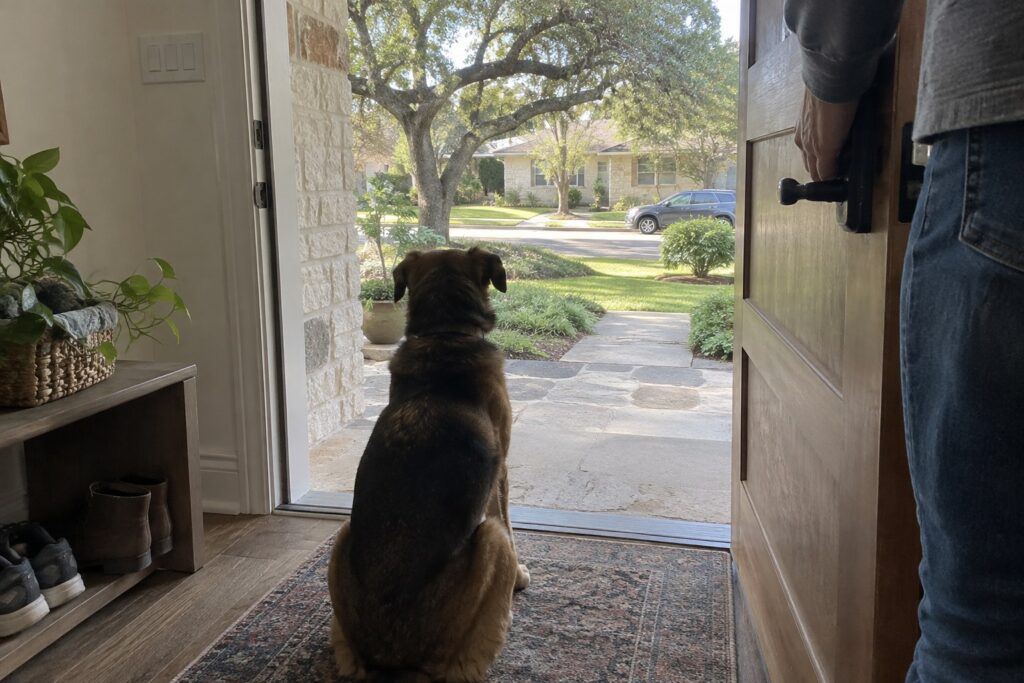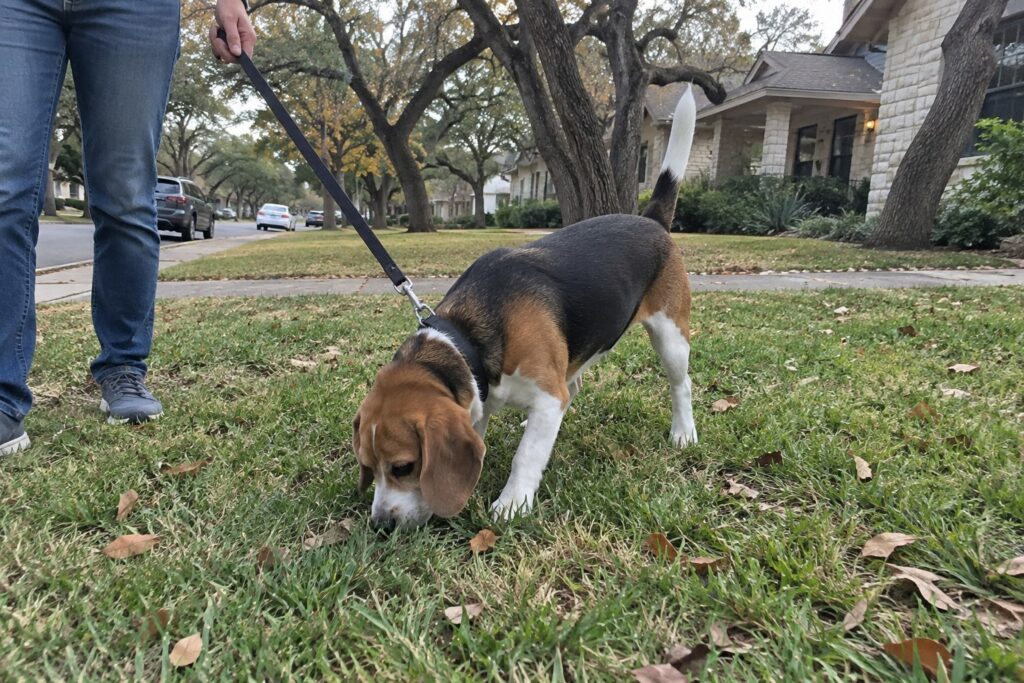

Austin families love their dogs. They invest in training, research breeds carefully, and genuinely want their dogs to be well-behaved members of the household. Yet even dogs that go through professional training programs sometimes regress. Even puppies that started on the right foot develop frustrating habits. And the most common reason, more than breed, more than age, more than the quality of the training itself, is inconsistency.
Dogs do not generalize the way humans do. When a dog learns “sit,” it has learned that in a specific context, offering a sit behavior leads to a reward or avoids a correction. Expand the context, change the handler, alter the rule, or skip enforcement a few times, and the behavior begins to erode. It’s not that the dog is stubborn or forgetful; it’s that the learning itself is conditional on the environment being consistent.
This is good news, actually. It means that most training failures are recoverable with a change in the owner’s approach rather than a complete restart of the dog’s education. Understanding why consistency matters, where families typically fall short, and how to build lasting habits after training ends is the knowledge every Austin dog owner needs.
What Consistency Actually Means in Dog Training
Consistency in dog training has several layers, and each one matters.
Command consistency means using the same word, the same tone, and the same expectation every single time. If you say “sit” for a formal sit and your partner says “sit down,” your child says “sit, sit, SIT,” and your grandmother says “oh, will you please just sit for me?”, the dog is hearing different cues with different emotional weights and no clear picture of what’s expected. Pick a word, agree on it as a household, and use it the same way every time.
Rules consistency means the rules don’t change based on mood, time of day, or who’s home. If the dog is not allowed on the couch, that’s true when you’re tired and don’t feel like enforcing it, when guests are over and find it cute, and when it’s cold and the couch looks comfortable to everyone including the dog. Rules that are sometimes enforced teach dogs to push boundaries because sometimes boundary-pushing works.
Consequence consistency means that behaviors reliably produce the same outcomes. Jumping on people should always result in the same response: a turn away, a verbal marker, a loss of attention, whatever the chosen method is. If jumping sometimes gets ignored, sometimes scolded, and sometimes gets rewarded with accidental petting, the dog has no clear information about what the behavior produces and will keep trying.
Why Family Alignment Is Crucial
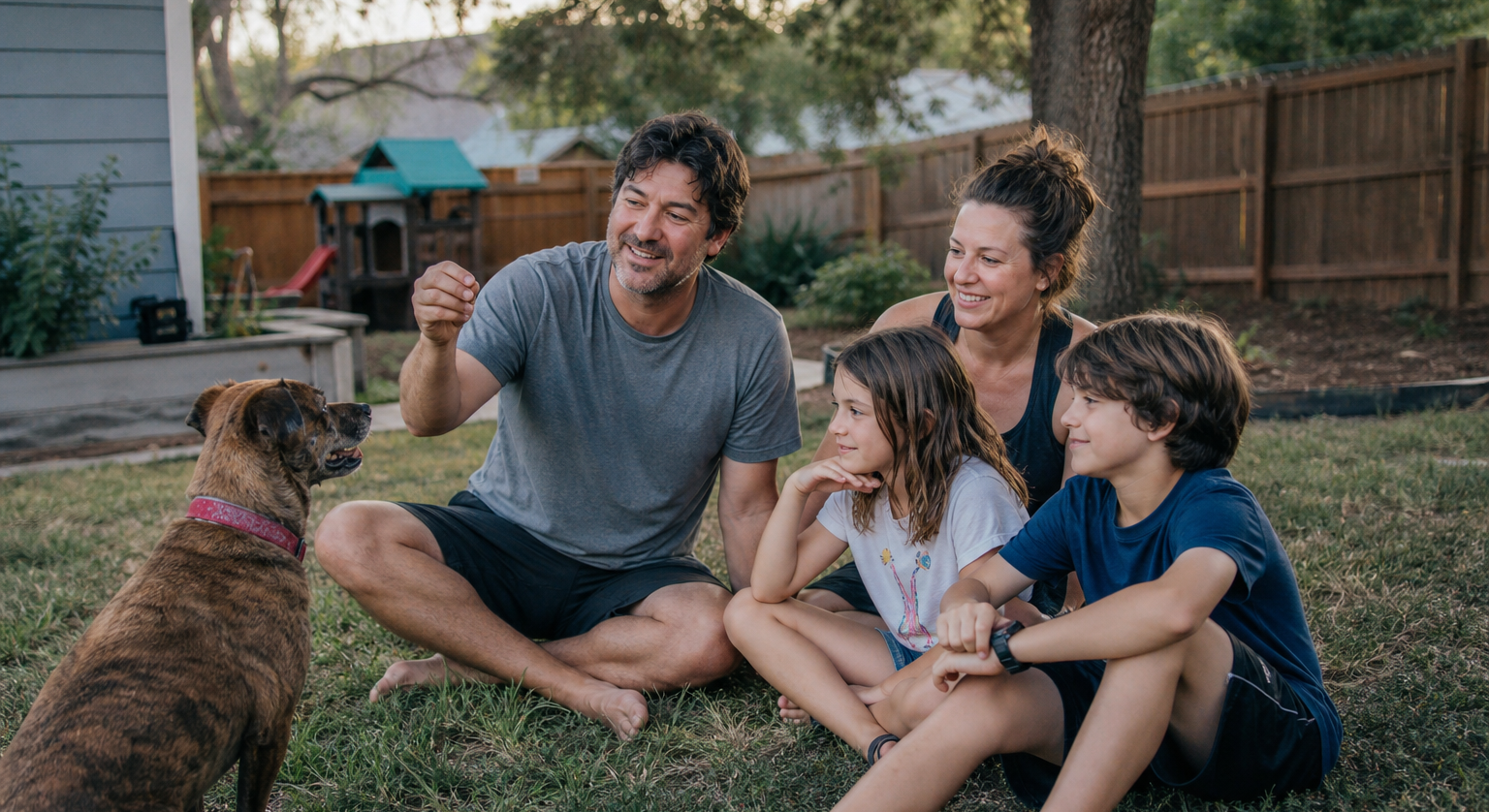
One of the most underappreciated challenges in dog training for families is that dogs train the whole household, not just the person who attended the classes or hired the trainer. A dog that has excellent “sit-stay” behavior with one family member and zero compliance with another has not learned the behavior; it has learned that the behavior is only required around one person.
Getting every family member on the same page before training begins, during the process, and after the professional component ends is genuinely one of the most important things an Austin family can do to protect their investment in training. This means:
- Holding a household meeting to agree on commands, rules, and enforcement
- Making sure children understand how to give commands and how not to accidentally reward unwanted behavior
- Including regular training practice as a family activity so everyone develops handling skills
- Establishing a single point of reference, such as a training notes document or a brief handout from the trainer, that everyone can return to if they’re unsure what the rule is
Trainers often note that the most successful training outcomes come from households where everyone is genuinely committed to the approach, not just the person who made the appointment.
Daily Routines: The Foundation of Consistent Behavior
Dogs thrive on routine because predictability reduces anxiety and makes expectations clear. A dog that knows when it will be fed, when it will be walked, when it will have downtime, and when it will have training or play time is a dog operating with a much lower baseline stress level. That lower stress level makes good behavior easier and bad behavior less tempting.
Building a daily routine that incorporates training practice doesn’t require hours of dedicated work. Five to ten minutes of structured practice once or twice a day is far more effective than occasional marathon sessions. Embedding training into everyday moments, asking for a “sit” before putting the food bowl down, requiring a “wait” before going out the door, practicing “place” before family dinner, produces the repetition that solidifies behavior without requiring extra time in the day.
Consistency in routine also includes consistency in how the dog is managed when training is not actively happening. A dog that has unsupervised access to behaviors you’re trying to eliminate (like counter surfing, jumping on guests, or door bolting) is practicing those behaviors and reinforcing them with whatever reward they’re accessing. Management structures like baby gates, leashes, and crates exist not as punishments but as tools that prevent unwanted practice until the training is solid enough to replace management.
Common Consistency Mistakes Austin Families Make
These patterns come up repeatedly in households where training has stalled:
- The “just this once” exception: Allowing the behavior once because it’s cute, it’s a holiday, or you’re too tired to enforce is not a one-time exception to the dog; it’s information that the rule is negotiable.
- Rescue behavior from unclear commands: Repeating a command multiple times (“sit, sit, SIT”) before the dog complies teaches the dog to wait for repetition. Give the command once, wait for compliance, and prompt or guide if needed.
- Inconsistent thresholds: Allowing the dog on the couch sometimes but not others, or allowing jumping from some people but not others, makes the rule unpredictable and therefore difficult to follow.
- Using emotion rather than structure: Yelling when frustrated or lavishing affection when guilty are emotional responses that don’t provide clear behavioral information. Structure and calm consistency are more useful than volume or intensity.
- Stopping training after the program ends: Professional training programs build a foundation; owners maintain it. A dog whose training ends when the trainer leaves will begin to test and erode that foundation within weeks without ongoing reinforcement.
Staying Consistent After Professional Training Ends
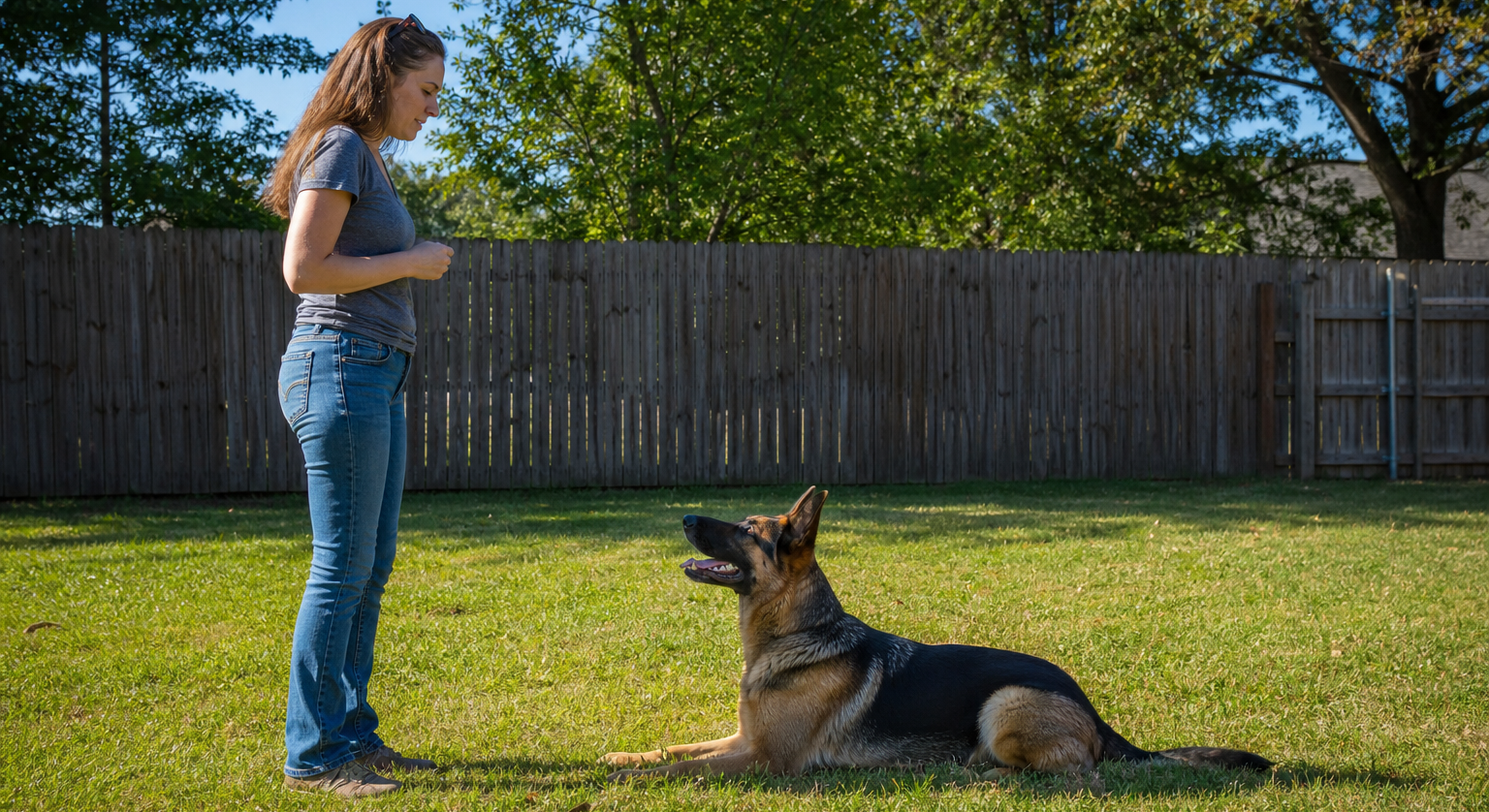
Professional training programs from facilities like All Dogs Unleashed are highly effective because dogs work with skilled handlers in structured environments that maximize learning. The transition back to everyday family life is where consistency becomes the owner’s responsibility.
A few strategies that help:
- Keep training in your daily routine even after the formal program ends. Maintenance sessions of five to ten minutes keep behaviors sharp and the dog practiced.
- Return for refreshers if you notice regression. A brief tune-up with a professional is far easier than rebuilding from scratch.
- Use the training program’s structure as a reference point: what were the expectations, what were the rules, what were the commands? Return to that baseline when things drift.
- Practice in new environments. Behaviors that are solid at home may need retraining in new settings. Take your training on the road to Zilker Park, to friends’ homes, and to new environments so the dog generalizes.
Frequently Asked Questions
How long does it take for consistent training to produce reliable behavior?
For most dogs, consistent training produces noticeable improvement within two to four weeks, and solid, reliable behavior in two to four months of daily practice. The more consistent the training environment and the more frequently the dog practices, the faster the results. Some behaviors take longer, especially those with a history of being inconsistently reinforced.
What do I do if family members won’t follow the training rules?
Start with a direct conversation about why consistency matters and frame it as protecting the investment everyone has made in the dog’s training. If specific family members are undermining training, it helps to involve them in a training session so they can see the dog’s response firsthand. Trainers can sometimes address this directly during a family session.
Is it too late to become consistent if training has already been inconsistent?
No. Dogs are constantly learning, and a shift to consistent handling will produce results at any age. The dog may need some time to adjust to new expectations, especially if inconsistency has taught it to test boundaries, but consistent structure will produce change.
Should I be strict all the time or can training be fun?
Both. Consistency doesn’t mean stern or humorless training. Dogs learn well in positive, engaging environments. What matters is that the expectations are clear and enforced consistently, not that every interaction is a formal training session. Play is excellent for dogs; it just shouldn’t undermine the training rules.
How do I know if my dog’s behavior problem is due to inconsistency or something else?
A professional evaluation is the most reliable way to answer this. Inconsistency typically produces behavior that’s variable across handlers and environments. If the dog is perfectly behaved with one person and not another, or behaves well in some settings and not others, inconsistency is usually involved. If the behavior is consistent across all contexts, there may be an underlying issue worth evaluating professionally.
How often should I practice commands with my dog?
Daily practice is ideal. Short, focused sessions of five to ten minutes once or twice a day are more effective than occasional long sessions. Embedding practice into daily routines, meals, walks, and transitions makes it sustainable and keeps the dog sharp without requiring dedicated training time every day.
Build Consistent Training Habits with Professional Support
Consistency is a skill, and like any skill, it’s easier to develop with guidance. The team at All Dogs Unleashed works with Austin families to build in-home training plans that are realistic, household-wide, and designed to last beyond the formal program. Whether you’re starting fresh or troubleshooting a regression, reach out at (512) 253-8819, stop by 3704 Mountain View Ave, Austin, TX 78734, or explore the board and training option for a structured approach to building lasting behavior.