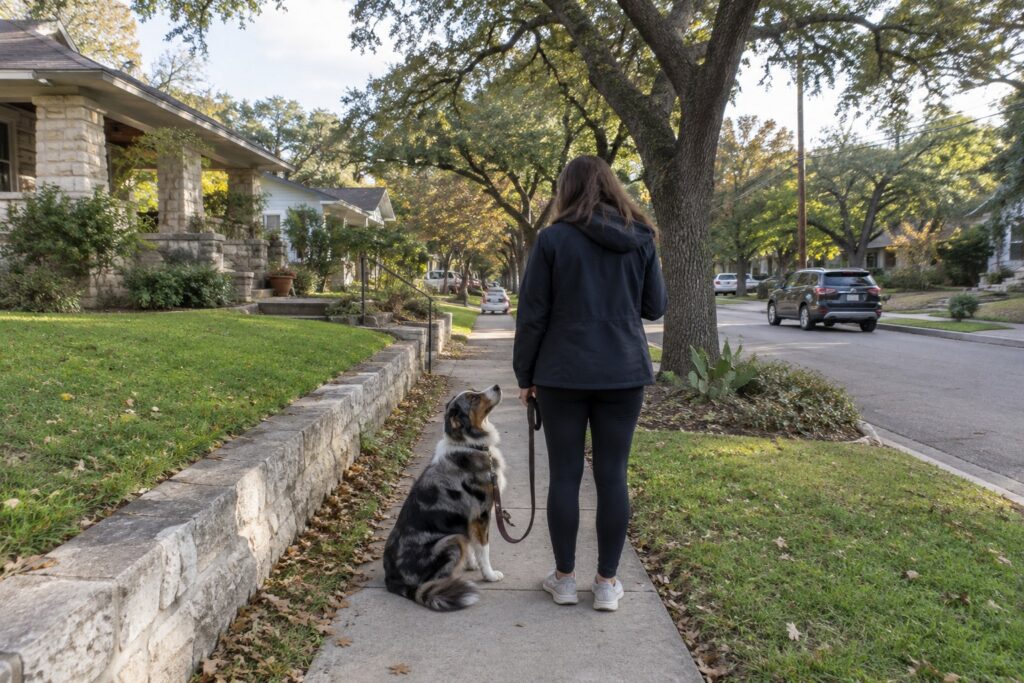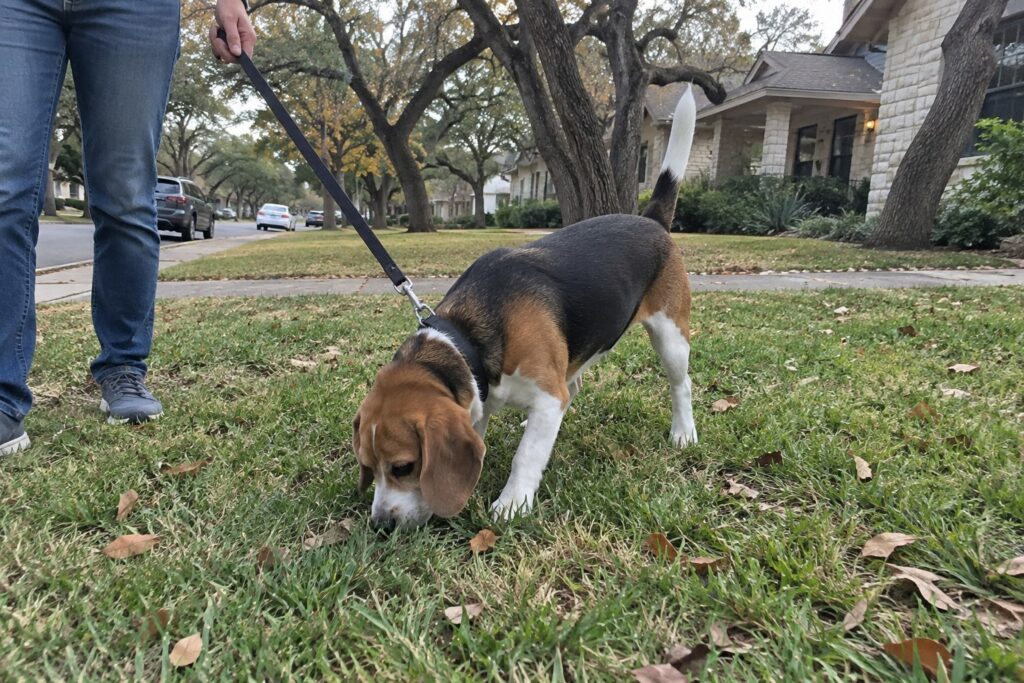

If you’ve ever been yanked down the sidewalk by your dog, you’re not alone. Leash pulling is one of the most common complaints among dog owners in Austin, TX, and one of the most frustrating. What starts as an excited tug can quickly escalate into a behavior that makes walks stressful, unsafe, and anything but enjoyable.
The good news is that leash pulling is entirely fixable. Understanding why dogs pull in the first place is the first step toward teaching them to walk calmly by your side. Whether you have a high-energy cattle dog, a determined Labrador, or a stubborn French Bulldog, the principles are the same, and they work.
At All Dogs Unleashed in Austin, we’ve helped thousands of dogs and their owners transform chaotic walks into something both sides actually look forward to. This guide covers the root causes of leash pulling and the most effective techniques to stop it for good.
Why Dogs Pull on the Leash
Dogs pull on the leash for a simple reason: it works. When a dog pulls forward and their owner follows, the dog learns that pulling gets them where they want to go. This is basic operant conditioning, the behavior is reinforced every time it succeeds. Dogs aren’t being stubborn or dominant; they’re doing what has consistently been rewarded.
Beyond reinforcement, dogs naturally move faster than humans and are driven by powerful instincts to explore their environment through scent, sight, and movement. When they catch the smell of another dog or spot a squirrel, the pull of their environment can feel overwhelming. Without training, leash pressure simply becomes background noise they’ve learned to ignore.
The Problem With Letting Pulling Continue
Many owners assume their dog will eventually grow out of pulling. In reality, the opposite tends to happen. The longer pulling is practiced and rewarded, the more ingrained the habit becomes. A puppy that tugs gently at eight weeks becomes a 60-pound adult that can knock over a child or dislocate a shoulder.
Leash pulling also creates a feedback loop of frustration. Owners shorten the leash, dogs feel more tension and pull harder, and the walk becomes a battle of strength rather than a cooperative experience. Left unaddressed, some owners stop walking their dog altogether, which creates a whole new set of behavioral problems from pent-up energy and under-stimulation.
Teaching Loose-Leash Walking: The Core Technique
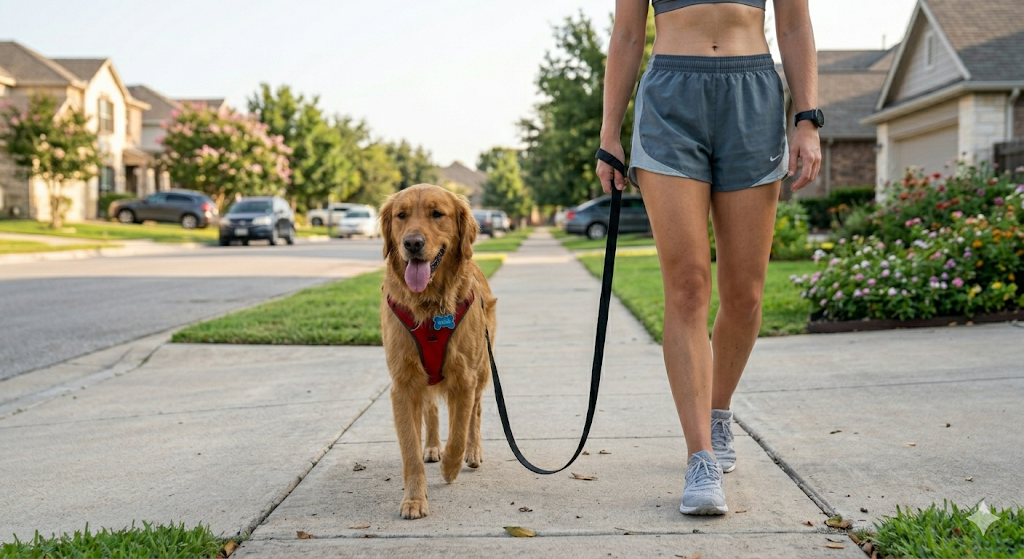
The foundation of loose-leash walking is teaching your dog that a slack leash is the only way forward. The moment tension appears in the leash, forward movement stops. This is sometimes called the “be a tree” method, you simply stop, wait for the dog to release the pressure, and then resume walking the moment the leash goes slack.
Consistency is everything here. Every person who walks the dog must follow the same rule. One inconsistent walk where pulling “works” can undo days of progress. Combine stopping with rewarding the correct position, treat your dog generously when they’re walking beside you with a loose leash, especially in the early stages of training.
Using Reward Placement Strategically
Where you deliver treats matters. Reward your dog at your hip, not in front of you or overhead. Delivering rewards at your side reinforces the exact position you want your dog to maintain, next to you, looking up toward you. Over time, this position becomes the default because it’s where the good stuff happens.
High-value rewards are especially important in the early stages and in high-distraction environments like Austin’s busy parks or popular trails like Barton Creek Greenbelt. Use small, soft treats your dog can eat quickly and that won’t cause them to lose focus. As your dog improves, you can gradually reduce the frequency of treats while maintaining the behavior.
Managing Distractions in Austin’s Outdoor Environment
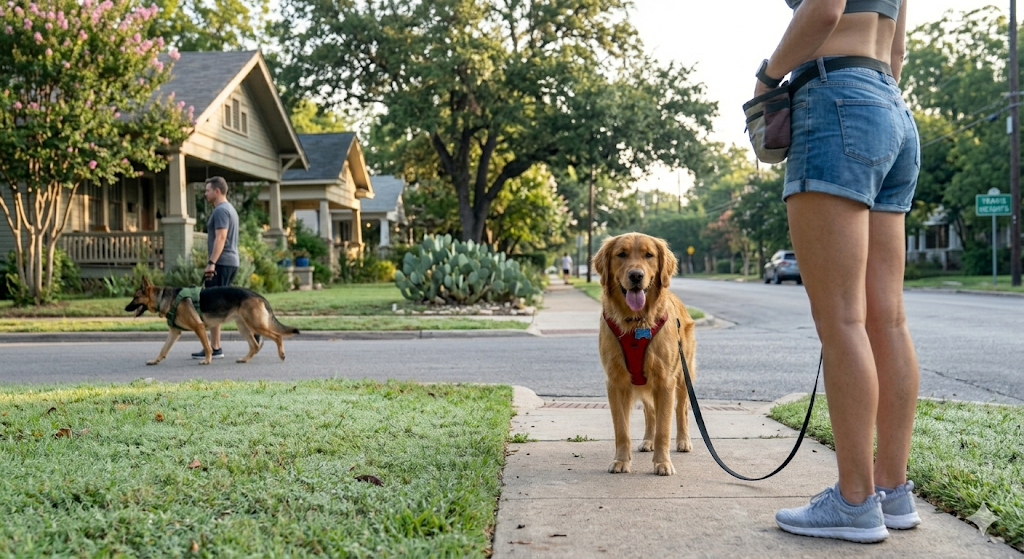
Austin is a dog-friendly city, and that means distractions everywhere. Other dogs on the trail, cyclists on South Congress, food smells near food trucks, and wildlife along Lady Bird Lake are all part of the landscape. Training in low-distraction settings first and gradually increasing difficulty is essential for real-world success.
Start practicing loose-leash walking in your front yard or a quiet neighborhood street before taking your dog to a busy area. Use distance as a tool, if your dog loses focus at 20 feet from another dog, stay at 30 feet and practice there until they can handle it, then slowly decrease the distance over multiple sessions. This process is called systematic desensitization and is one of the most effective approaches used at All Dogs Unleashed.
Equipment That Helps (and What to Avoid)
The right equipment can make loose-leash training significantly easier. A front-clip harness redirects your dog toward you when they pull, which naturally interrupts the forward momentum and makes it easier to regain their attention. Head halters like the Gentle Leader offer similar benefits for stronger dogs and can be particularly helpful for large breeds that are difficult to manage otherwise.
Retractable leashes should be avoided during training. They teach dogs that pulling extends the leash and gives them more freedom, the exact opposite of what you want. A standard 4-6 foot leash gives you control and gives your dog enough freedom to move comfortably. Avoid choke chains or prong collars as primary training tools; they may suppress pulling temporarily but don’t address the underlying behavior or build trust between you and your dog.
Frequently Asked Questions
How long does it take to stop leash pulling?
Most dogs show meaningful improvement within 2-4 weeks of consistent training. Complete reliability across all environments, including high-distraction areas, typically takes 2-3 months. The key variable is consistency: dogs trained every day with clear rules progress much faster than those trained inconsistently.
My dog only pulls sometimes. Do I still need to address it?
Yes. Intermittent pulling is actually harder to fix than constant pulling because intermittent reinforcement is the strongest form of reinforcement. If pulling sometimes works, your dog will keep trying it. Addressing the behavior even when it’s inconsistent leads to faster and more durable results.
Can older dogs learn to walk on a loose leash?
Absolutely. The idea that old dogs can’t learn new tricks is a myth. Adult and senior dogs can absolutely be trained to walk politely on leash, in fact, they often learn faster than puppies because they have better impulse control and focus. The same techniques work at any age, though older dogs with established habits may require a bit more time.
Should I use a prong collar or choke chain to stop pulling?
At All Dogs Unleashed, we don’t recommend prong collars or choke chains as training tools. While they may suppress pulling through discomfort, they don’t teach dogs what to do instead and can create anxiety, fear, or aggression around walks. Positive reinforcement-based methods produce more reliable, longer-lasting results and strengthen your relationship with your dog.
Is professional training necessary to stop leash pulling?
Many owners successfully teach loose-leash walking on their own with the right guidance and consistent practice. However, professional training is especially helpful if your dog is reactive, extremely strong, or if you’ve been struggling for months without progress. A trainer can identify what’s going wrong and build a plan tailored to your specific dog and environment.
What if my dog pulls toward other dogs or people?
Pulling toward other dogs or people is often rooted in over-excitement or, in some cases, reactivity. The training approach involves building a strong default focus on you before exposure to triggers, using distance management, and teaching an incompatible behavior like “look at me” when distractions appear. For reactive dogs, a structured behavior modification program is recommended, something our trainers at All Dogs Unleashed in Austin specialize in.
Work With a Professional Trainer to Stop Leash Pulling in Austin
Leash pulling is one of the most solvable dog behavior challenges, but it does require patience, consistency, and the right technique. If you’re tired of stressful walks and want a dog that walks calmly by your side through Zilker Park, along the greenbelt, or around your neighborhood, we’re here to help.
All Dogs Unleashed offers private training sessions, group classes, and board-and-train programs designed for dogs and owners across the Austin area. Our trainers work with all breeds, ages, and energy levels, using science-based methods that get lasting results. Contact us today at (512) 253-8819, stop by 3704 Mountain View Ave, Austin, TX 78734, or explore our training programs to schedule a consultation and take the first step toward walks you’ll both enjoy.