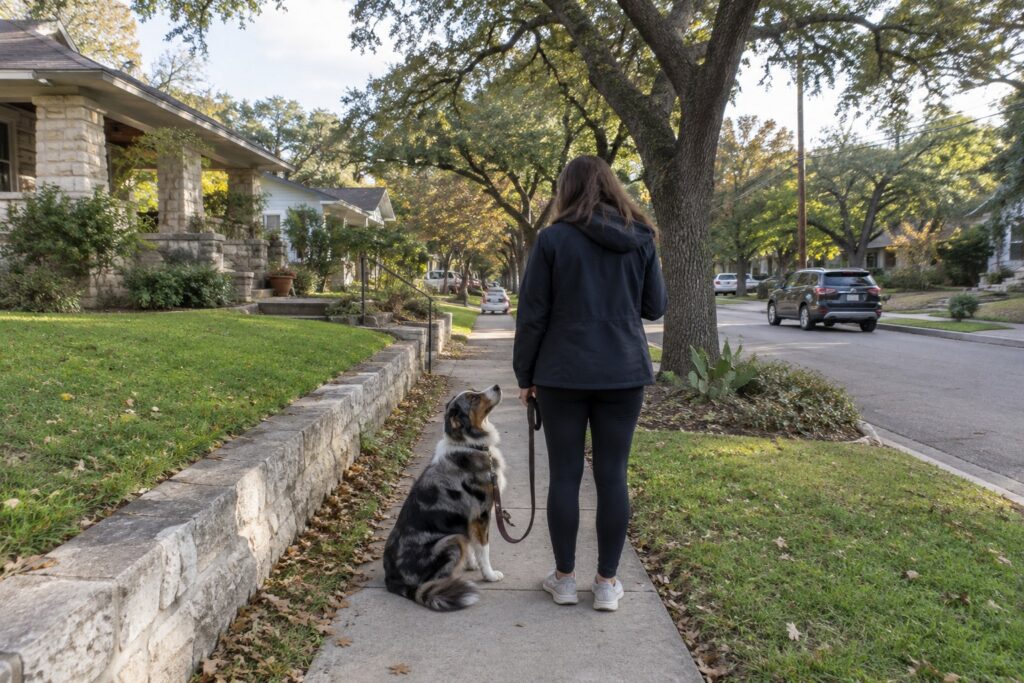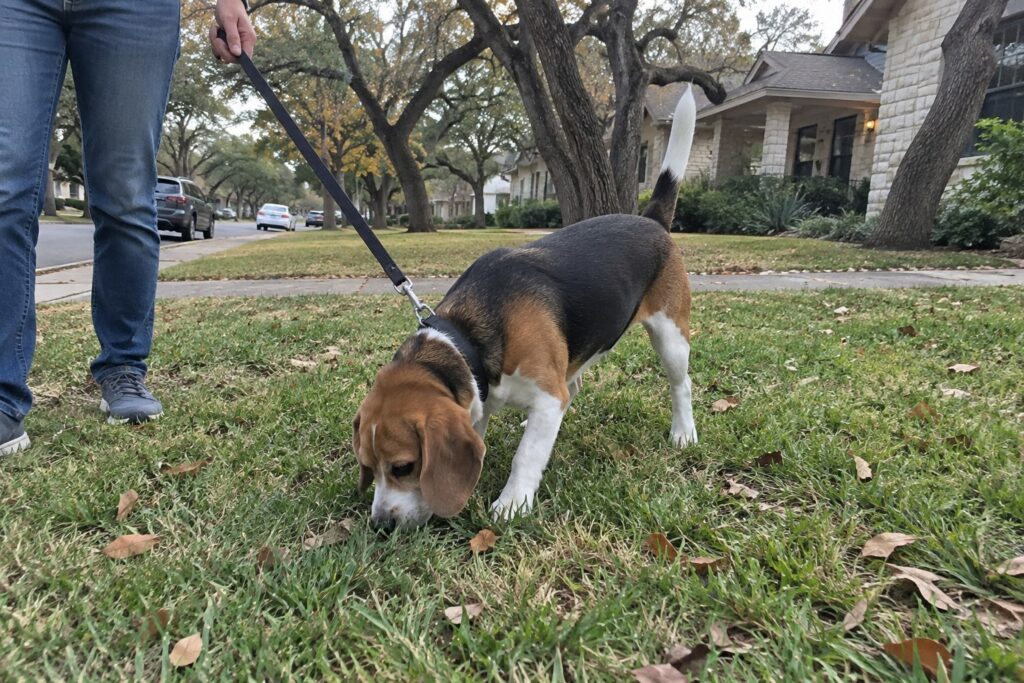

If your dog lunges every time a car rolls past, a cyclist zips by on the trail, or a rental scooter hums down the sidewalk, you already know the stakes. Learning how to stop dog from chasing cars is about more than good manners. It is about keeping your dog alive on busy Austin streets and keeping the people around you safe.
At All Dogs Unleashed Dog Training Austin, we work with chasers every week, from herding breeds that try to round up traffic to young dogs that simply cannot resist anything that moves fast. Below we break down why dogs chase, how to manage the risk today, and the training steps that change the behavior for good.
Ready for calmer walks around traffic? Talk with our Austin team about your dog.
Key Takeaways
- Chasing cars, bikes, and scooters usually comes from prey drive, herding instinct, fear, or frustration, and the right fix depends on which one is driving your dog.
- Management comes first, so use a secure leash, a well-fitted harness or collar, and a fenced yard while you train.
- Training works best below your dog’s threshold, at a distance where your dog notices a moving vehicle but can still take food and respond to you.
- A reliable “look,” “leave it,” and loose-leash walk give you tools to redirect your dog before the chase starts.
- Persistent or dangerous chasing often responds best to structured daily practice, like the two-week Board and Train program at All Dogs Unleashed.
Why Dogs Chase Cars, Bikes, and Scooters
Chasing looks like one behavior, but it can come from several different places. Before you pick a training plan, spend a few walks watching what your dog does in the seconds before the lunge. Their body language tells you a lot about the motivation.
Prey Drive
Many dogs are wired to pursue things that move quickly and unpredictably. A bike wheel, a skateboard, or a car tire triggers the same stalk and chase sequence a squirrel does. Terriers, hounds, and sighthounds often show this pattern. These dogs tend to go quiet and focused, then explode forward. The American Kennel Club notes that chasing moving objects is a natural instinct, which is why punishment alone rarely solves it.
Herding Instinct
Border collies, Australian shepherds, cattle dogs, and their mixes were bred to control movement. Some of them try to “herd” cars by crouching, staring, and then nipping or rushing at the wheels. Austin has plenty of these active breeds, and without a job they will often invent one.
Reactivity, Fear, and Frustration
Not every chaser is having fun. Some dogs bark and lunge at vehicles because the noise and speed scare them, and charging is their way of making the scary thing go away. Others are frustrated by the leash and the excitement spills over. If your dog’s hackles go up, their tail is tucked, or they look stressed after a car passes, fear may be part of the picture. Our body language guide for Austin dog owners can help you read those signals.
Reinforcement by Accident
Here is the frustrating part. Every time your dog lunges and the car drives away, the dog “wins.” From their point of view, the chase worked. That built-in reward is why chasing tends to get worse over time if nothing changes.
| Motivation | What It Looks Like | Training Focus |
|---|---|---|
| Prey drive | Quiet fixation, then a sudden sprint | Impulse control, “leave it,” acceptable outlets like fetch or flirt poles |
| Herding instinct | Crouching, staring, nipping at wheels | Focus on handler, structured jobs, threshold work |
| Fear or reactivity | Barking, hackles up, backing away then charging | Distance, desensitization, building confidence |
| Frustration or excitement | Whining, pulling, spinning on leash | Loose-leash walking, calm rewards, more exercise |
Safety Management While You Train
Training takes time, and the chase only has to succeed once to end in tragedy. Management keeps your dog safe while you build new habits. Think of it as the seat belt that stays on no matter how well training is going.
Leash, Collar, and Harness Checks
Walk a chaser on a standard 4- to 6-foot leash, never a retractable one near traffic. Retractable leashes let a dog build speed before hitting the end, and the thin cord can snap or slip. Check that the collar or harness fits snugly enough that your dog cannot back out of it. Many owners like a front-clip harness for added control. If pulling is a daily battle, our post on why dogs pull on the leash covers the basics.
Secure the Home Base
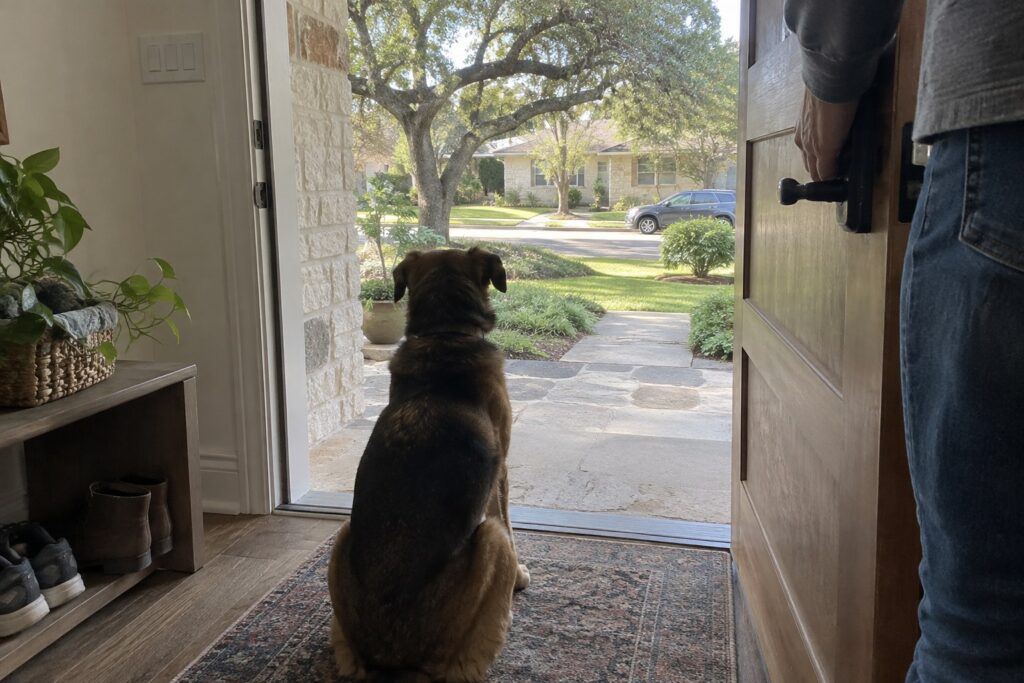
Plenty of car chasing starts at the front door or a gap in the fence. Check gates, latches, and the bottom of your fence line, especially if your yard sits on a busy street. Use a baby gate or a “wait” at the door so your dog never bolts toward the road when a package arrives.
Choose Your Routes and Times
You do not have to walk past a four-lane road while your dog is learning. Pick quieter residential blocks, walk at off-peak hours, and give yourself room to cross the street or turn around when a trigger appears. With Austin staying hot well into fall, early mornings tend to work well anyway, since they are cooler and usually calmer on the roads and trails.
Never Rely on Off-Leash Recall Near Traffic
Even a dog with a strong recall can lose their head when a scooter flies past. Keep chasers leashed anywhere near roads, bike paths, and parking lots. Off-leash freedom should be limited to fenced, designated areas until your trainer agrees your dog is ready. Our tips on teaching your Austin dog to come when called are a good companion to this work, not a replacement for a leash.
Building Focus Before the Chase Starts
The best moment to interrupt a chase is before it begins. Once your dog is in a full sprint, their brain is not taking requests. Your goal is to teach behaviors that pull attention back to you while your dog is still able to think.
Teach a Rock-Solid “Look”
Start indoors with no distractions. Say “look,” and the instant your dog makes eye contact, mark it with “yes” and give a high-value treat. Practice in short sessions until your dog snaps their head toward you every time. Then move to the yard, then the driveway, then a quiet sidewalk.
Add “Leave It”
“Leave it” tells your dog to disengage from whatever has caught their eye. Begin with a treat in your closed hand, reward when your dog backs off, and gradually work up to toys rolling across the floor. A dog that can “leave it” with a bouncing ball is building the same skill they will need when a bike rolls past.
Practice the U-Turn
An emergency U-turn is a cheerful cue, like “this way,” followed by a quick turn and a few happy steps in the opposite direction, then a reward. Practice it when nothing is happening so it becomes automatic. When a car appears sooner than expected, you have a smooth exit instead of a tug-of-war.
Give the Drive Somewhere to Go
Dogs with strong chase instincts do better when they get to chase on your terms. Fetch, tug, and flirt pole games in a fenced yard let your dog run hard and then come back to you. Pair those games with “drop it” and “wait” so even play reinforces control.
If your dog’s chasing is already intense, structured daily training can move things along faster than weekend practice alone.
Threshold Training Around Moving Vehicles
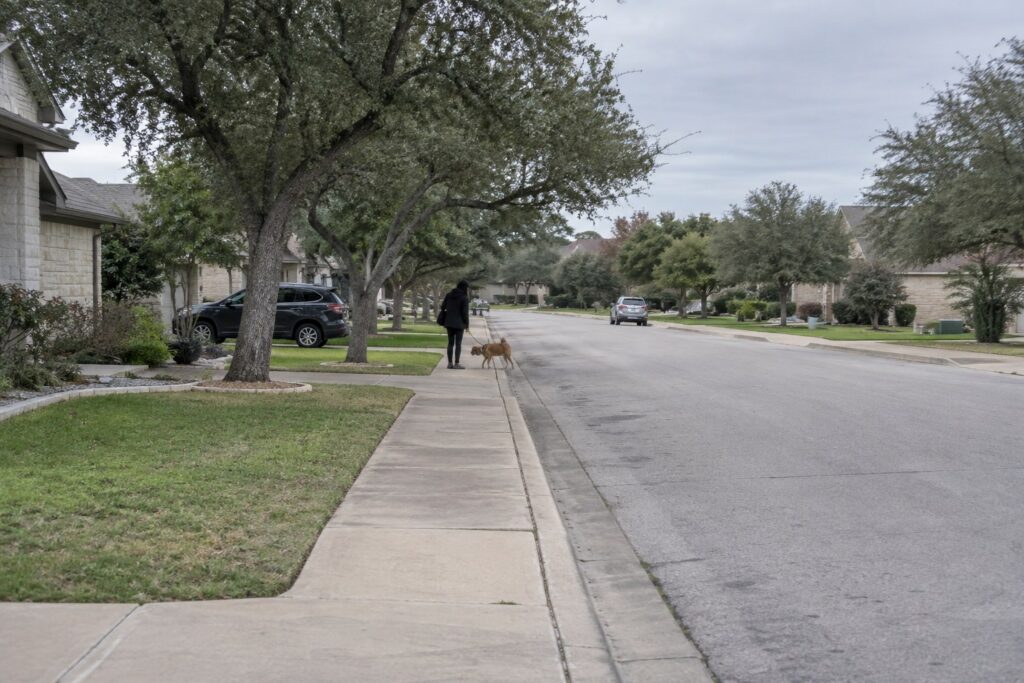
Threshold training is the heart of learning how to stop dog from chasing cars. Your dog’s threshold is the point where they stop being able to listen. Below it, they notice the car but can still eat and respond. Above it, they are barking, lunging, and ignoring you.
Find Your Dog’s Distance
Stand far back from a road where cars pass at a steady but not overwhelming rate. Watch your dog. If they glance at a car and then take a treat, you are in the right spot. If they freeze, stare, or refuse food, move farther away. Every dog’s number is different, and it can change day to day.
Pair Movement With Good Things
Each time a car passes, say “yes” and feed. When the car is gone, the treats stop. Over many repetitions, your dog starts to see a passing car as a cue to check in with you rather than a cue to chase. This kind of gradual desensitization is a mainstream, widely used approach for reactive dogs.
Shrink the Distance Slowly
Only move closer when your dog is relaxed and checking in on their own. Close the gap a few steps at a time over days or weeks. If your dog goes over threshold, simply add distance and end the session on an easy win. Pushing too fast is the most common reason this training stalls.
Change One Thing at a Time
Speed, noise, and closeness all raise the difficulty. A slow sedan is easier than a loud truck, and a jogger is easier than a cyclist on a fast descent. Work through one variable at a time. Once cars are manageable, start the same process with bikes, then scooters, then skateboards.
| Stage | Distance and Trigger | What Success Looks Like |
|---|---|---|
| 1 | Far from a quiet street, slow cars | Dog glances, then takes treats easily |
| 2 | Closer to the same street | Dog checks in with you after each car |
| 3 | Moderate traffic, loose-leash walking | Dog keeps walking with little reaction |
| 4 | Bikes and joggers at a distance | Dog responds to “look” and “leave it” |
| 5 | Scooters and busier sidewalks | Dog stays calm and stays with you |
Cyclists, Scooters, and Austin’s Busiest Walking Spots
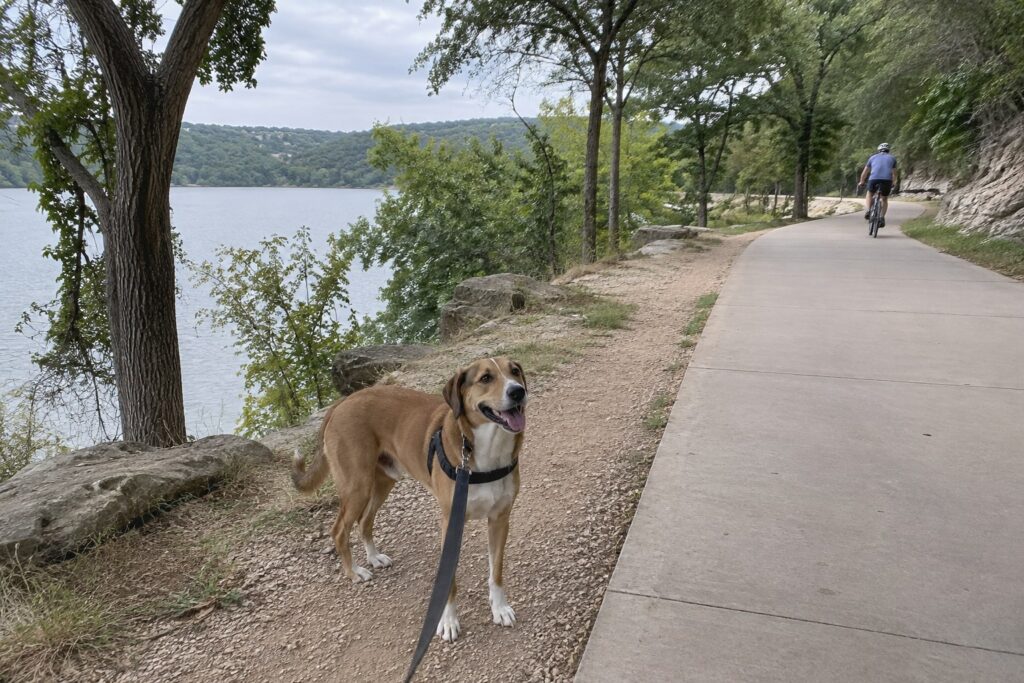
Austin is a city that moves on two wheels. That is great for commuters and tough for dogs that love to chase. A little planning helps you practice in the real world without setting your dog up to fail.
The Butler Trail at Lady Bird Lake
The roughly 10-mile Ann and Roy Butler Hike-and-Bike Trail loops Lady Bird Lake and is popular with runners, walkers, and cyclists. For a chaser who is early in training, that steady stream of bikes and joggers can be overwhelming. Save the trail for later stages, and when you do go, choose quieter hours, keep your dog on the side away from passing traffic, and step off the path to give bikes room.
South Congress and Downtown Sidewalks
South Congress and downtown blocks mix cars, cyclists, rental scooters, and crowds. Scooters are especially tricky because they are fast, quiet, and sometimes ridden on sidewalks. Treat these areas as an advanced test, not a training ground. Start with a short visit at a slow time, stand back from the curb, and reward calm watching before you walk.
Neighborhood Streets and Greenbelts
Quieter neighborhood streets are often the best place to build skills. Trailheads and greenbelt access points can bring mountain bikes into view suddenly, so stay alert and keep your U-turn ready. Our roundup of dog-friendly hiking trails in Austin can help you plan outings that fit your dog’s current level.
Heat and Arousal
A hot, tired, or overstimulated dog has less self-control. Austin heat lingers into October and beyond, so carry water, keep sessions short, and watch for heavy panting. We dig into this more in our post on how Austin’s climate affects your dog’s behavior. If your dog shows signs of heat stress, stop training and contact your veterinarian.
When to Bring In a Professional Trainer
Some dogs make steady progress with patient home practice. Others need more structure than a busy household can provide. Knowing the difference saves time and can prevent a serious accident.
Signs You Need Help
Reach out to a trainer if your dog has pulled you off your feet, slipped their leash near traffic, nipped at a cyclist or tire, or seems to be getting worse despite consistent work. Fear-based reactivity also deserves professional eyes, since pushing a scared dog too hard can backfire. If your dog’s behavior changes suddenly, a checkup with your veterinarian is a smart first step to rule out pain or illness.
How Board and Train Helps Chasers
Our two-week Board and Train program in Austin gives your dog daily, structured practice in a residential setting. Every enrollment begins with an evaluation, and leash reactivity correction is one of the areas our trainers address through methodical desensitization. When the program ends, you learn how to handle your dog yourself so the progress carries over to your own street. Board and Train comes with guaranteed results and lifetime support.
In-Home Lessons for Your Real Routes
Chasing often happens in specific places, like your driveway or the corner by the busy road. In-home dog training lets a trainer work with you and your dog on the exact routes you walk. It is also a great follow-up after Board and Train. You can compare options on our Austin dog training programs page.
Want a plan for your dog’s chasing? Call our Austin team at (512) 963-6017.
About All Dogs Unleashed Dog Training Austin
All Dogs Unleashed Dog Training Austin helps Central Texas dogs and their owners build calm, reliable behavior in the real world. Our two-week Board and Train program provides structured daily training for obedience, leash reactivity, and socialization, backed by guaranteed results and lifetime support. We also offer in-home private lessons, refresh training, and boarding. For dogs that chase cars, bikes, and scooters, we focus on impulse control, handler focus, and safe leash skills that hold up on busy Austin streets.
Frequently Asked Questions
Why does my dog chase cars but not people?
Cars move fast, make noise, and travel in a straight line away from your dog, which triggers chase instincts more strongly than a person walking. Herding and high-prey-drive breeds are especially sensitive to that motion. Some dogs also react out of fear of the noise. Watching your dog’s body language before the lunge helps you figure out which motivation you are dealing with.
Can a dog be trained to stop chasing cars completely?
Most dogs can learn to walk calmly past traffic with consistent training, management, and practice below threshold. The instinct to chase may never disappear entirely, especially in herding or prey-driven breeds, so lifelong leash safety near roads still matters. The goal is a dog that notices a car, checks in with you, and keeps walking instead of lunging.
Should I use a shock collar to stop my dog from chasing cars?
We recommend building focus, impulse control, and threshold skills rather than relying on any single tool as a shortcut. Punishment alone can increase fear or frustration in reactive dogs and does not teach your dog what to do instead. A professional trainer can evaluate your dog and recommend a safe, balanced plan that fits their temperament and your daily routine.
How long does it take to stop a dog from chasing bikes?
It depends on your dog’s age, history, motivation, and how consistently you practice. Some dogs improve noticeably within weeks, while long-standing chasers need more time. Working below threshold and progressing one variable at a time is the fastest reliable route. Structured programs like our two-week Board and Train give your dog daily repetition that busy owners often cannot provide at home.
Is it safe to walk a car-chasing dog near Lady Bird Lake?
It can be once your dog has solid focus skills, but the Butler Trail draws many runners and cyclists, so it is a demanding environment. Use a standard leash, go at quieter times, keep your dog on the side away from passing traffic, and step off the path when needed. Early in training, quieter neighborhood streets are a better place to practice.
What should I do if my dog slips the leash and chases a car?
Do not run after your dog, since that can turn the moment into a game. Call your dog in a happy voice, turn and move away, or crouch down to encourage them back. Once your dog is safe, check them for injuries and contact your veterinarian if anything seems off. Then review your collar or harness fit before the next walk.
Learning how to stop dog from chasing cars takes patience, smart management, and steady practice, but the payoff is a safer, more relaxed walk for you and your dog. If you want expert help, call our Congress Ave team at (512) 963-6017 or reach out online. You can also visit us at 111 Congress Ave. #201 in downtown Austin or at 3704 Mountain View Ave, where you can reach the team directly at (512) 253-8819.
Ready to Get Started with All Dogs Unleashed Dog Training Austin?
Let’s turn chasing into calm, focused walks. Call our Austin team at (512) 963-6017 (Congress Ave) or (512) 253-8819 (Mountain View Ave) to talk about the right training plan for your dog.