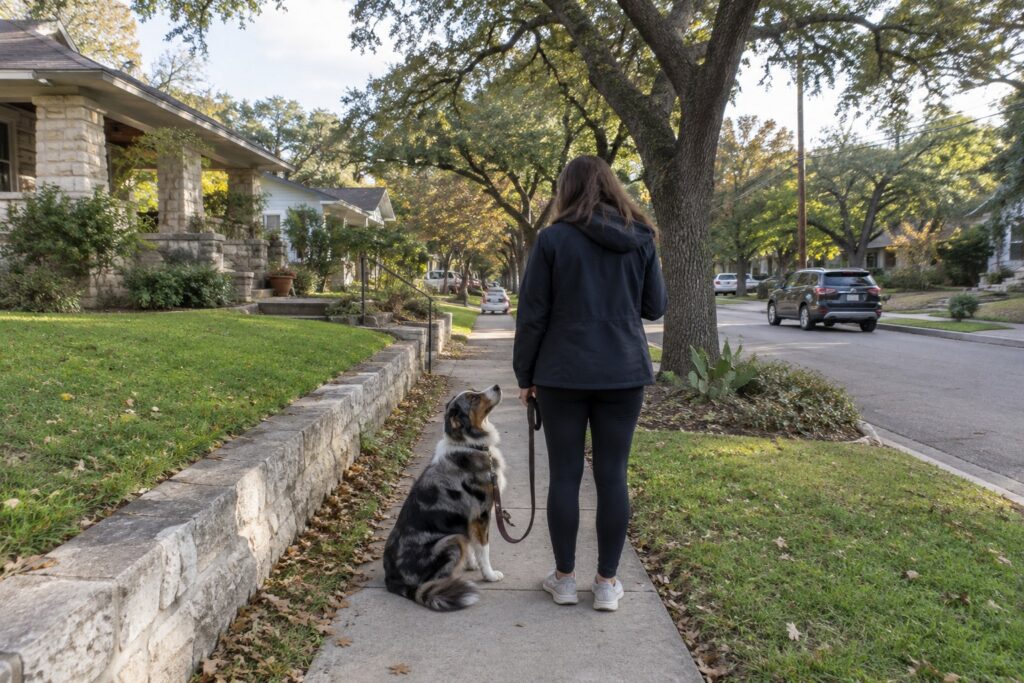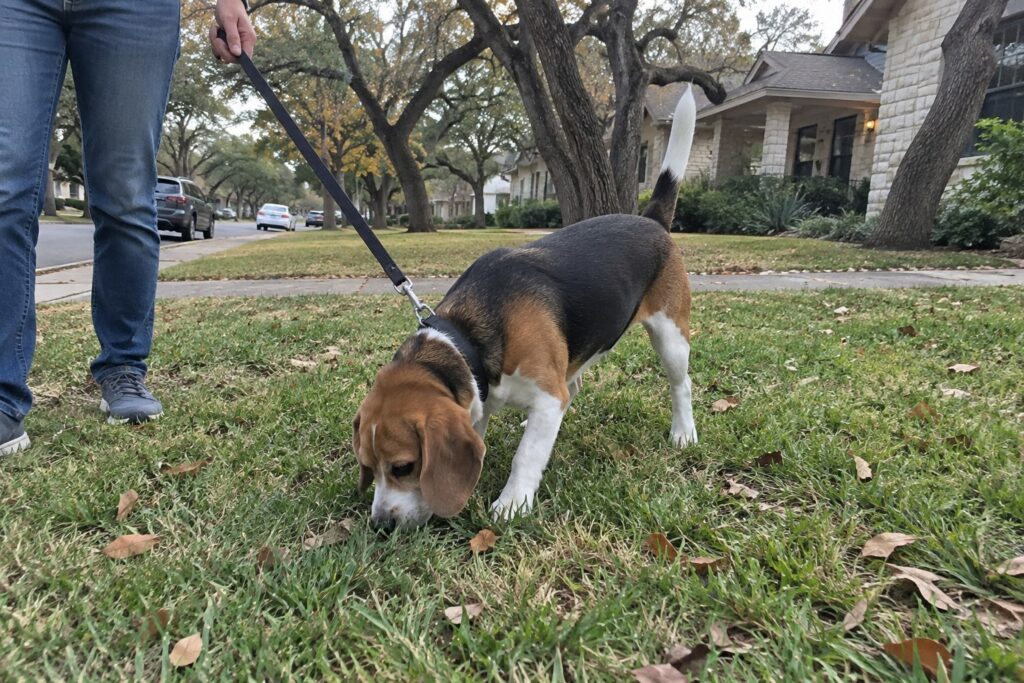

Austin is one of the most dog-friendly cities in the country, and for good reason. The city has dozens of off-leash parks, miles of trails along Lady Bird Lake and Barton Creek, a culture that welcomes dogs on patios and in retail spaces, and a year-round outdoor lifestyle that encourages people and their pets to be active together. But that same lifestyle comes with environmental realities that directly affect how dogs behave and how training needs to be structured. Chief among those realities is the Texas heat.
Dog owners who move to Austin from cooler climates often underestimate how significantly the heat changes everything. Dogs that were easy to exercise, calm at home, and focused during training sessions in a temperate climate can become reactive, unfocused, or lethargic once summer temperatures hit triple digits. Understanding the relationship between Austin’s climate, lifestyle, and dog behavior is not just useful information; it’s essential for any owner trying to keep their dog healthy, happy, and well-trained year-round.
This guide covers how Texas heat affects dogs physically and behaviorally, how to adjust training schedules accordingly, the value of indoor training options, and how to build good outdoor manners for Austin’s trails and green spaces.
How Texas Heat Affects Dog Behavior
Heat does more than make dogs uncomfortable. It has measurable effects on their behavior, energy regulation, and ability to learn.
Dogs regulate body temperature primarily through panting, and when ambient temperatures climb into the 90s and 100s, that system is under constant pressure. A dog that is heat-stressed will show signs including excessive panting, seeking shade, reluctance to move, and in some cases increased irritability or reactivity. Just as humans become short-tempered and less focused in extreme heat, dogs experience something similar. A dog that is calm and biddable at 70 degrees may become distracted, restless, or even snappy at 100 degrees.
There are additional behavioral patterns that owners often misattribute when training in summer conditions. A dog that seems to have forgotten commands it knows well is often not regressing; it’s struggling to process and respond because physical discomfort is competing with its ability to focus. A dog that becomes reactive on walks in summer may simply be overwhelmed and uncomfortable rather than having developed a new behavior problem.
Brachycephalic breeds (dogs with flat faces like French Bulldogs and Pugs), northern breeds like Huskies and Malamutes, and senior dogs or puppies are all especially vulnerable to heat. But all dogs are affected, and Austin’s climate demands that owners factor temperature into every decision about outdoor activity and training.
Adjusting Training Schedules for Summer Heat
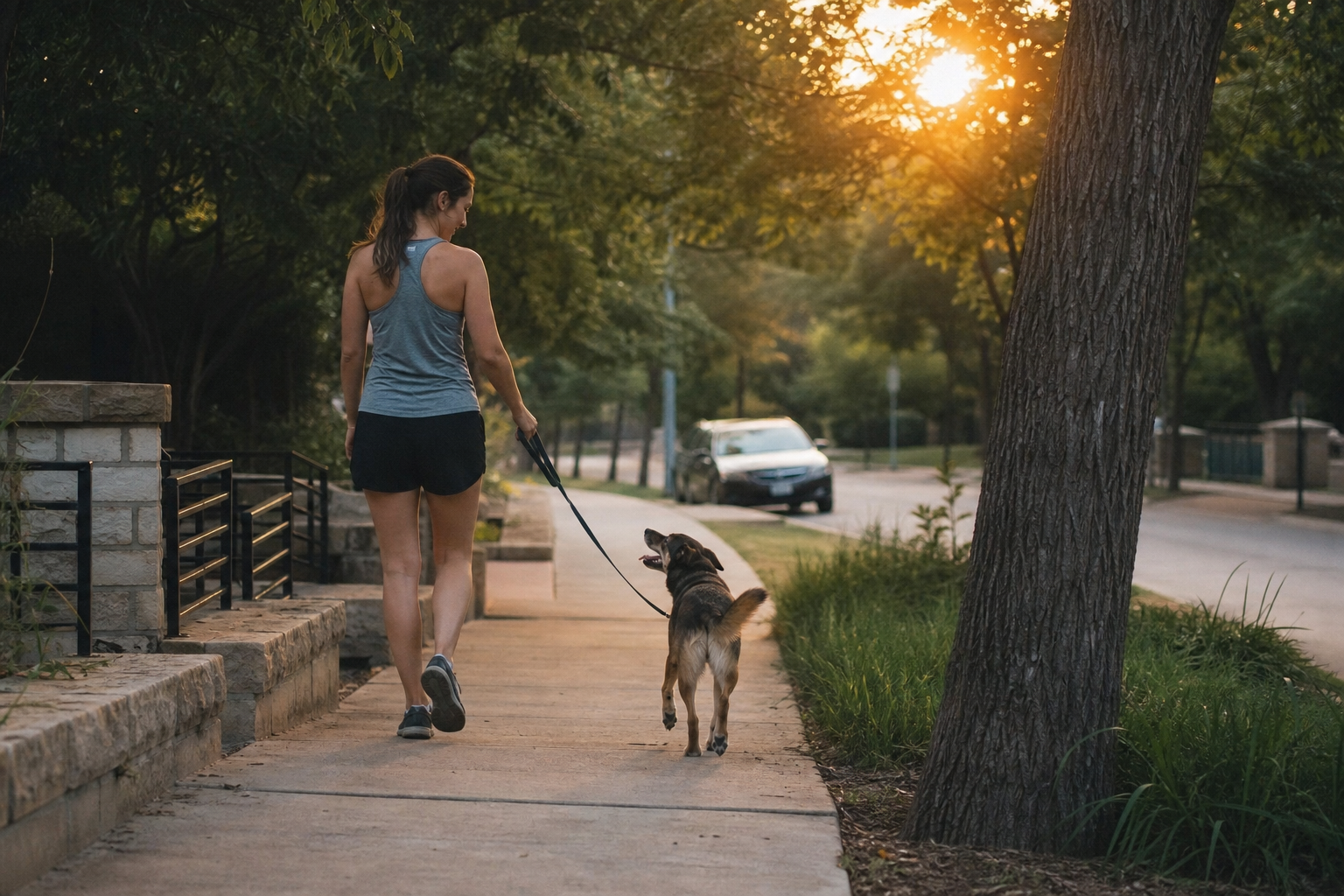
The most practical adaptation Austin dog owners can make is scheduling outdoor training and exercise during the coolest parts of the day. In summer, that typically means early morning before 9 a.m. or evening after 7 p.m. Pavement temperatures deserve special attention: asphalt can reach temperatures well above air temperature when in direct sun, and sustained contact with hot pavement can cause serious pad burns.
Beyond timing, session length matters more in heat. A 45-minute training session that’s productive in March may need to be broken into two 20-minute sessions in July. Dogs cannot absorb new information or perform reliably when they’re working to cool themselves down. Shorter, more frequent sessions with ample water breaks and rest in shade will produce better results than pushing through long sessions in the heat.
Hydration is also a training variable. An under-hydrated dog loses focus and physical responsiveness quickly. Bringing water to every outdoor training session, even short ones, is a standard practice for any Austin dog owner who works with their dog in summer.
It’s also worth noting that the intensity of training should match the conditions. Teaching a new behavior in July heat is harder than proofing a known behavior. Many trainers in Austin purposely use summer months to reinforce and consolidate skills rather than introduce complex new behaviors outdoors.
Indoor Training: A Smart Strategy for Hot Months
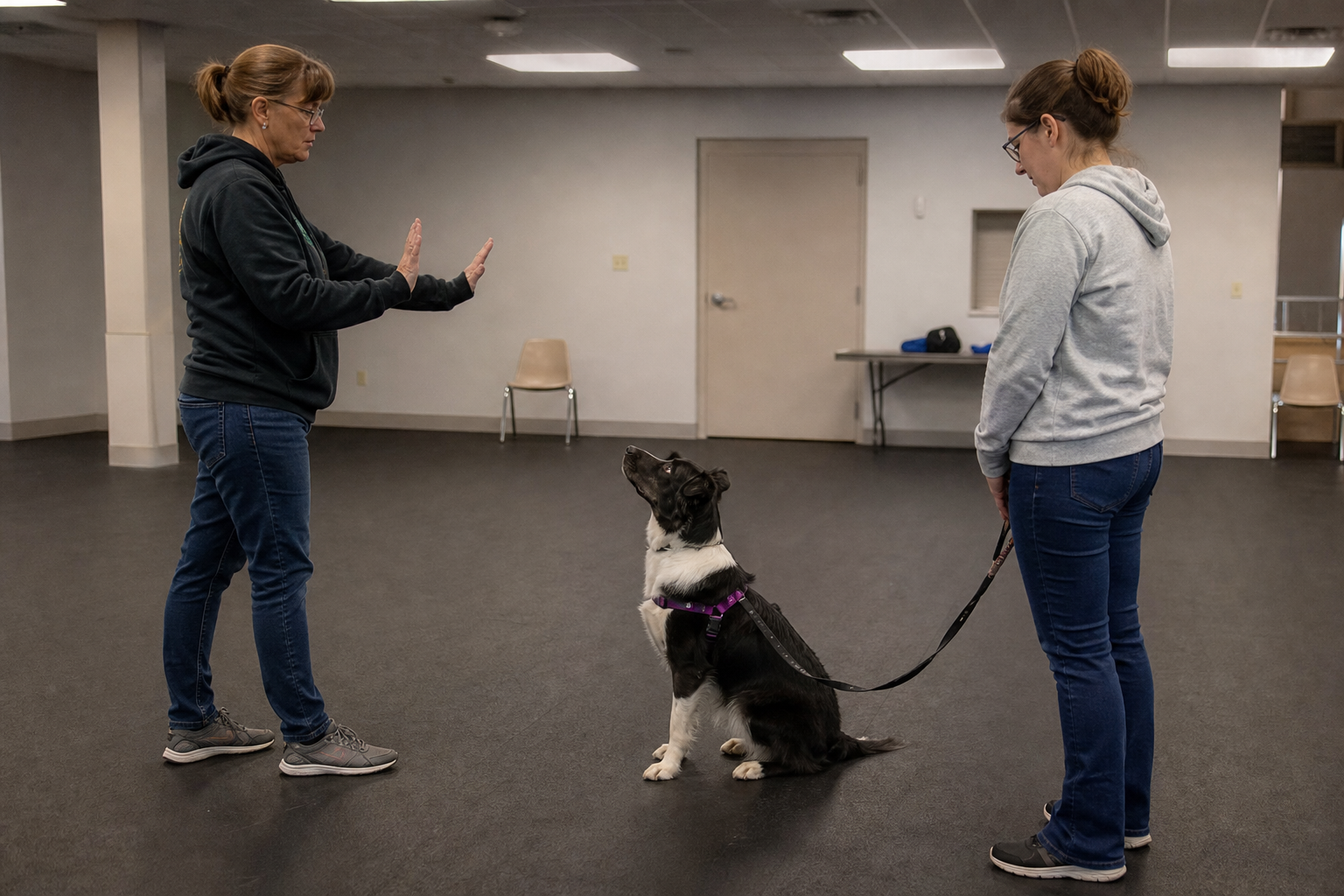
One of the most underutilized resources for Austin dog owners is structured indoor training. Facilities that offer dog daycare and training in climate-controlled environments allow dogs to work and socialize without the physical burden of heat. Indoor training is not a compromise; in many ways it produces better results during summer because dogs can actually focus.
For owners pursuing obedience work, socialization, or behavior modification during summer months, indoor sessions eliminate the heat variable entirely and allow trainers to isolate behavioral issues without the complicating factor of environmental stress. Many owners find that progress accelerates when training shifts indoors during Austin’s hottest months.
The board and training program is another excellent option for summer. Dogs in a structured boarding program benefit from professional training sessions scheduled at appropriate times, climate-controlled rest periods, and consistent handling that doesn’t vary based on whether the owner has the energy to train in 100-degree heat.
Outdoor Trail Etiquette in Austin
Austin’s trail culture is a major quality-of-life feature, and many dog owners want to include their dogs in hikes along Barton Creek, runs around Lady Bird Lake, or outings at Zilker Park and Auditorium Shores. Training your dog for these environments involves more than basic obedience; it requires exposure, desensitization, and practice in the actual settings where you’ll be using those skills.
Austin trails can be crowded, especially on weekends. Dogs encounter cyclists, runners, other dogs, wildlife, and children in rapid succession. A dog that does well in a quiet neighborhood may struggle significantly on a busy Saturday morning at the greenbelt. Working on leash manners, focus under distraction, and reliable recall in increasingly challenging environments is the kind of training that pays off consistently for Austin’s outdoor dog owners.
Trail etiquette in Austin also includes knowing when not to bring your dog. During heat advisories, even well-conditioned dogs face real risk on long or exposed trail sections. Having the training foundation to keep your dog safe and responsive in the outdoors also means knowing the limits of what the conditions allow.
Frequently Asked Questions
At what temperature is it unsafe to train or exercise my dog outdoors in Austin?
Most veterinarians recommend using caution when temperatures exceed 85-90 degrees F, especially with high humidity. Pavement temperatures become dangerous to paw pads at similar levels. When in doubt, do a seven-second pavement test: if you can’t hold your hand on the pavement comfortably for seven seconds, it’s too hot for your dog’s paws. Training and exercise should be moved to early morning, evening, or indoors.
Does Austin’s heat cause long-term behavior problems in dogs?
Heat itself doesn’t cause lasting behavior problems, but repeated experiences of being pushed past physical limits can increase stress responses over time. Dogs that are regularly overheated during exercise or training may become reluctant to engage with those activities. Building positive associations with exercise and training means respecting the dog’s physical limits, especially in summer.
Are there dog-friendly trails in Austin with shade that are better in summer?
Some sections of the Barton Creek Greenbelt and the Shoal Creek Trail offer more tree cover and shade than open routes. Generally, trails with tree canopy and access to water sources are more manageable in summer heat. Many Austin dog owners switch from midday trail runs to early morning hikes at shaded locations during peak summer months.
How does Austin’s active social culture affect dog behavior?
Austin’s outdoor culture means dogs are exposed to high-stimulus environments regularly: busy patios, festivals, crowded parks, and active streets. This can actually support socialization when managed well, but it can also contribute to overstimulation and reactivity if dogs aren’t properly prepared. Structured training helps dogs build the resilience to navigate these environments calmly.
Do I need different training strategies for different seasons in Austin?
Yes, to some extent. Spring and fall are ideal for intensive outdoor training work. Summer calls for shifting to indoor training or early-morning sessions with reduced intensity. Winter in Austin is mild enough for outdoor training most of the time, though the occasional cold front warrants flexibility. Adapting to the seasons is simply part of responsible dog ownership in Central Texas.
Should I let my dog swim in Barton Creek or Lady Bird Lake?
Many dogs love swimming in Austin’s waterways, and it’s a great way to exercise and cool down in summer. Blue-green algae blooms can occur in warm, slow-moving water and are toxic to dogs, so always check for advisories before allowing your dog to swim. After swimming, rinse your dog to remove any contaminants and check for debris in paws and coat.
Talk to a Trainer About Austin-Specific Training Needs
Every dog is different, and Austin’s climate and lifestyle create specific challenges worth discussing with a professional. All Dogs Unleashed works with Austin dogs and owners every day and understands how local conditions factor into training plans. Call (512) 253-8819, stop by 3704 Mountain View Ave, Austin, TX 78734, or explore the training programs available to find the right fit for you and your dog.