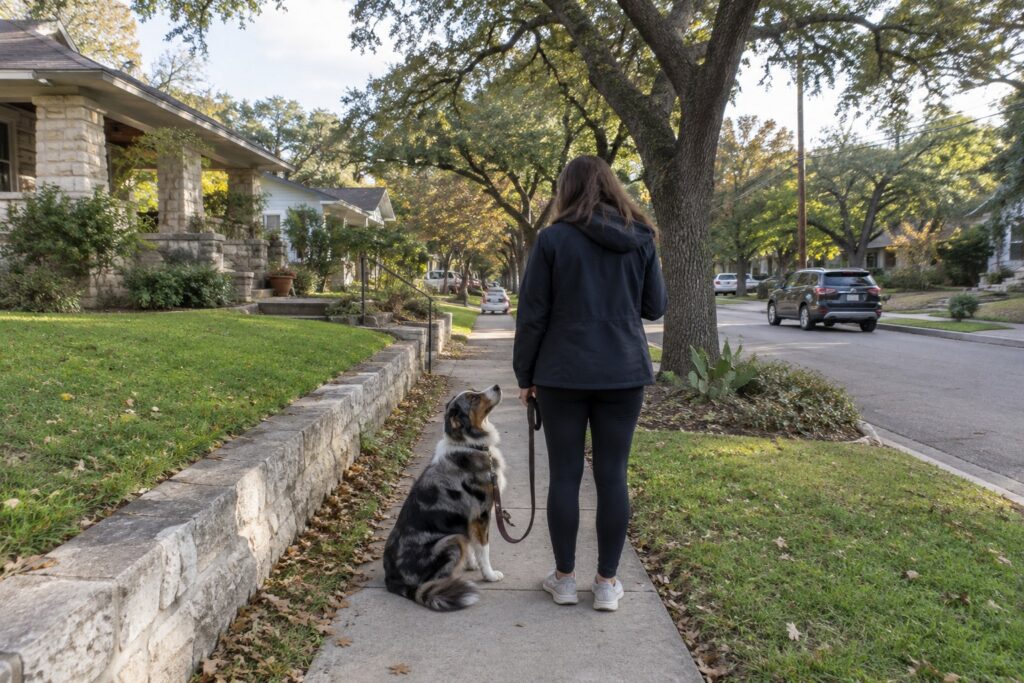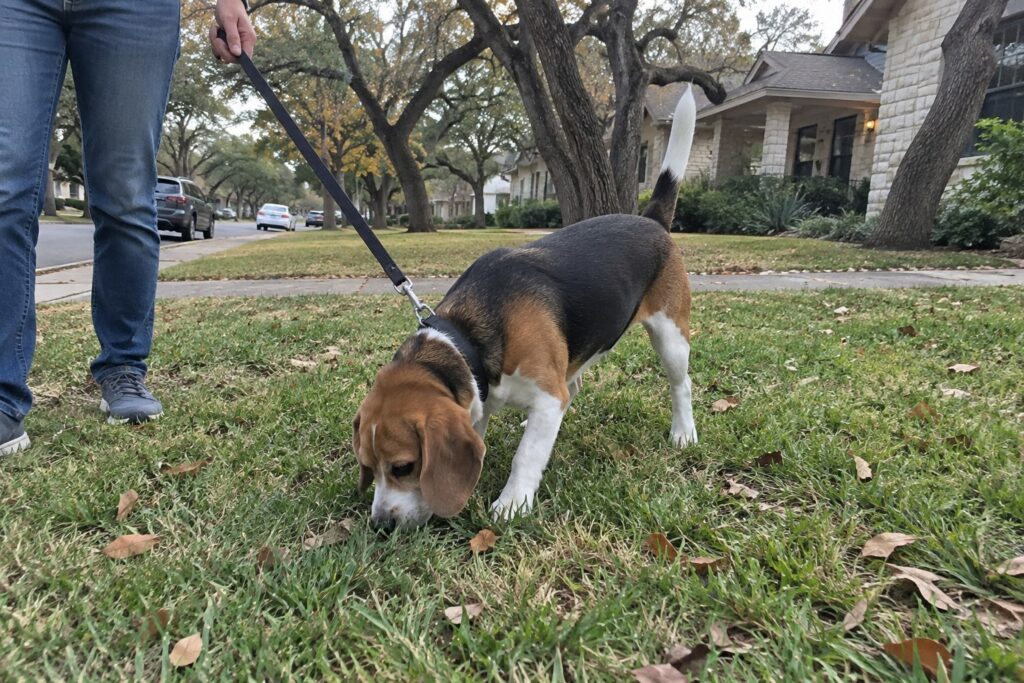

Austin’s winters are mild compared to most of the country, but January and February still bring cooler temperatures, occasional rain, and the kind of grey days that make even the most enthusiastic dog owner reluctant to head outside for a long walk. For dogs accustomed to active schedules during the warmer months, those lower-activity days can accumulate into a behavioral pattern problem if not managed intentionally.
Dogs do not need three hours of outdoor exercise every day to stay happy and well-behaved. What they need is consistent physical activity and, just as importantly, regular mental stimulation. Mental enrichment is genuinely exhausting for dogs in a way that strictly physical exercise sometimes is not. A dog that has spent 30 focused minutes working through a nose work exercise will often be calmer and more settled than a dog that ran for an hour with its brain disengaged.
At All Dogs Unleashed, we work with Austin dog owners year-round on the full picture of dog wellbeing, which includes enrichment and training activities that can be done entirely indoors. Here are the best options to try this winter.
1. Nose Work and Scent Games
Nose work is one of the most powerful enrichment activities available to dog owners and one of the least utilized. Dogs have up to 300 million olfactory receptors compared to 6 million in humans. Engaging that sense through structured scent games provides a level of mental stimulation that very few other activities can match.
Basic nose work involves teaching your dog to find a specific target odor hidden in the environment. The formal sport uses odors such as birch, anise, and clove, but introductory games can be done with your dog’s favorite treat or a small piece of food.
How to get started:
- Box searches: Set up five to ten cardboard boxes in a room. Hide a treat in one of them. Encourage your dog to investigate and reward it when it finds the correct box.
- Container searches: Use muffin tins, cups, or any small containers. Place treats under some, not others. Ask your dog to “find it.”
- Room searches: As your dog advances, hide the target odor in specific spots around a room and let the dog work systematically to find it.
Even 15-20 minutes of nose work will leave many dogs visibly tired in a way that reflects cognitive rather than purely physical exertion.
2. Puzzle Feeders and Food Dispensing Toys
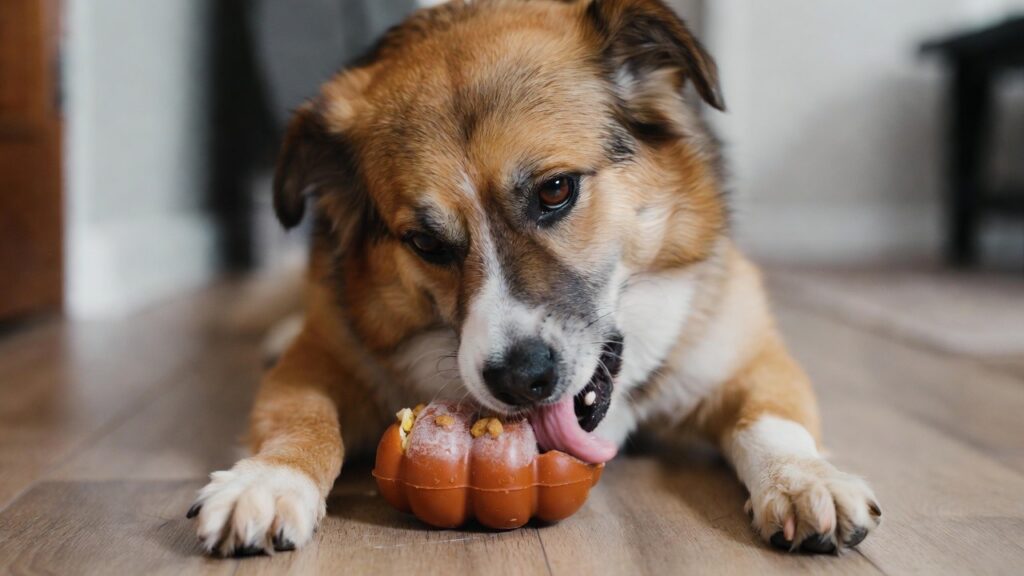
Feeding your dog from a bowl is a missed enrichment opportunity. Puzzle feeders, Kongs, snuffle mats, Licki Mats, and treat-dispensing balls all transform meal or snack time into a problem-solving exercise that keeps dogs mentally engaged.
The key is matching the difficulty level to your dog’s current experience and gradually increasing challenge as the dog improves:
- Beginner: A snuffle mat or a simple treat-dispensing ball. Kibble is spread or loaded into the puzzle, and the dog figures out how to get it out.
- Intermediate: A Kong stuffed with a mixture of kibble and soft food, frozen for 30-60 minutes before serving. Frozen Kongs take significantly longer to work through.
- Advanced: Multi-step puzzle boards that require the dog to slide, lift, and flip components to access treats. Several brands make well-designed versions available at Austin pet stores.
Rotating the puzzle type rather than using the same one every day maintains novelty and keeps the activity engaging.
3. Indoor Training Sessions
January is an excellent time to sharpen existing commands or work on new ones. Short, focused training sessions of 5-10 minutes, two to three times per day, are more effective than a single long session and can be done entirely indoors.
If your dog’s basic obedience is solid, consider advancing to more complex skills:
- “Place” command: Teaching your dog to go to a mat and remain there until released is one of the most practical commands for managing behavior during visitors and household activity.
- Impulse control exercises: “Leave it,” “wait,” and “stay” with increasing duration and distraction build the self-regulation capacity that transfers to every real-world situation.
- Trick training: Teaching tricks like “spin,” “roll over,” “paw,” or “bow” provides mental engagement and is genuinely enjoyable for dogs and owners alike. Trick training also builds the confidence of shy or anxious dogs.
Our in-home dog training program in Austin can come to your home and structure a winter training plan tailored to your dog’s current level and your goals.
4. Indoor Fetch and Tug Games
For dogs with sufficient drive and a home large enough to accommodate it, indoor fetch in a hallway or down a staircase provides real physical exercise on days when outdoor activity is limited. Use a soft toy rather than a hard ball to reduce the risk of breakage.
Tug is another excellent indoor game when played with clear rules:
- Always initiate and end tug on your cue, not the dog’s.
- Teach “drop it” before starting tug games so you maintain control of the game.
- Pause periodically and ask for a “sit” or “down” before continuing. This keeps the dog’s arousal regulated and reinforces obedience during excitement.
Tug is particularly beneficial for high-drive dogs that struggle with rainy-day under-stimulation.
5. Licking and Chewing Activities
Licking and chewing are self-regulating behaviors for dogs. They lower heart rate and cortisol levels and have a genuine calming effect on the canine nervous system. On grey winter days when your dog is restless, providing appropriate outlets for these behaviors is a simple and effective management tool.
Options include:
- Bully sticks and raw bones: Long-lasting chew options that provide sustained physical engagement and significant jaw work.
- Licki Mats: Flat rubber mats designed to be spread with peanut butter (xylitol-free), plain yogurt, or canned pumpkin. Can be frozen for extended engagement.
- Antlers and rubber chew toys: Durable options for power chewers that last longer than softer treats.
Providing a high-value chew when you need your dog to settle during a work call or video meeting is a legitimate and effective management strategy.
6. “Find It” Games With Kibble
If you want to add enrichment without any special equipment, scatter feeding is an immediate option. Instead of putting your dog’s meal in a bowl, toss handfuls of kibble onto the kitchen floor, across a rug, or into the grass. The dog sniffs out every piece, providing a satisfying nose work experience with zero setup.
You can escalate this into a “find it” hide-and-seek game:
- Ask your dog to “sit” and “stay.”
- While your dog waits, hide small piles of kibble in several spots around a room.
- Release with “find it” and watch your dog work through the space.
This game scales in difficulty by hiding treats in progressively more challenging spots and covering larger areas of the home.
7. Dog Daycare on High-Activity Days
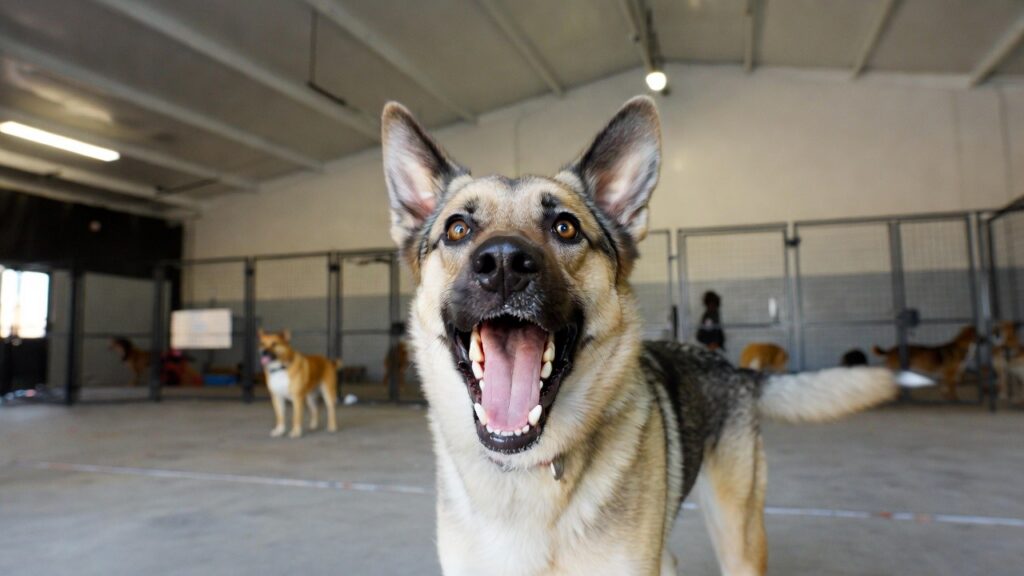
For dogs that need more stimulation than indoor activities can realistically provide, or for busy Austin households that cannot dedicate enrichment time during the workday, dog daycare at All Dogs Unleashed provides structured social play, supervised exercise, and mental engagement in a professional environment.
Daycare is particularly valuable for high-energy dogs during Austin’s winter months when reduced outdoor time creates a stimulation deficit. Dogs that attend daycare regularly during lower-activity seasons maintain better baseline behavior and are significantly easier to manage in the evenings.
8. Massage and Physical Relaxation Practice
Teaching your dog to accept calm physical handling from you is both an enrichment activity and a health practice. Regular gentle massage improves circulation, allows early detection of physical changes such as lumps or soreness, and builds the cooperative handling skills that make veterinary examinations and grooming appointments easier.
Practice by spending 5-10 minutes daily doing gentle strokes along your dog’s back, sides, and legs. Progress gradually to handling ears, paws, and mouth. Pair all handling with calm praise and small treats. Dogs that enjoy physical handling from their owners are also typically more tolerant of being handled by groomers and veterinarians.
Keep Your Austin Dog Active and Happy All Winter Long
Winter in Austin is shorter and milder than in most places, but even a few weeks of reduced outdoor activity can affect a dog’s behavioral baseline. With the right mix of mental enrichment, indoor training, and daycare support, your dog can stay happy, stimulated, and well-behaved through January and February.
All Dogs Unleashed is here to help you build the right routine. Call (512) 963-6017 to learn more about our training and daycare programs in Austin.
Frequently Asked Questions
How much indoor enrichment does a dog need per day?
There is no universal answer, as needs vary significantly by breed, age, energy level, and individual temperament. As a general guideline, 30-60 minutes of enrichment activity spread across the day is appropriate for most adult dogs. High-drive working breeds may need significantly more. Pay attention to your dog’s behavior: a well-stimulated dog settles easily, a bored dog finds its own entertainment.
Can puzzle feeders replace exercise entirely?
No. Mental enrichment and physical exercise address different needs and neither fully substitutes for the other. On days when outdoor exercise is genuinely not possible, puzzle feeders, training sessions, and indoor games are excellent supplements that reduce behavioral problems associated with under-stimulation. But they should not routinely replace daily physical activity.
My dog is not interested in puzzle toys. What can I do?
Dogs that are not food-motivated may need to work up to puzzle toys through shaping. Start by simply rewarding the dog for looking at the puzzle, then for touching it with their nose, then for interacting with it. You can also try different types of puzzles, as some dogs respond better to snuffle mats than to hard plastic puzzles. A trainer can help assess what motivates your specific dog most effectively.
Is indoor training as effective as outdoor training?
Indoor training is highly effective and, in some ways, produces stronger foundational learning because distractions are lower. The goal is to generalize commands trained indoors to outdoor environments with higher distraction levels. Training in both settings produces the most reliable obedience.
How do I keep my dog engaged without spending a lot of money on toys?
Cardboard boxes, paper bags, and plastic containers from your kitchen can all become enrichment tools. Scatter feeding costs nothing beyond the dog’s regular food. The “find it” hide-and-seek game requires no equipment at all. Enrichment quality has more to do with creativity and consistency than expense.
About All Dogs Unleashed
All Dogs Unleashed is a professional dog training company located at 111 Congress Ave. #201, Austin, TX 78701 serving the Austin, TX area. We offer a full range of services including dog boarding, daycare, grooming, in-home training, and structured board and train programs.
Business Name: All Dogs Unleashed
Address: 111 Congress Ave. #201, Austin, TX 78701
Phone: (512) 963-6017
Website: https://www.alldogsunleashed.com/austin/