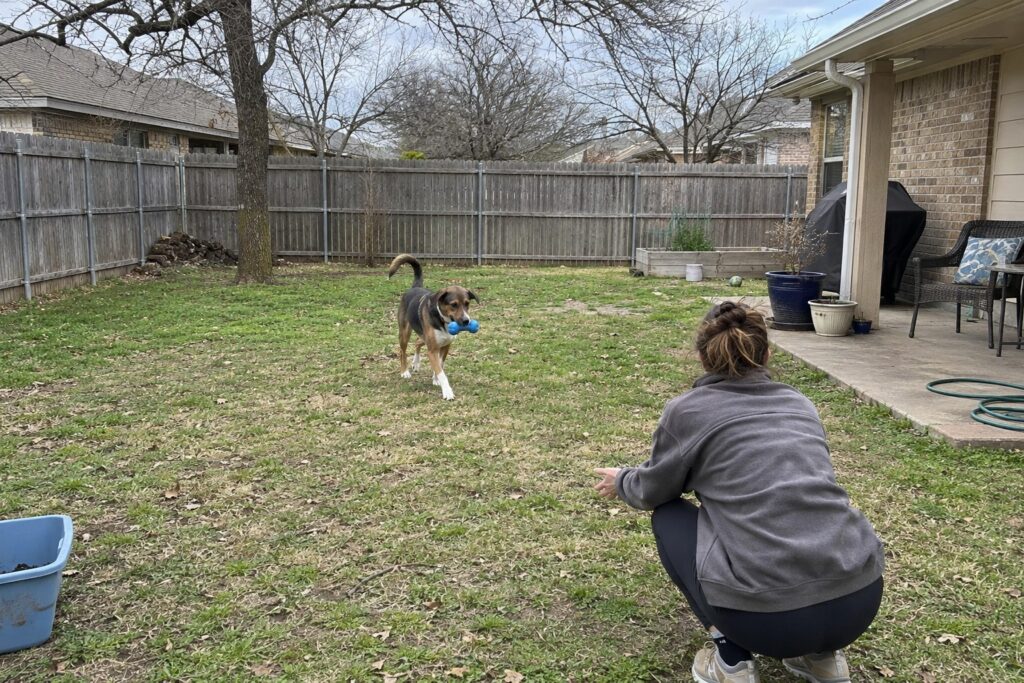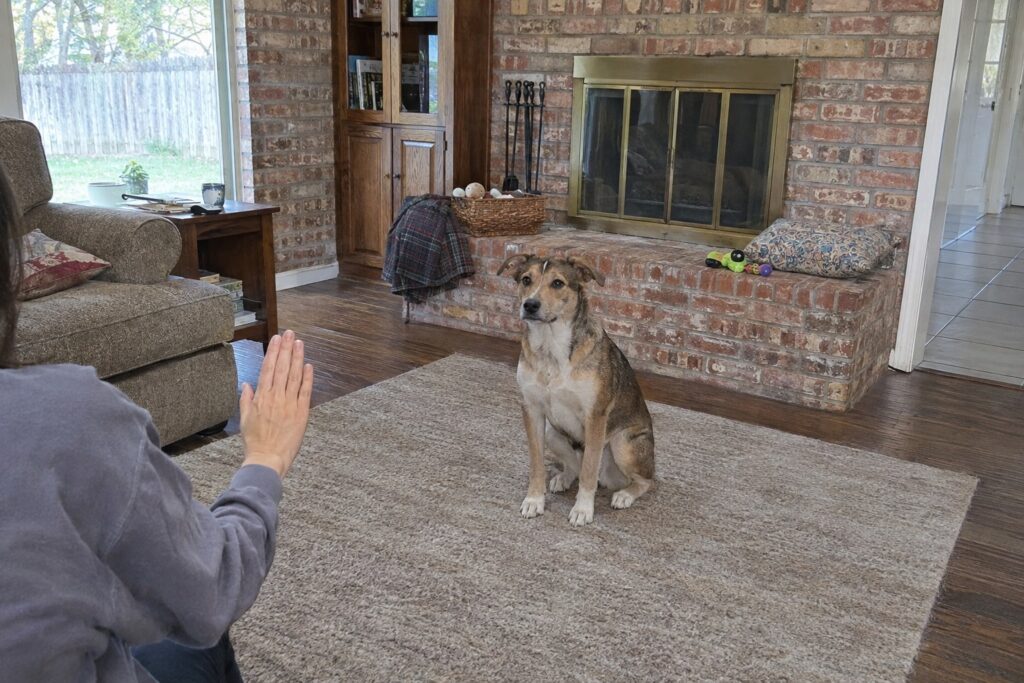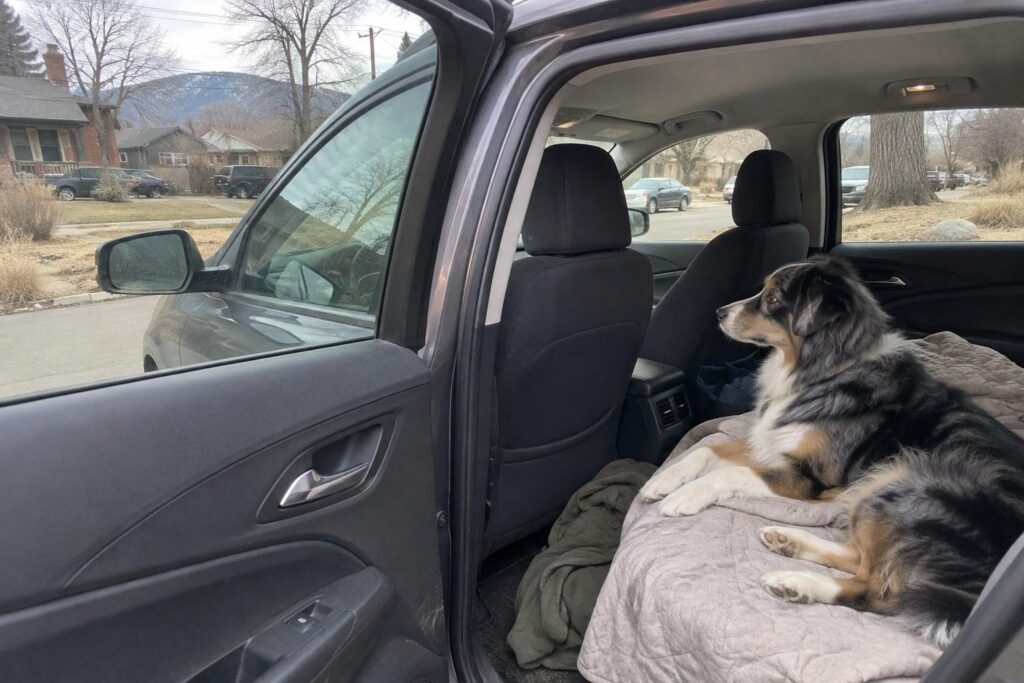

Great Pyrenees training works best when you understand what the breed was made for. These big, calm, fluffy dogs were developed to guard sheep and goats on their own, often through the night, and that job shaped a dog who thinks independently, barks at anything unusual, and likes to patrol well beyond your property line.
At All Dogs Unleashed Dog Training Austin, we see how often livestock guardian dogs and Pyrenees mixes end up in Central Texas homes, frequently by way of rescue. They can be gentle, loyal family companions. They are also not a breed that responds to the same approach you might use with a retriever. Setting realistic expectations from day one makes training smoother for everyone in the house.
Want a plan built around your Pyrenees and your household? Our Austin team is ready to help.
Key Takeaways
- Great Pyrenees were bred to guard livestock without human direction, so they are independent thinkers who need patient, consistent training rather than constant repetition.
- Barking, especially at night, is part of the guardian job, so the goal is to manage and reduce it rather than expect total silence.
- Pyrenees tend to roam and patrol, which makes a secure fence and leashed walks essential in unfenced areas.
- Most Pyrenees should not be trusted off leash, so build “come” on a long line and treat recall as a safety tool, not a ticket to freedom.
- The heavy double coat insulates against heat and sun, so plan Austin exercise for cool hours and brush the undercoat instead of shaving.
Understanding the Great Pyrenees Mindset
Most training frustrations with this breed come from a mismatch between what owners expect and what the dog was built to do. Once you see the world the way a guardian dog does, many puzzling behaviors start to make sense.
Bred to Work Alone
The American Kennel Club breed profile describes the Great Pyrenees as a patient, calm, and smart guardian that was developed to protect flocks in the mountains. Shepherds relied on these dogs to make their own decisions when no person was nearby. A dog that had to wait for instructions would have been a poor guardian.
That history is why your Pyrenees may look at you, consider your request, and then decide it has something more important to do. It is not defiance. It is a working dog weighing its priorities.
Calm Indoors, Alert Outdoors
Many Pyrenees spend much of the day relaxed and quiet, then become watchful as evening falls. Owners sometimes mistake that calm for low energy and skip training. In reality, a Pyrenees still needs structure, daily walks, and clear house rules to stay balanced.
Protective by Nature
Guardian breeds watch over what they consider theirs, which can include children, other pets, and the yard itself. Early, steady socialization helps your dog learn that delivery drivers, visitors, and neighbor dogs are normal parts of life in Austin rather than threats to confront.
| Guardian Trait | What It Looks Like at Home | Training Focus |
|---|---|---|
| Independence | Slow or selective response to known commands | Short sessions, high-value rewards, consistent follow-through |
| Vigilance | Barking at sounds, lights, and passersby | Acknowledge and redirect, a calm “quiet” cue |
| Roaming instinct | Testing fences, wandering off when loose | Secure containment, leash habits, boundary work |
| Protectiveness | Guarding the yard or family members | Socialization, calm greetings, “place” when guests arrive |
| Size and strength | Leaning, pulling, knocking people over | Loose-leash walking and polite manners from early on |
Life With Kids and Other Pets
Because guardian dogs bond closely with what they protect, many Pyrenees are patient with the children and animals in their own home. That bond still needs guidance. Teach kids not to climb on or crowd the dog, give your Pyrenees a quiet place to retreat, and supervise early interactions with cats and smaller dogs.
Visiting children and unfamiliar dogs are a different story. A protective Pyrenees may step between “its” kids and newcomers, so practice calm introductions on leash and reward relaxed behavior. If you share your home with more than one dog, our post on managing a multi-dog household in Austin offers useful routines.
Start Manners Early
A Pyrenees puppy grows into a very large adult, and habits that seem cute at a young age, like leaning on legs or jumping up, become hard to manage later. Begin “sit” for greetings, gentle leash walking, and handling exercises early, so brushing, nail trims, and vet visits stay easy as your dog grows.
Why Great Pyrenees Show Up So Often in Central Texas Rescues
Ranches and small farms across the Hill Country and surrounding counties use livestock guardian dogs to protect goats, sheep, and poultry. When working dogs or their puppies end up in shelters, many arrive at Austin-area rescues, and adopters fall for their gentle faces without always knowing what comes with the breed.
Starting Over in a Suburban Home
A dog raised with livestock may have had little exposure to city life. Leashes, car rides, traffic noise, and tile floors can all be new. Give your rescue time to settle, keep routines predictable, and introduce new experiences gradually so the dog builds confidence instead of feeling overwhelmed.
Unknown History Calls for Patience
With many rescue Pyrenees, nobody knows exactly how the dog was raised. Watch body language closely during the first weeks and avoid forcing interactions. Our post on why rescue dogs often need professional training in Austin covers this transition in more depth, and our body language guide for Austin dog owners can help you read early warning signs.
Mixes Bring Mixed Traits
Many Central Texas rescues are Pyrenees crossed with other guardian or working breeds. A mix may be more energetic, more vocal, or more reserved than a purebred. Train the dog in front of you, not the breed description, and adjust your plan as you learn its personality.
Night Barking and the Guardian Instinct
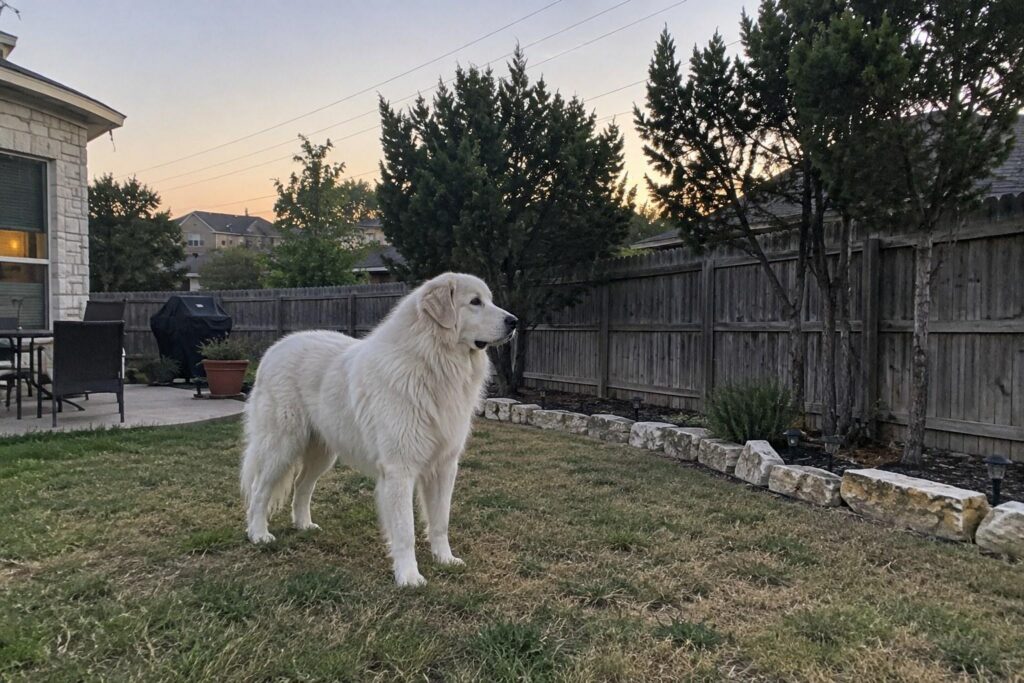
If there is one complaint we hear from Pyrenees households, it is barking after dark. Guardian dogs historically worked through the night, when predators were most active, so evening alertness is wired into the breed. In a neighborhood with close neighbors, that can create real tension.
Set Realistic Goals
You will probably never have a Pyrenees that never barks. A realistic goal is a dog who alerts briefly, then settles when you acknowledge it. Teaching a calm “quiet” cue, rewarding silence, and calmly calling your dog inside are more effective than yelling, which a guardian may hear as you joining the alarm.
Manage the Environment at Night
Bringing your Pyrenees indoors overnight is one of the simplest ways to reduce barking. Close blinds facing the street, use a fan or white noise to soften outside sounds, and give the dog a comfortable spot in a cool room. Fewer triggers mean fewer reasons to sound the alarm.
Burn Energy Before Bedtime
An evening walk after the heat breaks, followed by a short training session, helps your dog settle before lights out. Mental work such as “down” and “stay” practice or a puzzle feeder can take the edge off a restless guardian without overheating it.
Ready to build calmer habits with daily, consistent practice? Our two-week residential program gives your Pyrenees structure from trainers who understand independent breeds.
Roaming, Fencing, and Recall Limits
The AKC notes that Great Pyrenees need a securely fenced area and should not be trusted off leash, because they tend to wander in search of territory to guard. A Pyrenees that slips out may follow its instincts for a long way, which puts it at risk from cars and other hazards.
Fencing Comes First
A physical fence is a must. Walk the fence line often to look for gaps, loose boards, or soft soil where your dog might dig. Many Pyrenees are strong enough to push weak sections, and some will climb or dig to patrol a larger area. Never rely on an invisible boundary alone for a determined guardian.
Leash Habits That Hold Up
A full-grown Pyrenees can outweigh many of its handlers, so loose-leash walking is a priority early on. Start in quiet spaces, reward your dog for staying at your side, and stop moving forward when the leash tightens. Our post on why dogs pull on the leash and how to stop it offers more practical tips.
Recall as a Safety Net
Teaching “come” still matters, even if your Pyrenees will stay leashed outside fenced areas. Practice on a long line in your backyard, reward generously, and keep sessions short. The goal is a dog that turns back to you during an emergency, such as an open gate. For more on building this skill, read our guide on teaching your Austin dog to come when called.
| Situation | Management Step | Training Step |
|---|---|---|
| Testing or digging at the fence | Inspect the fence line and reinforce weak spots | Supervise yard time and redirect digging |
| Bolting through doors or gates | Use a leash or baby gate near entry points | Practice “wait” at every doorway |
| Wandering on walks | Keep a leash on in all unfenced areas | Loose-leash walking with frequent rewards |
| Ignoring “come” | Use a long line during practice | Short, rewarding recall sessions with slow distraction increases |
Heat Management for a Heavy-Coated Guardian in Austin
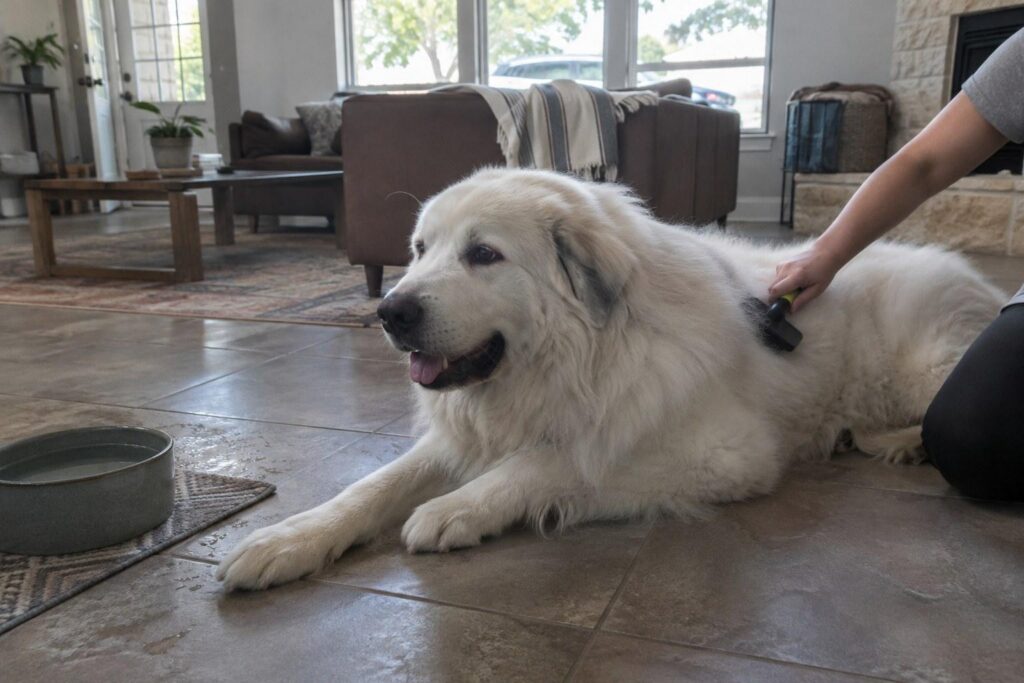
Great Pyrenees developed in cold mountain regions, and their thick double coat reflects that. Central Texas summers are long, and warm weather often hangs on well into fall, so a Pyrenees owner here has to treat heat as part of every training plan.
Train in the Cool Hours
Schedule walks and outdoor training for early morning and after sunset. Save the afternoon for indoor work in air conditioning, such as “place,” short obedience drills, and calm chew time. Pavement holds heat, so choose grass and shaded paths, and test the ground with the back of your hand before heading out.
Do Not Shave the Double Coat
It is tempting to think a shave will help a big fluffy dog stay cool. The AKC explains that a double coat helps regulate temperature and protects the skin from sunburn, so shaving can do more harm than good. Regular brushing to clear the loose undercoat lets air move through the coat. Ask your veterinarian about any skin or coat concerns.
Know the Warning Signs
The AVMA’s warm weather pet safety guidance lists excessive panting, drooling, restlessness, unsteadiness, abnormal gum and tongue color, and collapse as signs of heat stress. If you see them, stop activity, move your dog somewhere cool, offer water, and call a veterinarian right away. Our post on how Austin’s climate affects your dog’s behavior and training has more seasonal advice.
| Time of Day | Typical Austin Conditions | Best Pyrenees Activities |
|---|---|---|
| Early morning | Coolest part of the day | Walks, leash work, long-line recall |
| Midday and afternoon | Hottest air and pavement | Indoor obedience, “place,” puzzle feeders |
| After sunset | Cooling air, pavement may stay warm | Grassy walks, short calm training before bed |
How Board and Train Supports Great Pyrenees Training
Consistency is what moves the needle with an independent guardian, and it is hard to deliver every single day in a busy household. A structured residential program can give your dog that daily repetition.
Two Weeks of Daily Structure
Our two-week Board and Train program is a fixed program where your dog stays at our facility and trains with our team every day. Each enrollment begins with an evaluation, and dogs are housed individually in secure, climate-controlled kennels, which is a welcome detail for a heavy-coated breed in Texas.
Turnover Session and Written Instructions
We do not offer observation of training sessions, since a focused setting helps dogs learn. At the end of the program, we hold a turnover session where you learn how to handle your Pyrenees, and you go home with written instructions so the progress carries over.
Guaranteed Results and Lifetime Support
Board and Train comes with guaranteed results and lifetime support at no additional charge. If an old habit creeps back, our team is available to help. Affirm financing is available if you prefer to spread out the cost. You can compare options on our dog training programs page.
In-Home Lessons for Real-World Practice
Some families want to work alongside a trainer where problems actually happen, such as the front door or the backyard fence. Our in-home dog training and private lessons help you practice leash skills, greetings, and barking routines in your own space.
| Option | Best For | What You Get |
|---|---|---|
| Two-week Board and Train | Pyrenees needing daily structure, leash manners, and calmer responses | Daily training, evaluation, turnover session, written instructions, guaranteed results, lifetime support |
| In-home private lessons | Families who want hands-on coaching at home | Individual instruction in your dog’s everyday environment |
Have questions about your Pyrenees? Call our Austin team at (512) 963-6017 and we will help you choose the right next step.
About All Dogs Unleashed Dog Training Austin
All Dogs Unleashed Dog Training Austin helps Central Texas families build calm, reliable relationships with independent breeds, including guardian dogs and rescue mixes. Our fixed two-week Board and Train program provides daily structure in secure, climate-controlled kennels, followed by a turnover session and written instructions, and it is backed by guaranteed results and lifetime support. We also offer in-home private lessons, boarding, and refresh training so your Pyrenees can keep improving at home.
Frequently Asked Questions
Are Great Pyrenees hard to train?
Great Pyrenees are smart, but they were bred to make decisions on their own while guarding livestock, so they can seem slow or selective about commands. They usually respond best to short, consistent sessions, rewards they value, and calm follow-through. Expect steady progress rather than instant obedience, and stay patient as your dog learns your household routines.
How do I stop my Great Pyrenees from barking at night?
Night barking is part of the guardian instinct, so aim to reduce it rather than eliminate it. Bring your dog indoors overnight, block views of the street, and use white noise to soften outside sounds. Provide an evening walk and some mental work before bed, then reward quiet behavior and teach a calm “quiet” cue.
Can a Great Pyrenees be trained to walk off leash?
The AKC advises that Great Pyrenees should not be trusted off leash because they tend to roam in search of territory to guard. Most owners keep their Pyrenees leashed in any unfenced area. You should still teach “come” on a long line so your dog has a dependable response if it ever slips through a gate.
Can a Great Pyrenees handle the Austin heat?
Many Pyrenees live comfortably in Austin with careful planning. Keep exercise to early mornings and after sunset, provide shade, fresh water, and air conditioning during hot hours, and brush out the loose undercoat regularly instead of shaving. Watch for signs of heat stress like heavy panting or unsteadiness, and contact your veterinarian with concerns.
What kind of fence does a Great Pyrenees need?
A Pyrenees needs a secure physical fence that is sturdy and tall enough to discourage climbing or pushing through. Check the fence line often for gaps and loose boards, and watch for digging near the base. An invisible boundary alone is rarely enough for a determined guardian, and yard time should be supervised.
Is Board and Train a good fit for a rescue Great Pyrenees?
For many rescue Pyrenees, yes. Our fixed two-week Board and Train program gives your dog daily, structured practice with leash manners, greetings, and calm behavior. Every enrollment starts with an evaluation and ends with a turnover session where you learn to handle your dog, plus written instructions, guaranteed results, and lifetime support.
Successful Great Pyrenees training in Austin means working with the guardian instinct instead of fighting it: manage night barking, secure your fence, keep the leash on, and plan around the heat. If you want expert help, call us at (512) 963-6017 or reach out online. You can also visit either of our Austin locations, at 111 Congress Ave. #201 downtown or at 3704 Mountain View Ave.
Ready to Get Started with All Dogs Unleashed Dog Training Austin?
Give your Pyrenees the structure it needs to become a calm, trustworthy family companion. Call (512) 963-6017 to talk with our team about Board and Train or in-home lessons. You can also visit All Dogs Unleashed Dog Training Austin at 111 Congress Ave. #201, Austin, TX 78701, or at our second Austin location at 3704 Mountain View Ave, Austin, TX 78734, (512) 253-8819.