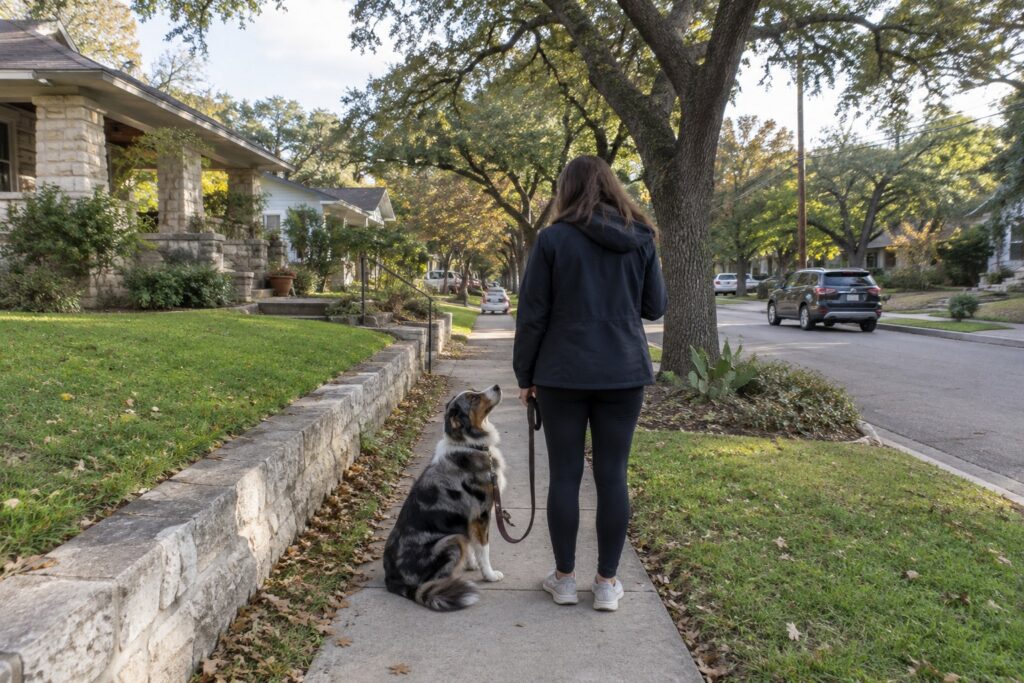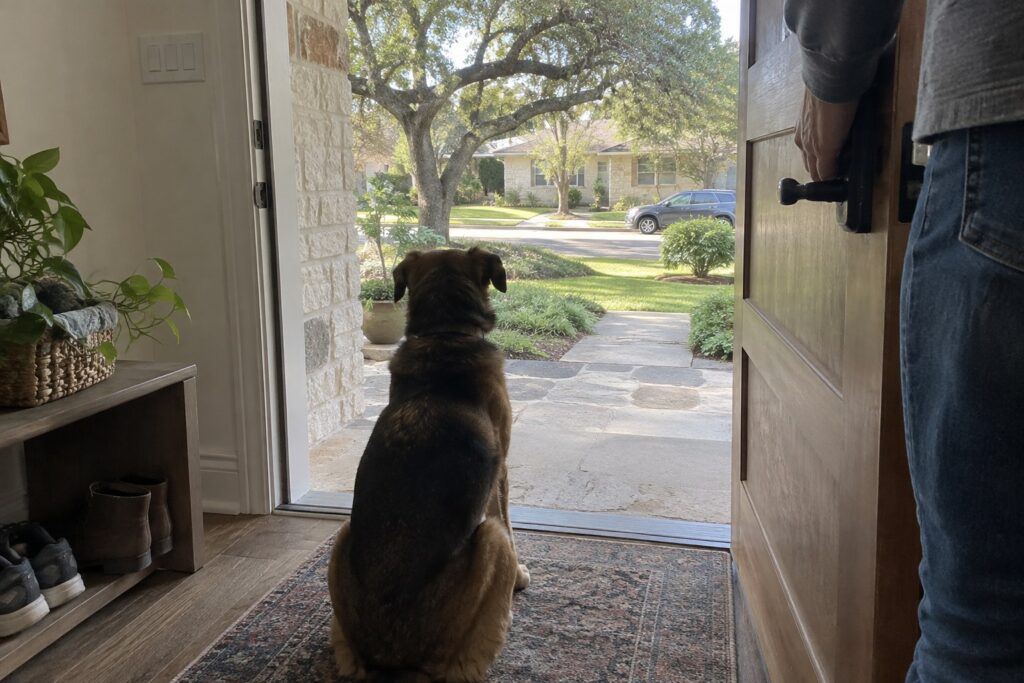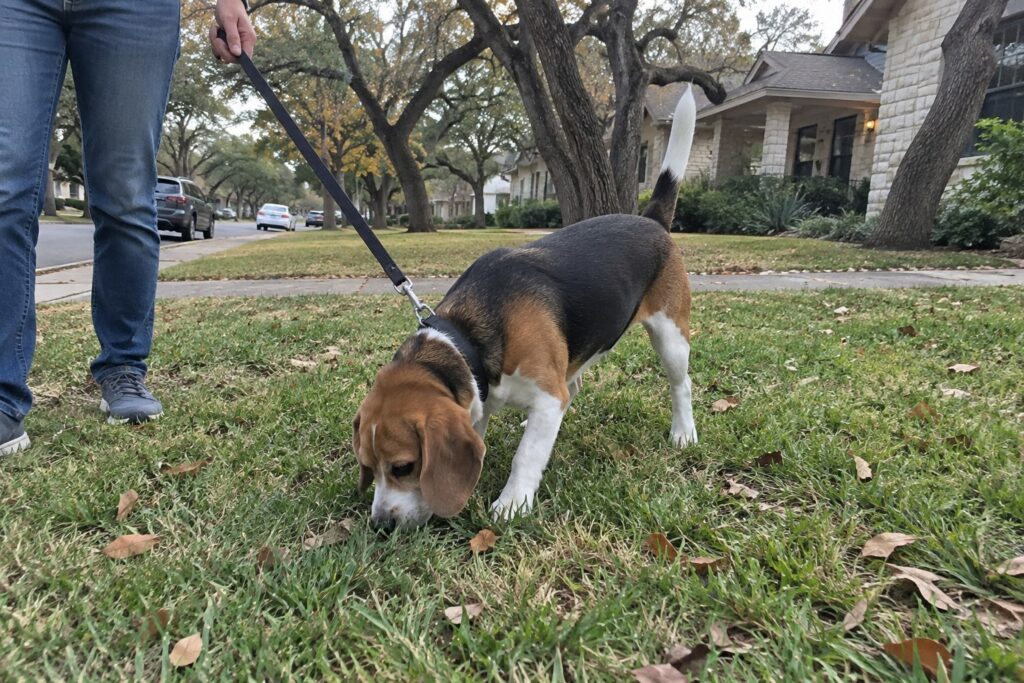

Austin is a city that loves dogs, and many Austin households love more than one. Multi-dog homes are common across the city, from bungalows in East Austin with a pair of rescue mutts to larger properties in the Hill Country suburbs with three or four dogs of varying sizes and ages. The appeal is easy to understand: dogs provide companionship to each other, reduce separation anxiety, and bring a lot of joy to the humans who live with them.
But anyone who has lived in a multi-dog household knows the challenges that come with it. Resource guarding at the food bowl, tension during walks, conflict over attention, and the difficulty of maintaining consistent training when dogs feed off each other’s energy are all real issues that can erode the harmony of a multi-dog home if left unaddressed. The good news is that with the right structure and some intentional training, most of these challenges are manageable.
Whether you’re adding a second dog to an existing household or working to improve the dynamic between dogs you already have, these practical training strategies will help you create a calmer, more structured environment for everyone under your roof.
Understanding Pack Dynamics and What They Actually Mean
The concept of “pack dynamics” gets a lot of attention in dog training discussions, and it’s worth grounding this topic in realistic expectations. Domestic dogs are social animals that do form relationships and hierarchies with other dogs they live with, but these relationships are more fluid and nuanced than older “dominance theory” models suggested.
What matters most in a multi-dog home is not establishing a rigid social hierarchy but rather ensuring that all dogs understand and respect a clear structure set by the humans in the household. Dogs in well-managed multi-dog homes know the rules, know what to expect from their environment, and have enough structure that competition for resources and status is minimized.
Tension between dogs in the same household usually signals one of a few things: insufficient individual training and structure, resource competition that hasn’t been managed, inconsistent rules that create confusion, or a mismatch in energy levels or play styles that needs management. Identifying which factor is driving the issue is the first step toward addressing it.
Resource Guarding: Prevention and Management
Resource guarding is one of the most common and most significant problems in multi-dog households. Dogs may guard food, water, toys, sleeping spots, resting areas, or even people. Low-level guarding (stiffening, hard stare, eating faster) can escalate to growling and snapping if not addressed.
Prevention starts with management:
- Separate feeding stations: Feed dogs in separate areas or rooms, especially if any guarding behavior has been observed. This removes the competition and allows each dog to eat without stress.
- Remove high-value items: When multiple dogs are together unsupervised, pick up high-value chews, bones, and toys that are likely to trigger guarding. Provide these items only under supervision and in separate spaces.
- Manage sleeping areas: If dogs compete for furniture or resting spots, use training to establish clear rules about where each dog is allowed to rest.
- Individual attention: Resource guarding of people is often triggered by perceived competition for attention. Scheduling separate one-on-one time with each dog reduces this pressure.
Training dogs to reliably “leave it” and “place” (go to and stay on a designated mat or bed) creates tools that are invaluable in multi-dog households for managing tension before it escalates.
Feeding Protocols That Reduce Conflict
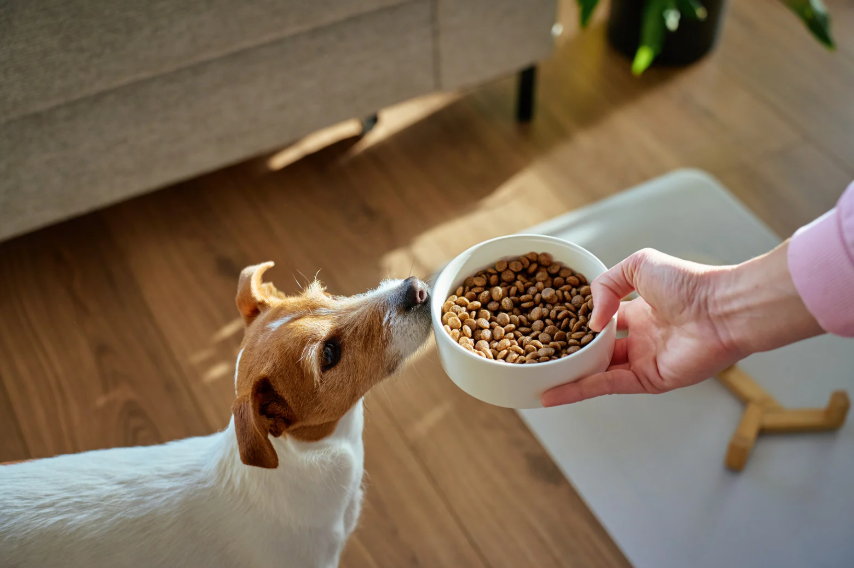
Mealtimes are a common flashpoint in multi-dog homes, and the way meals are structured makes an enormous difference. Beyond simply feeding dogs in separate spaces, the following protocols help establish calm, predictable routines:
- Feed on a consistent schedule: Dogs that know when food is coming are less anxious and less competitive around mealtimes.
- Require a “sit” or “place” before feeding: Making dogs work briefly for their meals builds impulse control and reinforces that the humans control the resources.
- Supervise until bowls are empty: Don’t leave dogs unattended with food unless you’ve confirmed that guarding is not occurring.
- Avoid free-feeding: Leaving food out all day creates a constant resource that can trigger ongoing guarding behavior. Structured mealtimes are almost always preferable in multi-dog homes.
Walking Multiple Dogs: Managing Leash Dynamics
Walks with multiple dogs can be chaotic or surprisingly manageable depending on how each dog’s leash manners have been trained. The most common mistake owners make is trying to walk multiple dogs together before each dog has reliable leash manners individually. Working on leash behavior with each dog separately first creates a foundation that makes group walks significantly easier.
When walking multiple dogs together:
- Use separate leashes initially: Couplers that attach multiple dogs to one leash can be useful once each dog is well-behaved, but they reduce individual control during training.
- Manage position: Dogs that pull toward each other or tangle leashes need more individual work before being walked as a pair.
- Reinforce calm: Dogs that are calm and focused on walks together should be consistently rewarded. The goal is each dog ignoring the other and walking politely alongside the handler.
- Know your dogs’ triggers: If one dog reacts to other dogs on leash, that reaction can quickly amplify through the group. Managing the reactive dog’s training individually first protects the other dogs from picking up the behavior.
Introducing a New Dog to the Household
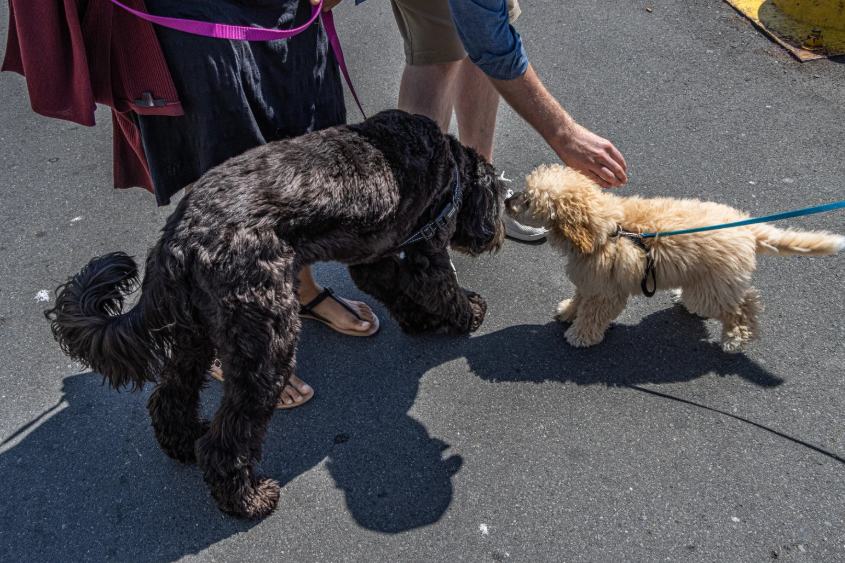
Introductions done well set the foundation for a positive long-term relationship. Introductions done poorly can create lasting tension that’s hard to undo.
Best practices for introducing a new dog:
- Neutral territory first: Introduce dogs outside the home on neutral ground such as a park or quiet street. This reduces territorial responses from the resident dog.
- Parallel walking: Walk the dogs in the same direction at a comfortable distance before allowing any direct interaction. This builds positive association while reducing pressure.
- Controlled greeting: Allow brief, calm sniffing with both dogs on loose leashes. Watch for stiffness, prolonged staring, or mounting, and interrupt before tension escalates.
- Manage the home environment: For the first few weeks, manage access to high-value resources carefully and supervise all interactions. Give each dog their own space to decompress.
- Separate training continues: Maintain individual training sessions for both the new dog and the existing dogs. A new dog arriving doesn’t mean group training replaces individual work.
Frequently Asked Questions
How do I stop my dogs from fighting over toys?
Management is the most reliable short-term solution: remove toys when dogs are together unsupervised, and only provide high-value items in separate spaces. Long-term, training reliable “drop it” and “leave it” commands, and working on reducing resource guarding through structured desensitization, addresses the root of the issue.
Is it normal for dogs in the same household to squabble?
Some degree of communication, including brief vocalizations or posturing, is normal among dogs that live together. Actual fights with biting, injury, or ongoing persistent conflict are not normal and should be addressed with professional help. The distinction matters: correction behavior within dog communication is different from unsafe aggression.
Should I get dogs of similar ages or is age difference okay?
Age differences can work well or present challenges depending on the individuals. A high-energy puppy and a senior dog may not be a compatible pairing because the puppy’s need for active play can stress an older dog. A well-matched energy level and play style matters more than specific age, though very large age gaps deserve consideration.
Do I need to train each dog individually in a multi-dog household?
Yes. Group training can supplement individual training, but it should not replace it. Each dog needs to have reliable skills built individually before they can be expected to perform in the presence of other dogs. Training a dog while another dog is present is a much higher-distraction environment, and dogs that only learn in groups often lack reliability when separated.
How do I handle it if one of my dogs bullies the others?
Identify whether this is truly bullying (persistent harassment that the other dog can’t escape from) versus normal play that one dog is opting out of. If it’s genuine bullying, management and structure are key: more exercise for the higher-energy dog, separate spaces and separate training, and professional guidance on whether the behavior reflects a deeper issue that needs targeted work.
How does professional training help multi-dog households?
Professional trainers can assess the specific dynamic in your household, identify which behaviors are driving conflict, and provide a training plan tailored to your dogs as individuals and as a group. They can also help you build the handling skills to manage multiple dogs effectively, which is often as much about owner education as dog training.
Get Help Managing Your Multi-Dog Household in Austin
If your multi-dog home could use more structure and less conflict, the team at All Dogs Unleashed can help. From in-home dog training that addresses issues in your own space to structured programs that work on individual behavior, professional support makes a real difference. Call (512) 253-8819 or come by 3704 Mountain View Ave, Austin, TX 78734 to talk through what would work best for your household.