
Choosing an ice melt safe for dogs is easier in October than it is at the hardware store the night before the first real storm. Once Central Iowa sidewalks turn slick, most of us grab whatever bag is left on the shelf, and that bag ends up on the same steps and walkways our dogs cross several times a day.
At All Dogs Unleashed Dog Training Des Moines, we work with dogs through every Iowa season, and our two-week Board and Train program builds the calm handling habits that make winter easier. Below you will find what to look for on an ice melt label, how to protect paws on public sidewalks you don’t control, and how to teach your dog to accept boots and paw wipes calmly instead of turning every walk into a wrestling match.
Want help building calm handling habits before winter arrives? Our team is ready to talk.
Key Takeaways
- Rock salt (sodium chloride) is the most common de-icer and can irritate paws and upset a dog’s stomach if licked or eaten.
- Products marketed as pet-friendly usually use urea or magnesium chloride, which are typically gentler but can still cause stomach upset.
- Wiping or washing your dog’s feet, legs, and belly after every winter walk reduces the chance of your dog licking chemicals off later.
- Store ice melt bags where your dog cannot reach them, since eating product straight from the bag is the bigger risk.
- Boots and paw wipes go much more smoothly when you teach them gradually with rewards, starting weeks before the first snow, and our two-week Board and Train program builds that calm handling foundation for you.
Why Ice Melt Matters for Des Moines Dogs
Winter in Des Moines means repeated snow and ice from late fall into spring, and the city expects property owners to keep up with their sidewalks. According to the City of Des Moines snow removal page, sidewalks must be cleared within 48 hours after snowfall ends. That means plenty of shoveling and plenty of de-icer on the routes your dog walks every day.
Your own steps and driveway are only part of the picture. Neighbors, businesses, and apartment buildings from Beaverdale to downtown all choose their own products, so your dog will cross surfaces you didn’t treat. A plan for your property plus a plan for after the walk covers both.
How Dogs Come Into Contact With De-Icers
Dogs pick up de-icer in three main ways. Crystals and brine collect between toes and on paw pads, dogs lick their feet and legs once they get home, and some dogs drink melted slush from puddles or eat pellets off the ground. A dog that investigates everything with its mouth has more exposure than a dog that walks calmly at your side.
What the ASPCA Says About Common Products
The ASPCA notes that common de-icers include sodium chloride (rock salt), calcium chloride, potassium chloride, and magnesium chloride. Rock salt is the most widely used and can be harsh on paws. The ASPCA also points out that a couple of licks of a treated paw usually causes only mild, self-limiting drooling, vomiting, or diarrhea, while eating larger amounts, especially from an open bag, can lead to more serious problems. You can read more in the ASPCA’s article on using de-icers around your dog.
How to Choose Ice Melt Safe for Dogs
No de-icer is completely risk-free, and the ASPCA cautions that labels such as “pet safe” are not a guarantee. Still, some ingredients are gentler than others, and reading the back of the bag tells you far more than the picture of a happy dog on the front.
Read the Ingredient List First
Look for the active ingredient near the top of the label. According to the ASPCA, pet-friendly ice melts typically contain urea or magnesium chloride. These are generally considered safer choices, but they may still cause stomach upset if your dog eats them, so treat them with the same care as any other chemical.
| Ingredient | Common Name or Use | What to Know for Dogs |
|---|---|---|
| Sodium chloride | Rock salt, the most common de-icer | Can irritate paws; eating it can cause stomach upset, and large amounts are more serious |
| Calcium chloride | Fast-acting pellets and flakes | Listed by the ASPCA among common de-icers that can irritate and cause stomach upset |
| Potassium chloride | Often blended with other salts | Still a salt; limit contact and prevent ingestion |
| Magnesium chloride | Often marketed as pet-friendly | Typically gentler, but may still cause stomach upset if eaten |
| Urea | Often marketed as pet-friendly | Typically gentler, but may still cause stomach upset if eaten |
Use Less and Store It Well
Shoveling early and often means you need less product. Sprinkle a thin layer rather than a heavy coat, and sweep up leftover pellets once the ice is gone. Sand or non-clumping grit can add traction on your own steps without adding more chemicals.
Storage matters just as much as the product itself. Keep bags sealed and up off the garage floor, and close the lid on any bucket you keep by the door. A curious dog that tears into a bag can eat far more than it would ever pick up on a walk.
Remember the Rest of the Winter Garage
Ice melt usually sits on the same garage shelf as antifreeze. The AVMA’s cold weather animal safety guidance recommends cleaning up antifreeze spills quickly and using pet-safe de-icers. A quick look around the garage before the first storm is a good habit.
Protecting Paws on Sidewalks You Don’t Control

Once you step off your own property, you can’t choose the product. You can choose your route, your gear, and what happens when you walk back in the door.
Plan Routes and Walk Mindfully
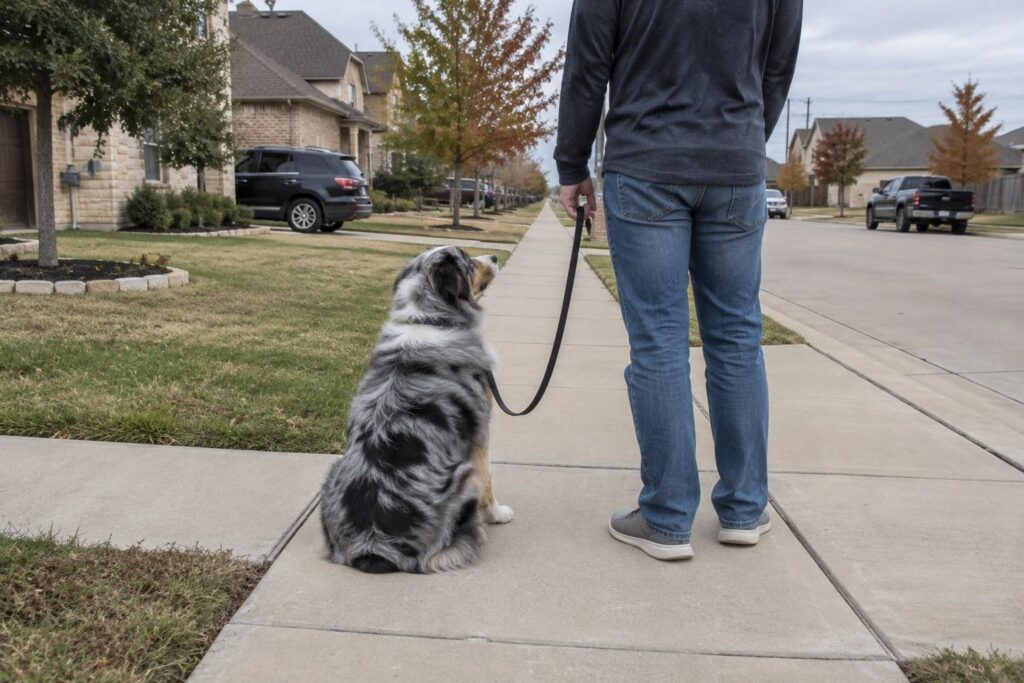
When you can, walk your dog on clean snow or grass instead of heavily treated concrete, and steer around visible piles of crystals and slushy puddles. Keep your dog close on a loose leash so you can guide it past spots you want to avoid. A dog with a reliable “heel” and “leave it” is much easier to keep off salted patches and away from puddles.
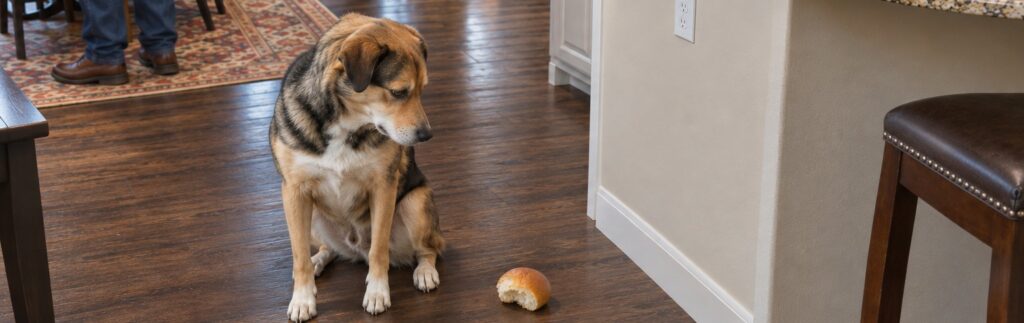
If your dog is a sniffer that tries to lick the ground, the “leave it” command becomes a winter safety tool, not just a manners exercise. Practice it with food on the floor indoors first, then outside on dry days, before asking for it near salty slush.
Boots, Balms, and Wipes
Dog boots create a barrier between paws and de-icer. Paw balms can help protect pads from drying and cracking, a point Cornell’s veterinary college also makes in its winter tips. Wipes or a warm damp cloth handle the cleanup. Most dogs do best with a combination.
| Option | What It Does | Training Needed |
|---|---|---|
| Dog boots | Keeps de-icer and ice off paw pads | High; most dogs need gradual practice to walk normally in them |
| Paw balm | Helps protect pads from drying and cracking | Low to moderate; dog must accept paw handling |
| Wipe or rinse at the door | Removes residue before your dog can lick it off | Moderate; dog must hold still and offer each foot |
| Route choice | Reduces exposure to treated surfaces | Low; loose-leash walking makes it easier |
The After-Walk Wipe Down
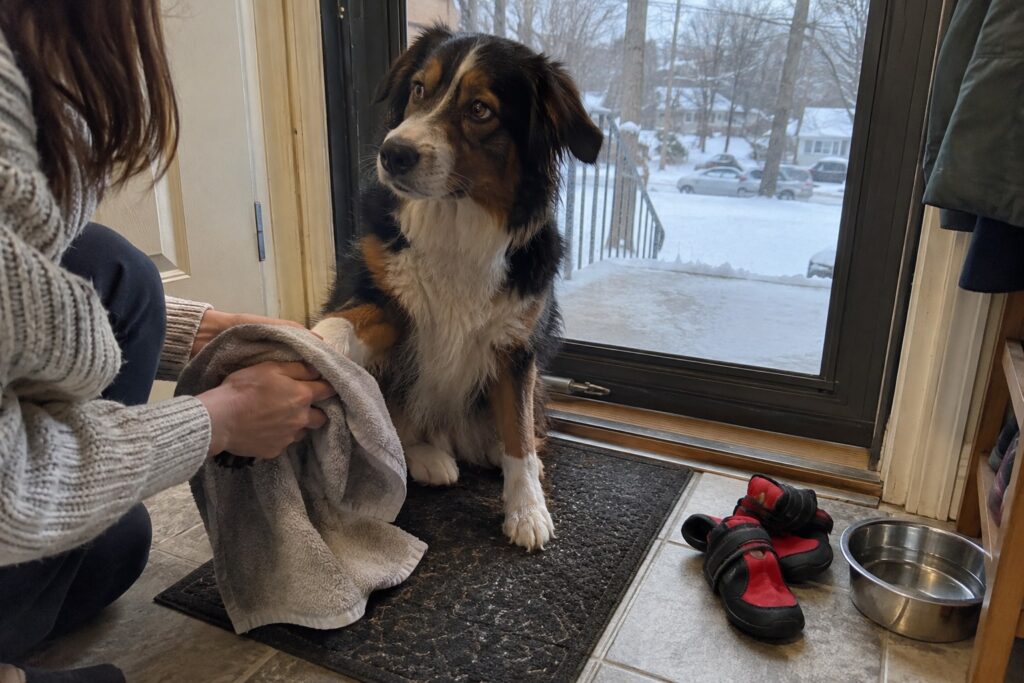
The AVMA recommends wiping down or washing your pet’s feet, legs, and belly after winter walks to remove chemicals your dog could otherwise lick off. Keep a towel and a bowl of lukewarm water by the door, clean between the toes, and dry each foot well. This takes a minute or two once your dog is used to it.
Winter goes more smoothly when your dog already walks politely and settles by the door. Our two-week residential program builds those skills.
Teaching Your Dog to Accept Boots and Paw Wipes
Plenty of dogs pull their feet away, mouth the towel, or freeze in place the first time they wear boots. That reaction is normal. The fix is desensitization: introducing the new experience in small, easy steps and pairing each step with something your dog likes.
Start With Paw Handling
Begin indoors on a calm afternoon. Touch one paw briefly, then reward. Over several sessions, hold the paw a little longer, gently spread the toes, and touch the towel to the foot, rewarding each small success. Keep sessions short and stop before your dog gets fussy. Soft, high-value rewards help a lot here, and our list of high-value dog treats for training has ideas that work well for quick handling reps.
You can also teach a cue for this routine, like “paw” or “feet,” so your dog knows what is coming. Predictability lowers stress for many dogs.
Introduce Boots in Stages
Let your dog sniff the boots on the floor and reward calm interest. Next, slip one boot on for a few seconds and take it off, reward, and repeat. Build to two boots, then four, then a short walk around the living room. Expect some high-stepping at first. Only head outside once your dog walks normally indoors, and keep the first outdoor trips short.
| Stage | Goal | Move On When |
|---|---|---|
| 1. Paw touches | Dog stays relaxed during brief handling | Dog offers or allows paws without pulling away |
| 2. Towel practice | Dog accepts wiping between toes | Dog stands still for all four feet |
| 3. One boot | Dog tolerates a boot for a few seconds | No chewing or frantic shaking |
| 4. Four boots indoors | Dog walks around the house | Gait looks close to normal |
| 5. Short outdoor walk | Dog walks calmly in boots outside | Dog is comfortable for the full route |
Build a Door Routine
Coming in from the cold is exciting, and many dogs want to bolt for the couch. Ask for a “sit” or “stay” on a mat inside the door, wipe each foot, and release your dog only when you are done. This routine keeps salt off your floors and teaches your dog to wait for you. Puppies can start learning it right away, and our puppy training covers the handling and patience that make it easier. Older dogs can learn it too, as we explain in our post on training an older dog.
Signs Your Dog Got Into Ice Melt
Even with good habits, exposure happens. Knowing what to watch for helps you act quickly and calmly.
Paw Irritation
Look for redness, cracking, limping, or constant licking and chewing at the feet after walks. Rinse the paws with lukewarm water and dry them. If the irritation doesn’t improve or your dog seems painful, call your veterinarian.
Ingestion
According to the ASPCA, dogs that lick or eat ice melt may show drooling, vomiting, or diarrhea, and larger amounts can cause more serious problems. If you think your dog ate a meaningful amount, especially from a bag, contact your veterinarian or ASPCA Animal Poison Control right away. Have the product packaging on hand so you can share the ingredients.
Never try to treat a suspected poisoning at home without professional guidance. Your veterinarian is always the right call for medical concerns.
How Training Makes Winter Walks Easier
Most winter paw safety comes down to a few skills: walking calmly on a loose leash, ignoring things on the ground, holding still for handling, and waiting at the door. These are everyday obedience skills, and they matter more when sidewalks are icy and treated.
Board and Train Before the Cold Sets In
Our Board and Train program is a fixed two-week program where your dog stays at our facility and works with our trainers daily on commands like “sit,” “stay,” “down,” “come,” and “heel,” plus leash manners. Each enrollment begins with an evaluation, and the program wraps up with a transition session so you learn the handling and reinforcement techniques to keep progress going at home. Board and Train comes with guaranteed results and lifetime support.
In-Home Lessons for Your Own Doorway
If the struggle is your dog’s behavior at your own front door, your mudroom, or your block, in-home dog training lets a trainer work with you in the exact spot where the wipe-down and boot routine happens. That kind of practice transfers well to real winter mornings.
If you’d like help getting your dog winter-ready, call us at (515) 480-7977 and we can talk through your goals.
About All Dogs Unleashed Dog Training Des Moines
All Dogs Unleashed Dog Training Des Moines helps Central Iowa dog owners build reliable obedience and calm everyday manners. Our two-week Board and Train program is our core service, backed by guaranteed results and lifetime support, and we also offer in-home lessons, refresh training, puppy training, and boarding. For winter, that means dogs who walk politely past salty slush, leave pellets on the ground alone, and stand still for a paw wipe at the door, so cold-weather routines feel manageable instead of stressful.
Frequently Asked Questions
What ice melt is safe for dogs?
No de-icer is completely risk-free, but the ASPCA notes that pet-friendly products typically contain urea or magnesium chloride, which are generally gentler than rock salt. They can still cause stomach upset if eaten. Read the label, use a light layer, sweep up leftovers, and wipe your dog’s paws after walks no matter which product you choose.
Is rock salt bad for dogs’ paws?
Rock salt, or sodium chloride, is the most common de-icer and can be harsh on paws, causing dryness and irritation. If your dog licks it off, it can also upset the stomach. Rinse or wipe paws with lukewarm water after walks on salted sidewalks, dry between the toes, and check for redness or cracking. Call your veterinarian if irritation continues.
What should I do if my dog ate ice melt?
A lick or two usually causes mild drooling, vomiting, or diarrhea, according to the ASPCA. If your dog ate a larger amount, especially from a bag, call your veterinarian or ASPCA Animal Poison Control right away. Keep the packaging handy so you can share the ingredients. Don’t try to treat it at home without professional advice.
How do I get my dog used to wearing boots?
Go slowly. Reward your dog for sniffing the boots, then put one on for a few seconds and take it off. Build up to four boots and short walks indoors before heading outside. Keep sessions brief and positive, and stop before your dog gets frustrated. Starting in the fall gives you plenty of time before sidewalks get icy.
How do I clean my dog’s paws after a winter walk?
Keep a towel and a bowl of lukewarm water by the door. Ask your dog to “sit” or “stay” on a mat, then wipe each foot, clean between the toes, and wipe the legs and belly, as the AVMA recommends. Dry everything well. Reward calm behavior so the routine becomes something your dog expects rather than resists.
Can training help my dog stop licking salt off the sidewalk?
Yes. A solid “leave it” and loose-leash “heel” make it much easier to guide your dog past salty puddles and piles of pellets. Practice indoors with food first, then outside on dry days, and add winter distractions gradually. Structured obedience work, such as our two-week Board and Train program, builds these skills so they hold up outdoors.
Picking an ice melt safe for dogs, wiping paws after every walk, and teaching calm handling before the first snow will make winter easier for you and your dog. If you’d like help building those habits, call (515) 480-7977 or reach out online. We’d be glad to meet you at our Walnut Street location in downtown Des Moines.
Ready to Get Started with All Dogs Unleashed Dog Training Des Moines?
Get your dog winter-ready with training that sticks. Call (515) 480-7977 to talk with our team about Board and Train, in-home lessons, or puppy training.