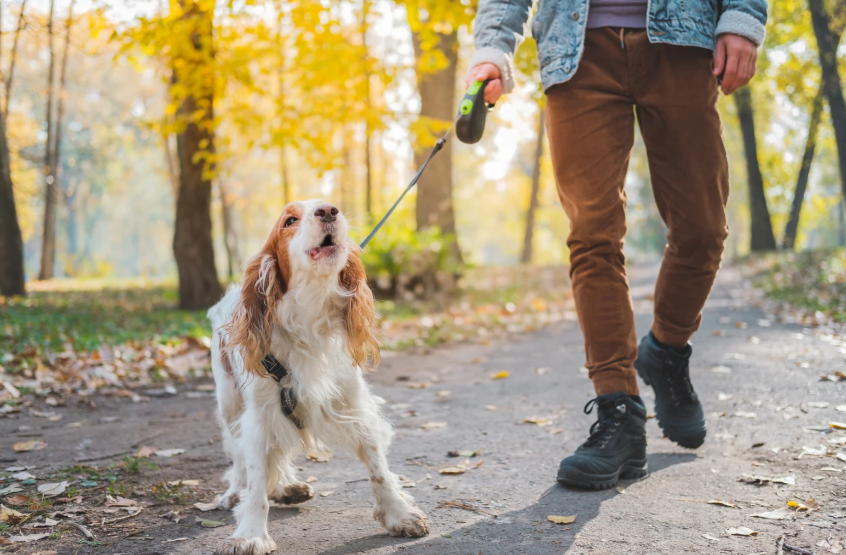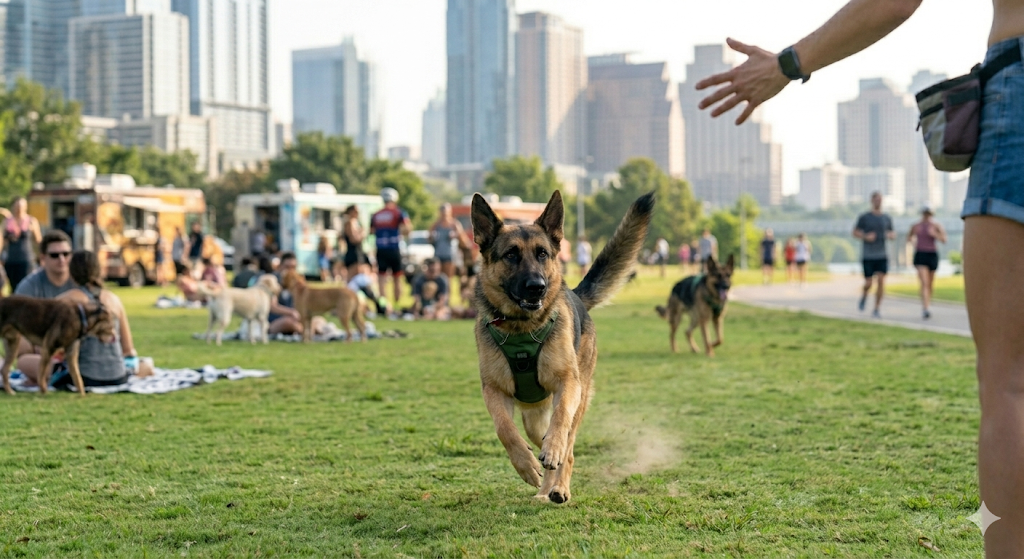

Bringing a rescue dog home is a hopeful moment that can quickly become overwhelming. Many dogs adopted through the Animal Rescue League of Iowa arrive with unknown behavioral histories, fear responses, and stress-related habits that standard obedience approaches do not address. All Dogs Unleashed Dog Training Des Moines specializes in rescue dog training that accounts for those variables from day one, using structured daily routines and graduated exposure training to help your dog build reliable responsiveness in real-world Des Moines environments. Ready to give your rescue dog the structured start that sticks?
Key Takeaways
- Rescue dog training addresses fear, reactivity, and unknown behavioral history that standard programs often overlook.
- Dogs adopted from shelters benefit most from structured daily routines established in the first weeks at home.
- Graduated exposure training helps rescue dogs acclimate to high-stimulation Des Moines environments without escalating stress.
- Every rescue dog begins with an individualized behavioral assessment, a hands-on evaluation of triggers, threshold distances, and handler dynamics that shapes the entire training plan.
The First Weeks Home Reveal What the Shelter Never Showed You
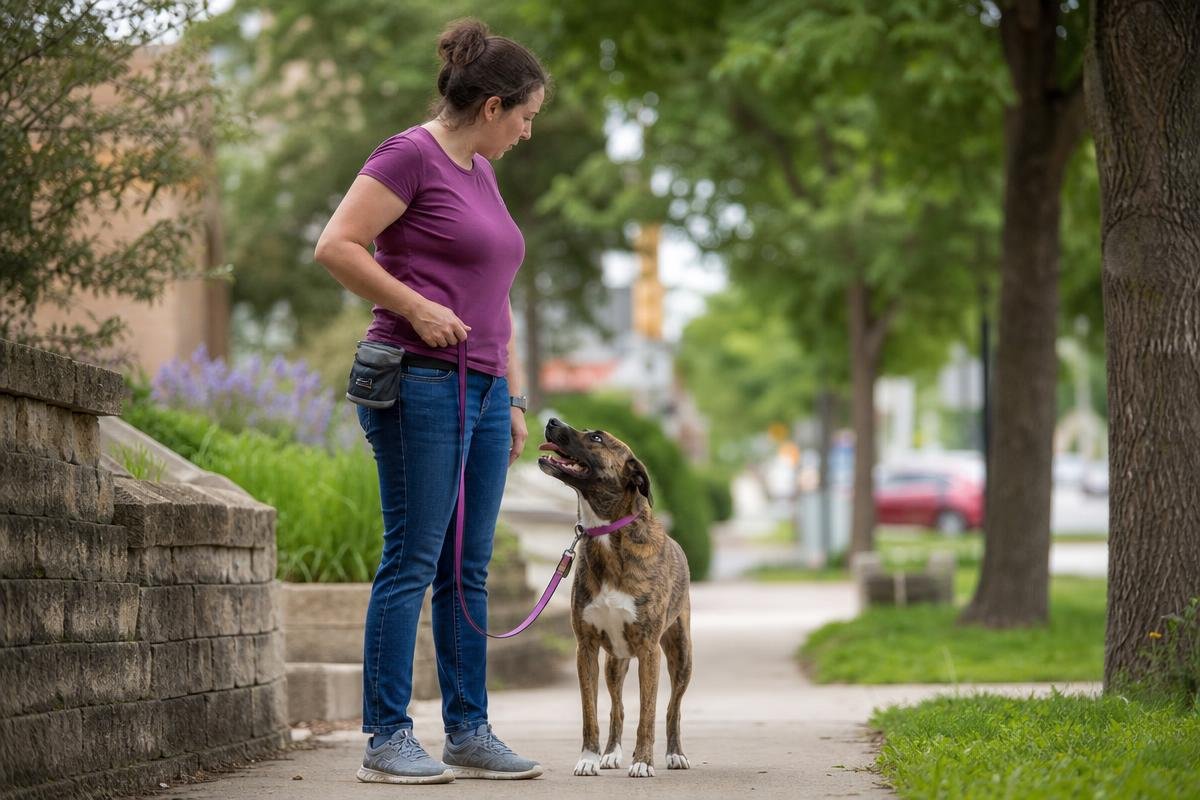
Bringing a rescue dog home from the shelter often feels manageable until the first week ends. Reactivity on leash, destructive responses to confinement, and persistent uncontrolled vocalization surface quickly in dense residential neighborhoods like Beaverdale and Sherman Hill, where foot traffic, cyclists, and off-leash dogs are constant. These behaviors are conditioned responses built from unknown histories and repeated environmental disruption inside the local shelter system.
All Dogs Unleashed Dog Training Des Moines provides structured training programs for shelter dogs in Des Moines backed by individualized behavioral assessment, real-world scenario work, and a money-back guarantee. Each assessment runs during your dog’s first session and evaluates trigger thresholds, leash response, body-language stress signals, and how your dog orients to a handler under mild pressure. That evaluation is what our training plan is built on. Whether your dog arrived from an owner surrender, a stray intake, or a transfer placement, our team builds the plan around what your dog actually needs.
If your newly adopted rescue dog is struggling to adjust, contact us now at (515) 480-7977. Our in-home dog training program and our board and train program are both available to adopters across the greater Des Moines area.
Why Rescue Dogs Present Distinct Behavioral Challenges
Adopted dog behavior problems catch many new owners off guard. Your dog may have seemed calm at the shelter but now barks at cyclists on Ingersoll Avenue, guards food bowls aggressively, or shuts down entirely in your apartment. These responses are not character flaws. They are predictable neurological outcomes of an animal whose behavioral baseline has been repeatedly disrupted by rehoming, neglect, or prolonged kennel residency.
Many dogs adopted through the Animal Rescue League of Iowa arrive with no documented socialization history. Local shelter intake includes owner surrenders, strays, and transfers, each carrying a different set of prior exposures. That variability is exactly why our hands-on behavioral assessment happens before any structured training begins.
The Behavioral Impact of Unknown History
Dogs that have experienced multiple rehoming events or prolonged shelter residency often present with resource guarding, hypervigilance to auditory stimuli, and unpredictable leash reactivity. These behaviors reflect an animal that learned to self-regulate in an environment where resources and safety were inconsistent. The rescue dog adjustment period, commonly framed as the 3-3-3 rule, gives adopters a calibration framework: three days to decompress, three weeks to learn household routine, three months to feel genuinely at home.
In our experience, that timeline plays out very differently depending on where an adopter lives. A dog decompressing in a ground-floor Sherman Hill apartment hears sidewalk traffic, delivery vehicles, and neighboring dogs through shared walls from the first hour, so the three-day window rarely produces true quiet. A dog settling into a fenced suburban yard in Urbandale gets far more control over its exposure and often moves through decompression faster. We calibrate the pace of training to the actual living environment, not just the calendar.
Structure, not permissiveness, is the correct response during this window. Allowing a newly adopted dog unrestricted access to the home before stable routines are established can reinforce anxiety rather than reduce it. Establishing structured daily routines from day one gives your dog a predictable framework to acclimate against. For guidance on building that foundation early, our trainers cover in-home dog training in Des Moines that addresses acclimation from within the dog’s actual living environment.
Fear, Reactivity, and Trauma Response in Shelter Dogs
Fear and reactivity in rescue dogs have a physiological basis. Chronic stress elevates cortisol levels, which lowers the threshold for fight-or-flight responses. A dog conditioned by kennel noise and unpredictable human contact will react to stimuli that a well-socialized dog ignores entirely. High-stimulation environments like the Des Moines River Trail or Gray’s Lake Park, with their steady foot traffic, cyclists, and other leashed dogs, can trigger acute reactive episodes in dogs still within their decompression period.
Fear and reactivity are not permanent conditions. With graduated exposure training and consistent behavioral reinforcement, most rescue dogs show measurable improvement. Understanding how to socialize a rescue dog with unfamiliar people through our board and train program and controlled environments is a critical early step that shapes the entire training trajectory.
What Does Effective Rescue Dog Training Actually Look Like?
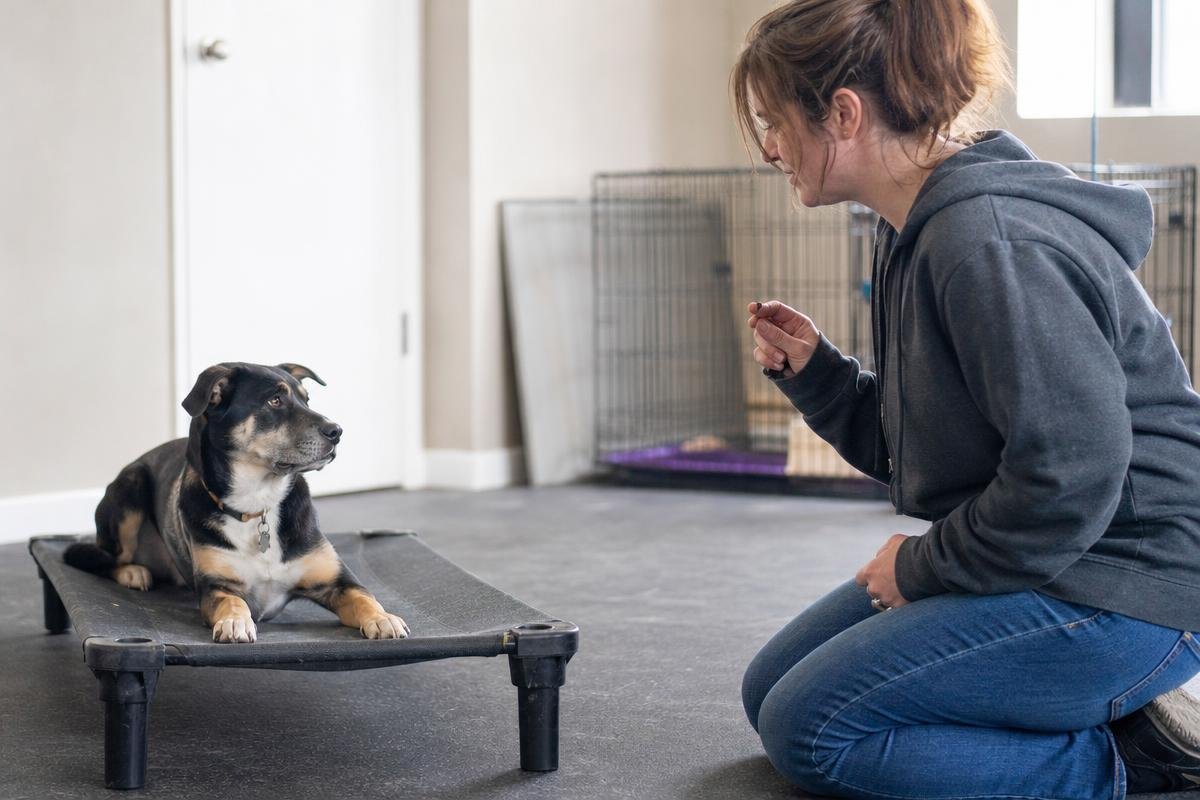
Rescue dogs lack an internalized framework for predicting what happens next. Shelter life, owner surrenders, and repeated relocations strip away the environmental consistency that makes a dog feel safe. Love and patience matter, but they do not replace structure. Effective rescue dog training builds that structure deliberately, using methods matched to each dog’s specific behavioral history.
Structured Daily Routines as the Foundation
Many adopted dogs arrive with no predictable schedule behind them. Feeding windows, exercise blocks, crate periods, and place-command rest times are not arbitrary rules. They make the environment legible. When your dog can anticipate what happens next, ambient anxiety drops measurably. Our trainers establish these routines early in the training process because a dog that feels safe in its daily rhythm learns new behaviors far more efficiently than one operating in a constant state of uncertainty.
This is especially relevant for adopters in higher-density neighborhoods, where foot traffic, cyclists, and other dogs begin the moment your dog steps outside. A structured routine creates a stable internal baseline before your dog ever faces those external pressures.
Graduated Exposure Training for Fear and Reactivity
Fear and reactivity in rescue dogs require a specific protocol. Our trainers use graduated exposure training, a systematic method that introduces fear triggers at low intensity while pairing each exposure with high-value counter-conditioning rewards. This is categorically different from flooding, which forces a dog into full contact with a trigger until the reaction subsides. Flooding is contraindicated for dogs with trauma histories because it overloads the nervous system rather than rebuilding tolerance.
A practical example: a rescue dog reactive to cyclists on the Des Moines River Trail begins training at a distance of 50 feet or more. At that threshold, your dog receives a reward for calm, focused attention on the handler. Distance decreases incrementally, but only after your dog demonstrates reliable responsiveness at each prior threshold. This measured progression, applied consistently in real-world scenarios, is what produces durable behavioral change.
Obedience as a Confidence-Building Tool
Obedience commands do more than produce compliant behavior. Sit, place, and come give your dog a reliable mechanism for earning predictable positive outcomes. That predictability is exactly what rescue dog training in Des Moines must address at the neurological level. A dog that understands how to earn a reward stops scanning the environment for threats and starts orienting toward the handler instead. Our clients consistently report measurable confidence shifts in their rescue dogs within the first weeks of structured obedience work.
Our board and train program and in-home dog training both apply this obedience-first framework, adapted to the environment where your dog needs it most. The methodology is the same. The setting is matched to your dog’s specific behavioral profile. Not sure which program fits your rescue dog? Schedule a free behavioral assessment call and we’ll match the format to your dog’s specific profile.
Is Board and Train the Right Option for Your Rescue Dog?
Attempting to correct persistent behavioral problems through weekly obedience classes rarely produces lasting results for rescue dogs. Between sessions, the same environment that triggered the fear response, the reactivity, or the separation anxiety continues to reinforce it. Your dog does not get a break from the pattern. The pattern gets stronger.
Board and train removes your dog from that cycle entirely. It is a clinical intervention, not a boarding convenience, and for rescue dogs with established behavioral histories, that distinction matters considerably.
How Immersive Canine Instruction Accelerates Rescue Dog Acclimation
Dogs that arrive from area shelters often carry behavioral histories shaped by multiple environments, inconsistent handling, and prolonged stress. A rescue dog adjustment period that unfolds inside a home full of unpredictable stimuli, well-meaning but inconsistent correction, and no structured daily routine is a slow path to progress at best. Immersive canine instruction changes the variable. Your dog lives at the facility and receives structured training across every waking interaction, not just during a scheduled session.
Our trainers apply consistent methodology from morning routines through real-world exposure scenarios. Fearful dogs are not overwhelmed. Graduated exposure training is sequenced deliberately, so your dog builds confidence at a pace the behavioral evidence supports. Clients have described the results plainly. One owner noted their border collie “came back sooo much better behaved.” Another described the difference as “night and day.” Those outcomes reflect what consistent, immersive structure produces during a short residency.
What to Expect From a Board and Train Program in Des Moines
Our board and train program in Des Moines accepts rescue dogs as young as four to six months and adult dogs with well-established behavioral problems. Your dog lives at our facility at 699 Walnut St, Suite 400, central to adopters coming from Ankeny, West Des Moines, and Urbandale.
The program is backed by a money-back guarantee: if your dog completes the residency and does not demonstrate the trained behaviors agreed to in your training plan, we refund the program cost. Because every program also includes lifetime support, the investment does not end when your dog comes home.
When your dog returns, you receive a handler education component. Our trainers walk you through the commands, the expectations, and the daily structure your dog now understands. That transfer of knowledge is what keeps the trained behaviors intact inside dense residential areas like Sherman Hill, where foot traffic and passing dogs are constant. The residency builds the foundation. The handler education protects it. Ready to break the cycle? Call (515) 480-7977 to find out if board and train is the right fit for your rescue dog.
In-Home Training for Rescue Dogs: When the Environment Is Part of the Problem
Adopted dog behavior problems often surface most intensely inside the home, not during structured training sessions. Your rescue dog may hold it together at a facility and then door-dash, resource guard around the food bowl, or spiral into destructive behavior the moment you reach for your keys. The home environment itself is the trigger, and addressing that requires a trainer who can observe the behavior in its actual context.
Our in-home dog training in Des Moines is a precision clinical tool, not a softer alternative to board and train. When your dog’s reactivity is tied to a specific doorway, a particular room, or the sound of a leash clip, our trainers need to be present in that space to assess and correct the behavior at its source.
Addressing Trigger-Specific Behaviors in the Home
Rescue dogs adopted through local rescue organizations arrive with behavioral histories that are often incomplete or unknown. That uncertainty means trigger identification must happen in the environment where the behavior actually occurs. Dogs living in dense residential neighborhoods like Beaverdale or the East Village face constant stimulation: cyclists passing windows, dogs on the sidewalk, neighbors at the door. Our trainers observe these specific triggers directly and apply structured correction protocols in real time rather than approximating the scenario elsewhere.
One client documented the outcome plainly: no longer worrying about company coming to the door or losing control when dogs walk by. That result came from addressing the trigger in the exact location where it existed.
Building Reliable Responsiveness Across Real-World Scenarios
A rescue dog that responds to “come” reliably in the living room but ignores the command at Waterworks Park has not generalized that behavior. This is stimulus generalization, and it is one of the most common reasons rescue dog training stalls. Our trainers build reliable responsiveness by proofing commands first in the home, then progressing through graduated exposure training in higher-stimulation environments.
Understanding why your dog responds differently across environments is the first step toward correcting it. Real-world scenarios, practiced consistently across multiple contexts, produce the durable behavioral change that structured daily routines alone cannot achieve.
How Des Moines Rescue Dog Owners Can Support Training at Home
Rescue dog training stalls most often not in the training facility but in your living room. A dog that holds a reliable sit-stay through a full board and train program can lose that behavior within days if household rules shift the moment your dog walks through the front door. What happens between formal sessions determines whether the structure holds.
Consistency Between Training Sessions
Four rules govern whether your rescue dog’s trained behaviors carry forward. First, use the exact command words our trainers established. Substituting “lie down” for “down” creates confusion your dog cannot resolve. Second, enforce the same boundaries in every room, not just the kitchen or the living room. Third, allow no exceptions. One instance of permitting a behavior you are trying to extinguish resets the threshold. Fourth, every person in the household applies the same rules without negotiation. A dog allowed to jump on one family member will jump on all of them.
Our team documents the exact commands, boundaries, and correction protocols used during residency. That documentation is your reference when inconsistency appears at home.
Managing the Decompression Period at Home
The rescue dog adjustment period begins the moment your dog enters your home, and the first 30 days carry the highest risk for behavioral regression. Limit your dog’s access to the full home initially. Baby gates and a crate reduce the number of variables your dog must process at once. Learn how to use crate training to support your rescue dog’s adjustment before that first night arrives.
Avoid high-stimulation outings during the first two weeks. Waterworks Park and the river trail corridor are appropriate destinations later in a graduated exposure progression, not during initial acclimation. Start with short leash walks on low-traffic residential streets in Ankeny, Urbandale, or quieter Central Iowa neighborhoods before advancing to busier corridors. Your dog needs repeated successful experiences, not early exposure to environments that trigger reactivity.
Our lifetime support program keeps our trainers available after your formal program ends. If behavior shifts during the decompression period, call us at (515) 480-7977 before a manageable problem becomes a persistent behavioral issue.
Frequently Asked Questions
How long does rescue dog training take?
Training timelines depend on the severity of your dog’s behavioral history and how consistently you reinforce structure at home. Dogs with moderate issues often show significant change through a board and train program. Dogs with severe trauma histories may require months of ongoing maintenance, which is why our programs include lifetime support to keep trained behaviors reliable long after formal instruction ends.
What behavioral problems do Central Iowa shelter dogs most commonly have?
The most common adopted dog behavior problems include separation anxiety, leash reactivity toward other dogs or cyclists, resource guarding, excessive vocalization, door-dashing, and unpredictable responses toward strangers. These are conditioned responses shaped by shelter stress and inconsistent handling. They are not permanent traits, and they respond well to structured behavioral intervention.
Is board and train safe for a fearful rescue dog?
Yes, provided the program uses positive reinforcement and graduated exposure rather than flooding or aversive methods. Fearful dogs frequently make faster progress in a structured residential setting than in weekly group classes, because the environment is controlled and consistent. Our board and train program in Des Moines is specifically structured to support dogs with fear-based behavioral profiles.
Can an older rescue dog actually be trained?
Adult and senior rescue dogs are fully capable of learning new behavioral patterns. The neuroplasticity required for conditioning does not disappear with age. The timeline may be longer for dogs with years of reinforced problem behaviors, but age alone is not a barrier. For a closer look at what this process involves, see our resource on training an older rescue dog in Des Moines.
How do I know if my dog needs a trainer or just more time?
If training problems have not improved or have worsened after four to six weeks at home, patience alone will not resolve them. Persistent behavioral problems are reinforced daily by the environment and routine. Professional assessment is warranted before those patterns become more deeply conditioned.
What does rescue dog training cost at All Dogs Unleashed?
Multiple program formats are available at varying price points to match different behavioral needs and household situations. All programs are backed by a money-back guarantee. For specific pricing, call (515) 480-7977 or submit a request through our Des Moines contact page.
If your rescue dog’s behavioral problems have not improved after several weeks at home, or if the behaviors are affecting your daily routine or safety, contact our team directly. Call (515) 480-7977 or visit our office at 699 Walnut St, Suite 400, Des Moines, IA 50309 to schedule a behavioral assessment. Our trainers will evaluate your dog’s specific profile and recommend the program format that matches the problem.
Every program is backed by a money-back guarantee and lifetime support so the progress your dog makes does not stop when formal training ends.
Ready to Get Started with All Dogs Unleashed Dog Training Des Moines?
Call (515) 480-7977 to speak with our team directly. We’re ready to answer your questions, walk you through your options, and help you find the right solution for your needs. Whether you’re just starting to plan or ready to move forward, we’ll make the process simple and stress-free. Reach out today and let’s talk about how we can help.