
French Bulldog training presents a specific set of challenges that generic obedience advice rarely addresses: breed-level stubbornness, short attention spans, and brachycephalic breathing limits that restrict how long and how hard your dog can work in a session. Owners across Des Moines frequently discover these realities after weeks of inconsistent results and persistent behavioral problems.
All Dogs Unleashed Dog Training Des Moines provides immersive canine instruction built around breed-specific needs, backed by a 100% money-back guarantee and lifetime support for every dog we train from our office at 699 Walnut St, Suite 400, Des Moines, IA 50309. Ready to stop guessing and start getting real results with your French Bulldog?
Key Takeaways
- French Bulldog training requires breed-specific techniques because standard obedience methods often fail with this stubborn, short-attention-span breed.
- Brachycephalic anatomy limits how long your French Bulldog can train outdoors, especially during Central Iowa summers when heat and humidity peak.
- Early socialization and structured daily routines produce the most reliable, lasting behavioral results in French Bulldogs.
- Positive reinforcement works best for Frenchies, but session length and reward timing must be calibrated to the breed.
- Persistent behavioral problems in French Bulldogs rarely resolve on their own and typically require professional, structured intervention.
Why Do Standard Training Methods Fail With French Bulldogs?

Standard obedience methods fail with Frenchies because the breed was built for companionship, not work, and generic reward structures never account for that. Owners apply methods designed for Labradors or Border Collies, see no traction within two weeks, and assume their dog is untrainable. The dog is not the problem. The approach is.
French Bulldogs are companion-bred animals with short attention spans, brachycephalic airways that limit session length, and a motivational hierarchy that looks nothing like a working breed’s. Applying generic training protocols without breed-specific adjustment does not simply produce slow results. It actively reinforces the behaviors you are trying to eliminate. Our team at All Dogs Unleashed’s professional dog training and boarding services in Des Moines has worked with Frenchies since the company was founded, and we see this pattern consistently among owners who arrive after weeks of frustration.
Six breed-specific realities govern every effective French Bulldog training program. Owners who understand these factors before starting avoid the most common setbacks. They also build reliable responsiveness that holds in real-world environments, from indoor sessions during Central Iowa’s sub-20°F January days to outdoor proofing at Gray’s Lake Park when temperatures allow. This article covers all six.
What Makes French Bulldogs Different to Train?

Frenchies are not difficult to train, they are different to train, and confusing the two is what leads owners to give up. That distinction matters because the fix for a dog that lacks motivation looks nothing like the fix for a dog with a handler relationship problem. Owners who misread the breed reach for the wrong tool and conclude their dog cannot learn, when in reality the technique simply was not matched to the animal in front of them.
How does breed temperament affect training?
French Bulldog temperament shapes everything because they were bred as companion dogs, not working dogs. Retrievers and herding breeds carry generations of selection for biddability, the instinct to defer to a handler. Your dog carries none of that. This is structural, not a character flaw, and it changes how obedience work must be structured from the first session.
The most important distinction when training a stubborn French Bulldog is separating a motivation deficit from a defiance problem. A motivation deficit means the reward you are offering does not compete with the environment. A defiance problem points to handler inconsistency or a damaged working relationship.
The correction is different in each case. Raising the reinforcement value solves the first. Rebuilding consistent structure solves the second. Your dog reliably learns sit, stay, down, come, and heel when the reinforcement hierarchy is correctly matched to what your dog actually values.
How long can a French Bulldog safely train?
A French Bulldog can work safely for only 10 to 15 minutes at a time, and less in warm or humid conditions, because of its brachycephalic anatomy. Compressed nasal passages and an elongated soft palate reduce oxygen exchange during physical exertion. This is the single most overlooked factor in effective training. Trainers who run 45-minute outdoor sessions will see a visible performance drop around minute 12 to 15, and owners routinely read that drop as stubbornness. It is physiological, not behavioral.
Around the metro, that window matters from May through September. July average highs near 86°F with relative humidity frequently above 70% make midday outdoor work genuinely unsafe for this breed. Early morning and evening scheduling are not preferences. They are safety requirements. Our in-home dog training services in Des Moines give flat-faced breeds a climate-controlled environment where session quality stays consistent regardless of outdoor conditions. Call us at (515) 480-7977 to discuss a schedule that protects your dog.
The 6 Things Des Moines French Bulldog Owners Must Know Before Training Begins
Attempting to correct persistent behavioral problems in a Frenchie without understanding the breed’s specific training requirements is the most common reason owners plateau after two weeks. These six points establish the foundation your dog needs before any formal obedience work begins.
1. Keep sessions short and distributed
Keep each training session brief because the breathing limits noted above cap sustained physical and mental output. Run 3 to 5 repetitions per command, 2 to 3 sessions per day, and space them at least two hours apart. Distributed practice produces faster retention than one long daily block, and your dog stays engaged rather than shutting down from fatigue.
2. Build a clear motivation hierarchy
Not all rewards carry equal weight. Use a three-tier system: low-value rewards like kibble for known behaviors in quiet environments, mid-value commercial training treats for new behaviors, and high-value options like real meat or cheese for high-distraction environments or breakthrough moments. Matching reward value to task difficulty is the single most effective adjustment most owners can make immediately.
3. Respect the socialization deadline
The critical socialization window closes at approximately 12 to 16 weeks. Frenchies that miss structured exposure to strangers, other dogs, traffic, and novel environments during this period are significantly more likely to develop reactive or fearful behaviors later. The urban environment around downtown Des Moines, with its pedestrian traffic, cyclists, and city noise, makes early exposure especially important for this breed. Our puppy trainer program in Des Moines is structured specifically around this window and the puppy training milestones that matter most in the first four months.
4. Enforce household consistency
Every person in your household must use identical command words, identical hand signals, and identical enforcement. This is the most common reason French Bulldog puppy training progress stalls after an initial strong start. If one family member allows the couch and another does not, your dog is not being disobedient. Your dog is responding accurately to inconsistent information.
5. Plan for a longer house training timeline
Owners frequently underestimate this. Frenchies typically require 4 to 6 months to achieve reliable house training because bladder control in small-breed dogs matures more slowly than in larger breeds. Structured crate training, introduced correctly and early, accelerates this timeline by establishing a clear elimination schedule your dog can predict and follow.
6. Establish structured daily routines
Feeding, elimination, training, and rest at consistent times each day reduce anxiety-driven behaviors including excessive vocalization and destructive chewing. Structured daily routines create the behavioral baseline from which reliable responsiveness to commands can be built. Without that baseline, even well-executed training sessions produce inconsistent results because your dog has no stable framework to reference between sessions.
Common French Bulldog Training Challenges and What Actually Works
Why does my Frenchie ignore commands in public?
Your Frenchie ignores commands in public because of a generalization failure, not stubbornness. Your dog sits perfectly in the kitchen, then ignores you completely at Birdland Dog Park because it learned the command in one environment and has not yet learned to perform it in others. This is one of the most misread problems owners face, and it has a specific fix.
The solution is proofing: practicing each foundational command, sit, stay, come, and heel, across five to seven distinct environments before treating the behavior as reliable. Sherman Hill sidewalks, Waterworks Park, and busy pet supply stores are exactly the kind of locations where proofing must happen. Our board and train program accelerates this process by exposing your dog to controlled environments with escalating distraction levels, compressing weeks of backyard repetition into structured real-world scenarios.
How do I stop a French Bulldog from pulling on the leash?
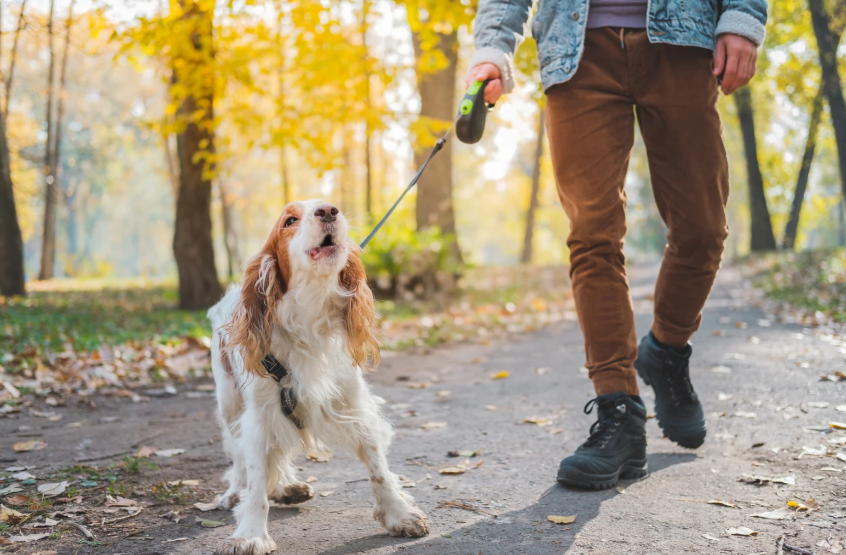
Stop leash pulling with a front-clip harness and a stop-and-redirect method, never a flat collar. A Frenchie that pulls may be small, but the health risk is not: collar pressure on the neck can restrict an already compromised airway, which makes flat collars contraindicated during leash training for this breed.
The instant the leash goes taut, stop all forward movement. Redirect with a heel command and reward with a high-value treat when your dog returns to position. Continuous leash corrections do not work well with Frenchies and create frustration on both ends of the lead. Consistent repetitions of this method across locations like Ingersoll Avenue or a quiet stretch of the Des Moines River trail system build reliable responsiveness over time.
How do I stop door barking?
Stop door barking by replacing it with an incompatible behavior rather than trying to silence the bark directly. Visitor reactivity and door barking rank among the most common complaints our team hears from Frenchie owners across the metro. The place command, sending your dog to a designated mat and holding a stay, works because your dog cannot simultaneously be on the mat and rushing the door.
Teaching place requires graduated exposure training: starting with low-distraction knocks, then building to doorbells, then actual visitors. For a full breakdown of this method, see how to address persistent behavioral problems through in-home dog training, where our trainers work through exactly these real-world scenarios in your own space. Call us at (515) 480-7977 to discuss the right approach for your dog.
Persistent pulling, selective hearing, and door reactivity are correctable with the right structure. Our trainers work with Frenchies across Central Iowa every week.
Which Training Program Fits a French Bulldog’s Needs in Des Moines?
Not every training format produces the same results for every dog, and Frenchies are a breed where the wrong program choice costs you weeks of progress. All Dogs Unleashed offers three structured programs from our central location at 699 Walnut St, Suite 400, Des Moines, IA 50309, each designed to address different stages and severity levels of a Frenchie’s training needs.
Board and Train
Frenchies with persistent behavioral problems, including dog reactivity, aggression, severe leash pulling, or repeated house training failures, need more than a weekly session. Our board and train program places your dog in a controlled environment with structured daily routines that remove the inconsistencies allowing problem behaviors to continue at home. One client described the outcome plainly: “My Louis is a different dog after one week with this team.” Every residency is backed by our 100% money-back guarantee.
In-Home Training
Door-barking, jumping on guests, and furniture boundary violations happen at home, which is exactly where they need to be corrected. Our in-home dog training service reinforces foundational commands, including sit, stay, down, come, and heel, in the specific context where the behavior breaks down. This program includes lifetime support, so your dog’s reliability does not erode after the final session ends.
Puppy Training
French Bulldog puppy training before 16 weeks is the highest-return investment a Frenchie owner can make. The critical developmental window closes fast, and structured early work covers socialization, crate training, house training, and foundational commands before unwanted patterns take hold.
One client whose dog enrolled as a puppy noted: “Before his training, Odie had difficulty calming down and lacked confidence. Immediately upon getting him back, there was a noticeable difference.” Our puppy training program in Des Moines is built around that developmental window, giving your dog the foundation that makes every future skill easier to build. Not sure whether a residency program is the right fit for your dog’s behavior challenges?
Call us at (515) 480-7977 to find out which program fits your dog’s current stage and behavioral needs.
French Bulldog Training in Des Moines: What Local Owners Should Plan For
Central Iowa’s climate creates real constraints for Frenchie owners that most generic training tips never address. Summers and winters both require deliberate scheduling adjustments, and knowing which local spaces support advanced work versus foundational work makes a measurable difference in your dog’s progress.
When should I train my Frenchie outdoors by season?
Train outdoors before 8 a.m. or after 7 p.m. from June through August, and move indoors entirely when temperatures drop below 20°F in winter. July and August average highs in the metro sit near 86°F, with relative humidity frequently above 70%, pushing the heat index well past safe thresholds for brachycephalic breeds. Midday summer work is a safety issue, not a preference.
January lows average near 14°F across the region. Cold, dry air can trigger bronchospasm in flat-faced dogs, so any session below 20°F should move indoors. Our in-home dog training program is structured specifically for these conditions, keeping your dog’s progress on track regardless of the forecast.
The shoulder seasons, April through early June and September through October, are the optimal windows for outdoor proofing work. Waterworks Park and the trails at Raccoon River Park in West Des Moines offer controlled, distraction-rich environments where your dog can practice reliable responsiveness without the physiological stress of extreme temperatures.
Which Des Moines spaces work for proofing?
Birdland Dog Park on the north side and the Southeast Community Center dog park are both appropriate off-leash proofing environments, but only after your dog demonstrates consistent recall and stay in on-leash, high-distraction settings. Understand the signs your dog is ready for off-leash work before entering any off-leash area. Taking a Frenchie into an off-leash park before foundational commands are solid typically produces setbacks, not progress.
The High Trestle Trail corridor west of the metro provides a longer, graduated exposure environment for dogs working through distraction-level proofing during shoulder season, and area pet expos offer another controlled setting to test focus around crowds and other dogs. Our team can help you build a location-specific training plan that sequences these spaces correctly. Call us at (515) 480-7977 to get started.
Frequently Asked Questions
How do you train a stubborn French Bulldog?
Address the motivation deficit first, not the stubbornness itself. High-value food rewards, short sessions of 10 to 15 minutes, and consistent repetition across multiple environments will produce results where generic correction-based methods fail. If the behavior persists despite consistent handling, a professional evaluation identifies whether the root cause is motivational, environmental, or handler-related.
What age should I start training my French Bulldog?
Training begins at 8 weeks. The critical socialization window closes between 12 and 16 weeks, and basic commands such as sit, stay, and come can be introduced immediately using short, reward-based sessions. Waiting until 6 months significantly increases the time and effort required to achieve reliable responsiveness. Our puppy training program in Des Moines is built around this developmental window.
How long does it take to train a French Bulldog?
Basic obedience in low-distraction environments takes 4 to 8 weeks of consistent daily practice. Reliable responsiveness in real-world scenarios requires an additional 4 to 12 weeks of graduated exposure training. House training typically takes 4 to 6 months due to slower bladder maturation in small breeds.
Can French Bulldogs learn off-leash commands?
Off-leash control is achievable, but it requires a higher level of proofing than most owners anticipate. Off-leash recall must reach near-perfect reliability in high-distraction, on-leash settings before the leash is removed. Locations such as Birdland Dog Park in north Polk County serve as effective proofing environments once foundational control is solid.
How long should French Bulldog training sessions be?
Keep sessions to 10 to 15 minutes maximum, and shorter in warm or humid conditions. Two to three short sessions distributed across the day produce faster skill retention than one long session. During Central Iowa summers, with July heat indexes regularly above 86°F and humidity exceeding 70%, schedule outdoor sessions in the early morning or evening only.
Is a board and train program right for a French Bulldog?
A board and train program in Des Moines is effective for dogs with persistent behavioral problems that have not responded to owner-led training. Our program includes a 100% money-back guarantee and lifetime support, so your dog’s progress does not stop when the residency ends.
Your Frenchie can learn. The breed is trainable. What changes the outcome is matching the program to the dog’s specific physiology, temperament, and developmental window. For a professional evaluation of where your dog is and what it needs, call us at (515) 480-7977 or visit our office at 699 Walnut St, Suite 400, Des Moines, IA 50309. We will tell you exactly which program fits your dog’s situation and what to expect from day one.
Ready to Get Started with All Dogs Unleashed Dog Training Des Moines?
Call (515) 480-7977 to speak with our team directly. We’re ready to answer your questions, walk you through your options, and help you find the right solution for your needs. Whether you’re just starting to plan or ready to move forward, we’ll make the process simple and stress-free. Reach out today and let’s talk about how we can help.