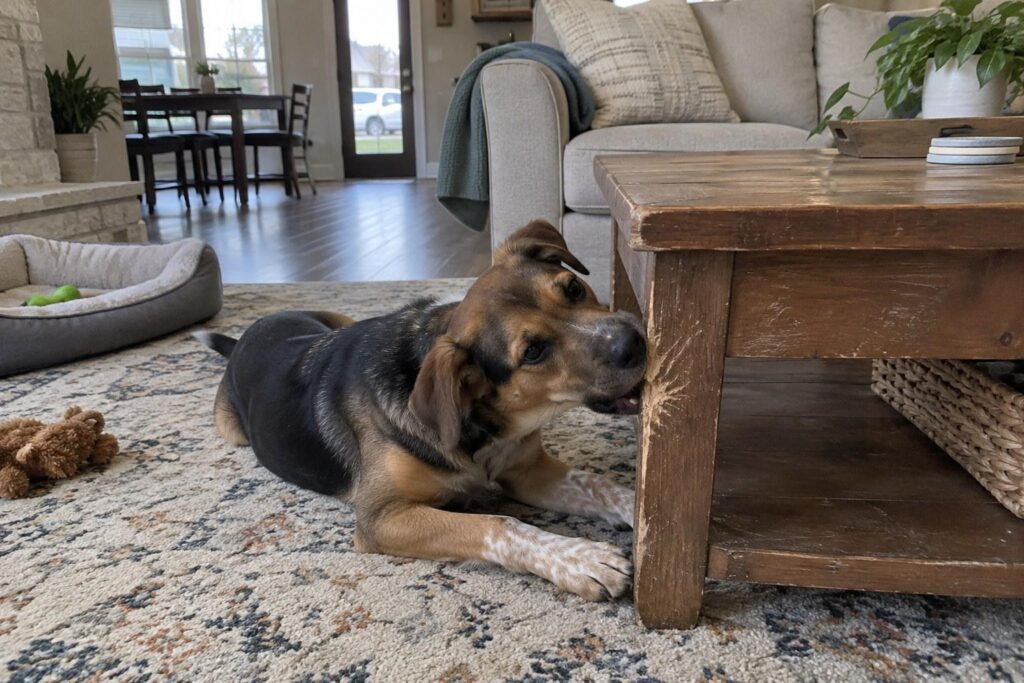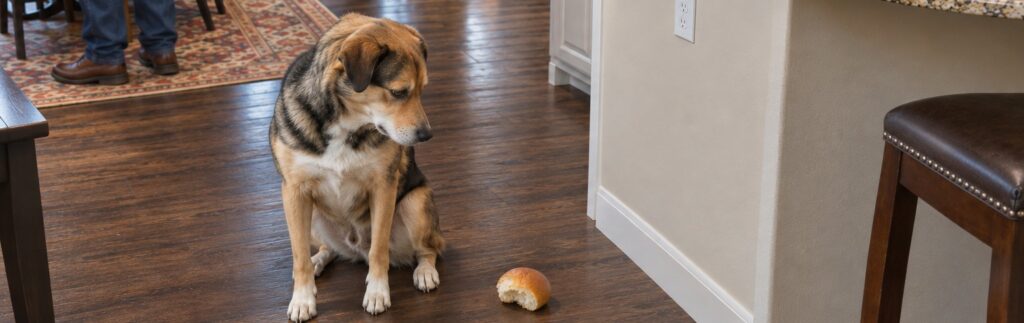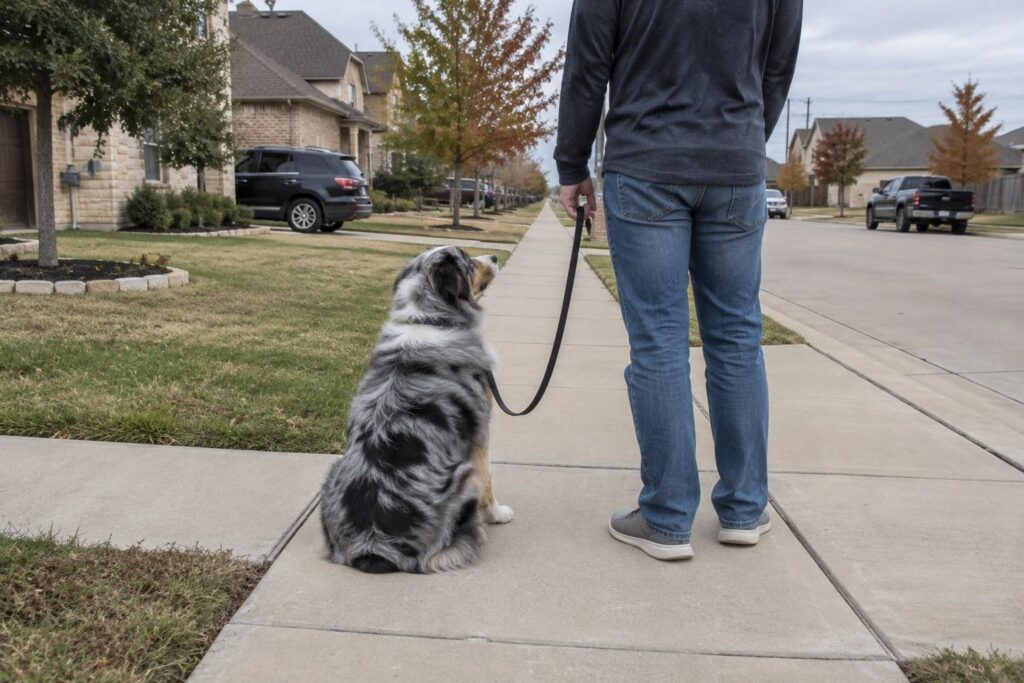

The place command gives your dog one simple job when the house gets loud: go to a bed or mat, lie down, and stay there until you release them. For busy Des Moines households, that one skill can turn a chaotic doorbell, a crowded Thanksgiving table, or a kitchen full of cooking into a calm, manageable moment.
At All Dogs Unleashed Dog Training Des Moines, we teach “place” to dogs of every size and age because it works in real homes, from older two-story houses in Beaverdale to newer builds in Ankeny and West Des Moines. Below, we walk through how to teach it, how to build duration and distraction, and how to use it when guests arrive during the long Iowa holiday season.
Want help building a calm, reliable “place” before the holidays? Our team is ready to talk through your dog’s needs.
Key Takeaways
- “Place” means your dog goes to a defined spot, stays on it, and does not leave until you give a clear release word.
- Start with short, easy repetitions in a quiet room, then add duration, distance, and distraction one at a time.
- A raised cot or a flat mat with clear edges makes the target obvious and helps your dog understand exactly where to be.
- Practice with fake doorbell rings and simulated guests before holiday gatherings so the real event is not your dog’s first test.
- Our two-week Board and Train program includes place and boundary training, and in-home lessons help you apply it in your own house.
What “Place” Means and Why It Helps at Home
“Place” is a stationary position command with a location attached. Unlike a basic “stay,” which asks your dog to freeze wherever they are, “place” sends your dog to a specific object and asks them to remain on it. Your dog can shift, sit, or lie down, but all four paws stay on the bed until you say the release word.
That clarity is what makes it so useful. Instead of repeating “no,” “off,” and “get down” while you answer the door or carry a hot dish, you give one cue that tells your dog what to do. A dog with a job is usually calmer than a dog guessing what you want.
How “Place” Differs From “Stay” and the Crate
A crate is a management tool that physically contains your dog. “Place” is a trained behavior, so your dog is choosing to hold the spot while remaining in the room with the family. Many owners use both: the crate for when no one can supervise, and “place” for when everyone is home and busy.
| Tool | What It Asks | Best Used For |
|---|---|---|
| “Place” | Go to a specific bed or mat and remain there until released | Meals, guests, doorbell, cooking, family movie night |
| “Stay” | Hold the current position wherever the dog is | Short pauses on walks, at doorways, or during paw wipes at home |
| Crate | Rest in an enclosed space | Unsupervised time, overnight, or when a dog is overwhelmed |
Why Busy Des Moines Homes Benefit
Iowa winters push a lot of daily life indoors. More time inside means more chances for jumping on visitors, begging at the table, and underfoot moments in the kitchen. A dependable “place” gives your dog a calm default for all of those moments, and it gives you a way to include your dog in family life instead of shutting them away.
Choosing the Right Place Bed and Location
Before you train, pick the object and the spot. The goal is a target your dog can easily tell apart from the rest of the floor.
Pick an Object With Clear Edges
Elevated dog cots are a popular choice because the raised edge makes “on” and “off” obvious. A firm mat or a bed with a defined border also works. Avoid a pile of blankets or a large rug, since your dog cannot easily tell where the boundary is. The bed should be big enough for your dog to lie down fully and turn around comfortably.
Pick a Location With a View
Put the bed where your dog can see the action but is not in the traffic path. In many Des Moines homes, that means a corner of the living room within sight of the front door, or a spot at the edge of the dining area. Keep it away from the kitchen walkway where people carry hot food, and away from drafty entryways during cold months.
| Bed Type | Pros | Things to Watch |
|---|---|---|
| Elevated cot | Very clear boundary, easy to wipe down after snowy walks | Some dogs need a few sessions to feel confident stepping up |
| Flat mat | Portable, easy to take to a relative’s house | Edges are less obvious, so be consistent with releases |
| Bolster bed | Comfortable for long holiday dinners | Can invite chewing in young dogs; supervise early on |
Step by Step: How to Teach Dog Place Command Skills
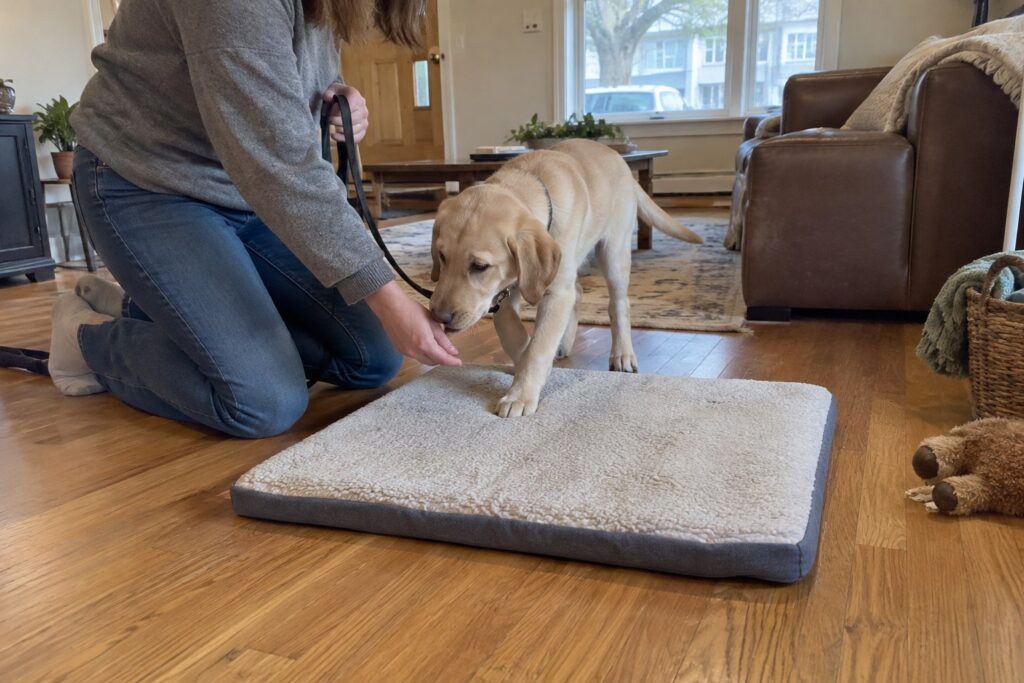
Keep early sessions short, about five minutes, and end while your dog is still succeeding. Use small, soft rewards your dog loves; our post on the best high-value dog treats for training has ideas that work well here.
Step 1: Lure Onto the Bed
Stand next to the bed with your dog on a leash. Say “place” once, then guide your dog onto the bed with a treat or gentle leash pressure. The moment all four paws are on, mark with a word like “yes” and reward on the bed. Rewarding on the bed, not after your dog steps off, teaches that the bed is where good things happen.
Step 2: Add the Release Word
After a few seconds, say your release word, such as “free” or “okay,” and invite your dog off the bed. Do not reward the step off; the reward belongs on the bed. The release word matters as much as the cue, because it tells your dog that the job is over only when you say so.
Step 3: Build Duration Slowly
Once your dog goes to the bed easily, start asking for a few more seconds before the release. Reward calmly and repeatedly while your dog stays. If your dog steps off early, calmly guide them back without a reward and try a shorter duration. Work up from seconds to a minute, then several minutes, over many sessions.
Step 4: Add Distance
Begin sending your dog to the bed from a step or two away, then from across the room. Also practice walking away from the bed while your dog holds position, then returning to reward. Change only one thing at a time: if you add distance, shorten the duration for that session.
Step 5: Fade the Lure
By this point, your dog should head to the bed on the verbal cue alone. Keep rewards coming, but start giving them after the behavior instead of showing them first. Over time, you can reward less often, while still praising calm, relaxed stays.
| Stage | Goal | Sign You Can Move On |
|---|---|---|
| Lure | Dog steps onto the bed on cue | Dog climbs on quickly with little help |
| Release | Dog waits for the release word | Dog pauses and looks at you before stepping off |
| Duration | Dog holds for several minutes | Dog lies down and settles without prompting |
| Distance | Dog goes to the bed from across the room | Dog heads to the bed on one cue |
| Distraction | Dog holds with activity nearby | Dog stays through a knock, footsteps, or dropped item |
If you would rather have a professional build the foundation, our two-week Board and Train program includes place and boundary training with progressive duration and distraction work every day, followed by a handoff session so you can keep it going at home.
Adding Distractions Before the Holidays Arrive
A dog who holds “place” in a quiet living room may still pop up the first time a crowd walks in. Distraction work is how you close that gap. Plan to start practicing a few weeks before Thanksgiving or other holiday gatherings, not the day of.
Practice Doorbell Rings
Play a doorbell sound on your phone or have a family member ring the real bell while your dog is on the bed. Start at low volume or from a distance, reward your dog for staying, and gradually make it more realistic. If your dog already rushes and barks at the door, pair this work with the steps in our post on how to stop barking at the door, which covers barking in detail.
Practice Fake Guests
Ask a neighbor or friend to come in, take off their coat and boots, and chat for a few minutes while your dog holds “place.” Coach the guest to ignore your dog at first. Once your dog is calm, you can release them to greet politely, then send them back to the bed.
Practice Dinner Setups
Set the table, carry plates, and sit down to eat while your dog stays on the bed within sight. Reward calm behavior between bites. Dropped food is a real test, so practice picking up a dropped item yourself while your dog holds position.
| Holiday Trigger | Practice Setup | What to Reward |
|---|---|---|
| Doorbell or knock | Recorded doorbell at low volume, then the real bell | Staying on the bed after the sound |
| Guests arriving | Friend enters, removes coat and boots, ignores the dog | Settling instead of rushing the door |
| Holiday dinner | Full table setup with family seated | Lying down calmly while people eat |
| Kids playing | Children moving around the room with toys | Holding position without chasing |
| Kitchen cooking | Oven open, dishes clattering, people moving | Staying out of the walkway |
Using “Place” When Guests Come Over
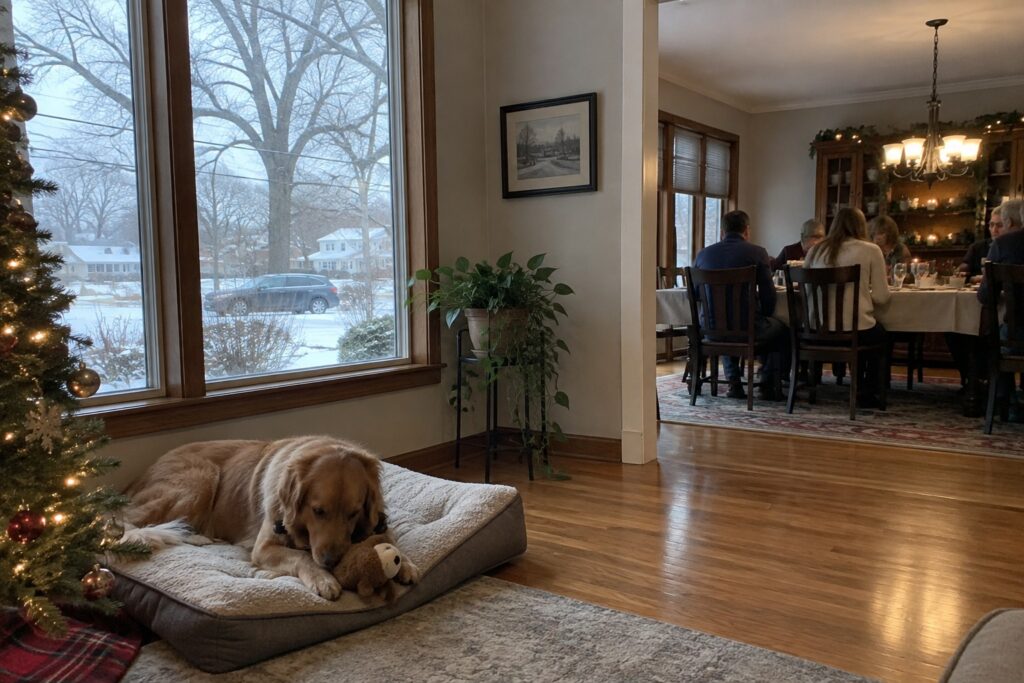
On the actual day, set your dog up to succeed. Give your dog a good walk or play session earlier in the day. In winter, an indoor game of fetch works if sidewalks are icy.
Send Your Dog to Place Before the Door Opens
When the doorbell rings, cue “place” first, then answer the door. If your dog struggles, keep a leash on so you can calmly guide them back. A dog who is already on the bed when guests walk in is far easier to manage than one you are trying to call back from the entryway.
Keep Table Food Off Limits
Holiday meals often include foods that are not safe for dogs. The ASPCA lists common people foods to avoid feeding your pets, including chocolate, grapes and raisins, onions, garlic, and products containing xylitol. A solid “place” keeps your dog away from the table and reduces the chance of guests slipping them scraps. If your dog eats something concerning, call your veterinarian right away.
Have Guests Help, Not Hinder
Brief guests before they arrive. Ask them not to call your dog off the bed or feed them from the table. Well-meaning visitors can undo weeks of practice in one evening. Families with young children may find our post on mistakes families make training dogs around kids helpful for setting ground rules.
Common “Place” Mistakes and How to Fix Them
Most problems with “place” come from moving too fast or being inconsistent with the release. Here are the ones we see most often.
Forgetting to Release
If you send your dog to “place” and then get distracted, your dog will eventually release themselves. That teaches them the cue ends whenever they decide. Set a phone reminder during early practice, and always end with your release word.
Using the Bed as Punishment
“Place” should feel like a calm, rewarding spot, not a timeout. If you only use it when your dog is in trouble, they may start avoiding the bed. Practice it at random, pleasant times too.
Asking for Too Much Too Soon
Jumping from a two-minute stay in a quiet room to a three-hour holiday party is a big leap. Build up gradually, and on busy days, plan short breaks where you release your dog for a potty trip or a quiet rest in another room.
When to Get Professional Help With Place Training
Some dogs pick up “place” quickly. Others, especially high-energy young dogs, dogs with strong reactions to visitors, or dogs that have practiced jumping and door rushing for years, need more structure than a few evening sessions can provide.
Board and Train for a Strong Foundation
Our two-week Board and Train program is a residential option where your dog stays at our Des Moines facility and trains daily. Place and boundary training is part of that daily work, built through progressive duration and distraction exercises. The program ends with a handoff session where you learn how to use the commands at home, and Board and Train includes guaranteed results and lifetime support at no additional charge.
In-Home Lessons for Real-World Practice
If your challenges are tied to your own front door, dining room, or family routine, in-home dog training lets a trainer work with you where the problems actually happen. For a look at every option we offer, visit our dog training programs page. Puppy owners can start early with puppy training, and older dogs can learn “place” too, as we explain in our post on training an older dog.
| Option | How It Works | Good Fit If |
|---|---|---|
| Board and Train | Fixed two-week residential program with daily training and a handoff session | You want a strong foundation and guaranteed results |
| In-Home Lessons | Private sessions with a trainer in your home | Problems center on your door, table, or household routine |
| Puppy Training | Early structure and foundation skills | You have a young puppy and want good habits from the start |
Ready to make holiday gatherings calmer this year? Call All Dogs Unleashed Dog Training Des Moines at (515) 480-7977 to talk about the right program for your dog.
About All Dogs Unleashed Dog Training Des Moines
All Dogs Unleashed Dog Training Des Moines helps Central Iowa dog owners build calm, reliable behavior at home and out in the community. Our two-week Board and Train program includes daily place and boundary work, obedience, and leash manners, and it comes with guaranteed results and lifetime support. We also offer in-home lessons, puppy training, refresh training, and boarding. Whether your challenge is a doorbell, a crowded dinner table, or an excited greeter, we build skills that hold up in real homes.
Frequently Asked Questions
How long does it take to teach a dog “place”?
Many dogs learn to step onto the bed on cue within a few short sessions, but a reliable “place” with long duration and real distractions takes consistent practice over weeks. Progress depends on your dog’s age, energy, and history. Short daily sessions of about five minutes usually work better than one long weekend session.
What is the best bed for place training?
An elevated dog cot is a common choice because the raised edge makes the boundary easy for your dog to understand. A firm mat with clear edges also works well and is easy to bring along to a relative’s house. Pick something sized so your dog can lie down fully and turn around comfortably.
Can I teach an older dog “place”?
Yes. Older dogs can learn “place” just like puppies, and many settle into it easily because they already enjoy resting near their people. Choose a bed that is comfortable for aging joints, keep sessions short, and check with your veterinarian if your dog has mobility issues that make stepping onto a raised cot difficult.
How do I stop my dog from leaving place when the doorbell rings?
Practice with a recorded doorbell at low volume first, rewarding your dog for staying on the bed. Gradually increase the volume, then move to the real bell and practice guests. Keep a leash on during early practice so you can calmly guide your dog back without chasing. Always release your dog yourself instead of letting the doorbell end the command.
Is the place command the same as a crate?
No. A crate physically contains your dog, while “place” is a trained behavior where your dog chooses to stay on a bed in the room with the family. Both are useful. Many owners use the crate for unsupervised time and overnight, and use “place” during meals, guests, and busy evenings when everyone is home.
Does Board and Train teach “place”?
Yes. Place and boundary training is part of our two-week Board and Train program in Des Moines, built through progressive duration and distraction exercises throughout each day. At the end, you attend a handoff session to learn how to use the command at home, and the program includes guaranteed results and lifetime support at no additional charge.
A dependable “place” makes holiday guests, doorbell rings, and family dinners easier for everyone in your home. If you want help building it, call (515) 480-7977 or reach out online. You can also visit our Walnut Street location in downtown Des Moines to learn more about our programs.
Ready to Get Started with All Dogs Unleashed Dog Training Des Moines?
Give your dog a calm job for the busiest days of the year. Call (515) 480-7977 today to talk with our team about Board and Train, in-home lessons, and more.