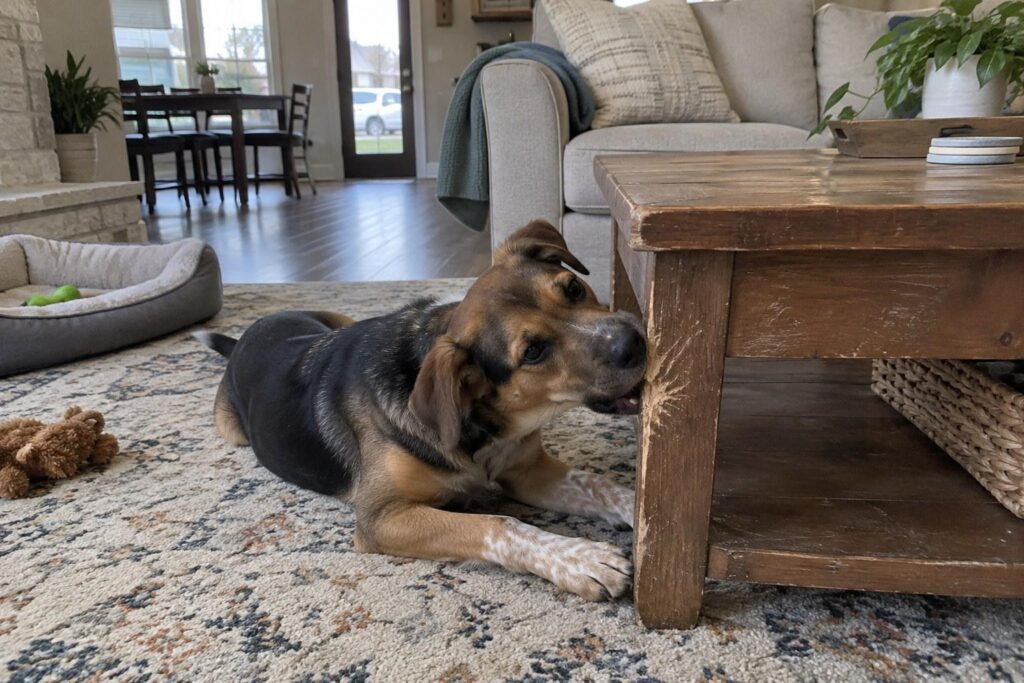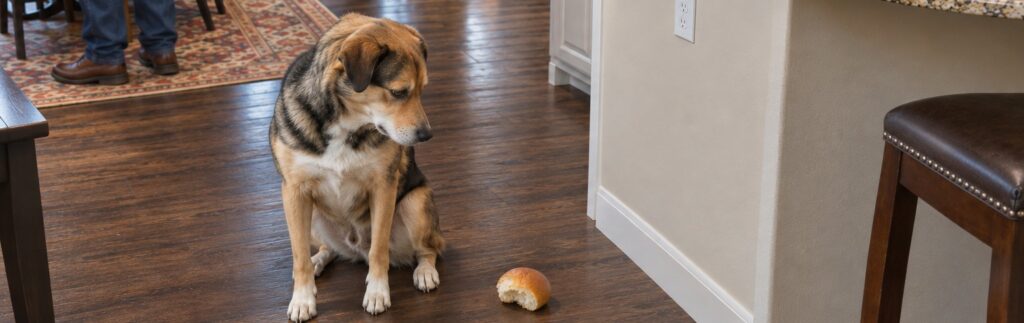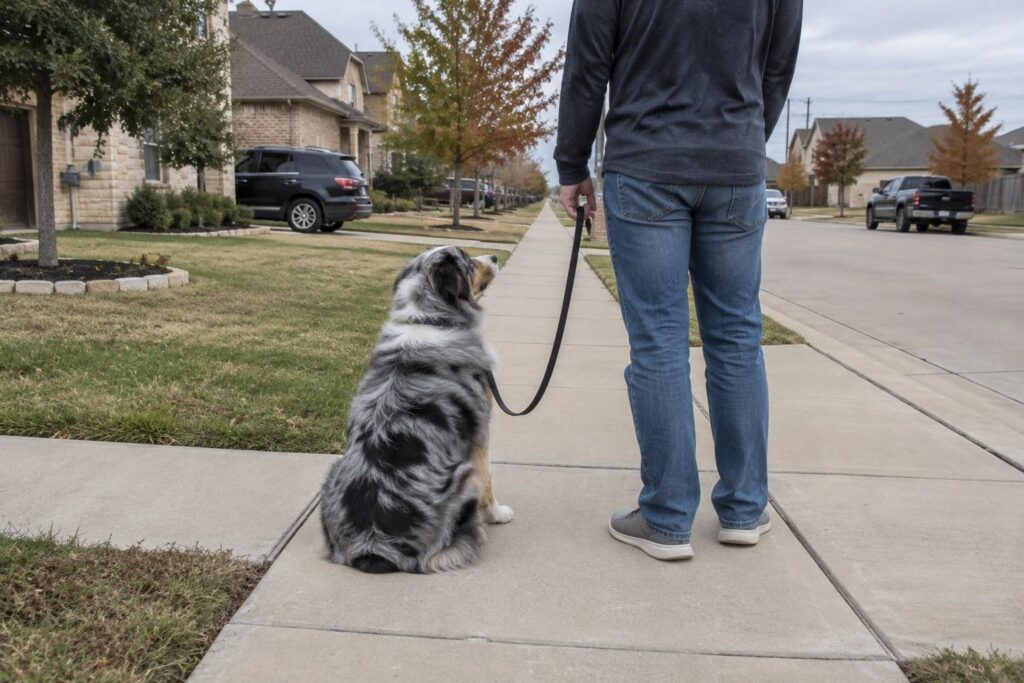

Dog counter surfing is one of the most common kitchen problems we see, and it tends to get worse right when your kitchen gets busiest. Thanksgiving turkeys resting on the counter, trays of cookies cooling by the stove, and guests setting plates down wherever there is room all give a curious dog more chances to score a reward.
At All Dogs Unleashed Dog Training Des Moines, we help families across the metro, from Beaverdale to Ankeny to West Des Moines, turn kitchen chaos into calm. Below you will find why the habit starts, why holiday food makes it risky, and the management and training steps that actually stop it.
Want help before the holiday cooking starts? Our team can build a plan around your dog and your kitchen.
Key Takeaways
- Counter surfing is a self-rewarding habit, so every successful grab makes your dog more likely to try again.
- Holiday kitchens raise the stakes because foods like chocolate, xylitol, grapes, onions, and cooked bones can seriously harm dogs.
- Management comes first: clear counters, use gates or a crate, and supervise closely whenever food is out.
- Teaching “leave it”, “off”, and a reliable “place” gives your dog a clear job instead of a guessing game.
- Our fixed two-week Board and Train program builds these skills daily and is backed by guaranteed results and lifetime support.
Why Dogs Start Counter Surfing in the First Place
Most dogs are not being spiteful when they steal food. They are doing what dogs naturally do: looking for something good to eat. Once a dog discovers that the counter sometimes pays off, the behavior sticks.
The Jackpot Effect
Counter surfing is rewarded on an unpredictable schedule. Your dog might jump up ten times and find nothing, then land a whole stick of butter on the eleventh try. That occasional jackpot is exactly what keeps the behavior going, much like a slot machine keeps people pulling the lever.
This is why “just ignoring it” rarely works. The counter itself is delivering the reward, and you are not in control of it unless you change the environment.
Size, Breed, and Opportunity
Taller dogs can simply reach more, and food-motivated breeds tend to try harder. They have the easiest reach, but small dogs can learn to climb chairs and stools to get the same payoff. If you share your home with a Lab, our Labrador retriever training tips for Des Moines owners cover how to channel that food drive productively.
Boredom and Under-Stimulation
Iowa winters keep a lot of dogs indoors for long stretches. When a dog has not had enough exercise or mental work, the kitchen becomes the most interesting room in the house. Shorter walks on icy sidewalks and fewer trips to the park can quietly increase kitchen mischief.
Accidental Reinforcement
Sometimes the family teaches the habit without meaning to. Handing a dog scraps while cooking, letting kids drop crusts from the counter, or chasing the dog after it grabs something can all make the kitchen feel like a game. If your household includes young children, our list of mistakes Des Moines families make training dogs around kids is worth a read.
Why Holiday Kitchens Make Counter Surfing Dangerous
A stolen sandwich is annoying. A stolen plate of holiday leftovers can mean an emergency vet visit. From Thanksgiving through New Year’s, counters in many Des Moines homes hold more food, more often, with more people coming and going.
Common Holiday Foods That Can Hurt Dogs
The ASPCA’s list of people foods to avoid feeding pets includes several items that show up on nearly every holiday table. The AVMA’s holiday pet safety guidance also warns owners to keep fatty scraps, bones, and sweets away from pets.
| Holiday Food | Why It Is a Concern |
|---|---|
| Chocolate and baked goods | Chocolate contains substances that are toxic to dogs; darker chocolate is generally more dangerous. |
| Sugar-free treats, gum, and some baked goods | May contain xylitol, which is toxic to dogs even in small amounts. |
| Grapes and raisins | Linked to kidney damage in dogs; watch for stuffing, salads, and desserts that include them. |
| Onions, garlic, and chives | Can damage a dog’s red blood cells; common in stuffing, gravy, and casseroles. |
| Cooked bones | Can splinter and cause choking or internal injury. |
| Turkey skin, fat trimmings, and gravy | Rich, fatty foods can cause stomach upset and may contribute to pancreatitis. |
| Macadamia nuts and alcohol | Both are on the ASPCA list of foods dogs should not have. |
If your dog gets into any of these, call your veterinarian or an animal poison control line right away. Do not wait for symptoms, and do not try to treat it at home without professional guidance.
Guests Change the Rules
Visitors do not know your house rules. A well-meaning relative may set a plate on the coffee table, leave a purse with gum on the floor, or slip your dog a bite of ham. More people also means more distraction, so nobody is watching the dog as closely as usual. Door traffic adds another layer, and our guide to teaching a dog to stop barking at the door can help you keep arrivals calmer.
Stress Can Drive Scavenging
Some dogs get overwhelmed by noise, new smells, and a packed house. Anxious dogs may pace, pant, and scavenge more. If your dog seems unsettled during gatherings, review these dog anxiety signs every Des Moines owner should recognize and give your dog a quiet space away from the crowd.
How to Stop Dog Counter Surfing Today With Management
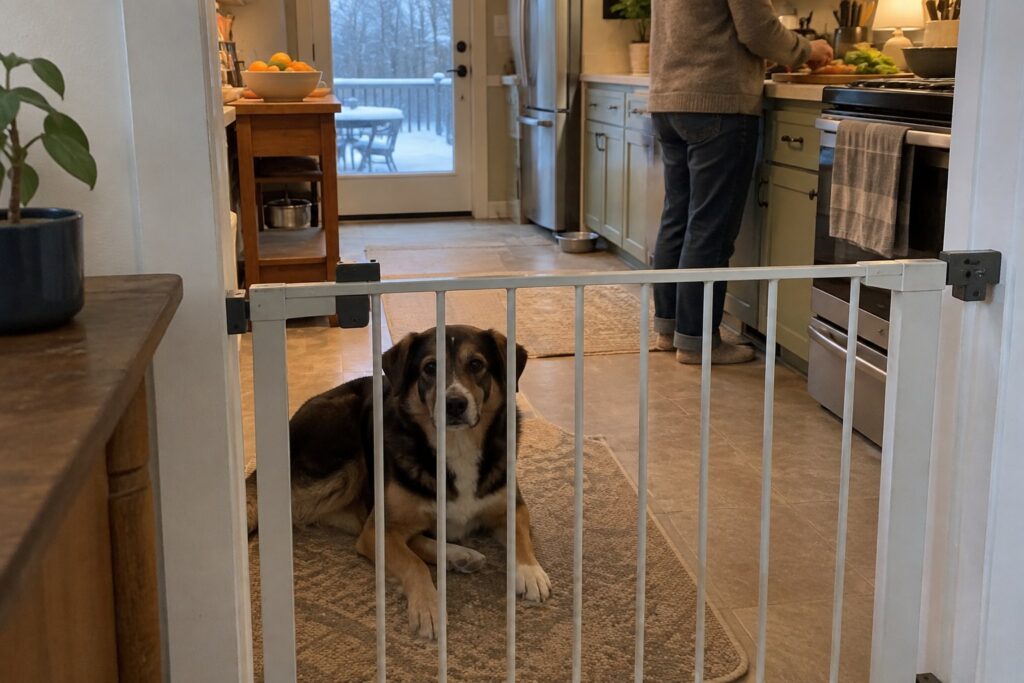
Training takes time. Management protects your dog and your dinner while that training happens. Think of management as removing the jackpot so the habit stops paying off.
Clear the Counters Completely
Push food to the back of the counter, and better yet, put it in the fridge, microwave, or oven when you step away. Keep trash in a closed cabinet or a can with a locking lid. Empty cutting boards and wipe down surfaces so there is not even a smell worth investigating.
Control Access to the Kitchen
A baby gate across the kitchen doorway is one of the simplest tools you can use. Many older two-story homes in neighborhoods like Beaverdale and Waterbury have kitchens with a doorway that gates easily. If your kitchen is open to the living area, a crate or a closed room with a chew toy works well during peak cooking hours.
Supervise or Separate
A simple rule helps: if food is out, your dog is either actively supervised or physically separated. Leashing your dog to you while you cook is another option for dogs still learning. Your dog cannot practice counter surfing if it cannot reach the counter.
Meet Your Dog’s Needs First
A tired, fed dog surfs less. Walk or play before guests arrive, feed a normal meal on schedule, and give your dog a long-lasting chew in its own area. Indoor games like scent work and food puzzles help on days when snow and ice keep walks short.
Want the kitchen manners to be solid before the next big gathering? Our immersive program works on these skills every day.
Training Commands That Replace the Habit
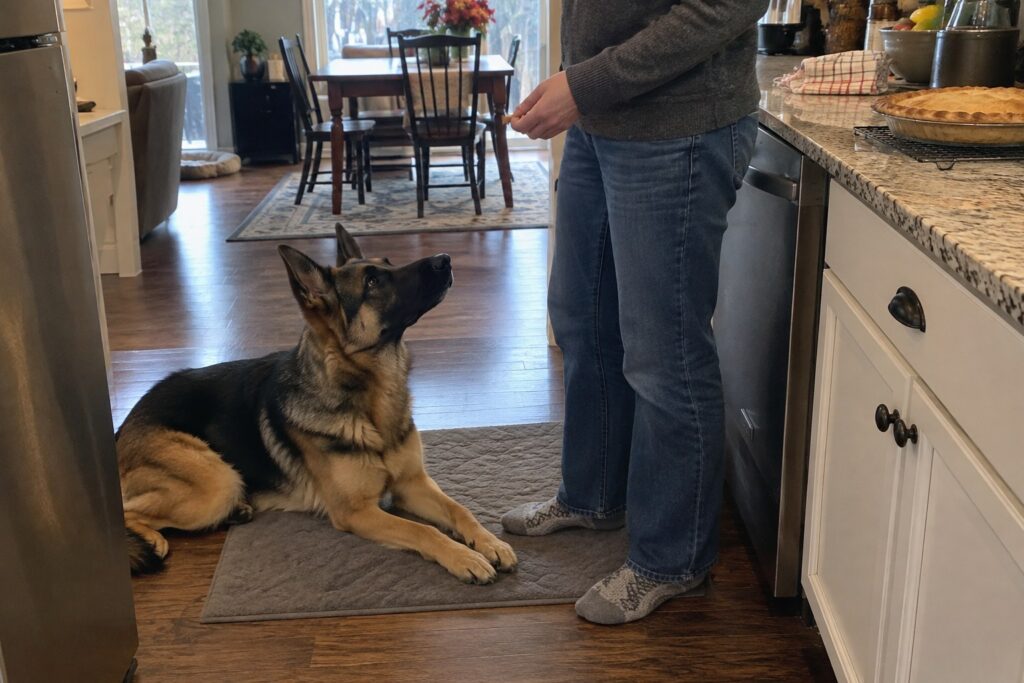
Management stops the reward. Training gives your dog something better to do. These three commands work together to create a dog who stays grounded while you cook.
Teaching “Leave It”
“Leave it” tells your dog to ignore something it wants. Start with a treat in a closed fist. When your dog stops sniffing or pawing and backs off, mark and reward with a different treat from your other hand. Gradually progress to a treat on the floor under your foot, then an uncovered treat, then food on a low table.
The key is that your dog never gets the item it was told to leave. The reward always comes from you. High-value rewards make a big difference here, and our roundup of high-value dog treats for training can help you pick options your dog will work for.
Teaching “Off”
“Off” means all four paws on the floor. Use it only for that, not as a catch-all for “stop.” When your dog puts paws up on the counter, calmly say “off,” guide your dog down if needed, and reward the moment all four feet land. Many owners accidentally use “down” for this, which confuses dogs who already know “down” means lie down.
Using “Place” as the Kitchen Default
A reliable “place” gives your dog a designated spot, such as a mat or bed near the edge of the kitchen, to hold until released. It is incompatible with counter surfing because your dog cannot hold “place” and stand at the counter at the same time. Place and boundary training is part of the daily work in our Board and Train program.
Comparing the Three Commands
| Command | What It Means | Best Used When |
|---|---|---|
| “Leave it” | Ignore the item and look away | Your dog is eyeing food or something dropped on the floor |
| “Off” | Four paws back on the floor | Your dog already has paws on the counter or a guest |
| “Place” | Go to a set spot and stay until released | You are cooking, serving, or hosting for a longer stretch |
Practice Under Realistic Conditions
Once your dog understands each cue in a quiet room, add difficulty slowly. Practice while a pan sizzles, while someone walks around with a plate, and eventually with a pretend dinner party. Keep sessions short, five to ten minutes, and end on a success.
Mistakes That Keep Counter Surfing Going
Even motivated owners can stall their progress. Watch for these common patterns.
Punishing After the Fact
Scolding your dog after you find an empty plate does not connect to the act of jumping up. Your dog only learns that you are unpredictable when you walk into the kitchen. Focus on preventing access and rewarding the right choices in the moment.
Inconsistent Household Rules
If one person allows paws on the counter while wiping crumbs and another does not, your dog will keep testing. Agree on the words and the rules as a family. Everyone should use “off,” “leave it,” and “place” the same way.
Relaxing Management Too Soon
A dog who has been good for two weeks can still relapse when a fresh turkey appears. Keep management in place during high-risk times, especially holidays, even after training is going well.
Relying on Gadgets Alone
Motion-activated deterrents and counter mats may startle some dogs, but they do not teach what to do instead. Some sensitive dogs become fearful of the kitchen. Training that builds clear communication lasts longer. If you have questions about equipment, our trainers can walk you through the options.
How Professional Training Solves Dog Counter Surfing
Some dogs have practiced counter surfing for years, and busy families do not always have time to run daily training sessions. That is when professional help can speed things up.
Board and Train for Fast, Lasting Results
Our Board and Train program in Des Moines is a fixed two-week program. Your dog stays at our facility and works with our trainers daily on obedience, leash manners, and place and boundary training, in varied settings so the skills transfer home. Every dog that completes Board and Train is backed by guaranteed results and lifetime support at no additional charge.
In-Home Lessons for Kitchen-Specific Coaching
Because counter surfing happens in your kitchen, working in that exact space can be powerful. Our in-home dog training and private lessons let a trainer coach you through your layout, your routines, and your family’s habits.
Starting Early With Puppies
Puppies learn quickly that counters hold treasure. Building “leave it” and “off” early prevents years of frustration, and our puppy training in Des Moines focuses on that foundation.
| Option | How It Works | Good Fit For |
|---|---|---|
| Board and Train | Fixed two-week stay with daily training at our facility, plus a guarantee and lifetime support | Established habits, busy households, dogs needing a full reset |
| In-Home Lessons | Private sessions in your home or at our facility | Owners who want hands-on coaching in their own kitchen |
| Puppy Training | Early foundation skills and management | Young dogs before the habit sets in |
Ready to stop kitchen theft for good? Call (515) 480-7977 and we will help you choose the right path for your dog.
About All Dogs Unleashed Dog Training Des Moines
All Dogs Unleashed Dog Training Des Moines helps metro families build calm, reliable dogs at home and in public. Our fixed two-week Board and Train program is our core offering, with daily structured sessions covering obedience, impulse control, and place training that make kitchen manners possible. We also offer in-home and private lessons, puppy training, refresh training, and boarding. Board and Train graduates receive guaranteed results and lifetime support, so you have a resource long after the holidays end.
Frequently Asked Questions
How do I stop my dog from counter surfing when I’m not home?
When you are away, rely entirely on management. Keep counters completely clear, store trash behind a closed door, and confine your dog to a crate, gated area, or dog-safe room. Training only works when you can reinforce the right choice, so do not leave opportunities for unsupervised practice. Over time, a well-trained dog will be less tempted, but prevention still matters.
Why does my dog only counter surf when I leave the room?
Your dog has likely learned that your presence predicts no reward, while your absence means the coast is clear. This is common and means your dog understands the rule but has not generalized it. Practice “leave it” while stepping briefly out of view, return quickly to reward good choices, and keep management in place until the behavior is reliable.
What should I do if my dog ate Thanksgiving food off the counter?
Figure out what and how much your dog ate, then call your veterinarian or an animal poison control line immediately, especially if chocolate, xylitol, grapes, raisins, onions, garlic, or cooked bones were involved. Do not induce vomiting unless a veterinarian tells you to. Fast action often leads to better outcomes, so do not wait for symptoms.
Can an older dog stop counter surfing?
Yes. Older dogs can absolutely learn new habits, though a long history of successful grabs means you need patience and strict management. Consistent “leave it” and “place” practice, paired with a fully cleared counter, usually brings steady progress. Check with your vet if appetite changes suddenly.
Is “off” the same as “down”?
No, and mixing them up slows training. “Off” should mean four paws on the floor, used for counters, furniture, or jumping on people. “Down” should mean lie down. Using one word for two different actions confuses dogs. Pick clear cues, make sure everyone in the household uses them the same way, and reward the exact behavior you asked for.
How long does it take to stop dog counter surfing?
It depends on how long the habit has been rewarded, your dog’s food drive, and how consistent your household is. Many dogs improve quickly once the counter stops paying off, but reliability around tempting holiday food takes steady practice. Our fixed two-week Board and Train program provides daily structured work to build these skills with professional support.
Dog counter surfing is frustrating, but it is fixable with the right combination of management and training, and getting ahead of it before the holidays can keep your dog safe from dangerous foods. If you want professional help, call (515) 480-7977 or reach out online. We would be glad to meet you and your dog at our Walnut Street location in downtown Des Moines.
Ready to Get Started with All Dogs Unleashed Dog Training Des Moines?
Give your dog the skills to stay calm in a busy kitchen this holiday season. Call (515) 480-7977 today to talk with our team.