
Doberman training works best when you treat the breed as the capable, people-focused working dog it is. Dobermans are smart, athletic, and deeply attached to their families, and they notice everything happening around the house. That combination makes them quick learners, but it also means a Doberman without clear structure will start making its own decisions about who belongs in the yard.
At All Dogs Unleashed Dog Training Bossier City, we enjoy working with Dobermans because they love having a job. Below you will find what drives the breed, the skills we teach first, how to handle alertness and protectiveness, and a practical routine you can follow at home in Bossier Parish.
Have questions about your own Doberman? Our team is happy to talk it through.
Key Takeaways
- The American Kennel Club places the Doberman Pinscher in the Working Group and describes the breed as loyal, fearless, and alert.
- Early, careful socialization is the single most important investment you can make in a young Doberman.
- Dobermans are sensitive to their handlers, so calm, consistent communication works far better than harsh corrections.
- A strong “place” cue and polite door manners help a watchful Doberman relax when guests arrive.
- Our two-week Board and Train program includes guaranteed results and lifetime support at no additional cost for graduates.
Understanding the Doberman Mindset
The AKC breed profile for the Doberman Pinscher lists the breed in the Working Group, with Germany as its country of origin and a temperament described as loyal, fearless, and alert. Those traits shape almost every question we hear from Bossier City owners.
Loyal Means They Want to Be With You
Dobermans are often called velcro dogs for a reason. Many follow their people from room to room and prefer to be part of whatever the family is doing. That closeness is a training advantage, because a Doberman usually cares a great deal about your approval. It also means long hours alone can lead to restlessness, chewing, or vocal frustration.
Alert Means They Notice Everything
A Doberman tends to register every car door, every footstep on the porch, and every unfamiliar person on the sidewalk. Alertness is not a problem by itself. The goal is a dog that notices, checks in with you, and then lets you handle the situation instead of reacting on its own.
Fearless Needs to Be Paired With Good Judgment
Confidence is wonderful in a big, strong dog, as long as it comes with self-control. A confident Doberman that has never learned to settle can become pushy or overly protective. Training gives that confidence a direction, so your dog feels secure enough to stay calm.
Doberman Training Priorities for the First Year
Young Dobermans grow fast, and a puppy that was easy to manage at ten weeks can be a strong, leggy adolescent a few months later. Building the right habits early makes everything easier once your dog is full size.
| Priority | Why It Matters for Dobermans | What to Practice |
|---|---|---|
| Socialization | Watchful dogs can grow suspicious of the unfamiliar | Calm, positive exposure to people, sounds, and places |
| Name response and focus | Gives you a way to interrupt alert behavior | Reward eye contact when you say your dog’s name |
| Loose leash walking | An adult Doberman is strong and fast | Short walks with frequent rewards at your side |
| Settle and “place” | Teaches an active dog to turn off | Rewarding calm on a mat or bed for longer periods |
| Reliable recall | Safety for a quick, athletic breed | “Come” on a long line before any off-leash time |
Socialization Comes First
Socialization does not mean letting your puppy greet every person and dog in sight. It means calm, positive experiences with new people at a comfortable distance, different floors and surfaces, car rides, household noises, and well-mannered dogs. Watch your puppy’s body language and keep each experience short and pleasant. Our puppy socialization steps for Bossier City owners offer a useful checklist for the early months.
Build Focus Before Distractions
Teach your Doberman that looking at you pays off. Say the name, reward the moment your dog makes eye contact, and repeat in short sessions around the house. Once that check-in is automatic indoors, practice it in the yard and then on quiet walks. This simple skill becomes your best tool when something interesting appears.
Teach “Sit,” “Down,” and “Stay” With Calm Energy
Dobermans usually pick up basic cues quickly. The real work is building duration and reliability. Ask for a “sit” or “down,” wait a few seconds, reward, and release. Add time slowly, then add mild distractions. Keep your voice steady and your rewards generous, because many Dobermans shut down or get frantic when handling feels harsh.
Use the Crate as a Rest Zone
A busy young Doberman benefits from scheduled downtime. A crate set up with a comfortable bed and a safe chew helps your dog learn that quiet time is part of the day. Our tips on crate training a dog into a calm routine work well for this breed.
Managing Alertness and Protective Instincts
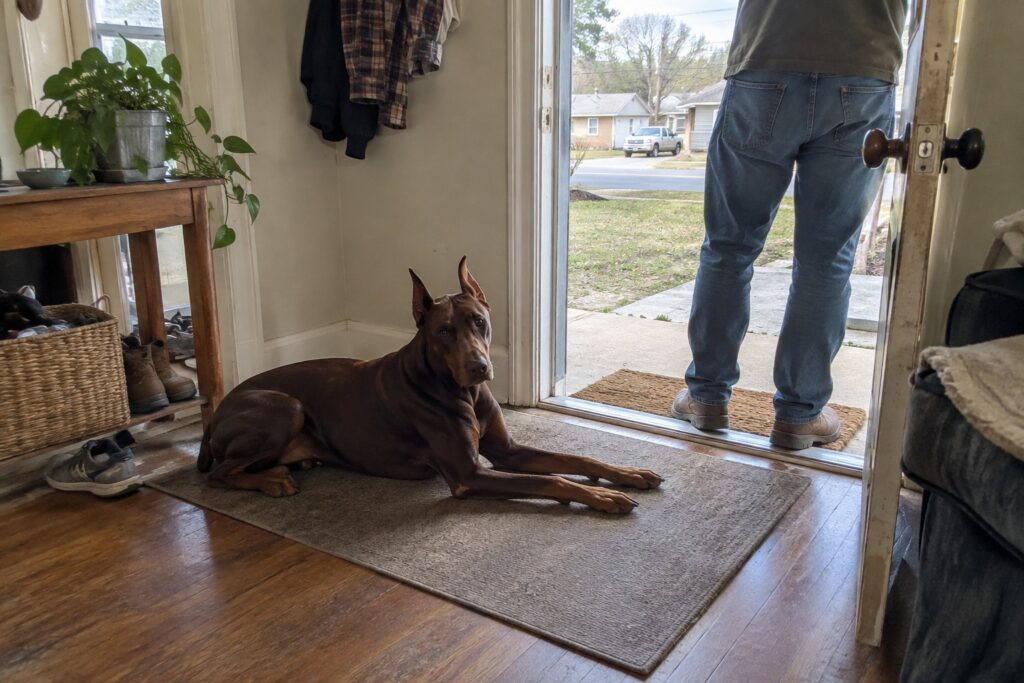
Many people choose a Doberman because they want a dog that makes them feel safe. A well-trained Doberman can be a reassuring presence. Protective behavior that is not under control, though, puts your dog, your guests, and your neighbors at risk.
Reward Calm Noticing
When your dog spots a person across the street or hears a noise outside, mark and reward the moment it looks back at you. Over time your Doberman learns that noticing something is a cue to check in, not a cue to bark and lunge. Keep enough distance that your dog can still take food and listen.
Door Manners Matter
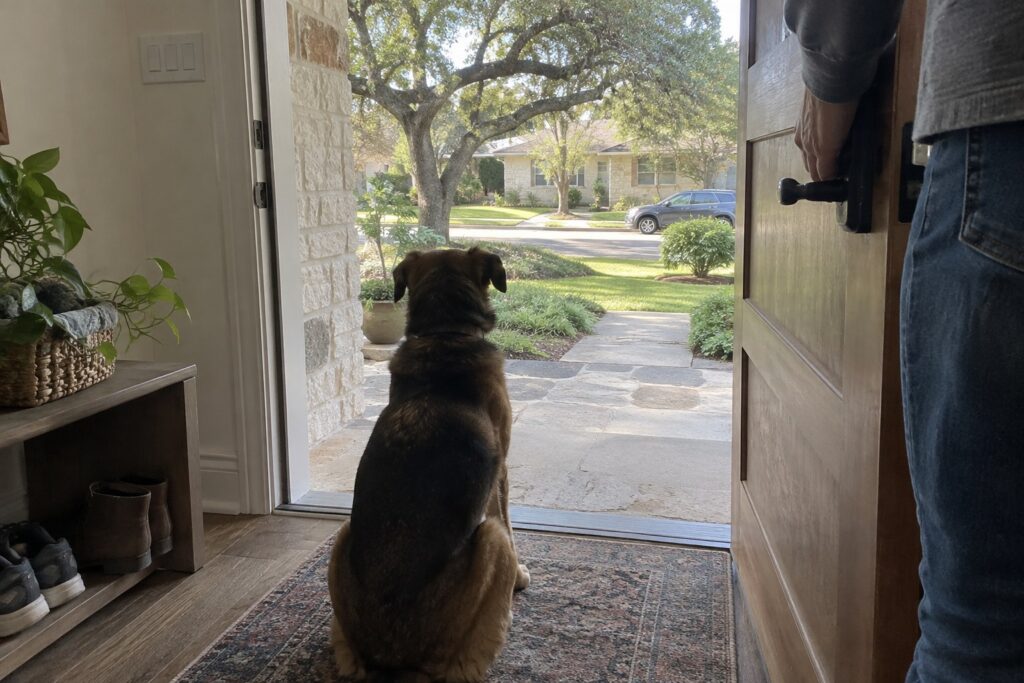
The front door is where many Dobermans struggle most. Teach a “place” cue on a mat a few steps from the door, practice it with family members knocking, then with friends who agree to help. Your dog should stay on the mat until you release it to greet calmly. Leash your dog during early practice so mistakes stay small.
Know When Behavior Needs a Professional
Stiff posture, hard staring, growling at visitors, and snapping are signs to get experienced help rather than trying to fix things alone. Never punish a growl, since that can remove the warning without changing how the dog feels. Our articles on professional aggression training for reactive dogs in Bossier and dog bite prevention for Bossier families explain what to watch for.
| What You See | What It Often Means | Helpful Response |
|---|---|---|
| Ears up, head turned toward a sound | Normal alertness | Calmly reward a check-in with you |
| A few barks at the window | Alerting the household | Thank the dog, call it away, ask for “place” |
| Lunging and nonstop barking on walks | Over-arousal or reactivity | Increase distance, reduce triggers, get guidance |
| Growling at guests, stiff body | Discomfort or guarding | Manage the situation and contact a professional |
If your Doberman is smart but hard to manage, our two-week program gives your dog structured practice every day while you get support.
Leash Skills for a Strong, Fast Dog
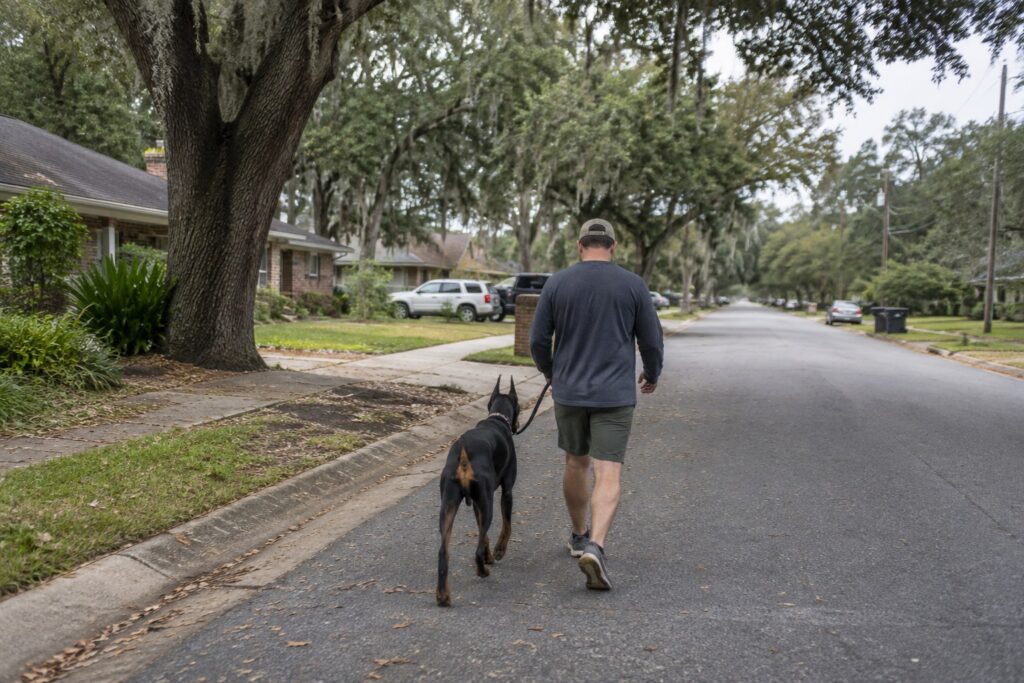
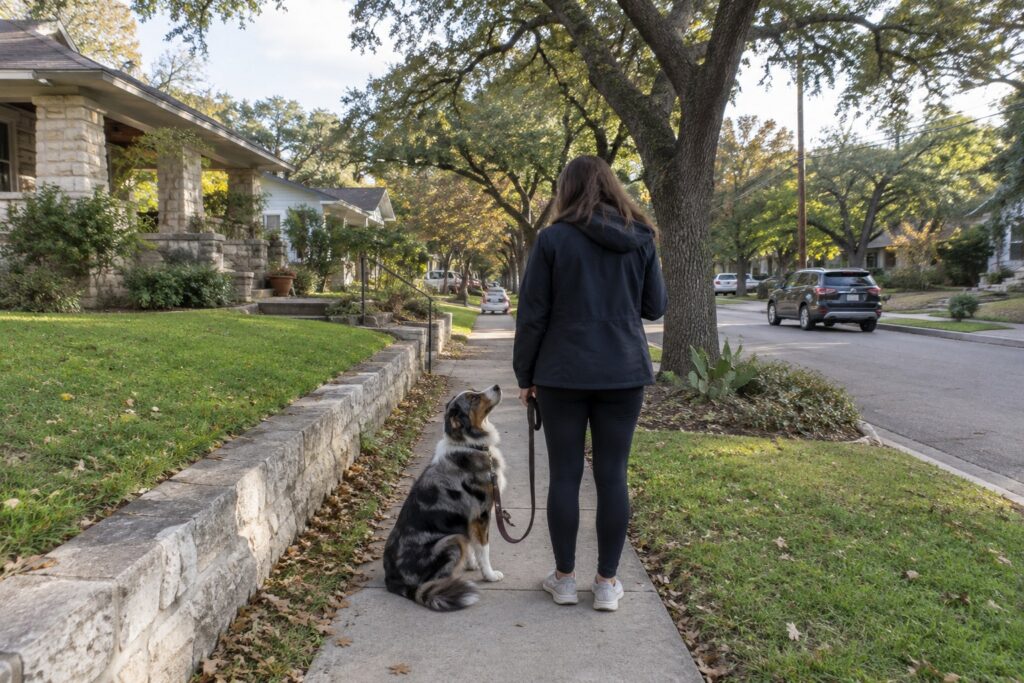
An adult Doberman is athletic, and a dog that pulls or lunges can be hard for anyone to hold. Good leash skills keep walks enjoyable around Bossier City neighborhoods and parks.
Start Somewhere Quiet
Practice in your driveway or a calm street first. Reward your dog for walking near your leg, and change direction the moment the leash goes tight. Keep early walks short so your Doberman can succeed. Our step-by-step article on training a dog to walk on a leash in Bossier covers the method in more detail.
Add Distractions Gradually
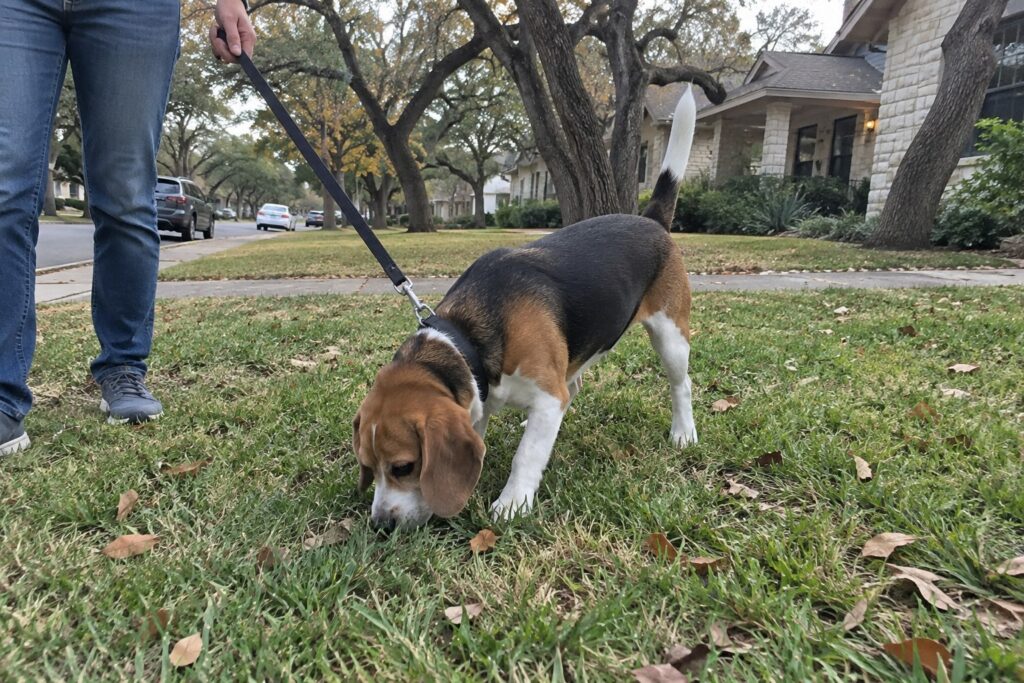
Once your dog walks nicely on quiet streets, add busier settings one step at a time. Parks with joggers, other dogs, and squirrels are a big jump in difficulty, so keep plenty of distance at first. If you want ideas for practice spots, see our list of dog-friendly parks in Bossier City.
Use a Long Line for Recall
Dobermans are quick, and a dog that chases something can cover ground fast. Practice “come” on a long line in open areas, reward generously, and keep off-leash time for later when recall is rock solid. Always follow local leash rules in public spaces.
Building a Daily Routine That Works
Dobermans thrive on predictable structure. A good routine meets their need for exercise and mental work while teaching them to rest.
Exercise and Enrichment
- A brisk walk or play session in the morning, timed for cooler hours during warm months.
- Two or three short training sessions of five to ten minutes spread through the day.
- Food puzzles, scent games, or a chew to work the brain.
- Scheduled quiet time in a crate or on a bed so your dog learns to switch off.
Weather in the Ark-La-Tex
Northwest Louisiana summers are long and humid, so plan walks for early morning or evening and bring water. Dobermans have short, thin coats that offer little insulation, so chilly, damp winter mornings can also be uncomfortable for some dogs. Fall is a great window for longer outdoor practice. If you expect trick-or-treaters on Halloween, October 31, or guests on Thanksgiving, November 26, start rehearsing door manners now.
Health and Training Go Together
A sudden change in energy, reluctance to exercise, or new irritability can have a medical cause. Keep up with routine veterinary visits and ask your veterinarian about breed-specific health screening. If behavior changes quickly, rule out pain or illness before assuming it is a training issue.
Keep the Household Consistent
Agree on the same cue words, furniture rules, and greeting routine for everyone in the home. A Doberman will quickly figure out which person lets it jump on the couch or bolt out the door. Consistency is what turns a clever dog into a dependable one.
How Professional Training Helps
Some owners do very well training at home. Others want faster progress, or need help with a dog that is already strong and set in its habits. Professional support gives you structure and a clear plan.
Two-Week Board and Train
Our Board and Train program runs a fixed two weeks. Your Doberman stays at our facility and works through multiple structured sessions each day, and our trainers vary exercise settings so skills hold up in new places. Supervised socialization is based on each dog’s temperament. In the final days, we focus on handler transition training so you learn the timing and technique to keep results going at home. Graduates receive guaranteed results and lifetime support at no additional cost, and Affirm financing is available.
In-Home Lessons
If you would rather learn side by side with your dog, our in-home dog training works on problems where they happen, like the front door, the fence line, and the living room window.
Choosing the Right Option
| Option | Best For |
|---|---|
| Board and Train | Dobermans that need daily structured practice and owners who want efficient results |
| In-Home Lessons | Owners who want hands-on coaching for specific household habits |
| Refresh Training | Program graduates who want to sharpen skills that have slipped |
Ready to talk about your Doberman? Call us at (318) 562-6536 and we will help you pick the right next step.
About All Dogs Unleashed Dog Training Bossier City
All Dogs Unleashed Dog Training Bossier City helps owners across Bossier Parish and Northwest Louisiana turn smart, energetic dogs into calm, reliable companions. Our fixed two-week Board and Train program gives working breeds like the Doberman multiple structured sessions every day, with handler transition training before they head home. We also offer in-home lessons, boarding, and refresh training. Board and Train graduates receive guaranteed results and lifetime support at no additional cost.
Frequently Asked Questions
Are Dobermans easy to train?
Dobermans are intelligent and eager to work with their people, so they often learn new cues quickly. The challenge is their energy, alertness, and sensitivity. They do best with short, upbeat sessions, clear rules, and calm handling. Owners who stay consistent and keep training through adolescence usually find the breed very rewarding to work with.
When should I start training my Doberman puppy?
Start the day your puppy comes home. Focus first on name response, crate comfort, house training, and gentle handling, then add “sit,” “down,” and leash skills. Careful socialization during the early months matters a great deal for this breed. Ask your veterinarian about which outings are safe based on your puppy’s vaccination schedule.
How do I stop my Doberman from barking at the door?
Teach a “place” cue on a mat near the entry, then practice with family knocking or ringing the bell. Reward your dog for staying calm on the mat and release it to greet politely. Keep a leash on during early practice. If barking comes with growling or lunging at visitors, get professional guidance.
Are Dobermans good family dogs?
Many Dobermans are affectionate, loyal family companions when they are well socialized, exercised, and trained. They tend to bond closely with their people and want to be included. Supervise interactions with young children, teach kids to respect the dog’s space, and give your Doberman a quiet place to rest when the house gets busy.
Should I train my Doberman to be protective?
Most families are better served by a calm, confident, obedient dog than by one taught to guard. Dobermans are naturally alert, and that awareness usually needs guidance rather than encouragement. Focus on socialization, focus, and self-control. A dog that checks in with you when something seems off is far safer than one that reacts on its own.
Is Board and Train a good fit for a Doberman?
For many Dobermans it is a strong fit. Our fixed two-week program gives your dog multiple structured sessions every day, practice in varied settings, and supervised socialization based on temperament. You learn how to handle your dog during the final days. Board and Train graduates also receive guaranteed results and lifetime support at no additional cost.
Doberman training rewards patience and consistency with one of the most devoted companions you can find. Focus on socialization, calm focus, door manners, and leash skills, and keep practicing as your dog matures. If you want help, call (318) 562-6536 or reach out online, and visit our facility at 4500 Benton Rd in Bossier City.
Ready to Get Started with All Dogs Unleashed Dog Training Bossier City?
Your Doberman is smart, loyal, and ready to learn. We can help you build the calm confidence you want to see. Call (318) 562-6536 today to talk with our team about Board and Train or in-home lessons.