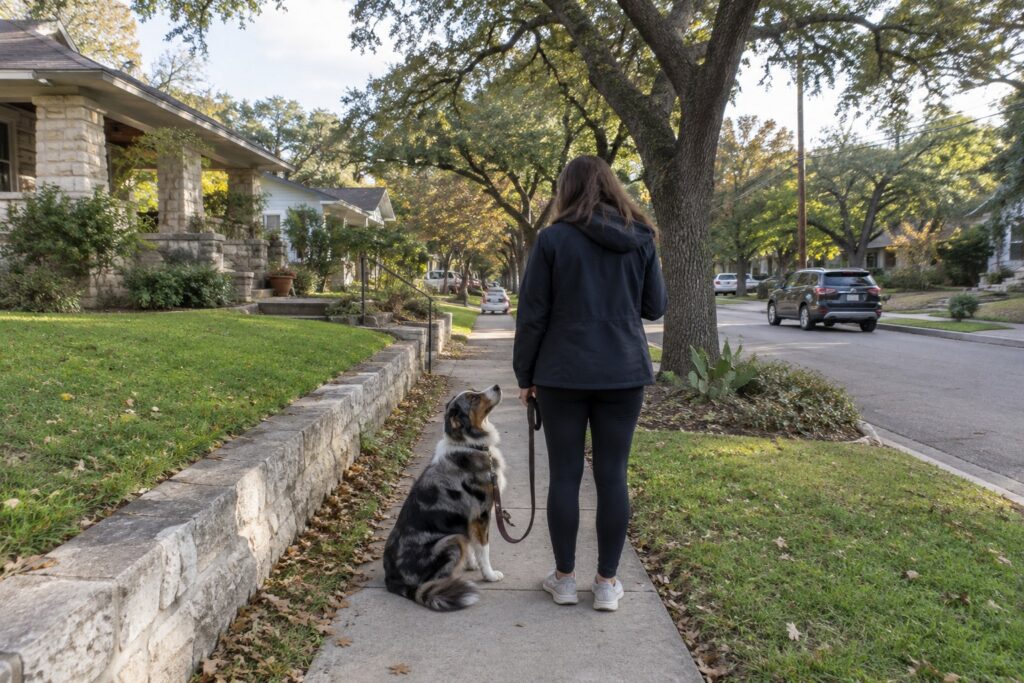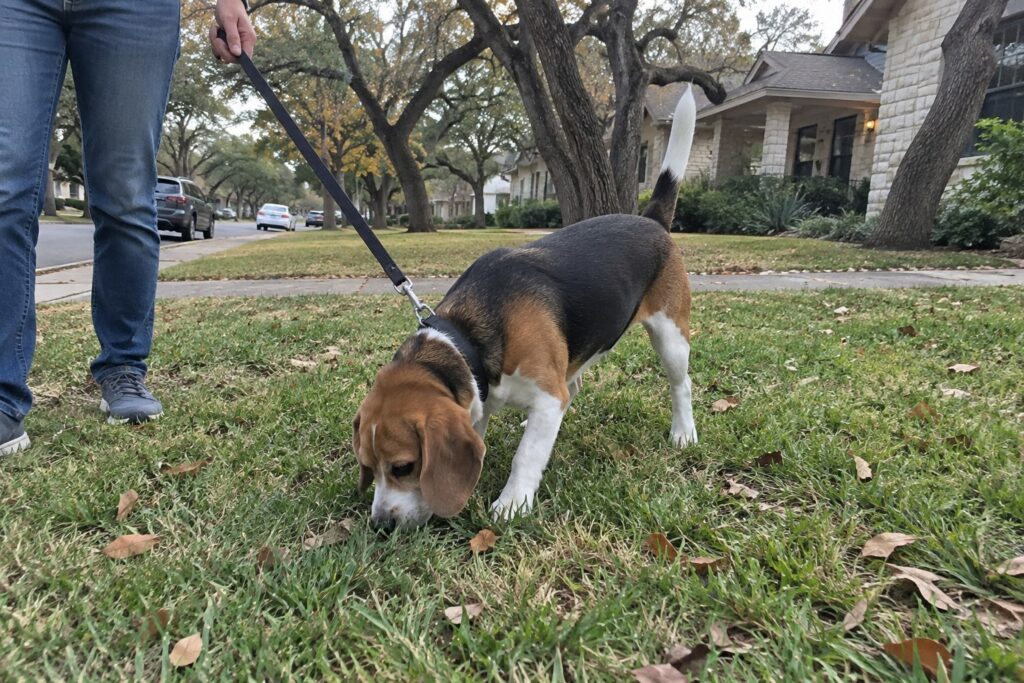

Beagle training starts with one honest fact: your dog experiences the world through scent first and everything else second. That cheerful, compact hound was bred to follow a trail for hours and announce the find with a voice that carries across a field, and those instincts do not switch off in an Austin backyard or on a busy greenway.
At All Dogs Unleashed Dog Training Austin, we work with scent hounds who would rather investigate a sidewalk than listen to a cue. The goal is never to erase the nose. It is to give your beagle clear structure, so the dog who follows every smell also learns to check in, quiet down, and leave the kitchen counter alone. For many hounds, our two-week Board and Train program builds that foundation quickly, and private lessons help the household keep it steady.
Living with a nose that leads the way? Let’s talk about a plan for your beagle.
Key Takeaways
- Beagles are scent hounds bred to track independently, so distraction around smells is instinct, not stubbornness or defiance.
- Food is a beagle’s strongest motivator, which makes treats a powerful training tool and an unattended counter a real safety risk.
- Baying and howling can be shaped with a “quiet” cue, enough daily exercise, and fewer triggers at windows and fences.
- Most beagles should stay on a leash or long line in open areas, because a fresh scent trail can override even solid recall.
- Short, frequent, upbeat sessions work better for hounds than long drills, and a structured program can speed up the process.
Why Beagles Think With Their Noses
Beagles were developed as pack hounds for tracking rabbits and other small game. The American Kennel Club breed profile describes them as merry, friendly, and curious, with a nose that ranks among the best in the dog world. That background explains nearly every training challenge owners report.
Bred to Work Away From People
A hunting beagle was expected to follow a trail on its own, often well ahead of the hunter, and to keep going without waiting for permission. Independence was a feature. In a family home, that same trait looks like a dog who hears you call, glances back, and returns to sniffing.
Understanding this changes how you train. You are not fighting a dog who dislikes you. You are competing with a reward system that has been selected over generations, so you need to make yourself more interesting and the rules more consistent.
What Scent Drive Looks Like Day to Day
Watch for the nose dropping to the ground, the tail lifting into a flag, and a sudden change in pace. Once your beagle is locked onto a trail, verbal cues often go unheard. The trick is to interrupt early, before the dog commits, and to reward attention generously when you get it.
Give the Nose a Job
Scent work is one of the best outlets for a beagle. Hide a few treats around a room, scatter kibble in the grass, or play “find it” with a favorite toy. A beagle who gets to use the nose on your terms is usually calmer and more cooperative afterward.
| Beagle Trait | What You See at Home | Training Response |
|---|---|---|
| Strong scent drive | Nose glued to the ground on walks | Interrupt early, reward check-ins, schedule sniff breaks |
| Independent working style | Hears cues but finishes the sniff first | High-value rewards and short, frequent sessions |
| Vocal pack hound | Baying at noises, squirrels, and neighbors | “Quiet” cue, fewer triggers, more exercise |
| Intense food motivation | Counter surfing and trash raids | Management plus a solid “leave it” |
| Endurance and curiosity | Restless, escape-minded when bored | Daily walks, scent games, secure fencing |
Baying, Howling, and the Beagle Voice
Beagles have three main sounds: a regular bark, a howl, and the bay, a long, musical cry hounds use to tell the pack they found something. In a quiet subdivision or an apartment with shared walls, that voice can become a problem fast.
Find the Triggers
Start by noticing when your dog sounds off. Common triggers include squirrels along the fence, delivery drivers, other dogs walking past, and boredom when the family is away. Write down the patterns for a week. Once you know the triggers, you can reduce the ones you control, such as closing blinds on a front window or bringing your dog inside instead of leaving it in the yard unsupervised.
Teach a “Quiet” Cue
Let your beagle bark once or twice, then say “quiet” in a calm voice and wait. The instant the dog pauses, mark it and reward. Gradually ask for longer silences before the treat appears. Never yell over the bay, because to a hound that can sound like you joined in.
Meet the Need Behind the Noise
A tired, mentally engaged beagle bays less. Pair a morning walk with a scent game and a food puzzle at midday. If baying happens mostly when your dog is alone, look at our article on separation anxiety in Austin dogs, since distress vocalizing needs a different plan than alert barking.
Food Motivation and Counter-Food Risks
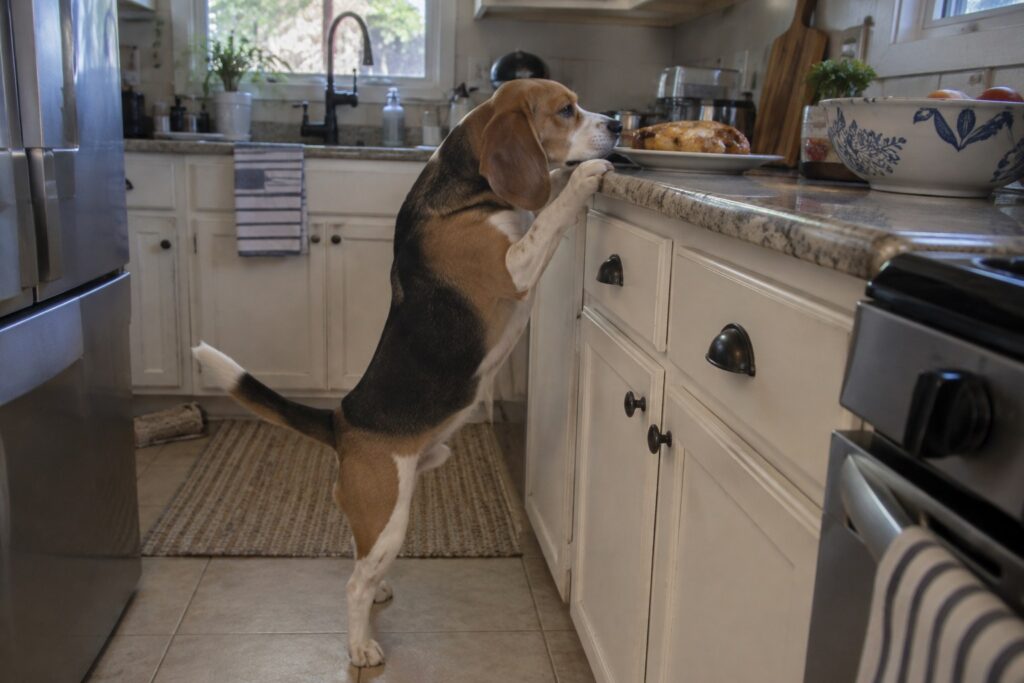
Few breeds love food the way beagles do. That drive is a gift for training, because a single small treat can buy a lot of focus. It also means your kitchen, trash can, and backpack are always being evaluated by an expert.
Use Food as a Training Tool
Cut treats very small and use part of your dog’s daily kibble for routine practice. Save higher-value rewards for hard moments, such as walking past a fresh rabbit trail. Because beagles tend to gain weight easily, count treats as part of the day’s food and ask your veterinarian about a healthy body condition for your dog.
Counter Surfing Is a Safety Issue
A beagle who steals a sandwich is annoying. A beagle who finds chocolate, grapes, raisins, onions, or anything sweetened with xylitol can be in real danger. The ASPCA’s list of people foods to avoid covers these and other common hazards. If you suspect your dog ate something toxic, call your veterinarian or an animal poison control line right away rather than waiting for symptoms.
The holiday season raises the stakes. Halloween candy bowls on Saturday, October 31, and the Thanksgiving spread on Thursday, November 26, put tempting food at nose level. Keep candy, plates, and trash bags out of reach and crate or gate your beagle while guests are eating.
Management Plus a Reliable “Leave It”
Training alone will not stop every theft, so set up the house for success. Push food to the back of counters, use a locking trash can, and close the pantry. At the same time, teach “leave it” by covering a treat with your hand, rewarding the moment your dog backs off, and building toward items on the floor and low tables.
| Hazard | Why It Matters | Prevention Step |
|---|---|---|
| Chocolate and candy | Toxic to dogs, common around Halloween | Store high, keep candy bowls away from the door |
| Xylitol gum and baked goods | Can be dangerous even in small amounts | Keep purses and backpacks zipped and off the floor |
| Grapes and raisins | Linked to serious illness in dogs | No snack bowls on coffee tables |
| Holiday table scraps | Fatty foods and bones cause stomach trouble | Gate or crate the dog during meals |
| Kitchen trash | Bones, wrappers, and spoiled food | Locking lid or trash inside a cabinet |
Want a beagle who chooses to “leave it” without a fight? Our residential program builds impulse control around food every day.
Recall and the Beagle Brain
Recall is the cue beagle owners worry about most, and for good reason. A hound on a hot scent can travel a long way before looking up. We cover general recall methods in our post on teaching your Austin dog to come when called, so here we focus on what makes beagles different.
Expect Scent to Win Early On
In the first months, assume a strong smell will beat your cue. Practice “come” in a quiet house, then a backyard, then a fenced area, adding difficulty slowly. Reward every return like it is a big deal, with real food, not just praise.
Use a Long Line
A 15- to 30-foot long line attached to a flat collar or harness lets your beagle explore while you keep control. If the nose drops and the dog drifts away, you can call once, then gently guide the dog back and reward. That prevents your hound from learning that ignoring you pays off.
Be Realistic About Off-Leash Time
Some beagles develop dependable recall with serious training, but many owners choose to keep their hound on a line in any unfenced space. That is not a failure. It is a smart decision for a hound bred to follow trails, and it keeps your dog away from traffic and wildlife.
Leash Manners on Austin Trails
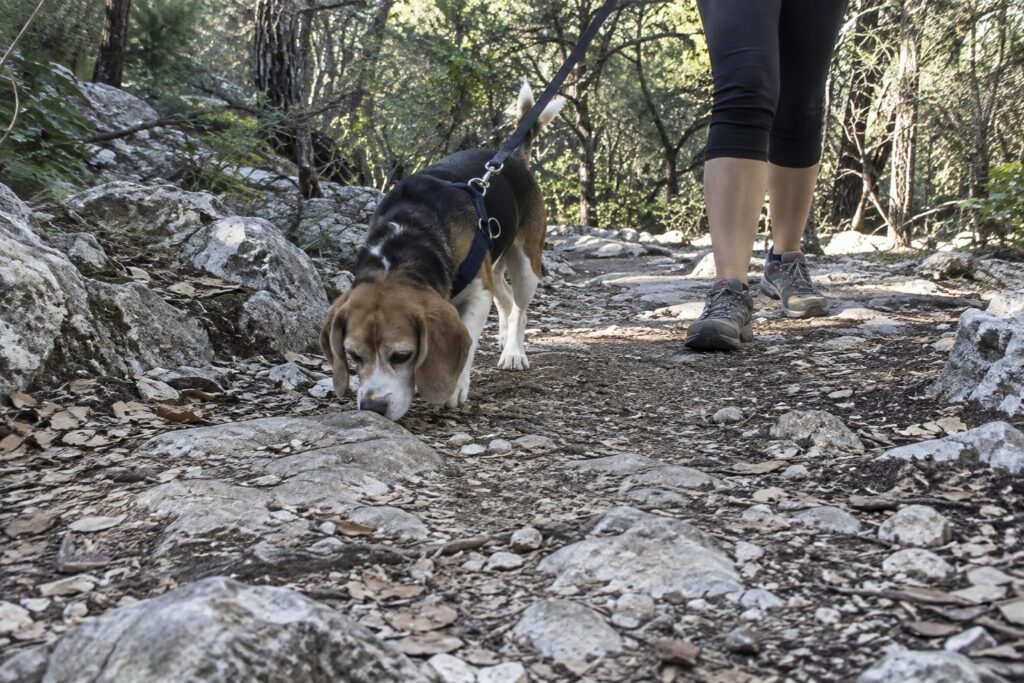
Austin gives beagles an endless buffet of smells, from the shaded trails of the Barton Creek Greenbelt to the loop around Lady Bird Lake on the Ann and Roy Butler Hike and Bike Trail. For route ideas, see our roundup of hiking trails and outdoor activities for dogs in Austin.
Sniff Breaks on Your Schedule
Instead of letting your beagle zigzag the whole way, alternate between walking time and sniff time. Use a release word such as “go sniff” to signal freedom, then a cue such as “let’s go” to resume walking. Your hound learns that sniffing is a reward you give, not something to take. If general pulling is the bigger problem, our post on why dogs pull on the leash goes deeper on that skill.
Trail Hazards for a Nose-Down Dog
A beagle with its nose in the brush can find discarded food, wildlife, and plants you would never notice. Keep your dog close in thick vegetation, carry plenty of water, and check paws and coat after hikes. Snakes live in Central Texas green spaces, so keep your beagle out of rock crevices and tall grass, and contact a veterinarian immediately after any suspected bite.
Plan Around the Heat
Austin stays warm well into fall, and beagles work hard when they are tracking. Walk early or late, choose shaded routes, and take breaks often. Our article on how Austin’s climate affects your dog’s behavior and training has more on adjusting routines to the weather.
| Walk Setting | Beagle Challenge | Best Equipment and Approach |
|---|---|---|
| Neighborhood sidewalk | Squirrels, yard scents, other dogs | Standard 6-foot leash, scheduled sniff breaks |
| Busy shared-use trail | Runners, cyclists, dropped food | Short leash near traffic, “leave it” ready |
| Wooded greenbelt | Wildlife trails, rocks, thick brush | Harness and leash, frequent water, stay on the path |
| Open field or fenced park | Strong pull toward fresh trails | Long line for recall practice |
How Patient Beagle Training Comes Together
The beagles who do best have owners who expect gradual progress and keep sessions short and fun. Two or three five-minute sessions a day usually beat one long drill. End while your dog still wants more, and keep the rules the same for every family member.
Consistency Across the Household
If one person lets the beagle beg at the table and another does not, the dog will keep trying. Agree on house rules, cue words, and where food lives. Our post on building consistency that gets real results offers practical ways to get everyone aligned.
When a Structured Program Helps
Some hounds need more repetition than a busy family can provide. Our two-week Board and Train program starts with an evaluation, then your beagle trains daily in a structured setting while our team works on focus, “leave it,” “quiet,” and leash manners. At the end, a turnover session shows you how to handle your dog, and you leave with written instructions. Board and Train comes with guaranteed results and lifetime support.
If you would rather work at home, private in-home dog training lets us address counter surfing, baying, and doorway manners right where they happen.
Ready to turn that nose into a strength? Call our Austin team at (512) 963-6017 to discuss your beagle.
About All Dogs Unleashed Dog Training Austin
All Dogs Unleashed Dog Training Austin helps Central Texas families build calm, reliable dogs through structured training. Our two-week Board and Train program is the core of what we do, giving scent hounds like beagles daily practice with focus, impulse control, and leash manners. We also offer private in-home lessons, boarding, and refresh training. Every Board and Train enrollment begins with an evaluation and ends with a turnover session so your household knows how to keep progress going.
Frequently Asked Questions
Are beagles hard to train?
Beagles are smart and eager for food, but their scent drive and independent working style can make them seem stubborn. Most of what owners call stubbornness is a dog distracted by smells. Short, frequent sessions, high-value rewards, and consistent rules usually produce steady progress. Expect training to take patience, especially for recall and quiet behavior around exciting triggers.
How do I stop my beagle from howling?
Start by identifying triggers such as noises outside, passing dogs, or time alone, then reduce the ones you can control. Teach a “quiet” cue by rewarding brief pauses and slowly lengthening them. Add daily exercise and scent games so your dog has an outlet. If howling happens only when you leave, talk with a trainer about possible separation stress.
Can a beagle ever be trusted off leash?
Some beagles develop good recall with dedicated training, but scent can override even a well-practiced cue. For safety, many owners keep their beagle on a leash or long line in any unfenced area. Practice recall in fenced spaces, reward generously, and only consider off-leash time where traffic, wildlife, and local rules make it reasonable and safe.
Why does my beagle steal food off the counter?
Beagles were bred with an exceptional nose and a strong appetite, so an unattended plate is almost irresistible. Counter surfing is also self-rewarding, which means every success makes it more likely. Combine management, like clearing counters and using locking trash cans, with a solid “leave it” cue. Remember that some human foods are toxic, so prevention matters.
What age should I start beagle training?
You can begin simple lessons as soon as your puppy comes home, including name recognition, “sit,” gentle handling, and short walks on a leash. Early habits around food and the kitchen are especially valuable for this breed. Adult and senior beagles can learn too, though older habits may need more repetition. Ask your veterinarian about vaccinations before busy public outings.
Does Board and Train work for scent hounds?
Yes, a structured residential program suits many scent hounds because it offers daily repetition in a consistent setting. At All Dogs Unleashed Dog Training Austin, every two-week Board and Train enrollment begins with an evaluation and ends with a turnover session. Owners leave with written instructions, plus guaranteed results and lifetime support, so the beagle’s new habits continue at home.
Patient beagle training respects the nose while teaching your hound to listen, stay quiet, walk politely, and leave food alone. With the right structure, your beagle can be both a curious explorer and a pleasant family companion. Call our Congress Ave team at (512) 963-6017 or reach out online to plan your next step, or stop by 111 Congress Ave. #201 in downtown Austin or at 3704 Mountain View Ave, where you can reach the team directly at (512) 253-8819.
Ready to Get Started with All Dogs Unleashed Dog Training Austin?
Your beagle’s nose is not going anywhere, but the chaos can. Call (512) 963-6017 (Congress Ave) or (512) 253-8819 (Mountain View Ave) to talk with our team about Board and Train or private lessons.