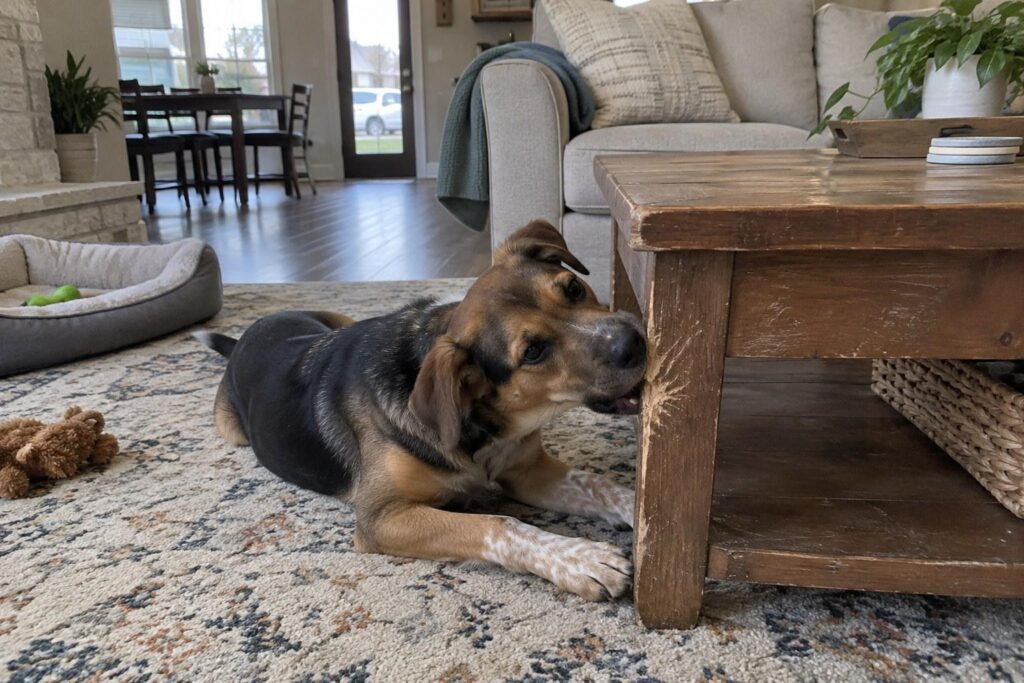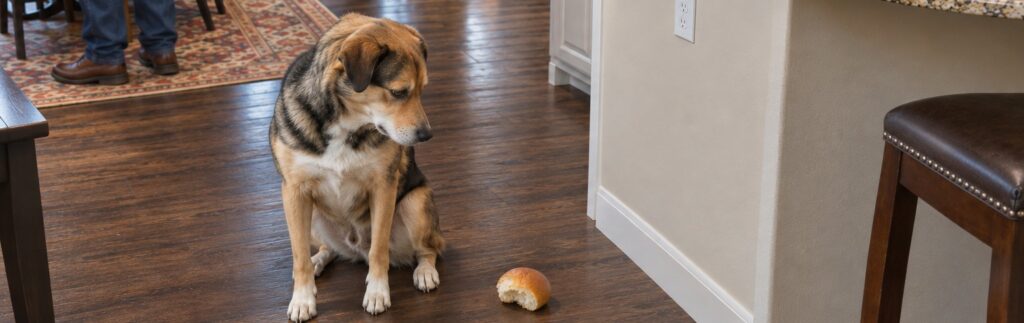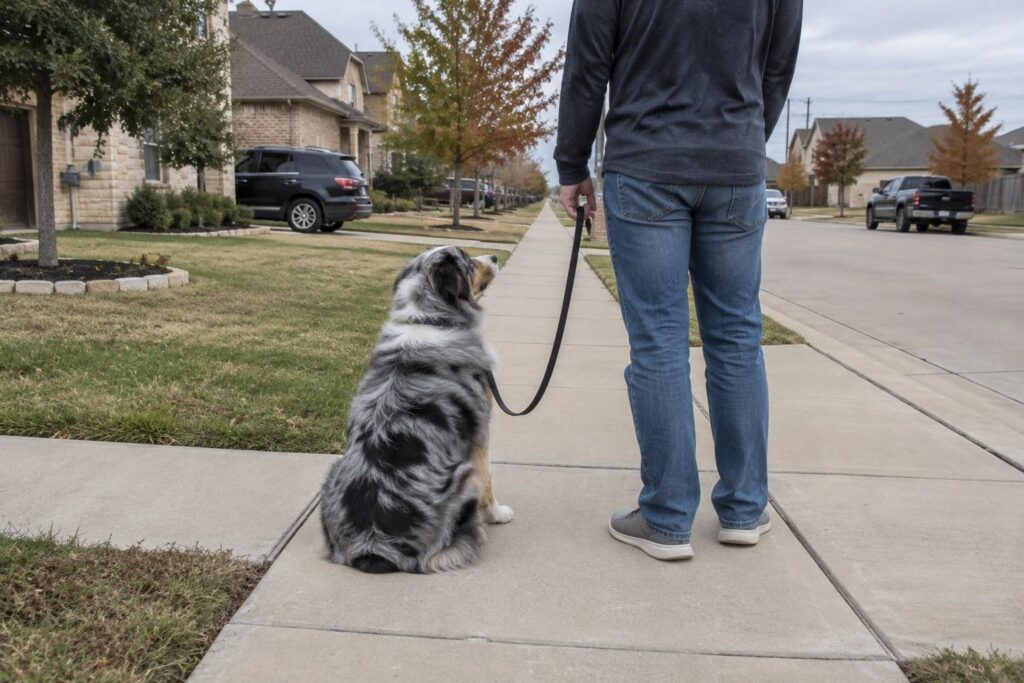

Chihuahua training often gets skipped because the dog is small enough to scoop up and carry away from trouble. That habit is understandable, but it leaves a lot of Chihuahuas in Austin barking at every larger dog on the trail, sneaking potty accidents behind the couch, and running the household from the top of the sofa.
At All Dogs Unleashed Dog Training Austin, we train dogs of every breed and size, and we hold small dogs to the same clear, fair standards as big ones. A Chihuahua is smart, loyal, and quick to learn when the rules stay consistent. With the right structure, your little dog can be calm at home, confident on walks, and safe around the bigger dogs that share our neighborhoods and trails.
Want help turning big attitude into good manners? Our Austin team can talk through a plan that fits your Chihuahua.
Key Takeaways
- Most “small dog syndrome” behavior is learned, so Chihuahuas improve quickly when owners apply the same rules and follow-through they would use with a large dog.
- Housetraining a Chihuahua takes a tight schedule, frequent potty breaks, supervision, and a crate or small pen, because tiny bladders and small accidents are easy to miss.
- Barking and lunging at bigger dogs usually come from fear or overexcitement, and they respond best to distance, focus work, and calm rewards rather than being picked up every time.
- Chihuahuas feel temperature extremes quickly, so plan walks around Austin heat, protect paws from hot pavement, and use a sweater on chilly winter mornings.
- Our two-week Board and Train program builds obedience and calm leash habits through daily practice and ends with a turnover session so you can keep the results going.
Why Chihuahuas Deserve Real Training
The AKC breed profile describes the Chihuahua as a tiny dog with a huge personality, and the breed standard calls for a weight of no more than 6 pounds. That small frame hides a bold, alert, and sometimes sassy temperament. Those traits make Chihuahuas great companions, but they also mean a Chihuahua will happily take charge if nobody else does.
Small Dog Syndrome Is Mostly a Human Habit
“Small dog syndrome” is a popular phrase for little dogs that bark, snap, jump, and ignore commands. There is nothing about the breed that forces those behaviors. In most homes, the pattern is built one shortcut at a time: jumping is cute instead of rude, growling gets the dog picked up, and barking at the door earns attention.
Common Myths About Chihuahuas
Owners often hear that Chihuahuas cannot be housetrained, that they are naturally mean, or that they only bond with one person. None of these are rules of the breed. Chihuahuas can be loyal to their favorite people, but with steady socialization they can also learn to greet guests politely and settle in new places.
| Myth | Reality | What to Do Instead |
|---|---|---|
| Chihuahuas cannot be housetrained | They can, with a consistent schedule and supervision | Use frequent potty breaks, a crate, and rewards outside |
| Snapping is just their personality | Snapping is usually fear or learned behavior | Build confidence and teach calm alternatives |
| Small dogs do not need training | Every dog benefits from clear rules | Teach “sit,” “place,” and “come” like you would with any dog |
| Carrying them solves problems | Constant carrying can make reactivity worse | Use distance and focus work on the ground |
Treat Your Chihuahua Like a Dog
The simplest mindset shift is to ask what you would expect from a larger dog in the same situation. Would you allow jumping on guests, begging at the table, or guarding the couch? If not, start teaching your Chihuahua the alternative. Small dogs are fully capable of “sit,” “down,” “place,” “leave it,” and a reliable recall.
Housetraining a Chihuahua Without the Frustration
Housetraining is one of the top complaints we hear from small dog owners. Chihuahuas have small bladders, accidents are easy to miss on a rug, and many little dogs dislike going outside when it is wet, hot, or cold. The fix is not punishment. It is structure.
Build a Predictable Schedule
Take your Chihuahua out first thing in the morning, after meals, after naps, after play, and right before bed. Puppies need breaks even more often. Go to the same spot each time, stay calm and quiet, and reward the moment your dog finishes. A predictable routine teaches your dog when and where the bathroom happens.
Use a Crate or Small Pen
Most dogs avoid soiling the space where they rest, so a correctly sized crate is one of the best housetraining tools. For a Chihuahua, the crate should be just big enough to stand, turn around, and lie down. When you cannot supervise, use the crate or a small pen. When your dog is loose, keep it in the same room so you can catch the early signs, like sniffing and circling.
Handle Accidents the Right Way
If you catch your dog mid-accident, calmly interrupt and carry it outside to finish, then reward. If you find an accident later, simply clean it with an enzymatic cleaner and tighten your supervision. Scolding after the fact only teaches a small dog to hide when it needs to go.
Plan for Weather
Many Chihuahuas refuse to go out in rain or in the hot afternoon. A covered patio spot, a shaded corner of the yard, or a short trip at a cooler time of day can keep your schedule on track.
| Time | Potty Break | Training Tip |
|---|---|---|
| Wake up | Straight outside | Carry young puppies so they do not stop on the way |
| After meals | Within a few minutes | Keep meal times on a set schedule |
| After play or naps | Right away | Watch for sniffing and circling |
| Bedtime | Last trip out | Pick up water a little before bed if your vet agrees |
For more on routines that stick, see our post on building the consistency that gets real results.
Barking at Bigger Dogs and Leash Reactivity
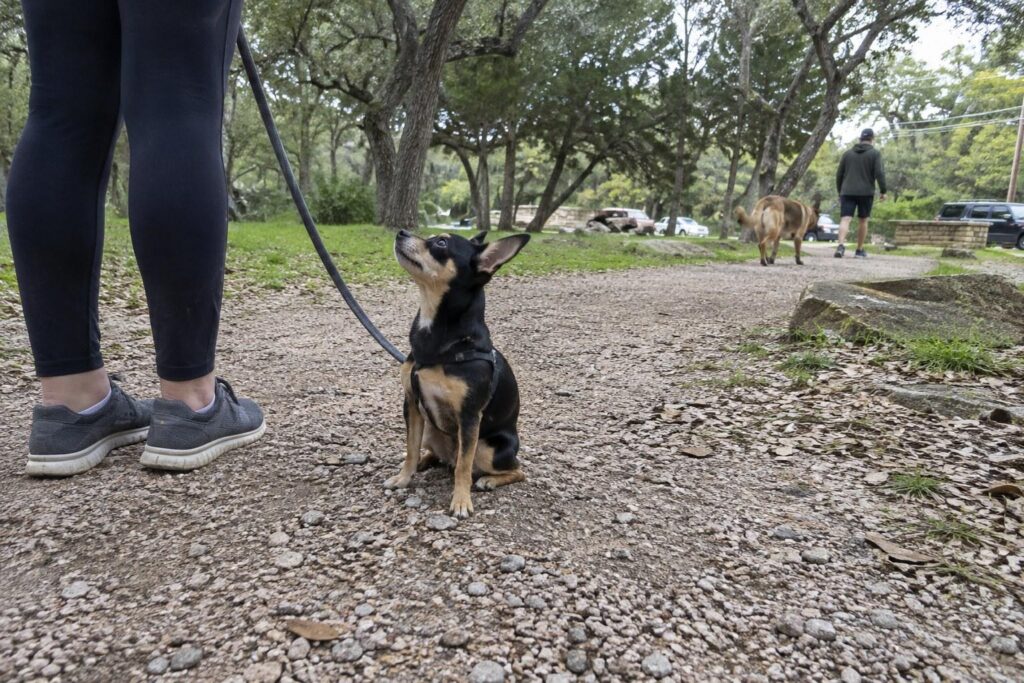
A Chihuahua barking and lunging at a German Shepherd can look funny from a distance, but it is a real problem. It stresses your dog, it can provoke the other dog, and it puts your Chihuahua in danger.
Why Small Dogs Bark at Big Dogs
Most of the time, the barking is fear dressed up as bravado. A tiny dog sees something many times its size approaching and tries to make it go away. When the big dog walks past, the Chihuahua learns that barking worked. Learning to read your dog’s signals helps, and our body language guide for Austin dog owners covers the early warning signs.
Distance First, Then Focus
Start practicing at a distance where your dog notices other dogs but stays calm enough to take a treat. Reward your Chihuahua for looking at the other dog and then back at you. Over many sessions, slowly close the gap. Teach a clear “look” or “watch me” and a “let’s go” turn so you can move away before your dog reaches its limit.
The Problem With Always Picking Them Up
Lifting your dog out of a true emergency is smart and sometimes necessary. But if every passing dog means a ride in your arms, your Chihuahua never learns to cope on the ground. Save the pickup for real danger and build skills the rest of the time.
Leash Manners Matter for Small Dogs Too
Small dogs often pull and zigzag because owners let it slide. A harness that fits well protects the delicate neck and throat area, and short, rewarding training sessions build loose-leash walking. If pulling is part of the picture, read our post on why dogs pull on the leash and how to stop it.
Want daily, structured help with reactivity and leash manners? Our two-week program gives your Chihuahua consistent practice with trainers who work with dogs of every size.
Heat and Cold Sensitivity in Central Texas
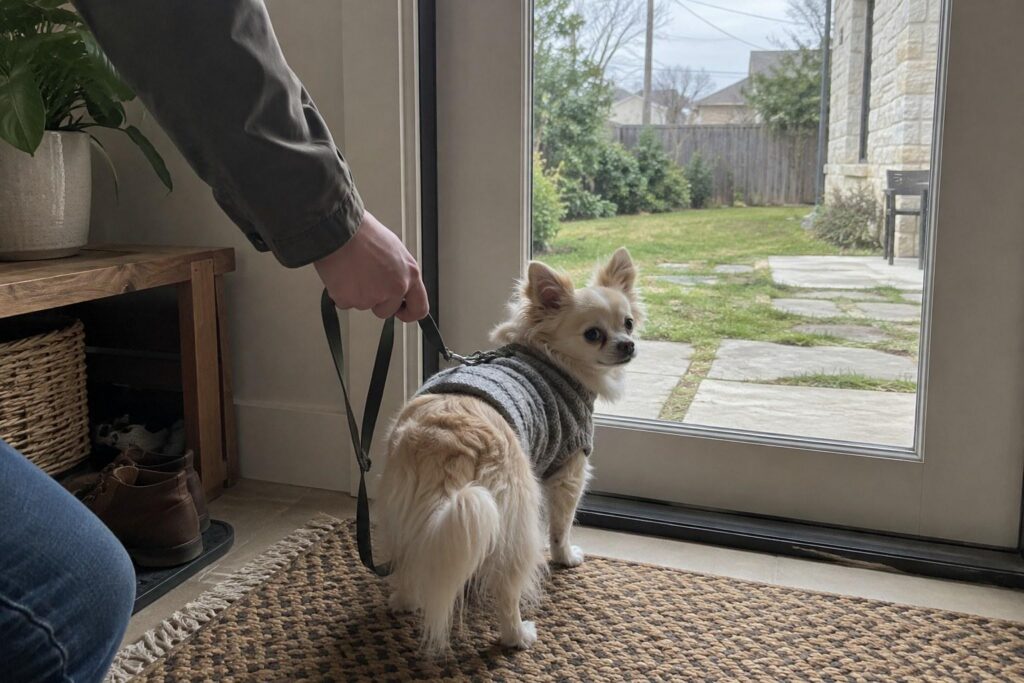
Chihuahuas have very little body mass, so they feel temperature changes quickly. Austin can stay hot well into fall, and winter mornings can turn surprisingly chilly. Your training plan has to work around both.
Hot Days and Hot Pavement
A Chihuahua walks very close to the ground, right where heat radiates off sidewalks and asphalt. Schedule walks and outdoor training for early morning or after sunset, and choose grass or shaded paths. Press the back of your hand to the pavement for several seconds; if it feels too hot for you, it is too hot for small paws. Bring water on every outing.
Signs of Overheating
The AVMA’s warm weather pet safety guidance lists excessive panting, drooling, restlessness, unsteadiness, abnormal gum and tongue color, and collapse as signs of heat stress. If you see them, stop activity, move your dog somewhere cool, and contact a veterinarian right away. Never leave any dog in a parked car.
Chilly Mornings and Shivering
The AKC notes that Chihuahuas are sensitive to cold. On cool mornings, a well-fitted sweater or coat can make potty breaks and walks more comfortable. Shivering can be a sign of cold, but it can also signal stress or excitement, so pay attention to the situation and ask your veterinarian if it seems unusual.
Indoor Training for Bad Weather Days
When it is too hot or too cold, move training indoors. Practice “place,” “down,” and “stay” in short sessions, play find-it games with treats, and work on calm greetings at the front door. Our post on how Austin’s climate and lifestyle affect your dog’s behavior and training has more ideas.
| Condition | Risk for a Chihuahua | Smart Adjustment |
|---|---|---|
| Hot afternoon | Overheating and burned paw pads | Walk early or late, stay on grass and in shade |
| Warm evening | Pavement may still hold heat | Test the ground and keep walks short |
| Cold morning | Chilling and reluctance to potty outside | Use a sweater and a sheltered potty spot |
| Rainy day | Skipped potty breaks and accidents | Use a covered area and keep the schedule |
Keeping Your Chihuahua Safe Around Larger Dogs on Austin Trails
Austin is full of great places to walk a dog, from the Ann and Roy Butler Hike and Bike Trail at Lady Bird Lake to Shoal Creek and the Barton Creek Greenbelt. These spots are also busy with large, energetic dogs, runners, and cyclists. A small dog needs a safety plan.
Choose the Right Times and Places
Quieter times of day mean fewer surprise encounters, and they line up with cooler temperatures too. Off-leash areas such as Red Bud Isle are popular with big, playful dogs, and rough play that is harmless between two large dogs can injure a Chihuahua. Many small dog owners prefer on-leash trails and open spaces where they can see dogs coming.
Advocate for Your Dog
You do not have to allow every greeting. If an off-leash or overly excited dog approaches, step between the dogs, ask the other owner to call their dog, and calmly move away. Teaching your Chihuahua a quick “let’s go” turn and a reliable “come” makes these moments much easier. Our tips on teaching your Austin dog to come when called apply to small dogs just as well.
Gear and Trail Habits
Use a secure harness and a standard leash rather than a long retractable line on busy trails, so you can bring your dog close quickly. Carry water, watch the trail surface for heat and sharp rocks, and keep outings short enough that your dog stays comfortable. For more trail ideas, see our roundup of hiking trails and outdoor activities for dogs in Austin.
How All Dogs Unleashed Dog Training Austin Helps With Chihuahua Training
Consistency is the heart of small dog training, and it is also the hardest part for busy households. That is why many owners choose professional help.
Two-Week Board and Train
Our two-week Board and Train program is a fixed program where your dog stays at our facility and trains with our team every day. Dogs are housed individually in secure, climate-controlled kennels. Every enrollment begins with an evaluation so we can shape the approach around your Chihuahua’s temperament, whether the main concerns are housetraining habits, barking, or leash reactivity.
Turnover Session, Guaranteed Results, and Lifetime Support
We do not offer observation of training sessions, because a distraction-free setting helps your dog learn. At the end of the program, we hold a turnover session where you learn to handle your dog, and you receive written instructions to follow at home. Board and Train comes with guaranteed results and lifetime support at no additional charge, and Affirm financing is available.
In-Home Private Lessons
Some owners want hands-on coaching in the exact places their dog struggles. Our in-home dog training and private lessons let you work on door manners, potty routines, and neighborhood walks with a trainer by your side. You can compare all of our dog training programs to find the best fit.
| Option | Best For | What You Get |
|---|---|---|
| Two-week Board and Train | Chihuahuas needing daily structure for barking, reactivity, or manners | Daily training, turnover session, written instructions, guaranteed results, lifetime support |
| In-home private lessons | Owners who want coaching at home and in their neighborhood | Hands-on training in your own space |
Questions about your Chihuahua? Call our Austin team at (512) 963-6017 and we will help you choose the right next step.
About All Dogs Unleashed Dog Training Austin
All Dogs Unleashed Dog Training Austin helps Central Texas owners raise calm, confident dogs of every size, including bold little breeds like the Chihuahua. Our fixed two-week Board and Train program gives dogs daily structure in secure, climate-controlled kennels, followed by a turnover session and written instructions, with guaranteed results and lifetime support. We also offer in-home private lessons, boarding, and refresh training. Whether your Chihuahua barks at big dogs or struggles with housetraining, our team builds habits that last.
Frequently Asked Questions
Are Chihuahuas hard to train?
Chihuahuas are smart and learn quickly, but they can be stubborn and sensitive. Most training trouble comes from inconsistent rules, since small dogs often get away with behavior a large dog would not. Keep sessions short and upbeat, use rewards your dog values, and make sure everyone in the home follows the same expectations so progress stays steady.
How long does it take to housetrain a Chihuahua?
There is no fixed timeline, because age, past habits, and consistency all play a role. Small breeds often need extra patience, since tiny accidents are easy to miss. A steady schedule, frequent potty breaks, crate use when you cannot supervise, and prompt rewards outside will move things along. Talk to your veterinarian if accidents suddenly increase after progress.
Why does my Chihuahua bark at bigger dogs?
Barking at larger dogs is usually fear or overexcitement, not true toughness. Your dog may be trying to make the big dog leave, and when it walks away, the barking feels successful. Work at a comfortable distance, reward calm looks, teach a “watch me” cue, and avoid letting larger dogs rush up to greet your Chihuahua.
Is small dog syndrome real?
Small dog syndrome is a common nickname, not a medical condition. It describes behaviors like jumping, snapping, and nonstop barking that often develop when small dogs are not held to clear rules. The good news is that these habits are usually learned, so consistent training, socialization, and fair boundaries can make a big difference for most Chihuahuas.
How do I protect my Chihuahua from the Austin heat?
Walk early in the morning or after sunset, stick to grass and shade, and test pavement with the back of your hand before heading out. Bring water, keep outings short, and never leave your dog in a parked car. Watch for heavy panting, drooling, or unsteadiness, and contact a veterinarian right away if you see them.
Can a Chihuahua go to Board and Train?
Yes. Our fixed two-week Board and Train program works with dogs of every breed and size, including Chihuahuas. It begins with an evaluation, includes daily structured training in secure, climate-controlled kennels, and ends with a turnover session where you learn to handle your dog. You also get written instructions, guaranteed results, and lifetime support at no additional charge.
Good Chihuahua training in Austin comes down to treating your little dog like a real dog: clear rules, a steady housetraining routine, patient work around bigger dogs, and smart planning for heat and cold. If you want expert help, call us at (512) 963-6017 or reach out online. You can also visit either of our Austin locations, at 111 Congress Ave. #201 downtown or at 3704 Mountain View Ave.
Ready to Get Started with All Dogs Unleashed Dog Training Austin?
Give your Chihuahua the manners and confidence to match that big personality. Call (512) 963-6017 to talk with our team about Board and Train or in-home lessons. You can also visit All Dogs Unleashed Dog Training Austin at 111 Congress Ave. #201, Austin, TX 78701, or at our second Austin location at 3704 Mountain View Ave, Austin, TX 78734, (512) 253-8819.