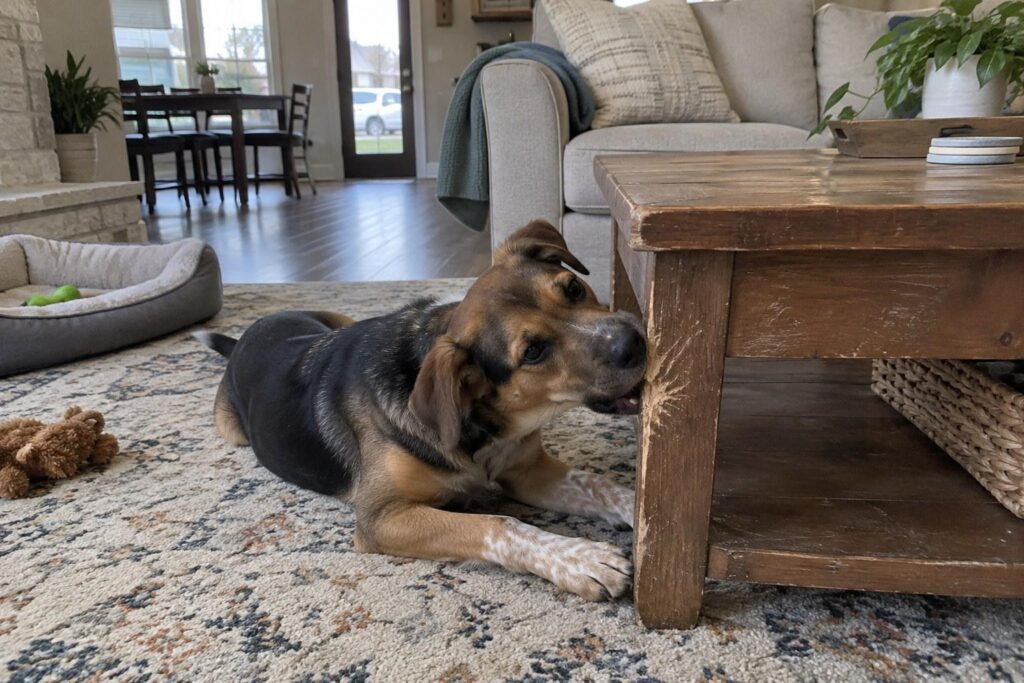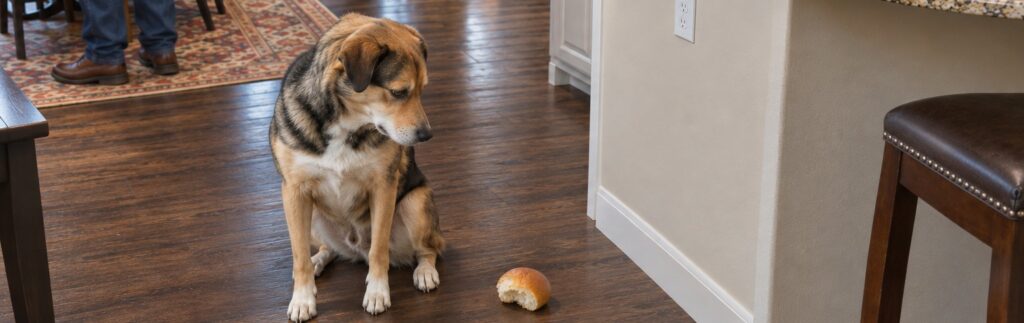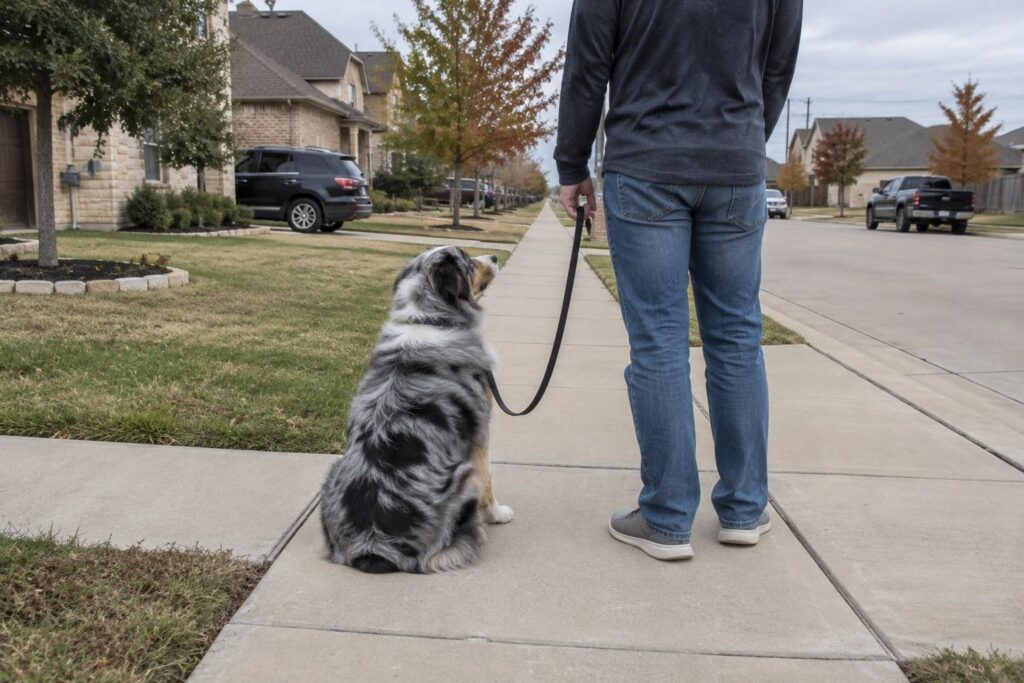

Dog whining is one of the most common complaints we hear from owners across Dallas. It starts as a soft whimper at the back door, then turns into a steady, high-pitched soundtrack every time you sit down to work, eat dinner, or pick up your keys. It can wear on the whole household fast.
At All Dogs Unleashed, we work with dogs from Uptown apartments to Carrollton backyards, and whining is almost always a form of communication with a clear cause. Once you know what your dog is asking for, you can decide whether to meet that need, teach a better behavior, or call your veterinarian.
Want help turning the noise down at your house? Talk with our team about your dog.
Key Takeaways
- Dogs most often whine to get attention, out of excitement, from anxiety, or to appease a person or another dog.
- Sudden or frequent whining can point to pain or a medical problem, so a veterinary exam comes before any training plan.
- Attention whining keeps going because it works, so the fix is to stop paying for the noise and start paying for calm, quiet behavior.
- Anxiety whining responds to gradual practice, predictable routines, and building your dog’s confidence, never to scolding or punishment.
- Structured obedience, like the impulse control taught in our two-week Board and Train program, gives your dog a calm job to do instead of whining.
Why Dogs Whine in the First Place
Whining is a normal part of how dogs talk. Puppies whine to get their mother’s attention, and most adult dogs keep that sound in their toolbox for life. The problem is not that your dog whines. The problem is when the whining becomes constant, loud, or tied to stress.
According to the ASPCA, dogs most commonly whine when they are seeking attention, when they are excited, when they are anxious, or when they are trying to appease someone. Each of those reasons calls for a different response, which is why one blanket rule rarely works.
Attention and Demand Whining
This is the dog who whines at you while you are on a call, sits beside the treat jar and whimpers, or paces by the couch until you lift the blanket. The message is simple. “I want something, and you are the one who can give it to me.”
Attention whining is learned. At some point the sound got your dog what it wanted, whether that was a pat on the head, a bite of your sandwich, or the door opening. Dogs repeat what pays off, so the whining grew.
Excitement and Greeting Whining
Some dogs whine when you come home or when they see the leash come off the hook. This comes from a dog overflowing with energy that does not yet know what to do with it.
Excited dogs are often too aroused to think clearly. Telling them “quiet” in that moment usually does nothing, because they do not understand the word and cannot settle on cue yet.
Anxiety and Stress Whining
Anxious whining often comes with other signs. You may see pacing, panting, yawning, lip licking, a tucked tail, or a dog who cannot settle in one spot. It shows up during thunderstorms, car rides, vet visits, and when the dog is left alone.
This type of whining is not a dog being pushy. It is a dog who feels uncomfortable and does not have the skills to cope. Our post on reading canine body language can help you spot stress signals before they build into a full whining episode.
Appeasement Whining
Some dogs whine while crouching, lowering their head, turning away, or rolling onto their back. This is appeasement. The dog is trying to say “I am no threat, please be nice to me.”
When Dog Whining Signals Pain or a Medical Problem
Before you treat dog whining as a training issue, rule out a physical cause. The ASPCA notes that dogs often whine in response to pain, and that if your dog vocalizes frequently or has suddenly started to vocalize, you should see your vet to rule out medical causes. We agree completely. No amount of training will fix a sore hip or an upset stomach.
Signs That Point Toward Your Vet
Call your veterinarian if the whining is new, sudden, or comes with any of these changes.
- Whining when getting up, lying down, jumping, or climbing stairs.
- Whining when you touch a certain spot on the body.
- Limping, stiffness, or reluctance to walk.
- Changes in appetite, drinking, bathroom habits, or energy.
- Restlessness at night or trouble getting comfortable.
- Whining in an older dog who never used to do it.
Whining and Basic Needs
Sometimes the cause is plain and physical. A dog may whine because it needs to go out, its water bowl is empty, it is too hot, or a toy rolled under the couch. Check those basics first. On a hot North Texas afternoon, a dog whining by the door may simply be uncomfortable and need shade, water, and a cooler room.
How to Tell What Kind of Whining You Are Hearing
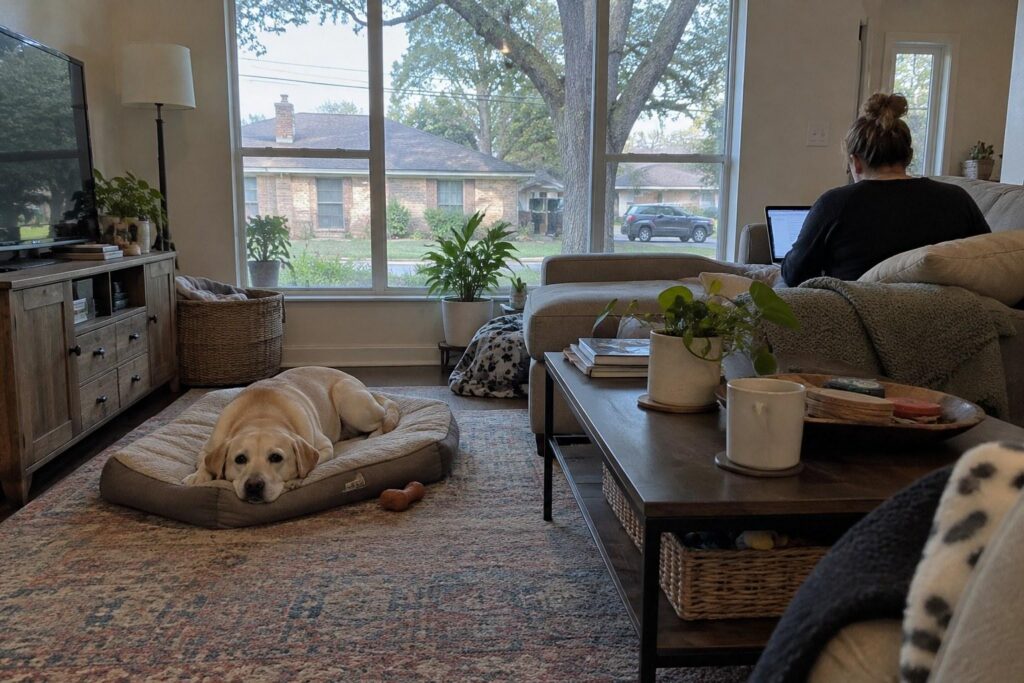
Watch when the whining starts, what your dog’s body is doing, and what happens right after. A few days of notes usually reveal a clear pattern.
| Type of Whining | When It Usually Happens | Body Language | First Step |
|---|---|---|---|
| Attention or demand | When you are busy, eating, or on the couch | Staring at you, pawing, nudging, sitting close | Stop rewarding the noise and reward quiet |
| Excitement | Greetings, leash time, car rides to fun places | Wiggly body, jumping, spinning, fast tail | Keep greetings low key and ask for a sit |
| Anxiety | Storms, departures, new places, vet visits | Pacing, panting, lip licking, tucked tail | Lower the stress and build confidence slowly |
| Appeasement | Being approached, scolded, or meeting new dogs | Crouching, ears back, looking away, rolling over | Avoid punishment and build confidence |
| Pain or medical | Moving, being touched, or new and sudden | Stiffness, limping, guarding a body part | Schedule a veterinary exam |
Questions to Ask Yourself
Does the whining stop the moment your dog gets what it wants? That points to attention or demand. Does it happen only when you are about to leave or are already gone? That points to anxiety. Did it start out of nowhere in a dog who used to be quiet? That points to your vet.
If your dog’s whining is tangled up with jumping, barking, or ignoring commands, a structured program can address the whole picture at once. Our two-week residential program builds calm, reliable behavior from the ground up.
How to Reduce Attention and Demand Whining
Once your vet has ruled out a medical cause, attention whining is one of the most fixable problems we see. The rule is simple. Stop paying for whining, and start paying generously for quiet.
Stop Rewarding the Noise
Any response can be a reward. Looking at your dog, talking to it, telling it to hush, or pushing it away all count as attention. When your dog whines for something, calmly turn away and wait. Do not make eye contact, and do not speak.
Expect the whining to get worse before it gets better. Behavior that used to work often gets louder right before a dog gives it up. If you cave during that spike, you teach your dog to whine longer and louder next time. Stay consistent, and make sure everyone in the house follows the same rule.
Reward Calm, Quiet Moments
The other half of the plan matters just as much. Catch your dog being quiet. When it lies down calmly while you work, toss a treat, offer quiet praise, or give a gentle scratch. You want your dog to learn that calm behavior is what gets your attention.
Teach an Alternative Behavior
Dogs do better when they have a clear job. Teach a solid sit, down, or place command, and ask for it in the moments when whining usually starts. A dog lying on its bed cannot also be pacing and whimpering at your elbow.
Strong basic commands are the foundation for this. Our list of must-know obedience commands from Dallas trainers is a great place to start.
Meet the Real Need on Your Schedule
Ignoring whining does not mean ignoring your dog. Many demand whiners are under-exercised or bored. A dog who got a brisk walk around White Rock Lake in the morning and a puzzle feeder at lunch has far less reason to nag you at 3 p.m.
Build exercise, play, and mental work into the day before the whining starts. Fresh ideas from our dog enrichment activities in Carrollton post can keep a busy brain occupied indoors on hot or rainy days.
| Do This | Avoid This |
|---|---|
| Turn away calmly when your dog whines for attention | Saying “stop” or “no” over and over |
| Reward quiet within a few seconds | Waiting until you feel guilty and then giving in |
| Ask for a sit, down, or place instead | Leaving your dog with no clear job to do |
| Schedule walks, play, and enrichment | Only giving attention when the whining starts |
| Get the whole household on the same rules | Letting one person reward the whining |
How to Calm Anxiety and Separation Whining
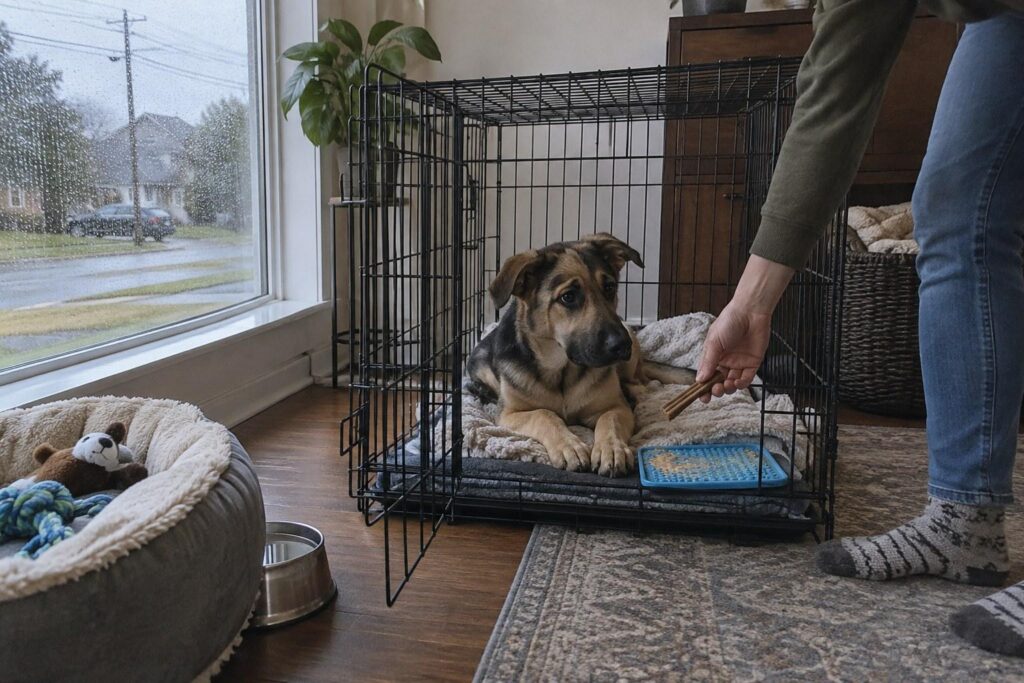
Anxiety whining needs a softer approach. Ignoring a frightened dog does not teach it to feel safe. Here the goal is to lower stress, build confidence, and help your dog learn that the scary thing is manageable.
Whining When You Leave
If your dog only whines right before you leave or while you are gone, separation anxiety may be part of the picture. The ASPCA’s separation anxiety resource explains that these dogs usually show at least one other sign, such as pacing, panting, drooling, destruction around doors and windows, or accidents indoors.
For mild cases, a few habits help. Practice your departure cues, like picking up your keys or putting on your shoes, without actually leaving. Start with very short absences that end before your dog gets upset, then build the time slowly. Keep arrivals and departures calm and boring so they stop feeling like big events.
Whining in the Crate
Puppies and newly adopted dogs often whine in the crate during the first nights. First make sure the dog has been out to potty recently and is not hungry, thirsty, or too warm. Then aim to let the dog out after a brief quiet moment rather than in the middle of a whining spell.
A crate should feel like a safe den, not a punishment. Our post on why crate training works covers how to build that positive association step by step.
Storms, Car Rides, and New Places
Spring storms roll through North Texas with loud thunder and heavy rain, and many dogs whine and pace through them. Give your dog a quiet interior room or covered crate, play background noise, and offer a chew or lick mat. Stay calm yourself. Your relaxed body language tells your dog there is nothing to worry about.
Build Confidence, Skip the Punishment
The ASPCA advises avoiding physical and verbal punishment with appeasement whining, because intimidation lowers a dog’s confidence and can make the whining worse. Instead, build confidence with fun, structured activities. Short training sessions, trick work, and games like tug and fetch give an unsure dog wins it can feel good about.
Calming Excitement Whining at Greetings
A dog who whines and wiggles every time someone walks in the door is happy, but that energy can turn into jumping, mouthing, and chaos. The fix is to make greetings less of a party.
Keep Hellos Low Key
When you come home, keep your voice soft and your movements slow. Wait to pet your dog until it has settled a bit. If you greet an excited dog with a high-pitched “who’s a good boy,” you add fuel to the fire.
Give Your Dog Something Polite to Do
A dog busy holding a sit or carrying a favorite toy has a harder time whining and jumping at the same time. Practice the greeting routine with family first, then with friends your dog knows, and finally with new people. If jumping is part of your dog’s greeting, see our post on why dogs jump on people.
When to Bring in a Professional Trainer
Most mild whining improves with consistency. But some dogs have years of practice, multiple triggers, or whining wrapped up with barking, jumping, reactivity, or pushy behavior. That is when professional help saves time and frustration.
Two-Week Board and Train
Our Board and Train program is a fixed two-week residential program with daily, structured instruction. Every dog starts with an initial assessment so the plan fits its needs. Obedience foundations like sit, stay, come, and heel, plus impulse control for dogs ready for advanced work, teach your dog to hold calm behavior instead of whining for what it wants.
When your dog comes home, you learn how to keep those results going. Board and Train comes with guaranteed results and lifetime support at no additional charge, and Affirm financing is available.
Private Lessons at Home
Whining often happens in specific places, like the kitchen at dinner or the front door at departure. In-home dog training across the DFW Metroplex lets us work on household boundaries right where the problem happens. Every family member learns the same handling, which keeps the rules consistent once the trainer leaves.
| Option | Best For | What You Get |
|---|---|---|
| Board and Train | Dogs with several habits to fix, or busy owners who want concentrated training | Two weeks of daily training, an initial assessment, guaranteed results, and lifetime support |
| Private Lessons | Whining tied to specific spots or routines at home | Hands-on coaching in your home or at our facility, with the whole family learning together |
Not sure which option fits? Call us at (972) 484-3647 and we will talk through your dog’s whining and help you choose.
About All Dogs Unleashed
All Dogs Unleashed helps dog owners across Dallas and the DFW Metroplex turn frustrating habits into calm, reliable behavior. From our training facility in Carrollton, we offer a two-week Board and Train program, private lessons at our facility or in your home, boarding, and refresh training. Whether your dog whines for attention, out of excitement, or from stress, we build a plan around your dog and teach you how to keep the progress going at home.
Frequently Asked Questions
Why does my dog whine all the time?
Constant whining usually means your dog has learned that the sound gets results, or that it is bored, anxious, or uncomfortable. Start with a vet visit to rule out pain, especially if the whining is new. Then look at exercise, routine, and how your household responds. Rewarding quiet behavior and ignoring demand whining often brings big improvement within a few weeks of consistency.
Should I ignore my dog when it whines?
It depends on the cause. Ignoring works well for attention and demand whining, as long as you also reward your dog for being quiet. It does not work for pain, a real potty need, or genuine fear. Check the basics first, like water, bathroom, and temperature, then decide. A frightened dog needs calm support and gradual training, not the cold shoulder.
Why does my dog whine at night?
Night whining often comes from a bathroom need, discomfort, boredom, or being separated from the family. Puppies may need a late potty break, and older dogs may be dealing with joint pain or other health changes. Give a good evening walk, a final potty trip, and a comfortable sleeping spot. If the whining is new or worsening, ask your veterinarian to check for medical causes.
Is whining a sign that my dog is in pain?
It can be. Dogs often whine when they hurt, and sudden or frequent whining is a good reason to call your vet. Watch for whining when your dog stands up, lies down, climbs stairs, or is touched in a certain spot. Limping, stiffness, and changes in appetite or energy are other clues that a medical exam should come before any training plan.
Can training stop a dog from whining?
Training can greatly reduce attention, demand, and excitement whining, and it helps anxious dogs build confidence. The key is consistency from everyone in the home, plus a calm alternative behavior like sit or place. Our two-week Board and Train program builds that foundation with daily structured work, and private lessons help your family apply the same rules at home in everyday situations.
Why does my dog whine when I leave the house?
Whining at departures often points to separation stress, especially if your dog also paces, pants, drools, or chews near doors. Practice picking up your keys without leaving, keep departures and arrivals low key, and start with very short absences. If the distress is severe or your dog hurts itself, talk with your veterinarian, since some dogs need medical support alongside training.
Dog whining is your dog’s way of telling you something, whether that is “I want attention,” “I am excited,” “I am worried,” or “something hurts.” Rule out pain with your vet, then reward quiet, give your dog a clear job, and build confidence step by step. If you want expert help, call (972) 484-3647 or reach out online. Our training facility at 2401 Luna Rd in Carrollton serves Dallas and the DFW Metroplex.
Ready to Get Started with All Dogs Unleashed?
A quieter, calmer dog is closer than you think. Call All Dogs Unleashed at (972) 484-3647 to talk about your dog’s whining and find the right training plan for your home. You can also visit All Dogs Unleashed at 2401 Luna Rd, Carrollton, TX 75006.