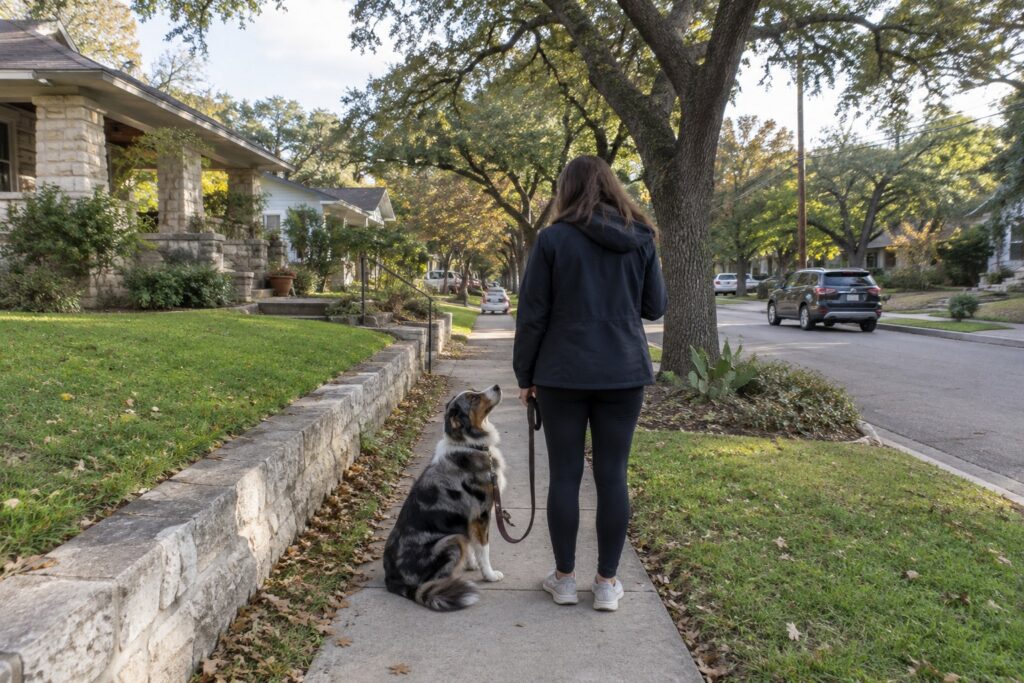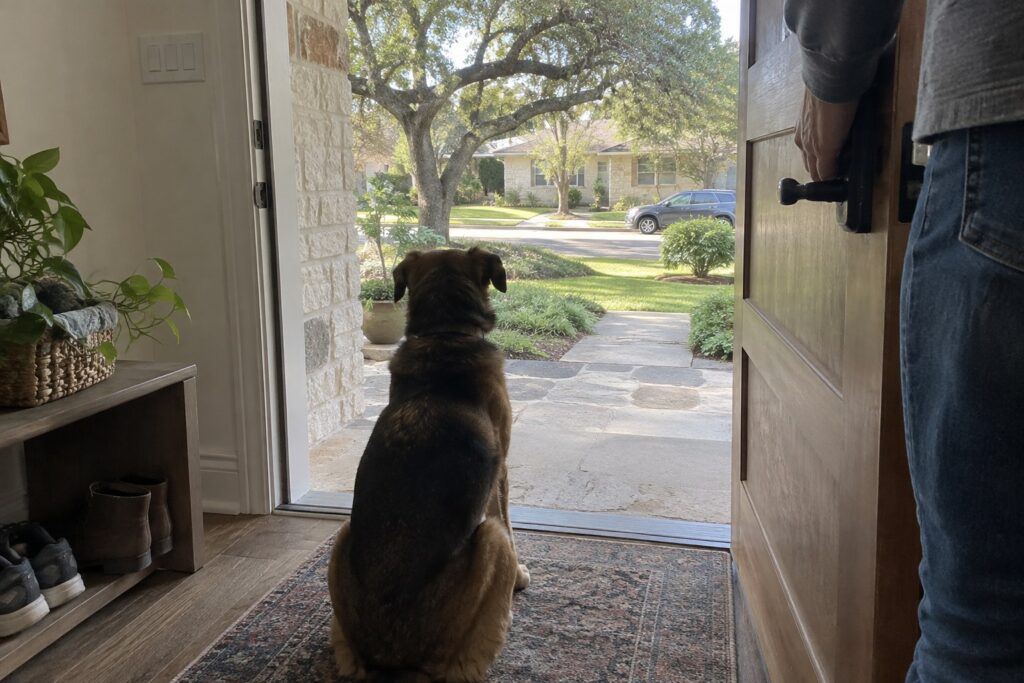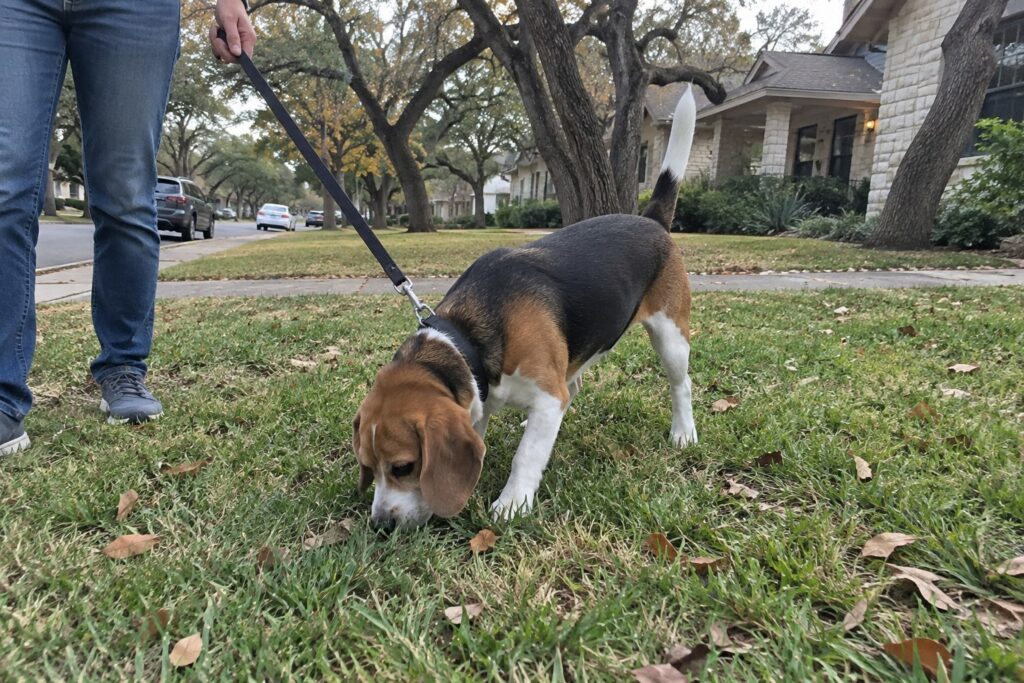

Coyotes and dogs share more of Denver than most owners realize. Coyotes live in the city year-round, using parks, open space, creek corridors, and quiet neighborhoods, and they are most active at dawn and dusk. As fall days get shorter, those hours line up with the early morning and after-work walks you already take.
At All Dogs Unleashed Dog Training Denver, we train dogs from our facility at 2301 Blake St in the Ballpark neighborhood next to RiNo, and our two-week Board and Train program builds the recall and leash skills that matter most around wildlife. Below you will find what Denver Parks and Recreation and Colorado Parks and Wildlife actually recommend, plus the obedience skills that turn a tense encounter into a calm walk away.
Want a dog that comes back the first time you call, even with wildlife in view? Talk to our Denver team.
Key Takeaways
- Colorado Parks and Wildlife says coyotes are active year-round and especially active at dawn and dusk, which overlaps with fall walking hours once the days shorten.
- If a coyote approaches, Denver and state guidance is the same: do not run or turn your back, get big and loud, and keep hazing until the coyote leaves.
- A reliable recall, a solid “leave it”, and a focused “heel” let you keep your dog close and under control while you haze or walk away, and they are the core skills our two-week Board and Train program builds every day.
- Pick up small dogs when a coyote is visible, keep every dog on a short leash in public spaces, and never let your dog chase or play with wildlife.
- Check your yard before letting your dog out, keep lights on at night, and remove food attractants like fallen fruit, pet food, and spilled birdseed.
Why Denver Dogs Cross Paths With Coyotes
Denver Parks and Recreation describes coyotes as native to Colorado’s Front Range. According to the city, generations of coyotes have now been born and raised in urban areas, so people, houses, pets, and cars are a normal part of their lives.
Coyotes Are Year-Round City Residents
The city’s Urban Coyote FAQ explains that residential areas give coyotes everything they need: food, water, shelter, and space. Parks, yards, and natural areas along waterways all qualify. Local news outlets have reported coyote sightings in places Denver dog owners know well, including City Park, Washington Park, and along the Cherry Creek Trail.
That does not mean every walk is risky. The city notes that coyotes are naturally curious but timid and will normally run away if confronted. Coyotes and dogs can coexist in the city when owners have a plan and a dog trained well enough to follow it.
Why Fall Walks Deserve Extra Attention
According to Colorado Parks and Wildlife, coyotes are most visible during breeding season from January through March, and pups are born from April to mid-May. Fall is not a special coyote season on that calendar. What changes in fall is your schedule relative to theirs.
CPW notes that coyotes are especially active at dawn and dusk. In 2026, daylight saving time ends on Sunday, November 1, and sunset arrives an hour earlier on the clock overnight. Suddenly the 6 p.m. walk around Sloan’s Lake or along the Platte River Greenway happens in the dim light when coyotes are moving.
What Draws Coyotes Close to Dogs
The Denver Urban Coyote Information Sheet says feeding coyotes, whether on purpose or by accident, is the biggest cause of problems. Every time a coyote sees a person and nothing happens, it grows bolder. The city also states plainly that coyotes can and do target pets, both as competition and as potential food.
CPW adds a useful distinction: some pets can be seen as a food source, while large dogs can be seen as a threat to a coyote’s territory. That means big dogs are not automatically safe. A large dog that charges toward a coyote can end up in a fight it did not need to have.
What to Do If You Meet a Coyote on a Walk
Memorize the official response before your next walk. Denver Parks and Recreation and Colorado Parks and Wildlife’s Living with Coyotes guidance agree on the core steps, and the city calls the process hazing.
The Hazing Steps, in Order
- Stop. Do not run and do not turn your back on the coyote.
- Bring your dog in close. Pick up a small dog if you can do so safely.
- Make yourself big and loud. Wave your arms, clap your hands, and shout in a loud, authoritative voice.
- Throw objects toward the coyote if they are available.
- Keep hazing until the animal leaves. The city capitalizes this point for a reason: stopping early teaches the coyote that people are not a real concern.
- If the coyote does not leave, face it and back away slowly.
The city’s information sheet adds one more rule that matters for dog owners: never allow a coyote to get between you and your pet or child. CPW also suggests carrying a walking stick or deterrent such as an air horn, and it advises checking with local authorities to make sure any method you use is legal.
Do and Don’t at a Glance
| Do | Don’t |
|---|---|
| Keep your dog on a short leash and close to your side | Let your dog chase, bark at, or “play” with the coyote |
| Pick up a small dog when a coyote is visible | Run, which can trigger a chase response |
| Stand tall, yell, wave, clap, and throw objects toward it | Turn your back or ignore the coyote |
| Haze until the coyote leaves the area | Stop hazing the moment it pauses |
| Face the coyote and back away slowly if it stays | Let the coyote get between you and your dog |
Signs a Coyote Is Acting Aggressively
CPW lists three warning signs: raised hackles, bared teeth, and growling. The Denver FAQ says coyotes that show this kind of behavior toward people should be reported to CPW. If a person is injured by a coyote, call 911 immediately.
If your dog is bitten or scratched, get to a veterinarian right away, even if the wound looks minor. CPW and the city both recommend keeping your pets current on vaccines, and your vet can advise on next steps after any wildlife contact. Reading your own dog’s signals helps too, and our post on dog body language every Denver owner should read covers the stiffening and fixation that come right before a lunge.
When and How to Report a Coyote in Denver
The Denver Parks and Recreation Wildlife Management page lists Denver 311 and the city’s Wildlife Hotline for reporting wildlife concerns. The city’s information sheet asks residents to report, with the date and location, a coyote biting or attacking a person, a coyote attacking a dog, and anyone feeding coyotes, whether accidentally or on purpose.
The Training Skills That Keep Coyotes and Dogs Apart
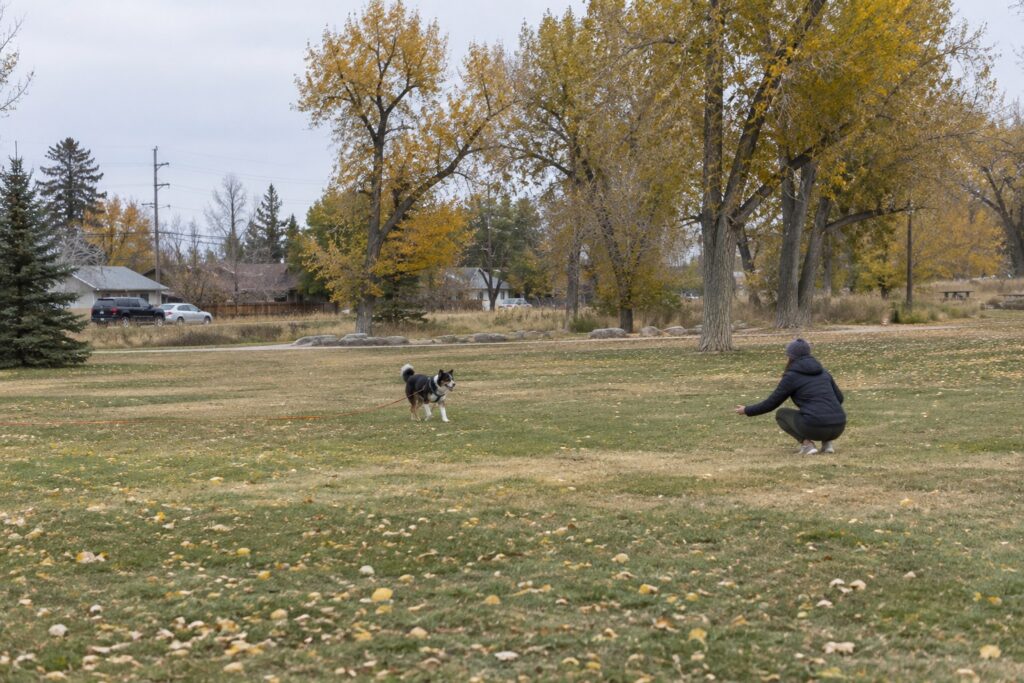
Every piece of official advice assumes one thing: that your dog will stay with you while you act. If your dog bolts toward a coyote, ignores your voice, or spins at the end of the leash, you cannot haze effectively or back away calmly. This is where a coyote sighting stops being a wildlife issue and becomes a training issue.
A Recall That Works Under Real Distraction
“Come” is the skill that matters most. A dog that returns only when nothing interesting is happening does not have a recall yet. Practice in the yard first, then in quieter parts of a park on a long line, and reward heavily every time your dog turns away from something exciting to come back to you. If your dog does slip away, our post on what to do if your dog gets loose walks through the next steps.
“Leave It” for Anything Wild
“Leave it” teaches your dog to disengage from something it wants. Start with a treat in your closed hand, reward the moment your dog backs off, then progress to items on the floor and movement at a distance. On a walk, a strong “leave it” stops the fixation on a rustle in the brush before it turns into a lunge.
“Watch Me” and “Heel” for Walking Away
“Watch me” asks your dog to look at your face on cue, which breaks the stare-down with a coyote. “Heel” keeps your dog tight at your side while you back away or change direction. Together they let you follow the official guidance without being dragged. Dogs that already react to other dogs on leash often need more work here, and our leash reactivity fixes for Denver owners are a good place to build that foundation.
Skill Priorities for Coyote Safety
| Skill | What It Does During an Encounter | Where to Start Practicing |
|---|---|---|
| “Come” (recall) | Brings your dog back before it reaches the coyote | Fenced yard, then a long line in a quiet park |
| “Leave it” | Breaks your dog’s focus on movement or scent | Kitchen floor, then sidewalks with mild distractions |
| “Watch me” | Turns your dog’s eyes back to you | Living room, then your front steps |
| “Heel” | Keeps your dog at your side while you back away | Quiet residential blocks at off-peak times |
| “Sit” or “down stay” | Holds your dog still while you pick up a small dog or haze | Home, adding duration before distance |
Building these skills to the point where they hold up with a live animal in view takes daily repetition. Our two-week Board and Train program drills “come”, “heel”, and leash manners every day in varied indoor and outdoor settings, and every graduate comes with guaranteed results and lifetime support.
Small Dogs, Large Dogs, and Off-Leash Risks
Small Dogs
CPW advises picking up small dogs when coyotes are visible, and the city recommends supervising small dogs whenever they are outside. For a small dog, the most useful trained behaviors are a fast recall to your feet and calm acceptance of being lifted. Practice calm pickups at home, paired with a treat.
Large Dogs
Big dogs face a different risk. Because a coyote may see a large dog as a territorial threat, a dog that charges or barks aggressively can escalate a situation. For large dogs, “heel” and “leave it” are the priority, along with keeping your dog from ever practicing chasing wildlife on walks.
Off-Leash Dogs and Denver Leash Law
Denver’s leash law requires dogs to be leashed at all times unless they are inside your home, your yard, or a designated off-leash dog park. CPW recommends keeping pets on a short leash, and retractable leashes that let a dog wander 20 feet ahead make it harder to pull your dog in quickly. Before you head to an off-leash area, check our list of the best off-leash dog trails in Denver for trained dogs, and make sure your recall is ready for the setting.
CPW also recommends avoiding known or potential den sites and thick vegetation where coyotes may take cover. If you are heading west on weekends, our post on how to train your dog for Denver hiking trails and mountains covers trail manners that carry over to wildlife encounters.
Coyote-Proofing Your Denver Yard This Fall
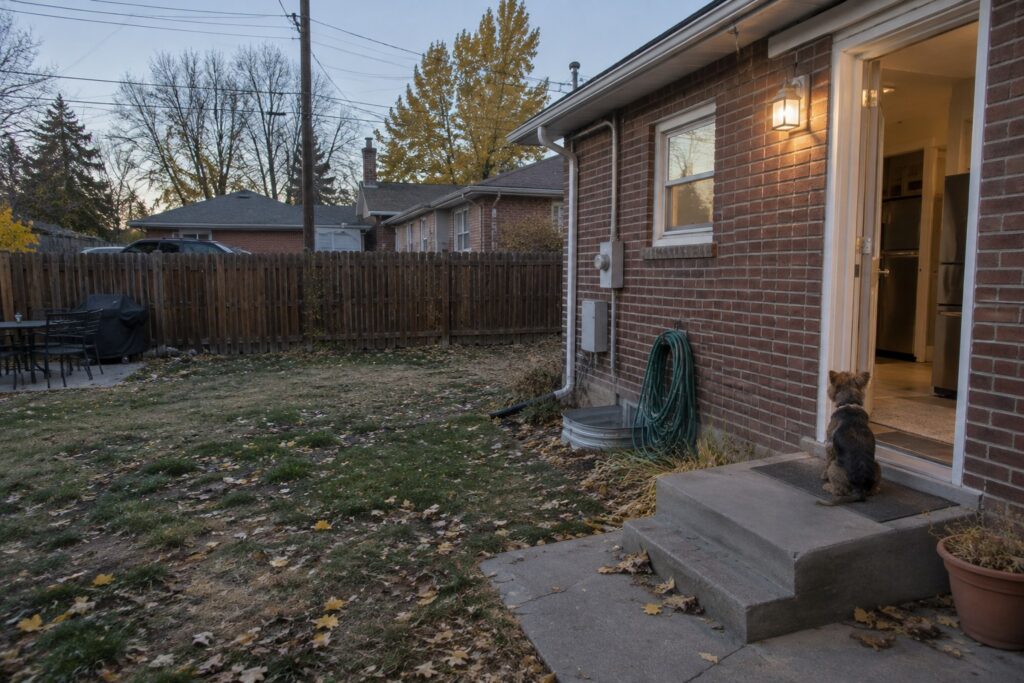
Many conflicts start at home rather than on the trail, and the city’s information sheet includes a practical backyard checklist.
Remove What Attracts Coyotes
Fall brings fallen fruit from backyard trees, and the city specifically asks residents to pick it up. Keep trash and compost inaccessible, clean up under bird feeders, and keep pet food indoors. The city’s broader wildlife guidance also suggests covering doggie doors at night.
Secure the Yard and Light It Up
- Maintain fences so coyotes cannot slip underneath. The city notes that coyote rollers and wire extensions on top of fences can discourage animals from climbing over.
- Install motion-activated lights and keep lights on whenever your dog is outside after dark.
- Visually inspect the yard before letting your dog out, especially first thing in the morning and at night.
- Keep pets inside at night or in a fully enclosed kennel, since the city notes nighttime is when coyotes are most active.
Train the Backyard Routine
A dog that bolts out the back door the second it opens gives you no time to scan the yard. Teach your dog to wait at the door until released, then step out first yourself. Pair that with a recall from the far corner of the yard so you can call your dog in instantly if something appears along the fence line. Our in-home dog training in Denver is well suited to this, because the trainer works on your actual doors, gates, and yard with everyone in the household.
How Board and Train and In-Home Lessons Build Coyote-Ready Dogs
Knowing the hazing steps is the easy part. Having a dog that stays with you while you use them takes repetition under distraction.
Board and Train for Reliable Control
Our Board and Train program in Denver is a structured two-week curriculum where your dog lives at our facility and works with our trainers in daily sessions. Core commands including “sit”, “stay”, “down”, “come”, and “heel” are practiced across indoor and outdoor settings so the responses hold up outside the training room. Each program starts with an intake assessment, and dogs with a bite history need an evaluation before acceptance. In the vast majority of cases, dogs complete the program within the two-week timeframe, and every graduate is backed by guaranteed results and lifetime support.
In-Home Lessons for Your Real Routine
If your main concern is the backyard, the front door, or the specific route you walk every evening, private lessons at your home or at our facility let a trainer work on those exact situations. In-home programs typically run 4 to 12 appointments, and we involve everyone in the household so the dog hears the same cues from every person holding the leash.
Not sure which format fits your dog? Call us at (720) 310-7337 and we will help you choose.
About All Dogs Unleashed Dog Training Denver
All Dogs Unleashed Dog Training Denver works with dogs of all breeds, ages, and temperaments from our facility at 2301 Blake St. Our two-week Board and Train program builds a dependable “come”, “heel”, and leash manners through daily structured sessions, and every graduate receives guaranteed results and lifetime support. We also offer in-home and facility-based private lessons, boarding, and refresh training, so Denver owners can find the right fit for a dog that needs to stay under control around wildlife on city walks and trails.
Frequently Asked Questions
Are coyotes dangerous to dogs in Denver?
Coyotes can pose a real risk to dogs, though encounters usually end with the coyote leaving. Denver Parks and Recreation says coyotes can and do target pets, both as competition and as potential food. Small dogs may be seen as prey, and large dogs may be seen as a territorial threat. Supervision, a short leash, and solid obedience reduce that risk considerably.
What time of day are coyotes most active in Denver?
Colorado Parks and Wildlife says coyotes can be seen throughout the day but are especially active at dawn and dusk. Denver’s guidance also notes nighttime activity and recommends keeping pets inside at night or in a fully enclosed kennel. In fall, shorter days push many regular walks into those low-light hours, so stay alert and keep your dog close.
Should I pick up my small dog if I see a coyote?
Yes. CPW recommends picking up small dogs when coyotes are visible. Once your dog is in your arms, stand tall, shout, and wave your free arm to haze the coyote until it leaves. If it stays, face it and back away slowly. Practicing a calm pickup at home helps your dog stay still instead of struggling during a stressful moment.
Will my dog’s barking scare a coyote away?
Do not count on it. CPW notes that large dogs can be seen as a territorial threat, so barking or lunging may escalate things rather than end them. Official guidance puts the hazing on you, not your dog. Keep your dog quiet and close with “watch me” and “heel”, and let your voice, arm movements, and thrown objects do the work.
How do I report a coyote that attacked my dog in Denver?
Denver’s Urban Coyote Information Sheet asks residents to report a coyote attacking a dog, including the date and location. Contact Denver 311 or the Denver Parks and Recreation Wildlife Hotline listed on the city’s Wildlife Management page. If a person is injured, call 911 right away. Take your dog to a veterinarian promptly, even if the injury looks small.
Can training really help my dog around coyotes?
Training will not change coyote behavior, but it changes what your dog does during an encounter. A reliable “come”, “leave it”, and “heel” keep your dog beside you while you follow official hazing steps. Our two-week Board and Train program drills those commands daily in varied settings, and graduates receive guaranteed results and lifetime support for continued help at home.
Coyotes and dogs will keep sharing Denver’s parks, trails, and backyards, and that is manageable with the right habits and the right training. Follow the city and CPW hazing steps, keep your yard unappealing to wildlife, and build a recall you can trust on dark fall evenings. When you want professional help, call (720) 310-7337 or reach out online, and visit us at our facility at 2301 Blake St in Denver.
Ready to Get Started with All Dogs Unleashed Dog Training Denver?
If you want a dog that comes when called and stays at your side no matter what steps out of the brush, call (720) 310-7337. Our team will talk through your dog’s needs and help you pick between Board and Train and private lessons.