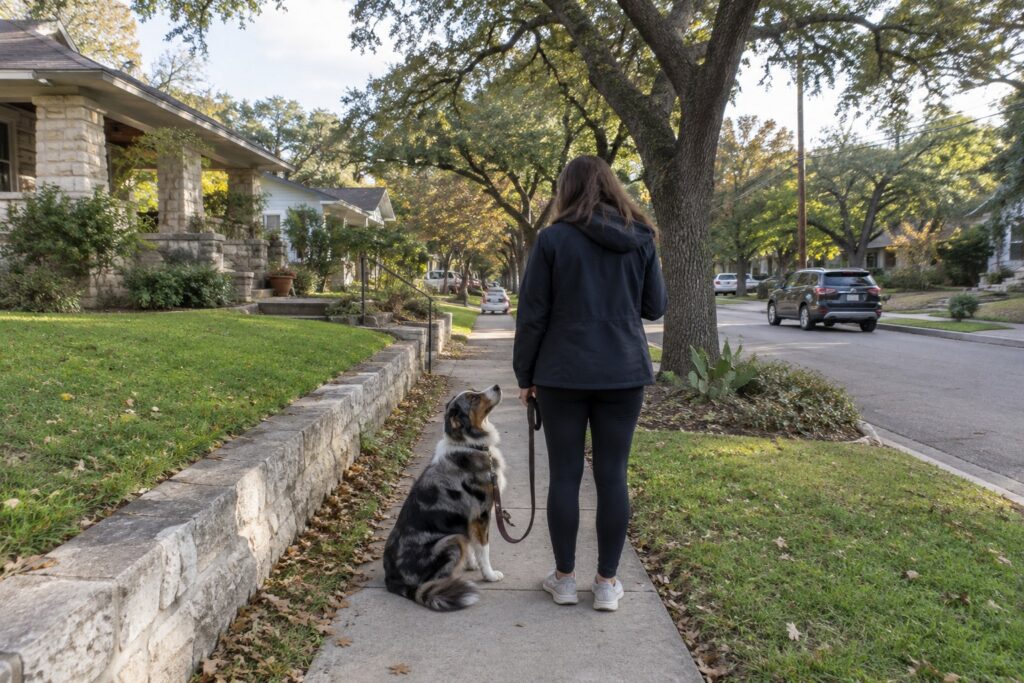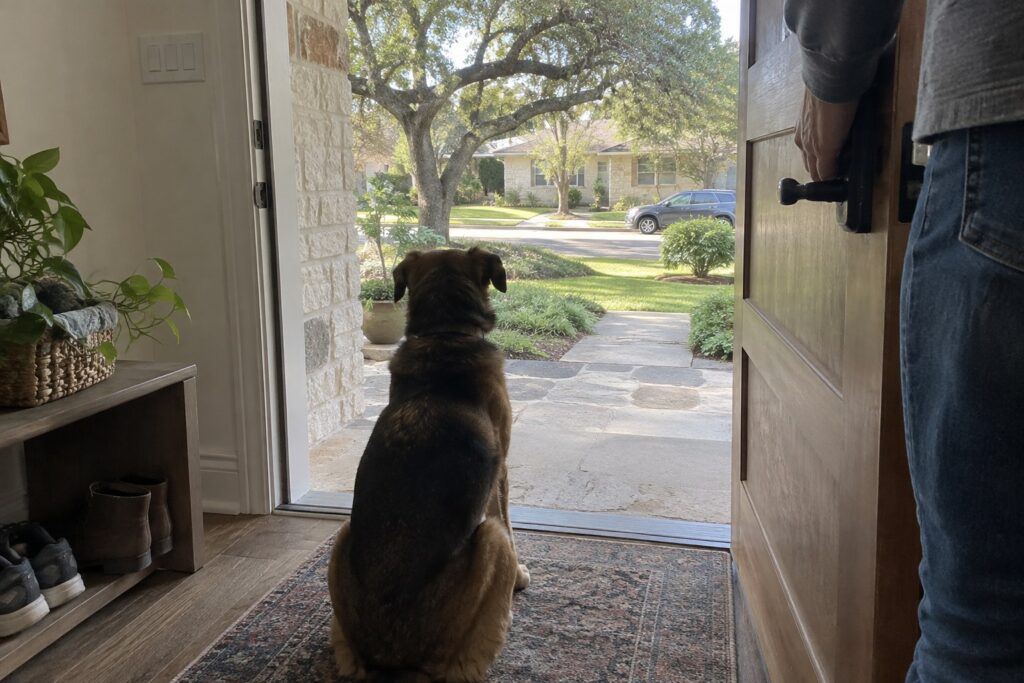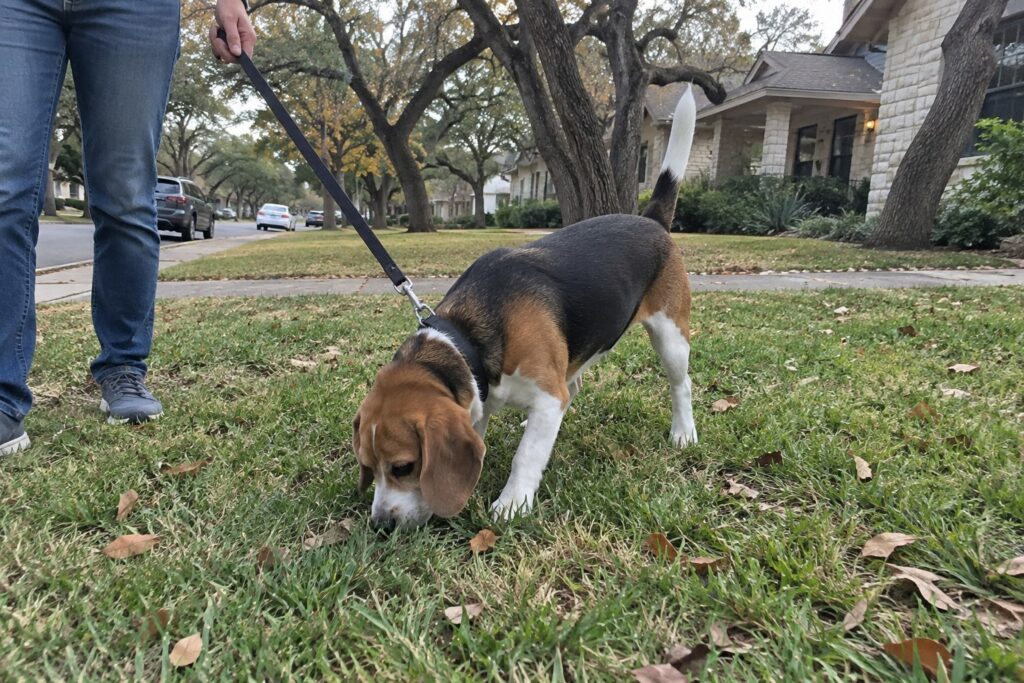

Dogs communicate constantly. Every elevator ride, every sidewalk encounter, every trail crossing, every dog park visit is a stream of signals about how the dog feels and what they’re likely to do next. Owners who can read those signals prevent most behavior problems before they happen. Owners who can’t end up surprised by reactions that were actually telegraphed several steps in advance.
Denver makes body language reading more important than most cities. Dense apartment buildings put dogs in close proximity to strangers and other dogs dozens of times a day. Off-leash trails create unpredictable encounters with wildlife, mountain bikers, and dogs whose owners are out of sight. Dog parks across the metro draw a wide range of behavior styles into shared spaces. Each of these settings rewards owners who can read what a dog is saying without words.
Why Body Language Is the Foundation of Every Other Training Skill
Most training problems trace back to a body language gap. A dog who lunges on leash was probably showing stress signals for several seconds before the lunge, signals the owner missed. A bite at the dog park was almost certainly preceded by stiff body posture, hard staring, and ignored calming signals from the other dog. Owners who can read body language accurately don’t just respond to problems faster; they prevent most of them entirely.
This isn’t a memorization exercise. The goal is to develop an observational habit, looking at the whole dog, in context, and learning what your specific dog’s signals mean in the environments you both live in.
Read the Whole Dog Together
Single signals can mislead. A wagging tail isn’t always a happy tail. A yawn isn’t always a tired dog. A play bow can be a genuine invitation or a stress-displacement behavior. Body language reads accurately only when owners look at posture, face, tail, and movement together as one connected picture.
The framework that works is simple: scan the dog from face to tail, note what each part is doing, then check whether all the signals point the same direction. A loose body with soft eyes, neutral ears, a relaxed mouth, and a low loose tail wag is consistent, that’s a relaxed dog. A loose body with hard staring, forward ears, and a stiff high tail is inconsistent, that’s an aroused dog whose loose body might shift to stiff in the next half-second.
Reading the Face: Eyes, Ears, and Mouth
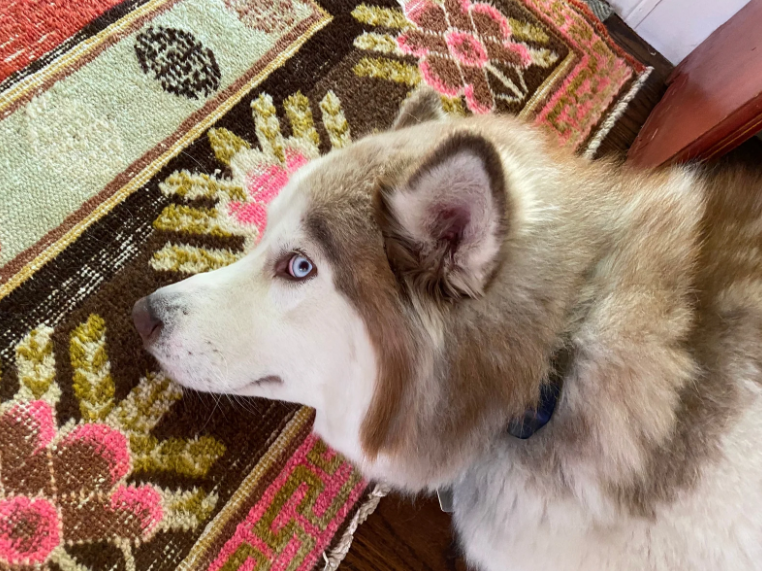
The face delivers the highest-resolution signals.
Eyes. Soft eyes are relaxed and slightly squinted, the eyes of a dog who isn’t scanning for threats. Hard eyes are wide, fixed, and intent, the eyes of a dog locked onto something. The most important signal to learn is “whale eye,” where the dog turns their head away while keeping their eyes on the trigger, showing the whites at the corners. Whale eye is a strong stress signal and a common precursor to defensive aggression.
Ears. Forward ears mean engagement, which could be friendly interest, alertness, or focused arousal depending on the rest of the body. Neutral ears (held naturally for the breed) signal relaxation. Pinned-back ears typically mean fear or stress. “Airplane ears” (held out sideways) often appear in friendly, social moments.
Mouth. A relaxed mouth is slightly open, often with a loose hanging tongue, and the corners of the mouth are soft. A tight, closed mouth is a stress signal, particularly when it appears in a context where the dog should be relaxed. Lip licking when no food is present, repeated yawning when the dog isn’t tired, and sudden panting in mild weather are all stress signals worth noting.
Reading the Body: Posture and Weight Distribution
Loose vs. stiff. A relaxed dog moves fluidly. Muscles are soft, weight shifts naturally, breathing is regular. A stressed or aroused dog moves stiffly. Muscles tighten, movement becomes jerky or frozen, breathing changes. Stiffness is one of the most reliable early warning signs of escalating arousal.
Weight forward vs. weight back. Weight shifted forward, toward the trigger, indicates either engagement (friendly approach) or confrontation (alert investigation). Weight shifted back, away from the trigger, indicates avoidance or fear.
Low body vs. tall body. Crouching, lowered head, and tucked posture often signal fear or submission. A stretched-tall body, raised hackles, and lifted head signal confidence, alertness, or arousal.
Shaking off. A full-body shake (as if shaking off water) when the dog isn’t wet is a stress-release behavior. It typically appears after a tense moment passes and signals the dog is moving back toward a relaxed state.
Reading the Tail: More Complicated Than You Think
The “wagging tail means happy dog” myth is responsible for a significant share of preventable dog bites. Tail signals are more nuanced.
Position matters. A high, stiff tail communicates arousal or assertiveness. A neutral mid-height tail signals relaxation. A low tail signals caution, stress, or submission. A fully tucked tail is fear.
Wag speed and quality matters. A loose, full-body wag where the hips swing along with the tail is friendly. A stiff, fast wag at a high tail position is arousal, not joy, and is one of the body language signals most commonly misread before a bite.
Breed shape matters. Sighthounds (Greyhounds, Whippets, Salukis) carry their tails low naturally. Spitz breeds (Huskies, Akitas, Pomeranians) carry tails over the back even when relaxed. Tail-docked or naturally short-tailed breeds communicate more through hip movement and overall posture than tail position.
The Four Body Language Categories to Recognize
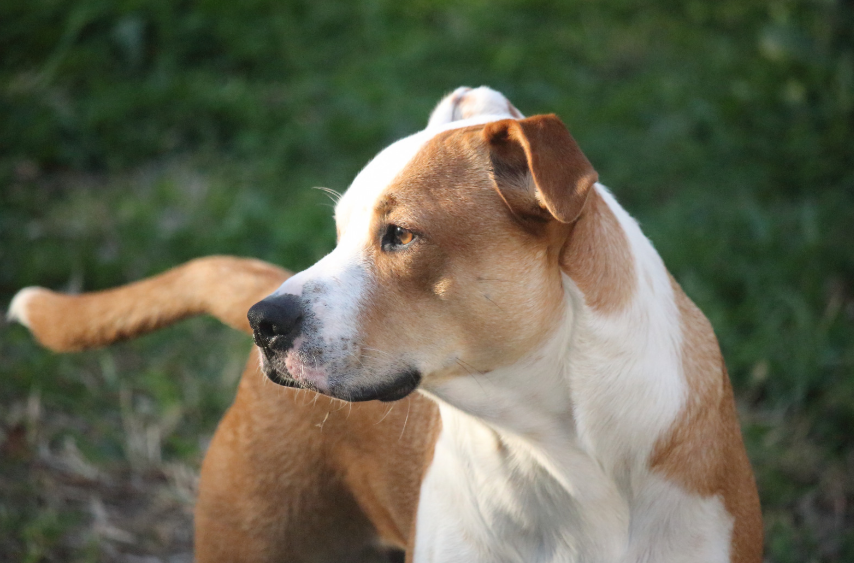
Relaxed and social. Soft eyes, neutral or airplane ears, relaxed mouth, loose body, mid or low tail with full-body wag. This is the dog you can interact with normally.
Alert and aroused. Hard eyes, forward ears, closed mouth, stiff body, high tail. The dog is focused on something. Not necessarily aggressive, but in a state where reactions could escalate quickly. Time to create distance, redirect attention, or end the interaction depending on context.
Stressed and uncomfortable. Whale eye, pinned ears, lip licking, yawning, lowered body, tucked tail, look-aways. The dog is asking for space and trying to defuse the situation. This is the stage where most owners can intervene and prevent escalation entirely.
Warning and distance-increasing. Stiff body, hard staring, growling, lifted lip, snapping. The dog has moved past stress signals into active communication that they need space immediately. This is the time to remove the dog from the trigger and address the underlying issue with structured training.
Calming Signals: How Dogs Defuse Tension
Dogs use specific signals to lower the emotional temperature of a situation. The most common calming signals include yawning when not tired, lip licking when no food is present, slow blinking, turning the head away, slow movements, ground sniffing in the middle of an interaction, and walking in curves rather than directly toward another dog.
This matters because owners often interpret calming signals as defiance, distraction, or unfocused behavior. A dog who suddenly stops to sniff the grass when a stranger approaches isn’t being stubborn; they’re often communicating that they’re uncomfortable and trying to manage the situation. Pulling them through it rather than respecting the signal teaches the dog that calming signals don’t work, and the next escalation step is usually something less subtle.
Common Denver Scenarios
Elevator and hallway encounters. A dog who freezes when another dog steps into the elevator, tightens their mouth, and stares at the wall is overwhelmed. Reduce the trigger by creating distance, turning your dog to face the corner, or stepping out and taking the next car.
Sidewalk interactions with bikes and scooters. Watch the dog’s body the moment a bike or scooter enters their visual field. A stiff body, forward weight shift, and hard staring are early signs that a chase response or reactive lunge is brewing. The intervention window is in those first half-second signals.
Dog park behavior. Healthy play is loose, takes turns, and includes natural pauses. Body language stays soft, mouths stay open, and dogs often self-handicap during play. Brewing trouble looks like stiff bodies, one dog repeatedly mounting or pinning another, hard staring across the park, or a dog who keeps trying to walk away while another keeps following.
Trail encounters with off-leash dogs and wildlife. A loose, curving approach is usually friendly. A direct, stiff, straight-line approach with a high tail is not. With wildlife, watch your own dog’s arousal. A hard stare and forward weight shift toward a deer or moose means the next step is likely a chase. The recall window closes fast.
Body Language That Predicts a Bite
Most dog bites are predictable. The escalation pattern is consistent: subtle stress signals first (lip licking, yawning, look-aways), then more obvious calming signals if the trigger doesn’t decrease, then distance-increasing signals (stiff body, hard stare, growl), then a bite if the warnings get ignored.
The reason “the dog bit out of nowhere” stories are so common isn’t that dogs actually bite without warning. It’s that the warnings were missed or overruled. A dog who growls is communicating clearly. Punishing the growl trains the dog to skip the warning step, not to stop the underlying discomfort. That’s how you get dogs who appear to bite without warning later in life.
Common Body Language Misreads
Assuming all wagging means happy. Tail position, wag speed, and the rest of the body matter more than the wag itself.
Missing whale eye. This is the single most commonly missed signal. Owners see their dog “looking around” but miss that the head is turned away while the eyes are fixed on the trigger.
Calling a stressed dog “stubborn.” A dog who’s pulling toward home, refusing to engage, or moving slowly often isn’t being defiant. They’re communicating that the current environment is too much.
Misreading freeze as calm. A dog who stops moving and stares at a trigger isn’t relaxed. Freezing is often the moment just before a reactive lunge or a bite. Don’t mistake stillness for stability.
Frequently Asked Questions
Do different breeds have different body language?
The core signals are universal across dogs, but presentation varies by breed. Spitz breeds carry tails over the back naturally. Sighthounds tuck low. Cropped-ear breeds rely more on body posture than ear position. Reading body language for your specific breed means knowing what neutral looks like before trying to spot changes.
Why are some dogs harder to read than others?
Several factors make individual dogs harder to read: heavy coats that obscure body posture, dark facial features that hide eye signals, cropped ears or docked tails that remove communication channels, and individual personality differences. Time spent observing your dog at baseline is the only reliable shortcut.
How can I tell if play between dogs is healthy or about to escalate?
Healthy play is mutual, takes turns, includes self-handicapping (larger dog playing down to the smaller dog’s level), and has natural pauses. Bodies stay loose, mouths stay open, and either dog can step away without conflict. Brewing trouble shows stiff bodies, one-sided dynamics, hard staring across the park, or a dog who keeps trying to disengage while another keeps pursuing.
When should I bring in a professional for body language interpretation?
Bring in a professional when you’re seeing escalating warning signs (growling, snapping, lunging) you don’t fully understand, when reactive behavior is increasing despite your management efforts, or anytime there’s been a bite or near-bite. The earlier the intervention, the easier the work. Our post on Walking a Reactive Dog covers the practical management side once you’ve identified what’s going on.
Body language reading is a skill, and the fastest way to build it is with someone who can show you what to look for in real time. Our Denver dog training programs include the observational coaching that makes everything else click. We offer in-home dog training so we can work with you and your dog in your actual environment, and board and train for accelerated results when patterns need to shift faster. Contact us or call (720) 310-7337 to get started.
About All Dogs Unleashed Denver
All Dogs Unleashed builds the observational skills owners need to understand what their dogs are actually saying, alongside the practical training that turns that understanding into real-world results. Body language literacy is the foundation we layer every other training skill on top of, from obedience and recall to reactivity work and city manners. Beyond core training, our Denver location also offers in-home dog training, board and train, dog boarding, and dog daycare for owners who need full-service support.
Visit us at 2301 Blake St, Denver, CO 80205, or call (720) 310-7337 to learn more about how our trainers can help you read and respond to your dog with confidence.