
Worried your dog is showing dog dominance behavior? Growling at guests, guarding food, snapping when corrected, or pushing past you at the door? We’re All Dogs Unleashed, and we’ve helped Bossier City dog owners fix these exact problems through structured Board and Train programs built around the individual needs of your pet. Our trainers read what’s really driving the behavior, then teach your dog clear rules and calm responses so you get a well-balanced dog at home, at the park, and around guests.
Ready to fix pushy or aggressive behavior? Call (318) 562-6536 today.
Key Takeaways
- What looks like dog dominance behavior is often anxiety, poor boundaries, or learned habits, not a dog trying to be "alpha."
- Growling, snapping, resource guarding, and leash reactivity all need structured training, not punishment-based confrontation.
- Bossier City owners get the best results with a Board and Train program tailored to the individual needs of your pet.
- Clear rules, consistent leadership, and daily structure at home turn pushy dogs into well-rounded pets.
What Pushy Behavior Looks Like in a Real Bossier City Home

Your dog pushes through doorways first. He growls when you move him off the couch. He blows off every command unless a treat is involved. Most Bossier City owners call this dog dominance behavior, but the term gets thrown around without much understanding of what it actually means.
Here is what we will cover: the real science behind dominant dog behavior, the warning signs that matter in Northwest Louisiana households, and the correction steps that actually work. This information comes straight from our training floor at the All Dogs Unleashed Dog Training Bossier location, where we work with these exact cases every week. If you want to see the full range of options before reading further, ourdog training programs page breaks down what each one covers.
You will leave knowing whether your dog is truly pushy or just untrained, and what to do next.
What 'Dog Dominance Behavior' Actually Means (and What It Doesn't)
Dominance describes a dog controlling access to a specific resource in a specific relationship. It is not a personality trait, and it is not a label that fits your whole dog.
That distinction matters for Bossier City households. Most of what owners call dominant dog behavior is actually a training gap, not a power struggle.
The Old Alpha Theory vs. What Research Actually Shows
The alpha theory came from 1970s studies on captive wolves living in forced, unrelated groups. The same researcher later walked the findings back. Wild wolf packs are family units, not boss-and-underling hierarchies.
Modern behaviorists use resource-based language instead. A dog might guard a bone from another dog one day and share the couch the next. The behavior is situational, not a fixed rank. So no, the old alpha theory is not still valid in the way pop training made it famous.
Why the Word 'Dominant' Still Matters for Everyday Owners
Here is where we land with our Bossier City clients. The science is clear, but the word “dominant” still shows up in every intake call we take. Owners use it to describe a dog that ignores them, pushes through doors, or growls over food.
Those are real problems. They are just not what dominance actually means. Most are impulse control issues or missed training steps.
Behaviors people mislabel as dominance:
- Leash pulling, usually an untrained walking habit
- Jumping on guests, a greeting and excitement issue
- Recall failure, a reinforcement and proofing gap
- Sleeping on the couch or bed, a house rules choice
None of these are your dog trying to run the house. They are dog behavior problems with clear training fixes.
Real warning signs that need a trainer’s eye are different. Stiff body language over food, growling when moved off furniture, snapping at hands near toys, or guarding one family member from another. Those point to resource guarding or anxiety, not rank.
The practical question is not “is my dog dominant?” The better question is “which behaviors are causing problems in my home, and what do I want instead?” That is the question we answer when you reach out to our Bossier City training team.
Warning Signs: How to Read Actual Dominant Dog Behavior
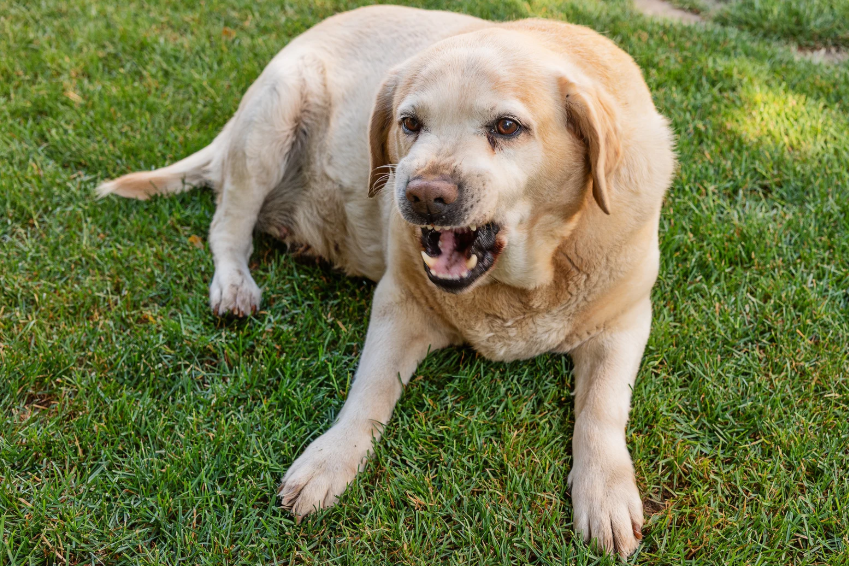
Real dominant dog behavior shows up in the body before it shows up in the bite. Most Bossier City owners miss the early signals because they look like quirks. Here is what to actually watch for.
Body Language Signals That Signal a Control Issue
Watch for these signs in your home:
- Stiff legs with a high, slow-wagging tail
- Hard stare that does not break when you look back
- Blocking doorways, hallways, or furniture you want to use
- Growling when touched during eating, sleeping, or play
- Repeated mounting of people or other dogs despite correction
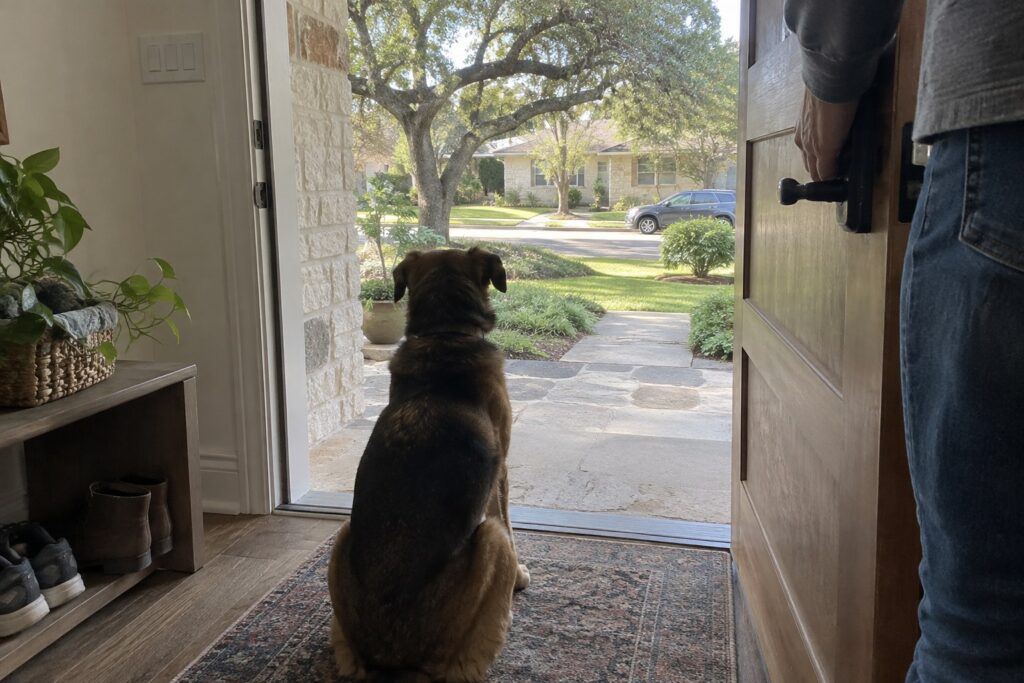
- Pushing through you instead of waiting at the door
One of these on its own is not a crisis. Two or more showing up consistently is a different conversation than a dog that just pulls on the leash. That pattern is dominant dog behavior, and it needs structure, not more treats.
Our trainers assess these exact signals during an in-person consultation at our Benton Road location. We watch how your dog moves through space, how it responds to handling, and where the control issues actually live. If your dog also needs a coat reset or nail trim before the assessment so handling does not turn into a wrestling match, ourdog grooming team can handle that in the same visit.
When Resource Guarding Crosses Into Aggression
Resource guarding is specific and manageable. Your dog freezes over a bowl, a bone, the couch, or a person. It growls, shows teeth, or air-snaps to make you back off. With the right plan, we can change that response.
Dog aggression in the home is a different category. If your dog has snapped and made contact, broken skin, or redirected a bite onto a person or another pet, you are past the DIY stage. Stop managing it alone.
Call our trainers in Bossier City the same week it happens. Bite history gets worse with time and repetition, not better. We will tell you straight whether your dog needs a Board and Train, in-home work, or a vet behavior referral first.
Seeing growling, stiff posture, or snapping at home? Talk to a professional trainer in Bossier City today at (318) 562-6536.
The Root Causes Behind Dominant Dog Behavior in Bossier City Homes
Pushy behavior usually comes from two places: breed wiring and household inconsistency. Most Bossier City dogs we work with are not “trying to dominate” anyone. They are strong-willed dogs living without clear rules. Fix the rules, and most of the pushy behavior fades.
Breeds and Genetics
Yes, some breeds are more prone to pushy, take-charge behavior. Northwest Louisiana has a lot of them. We see the same lineup roll through our Benton Road location week after week:
- German Shepherds
- German Shorthaired Pointers
- Rottweilers
- Belgian Malinois
- American Pit Bull Terriers
Heidi, a GSP we trained at Benton Road, is a good example. Smart, athletic, and full of opinions. Without a job, that energy turns into counter-surfing, door-charging, and ignoring her owners.
This is not a defect. These are working breeds. They need structure, consistent rules, and real mental and physical exercise. Give them that, and they thrive. Skip it, and you get dog behavior problems that look a lot like dominance.
How Inconsistent Rules Create Pushy Dogs
Why does your dog listen to one person in the house but blow off everyone else? Because that one person is consistent. The others are not. Dogs read patterns, not lectures.
Here is the classic Bossier City example. A guest comes over. Your dog jumps. You push him off. Your spouse laughs and pets him. Your teenager yells. Grandma slips him a treat to calm down. Your dog files one thing away: jumping equals attention. Mission accomplished.
That is how to stop dog dominance behavior at the root. Everyone in the household has to apply the same rules, the same way, every single time. One weak link and the dog learns to work the system.
This is why we steer most Bossier City families toward ourIn-Home Dog Training program. We come to your house. We train the dog and we coach the people. Spouse, kids, in-laws, roommates, all of them. Because dog obedience training in Bossier City does not stick if only one person knows the rules.
If you want a program built around your household and your specific dog, our Bossier City trainers can walk you through what fits best.
How to Correct Dominant Dog Behavior: A Practical Step-by-Step Plan
Pushy behavior gets worse without structure. Here is the exact plan we use with Bossier City clients to stop dog dominance, in order. Do all three steps. Skipping one is why most owners fail.
Step 1: Establish Clear Boundaries
Decide what is off-limits before you start. Then enforce it every single time, by every person in the house.
- Pick your off-limits spaces: couch, bed, kitchen, kids' rooms. Write them down.
- Keep a light indoor leash on your dog during the correction period. It lets you guide without grabbing the collar.
- Get the whole household to agree on the rules in writing. One person sneaking treats undoes a week of work.
- Zero exceptions. Not when guests come over. Not when your dog looks sad.
Step 2: Stop Rewarding Demanding Behavior
Your dog repeats what works. If barking, pawing, or jumping gets attention, you just trained the behavior you hate.
- Turn your back on barking or pawing. Wait until quiet. Then engage.
- Teach "place" or a solid down-stay as the acceptable alternative. Reward calm, not demanding.
- Feed at set times. No free-feeding. You control the food, you control the structure.
- Ignore jumping completely. No eye contact. No "no." No pushing away. All of that is attention.
Step 3: Use Obedience Commands as Daily Structure
This is Nothing in Life is Free, or NILF. Your dog performs a known command before anything good happens. Sit before the food bowl goes down. Down before the leash clips on. Place before you toss the toy. This is structure, not punishment.
NILF makes obedience part of real life, not just a training drill. Run 5 to 10 minute sessions a few times a day. Short and frequent beats one long boring session every time. This foundation runs through everyBoard and Train and In-Home Training program we run in Bossier City. If you travel mid-program or need a controlled environment for your dog while the household resets the rules, ourdog boarding option keeps the structure in place even when you are out of town.
If your dog has crossed from pushy into snapping, biting, or threatening family members, stop managing it alone. Call our Bossier City team at (318) 562-6536 or stop by our Benton Road location to book an assessment. We will tell you straight whether In-Home Training or Board and Train fits your dog.
Frequently Asked Questions
How Long Does It Take to See Improvement in a Dog with Dominance Behavior?
Most owners working with a professional trainer begin noticing measurable changes within two to four weeks of consistent practice. Dogs with deeply ingrained habits may take two to three months before the new patterns feel natural to them. All Dogs Unleashed Dog Training Bossier typically sets realistic timelines during the initial consultation so owners know what to expect at each stage.
Is Dominant Dog Behavior More Common in Male Dogs Than Female Dogs?
Sex does play a small role, as intact males tend to display more status-related pushing and posturing than neutered males or females. However, spayed and intact females can show equally intense controlling behavior, especially around food, toys, or sleeping spots. The individual dog’s history, socialization, and household rules usually matter far more than sex alone.
Can Dominant Behavior Be a Sign of an Underlying Medical Problem?
Yes, sudden changes in assertiveness or irritability should always prompt a veterinary checkup before beginning a behavior modification plan. Pain from conditions like arthritis, dental disease, or thyroid imbalances can cause a normally easygoing dog to start snapping or guarding. All Dogs Unleashed Dog Training Bossier recommends ruling out medical causes first, especially when the behavior appears without an obvious trigger.
Will Getting My Dog Neutered or Spayed Fix the Dominance Problem?
Spaying or neutering can reduce hormonally driven behaviors like mounting and some forms of marking, but it rarely eliminates established dominance patterns on its own. A dog that has practiced pushy or controlling behavior for months will still need structured training alongside any surgical intervention. Think of the procedure as one helpful tool rather than a complete solution.
Is It Safe to Work on Dominant Behavior with Children in the Home?
It can be done safely, but households with young children should involve a professional trainer from the start rather than attempting corrections independently. Children move unpredictably and may accidentally escalate a tense moment during the training process. All Dogs Unleashed Dog Training Bossier can show families in the Bossier area how to manage interactions safely while the dog is being retrained.
Do Dominant Dogs Ever Fully Outgrow the Behavior Without Training?
Most do not. Without clear feedback from the owner, a pushy dog simply learns that the behavior works and repeats it. Senior dogs occasionally mellow as energy levels drop, but the underlying patterns typically remain and can resurface during stressful events like moves, new family members, or illness. Consistent training produces far more reliable results than waiting for the dog to change on its own.
What Should I Avoid Doing at Follow-Up Training Sessions?
Skipping practice between sessions is the most common mistake, because dogs need daily repetition to solidify new responses. Owners should also avoid reverting to old habits, such as letting the dog back onto furniture or feeding from the table, after a good week of progress. All Dogs Unleashed Dog Training Bossier encourages owners to keep a short daily log of wins and setbacks so each follow-up session can be adjusted based on real progress.
Ready to Get Started with All Dogs Unleashed Dog Training Bossier?
Call (318) 562-6536 to speak with our team directly. Reach out today and let’s talk about how we can help.