
Food aggression in dogs is one of the most common calls we get from Bossier City families, and it almost always starts the same way: a low growl over the bowl, then a snap, then a scared owner who doesn’t know what’s safe anymore. At All Dogs Unleashed Bossier City, we work with Bossier City dogs daily to fix resource guarding before someone gets hurt. Our trainers build structure around mealtimes so your dog learns calm behavior, not control. Whether your pup guards kibble, treats, or the empty bowl, we can help.
Ready to make mealtimes safe again? Call our Bossier City trainers today at (318) 562-6536.
Key Takeaways
- Food aggression in dogs is a form of resource guarding that gets worse without structured training, not better with age.
- Warning signs include stiff body, hard stare, low growl, and lunging when you walk near the bowl.
- Punishing a guarding dog usually backfires; we teach trade-up exercises and calm bowl routines instead.
- Bossier City owners can book a Board and Train or In-Home program to address food aggression directly.
When the Bowl Becomes a Battleground in Your Bossier City Home
You set the bowl down. Your dog stiffens, lowers their head over the food, and lets out a low growl when you walk by. Maybe last week it was a snap. That is food aggression, and it is a form of resource guarding in dogs we see in Bossier City homes every week.
Good news: this is fixable. Your dog is not mean. They are insecure about losing a resource, and that response can be retrained.
This guide covers the warning signs, what causes the behavior, and a step-by-step plan to correct it. Any breed, any age, any history, we train ANY dog and solve ANY problem. With 257 five-star reviews from Bossier City and Shreveport families, our team has walked owners through this exact issue hundreds of times. Our full lineup ofdog training programs is built to handle behavior cases exactly like this.
What Does Food Aggression in Dogs Actually Look Like?
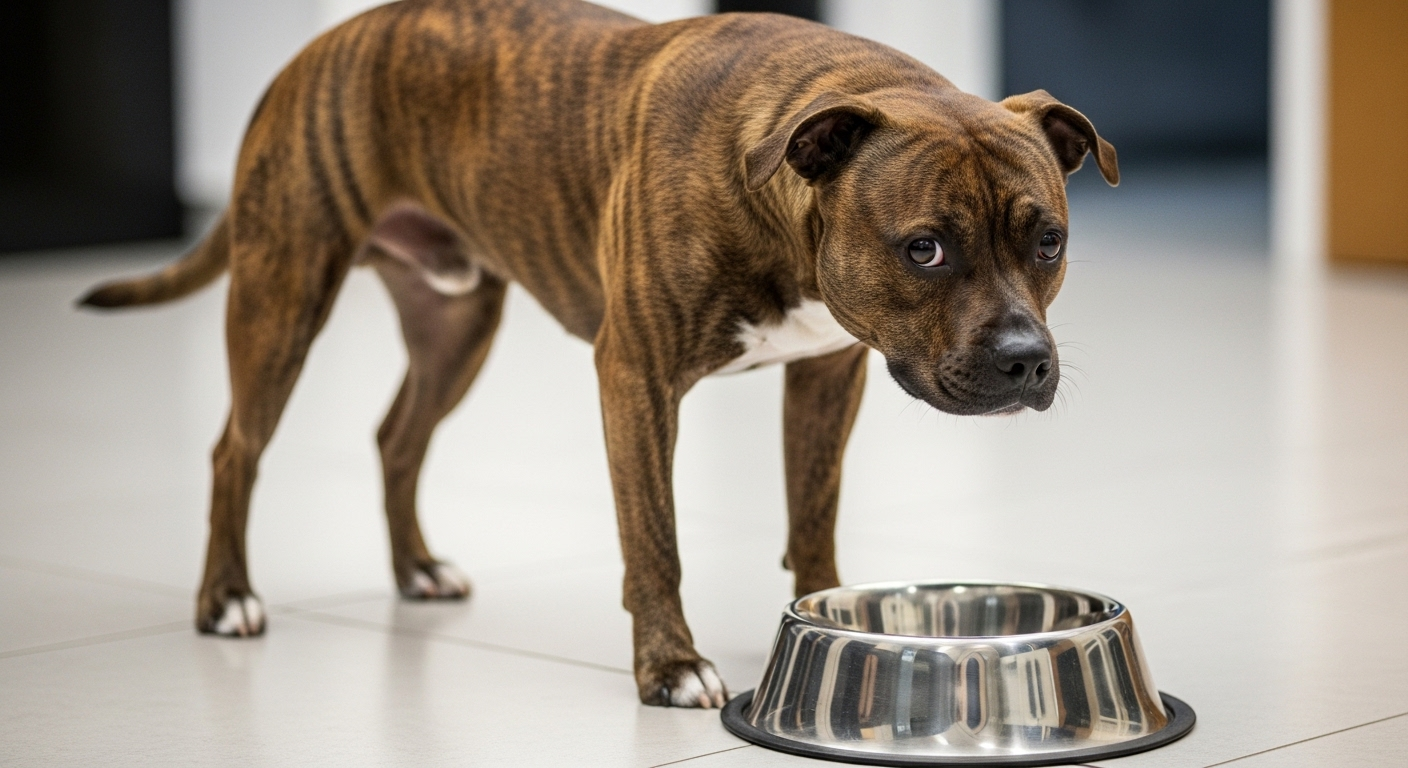
Food aggression shows up on a spectrum, not all at once. Most Bossier City owners we work with don’t catch it early. They call us after a growl turned into a snap, or a snap turned into a bite. By then, the behavior has been rehearsed for months.
The truth is, your dog was probably telling you something at meal time long before the teeth came out. You just didn’t know what to read.
The Three Levels of Food Aggression
Dog food bowl aggression usually moves through three stages. Catching it at Level 1 is the difference between a quick fix and a long behavior case.
- Level 1 (Mild): Your dog freezes when you walk by. Eating speeds up. Body goes stiff over the bowl. No sound, no teeth, just tension.
- Level 2 (Moderate): Low growl. Curled lip. Hard eye contact when you approach. The dog is telling you to back off.
- Level 3 (Severe): Lunging, snapping, or biting if you reach for the food or bowl. This is a safety issue, especially around kids.
Most folks only flag it at Level 2 or 3. That’s late, but not too late.
Body Language Signs to Read Before the Bowl
A dog aggressive at meal time almost always warns you first. Watch for these pre-escalation signals:
- Dropped, stiff tail
- Lowered head over the bowl
- Whale eye (whites showing as they side-eye you)
- Raised hackles along the shoulders
- Sudden change in eating pace, faster or frozen still
Yes, mild stiffening over the bowl is a real problem. It’s Level 1, and it’s the easiest stage for food possessive dog training to correct before it grows teeth.
Why Do Dogs Develop Food Aggression? The Root Causes
Food aggression is almost always a form of resource guarding, a hardwired survival instinct. Your dog is not being “bad” or “dominant.” He is protecting something valuable the only way he knows how.
Resource Guarding as a Natural Canine Instinct
In the wild, the dog who protected his meal survived. That instinct did not disappear when dogs moved onto our couches in Bossier City. High-value items like food, bones, pig ears, and favorite toys trigger the strongest guarding response.
It becomes a real problem when that guarding gets pointed at people, especially kids or guests walking past the bowl. Rescue dogs often guard harder because many came from shelters, hoarding situations, or strays where food was never guaranteed. If you adopted a rescue who guards his bowl, it is not your fault. It is his history talking.
This same instinct shows up in other ways too, which is why resource guarding in dogs often overlaps with stopping dominance issues in your Shreveport home. Same root, different symptom.
When Environment and Household Habits Make It Worse
Most Bossier City homes we work with have more than one dog. That changes everything at mealtime. Competitive feeding dynamics are the number one trigger our team sees in food possessive dog training cases across the area.
Common environmental triggers that make guarding worse:
- Feeding multiple dogs in the same room or close together
- Bowls placed in high-traffic spots like kitchen walkways
- Unpredictable feeding schedules that create food anxiety
- Owners reaching into the bowl to "test" or "show dominance"
- Kids walking up to a dog while he is eating
- Free-feeding in homes where another pet steals food
And no, you should not be sticking your hand in the bowl. That old advice creates the exact problem you are trying to prevent. It teaches your dog that hands near food mean food disappears.
Not sure what is triggering your dog’s guarding? Call us at (318) 562-6536 and we will help you sort it out.
A Step-by-Step Plan to Correct Food Aggression at Home
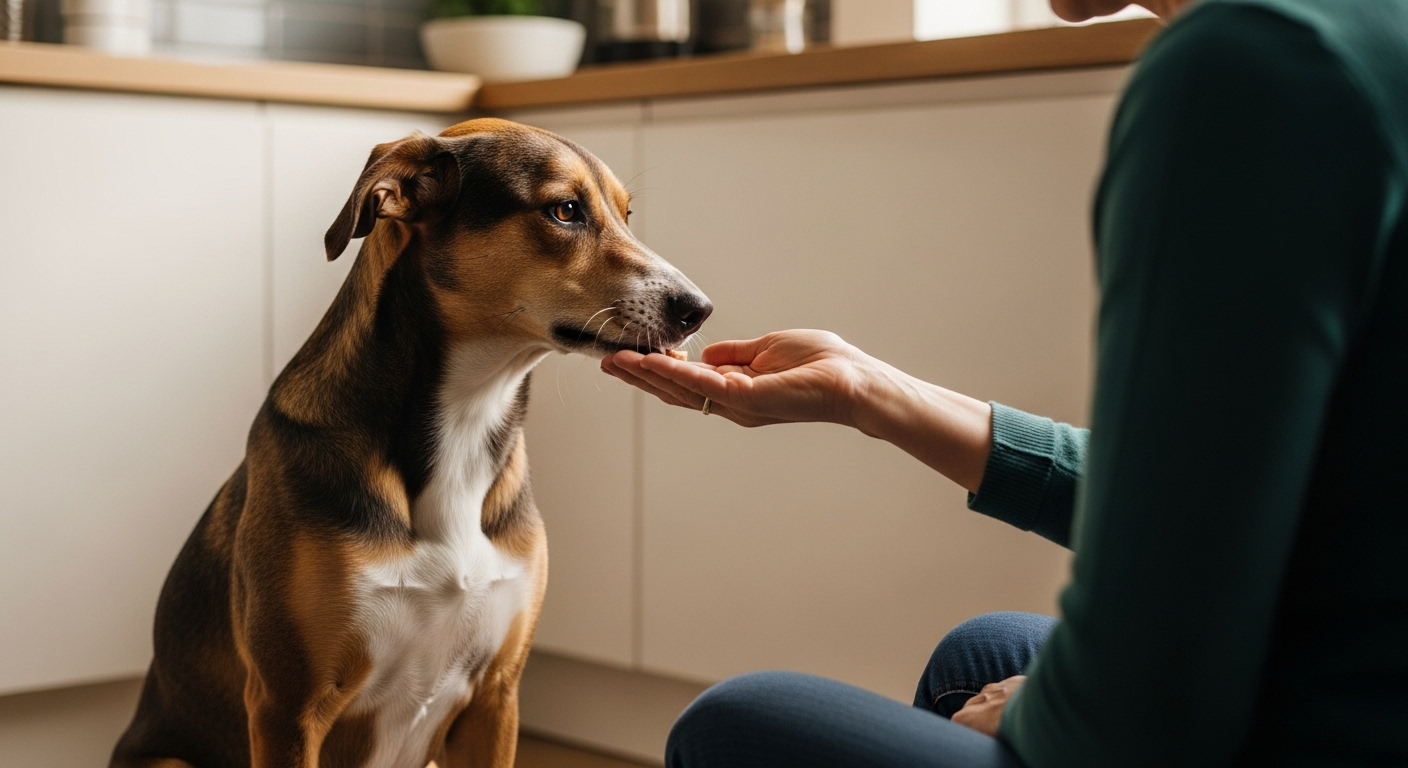
The safest first step is to remove pressure from the bowl entirely. You manage the environment first, then rebuild your dog’s trust around food in small, predictable reps. Most owners in Bossier City see real progress in 2 to 4 weeks of daily practice.
Step 1: Manage the Feeding Zone First
Pick one quiet spot. Feed at the same time, in the same place, from the same bowl every day. Predictability lowers anxiety, which lowers guarding.
- Separate dogs with closed doors or baby gates. No shared meals during training.
- Move feeding indoors if your home sits near a busy Bossier City street. Foot traffic and lawn crews trigger guarding fast.
- Keep kids and other pets out of the feeding zone until the dog finishes and walks away.
- Pick up the empty bowl after meals so it never becomes a guarded object on the floor.
Step 2: Use Hand Feeding to Build Trust at the Bowl
Yes, hand feeding works, and it works fast. For 1 to 2 weeks, deliver the majority of each meal directly from your hand. Your dog learns that your hands bring food, not take it.
After week two, reintroduce the bowl. As your dog eats, walk by and drop in something better than kibble: small pieces of boiled chicken, plain cheese, or freeze-dried liver. Do this 3 to 5 times per meal. This is the core of dog food bowl aggression work.
Step 3: Practice Positive Interruptions and Trade-Ups
The trade-up method teaches your dog that hands near the bowl mean an upgrade. Wait until your dog is calm, then:
- Calmly pick up the bowl.
- Drop in a high-value treat your dog rarely gets.
- Set the bowl right back down.
- Repeat 10 to 15 reps across several sessions per week.
If your dog stiffens, freezes, or growls at any point, stop and go back to Step 2. Pushing through a warning is how bites happen. If progress stalls or the growling escalates, this is when food possessive dog training needs hands-on help. Our professionalIn-Home Training in Shreveport covers Bossier City and the surrounding parishes.
Step 4: Teach a Solid Leave It and Wait Before Every Meal
Every meal becomes a training rep. Ask for a “wait” before you set the bowl down. Release with a clear word like “okay.” Practice “leave it” starting 6 feet from the bowl, then close the distance over several sessions.
These two cues give you an off switch around food. Most dogs show a clear shift in the first 10 to 14 days of daily practice. Full reliability takes 4 to 8 weeks of steady reps.
When Home Training Is Not Enough: Signs You Need a Professional
Some food aggression cases are not safe to work alone. If your dog has crossed certain lines, home drills will not fix it and may make it worse. Here is how we tell families in Bossier City when it is time to bring us in.
Behaviors That Signal It Is Time to Call a Trainer
Stop trying to fix it yourself if you see any of these red flags:
- Your dog has broken skin on a person or another pet, even once.
- You have young children in the home and the dog stiffens, growls, or air-snaps near food.
- Multi-dog fights are happening at feeding time.
- You have run drills for 3 to 4 weeks with no real progress.
- The behavior came back after a life change, like a move, a new baby, or settling a new dog into your Bossier City home.
To answer the question we get most: no, it is not safe to keep a child near a dog that guards food. Manage the dog with crates and gates until a trainer has eyes on the case. If you need a safe place for the dog during the most intense weeks of the training reset, ourdog boarding facility gives you a controlled environment that takes the pressure off the household.
How Board and Train Works for Food Aggressive Dogs
Board and Train is full-time, not a one-hour weekly lesson. Your dog stays with us, and we work the bowl in real feeding contexts multiple times a day. That repetition in a controlled setting is how we change the response, not just suppress it.
Our trainers Kelden, Kelvin, and Laurel get named over and over in our 257 five-star reviews for this exact work. Families from the Benton Road area and across Bossier City send us dogs that were guarding, biting, or starting fights at meal time, and we send back a dog the household can actually live with.
If you are wondering how to stop food aggression and home steps are not moving the needle, or your dog is aggressive at meal time around kids or other pets, call us at (318) 562-6536. We will walk you through an in-home evaluation or our Board and Train option and build a correction plan for your dog, your family, and your home.
Frequently Asked Questions
Can Food Aggression in Dogs Be Fully Cured, or Just Managed?
Many dogs show dramatic, lasting improvement with consistent training, but food aggression is rooted in instinct, so the goal is reliable management rather than a guaranteed permanent cure. Most owners work with All Dogs Unleashed Bossier City to reach a point where their dog is calm and safe around food every day. Maintenance training and consistent household rules are usually needed long term to keep the behavior from creeping back.
Is Food Aggression More Common in Certain Dog Breeds?
Any breed can develop food aggression, but dogs bred for independent work, guarding, or high prey drive sometimes show stronger resource guarding tendencies. Rescue dogs with unknown histories also present with food aggression more frequently, likely due to past competition for resources. Breed alone is not a reliable predictor, so every dog should be assessed on its individual behavior and history.
How Long Does It Typically Take to See Real Progress?
Mild food aggression often responds to consistent home training within two to four weeks. More established or severe cases handled through a structured program like board and train at All Dogs Unleashed Bossier City can show significant improvement in two to four weeks of intensive work, followed by owner follow-up sessions. Progress depends heavily on how consistently the household reinforces the new rules after training ends.
Is It Safe to Continue Feeding a Food Aggressive Dog Normally While Training?
Feeding routines should continue, but the setup needs to change immediately once food aggression is identified. Removing children, other pets, and unnecessary foot traffic from the feeding area prevents bites while training is underway. Skipping meals as a punishment is never recommended, since hunger increases guarding behavior and undermines trust-building efforts.
Will Getting a Second Dog Make Food Aggression Worse?
Adding a second dog to a household with an unresolved food-aggressive dog is a significant risk and is generally discouraged until the issue is addressed. Competition between dogs at the bowl can escalate mild guarding into serious fights very quickly. If you already have multiple dogs, All Dogs Unleashed Bossier City recommends separate feeding stations in separate rooms as a non-negotiable management step during training.
Can Children Safely Participate in the Training Process?
Children should not lead food aggression training exercises, since unpredictable movements and high energy can trigger a reaction faster than an adult can intervene. Adults should handle all active training steps, while children learn clear rules about not approaching the dog during meals. Once a trainer has confirmed stable improvement, supervised, age-appropriate participation can be introduced gradually.
Does Spaying or Neutering a Dog Reduce Food Aggression?
Spaying and neutering can reduce some hormone-driven behaviors, but food aggression is primarily a learned and instinct-based behavior rather than a hormonal one. Most veterinary and training professionals agree that surgery alone will not resolve resource guarding. Behavioral training remains the primary and most effective treatment, regardless of a dog’s reproductive status.
Ready to Get Started with All Dogs Unleashed Bossier City?
Call (318) 562-6536 to speak with our team directly. Reach out today and let’s talk about how we can help.