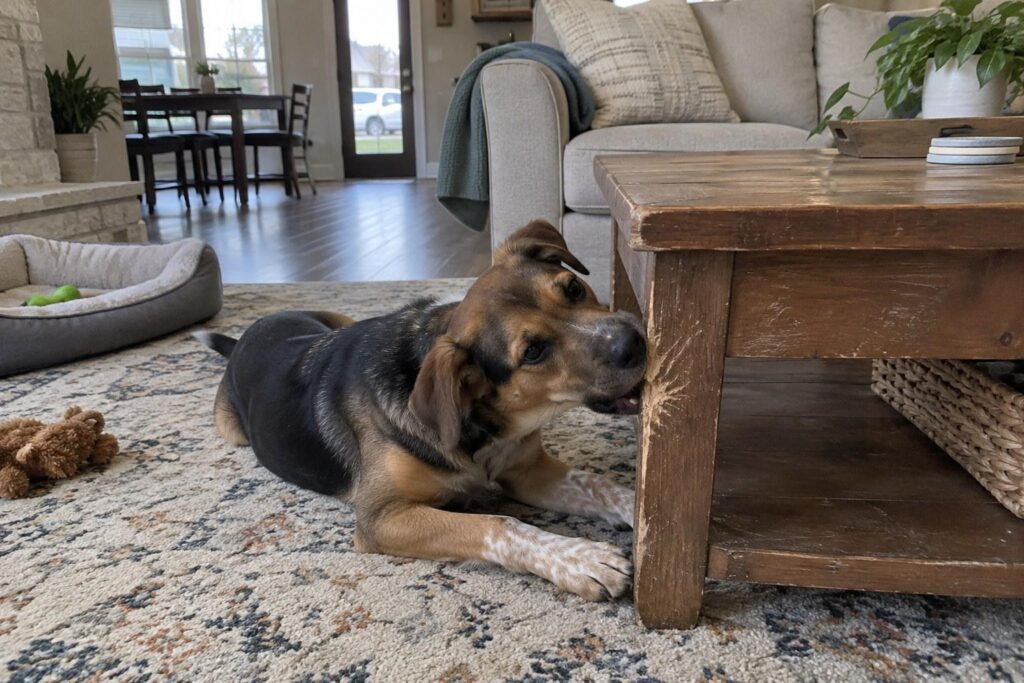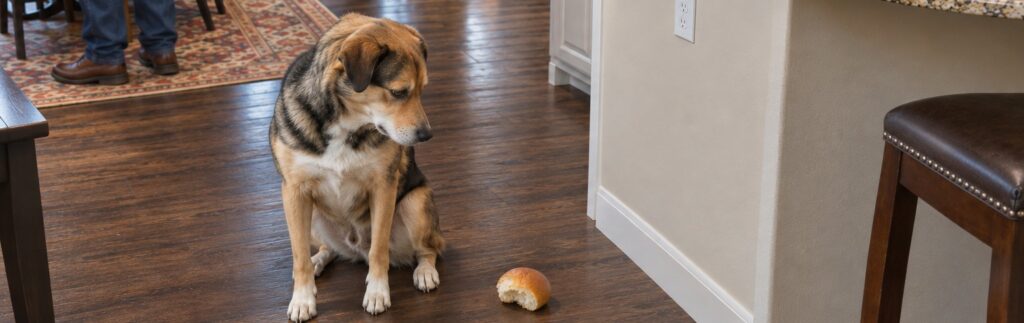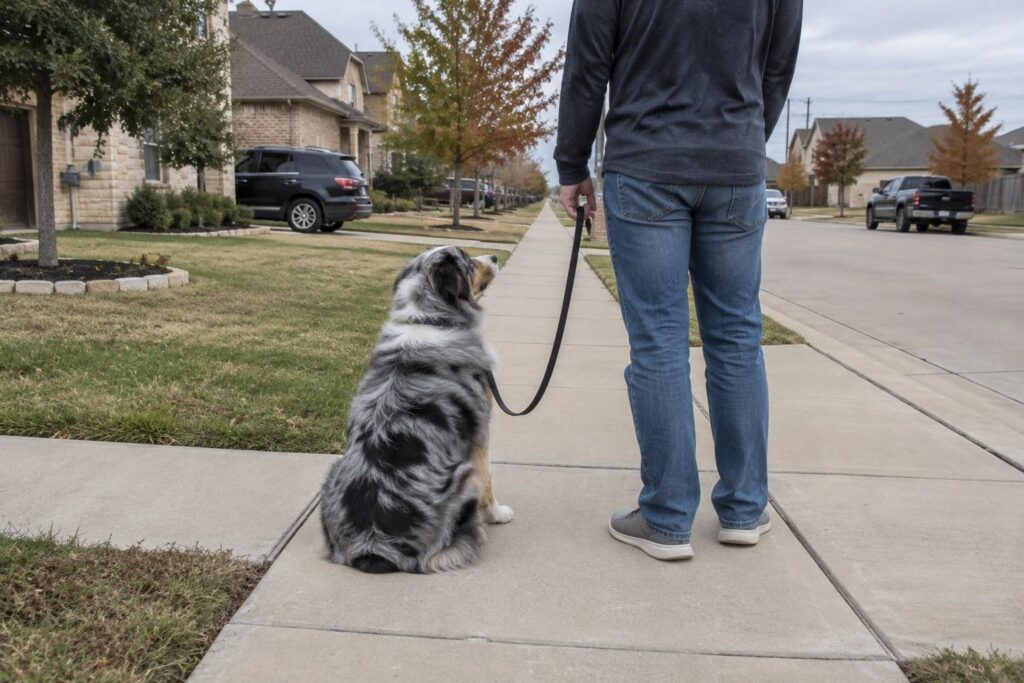

Good rottweiler training starts long before your dog reaches full size. A Rottie puppy who learns clear routines, simple cues and polite greetings grows into an adult who is easier to live with, easier to walk and more relaxed around guests. Because these dogs get big and strong quickly, the habits you build in the first year matter a great deal.
At All Dogs Unleashed Dog Training Shreveport, we help families across Northwest Louisiana turn everyday moments into steady manners. Below, you will find practical steps for structure, foundation cues, rewards, leash work and calm social exposure, plus how our training options can support you.
Have questions about your Rottweiler’s manners at home? Send us a note and our team will help you sort out next steps.
Key Takeaways
- Rottweilers grow large and strong quickly, so it pays to teach manners like sitting for greetings and staying off furniture while your dog is still small.
- Predictable daily routines for meals, potty breaks, exercise and rest give your Rottie a clear framework that makes training easier to follow.
- Short, upbeat training sessions with well-timed rewards work better for young dogs than long, repetitive drills.
- Loose-leash walking and calm social exposure should be built gradually, at a distance and pace your individual dog can handle.
- Our two-week Board and Train program and private lessons can help when you want structured support and a clear plan to keep at home.
Why Rottweiler Training Should Start Early
Every dog benefits from early guidance, but size and strength raise the stakes. A jumping eight-week-old puppy is cute, while the same habit in a dog who is close to adult weight can knock over a child or an older relative. Starting early lets you teach the polite version of a behavior before the pushy version becomes a habit.
The American Kennel Club notes in its Rottweiler puppy training timeline that Rottweilers are a highly intelligent breed that is generally eager to be trained, and that teaching good behavior and socializing early helps bring out the best in a puppy. The same AKC article points out that these dogs become strong and big quickly, which is a practical reason to lay a foundation from day one.
Every Rottweiler Is an Individual
It is easy to assume a breed comes with a fixed personality, but that view can lead owners astray. Some Rottweilers are outgoing and silly, some are reserved with new people, and many fall somewhere in between. Your dog’s genetics, early experiences, health and daily routine all shape behavior.
Rather than training for a stereotype, train the dog in front of you. Watch how your Rottie responds to new people, noises and places, and adjust your pace. If something about your dog’s behavior worries you, talk with your veterinarian first to rule out pain or a medical cause, then bring in a qualified trainer.
Choosing Practical Training Goals
The AKC article emphasizes teaching good behavior and socializing early. For most households, practical goals include settling quietly during dinner, greeting visitors without jumping, walking on a loose leash, and coming when called. Writing down a few priorities keeps the whole family focused on the same targets and makes it easier to notice progress.
If you recently brought home an older Rottweiler from a shelter or rescue, the same goals apply. Our post on common training mistakes after adopting a dog in Shreveport covers pitfalls that are easy to avoid in the first few weeks.
Building Clear Daily Routines at Home
Structure is one of the most helpful gifts you can give a young, strong dog. When meals, potty breaks, walks, training and naps happen at roughly the same times, your Rottie learns what to expect. That predictability tends to lower frustration and makes it easier to reward the behavior you want.
A Sample Daily Framework
The table below shows one simple way to organize a day. Adjust the timing for your work schedule, your dog’s age and your veterinarian’s guidance on exercise for a growing puppy.
| Time of Day | Activity | Training Focus |
|---|---|---|
| Early morning | Potty break and short walk | Calm exit at the door, loose leash |
| Breakfast | Meal in crate or a set spot | Sit and wait before the bowl goes down |
| Midday | Potty break and rest | Settling quietly in a crate or on a mat |
| Late afternoon | Play and a short training session | Sit, down, off and recall practice |
| Evening | Dinner and family time | Staying on a mat during the family meal |
| Bedtime | Final potty break | Quiet crate routine for the night |
Using the Crate and a Settle Spot
A crate gives a puppy a safe place to rest and helps with house training. A mat or bed in the living room gives your dog a job when the household gets busy. Both teach your Rottie that calm, quiet time is a normal part of the day.
If the crate is new to your dog, go slowly and make it pleasant. Our article on crate training a dog into a calm routine walks through the process step by step.
Balancing Practice With Rest
Training a growing dog does not mean filling every free moment with drills. Keep lessons short, allow quiet rest between active periods, and adjust exercise to your dog’s age and your veterinarian’s guidance. If your dog seems uncomfortable or unusually tired, stop the session and give them a chance to settle.
Foundation Cues Every Rottie Should Know
Foundation cues give you a shared language with your dog. Once your Rottweiler understands a handful of simple behaviors, you can use them to prevent problems before they start. A dog who knows how to sit when a guest walks in has an easy alternative to jumping.
The Core Five
Start with sit, down, off, wait and come. The AKC article describes puppies at this stage as sponges who can learn many things, but it also warns that attention spans are short and suggests keeping sessions to about five minutes. Several brief sessions spread across the day usually beat one long session.
For “off,” the AKC article offers a simple approach: if your puppy jumps on the couch, say “off” and reward the moment all four feet are on the floor. The same cue can help when your dog wants to jump on people.
Practicing in Real Life
Dogs do not automatically transfer behavior from the kitchen to the front yard. Once your Rottie knows a cue in a quiet room, practice it in the hallway, in the backyard, on the driveway and eventually on walks. Add one new challenge at a time so your dog can keep succeeding.
If you are raising a young puppy, our puppy training tips for new dog owners in Shreveport offer more ideas for the first months at home.
Want a structured start with a professional team handling the daily repetition? Our two-week Board and Train program gives your dog multiple structured sessions every day and finishes with training to help you take over at home.
Using Reinforcement the Right Way
Reinforcement simply means that behavior followed by something your dog values is more likely to happen again. Food, praise, play and access to things your dog wants, like going outside, can all be rewards. The key is timing, consistency and choosing a reward that matters to your dog at that moment.
Timing and Consistency
Reward within a second or two of the behavior you like so your dog connects the two. If you mark the moment with a word such as “yes,” follow it right away with the reward. Make sure everyone in the house uses the same cue words and rewards the same behaviors.
Consistency also means not rewarding the habits you are trying to change. If your Rottie jumps for attention and sometimes gets petted, the jumping will stick around. Ask for a seat instead and give attention when it happens.
Comparing Common Reward Options
| Reward Type | Best Used For | Tips |
|---|---|---|
| Small food treats | Teaching new cues | Use tiny pieces and count them in the daily food amount |
| Calm praise | Rewarding settled behavior | Keep your voice soft so you do not excite your dog |
| Toy play | Recall and energetic moments | End the game while your dog is still interested |
| Life rewards | Door manners and leash walks | Open the door or move forward only after a calm sit |
Fading Treats Over Time
Once your dog responds reliably, you can begin rewarding every few repetitions instead of every time. Keep paying well for difficult moments, such as coming away from something exciting. Rewards never need to disappear completely; they just become less predictable.
Leash Manners for a Growing Rottweiler
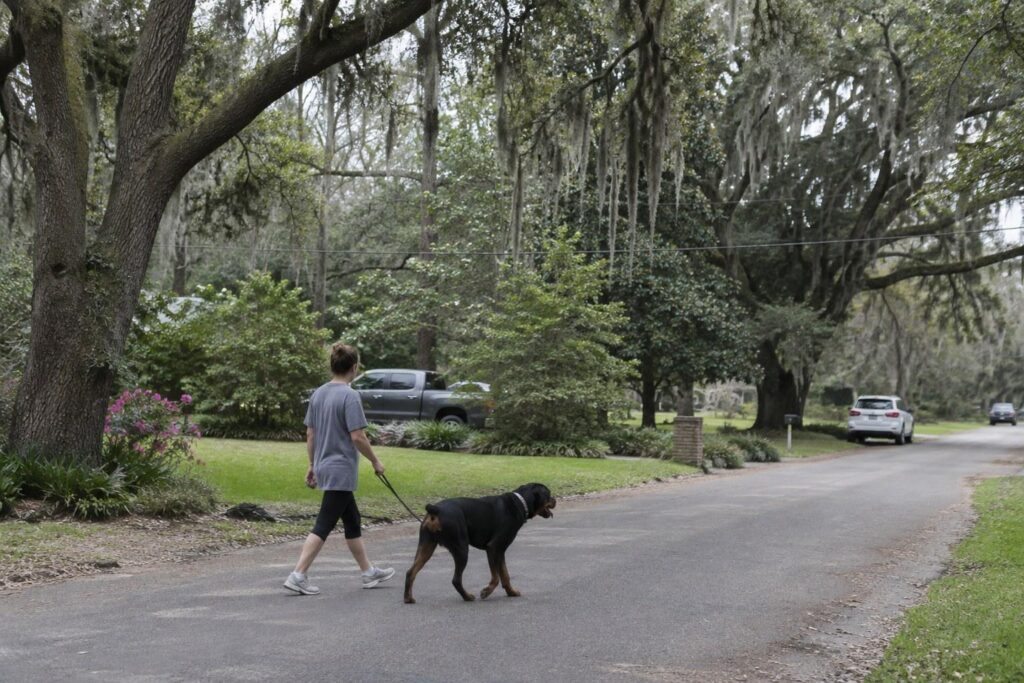
A strong dog pulling on a leash is tiring and can be unsafe. Loose-leash walking takes patience, but it is one of the most useful skills you can teach. The goal is simple: a slack leash means you keep moving, while a tight leash means the walk pauses.
Building Loose-Leash Habits
Start in a low-distraction area such as your driveway or a quiet street. Reward your dog for walking near your side, and stop or change direction when the leash tightens. Keep early walks short and successful, then gradually add more distractions.
Choose comfortable, well-fitted equipment and check the fit as your puppy grows. If you are unsure what fits your dog, ask your trainer or veterinarian for guidance.
Handling Distractions on Walks
Squirrels, other dogs, joggers and cars can all test your Rottie’s focus. Before your dog reacts, create distance, ask for an easy cue and reward attention on you. Working at a distance where your dog can still think lets you build focus step by step.
If your Rottweiler is already lunging, barking or struggling around triggers, you may need more targeted help. Our post on reactive dog training in Shreveport explains what that kind of work can look like.
Safe, Calm Social Exposure
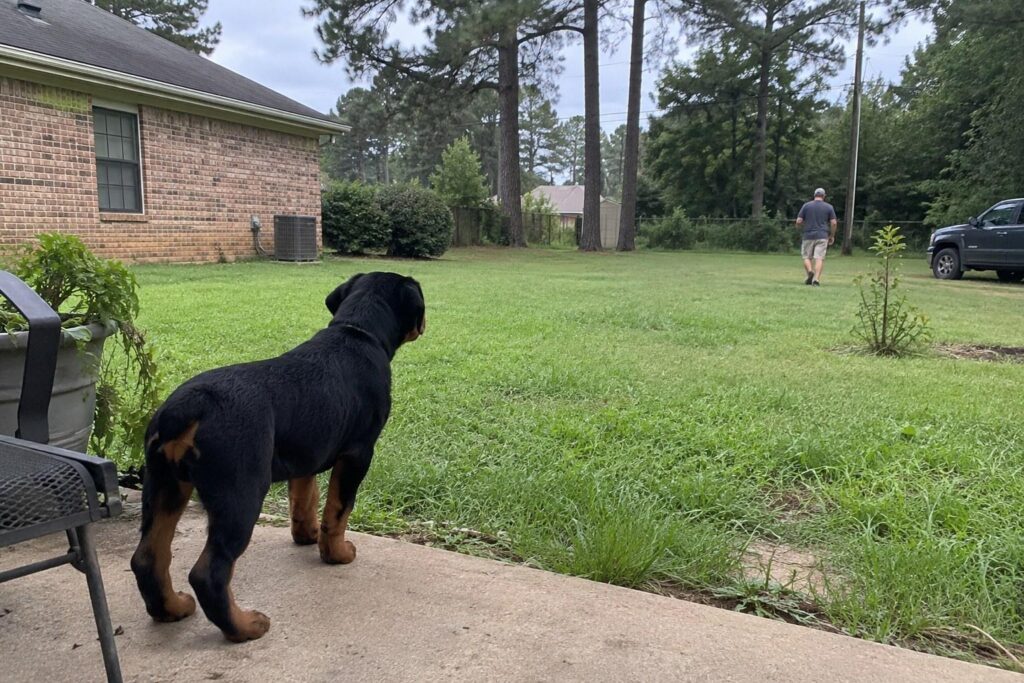
Socialization does not mean meeting every dog and person you see. It means helping your dog have calm, positive experiences with the sights, sounds, people and places they will encounter in life. Quality matters far more than quantity.
The AKC article recommends introducing a puppy to new people and surroundings, such as visiting friends or having family over, while being careful about exposure to viruses like parvo. Talk with your veterinarian about when your puppy is protected enough for busier public places.
Reading Your Dog’s Body Language
Watch for signs that your dog is comfortable, like a loose body and soft eyes. Signs of stress can include lip licking, yawning, turning away, a tucked tail or freezing. If you notice stress, add distance and give your dog a break rather than pushing forward.
Greeting Guests at Home
Front door greetings are a common sticking point. Practice by having a family member knock, then ask your dog to go to a mat or sit and reward calm behavior. When real visitors come, keep your dog on a leash or behind a gate until the excitement passes.
Let guests ignore your dog at first, then invite a calm greeting once your Rottie settles. Over time, your dog learns that quiet behavior is the fastest route to attention.
Getting Professional Support in Shreveport
Some families enjoy handling every step themselves, and others prefer professional help to get on track faster. Both approaches can work. The right fit depends on your schedule, your goals and how your dog responds to training.
Two-Week Board and Train
In our two-week Board and Train program, your dog stays with us and works through multiple structured sessions each day. Trainers practice exercises in varied contexts to help skills carry over to new places, and supervised socialization is based on each dog’s temperament. In the final days, we focus on handler transition training so you learn how to keep the results going at home.
Board and Train graduates receive guaranteed results and lifetime support at no additional cost. If you are getting ready to enroll, our article on preparing your dog for Board and Train covers what to bring and how to plan.
Private Lessons and Refresh Training
If you would rather learn side by side with a trainer, private lessons and in-home dog training let you work on the specific situations that challenge your Rottie. Refresh training can help a dog who has slipped on skills over time. You can compare all of our dog training programs in Shreveport to see which one fits your household.
Ready to talk through your Rottweiler’s goals? Call us at (318) 593-7321 and we will help you choose a plan.
About All Dogs Unleashed Dog Training Shreveport
All Dogs Unleashed Dog Training Shreveport helps dog owners across Northwest Louisiana build practical, reliable manners. Our core offering is a two-week Board and Train program with multiple structured sessions daily and handler transition training before your dog comes home. We also provide private and in-home lessons, refresh training and boarding. For owners of large, strong breeds like Rottweilers, we focus on clear routines, foundation cues and calm behavior that fits real family life.
Frequently Asked Questions
At what age should I start training my Rottweiler puppy?
You can begin teaching simple manners as soon as your puppy comes home. Young puppies learn quickly but have short attention spans, so keep sessions brief and positive. Focus on house training, a crate routine, sit and gentle handling. Ask your veterinarian when your puppy can safely visit busier public places for wider social exposure.
Are Rottweilers hard to train?
The AKC describes Rottweilers as highly intelligent and generally eager to be trained. Like any dog, each one is an individual, and results depend on consistency, timing and clear routines. Their size and strength mean that small habits like jumping or pulling matter more, so steady practice from an early age is especially helpful for most households.
How long does it take to teach a Rottweiler leash manners?
There is no single timeline, because every dog learns at a different pace. Most dogs improve with short, frequent practice in calm areas before moving to busier places. Stopping when the leash tightens and rewarding a slack leash builds the habit. A trainer can help if pulling is strong or your dog reacts to distractions.
Is Board and Train a good option for a Rottweiler?
It can be a strong fit for owners who want a structured start. Our Board and Train program is a fixed two-week stay with multiple structured sessions daily, practice in varied contexts and handler transition training in the final days. Graduates receive guaranteed results and lifetime support. Contact us to discuss whether it suits your dog.
How do I socialize my Rottweiler safely?
Aim for calm, positive experiences rather than lots of greetings. Introduce new people, sounds and places gradually and watch your dog’s body language for signs of stress. Give your dog space to observe from a comfortable distance. Talk with your veterinarian about vaccination timing before taking a young puppy to busier public spots.
Can you train my Rottweiler at home instead?
Yes, we offer private lessons and in-home dog training in the Shreveport area. Working in your own space lets you address the situations that actually challenge your dog, like door greetings or counter surfing. Many owners like learning alongside a trainer. Reach out to our team and we can talk through which option fits your goals.
Thoughtful rottweiler training gives your dog the structure, cues and confidence to be a calm, polite member of your family. Start with routines, reward the behavior you want and build leash manners and social skills at your dog’s pace. When you want expert help, call us at (318) 593-7321 or reach out online to learn more about our location at 1220 Shreveport Barksdale Hwy, Shreveport, LA 71105.
Ready to Get Started with All Dogs Unleashed Dog Training Shreveport?
Give your Rottweiler a steady foundation for life at home. Visit All Dogs Unleashed Dog Training Shreveport at 1220 Shreveport Barksdale Hwy, Shreveport, LA 71105, (318) 593-7321, or our Bossier City location at 4500 Benton Rd, Suite 200, Bossier City, LA 71111, (318) 562-6536, today to talk with our team about Board and Train, private lessons or refresh training.