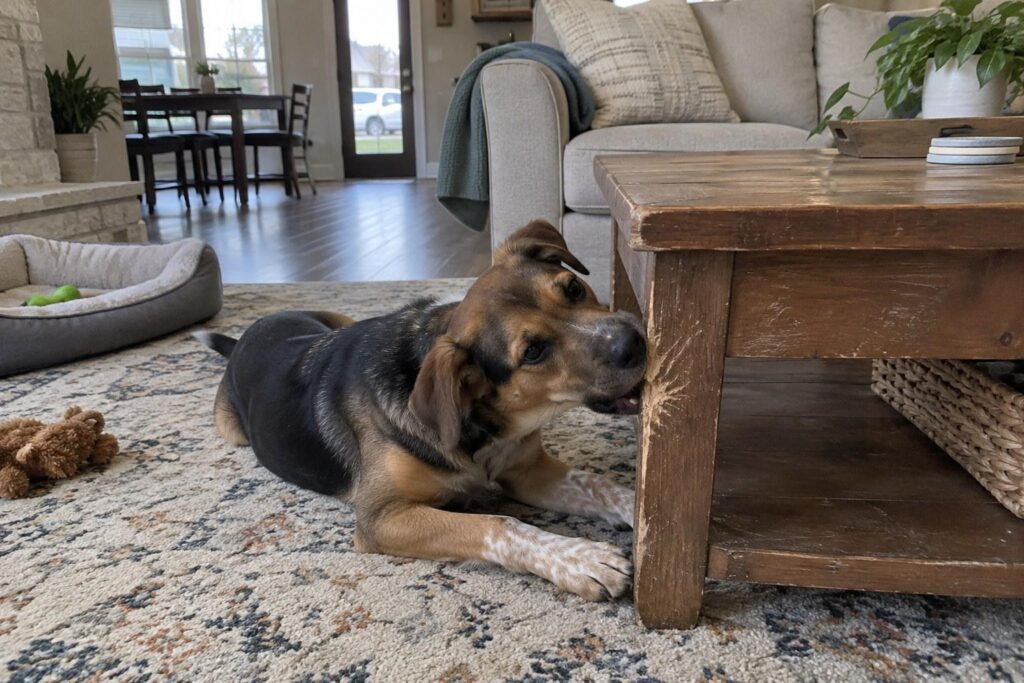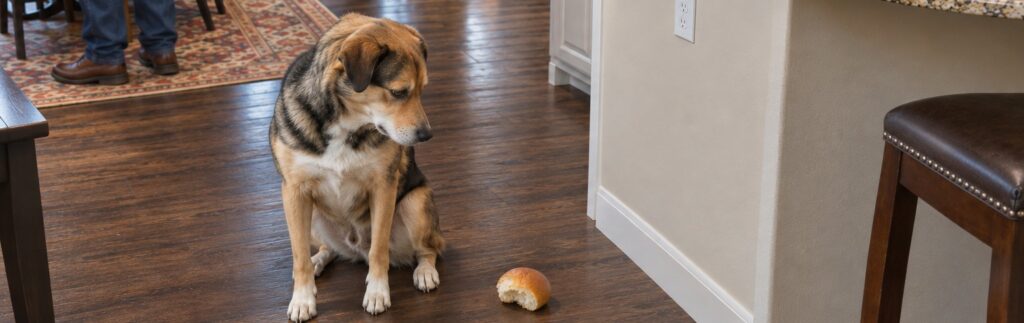

Living with a dog afraid of thunder can turn every gray afternoon into a guessing game. One minute your dog is napping on the couch, and the next it is pacing, panting, or trying to squeeze behind the toilet while the sky rumbles over Bossier Parish. Storms are a regular part of life in Northwest Louisiana, so learning to help your dog through them is worth the effort.
At All Dogs Unleashed Dog Training Bossier City, we regularly work with nervous dogs. Below we share how to read storm fear, what to do before and during a storm, the training habits that build confidence over time, and when it makes sense to bring in your veterinarian or a professional trainer.
Want to talk through your dog’s storm behavior with our team? We are glad to help.
Key Takeaways
- The National Weather Service notes that thunderstorms occur in every month in the Shreveport-Bossier area, so storm preparation is a year-round job.
- Trembling, pacing, hiding, and trying to escape are common signs that a dog is struggling with loud noises.
- A quiet, den-like safe space and a predictable storm routine give a frightened dog somewhere to settle.
- Comforting your dog is fine, but punishing fearful behavior usually makes it worse.
- Severe or worsening storm fear deserves a conversation with your veterinarian, and structured training can build the calm skills your dog leans on.
Why Storms Hit Some Dogs So Hard
Thunder is only part of the picture. Many dogs react to the whole package that comes with a storm, including wind, rain on the roof, flashes of lightning, and the changes in the air before the weather arrives. The American Kennel Club explains that a phobia is an intense and persistent fear, and its article on common fears and phobias in dogs notes that some dogs can even anticipate a storm before it reaches them.
Storm Season Is Not Just Spring Here
According to the National Weather Service office in Shreveport, thunderstorms occur every month in the Shreveport-Bossier metro, though they are most frequent in spring and summer. Fall cold fronts can still roll across the Ark-La-Tex and bring a round of rumbling weather. That means you rarely get a long break, and a dog that falls apart in April may face the same trigger again in November.
Fear Tends to Build Without Help
A dog that panics during one storm often reacts a little sooner and a little harder the next time. It may start pacing when the wind picks up or the room gets dark, long before you hear the first clap. Left alone, that pattern can spread to other sounds like fireworks, gunfire during hunting season, or a heavy truck rattling down the street.
Some Dogs Are Simply More Sensitive
Genetics, early experiences, and general temperament all play a role. Some dogs are naturally more sound sensitive than others, and a dog with general anxiety often finds storms especially hard. None of this is your fault, and none of it means your dog cannot improve. It just means the plan should match the dog in front of you.
Signs Your Dog Is Afraid of Thunder
Storm fear is not always dramatic. Some dogs shake and howl, while others go quiet and try to disappear. Learning your dog’s personal warning signs helps you step in early, while your dog can still take a treat and follow simple cues.
| What You See | Stress Level | Helpful Response |
|---|---|---|
| Ears back, lip licking, yawning, glancing toward windows | Mild | Start your storm routine and offer a calm activity |
| Following you closely, panting, pacing | Moderate | Guide your dog to its safe space and add background sound |
| Trembling, drooling, hiding, refusing food | High | Stay close, keep things quiet, avoid asking for hard skills |
| Clawing doors, chewing exits, trying to escape | Severe | Keep your dog safe and talk with your veterinarian |
Quiet Signs Are Easy to Miss
Lip licking, whale eye (where you see the whites of the eyes), a tucked tail, and slow movement are often the first clues. A dog that suddenly stops eating its chew or leaves a favorite spot may already be uncomfortable. Catching these early signals gives you the best chance to help before panic sets in.
Escape Behavior Is a Safety Issue
The AKC lists trembling, pacing, hiding, barking, and attempts to escape among the signs of noise fear in its piece on helping a dog scared of loud noises. Escape attempts are the ones that worry us most. A panicked dog can dig under a fence, push through a screen door, or bolt when someone opens the gate. Our tips to dog-proof your yard in Bossier City are worth reviewing before the next front moves through.
Storm Fear or Something Else?
Some dogs who struggle during storms are also uneasy whenever they are left alone. If your dog falls apart when you leave the house, even on sunny days, read our overview of dog separation anxiety signs. The two problems can overlap, and the plan for each looks a little different.
Setting Up a Storm Safe Space at Home
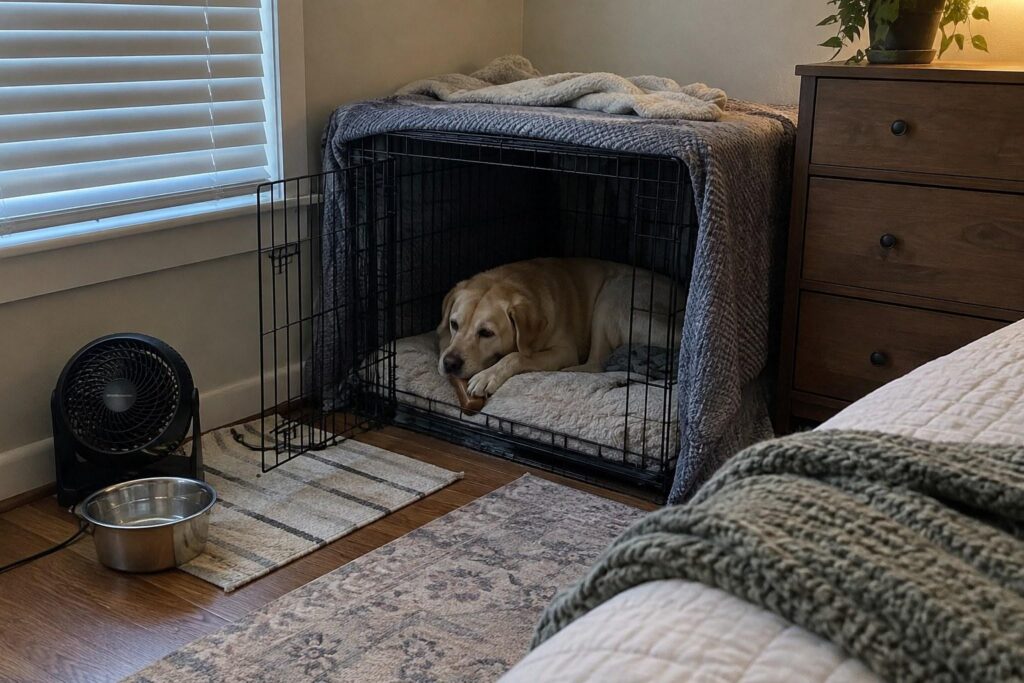
A safe space is a spot your dog already likes, set up so it muffles the sights and sounds of a storm. It should be somewhere your dog can choose to go, not a place it gets shut away as punishment.
Pick the Right Spot
Interior rooms with few windows usually work best. A laundry room, walk-in closet, or a quiet corner of a bedroom can all do the job. Watch where your dog already tries to hide during storms, because that is often a strong clue about where it feels secure.
Make It Cozy and Familiar
Add a soft bed, an old T-shirt that smells like you, and a long-lasting chew. If your dog is comfortable in a crate, a crate with a breathable cover over the top and sides can feel like a den. Leave the door open so your dog never feels trapped. Our walkthrough on crate training a dog into a calm routine explains how to build that positive association first.
Soften the Sound and Light
Close the blinds to block lightning flashes. Turn on a fan, white noise machine, or soft music to help cover the rumble. Background sound will not erase thunder, but it can take the sharp edge off and make the room feel normal.
| Safe Space Item | Why It Helps |
|---|---|
| Interior room or covered crate | Fewer windows means less flashing light and outside noise |
| Bed and a shirt that smells like you | Familiar comfort and scent |
| Fan, white noise, or soft music | Masks some of the thunder |
| Long-lasting chew or food puzzle | Licking and chewing can help a dog settle |
| Water bowl | Panting dogs get thirsty |
If your dog’s fear is affecting daily life, our two-week program gives your dog structured practice every day with calm, confidence-building routines.
What to Do During a Storm
When the sky opens up, your goal is not to train big new skills. Your goal is to keep your dog safe, keep the house calm, and help your dog stay a little more relaxed than it would on its own.
Start Your Routine Early
Check the forecast and get ahead of the weather. Take your dog out for a bathroom break before the rain starts, close the blinds, turn on the fan or music, and set out a chew in the safe space. Over time, this routine becomes a signal that says “we know what to do now.”
Yes, You Can Comfort Your Dog
Many owners worry that petting a scared dog rewards fear. Fear is an emotion, not a trick, and calm reassurance does not teach your dog to be more afraid. Sit nearby, speak in a low and steady voice, and offer slow, gentle petting if your dog wants it. What does not help is frantic fussing or a worried, high-pitched voice that tells your dog something really is wrong.
Never Punish Fear
Scolding a dog for hiding, shaking, or having an accident during a storm adds a second source of stress. It can also teach your dog to hide its warning signs, which makes the problem harder to read. If your dog chews a door frame while panicking, manage the space next time rather than correcting the dog in the moment.
Keep Leash and Gate Safety Tight
Leash your dog for every bathroom break during and right after a storm, even in a fenced yard. Double check that gates are latched, and make sure your dog wears a properly fitted collar with current ID tags. Bossier Parish storms often blow through quickly, and a dog that bolts in the middle of one can end up far from home before the rain stops.
Training That Builds Storm Confidence
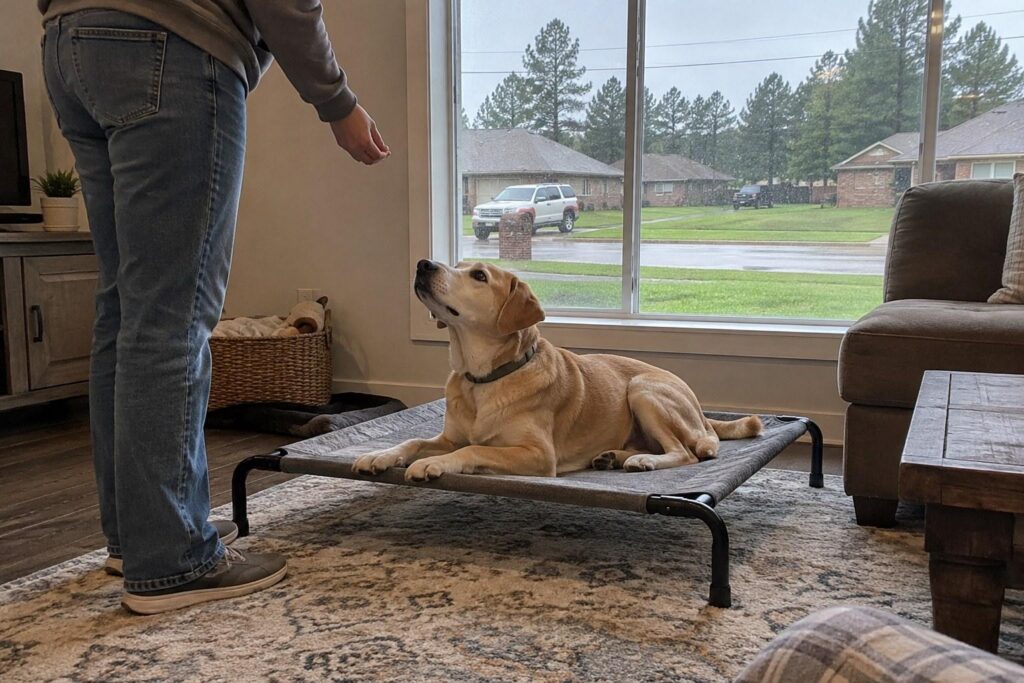
The real progress happens on calm days. Training between storms gives your dog skills and positive associations it can lean on when the weather turns. This is the part of the plan that changes how a dog afraid of thunder responds over the long run.
Teach a Rock Solid “Place”
A “place” cue sends your dog to a bed or mat and asks it to settle there. Practice it on quiet days with generous rewards, building up from a few seconds to several minutes. Once your dog loves going to “place,” you can put that bed in the storm safe space so the cue carries comfort with it.
Pair Storm Sounds With Good Things
Many trainers use recordings of storm sounds, played at a very low volume, while the dog eats a meal or enjoys a favorite game. If your dog stays relaxed, you can raise the volume a little over many sessions. If your dog stops eating, starts pacing, or looks worried, the sound is too loud, so turn it down and go slower. Keep in mind that a recording does not copy the wind, lightning, and pressure changes of a real storm, so this works best as one part of a bigger plan.
Build Simple Focus Skills
Short, easy cues like “sit,” “touch,” and a name response give your dog something familiar to do when it feels uneasy. Practice them all over the house and yard so they become automatic. During a mild storm, a few easy reps followed by a treat can help your dog think instead of spiral.
Raise Overall Confidence
Dogs that feel secure in daily life tend to recover faster from scary moments. Regular walks, clear routines, and calm exposure to new places all help. Our article on how behavior modification training addresses fear and anxiety explains how trainers approach nervous dogs more broadly.
| Skill | Practice on Calm Days | How It Helps in a Storm |
|---|---|---|
| “Place” | Short sessions on a bed with rewards | Gives your dog a familiar spot to settle |
| Name response | Reward eye contact around the house | Helps you get your dog’s attention early |
| “Touch” | Nose to hand for a treat | An easy task that redirects worry |
| Low-volume sound work | Storm audio paired with meals | Builds positive associations with the sound |
When a Dog Afraid of Thunder Needs More Help
Mild storm worries often improve with a good routine and patient practice. Severe fear is different. If your dog hurts itself trying to escape, destroys doors or crates, or stays stressed for hours after the storm passes, it is time to get more support.
Talk With Your Veterinarian
Your veterinarian can rule out pain or other medical issues that make a dog more sensitive and can discuss whether medication or other options make sense for your dog. Never give your dog human medications or another pet’s prescription without your vet’s guidance. Medical support and training often work best together.
How Professional Training Fits In
A professional trainer can help you read your dog more clearly, build skills like “place” with more reliability, and set up a step-by-step plan for your household. Our in-home dog training lets you practice those routines in the actual rooms where your dog spends storms. If your dog’s nerves show up in many situations, our article on signs your Bossier City dog needs professional behavior training can help you decide.
The Two-Week Board and Train Option
Our two-week Board and Train program is a good fit for dogs whose anxiety shows up beyond storms. Your dog stays at our facility and works through multiple structured sessions each day, and trainers vary the settings so skills hold up in new places. In the final days, we teach you how to handle your dog at home. Board and Train graduates receive guaranteed results and lifetime support at no additional cost.
Planning for Storms While You Travel
Storms do not wait for you to be home. If you are traveling over Thanksgiving on Thursday, November 26, 2026, or any other time, think about who will be with your dog when the weather turns. Our dog boarding keeps a structured routine, and you can bring your dog’s regular food and medications so nothing changes more than it has to.
Have questions about your dog’s storm fear? Call us at (318) 562-6536 and we will help you find the right next step.
About All Dogs Unleashed Dog Training Bossier City
All Dogs Unleashed Dog Training Bossier City helps dogs and owners across Bossier Parish and the Ark-La-Tex build calm, reliable behavior. Our two-week Board and Train program gives nervous dogs structured daily practice, handler transition training, guaranteed results, and lifetime support at no additional cost for graduates. We also offer in-home dog training, boarding, and refresh training, so you can keep building your dog’s confidence through every storm season.
Frequently Asked Questions
Why is my dog suddenly scared of thunderstorms?
Storm fear can show up at any age. A single frightening storm, changes in hearing, or growing sensitivity to wind and pressure changes can all play a role. Pain or illness can also make a dog more reactive to noise. If the fear appears suddenly or seems intense, schedule a visit with your veterinarian first, then build a calm storm routine at home.
Should I comfort my dog during a thunderstorm?
Yes. Calm comfort does not reward fear, because fear is an emotion rather than a learned trick. Sit close, speak in a low steady voice, and offer gentle petting if your dog wants it. Try to avoid anxious fussing or a worried tone, since your dog reads your mood. Let your dog choose whether to stay near you or rest in its safe space.
Where should my dog stay during a storm?
An interior room with few windows, such as a laundry room, closet, or quiet bedroom corner, usually works well. Add a familiar bed, a shirt that smells like you, water, and a chew. A covered crate with the door open can feel like a den for crate-trained dogs. Close the blinds and run a fan or soft music to soften the noise.
Can a dog outgrow its fear of thunder?
Some dogs improve on their own, but many get worse without help because each storm reinforces the fear. The best results usually come from steady practice between storms, a predictable routine during them, and support from your veterinarian when the fear is severe. Progress may be gradual, yet most dogs can learn to cope far better than they do now.
Do storm sound recordings really help dogs?
They can be useful when played very quietly while your dog enjoys food or play, with the volume raised slowly over many sessions. Stop and turn it down if your dog stops eating or looks worried. Recordings cannot copy wind, lightning, or pressure changes, so treat them as one tool within a bigger plan rather than a complete fix for storm fear.
When should I get professional help for my dog’s storm anxiety?
Reach out for help if your dog injures itself, tries to escape, destroys doors or crates, or stays stressed long after the storm ends. Start with your veterinarian to rule out medical causes and discuss options. A professional trainer can then help you build reliable calm skills, a solid “place” cue, and a household routine that supports your dog through every storm.
Helping a dog afraid of thunder takes patience, a solid routine, and practice on the calm days in between storms. If you want support building that plan, call us at (318) 562-6536 or reach out online. You can also visit our facility at 4500 Benton Rd in Bossier City to learn how we help nervous dogs feel more secure at home.
Ready to Get Started with All Dogs Unleashed Dog Training Bossier City?
Storm season does not have to mean hours of pacing and panting. Call (318) 562-6536 to talk with our team about Board and Train, in-home dog training, or boarding for your dog. Our facility is All Dogs Unleashed Dog Training Bossier City, 4500 Benton Rd, Suite 200, Bossier City, LA 71111.