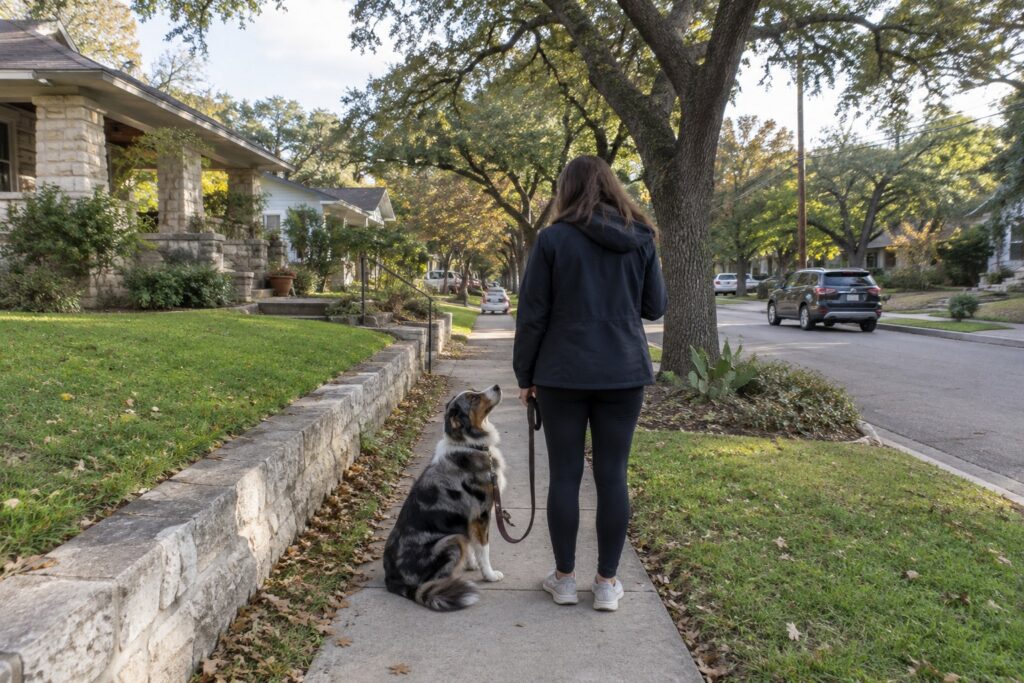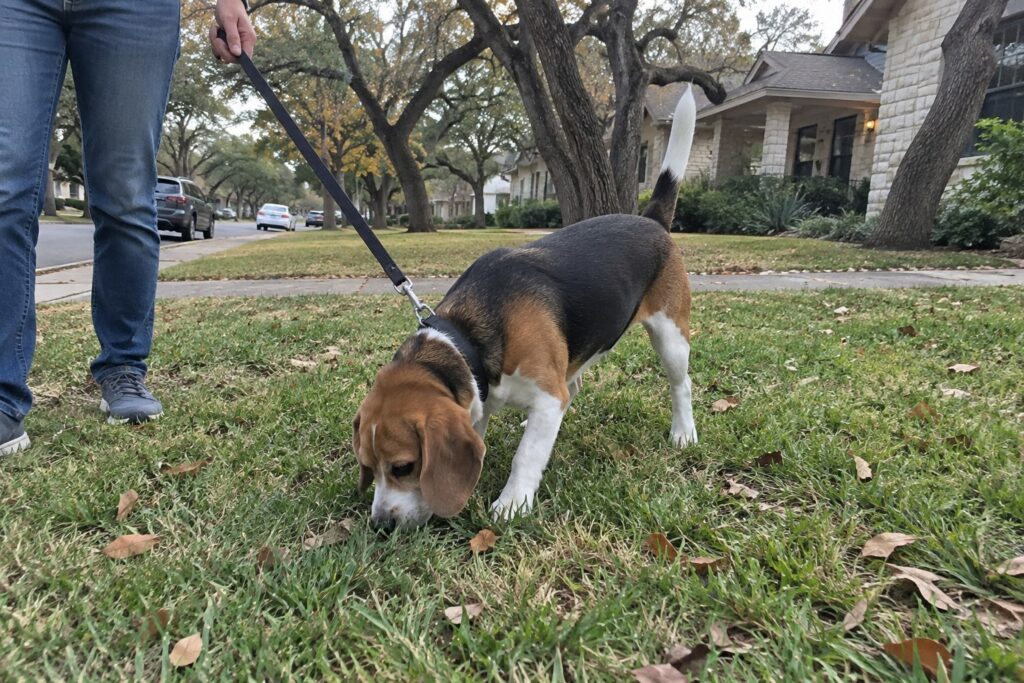

If your dog lunges at other dogs, shuts down during thunderstorms, or barks uncontrollably at strangers, the problem is not stubbornness. It is fear, anxiety, or reactivity, and it needs a real plan. Behavior modification dog training in Shreveport, LA is exactly what we do at All Dogs Unleashed. We work with any dog and any problem, using well-balanced customizable programs built around your dog’s specific triggers. The core question this article answers is a practical one: how does this kind of training actually work, step by step, and why does it succeed where obedience classes fall short? Whether it is fireworks season or a walk through the Highland neighborhood, we give you and your dog the tools to handle it.
Ready to stop the lunging, barking, and shutting down? Let’s build a plan for your dog.
Key Takeaways
- Behavior modification dog training in Shreveport, LA targets the root cause of fear, anxiety, and reactivity, not just the symptoms.
- Our programs are customizable to fit your dog’s specific triggers and history, no cookie-cutter group class approach.
- Common triggers like thunderstorms, fireworks, and leash reactivity in high-traffic neighborhoods are all addressable with the right training plan.
- Both Board and Train and in-home options are available, so you can choose what fits your schedule and your dog’s needs.
Fear and Anxiety Responses Are Learned, and That Means They Can Be Changed
Your dog lunges at every passing dog on the block. He shuts down completely at the vet. She barks nonstop every time a thunderstorm rolls in off Cross Lake. You’ve watched the YouTube videos. You’ve tried the treats. Nothing sticks. This is not a personality flaw. These are learned fear and anxiety responses, and they are fixable.
Behavior modification dog training in Shreveport, LA is the specific approach designed for exactly these problems. Not basic obedience. Not sit-and-stay drills. A targeted process that changes how your dog feels about the things that trigger him, so the behavior changes for good.
At All Dogs Unleashed Dog Training Shreveport, we carry a 4.9 Google rating backed by more than 700 five-star reviews. Our trainers follow a least-intrusive, minimally-aversive philosophy, which means we address the emotion first rather than punishing the symptom, an approach that matters more on sensitive fear and aggression cases than almost anywhere else in dog training. We work with any dog and any problem. Our dog training programs are built around your dog’s individual history, not a one-size-fits-all class.
Keep reading. We’ll cover what this training actually is, which problems it targets best, and how the process works right here in Shreveport.
What Is Behavior Modification Dog Training, and How Is It Different From Obedience Training?
Behavior modification changes the emotional response behind a problem behavior, not just the behavior itself. Obedience training teaches commands. This approach rewrites the fear, anxiety, or frustration that drives the problem in the first place.
Your dog can know “sit” and “stay” perfectly and still lunge at every stranger on the sidewalk. That is not a training gap. That is an emotional one. Obedience classes were never built to fix it.
Obedience Training vs. Behavior Modification: A Clear Example
Here is a simple way to see the difference. A dog that jumps on guests is an obedience problem. You teach “off,” you reward four paws on the floor, and the behavior changes. That works because the dog is not afraid. It is just excited and untrained.
Now picture a dog that lunges and snaps at strangers on the leash. That dog is not being stubborn. It is scared. No command fixes fear. That is a dog aggression and fear-based behavior case that needs behavior modification, not another obedience class.
Owners in high-foot-traffic neighborhoods like Broadmoor see this every day. The dog knows every command at home. Outside, it falls apart. The trigger is emotional, and the fix has to match.
Which Behaviors Does This Training Target?
We use this approach to address the root emotion driving these specific problems:
- Leash reactivity toward people, dogs, or vehicles
- Fear of strangers or unfamiliar environments
- Noise anxiety from thunderstorms or fireworks
- Separation anxiety and destructive behavior when left alone
- Resource guarding over food, toys, or space
- Dog-to-dog aggression
- Fear-based biting
If your dog struggles with any of these, our dog training programs are built to address the emotional root, not just the surface behavior, no matter the breed or history.
The Step-by-Step Process: How Behavior Modification Dog Training in Shreveport, LA Actually Works
This is the heart of the question owners ask us most: how does the training actually work? It is not a single technique. It is a structured process that builds on itself, session by session. Here is exactly what that process looks like when we work with a reactive or anxious dog.
Step 1: Identify the Trigger and Assess the Root Cause
We start by pinpointing exactly what sets your dog off. Is it other dogs? Strangers? Loud vehicles? The fireworks and summer thunderstorms Shreveport is known for? We also determine whether the reaction is rooted in fear, frustration, or anxiety. That distinction matters. A frustrated dog and a fearful dog look similar but need different approaches. This assessment is what separates professional reactive dog training from a YouTube fix.
Step 2: Desensitization
Think of it like turning down the volume on a song that scares you. We expose your dog to the trigger at such a low intensity that no reaction occurs. Maybe that means a dog visible at 100 feet, or a recording of thunder played quietly. We increase intensity gradually across sessions, only when your dog is ready. No flooding. No forcing.
Step 3: Counter-Conditioning
At the same time, we build a new association with the trigger. Your dog learns that the thing it feared now predicts something good. Take a real example we see often: a dog that reacts hard to the loud diesel service trucks rumbling down Kings Highway. Through counter-conditioning, that same truck noise starts to predict high-value treats and calm praise instead of tension. Over enough repetitions, the truck no longer signals threat. It signals reward. That rewires the emotional response, not just the behavior on the surface.
Step 4: Real-World Proofing in Shreveport Environments
New responses have to work outside the training session. We proof the behavior in real environments: foot traffic near Pierremont Road, busy parks, and neighborhood walks in the Garden District where leash reactivity shows up daily. If triggers are specific to your home, our in-home dog training service brings the proofing process directly into your dog’s own space. That is where lasting behavior change actually sticks.
Want us to map out your dog’s specific triggers and a step-by-step plan? Book a free assessment.
Fear, Anxiety, and Reactivity: The Three Problems This Training Solves Best

Most dogs that come to us with “aggression” or “bad behavior” are actually dealing with one of three root problems: fear, anxiety, or reactivity. These are not the same thing, and they do not get fixed the same way. Behavior modification is built to address all three at the source.
Fear-Based Behaviors
What you see: your dog growls, snaps, or bites when cornered. Maybe it shuts down at the vet or lunges at strangers. A lot of owners assume that’s dominance or stubbornness. It is usually neither. Fear is the most common driver of dog aggression we see, and misreading it leads to the wrong training approach entirely.
The process identifies the fear root first. Then we work to change the emotional response, not just suppress the symptom. This is especially important with food aggression, which almost always has a fear and resource-protection component underneath the surface behavior.
Anxiety
What you see: destruction when you leave the house, pacing, excessive barking, or a dog that completely falls apart during a storm. In the Shreveport area, summer thunderstorms roll through regularly, and July 4th fireworks push anxious dogs past their limit every single year. These are not quirks. They are real anxiety responses.
Separation anxiety and noise anxiety both respond well to structured training. If your dog panics every storm season, that is trainable. We work through desensitization and counter-conditioning to change how your dog processes those triggers. Read more about the warning signs in our guide to noise anxiety in dogs.
Leash Reactivity
What you see: a dog that is calm at the dog park but explodes on leash the moment it spots another dog or a jogger. High-foot-traffic pockets like South Highlands make this a daily problem for a lot of owners. The leash itself creates frustration because your dog cannot approach or flee, so the emotion comes out as barking, lunging, and pulling.
This is leash frustration, and it is a distinct form of reactivity. One owner brought in a four-year-old Catahoula mix for leash pulling, jumping, and aggressive barking. Our trainer Keldon worked through each behavior systematically, and the results were clear. If you want to see what that kind of control looks like, our off-leash training guide covers what real off-leash control requires.
Which Training Format Works Best for Behavior Modification?
Not every dog needs the same approach. The right format depends on the severity of the behavior, how long it has been happening, and where it shows up. Here is how to think through the decision.
Board and Train: Best for Deep-Rooted Fear and Aggression
Some behaviors are too ingrained for a once-a-week session to fix. If your dog has been reactive or fearful for months or years, daily repetition is what actually moves the needle. Our Board and Train program puts your dog in a structured environment every single day. The new behavior gets installed before your dog comes home.
One Shreveport couple sent their Dogo Argentino through the program and picked her up doing amazing after weeks of consistent daily work. That kind of result comes from steady repetition, not occasional sessions. This format is also a strong fit if you travel for work or want results before summer hits and the thunderstorms and fireworks start.
Curious whether an immersive program is right for a deep-rooted case? See our Board and Train program.
In-Home Training: Best for Environment-Specific Reactivity
If your dog loses it at the front door, goes wild at the backyard fence, or reacts to kids in the living room, the problem is tied to a specific place. Our in-home training puts our trainer in that exact space. We work the problem where it actually happens. One family saw immediate changes in their dog’s behavior during sessions that included children present in the home. That is not a coincidence. That is the right format doing its job.
Dogs in denser, walkable neighborhoods deal with daily leash reactivity. In-home work lets us address triggers in real time, in the real environment.
How to Choose the Right Format for Your Dog
- Severe fear, aggression, or anxiety that has lasted more than a few months: Board and Train
- Reactivity that only happens in specific spots at home: in-home training
- Owner has limited availability for daily follow-through: Board and Train
- Behavior is environment-specific and you want the trainer in that space: in-home training
Not sure which fits your dog? Call us at (318) 593-7321 and we will help you figure it out.
Ready to pick the right format and get started? Call All Dogs Unleashed at (318) 593-7321 and we will assess your dog and point you in the right direction.
Behavior Modification for Shreveport Dogs: Why Local Conditions Matter
Dog anxiety training in Shreveport is not one-size-fits-all. The environment your dog lives in shapes the triggers they react to. And this area has some very specific ones.
Climate, Wildlife, and Anxiety Triggers in Northwest Louisiana
Northwest Louisiana summers are brutal. The heat keeps dogs inside for long stretches, which cuts socialization opportunities and lets anxiety build quietly. Then storm season hits. Thunderstorms here are frequent and loud, and July 4th fireworks can last for days in some neighborhoods. Noise anxiety is one of the most common issues we see in dogs from this area.
The Red River corridor and the wooded edges near Cross Lake add another layer. Dogs on leash regularly encounter deer, squirrels, and nutria. That kind of wildlife exposure spikes prey-drive reactivity fast. Reactive dog training here has to account for these triggers, not just generic ones.
- Frequent summer storms create recurring noise anxiety cycles
- Local lakefront and river wildlife trigger prey-drive reactivity on leash
- Reduced outdoor time in summer heat shrinks socialization windows
Neighborhoods and Daily Reactivity Flashpoints
Certain parts of this area are practically reactivity training grounds. Foot traffic, cyclists, and other leashed dogs create constant exposure for dogs in denser neighborhoods. Over time, that daily pressure builds into full leash reactivity if it goes unaddressed.
Dogs near Bossier City face a different challenge. The Texas Street Bridge area brings heavy vehicle noise and crowds. If your dog crosses between cities regularly, that environment alone can escalate anxiety. Even the trails and parks on the east side of the river can be flashpoints where triggers surface fast.
We work with dog owners across both sides of the river from our location at 1220 Shreveport Barksdale Hwy, Shreveport, LA 71105. Training works best when it addresses the real environments your dog actually lives in.
What to Expect: Results, Timeline, and What Owners Need to Do

One of the first questions owners ask us is simple: how long will this take? The honest answer is that it depends on your dog and the severity of what you’re dealing with. Every program is tailored to your dog’s specific situation, so timelines vary.
How Long Does Behavior Modification Take?
Mild reactivity or a single-trigger fear can show measurable improvement in as little as 2 to 4 weeks of consistent work. Deep-rooted anxiety or multi-trigger aggression typically requires 6 to 12 weeks of structured sessions. Dogs dealing with noise anxiety from summer storm season often fall somewhere in between, depending on how frequently they encounter the trigger.
Our Board and Train program compresses this timeline significantly. Daily structured sessions accelerate progress in ways that once-a-week appointments simply cannot match. We will not make reckless promises on severe aggression cases, but we will tell you exactly where your dog stands and what realistic progress looks like.
Your Role Between Sessions
Dog anxiety training in Shreveport does not stop when you leave our facility. What you do at home between sessions determines how fast your dog improves. Consistency across every family member, including kids, is part of the process. We work with the whole household, not just the primary owner.
Here is what owners need to do between sessions:
- Practice trigger exposure at low intensity only
- Use the exact same command words your trainer uses
- Avoid flooding your dog with the trigger before it is ready
- Reward calm behavior immediately every time you see it
Storm season here means your dog may face noise triggers weekly. Staying consistent during that stretch matters more than most owners realize. See the full structure of our dog training programs to understand how each format supports your work at home.
Frequently Asked Questions
What is behavior modification dog training?
Behavior modification dog training changes the emotional response behind a problem behavior, not just the behavior itself. Your dog learns to feel differently about the trigger. That shift is what makes the change stick.
How is behavior modification different from obedience training?
Obedience training teaches commands. Behavior modification rewrites the fear or anxiety driving the problem. Example: a dog that lunges at other dogs on leash does not need to learn “sit.” It needs to stop feeling threatened by other dogs. That requires a different approach entirely.
How much does behavior modification dog training cost in Shreveport?
Pricing depends on the program and the severity of your dog’s behavior. We offer well-balanced, customizable programs built around your dog’s specific triggers and history. Call us at (318) 593-7321 for a program assessment. We are available Monday through Friday 7:00 AM to 6:30 PM and weekends 9:00 AM to 3:00 PM.
Can behavior modification help an aggressive dog?
Yes. Behavior modification is specifically designed for fear-based and reactive aggression. Severity determines the best format. Deeper cases often do best with our Board and Train program. Milder cases may work well with in-home dog training. We train any dog and any problem, including dogs with food aggression.
How long does behavior modification take to work?
Mild issues often show real progress in 2 to 4 weeks. Deeper issues typically take 6 to 12 weeks. Board and Train compresses the timeline significantly. Consistent owner follow-through after training affects how fast results hold.
Does behavior modification work for all dog breeds?
Yes, all breeds respond to behavior modification. German Shepherds, Catahoulas, Pit Bulls, and Labradors are among the breeds we see most often for reactivity and anxiety in this area. The Catahoula is a Louisiana staple with a strong prey drive that can spike fast near wildlife. If you have a German Shepherd, our German Shepherd training guide is a good starting point.
Your dog’s reactivity, fear, or anxiety does not have to be permanent. All Dogs Unleashed Dog Training Shreveport works with dogs of every breed and every problem level. Call (318) 593-7321 or visit us at 1220 Shreveport Barksdale Hwy to talk through which dog training program fits your dog. The sooner you start, the sooner your dog gets relief.
Ready to Get Started with All Dogs Unleashed Dog Training Shreveport?
Call (318) 593-7321 to speak with our team directly. We’re ready to answer your questions, walk you through your options, and help you find the right solution for your needs. Whether you’re just starting to plan or ready to move forward, we’ll make the process simple and stress-free.
Reach out today and let’s talk about how we can help.