
Rottweiler training is really about one thing: teaching a powerful, confident dog to make calm choices around your family, your guests, and your neighborhood. Rottweilers are devoted, smart, and sturdy, and they take their role in the household seriously. That is a wonderful mix in a dog with good habits, and a heavy responsibility in a dog without them.
At All Dogs Unleashed Dog Training Bossier City, we see plenty of Rottweilers, from gangly adolescents to grown dogs who have learned to drag their owners down the block. Below we break down how the breed thinks, which skills to build first, how to guide guarding instincts, and a routine you can follow at home in Bossier Parish.
Want to talk about your own Rottweiler? Our team is glad to help.
Key Takeaways
- The American Kennel Club places the Rottweiler in the Working Group and describes the breed as loyal, loving, and a confident guardian.
- Steady manners start with careful socialization and body handling while your dog is still small enough to manage easily.
- Loose leash walking and a reliable “leave it” matter more for a large, strong dog than almost any trick.
- A solid “place” cue and a rehearsed greeting routine help a watchful Rottweiler stay relaxed when people come to the door.
- Our two-week Board and Train program includes guaranteed results and lifetime support at no additional cost for graduates.
How a Rottweiler Thinks
The AKC breed profile for the Rottweiler lists the breed in the Working Group and sums up its temperament as loyal, loving, and a confident guardian. Each of those words points to something you will deal with in training.
Loyal and Loving at Home
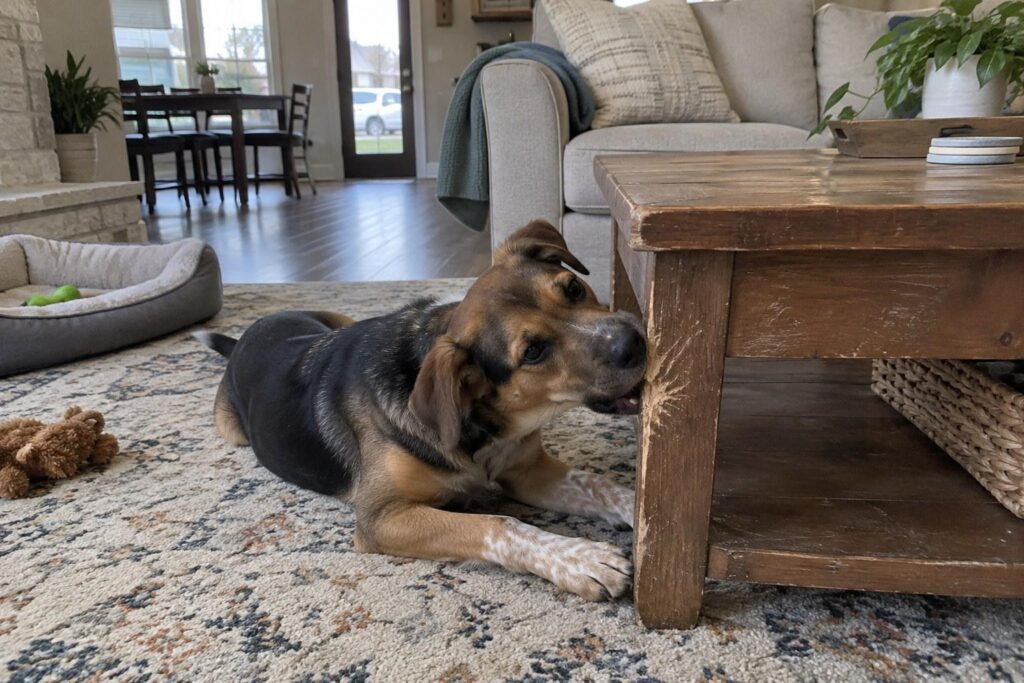
Plenty of Rottweilers are big softies with their own people. They lean on your legs, follow you to the kitchen, and want to be included. That attachment is a real training asset, because your dog cares about working with you. It also means a bored or lonely Rottweiler may find its own projects, like chewing furniture or digging under the fence.
A Confident Guardian by Nature
Rottweilers tend to watch strangers closely and form opinions quickly. You do not need to teach that awareness. What you need to teach is what to do with it. A well-trained Rottweiler notices a visitor, looks to you, and then accepts your decision about who is welcome.
Strength Changes the Stakes
Behaviors that are mildly annoying in a small dog become real problems in a dog this size. Jumping on guests, pulling toward another dog, or pushing through doorways can knock someone over. That is why we focus on self-control early and never wait for size to arrive before teaching manners.
Rottweiler Training Priorities for Year One
A Rottweiler puppy that fits in your lap will not stay that way for long. The habits you build during the first year carry into adulthood, so put your energy into the skills that matter most for a big, strong dog.
| Priority | Why It Matters for Rottweilers | What to Practice |
|---|---|---|
| Socialization | A natural guardian can grow wary of the unfamiliar | Calm, positive exposure to people, places, and sounds at a comfortable distance |
| Body handling | Vet visits and nail care get harder as your dog grows | Gently touching paws, ears, and mouth, followed by a reward |
| Loose leash walking | An adult can easily outmuscle most handlers | Short walks with frequent rewards at your side |
| “Leave it” and “drop it” | Protects your dog and keeps food and toys from becoming a contest | Trading items for something better, building up slowly |
| Settle and “place” | Teaches a working dog how to switch off | Rewarding calm on a mat for longer and longer stretches |
Socialize With Quality, Not Quantity
Socialization is not about letting your puppy greet every stranger at the store. It is about calm, positive experiences: new people seen from a comfortable distance, car rides, different floors, household appliances, and well-mannered adult dogs. Keep each outing short, watch your puppy’s body language, and leave on a good note. For a structured checklist, see our puppy socialization steps for Bossier City owners.
Make Handling Normal
Spend a few minutes each day touching your Rottweiler’s paws, looking in its ears, lifting its lips, and running your hands down its legs. Pair each touch with a treat. A grown dog that is comfortable being handled is far easier for you, your veterinarian, and anyone else who needs to help care for it.
Teach “Sit,” “Down,” and “Stay” for Duration
Most Rottweilers learn the basic cues quickly. The challenge is holding them. Ask for a “sit” or “down,” wait a couple of seconds, reward, and release. Stretch the time a little at a time, then add mild distractions. Keep your voice steady and your rewards generous. Many Rottweilers respond best to a calm, clear handler rather than a loud one.
Build a Rest Routine
Young Rottweilers often get mouthy and pushy when they are overtired, not when they are under-exercised. Scheduled naps in a crate or on a bed help your dog learn to settle. A comfortable crate with a safe chew makes a natural rest zone.
Guiding Guarding Instincts the Right Way
Many families choose a Rottweiler because they want a dog that adds a sense of security. A steady, well-mannered Rottweiler can do that just by being present. A Rottweiler that guards without guidance, though, is a risk to guests, delivery drivers, and the dog itself.
Reward Checking In
When your Rottweiler spots someone across the street or hears a noise outside, mark and reward the moment it turns back to you. Over time your dog learns that noticing something is a signal to look at you, not a signal to bark or charge. Keep enough distance that your dog can still eat treats and respond.
Practice the Front Door
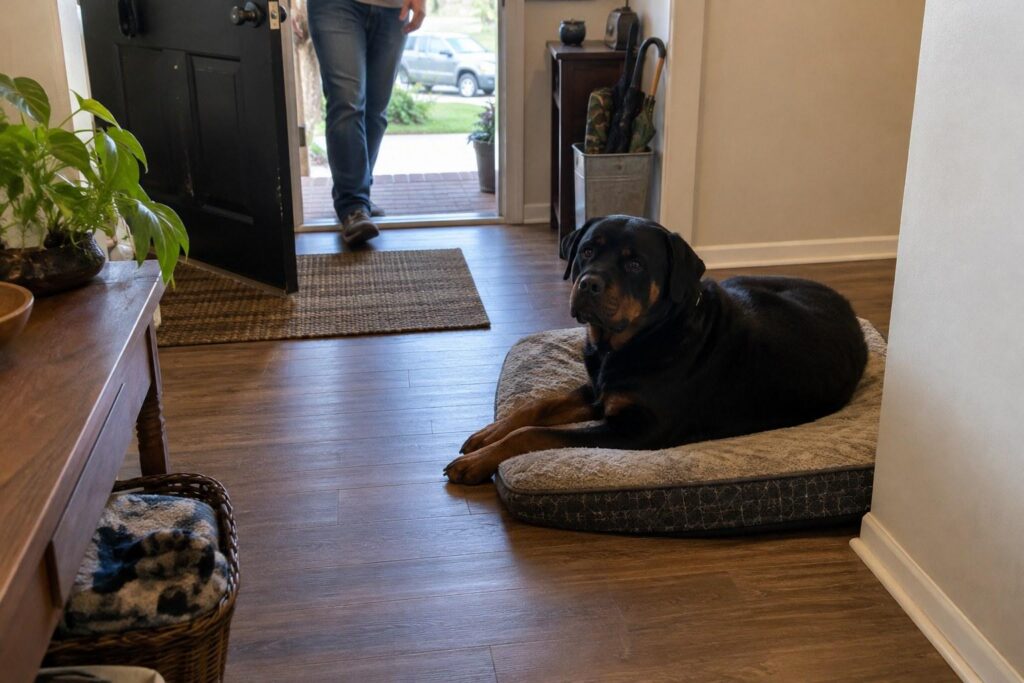
The front door is where guarding behavior shows up most. Teach a “place” cue on a mat several steps from the entry. Practice it while a family member knocks, then while a friend comes in. Your dog stays on the mat until you release it to greet calmly. Keep a leash on during early sessions so mistakes stay small.
Protect Food and Toys From Becoming a Fight
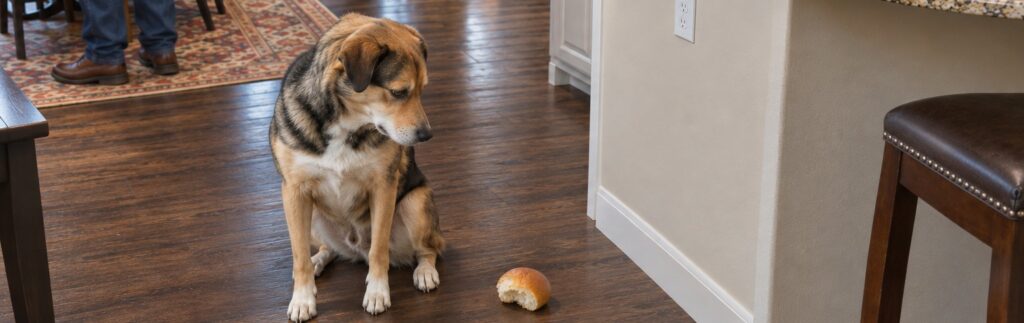
Some Rottweilers stiffen or freeze over food bowls, bones, or stolen socks. Practice trading: offer something better, reward the “drop it,” and give the item back when it is safe. Never yank things away or punish a growl, since that can remove the warning without changing how your dog feels. Our guide on resource guarding for Bossier owners goes deeper.
Know When to Call a Professional
Hard staring, a stiff body, growling at visitors, lunging, or snapping are signs to get experienced help rather than working it out alone. Our articles on professional aggression training for reactive dogs in Bossier and dog bite prevention for Bossier families explain what to watch for.
| What You See | What It Often Means | Helpful Response |
|---|---|---|
| Head up, ears forward toward a sound | Normal alertness | Calmly reward a check-in with you |
| A deep bark or two at the window | Alerting the household | Thank your dog, call it away, ask for “place” |
| Freezing over a bone or bowl | Early resource guarding | Give space, practice trades, seek guidance |
| Lunging or growling at guests | Discomfort or uncontrolled guarding | Manage the situation and contact a professional |
If your Rottweiler is smart but hard to handle, our two-week program gives your dog structured practice every day while you get expert support.
Leash Control for a Powerful Dog
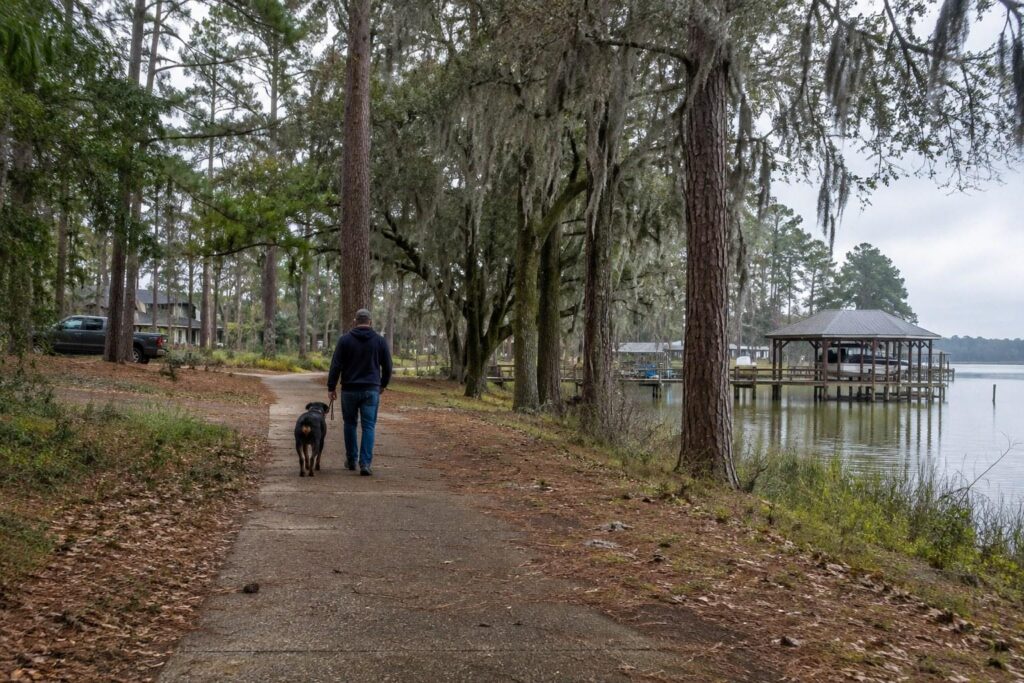
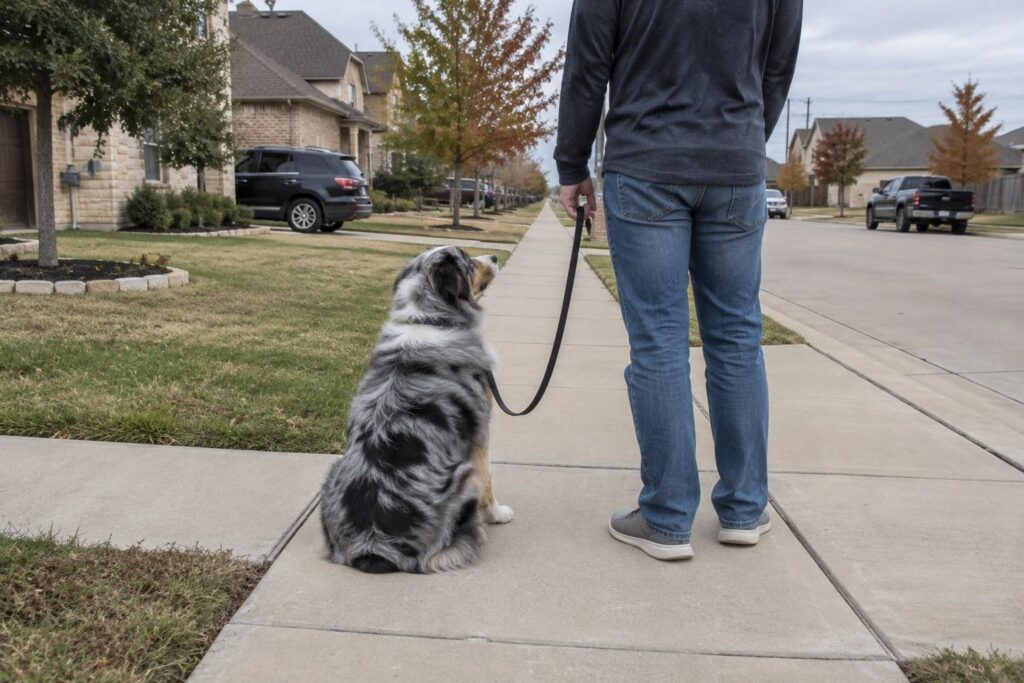
Nothing affects daily life with a Rottweiler more than how it walks on a leash. A dog that pulls, lunges, or plants its feet turns a simple walk into a workout for the wrong person. Good leash skills make outings around Bossier City safe and pleasant.
Start in a Boring Spot
Practice in your driveway or on a quiet street first. Reward your dog for walking near your leg, and change direction the moment the leash goes tight. Keep early walks short so your Rottweiler gets plenty of wins. Our step-by-step article on training a dog to walk on a leash in Bossier lays out the method.
Raise the Difficulty Slowly
Once your dog walks nicely on a calm street, add busier settings one at a time. Parks with joggers, bikes, squirrels, and other dogs are a big jump, so start with plenty of distance. For practice locations, check our list of dog-friendly parks in Bossier City.
Teach “Leave It” on the Move
A dropped chicken bone on the sidewalk or a cat under a car can trigger a sudden lunge. Practice “leave it” at home with low-value items, then on walks with things your dog finds more tempting. Reward heavily when your dog turns away. This one cue prevents a lot of tug-of-war on the leash.
Choose Equipment That Fits
A well-fitted flat collar or harness and a sturdy six-foot leash work for most dogs. Retractable leashes give a strong dog too much momentum. If you are unsure what suits your dog, ask a trainer to check the fit and your handling.
A Daily Routine That Keeps Manners Steady
Rottweilers do well with structure. A predictable day meets their need for exercise and mental work while teaching them that quiet time is part of life.
Exercise and Enrichment
- A walk or play session in the morning, timed for cooler hours when it is warm.
- Two or three short training sessions of five to ten minutes spread through the day.
- Food puzzles, sniff walks, or a safe chew to work the brain.
- Scheduled rest in a crate or on a bed so your dog learns to switch off.
Ark-La-Tex Weather
Northwest Louisiana summers are long and humid, and a large dark-coated dog can overheat quickly. Plan walks for early morning or evening, bring water, and watch for heavy panting or slowing down. Late fall is a great stretch for longer outdoor practice. If you are hosting family for Thanksgiving on November 26, start rehearsing door manners and “place” now so the holiday stays relaxed.
Holiday Food Safety
A tall Rottweiler can reach counters and tables with ease. Keep platters, trash, and leftovers out of reach, and practice “leave it” before guests arrive. The ASPCA keeps a helpful list of people foods to avoid feeding your pets. Call your veterinarian right away if your dog eats something it should not.
Health and Behavior Go Together
New grumpiness, reluctance to climb stairs, or sudden changes in energy can have a medical cause. Keep up with routine veterinary visits and ask your veterinarian about health screening for large breeds. If behavior shifts quickly, rule out pain or illness before treating it as a training problem.
Keep Everyone Consistent
Agree on cue words, furniture rules, and greeting routines for everyone in the household. A Rottweiler will quickly learn which family member lets it jump up or barge through the door. Consistency turns a clever dog into a dependable one.
When Professional Help Makes Sense
Some owners make great progress on their own. Others want faster results, or need help with a dog that is already big, strong, and set in its habits. Professional support gives you a plan and a coach.
Two-Week Board and Train
Our Board and Train program is a fixed two-week program. Your Rottweiler stays at our facility and works through multiple structured sessions each day, and our trainers vary exercise settings so skills hold up in new places. Supervised socialization is based on each dog’s temperament. In the final days, we focus on handler transition training so you learn the timing and technique to keep results going at home. Graduates receive guaranteed results and lifetime support at no additional cost, and Affirm financing is available.
In-Home Lessons
If you would rather learn alongside your dog, our in-home dog training tackles problems where they actually happen, like the front door, the backyard fence, and the kitchen counter.
Picking the Right Fit
| Option | Best For |
|---|---|
| Board and Train | Rottweilers that need daily structured practice and owners who want efficient progress |
| In-Home Lessons | Owners who want hands-on coaching for specific household habits |
| Refresh Training | Program graduates who want to sharpen skills that have slipped |
Ready to talk about your Rottweiler? Call us at (318) 562-6536 and we will help you choose the right next step.
About All Dogs Unleashed Dog Training Bossier City
All Dogs Unleashed Dog Training Bossier City helps owners across Bossier Parish and Northwest Louisiana turn strong, smart dogs into calm, reliable companions. Our fixed two-week Board and Train program gives powerful breeds like the Rottweiler multiple structured sessions every day, plus handler transition training before they head home. We also offer in-home lessons, boarding, and refresh training. Board and Train graduates receive guaranteed results and lifetime support at no additional cost.
Frequently Asked Questions
Are Rottweilers hard to train?
Rottweilers are intelligent and usually eager to work with their people, so they often pick up new cues quickly. The harder part is their size, strength, and natural wariness of strangers. They do best with short, upbeat sessions, clear household rules, and calm, consistent handling. Owners who keep training through adolescence tend to find the breed very rewarding.
When should I start training my Rottweiler puppy?
Start the day your puppy comes home. Focus on name response, crate comfort, house training, and gentle handling, then add “sit,” “down,” and leash skills. Careful socialization in the early months matters a great deal for a guardian breed. Ask your veterinarian which outings are safe based on your puppy’s vaccination schedule.
How do I stop my Rottweiler from pulling on the leash?
Start in a quiet place and reward your dog for walking beside your leg. Stop or change direction whenever the leash goes tight, and keep sessions short. Add distractions gradually, keeping enough distance that your dog can still focus. A well-fitted collar or harness helps, but consistent practice is what actually changes the habit.
Are Rottweilers good with kids?
Many well-socialized, well-trained Rottweilers are affectionate with their families, including children. Their size means even friendly play can knock over a small child, so always supervise. Teach kids not to hug, climb on, or bother the dog while it eats or rests, and give your Rottweiler a quiet spot to retreat when the house gets busy.
Should I train my Rottweiler to be a guard dog?
Most families are better served by a calm, obedient, confident dog than by one taught to guard. Rottweilers are naturally watchful, and that instinct usually needs guidance rather than encouragement. Focus on socialization, focus, door manners, and self-control. A dog that checks in with you when something feels off is much safer than one that reacts alone.
Is Board and Train a good fit for a Rottweiler?
For many Rottweilers it is a strong fit. Our fixed two-week program gives your dog multiple structured sessions every day, practice in varied settings, and supervised socialization based on temperament. During the final days you learn how to handle your dog yourself. Board and Train graduates also receive guaranteed results and lifetime support at no additional cost.
Rottweiler training pays off with a loyal, steady companion you can take almost anywhere. Focus on socialization, handling, leash control, door manners, and calm guarding habits, and keep practicing as your dog matures. If you want help, call (318) 562-6536 or reach out online, and visit our facility at 4500 Benton Rd in Bossier City.
Ready to Get Started with All Dogs Unleashed Dog Training Bossier City?
Your Rottweiler is strong, smart, and ready to learn. We can help you build the steady manners you want to see at home and around town. Call (318) 562-6536 today to talk with our team about Board and Train or in-home lessons. Our facility is All Dogs Unleashed Dog Training Bossier City, 4500 Benton Rd, Suite 200, Bossier City, LA 71111.