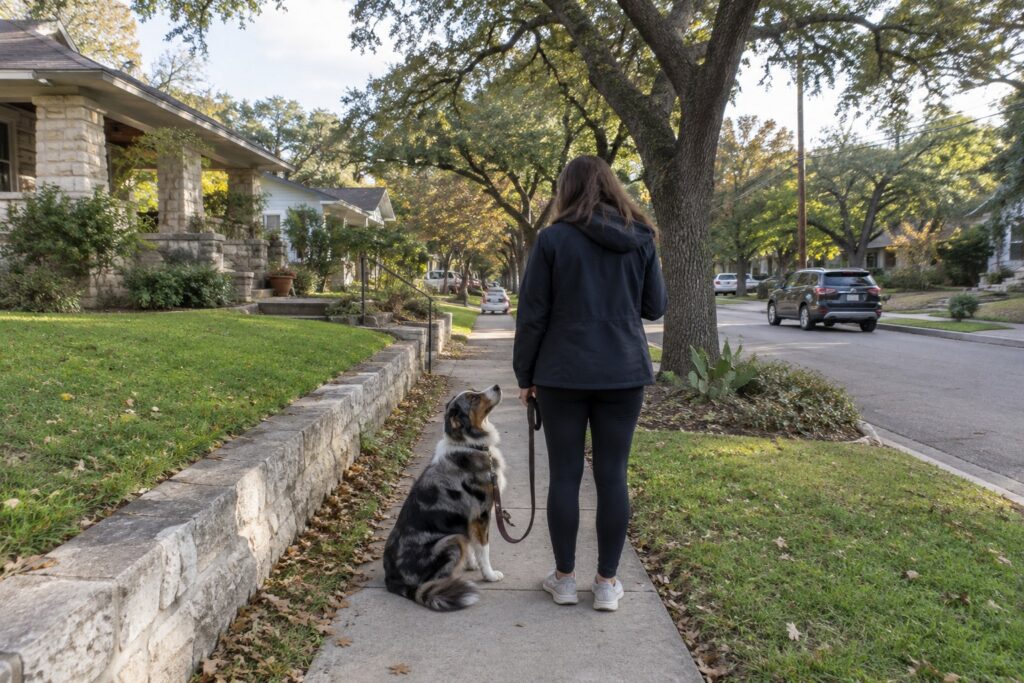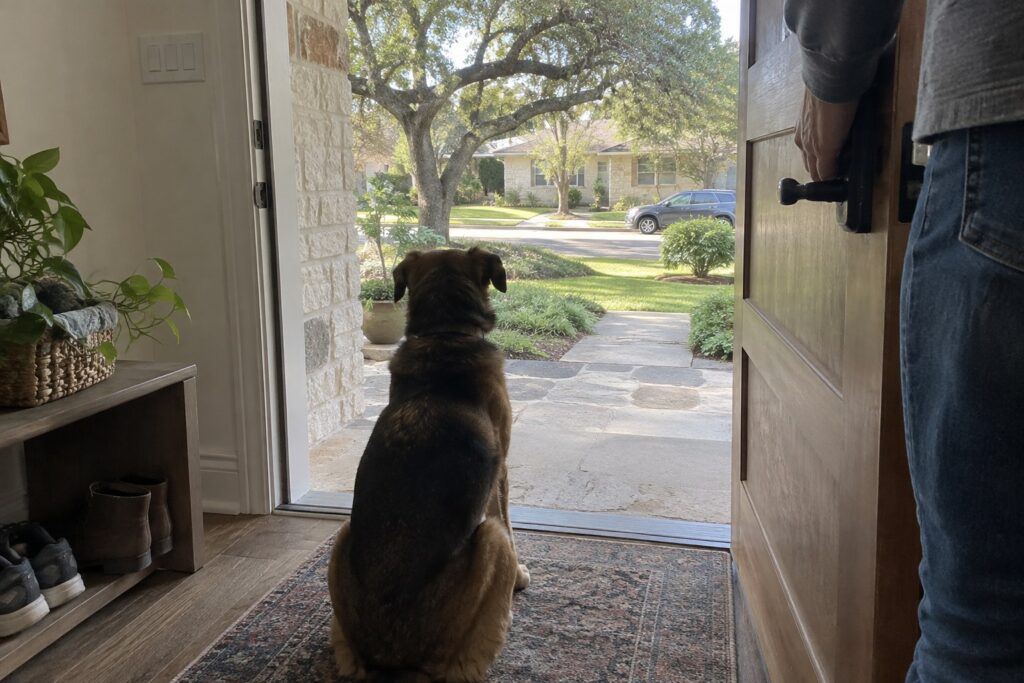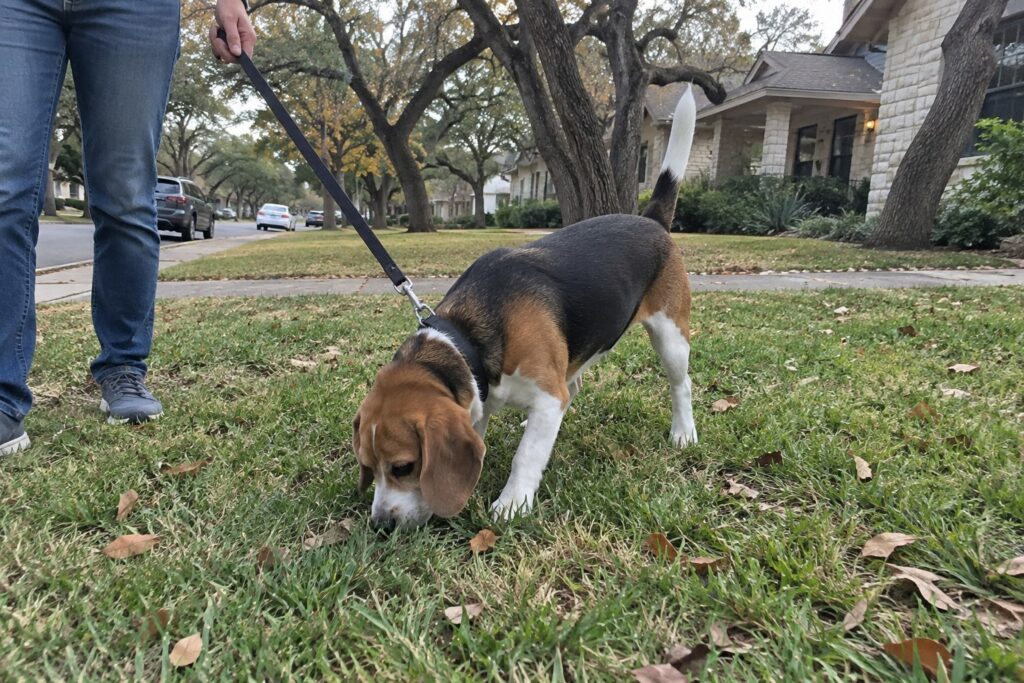

The new year is a natural time to reflect on habits, routines, and goals, and that applies to your dog just as much as it does to you. Whether your pup struggled with leash manners last year, never quite mastered a reliable recall, or still jumps on every guest who comes through the door, January is an ideal time to reset and build a clear training plan for the months ahead.
Dog training goals work best when they are specific, realistic, and built on a foundation of consistency. This guide walks through how to approach dog training goals in Austin TX with intention so that by the end of the year, you and your dog have made real, measurable progress.
Why Setting Training Goals Matters
Training without clear goals tends to drift. You might practice “sit” one day and work on loose leash walking the next, without ever building the focused repetition a dog needs to truly learn and generalize a behavior. When you define what you want to achieve, you can practice more deliberately, track progress more honestly, and adjust your approach when something is not working.
Goals also help you stay motivated. Training is not always quick or linear, and having a clear target makes it easier to recognize progress even when it feels slow.
Start with an Honest Assessment
Before setting goals, take stock of where your dog is right now. Think through the following areas:
- Basic obedience: Does your dog reliably sit, stay, come when called, and lie down on cue in low-distraction environments? What about in public spaces like Mueller Lake Park or the trails near Barton Creek?
- Leash manners: Can you walk your dog through a busy stretch of South Congress without getting pulled or tangled?
- Social behavior: How does your dog respond to guests, children, other dogs, or unfamiliar environments?
- Problem behaviors: Are there specific behaviors, jumping, counter-surfing, barking at the doorbell, that consistently cause frustration?
Writing down your answers gives you a clear picture of where to focus your energy in the new year.
How to Set Realistic Dog Training Goals
The most effective training goals share a few common traits. They are specific rather than vague, they are achievable within a reasonable timeframe, and they account for your dog’s current skill level and your own schedule.
A few examples of well-framed training goals:
- Vague: “I want my dog to walk better.”
Specific: “By March, my dog will walk on a loose leash for a full 20-minute neighborhood walk without pulling.” - Vague: “I want my dog to stop jumping.”
Specific: “Within 6 weeks, my dog will sit automatically when guests enter the front door instead of jumping.” - Vague: “I want my dog to come when called.”
Specific: “By summer, my dog will recall reliably in a fenced area with moderate distraction, like Norwood Estate Dog Park.”
Breaking larger goals into monthly milestones also helps. Progress in dog training builds layer by layer, and smaller wins along the way keep both you and your dog engaged.
Building Consistency into Your Routine
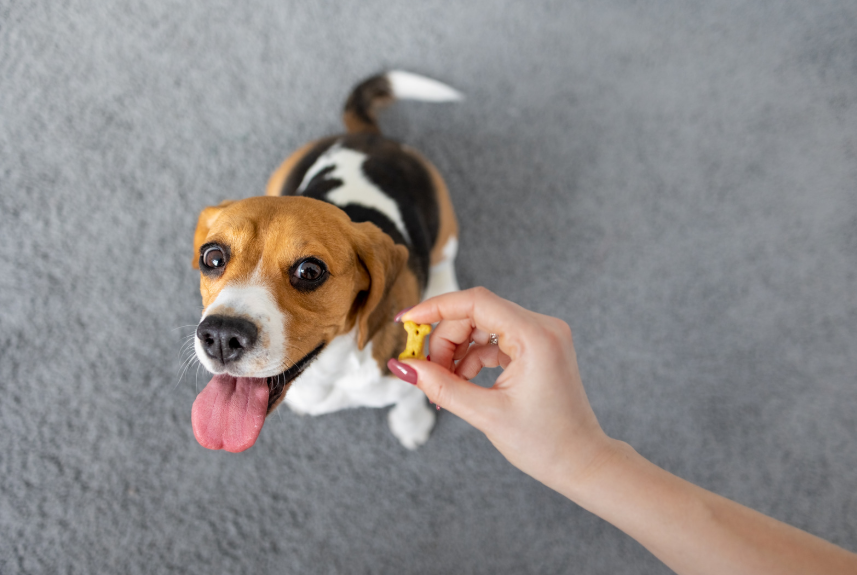
The single most powerful factor in dog training is consistency. Short, frequent practice sessions are far more effective than occasional long ones. Most dogs do best with 5-10 minute training sessions, one to three times per day. Austin’s year-round outdoor lifestyle actually makes this easier than it sounds since opportunities to practice real-world skills are available on almost every walk.
A few ways to build consistency without adding a lot of time:
- Attach training to daily routines: Practice a sit-stay before setting down your dog’s food bowl. Ask for a “down” before opening the back door. Work on leash manners every time you head to Zilker Park.
- Keep treats accessible: A small treat pouch near the leash hook makes it easy to reward good behavior without any extra setup.
- Use everyday moments: Real-life rewards, access to the dog park, permission to greet another dog, getting their leash put on, are often more motivating than treats for excited dogs.
Choosing the Right Training Approach for Your Goals
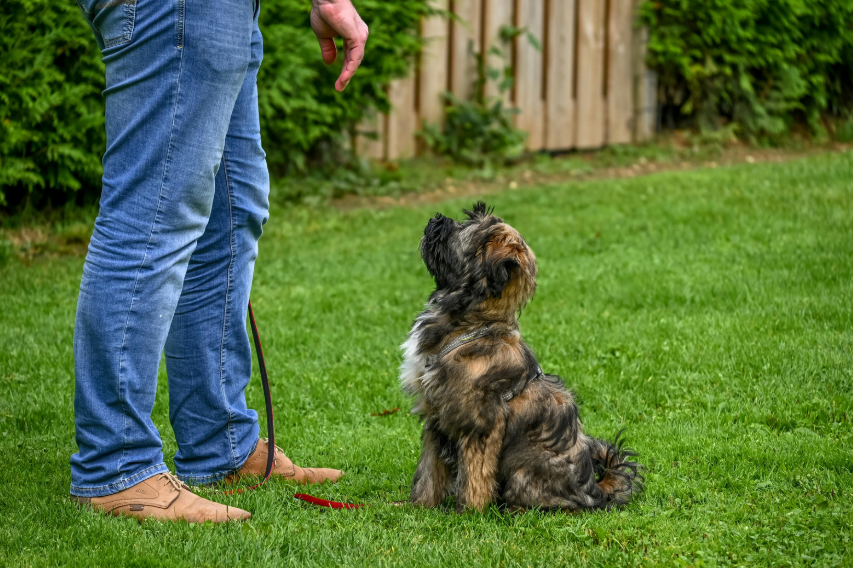
Different goals often call for different training formats. For dog owners in Austin who are setting goals around foundational obedience, reinforcing existing training, or working through mild problem behaviors at home, in-home dog training in Austin is often the most practical fit. Training in the environment where the behavior occurs is especially effective for issues like door-dashing, counter-surfing, and separation-related anxiety because the real-life triggers are already present.
For dogs working toward bigger behavioral goals, or for owners who want a structured curriculum that builds systematically over time, exploring the available dog training programs in Austin, TX is a strong next step. A defined program removes the guesswork about what to work on and in what order, which makes goal-setting more efficient from the start.
Building on Small Wins
One of the most common mistakes in new-year dog training plans is setting expectations too high too fast. A dog that has never held a stay for more than five seconds is not going to hold one for two minutes by February. Progress that looks small on paper, a 10% improvement in focus during a walk, three seconds added to a stay, a slightly calmer greeting at the door, represents real neural change in your dog’s brain. Celebrate those wins rather than dismissing them.
Keeping a simple training log helps here. A few lines in a notebook or a note on your phone each week lets you look back and see how far you have come. What felt impossible in January often looks routine by June.
Avoiding Common Goal-Setting Pitfalls
A few patterns tend to derail new-year training plans before they get started:
- Taking on too many goals at once: Focus on one or two priority behaviors before adding more. Depth of training beats breadth.
- Skipping sessions when life gets busy: Even a two-minute session on a hectic day keeps the pattern alive and maintains momentum.
- Expecting progress to be linear: Dogs, like people, have good days and bad days. A regression after a stressful week is normal. Stick with the plan.
- Waiting for the “right time”: There is no perfect time to start. Beginning with wherever your dog is right now is always the right move.
Frequently Asked Questions
What are good beginner training goals for a new dog owner?
Start with the behaviors that affect your daily life most directly: a reliable sit and stay for short durations, a loose leash on neighborhood walks, and a recall in low-distraction environments like your backyard. These foundational skills make every other aspect of dog ownership easier and set the stage for more advanced work later.
How long does it take to see results from a dog training plan?
Most dogs show noticeable improvement within 2-4 weeks of consistent practice on a specific behavior. Full reliability in varied environments, especially around distractions, typically takes longer, often 2-3 months or more. The key variable is consistency: dogs that are practiced with daily make progress much faster than those trained sporadically.
Is it too late to start training my adult dog?
No. Adult dogs are fully capable of learning new behaviors and breaking old habits. In some ways adult dogs are easier to train than puppies because they have longer attention spans and are not in a constant state of developmental distraction. Many of the best training results happen with dogs that are several years old.
How many training sessions should I do per day?
Two to three short sessions of 5-10 minutes each is a reliable daily structure for most dogs. Quality matters more than quantity. A focused, well-timed 5-minute session is more productive than a distracted 30-minute one. Always end sessions on a positive note, with a success the dog can feel good about.
What if my dog does not seem motivated during training?
Motivation issues are usually about the reward value relative to the distraction level, or about the timing of reinforcement. Experiment with higher-value rewards, like small pieces of chicken or cheese, and make sure the environment is not too challenging for your dog’s current skill level. If motivation remains low despite adjustments, a trainer can help identify what is getting in the way.
Should I hire a trainer or work on goals myself?
Both approaches can work, and they are not mutually exclusive. Working with a trainer gives you professional guidance, accountability, and techniques that are matched to your dog’s specific learning style. Many owners find that starting with professional support gives them the foundation to practice effectively on their own between sessions. For dogs with significant behavioral challenges, professional guidance from the start is usually the more efficient path.
Start the New Year Strong with All Dogs Unleashed in Austin
January is a great time to commit to a training plan that will make daily life with your dog more enjoyable for both of you. Clear goals, consistent practice, and the right support make a real difference over the course of a year.
All Dogs Unleashed works with Austin dog owners and their pups to build the skills that matter most, whether that means working through problem behaviors, reinforcing foundational obedience, or taking training to the next level in new environments.
Call (512) 253-8819 or stop by 3704 Mountain View Ave, Austin, TX 78734 to get started on a plan that sets your dog up for a great year ahead.