
Dog behavior problems don’t fix themselves, and Dallas dogs have plenty of reasons to develop them. Between storm season, busy trails like Katy Trail, and dog-friendly neighborhoods packed with foot traffic, your pup gets a lot of chances to practice bad habits. The training team at All Dogs Unleashed DFW has seen it all, and we know exactly how to fix it. Here are the 10 behavior problems we solve most often, so you know what to expect and how we can help.
Ready to stop the barking, pulling, or jumping for good? Book your free assessment today.
Key Takeaways
- The most common dog behavior problems include separation anxiety, aggression, excessive barking, leash pulling, and destructive chewing.
- Dallas dogs face unique triggers like storm season noise phobia and high-traffic urban environments that can make behavior problems worse.
- One-on-one, individualized attention resolves most issues faster than generic group classes.
- Our board and train program gives your dog consistent daily practice, which produces faster and more lasting results.
- Most behavior problems have a root cause, and fixing the root cause is what makes the results stick long term.
Your Pup Is Not Broken. These Problems Are Just More Common Than You Think.
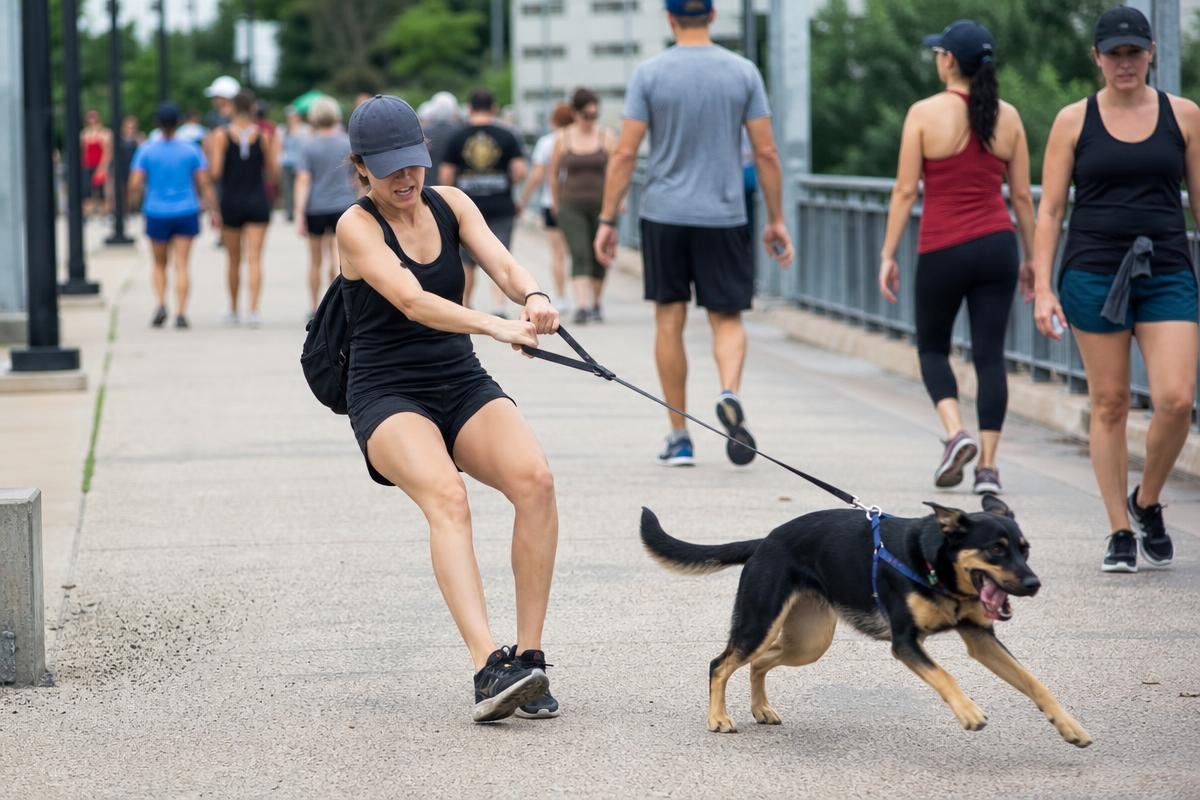
You love your pup. But if he’s dragging you down Katy Trail or barking through every afternoon in your Lake Highlands backyard, you’re probably exhausted. Maybe you’ve wondered if this is just how he is.
It’s not. These are common issues our behavior specialists see every week. Jumping, barking, leash pulling, and separation anxiety are not personality flaws. They’re fixable patterns.
All Dogs Unleashed DFW has earned over 2,000 five-star reviews from owners across the Dallas area who said training made a night and day difference. This article names all ten problems, explains why each one happens, and shows exactly what a trainer does to fix it. If you’ve ever wondered whether older dogs can still improve their behavior, the answer is yes, and so can yours.
Why Do Dallas Dogs Develop Behavior Problems in the First Place?
The Role of Heat, Confinement, and Urban Stress
Dallas summers regularly push past 100 degrees. That means your pup spends hours indoors with no outlet for energy. Boredom sets in fast. That boredom turns into destructive chewing, nonstop barking, and other issues that seem to come out of nowhere.
Dense neighborhoods add another layer. In areas like Oak Cliff, constant foot traffic, passing cars, and other dogs on every block create a wall of stimulation. For a pup with no training foundation, that stimulation triggers reactive behaviors the moment you step outside.
Dallas storm season makes things worse. Frequent spring and fall thunderstorms are a major driver of the noise phobia and fear responses we see in our clients’ dogs all year long.
Breed Tendencies vs. Learned Habits
Here is the most important thing to understand. Most behavior problems are not breed destiny. They are learned habits your pup picked up because they worked. Jumping got your attention. Barking got the door opened. The behavior stuck because it paid off. If it was learned, it can be unlearned. That is exactly what our behavior specialists do every day. Start with the dog obedience commands every Dallas owner should teach first if you want to get ahead of these habits right now.
The 10 Dog Behavior Problems Dallas Private Trainers See Every Week
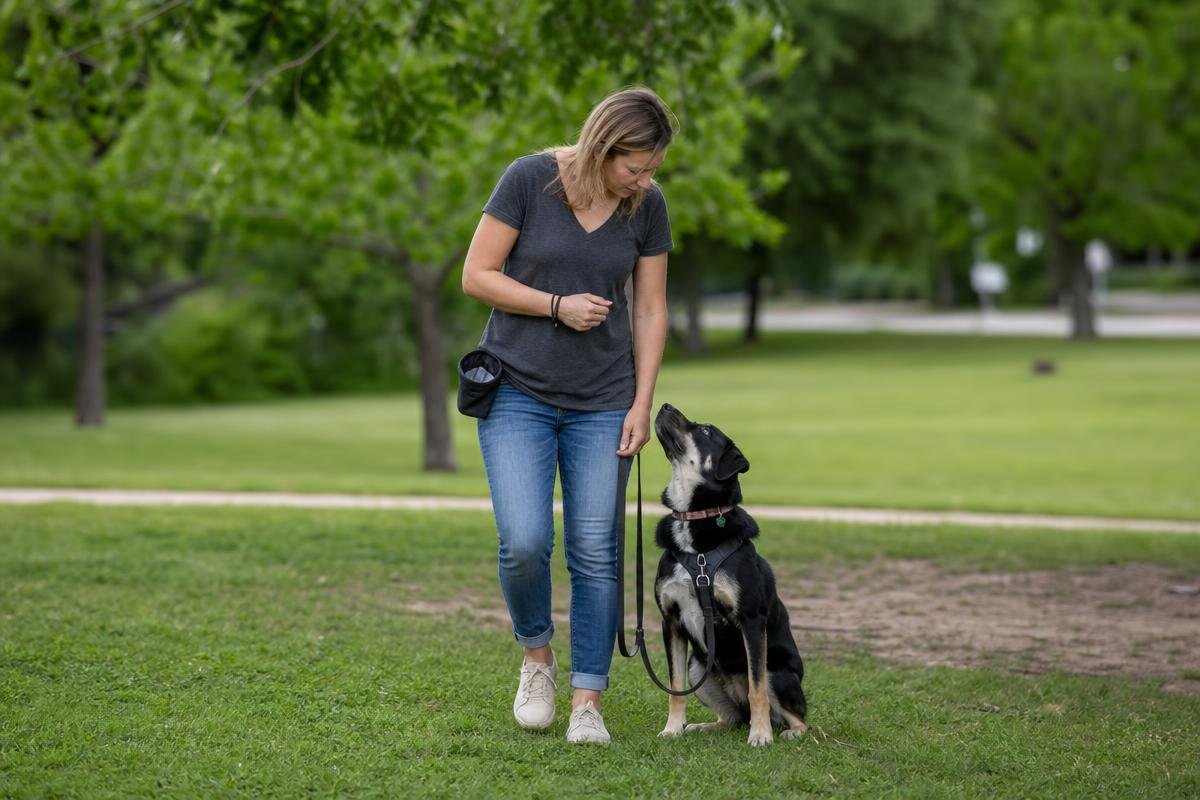
Every one of these problems is fixable. We see them constantly across Uptown, Lakewood, the M Streets, and everywhere in between.
1. What Causes Separation Anxiety in Dallas Dogs?
Separation anxiety is usually rooted in a dog that never learned to feel safe alone, and Dallas commute hours make it worse. Your pup barks, destroys things, or has accidents the moment you walk out the door. For dogs in Deep Ellum apartments, where owners commute daily, this is one of the most common calls we get.
- Short departure drills that start with 30-second absences and build tolerance over days and weeks
- Place command training so your pup has a calm, defined spot to settle
- Structured departure and arrival routines that remove the emotional charge
- Vet coordination for severe cases where anxiety is physical, not just behavioral
2. Aggression Toward People or Other Dogs
Growling, snapping, or lunging is always a communication problem, not a breed sentence. If you have more than one pup at home, read our guide on how to stop dog fighting in a multi-dog home for more detail.
- Identify the trigger type: fear response vs. resource guarding vs. redirected frustration
- Threshold training to keep your pup below the reaction point, often starting at 20 to 30 feet from the trigger
- Counter-conditioning to build a new emotional response to the trigger
- Structured introductions with controlled distance and high-value rewards
3. Why Is My Dog Barking Excessively?
Excessive barking almost always falls into one of three buckets: alert barking at the window, demand barking for attention, or boredom barking, and each needs a different fix. Lumping them together is why most at-home attempts stall out.
- Quiet cue paired with a positive interruption for alert barkers
- Removing all attention rewards for demand barking, consistently and immediately
- Enrichment protocols and structured exercise for boredom-driven barkers
- Desensitization to window triggers by blocking sightlines and rebuilding calm behavior
4. Destructive Chewing
Chewing is almost always under-stimulation or teething, not defiance. Your pup is not being spiteful. The behavior just needs a legal outlet and a management plan.
- Structured daily exercise schedule, often two 20-minute sessions
- Appropriate chew outlet introduction so your pup knows what is acceptable
- Crate training as a short-term management tool while the habit changes
- “Leave it” command to interrupt and redirect in real time
5. Leash Pulling and Reactivity
This is the top reason area owners come to us for board and train. Katy Trail and White Rock Lake are great spots, but not when your pup is dragging you toward every passing jogger or dog. Dog aggression training in the DFW area often starts right here, on the leash.
- Loose-leash walking foundation using the stop-and-wait method before any heel work
- Heel command built in low-distraction settings first, then proofed in real environments
- Structured walk routines that establish your role as the one setting the pace
- Threshold-based counter-conditioning for reactive pups who lose focus around triggers
6. Jumping on People
Jumping worked before. Someone laughed, made eye contact, or pushed your pup away, and all of those responses were rewarding. The fix is consistent, not complicated.
- Four-on-the-floor rule: no greeting happens until all paws are down
- Turning away completely the moment jumping starts, without fail
- Sit as an incompatible behavior, because a sitting pup cannot jump
- Practicing greetings with strangers in controlled settings to proof the behavior
7. House Soiling After Puppyhood
Adult dogs having accidents indoors always get a medical check first. Once medical causes are cleared, the fix is structure.
- Tight, predictable outdoor schedule with no guessing about timing
- Crate training to use your pup’s natural den instinct as a management tool
- Active supervision protocols instead of free-roaming access during retraining
- Addressing underlying anxiety if accidents cluster around stressful events
8. Begging and Counter-Surfing
This one started the first time it worked. One scrap from the table, one unattended plate, and your pup learned that persistence pays off. Fixing it requires the whole household to commit.
- Place command during every meal so your pup has a clear job to do
- Consistent no-table-feeding rule across every family member, no exceptions
- Management tools like baby gates during the retraining phase
- “Off” command for counter-surfing, paired with redirection to a settled position
9. Destructive Digging
Boredom, prey drive, and escaping the heat are the three most common reasons pups tear up yards across Preston Hollow. Each root cause points to a slightly different fix.
- Increased physical and mental exercise to reduce the drive to self-entertain
- Designated dig zone where digging is allowed and rewarded, redirecting the instinct
- Interruption-and-redirect protocols when digging starts in off-limit areas
- Shade, water access, and shorter outdoor sessions during extreme heat periods
10. Fear and Phobia Responses
Spring and fall storm season in the Metroplex means thunder, lightning, and fireworks are a recurring issue. Fear and phobia responses tend to spike after severe weather months. These are not quirks your pup will outgrow on their own.
- Systematic desensitization using recorded storm sounds at low volume, raised gradually only when your pup stays relaxed
- Counter-conditioning with high-value rewards to change the emotional response to triggers
- Confidence building through a solid obedience foundation, because a trained pup handles stress better
- Structured exposure to mild stressors in controlled settings to build resilience over time
Ready to Fix These Problems for Good?
Seeing your pup on that list? Our 2-week board and train program is built to fix these exact dog behavior problems. See if board and train is right for your dog. Schedule a free assessment today.
How Dallas Private Trainers Actually Fix These Problems
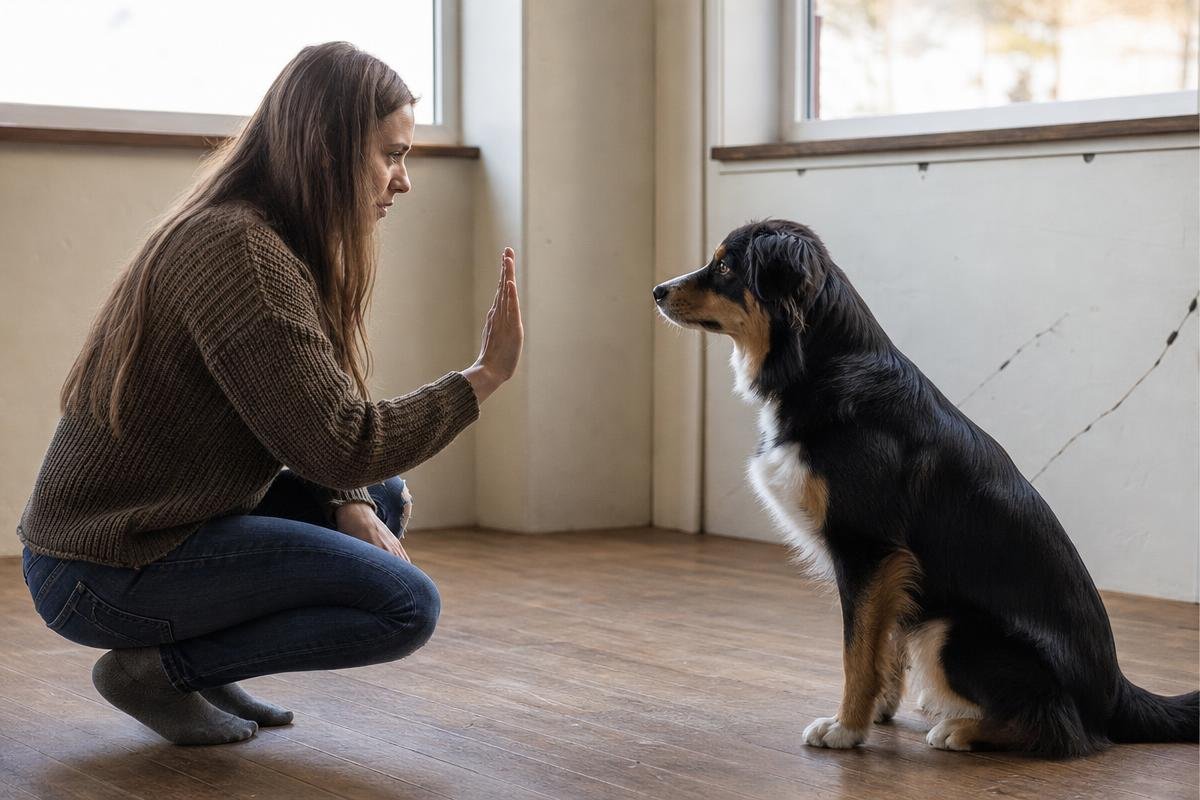
Generic group classes treat every pup the same. We don’t. Our behavior specialists build a plan around your specific dog, your home, and your schedule. Here’s exactly how we do it.
Board and Train: The Fast-Track Option
The 2-week board and train program is built for busy owners. If you’re dealing with a demanding commute or frequent travel, this is the fastest path to a well-behaved pup. Your dog stays with our staff full-time, getting individualized attention and consistent repetition every day. That kind of focus is impossible to replicate in a one-hour weekly class. Trainer Jake works directly with your pup from day one, building the foundation. After two weeks, most owners see a night-and-day difference. One client put it perfectly: “The transformation has been incredible. She came home knowing commands.”
In two weeks, your dog will:
- Walk on a loose leash without pulling
- Respond reliably to sit, stay, come, and place
- Stop jumping on people at the door
- Leave counters and furniture alone
- Stay calm around distractions like other dogs and foot traffic
In-Home Training: Fix Problems in Your Dog’s Real Environment
Some behavior problems only show up at home. Separation anxiety, house soiling, and begging are all environment-specific issues. If your pup loses it the moment you leave, fixing that in a training facility doesn’t help much. Our trainer comes to you. In neighborhoods like Far North Dallas, where the home layout and daily routine are part of the trigger, this matters. Trainer Randall observes the behavior in context, demonstrates the fix, then coaches you so the results actually stick when he leaves.
What to Expect in the First Two Weeks
- Initial assessment. We evaluate your dog’s behavior, history, and environment before anything else.
- Custom training plan. We build a plan around your specific issues, whether that’s dog aggression training or basic dog obedience training.
- Daily training sessions. Consistent repetition builds real habits fast.
- Owner handoff. We walk you through everything so you can maintain results at home.
- Lifetime support. This is included, not an add-on. As one client said, “Randall took the time to explain every step of the training process.” That support doesn’t stop after graduation.
Ready to stop managing the chaos and start seeing real results? Get started with a custom plan for your pup.
What Dallas Dog Owners Say After Training
“The difference in our pup is night and day. We were at our wit’s end with the behavior problems, and after training we finally have the well-behaved companion we always wanted.” – Mable
“Roxy’s transformation has been incredible. She was reactive, jumpy, and impossible to walk. Now she listens on the first command without fail. I can’t believe this is the same dog.” – Roxy’s Mom (Cavapoo)
“I actually cried when I saw how much she had changed. I only wish we had done this sooner.” – Verified Client
Our results speak for themselves, and they are backed by thousands of five-star reviews from pet owners across the Metroplex. If you want to see what professional training looks like in action, our blog covers the foundational skills every dog needs.
Dog Behavior Problems in Dallas: What Makes This City Different
High Heat and Small Yards Drive Problem Behaviors
Dallas summers are brutal. Temperatures push past 100 degrees for weeks at a time. Pups in Bishop Arts, Lower Greenville, and similar neighborhoods spend most of July and August stuck inside with nowhere to burn energy. That boredom has to go somewhere. It usually goes into your couch. Or your baseboards. Or into nonstop barking at the window. Destructive chewing, excessive barking, and separation anxiety all spike in summer. It is not a coincidence. And while you are managing the heat, watch for signs of dehydration in Dallas dogs too, because heat stress and behavior stress often show up together.
Dallas Dog Culture Means More Triggers, Not Fewer
This city is genuinely great for dogs. White Rock Lake, Uptown patios, and countless trails give you so many places to take your pup. But for an untrained dog, all of that foot traffic, outdoor seating, bikes, and other animals is overwhelming. Reactivity, leash pulling, and dog behavior problems around strangers are extremely common here because of how much exposure dogs get before they are ready for it. Training does not take that lifestyle away. It is what makes that lifestyle actually enjoyable. A well-behaved pup thrives in this city. An untrained one makes every outing stressful for everyone.
Frequently Asked Questions
What is the most common dog behavior problem trainers see in Dallas?
Leash pulling and separation anxiety top our list every week. The city’s active outdoor culture means pups hit busy trails and patios constantly, and long commute hours leave them home alone for stretches that fuel anxiety. Most dogs in our board and train program show real improvement within the first week.
Can older dogs have their behavior problems fixed?
Yes, absolutely. The idea that older dogs cannot change is a myth. We had a five-year-old pup come home from board and train with self-control and manners his owners had never seen before. Habits may build a little more slowly, but the results are just as real. Senior dogs can absolutely learn in Dallas, and we see it happen all the time.
How long does it take to fix a dog behavior problem?
It depends on the problem. Simpler issues like jumping or begging often improve in just a few in-home sessions. Serious issues like aggression or deep-rooted separation anxiety take longer and require consistent follow-through from you at home. Our board and train program typically produces significant results within two weeks.
Is board and train effective for serious behavior problems like aggression?
Yes, for most dogs. Dog aggression training in Dallas requires time, consistency, and a controlled environment, and board and train gives us all three. Our team assesses whether aggression is fear-based, resource-based, or territorial before building a plan. In rare severe cases, we may refer to a veterinary behaviorist, but that is the exception, not the rule.
Do I need to keep training my dog after the program ends?
Consistency at home is what locks in the results. That is why All Dogs Unleashed DFW includes lifetime support with every program. If a behavior creeps back, you have ongoing guidance from our team. Most owners find the habits stick naturally once they apply the same cues at home that we used in training.
Your pup’s behavior problems are not permanent. Whether it is leash reactivity on White Rock Lake trails or separation anxiety tearing up your apartment in Uptown, our team has fixed it before and can fix it for your pup. Book a free consultation today and find out exactly what your pup needs. Guaranteed results, lifetime support, and a well-behaved companion you are proud to take anywhere in this city.
Ready to Get Started with All Dogs Unleashed DFW?
Get in touch to speak with our team directly. We’re ready to answer your questions, walk you through your options, and help you find the right solution for your needs. Reach out today and let’s talk about how we can help.