
Two dogs living under one roof in Dallas should not feel like a war zone. If your pups are snapping, posturing, or full-on scrapping, you need a real plan, not guesswork. At All Dogs Unleashed, we help Dallas families end household conflict between dogs and rebuild a calm pack. Knowing how to stop dog fighting starts with reading body language, fixing the triggers, and teaching both dogs a new set of rules they actually follow.
Ready to bring peace back to your home? Call our Dallas team at (214) 807-1462 or our Carrollton office at (972) 484-3647.
Key Takeaways
- Most dog fights in multi-dog homes trace back to resource guarding, poor structure, or missed warning signals.
- Learning to read your dogs early is the fastest way to stop dog fighting before it starts.
- Positive associations, clear rules, and management tools like crates and gates protect both dogs while you train.
- Serious aggression between housemates needs professional help, not another YouTube video.
Two dogs who used to nap on the same couch are now snarling at each other. One snap turned into a full fight last week. You’re scared to leave them alone, and you’re starting to wonder if your home will ever feel calm again. You’re not alone. Multi-dog households across Dallas, from tight Oak Cliff bungalows to Uptown apartments, deal with this more than people think. The good news: most cases can be fixed with the right plan.
This guide covers the warning signs, safe ways to break up a fight, and prevention steps that actually work. We’re certified trainers at All Dogs Unleashed, and we help multi-dog families every week, including cases that overlap with reactive dog training. Dog aggression in a multi-dog household is treatable when you act early.
Why Dogs Fight in the Same Household
Dogs that share a home fight for real reasons, not random ones. Most scraps trace back to three patterns we see every week in Carrollton, Plano, and Uptown homes. Once you know the trigger, you can manage it.
Resource Guarding
Resource guarding means one dog claims something valuable and warns the other dog off. It is the most common spark behind dog aggression in multi-dog households. The “resource” is rarely just food.
- Food bowls and water stations placed too close together
- High-value chews like bully sticks, bones, or stuffed Kongs
- Sleeping spots, dog beds, or the couch corner
- Doorways, narrow halls, and your attention on the floor
Feed dogs in separate rooms. Pick up toys when you are not actively supervising. Hand out chews in crates, never side by side.
Social Tension
Dogs that used to get along often start fighting when the social order shifts. A new puppy reaches social maturity around 18 months and challenges the older dog. A senior dog recovering from illness suddenly looks weak to the others, and conflict starts.
- Adding a new dog without a slow introduction
- Big age gaps between a young adult and a senior
- One dog returning from the vet smelling different
- Same-sex pairs hitting maturity at the same time
This is the most common driver behind managing multiple dogs Dallas owners ask us about, especially with pit mixes, labs, and huskies sharing one yard.
Redirected Aggression
Redirected aggression is the “aha” cause most owners miss. One dog gets fired up at something it cannot reach, then turns and bites the dog standing next to it. The housemate did nothing wrong.
- A squirrel or delivery truck spotted through the front window
- Another dog walking past the fence line near White Rock Lake
- A loud Uptown sidewalk passing two leashed dogs at once
- Doorbell ringing while both dogs race the hallway
For more on root causes and warning signs, read our breakdown of aggression causes before your next intro session.
How to Read the Warning Signs Before a Fight Breaks Out
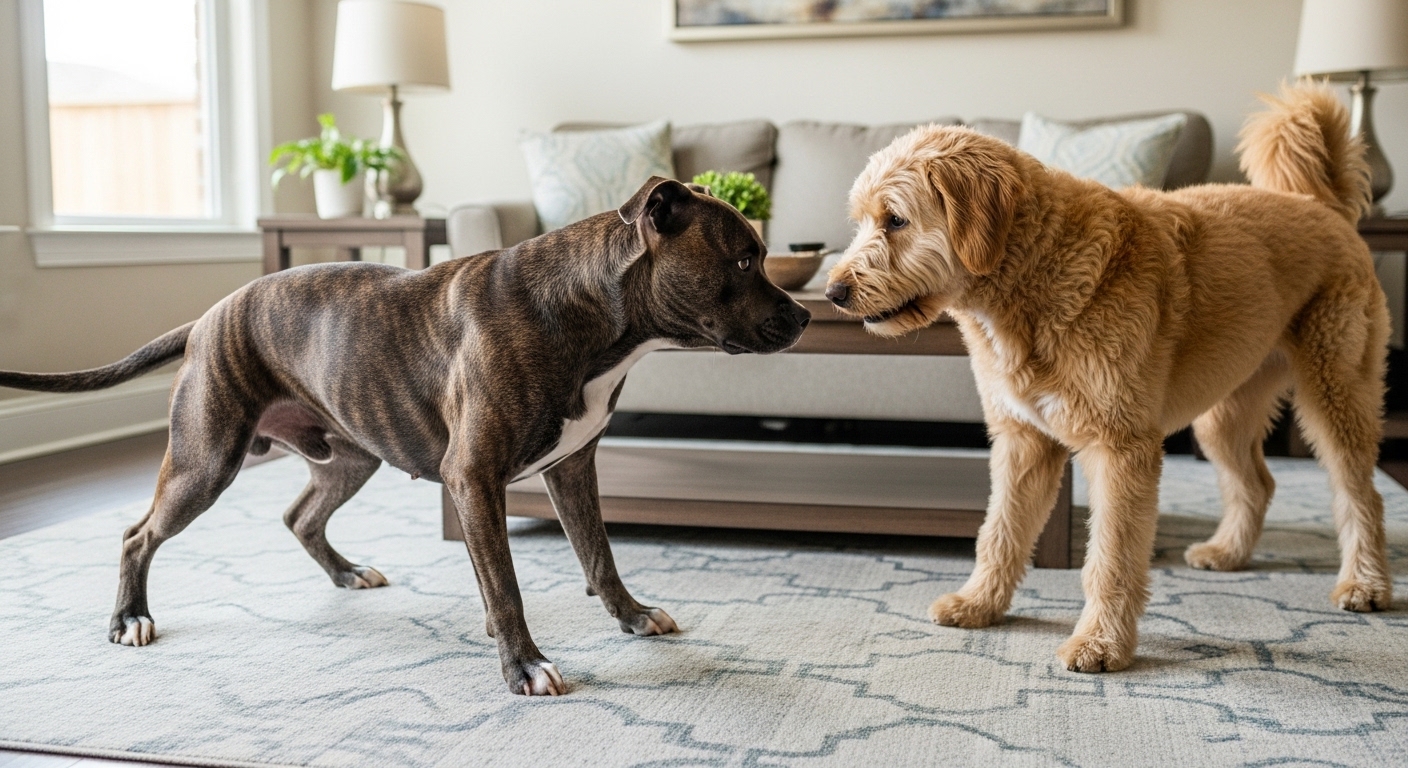
Most scraps give you 10 to 30 seconds of warning if you know what to look for. Your dogs are talking the whole time. The problem is owners miss the early signals and only catch the loud ones. Learn to spot tension early and you can stop a fight before teeth ever come out.
Body Language Cues That Predict a Fight
Watch for these red flags between your dogs:
- Hard stare or whale eye (whites showing)
- Stiff, high tail with a slow wag
- Raised hackles down the spine
- Tight, closed mouth and pinned ears
- Weight shifted forward over the front legs
- Low, stiff growl with a frozen body
Real play looks totally different. You’ll see loose wiggly bodies, bouncy movement, play bows, and open relaxed mouths. If your dogs pause and one looks stiff while the other looks loose, separate them. That mismatch is how fights start in tight Carrollton townhomes and Plano cottages where dogs can’t get away from each other.
The Escalation Ladder (and Why Punishing Growling Backfires)
No, do not punish a growl. A growl is information, not defiance. Dogs usually climb a predictable ladder before they bite:
- Sniff or look away
- Yawn
- Lip lick
- Freeze
- Growl
- Snap
- Bite
When you punish growling, you teach your dog to skip rungs 1 through 5 and go straight to snapping. That’s how owners end up with “out of nowhere” bites. Thank the growl. Then create distance and reset. To prevent dog fighting at home long-term, you build positive associations between the dogs so the ladder resets lower over time. The Texas summer heat traps everyone inside, so this work matters more here than in cooler climates.
How to Safely Break Up a Dog Fight Without Getting Hurt
The safest way to break up a dog fight is to never put your hands near their mouths. Use noise, water, or a barrier first. Redirected bites are the number one cause of human injury during fights, even from dogs who love you.
No-Hands Interruption Techniques
Try these in order. Move fast, but stay out of biting range:
- Make a loud, sharp noise. Clap hard, slap a wall, or blast an air horn.
- Spray water in the aggressor’s face. A spray bottle, hose, or even a cup works.
- Throw a blanket or jacket over both dogs. It disorients them and breaks visual lock.
- Toss a large object between them. A chair, laundry basket, or trash can creates a barrier.
Never reach in with your hands. Never grab collars. A dog in fight mode does not recognize you.
The Wheelbarrow Method
This is the safest physical separation if noise and water fail. With two people, each person grabs the back legs of one dog and walks backward like a wheelbarrow. Keep moving in a circle so the dog cannot twist around to bite. Alone? Yes, you can break up a fight alone, but it is risky. Grab one dog’s back legs, pull and spin in a circle, and back away to a separate room or behind a closed door. Secure that dog before you even think about checking the other.
What to Do in the First 30 Minutes After a Fight
Separate the dogs into different rooms immediately. Do not let them see each other. Both dogs stay in an adrenaline state for 30 to 60 minutes, and a second fight can ignite in seconds. Then check each dog calmly for punctures, lacerations, limping, or swelling. Puncture wounds often look small but go deep. Call an emergency vet for any bite wound, even minor ones. The North Texas area has 24-hour emergency clinics across Carrollton, Plano, and Frisco for after-hours care.
Had a fight in your home? Don’t wait for the next one. Call our Carrollton team at (972) 484-3647 or our Ervay location at (214) 807-1462 for help today.
How to Prevent Dog Fights From Happening Again
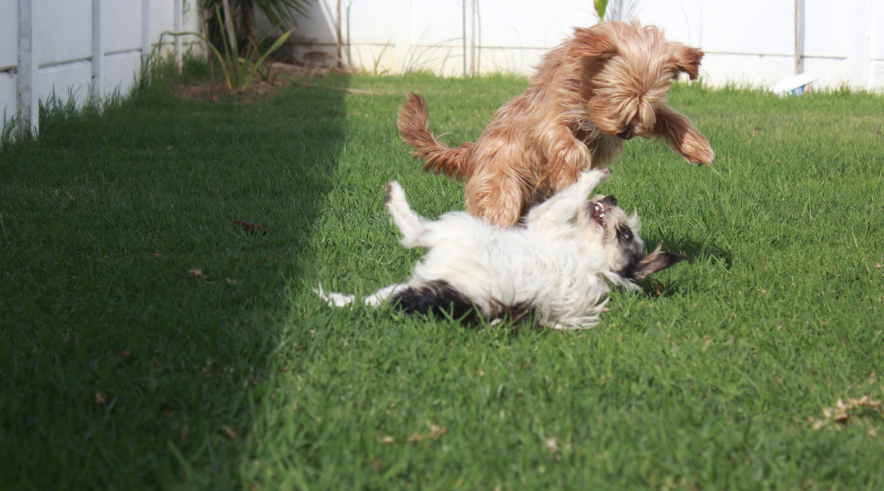
You prevent future fights with three layers: smart home management, positive associations between your dogs, and solid obedience commands that work under stress. Skip any one layer and you are gambling. Get all three right and your dogs can live calmly under the same roof.
Management Setup at Home
Management means controlling the environment so fights cannot start. This matters more in summer, when triple-digit heat and air quality alerts near White Rock Lake cut your outdoor exercise short and force everyone indoors. Set up your home like this to prevent dog fighting at home:
- Feed each dog in a separate room with the door closed
- Pick up bowls after meals. No free-feeding.
- Rotate high-value chews instead of handing them out together
- Give each dog a designated rest zone: separate crates, separate beds
- Use baby gates at high-conflict spots like the kitchen during meal prep and narrow hallways
- Never let dogs crowd the front door at the same time
Building Positive Associations
The rule is simple: when Dog A sees Dog B, something great happens. This is the core of positive association training and it rewires how your dogs feel about each other. Start with both dogs on opposite sides of a large room, each on leash with a handler. The moment they notice each other and stay calm, mark it and feed chicken or cheese. Not kibble. High value only. Over many short sessions, you close the distance a few feet at a time. If either dog stiffens, you went too fast. Back up.
Foundation Commands That De-Escalate Tension
Three commands break tension before it boils over:
- Leave it breaks a hard stare before it locks in
- Place sends each dog to their own mat on cue
- Look at me pulls attention back to you and off the other dog
Train each dog individually first. A command your dog cannot do alone will fail with a second dog in the room. Solid obedience training is the backbone of dog to dog aggression training in our area. In two weeks, your dog can learn to leave the other dog alone on command. That is the goal.
When Dog Fighting in Your Dallas Home Needs Professional Help
Call a certified trainer when fights happen weekly, when anyone needs stitches, or when one dog now lives in fear of the other. Some cases need hands-on help, and that is okay. Management alone will not fix a household where the conflict keeps escalating.
Signs You Need a Certified Trainer
If you see any of these patterns, it is time to bring in our team:
- Fights break out with no warning growl or freeze
- Puncture wounds that need a vet visit
- One dog hides, skips meals, or avoids shared rooms
- Fights happen multiple times a week even with crates and gates
- Reintroductions restart the conflict within minutes
For households where one dog also reacts to outside triggers, our reactive dog training in Dallas pairs well with in-home training on dog-to-dog aggression training Dallas families trust.
How Our Board and Train Program Works
Your dog stays at our Carrollton facility for two weeks. Certified trainers Samantha, Jake, and Randall build obedience, impulse control, and calm responses around other dogs. We work on place command, recall under distraction, and structured greetings. Then we bring you in for a handoff session so the rules stay the same at home.
All Dogs Unleashed holds a 4.9-star rating from over 1,400 area customers, and our trainers have helped many multi-dog households reset after serious fights. The work is not magic. It is daily reps, clear rules, and a plan you can actually follow. If your dogs are fighting more than once a week, or if anyone has needed stitches, call our team at (214) 807-1462 or our Carrollton facility at (972) 484-3647. Visit us at 2401 Luna Rd, Carrollton, TX 75006 to learn more about our Board and Train program for multi-dog homes. You do not have to live with the fear of the next fight. We can help you fix it.
Frequently Asked Questions
How Long Does It Typically Take to Resolve Dog Aggression Between Housemates?
The timeline varies depending on the severity of the aggression and the dogs’ histories, but most households see meaningful improvement within four to twelve weeks of consistent training. Cases involving deep-rooted fear or repeated bite incidents may require several months of structured work. All Dogs Unleashed recommends scheduling an evaluation early so a trainer can give you a realistic timeline based on your specific dogs.
Is It Ever Safe to Reintroduce Two Dogs That Have Seriously Bitten Each Other?
Reintroduction is sometimes possible, but it depends on the bite level, the dogs’ ages, and whether an underlying medical issue contributed to the incident. A qualified trainer will assess both dogs individually before any face-to-face contact is attempted. Rushing reintroduction without a structured protocol is one of the most common reasons aggression escalates rather than improves.
Can Spaying or Neutering Reduce Fighting Between Dogs in the Same Home?
Hormones do play a role in same-sex aggression, and spaying or neutering can reduce certain hormonally driven tensions, particularly in intact males. However, it is rarely a complete solution on its own, especially when the conflict stems from resource guarding or established social dynamics. A veterinary consultation combined with professional training gives you the best chance of lasting results.
Does the Breed of My Dog Affect How Difficult It Is to Stop the Fighting?
Breed can influence bite intensity and threshold for arousal, but it does not determine whether a dog can learn to coexist peacefully. Many breeds historically associated with dog aggression respond very well to structured training and clear household management. All Dogs Unleashed works with all breeds in the Dallas area and tailors each program to the individual dog rather than breed stereotypes.
Should I Separate My Dogs Permanently After a Fight?
Permanent separation is sometimes the safest long-term choice, but it is not automatically necessary after a single incident. A certified trainer can help you distinguish between a redirected outburst that is unlikely to repeat and a pattern of predatory or dominance-based aggression that poses an ongoing risk. Making that call without a professional assessment often leads either to unnecessary permanent separation or to dangerous reunions done too soon.
What Should I Tell My Vet After My Dogs Have Been Fighting?
Let your vet know the frequency, duration, and nature of the fights, including whether any puncture wounds occurred and which dog was typically the initiator. Pain from an undiagnosed condition like arthritis or a thyroid imbalance can trigger sudden aggression, so a physical exam helps rule out medical causes. Sharing this information also helps your vet and your trainer at All Dogs Unleashed coordinate care more effectively.
Can Children Safely Live in a Home Where Two Dogs Have Been Fighting?
Children can continue living with dogs that have a history of fighting, provided that strict management protocols are in place and adult supervision is consistent. Dogs that are tense with each other are statistically more likely to redirect that tension onto a nearby child, so temporary separation during high-risk moments is essential. All Dogs Unleashed strongly recommends professional guidance before assuming the situation is stable enough for unsupervised interaction around kids.
Ready to Get Started with All Dogs Unleashed?
Call (972) 484-3647 (Carrollton); (214) 807-1462 (Dallas/Ervay) to speak with our team directly.
Reach out today and let’s talk about how we can help.