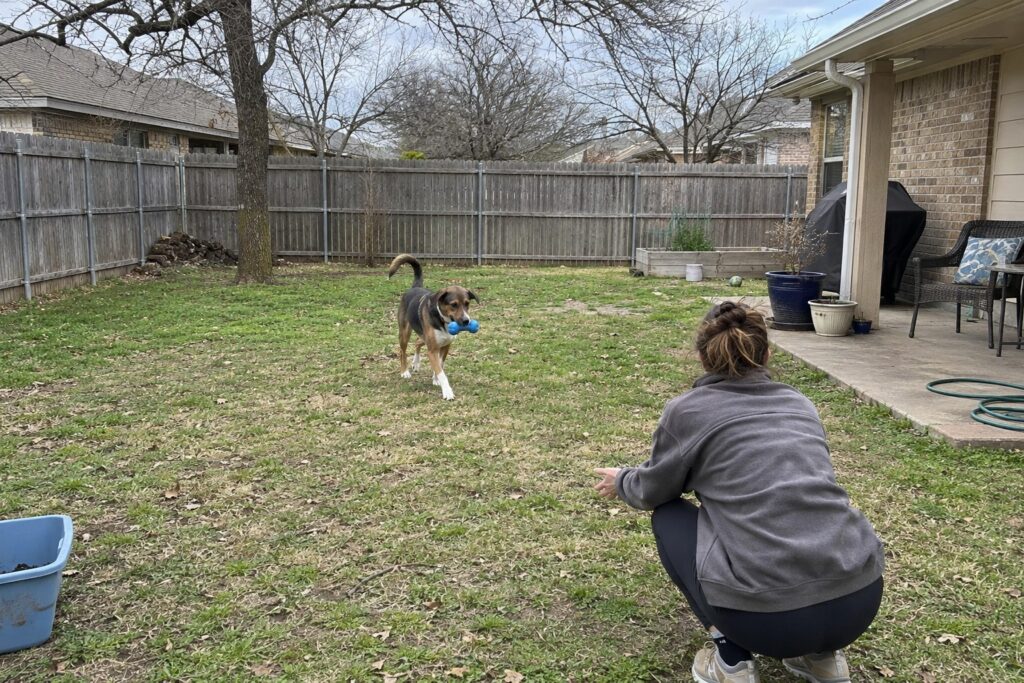

Learning how to teach a dog to fetch starts with a useful change in expectations. Chasing a ball, picking it up, carrying it back, and releasing it are separate skills. Your dog may enjoy one part without understanding the rest. Throwing the toy farther does not fill those gaps, and chasing your dog around the yard usually teaches a different game.
At All Dogs Unleashed Dog Training Fort Worth, we help owners build clear communication and everyday obedience. Our two-week Board & Train program can support that broader foundation. For fetch itself, start with small, manageable steps at home, reward the part you want, and keep the game comfortable for the dog in front of you.
Want help turning scattered responses into clearer daily habits? Tell us about your dog’s training needs.
Key Takeaways
- Fetch is a chain of behaviors, so teach interest, pickup, return, and release before expecting a complete retrieve.
- Start close to your dog with a suitable toy instead of beginning with long throws across a yard.
- Trade and reward voluntary releases rather than grabbing the toy or chasing a dog that carries it away.
- Use safe footing, appropriate toys, supervision, and comfortable conditions, and ask your veterinarian about exercise limits.
- Our two-week Board & Train program develops broader obedience and owner handling that can support more organized activities at home.
Understand What Your Dog Thinks the Game Is
Some dogs immediately chase anything that moves. Others prefer sniffing the grass, carrying a toy by themselves, or interacting directly with you. Those preferences are starting information, not a pass-or-fail test. A dog does not need to love retrieving to enjoy a good relationship with its owner.
Separate Chase From Retrieve
A dog that races after a ball has shown interest in movement. That dog has not necessarily learned to pick up the ball or bring it back. If you keep throwing as soon as the dog drops it somewhere in the yard, you may be rewarding a version of the game that does not include returning to you.
The American Kennel Club’s approach to teaching fetch breaks the process into smaller pieces, including holding the toy and gradually increasing distance. That approach gives you a way to reward progress even before your dog completes a full retrieve.
Look for Interest Without Applying Pressure
Offer one or two appropriate toy choices and notice what your dog investigates. A soft toy may appeal to a dog that ignores a rubber ball. Another dog may prefer a toy that rolls slowly. Keep the choices simple enough that you can see what actually holds your dog’s interest.
Do not push an object into your dog’s mouth or hold the mouth shut around it. If the dog turns away, becomes tense, or leaves, pause and reassess. Fetch should be an optional shared activity, not a struggle over possession or an exercise in forcing a dog to interact.
Set Up a Safe Place to Practice
You can teach the first pieces of fetch without a large field. A quiet room, uncluttered hallway, or secure yard with comfortable footing is often easier. Reducing the space also reduces distractions and makes a short return more understandable.
Choose Equipment for Your Individual Dog
Use a toy designed for dogs and appropriate for your dog’s size and chewing habits. It should not be small enough to swallow or damaged enough to shed pieces. Supervise the session and remove the toy if it starts coming apart. Avoid sticks and improvised objects that can splinter or injure the mouth.
Ask your veterinarian about suitable exercise if your dog has joint pain, breathing concerns, a medical condition, or an uncertain activity tolerance. A rolling toy over a short distance may be more appropriate than an airborne throw, but your veterinarian should guide restrictions for an individual dog.
| Setup Choice | Useful Starting Point | What to Avoid |
|---|---|---|
| Toy | A sound, dog-appropriate toy that interests your dog | Small objects, sharp edges, or loose pieces |
| Surface | Clear, nonslip footing | Slippery floors, clutter, and uneven ground |
| Space | A quiet room or secure enclosed area | Roads, open gates, and crowded shared spaces |
| First movement | A gentle roll or nearby placement | High jumps and long, repeated sprints |
| Session length | A few comfortable, successful repetitions | Continuing through fatigue or frustration |
Keep the Environment Comfortable
In Fort Worth, plan outdoor practice around actual conditions rather than a fixed schedule. Bring water, provide breaks, and stop if your dog seems uncomfortable. Fetch should not become a reason to keep running a dog that is slowing down or struggling to recover.
Our information on heat safety for Fort Worth dogs explains why changes in breathing, energy, and comfort deserve attention. If you suspect illness or an emergency, contact a veterinarian instead of trying to train through it.
How to Teach a Dog to Fetch One Piece at a Time
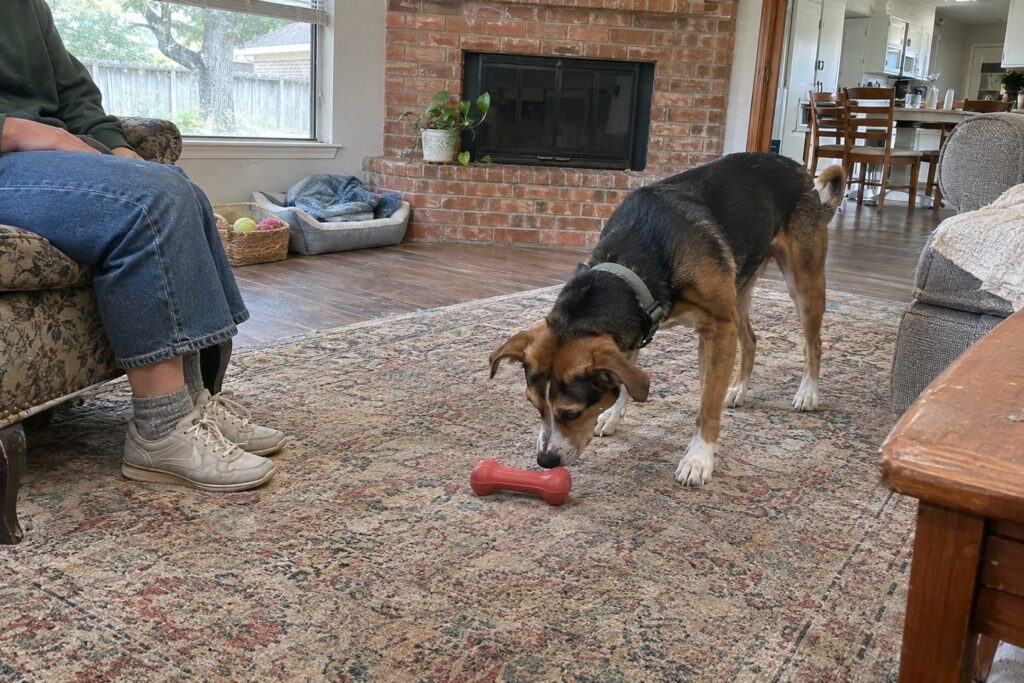
Begin with the toy beside you, not at the far end of the yard. Have small rewards available and use a familiar marker, such as a brief yes, to identify the action you want. Work on the smallest missing piece rather than repeating the entire sequence after every mistake.
Reward Looking, Touching, and Picking Up
Place or hold the toy where your dog can investigate it freely. Mark and reward interest if the dog is hesitant. As interest grows, reward a nose touch or mouth contact, then a brief pickup. You are shaping a clearer action through manageable steps.
Do not demand a long hold immediately after the first pickup. Reward a moment of success, reset, and let the dog try again. If the dog will not take the toy, check the object, the setting, and your dog’s comfort before assuming a lack of effort. Food rewards should fit your dog’s diet and daily intake.
Build a Comfortable Release
Practice trading a low-value toy for a suitable reward before adding distance. Present the trade without reaching into your dog’s mouth. Mark the voluntary release, deliver the reward, and return the toy when appropriate so giving it up does not always end the fun.
Add your chosen release cue once you can reliably predict the action. The AKC’s guidance on teaching drop it explains the value of exchanges and rewards. If your dog stiffens, freezes, growls, or guards the toy, stop reaching for it and seek professional help with a safe plan.
Connect Pickup to a Very Short Return
Put the toy just a step away. When your dog picks it up, encourage a movement back toward you and reward that progress. Ask for the familiar release only after the dog reaches you. Keep your body relaxed instead of looming forward and grabbing the object.
At first, a single step in your direction with the toy may deserve reinforcement. As the pieces become familiar, reward a more complete return. Increase distance a little at a time, and shorten it again if the dog starts dropping the toy halfway back or wandering off.
Keep a simple picture of success in mind before each repetition. If today’s goal is carrying the toy one step toward you, reward that rather than withholding the reward because the release was imperfect. You can practice release separately. Raising several expectations at once makes it difficult for your dog to discover what is working.
When the short sequence feels familiar, move to a slightly different starting position in the same room. Keep the distance easy. A dog that returns neatly down a hallway may need help understanding the same task in an open living room, where there are more directions to choose from and more objects competing for attention.
Need help with the broader obedience behind a more organized routine? Our two-week Board & Train program includes daily training and owner transfer sessions focused on continuing your dog’s progress at home.
Fix the Part That Is Breaking Down
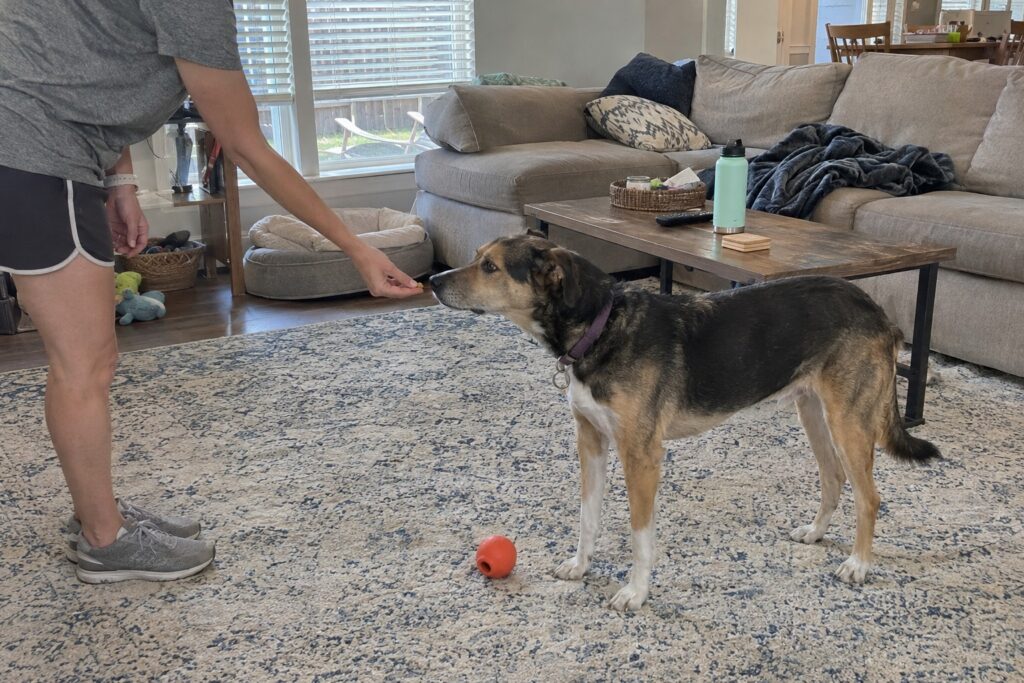
Once you know the separate pieces, common fetch problems become easier to identify. Watch the whole sequence once before changing anything. Does your dog lose interest before reaching the toy, carry it away afterward, or return but resist releasing it?
Your Dog Runs Away With the Toy
Do not chase. For some dogs, being pursued is more rewarding than returning the object. Stop the chase game, reduce the distance, and practice in a quieter, smaller space. Reward a step toward you before asking for more.
You can also rehearse approaching you without a toy so that returning has value on its own. Our advice on developing reliable recall covers that separate foundation. Keep sessions in secure areas while your dog’s responses are still developing.
Your Dog Drops the Toy Early
Make the return shorter and reward carrying for a manageable distance. If you ask for a release too soon, your dog may learn to drop the toy before reaching you. Wait until the dog is close, then give the cue and complete the exchange.
Check whether the toy is comfortable to hold. A heavy, awkward, or damaged object can make carrying unpleasant. If your dog suddenly stops picking things up, chews on one side, or seems painful around the mouth, ask your veterinarian rather than treating the change as a training issue.
Your Dog Returns but Will Not Release
Go back to calm trades without a throw. Use a reward that makes sense for your dog and avoid pulling against the mouth. A release that works with a quiet toy beside you is the starting point for a release during more exciting play.
Do not confuse a playful pause with permission to take risks. Growling, freezing, hard staring, or snapping around an object calls for a different, professionally guided approach. Keep children away from the interaction, avoid confrontation, and stop the game safely.
| What Happens | Likely Missing Piece | Next Practice Step |
|---|---|---|
| Chases but leaves the toy | Comfort with pickup | Reward mouth contact and brief holds nearby |
| Grabs the toy and runs away | A rewarding return | Shorten the distance and reward approaching |
| Drops it halfway back | Carrying toward you | Rebuild the return over a shorter distance |
| Brings it back but keeps it | A comfortable release | Practice calm trades without throwing |
| Loses interest quickly | A suitable activity or setup | Try a different toy or choose another game |
Keep Fetch From Becoming an Overexcited Habit
A successful retrieve does not mean every session needs more speed or more throws. The useful goal is cooperative play with a clear beginning and ending. Your dog should be able to take a break rather than becoming increasingly frantic each time you touch the toy.
Use Calm Starts and Clear Breaks
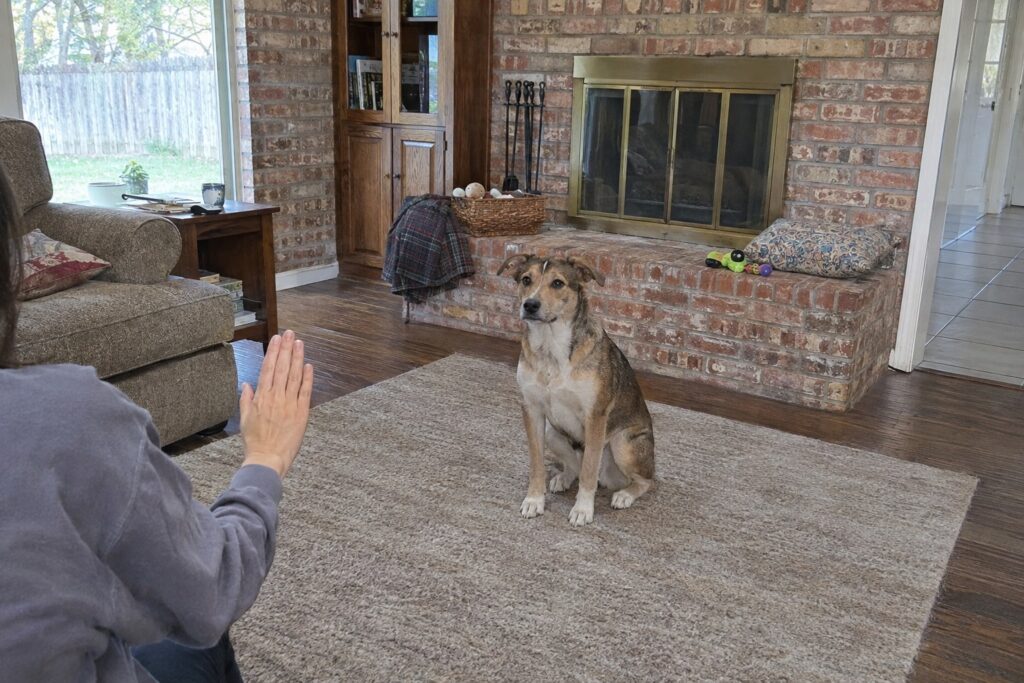
Wait for a manageable moment before setting the toy in motion. If your dog already knows sit, you can occasionally use that familiar behavior before a gentle roll. Do not demand a long stay or add multiple new rules while the retrieve itself is still confusing.
Pause between repetitions, let your dog drink when needed, and put the toy away calmly when you finish. If the game produces persistent barking, jumping, or grabbing at your hands, reduce the excitement and work on the missing foundation separately. More throwing rarely fixes an overaroused routine.
Use the same ending routine each time. You might complete one easy return, trade for the toy, put it out of reach, and move into a quiet household activity. Everyone in the family should respect that ending instead of restarting the game whenever the dog demands another throw. Predictable boundaries help play fit into the rest of the day.
Mix Play With Other Appropriate Activities
Fetch is only one option. Sniffing walks, short obedience practice, suitable food puzzles, and quiet rest can all have a place in a dog’s day. Dogs that do not enjoy carrying objects are not failing a basic requirement of being a companion.
For older dogs, our discussion of safe exercise routines for Fort Worth seniors offers additional considerations. Your dog’s comfort and veterinary guidance should shape the activity, not a target number of retrieves or a desire to tire the dog out.
When to Ask a Trainer for Help
A trainer can help you identify whether the difficulty is unclear timing, a missing obedience skill, too much excitement, or a situation that needs a different plan. Describe what your dog actually does rather than simply saying the dog refuses to fetch.
Support the Foundation, Not Just the Game
Our in-home training options can help owners improve communication where their daily routines happen. Our Fort Worth training programs also include options for dogs that need a broader obedience foundation. Ask about the right fit rather than assuming a retrieving-specific service is offered.
Board & Train is a fixed two-week program with daily training, an arrival evaluation, owner transfer sessions, and written guidance. Guaranteed Training Results and lifetime support apply to that program. We can discuss how to carry your dog’s trained behaviors into suitable activities after the program without promising that every dog will love fetch.
Call (817) 393-6224 to talk through your dog’s current habits and your training goals.
About All Dogs Unleashed Dog Training Fort Worth
All Dogs Unleashed Dog Training Fort Worth helps dogs and owners build practical obedience for everyday life. Our two-week Board & Train program combines daily training with owner transfer sessions and written instructions for continued practice. Private lessons and in-home training options are also available. Tell us which behaviors are missing and where your dog struggles so we can discuss a suitable training option, including how clearer handling can support appropriate play at home.
Frequently Asked Questions
Why does my dog chase the ball but not bring it back?
Chasing and returning are different behaviors. Your dog may enjoy movement without understanding that carrying the toy back keeps the game going. Practice pickup and a very short return beside you, reward progress, and increase distance gradually. Avoid chasing your dog with the toy, which can make running away the more rewarding activity.
Can an adult dog learn to fetch?
Yes, adult dogs can learn the separate skills involved in retrieving. Start with a toy your dog finds interesting and reward small steps instead of expecting a full return immediately. Consider comfort, previous experience, and physical ability. Ask your veterinarian about exercise restrictions if your dog has health concerns or an uncertain activity tolerance.
What should I do if my dog will not pick up a toy?
Try a different appropriate toy and reward interest before expecting a pickup. A look, nose touch, or brief mouth contact can be a useful starting point. Do not force the object into your dog’s mouth. If reluctance is sudden or accompanied by signs of mouth pain, contact your veterinarian before continuing training.
Should I pull the ball out of my dog’s mouth?
No. Practice a voluntary release using calm trades and suitable rewards rather than prying or pulling. Return to an easy exercise without throwing if the release breaks down during play. If your dog freezes, growls, snaps, or guards the object, stop reaching for it and ask a qualified professional for a safe plan.
How many times should I throw the toy?
There is no single safe number for every dog. Keep early sessions brief and stop while your dog is still comfortable and interested. Consider age, conditioning, health, footing, and outdoor conditions. Avoid repeated high jumps or hard turns, and ask your veterinarian to help set appropriate exercise limits for your individual dog.
What if my dog never enjoys fetch?
Choose another appropriate activity. Fetch is optional, and some dogs prefer sniffing, food puzzles, short training sessions, or other forms of play. You can encourage interest without insisting that retrieving become a favorite game. A useful routine should meet your dog’s needs and suit the dog’s comfort, abilities, and preferences.
Understanding how to teach a dog to fetch means rewarding the small pieces and respecting your dog’s comfort. For help with the broader training foundation, call (817) 393-6224 or reach out online. All Dogs Unleashed Dog Training Fort Worth is located at 4011 Benbrook State Rte, Fort Worth, TX 76116.
Ready to Get Started with All Dogs Unleashed Dog Training Fort Worth?
Build clearer communication for play and everyday life. Call (817) 393-6224 to discuss your dog’s needs and the next step for training.