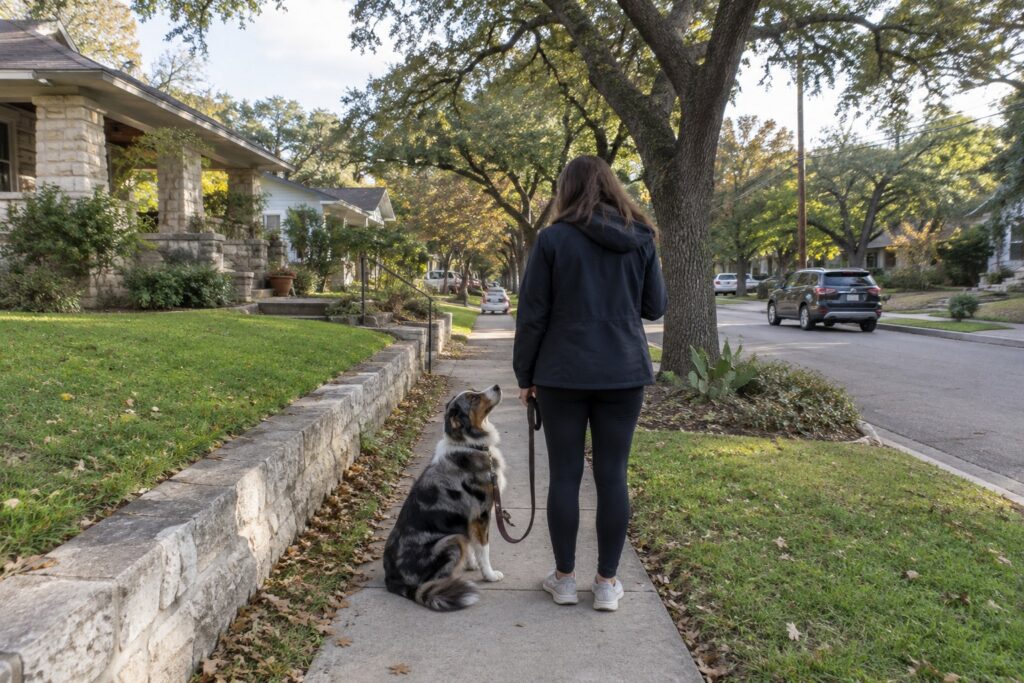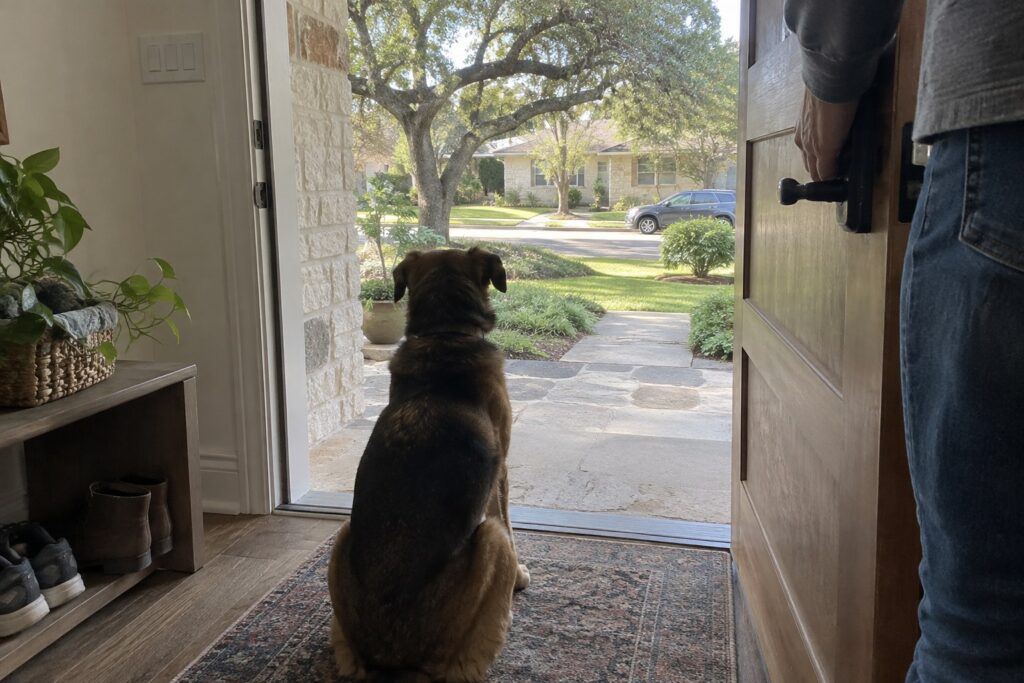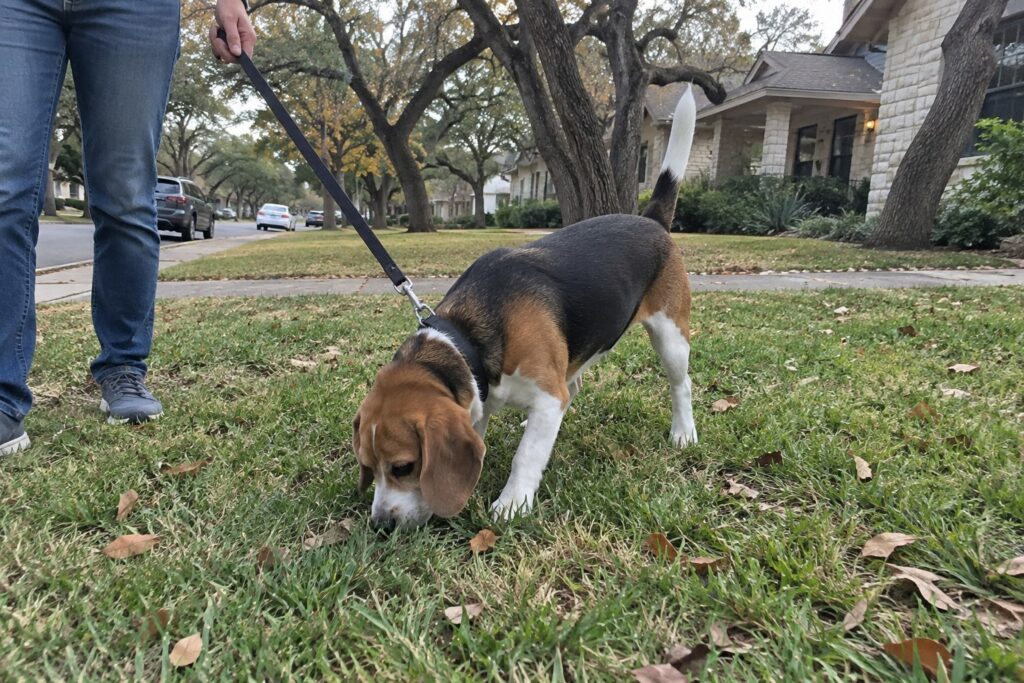

Your dog bolts after a squirrel at Trinity Park and suddenly your voice means nothing. Sound familiar? At All Dogs Unleashed Dog Training Fort Worth, we build reliable recall so your furry friend comes back every single time you call, leash or no leash. Solid dog recall training is the difference between a stressful walk and real freedom at the park. Our team uses personalized training programs built around the unique needs of every dog, because a Labrador chasing ducks needs a different approach than a Shepherd fixated on joggers.
Ready to trust your dog off-leash in Fort Worth? Call us today at (817) 393-6224.
Key Takeaways
- Reliable recall takes consistent practice in low-distraction spaces before testing your dog at busy Fort Worth parks.
- Never punish your dog for coming back, even if they took their sweet time getting to you.
- Effective dog recall training pairs the cue with something better than whatever your dog is chasing.
- A long line is your best friend during the early weeks, giving you control without crushing the fun.
When "Come!" Falls on Deaf Ears
You unclip the leash at Oakmont Park. Your dog bolts toward another dog, a squirrel, or that mystery smell near the trail edge. You call. You call again. Nothing. Your stomach drops as you jog after them, waving treats, hoping no one is watching.
It's nerve-wracking. A little embarrassing. And near a busy road or off-leash trail corridor, downright unsafe. Most dogs aren't ignoring you to be stubborn. They simply haven't been taught that "come" means come, every time, no matter what's more interesting.
This guide walks you through exactly how we build a reliable recall dog owners can trust. You'll learn the foundation blocks, the common mistakes that quietly break recall, a step-by-step method you can start tonight in the backyard, and the signs it's time to bring in a pro for serious dog recall training.
Let's fix this. For good.
Why Recall Is the Most Important Cue Your Dog Will Ever Learn
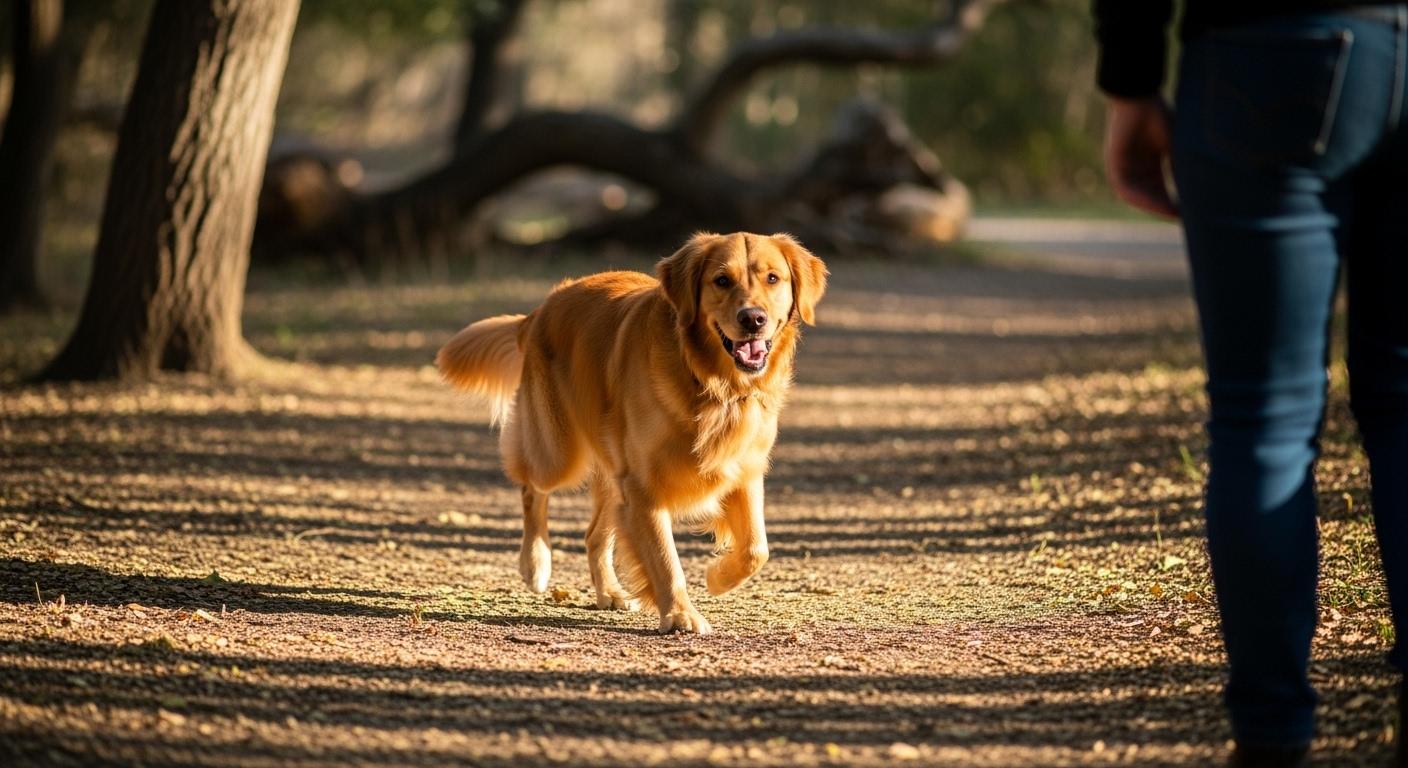
Ever had to chase your dog down a crowded trail while joggers swerve and your heart pounds? That moment is exactly why recall matters more than sit, down, or any trick you can teach. A solid off-leash dog training in Fort Worth foundation starts and ends with one question: will your dog come back when you call, every single time?
Recall Can Save Your Dog's Life
A reliable recall dog is a safe dog. We have seen the difference one strong cue makes in real moments:
- Stopping before a busy road
- Avoiding an off-leash aggressive dog
- Dropping something toxic on the trail
- Coming back from a fence line
Sit is convenient. Recall is lifesaving. When your dog turns on a dime and runs back to you, you are not just showing off training. You are buying back precious seconds in situations that could end badly.
Why Arlington and Keller Parks Make Recall Even Harder
The dog recall command falls apart in places packed with distraction. The Trinity Trails corridor runs thick with cyclists whipping past, joggers, strollers, and other dogs. Your dog's brain lights up. Add summer heat and reactivity climbs, especially in open spots like Oakmont Park where shade is thin and tempers run short.
Then there is the greenbelt along the river. Squirrels, rabbits, and lingering deer scent fire up prey drive in ways your backyard never will. A recall practiced only at home will not hold here. That is why we proof the cue across many situations, noises, and people until it becomes automatic.
Before you fix the cue, read what is pulling your dog's attention away. Is it the scent? The movement? Another dog? Once you know the trigger, you can train against it. That is the work that turns a backyard cue into a true off-leash partner.
The Building Blocks of a Reliable Recall
A strong recall is built in a specific order. Skip a step and the whole thing falls apart at the park. Here is the exact process we walk every Arlington and Keller client through when they want to teach a dog to come when called.
Step 1: Choose and Protect Your Recall Word
Pick one word and guard it like gold. Most owners do best with something short and clear. Good options include:
- "Come"
- "Here"
- A whistle tone
- Your dog's name plus "come"
Never use that word when you cannot back it up with a reward or a gentle long-line guide. And never use it to scold, end play at the dog park, or call your dog in for a bath. That is called poisoning the cue, and it is the number one reason the come command in dog training quits working. If you need to interrupt your dog for something unpleasant, walk over and get them instead.
Step 2: Make Coming to You the Best Thing That Ever Happens
Your dog has to believe you are more interesting than a squirrel. Reserve your highest-value reinforcer for recall only. We mean real stuff:
- Diced chicken or hot dog
- Freeze-dried liver
- A quick game of tug
- Big, goofy praise
When you call, run backwards a few steps to trigger the chase instinct. Get low when they arrive. Make a party out of it. If your dog gets bored snacks for sitting and steak for recall, the dog recall command becomes the easiest choice in their day.
Step 3: Proof the Cue Across Distractions
This is where most owners stall. Your dog listens at home and ignores you at the park. The fix is gradual exposure on a 15 to 30 foot long line, so they cannot self-reward by blowing you off.
Work this ladder, one step at a time:
- Inside the house, no distractions
- Backyard with normal yard smells
- Quiet corner of a park in Grapevine or Southlake
- Busier section of the Trinity Trails with cyclists and squirrel scent
Only move up when your dog hits recall 9 out of 10 times at the current level. The long line guarantees a win every time, and your relationship grows with every successful return.
Stuck on a step? Our trainers can build a custom recall plan for your dog. Call (817) 393-6224 to get started.
Common Mistakes That Undermine Your Dog's Recall
We understand that you've been working hard on this, and it can feel frustrating when your dog nails recall in the kitchen but blows you off at the park. Most recall problems aren't your dog being stubborn. They're small habits that quietly teach your dog the wrong lesson.
Repeating the Cue Without a Reward
Here's the rule we live by: one cue, one chance. When you call "come" three or four times in a row, you teach your dog the first few calls are optional. The word loses meaning fast.
If your dog doesn't respond on the first try, don't keep yelling. Walk them in with the long line and reward when they arrive. That's how a reliable recall dog gets built, by making the cue mean something every single time.
Calling Your Dog Only When Fun Ends
Why does your dog run away when you try to leash them up? Because "come" has started to predict the end of fun. Every park trip ends the same way: you call, they get clipped, they go home. Smart dogs catch on quickly.
Try the surprise party recall instead. Call your dog mid-play, throw a small reward party with high-value treats or a quick tug game, then release them back to play. Do this five or six times per outing. Now recall predicts something good and a return to freedom, not the end of the adventure.
Practicing Only at Home
The backyard is a controlled bubble. No squirrels darting across the trail, no other dogs, no joggers, no new smells. A dog with a backyard-only recall is not a dog with a recall.
Take the Trinity Trail greenway as a real test. Cyclists, ducks, off-leash dogs, fresh scent every ten feet. If you haven't practiced in environments like that, your dog has no framework for responding there. This is where serious off-leash dog training Fort Worth owners need actually happens, out in the world with distractions present.
If building that level of reliability on your own feels overwhelming, our board and train program in Fort Worth puts your dog through these exact real-world environments with a professional handler. You get a dog who comes back when called, no matter what's competing for their attention.
How to Practice Dog Recall Training at Fort Worth Parks
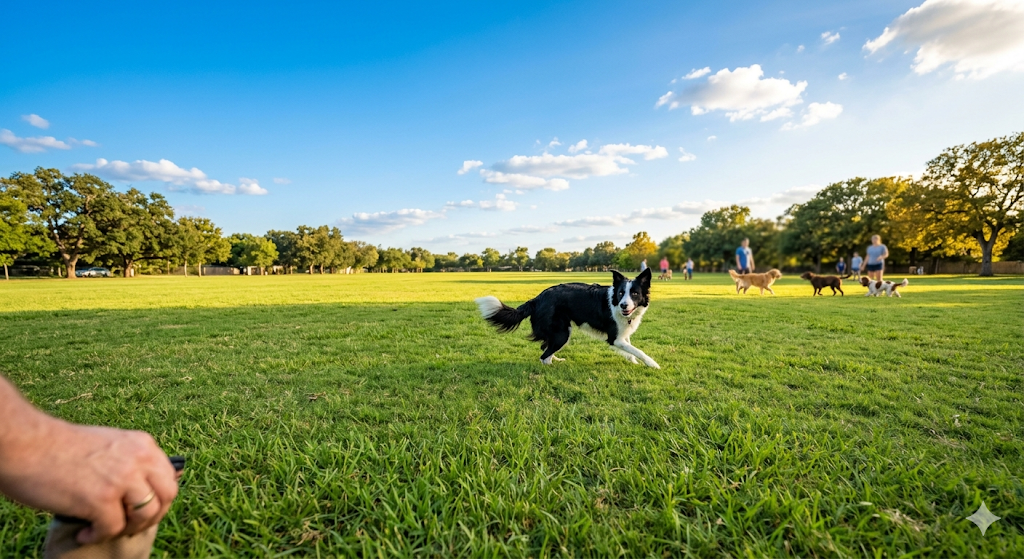
Imagine standing at the Gateway Park off-leash area near Beach Street. Your dog is 40 feet out, nose deep in grass, three other dogs running circles nearby. You say their name once. They turn, lock eyes, and sprint back to you like nothing else exists. That is what real recall looks like, and these are the local spots where we build it.
Best Parks and Trails for Recall Practice
Match the park to your dog's current skill level. Pushing too hard too fast is the fastest way to burn a recall cue.
- Gateway Park off-leash area (Beach Street): Moderate distraction. Good for early proofing once backyard work is solid.
- Trinity Trails near the Samuels Avenue bridge: High distraction with bikes, joggers, and other dogs. Advanced dogs only.
- Oakmont Park (southwest side): Wide open grass. Perfect for long-line distance drills.
- Sansom Park and the Lake Worth Trail corridor: Wildlife scent everywhere. This is where you test prey drive.
One important note: city ordinance requires dogs be under control at all times. Confirm off-leash rules at each park before you unclip anything, and use a long line everywhere else. If you want hands-on coaching with real off-leash control training, our team works dogs in these exact environments.
A Simple 10-Minute Recall Drill You Can Do Today
Grab a 20-foot long line, high-value treats (real chicken or cheese, not kibble), and head to Oakmont or a quiet field.
- Clip the long line to a back-clip harness. Let your dog wander and sniff for 30 seconds.
- Say their name and your recall cue once. Do not repeat.
- The moment they turn toward you, mark with "yes!" and back up a few steps.
- Deliver the top reward on arrival. Hold their collar gently while they eat.
- Release with "okay" and let them go sniff again.
Repeat five times, adding distance to each rep. Do not drop that long line until your dog hits 95 percent reliability across at least three different environments. Off-leash freedom is earned, not assumed.
If you have tried these drills and your dog still treats "come" like a suggestion, we can help. Our trainers build recall in the real places your dog struggles, not just a quiet backyard. Call us at (817) 393-6224 to talk through your dog and find the right program.
Frequently Asked Questions
How Long Does It Take to Build a Reliable Recall in Dogs?
Most dogs begin showing consistent improvement within 4 to 8 weeks of daily, structured practice, though high-distraction reliability can take several months. The timeline depends heavily on the dog's age, breed, and history with the cue. Working with a trainer at All Dogs Unleashed Dog Training Fort Worth can shorten that timeline by identifying gaps in your current approach early.
Can Older Dogs Learn to Recall as Effectively as Puppies?
Yes, older dogs can absolutely learn a reliable recall, though they may have more ingrained habits that require additional patience to work through. Senior dogs often have longer attention spans than puppies, which can actually work in your favor during training sessions. The key is consistent reinforcement and realistic expectations about how quickly the behavior will generalize to new environments.
Is It Better to Use a Long Line or a Retractable Leash During Recall Practice?
A long line, typically 20 to 30 feet, is strongly preferred over a retractable leash for recall training. Retractable leashes create constant tension on the leash, which can inadvertently teach dogs to pull and does not simulate the freedom needed for true off-leash practice. A flat long line gives you safety and distance without sending confusing feedback through the leash.
Should I Use the Same Recall Word for Every Member of My Household?
Yes, everyone in the household should use the exact same recall word and the same enthusiastic tone when calling the dog. Inconsistent wording confuses dogs and weakens the cue over time, especially in multi-person families with children. All Dogs Unleashed Dog Training Fort Worth recommends holding a quick family meeting to align on the chosen word before training begins.
What Should I Do If My Dog Reaches Me but Then Darts Away Before I Can Reward Them?
This is a very common issue and usually signals that the dog anticipates something unpleasant happening after they arrive, such as being leashed or taken inside. Practice calling your dog, rewarding generously, and then immediately releasing them to go play again so that coming to you never feels like a trap. Over many repetitions, your dog will learn that arriving at your side is always worth it.
Does Dog Recall Training Work for Reactive or Easily Distracted Dogs?
Recall can be trained in reactive and highly distracted dogs, but the approach needs to account for their specific triggers and arousal thresholds. Starting well below their threshold, using high-value rewards, and building duration gradually are all critical steps for these dogs. The team at All Dogs Unleashed Dog Training Fort Worth has experience working with reactive breeds and can customize a recall plan that fits your dog's profile.
How Do I Know When My Dog's Recall Is Strong Enough for Off-Leash Freedom?
A general benchmark is a 95 percent or better response rate across at least three different high-distraction environments on multiple separate days. Your dog should return quickly and reliably even when other dogs, wildlife, or food are present nearby. Before removing the leash in any unfenced area, confirm that the environment is legal for off-leash dogs and that your recall holds up under the specific distractions present at that location.
Ready to Get Started with All Dogs Unleashed Dog Training Fort Worth?
Call (817) 393-6224 to speak with our team directly. Reach out today and let's talk about how we can help.