
Fort Worth summers hit hard, and your dog feels the heat faster than you do. At All Dogs Unleashed Dog Training Fort Worth, we are a local dog training team that works with families across Tarrant County, and every July we field calls from worried owners whose pups overheated on a routine walk. Knowing the early dog heat stroke signs, heavy panting, bright red gums, thick drooling, can save your best friend's life. This guide walks you through what to watch for, what to do in the first five minutes, and how solid obedience training reduces the risk before the next heat wave rolls in.
Worried about your dog's summer safety? Call (817) 393-6224 to book a training session that builds life-saving recall.
Key Takeaways
- Early dog heat stroke signs include heavy panting, bright red or pale gums, thick drooling, and a racing heart rate.
- Body temperatures above 104°F signal heat stroke and need cooling plus a vet visit within minutes, not hours.
- Late symptoms like vomiting, wobbling, or collapse mean organ damage is starting and every second counts.
- Reliable recall and a rock-solid place command keep your dog out of dangerous heat exposure in the first place.
It's a Tuesday in July. The thermometer on your back porch reads 104°F, the pavement off Camp Bowie is closer to 140°F, and your dog has been outside for maybe five minutes. The panting started light. Now it's heavy, fast, and the drool is starting to pool. Most owners we talk to never saw the first warning sign coming because it looked just like normal happy panting.
That's why this guide matters today, not next weekend. Knowing the real dog heat stroke signs, and acting in the first few minutes, is the difference between a scary afternoon and an emergency vet bill, or worse. We'll walk you through the early symptoms most owners miss, the first aid steps to take before you reach the clinic, and why summer in Fort Worth puts our dogs at higher risk than dogs in cooler parts of the country.
You'll also learn which breeds tip into trouble faster, what a healthy heart rate and gum color look like, and the training cues that pull your dog out of danger fast. Fort Worth summers don't ease up much between June and late September, so let's start with why this climate is so hard on them.
Why Fort Worth Dogs Face Higher Heat Stroke Risk
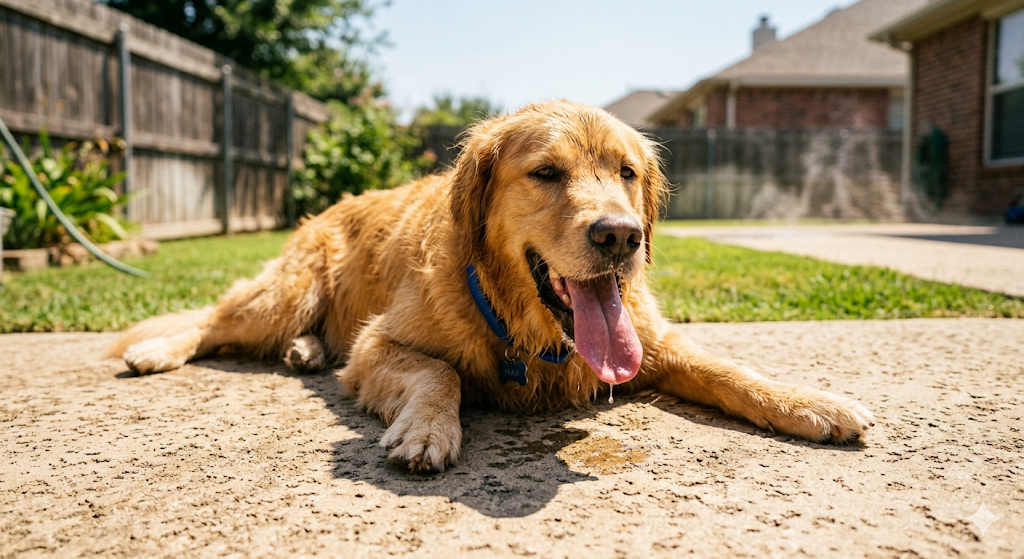
North Texas hits your dog harder than most parts of the country. We see more heat-related emergencies here from mid-June through mid-September than any other stretch of the year. The mix of triple-digit days, sticky humidity after evening storms, and sun-baked concrete creates a perfect storm for trouble.
Fort Worth's Summer Heat by the Numbers
Fort Worth averages 38 or more days per year above 100°F. Peak danger runs mid-June through mid-September, but late May can spike fast before your dog has time to adjust.
Surface temperatures are the silent threat. On a 95°F afternoon, asphalt and dark concrete can hit 140 to 160°F. That's enough to burn paw pads in under 60 seconds. Neighborhoods like Near Southside and Riverside trap even more heat thanks to the urban heat island effect, where dense buildings and pavement keep radiating warmth long after sunset.
Humidity makes things worse. Dogs cool themselves mostly through panting, since they only sweat through their paw pads. When Tarrant County humidity climbs after an evening thunderstorm, heavy panting becomes far less effective at shedding heat.
Know these numbers by heart:
- Normal temp: 101 to 102.5°F
- Heat stroke begins: 104°F
- Life-threatening: above 106°F
Which Dogs Are Most Vulnerable
Some dogs struggle more than others, and breed plays a huge role. If you have a flat-faced breed, the risk jumps sharply. Their shortened airways can't move enough air to cool the body down.
Highest-risk profiles we see most often:
- Brachycephalic breeds (Bulldogs, Pugs, Boxers)
- Dark-coated dogs
- Overweight dogs
- Seniors 7 years and older
- Puppies under 6 months
- Dogs not yet acclimated after a mild spring
That last one catches a lot of owners off guard. North Texas springs can stay mild well into May, then jump to 98°F overnight. Your dog hasn't built any heat tolerance yet. If your furry friend falls into one of these groups, consider working with a Fort Worth dog trainer who understands outdoor session limits so summer practice doesn't put them at risk. Smart training keeps you and your dog safe while you build the bond that makes hot-weather control possible.
How to Read Dog Heat Stroke Signs: Early to Critical
Heat stroke moves fast. A dog can shift from "a little hot" to a true medical emergency in 20 to 30 minutes of heavy sun exposure. The signs come in stages, and knowing the stage tells you whether to cool your dog at home or drive straight to the ER.
Early Warning Signs (Act Before It Gets Worse)
The first signs are subtle. Your dog still looks like your dog, just off. Watch for:
- Heavy, labored panting
- Thick, ropy drool
- Bright red gums or tongue
- Fast heart rate (check inside the rear thigh near the groin)
- Restlessness or pacing
- Glazed, unfocused eyes
Here is something most articles skip. Bright red gums mean your dog is working hard to cool down. If those gums shift toward pale pink, gray, or muddy, that is escalation, not improvement. Get into shade or AC right now and start cooling with cool (not ice cold) water on the belly, paws, and armpits.
Moderate to Severe Heat Stroke Symptoms
This is where heat exhaustion crosses into full heat stroke. If you see these, basic dog overheating first aid is no longer enough on its own. Call ahead to a Fort Worth emergency animal hospital while someone else starts cooling your dog.
- Vomiting, sometimes with blood
- Diarrhea
- Stumbling, "drunk on their feet" walking (ataxia)
- Muscle tremors or twitching
- Weak rear legs or refusing to stand
- Excessive drooling that suddenly stops (dehydration)
The shift from heat exhaustion signs to true heat stroke in dogs symptoms is the nervous system. Once balance, awareness, or muscle control go, organs are starting to take damage. Internal temperature at this point is often 105°F or higher.
What Collapse and Unconsciousness Look Like
Collapse does not always look dramatic. Sometimes your dog just lies down and will not get up. The body goes limp. They do not respond to their name, to touch, or to a favorite treat held near the nose. Breathing turns shallow and irregular. Gums may look white, blue-tinged, or gray, which signals shock.
Heart rate at this stage swings two ways: pounding and rapid, or weak and hard to find. Seizures can follow. This is a load-the-car, drive-now emergency. Cool with wet towels in the car and call the ER on the way so they can prep.
Worried your dog is showing these signs right now? Call your nearest Fort Worth emergency vet first. For training questions that help prevent these situations, reach our team at (817) 393-6224.
First Aid for Dog Heat Stroke: What to Do Right Now
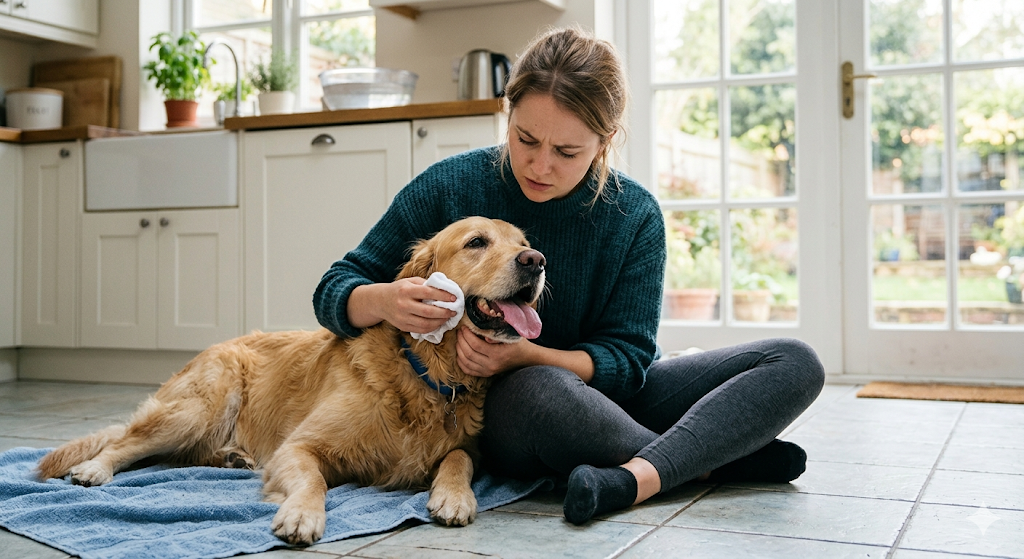
If you spot heat stroke symptoms, act within the first 5 minutes. Move your dog to a cool space, start cooling their body with room-temperature water on key pulse points, and call a vet immediately, even if they perk up. The next 10 minutes matter more than the drive to the clinic.
Step 1: Move Your Dog to a Cool Area Immediately
Get them out of direct sun. If you're on the Benbrook Lake trails or at a park without shade, carry them to your car and crank the AC. No vehicle nearby? Find deep shade under a tree or building overhang.
Strip off anything restrictive:
- Muzzle
- Collar or harness
- Backpack or vest
No air conditioning available? Fan them with whatever you have, a shirt, a hat, a car floor mat. Moving air pulls heat off their skin.
Step 2: Cool Them Down Safely (and What NOT to Do)
Here's how to cool down a dog the right way. Pour cool (not ice-cold) water on the spots where blood vessels run close to the skin:
- Armpits
- Groin
- Neck and throat
- Paw pads and belly
A wet cloth pressed to these areas works too. If they're conscious and alert, offer small sips of cool water. Don't force it.
Now the do-not-do list. This part of dog overheating first aid trips up well-meaning owners:
- No ice or ice-cold water. It constricts blood vessels at the skin and traps heat inside the body.
- Don't wrap them in a wet towel. A soaked towel acts like an oven mitt, holding heat against them.
- No ibuprofen, aspirin, or Tylenol. These are toxic to dogs and won't bring the fever down.
Step 3: Get to a Vet Even If They Seem Better
Yes, you still need to go. A dog who looks recovered can develop kidney failure, brain swelling, or blood clotting problems hours later, with zero outward warning. The internal damage from heat stroke doesn't always show up at the curb.
Call ahead to a Tarrant County emergency animal clinic so they're ready when you walk in. After the crisis passes, contact the All Dogs Unleashed Fort Worth team with any summer training safety questions. We'd rather talk you through prevention than hear about a close call.
Proven Ways to Prevent Heat Stroke in Fort Worth Dogs
Prevention beats panic every time. A few smart habits keep your dog safe through the worst of Texas summer, and they take less effort than you think.
Timing Walks to Avoid Peak Heat
The danger window runs 11 a.m. to 6 p.m., June through September. Walk before 9 a.m. or after 7 p.m. Even then, paved trails like those around River Legacy Park in Arlington hold heat well past sunset.
Use the 5-second pavement test: press the back of your hand to the asphalt for five seconds. If you can't hold it, your dog's paws can't either. Grass routes through shaded neighborhoods in Keller or Southlake are safer picks on hot evenings.
Hydration and Cooling Gear That Actually Works
Dogs need roughly 1 ounce of water per pound of body weight daily, more when it's hot. Always pack water for any walk over 15 minutes. Knowing how to cool down a dog before things turn dangerous starts with simple gear:
- Cooling vests soaked in cool water
- Wet bandanas around the neck
- Collapsible water bowls
- Booties for hot pavement
Skip the battery-powered fans and gimmicky cooling mats. And never leave your dog in a parked car. A Costco lot in August hits 140°F inside within minutes.
Knowing When to Skip Outdoor Training
Watch the heat index, not just the temperature. When it tops 103°F, move training indoors. Summer safety for your dog sometimes means trading the backyard for climate-controlled space, and that's where our All Dogs Unleashed Fort Worth dog trainers step in with board and train programs built for hot months.
If summer heat has you rethinking your dog's training routine, we run climate-controlled board and train programs all summer so your dog keeps learning safely. Call (817) 393-6224 to talk through what fits your dog best.
Frequently Asked Questions
How Long Does It Take for a Dog to Recover From Heat Stroke?
Recovery time depends on how quickly treatment began and how severe the episode was. Mild cases caught early may resolve within a day or two with rest and veterinary monitoring, while severe cases involving organ damage can require hospitalization for several days or longer. Some dogs experience lasting kidney or neurological issues, which is why a follow-up vet appointment is essential even after your dog appears normal again.
Can a Dog Get Heat Stroke Even With Access to Shade and Water?
Yes, shade and water reduce risk significantly but do not eliminate it entirely, especially during Fort Worth's most intense summer heat. High humidity slows the evaporation of panting, which is a dog's primary cooling mechanism, making the combination of heat and moisture particularly dangerous. Dogs that are overweight, older, or brachycephalic can overheat even in shaded outdoor areas when temperatures climb above 90 degrees.
Is It Safe to Resume Training Outdoors After a Heat Stroke Episode?
Your vet should clear your dog before returning to any outdoor physical activity, and a gradual reintroduction is strongly recommended. Dogs that have experienced heat stroke may have a lower tolerance for heat going forward, so the same conditions that were once manageable could trigger another episode more quickly. All Dogs Unleashed Dog Training Fort Worth can help you transition to indoor or early morning sessions while your dog rebuilds tolerance safely.
What Is the Difference Between Heat Exhaustion and Heat Stroke in Dogs?
Heat exhaustion is an earlier stage where the body is struggling to regulate temperature but has not yet failed, while heat stroke is a medical emergency involving a core body temperature above 104 degrees Fahrenheit and potential organ damage. A dog with heat exhaustion may still be alert and responsive, whereas a dog in heat stroke can become disoriented, uncoordinated, or unresponsive. Treating heat exhaustion promptly is critical because it can escalate to heat stroke within minutes in Fort Worth's summer conditions.
Does Pet Insurance Typically Cover Heat Stroke Treatment?
Most accident and illness pet insurance plans do cover heat stroke treatment since it is considered an acute medical emergency rather than a pre-existing condition. Coverage varies by provider and policy tier, so reviewing your deductible and reimbursement limits before an emergency is a smart step. Emergency vet care for severe heat stroke cases can run several hundred to over a thousand dollars, making insurance a worthwhile consideration for Fort Worth dog owners who spend time outdoors.
Are Certain Dog Coat Colors or Sizes More at Risk for Overheating?
Dark coated dogs absorb more radiant heat from direct sunlight, which can raise their surface temperature faster than lighter coated dogs in the same conditions. Very large breeds generate more internal body heat during exercise, while very small breeds can lose body water more quickly relative to their size. Both extremes benefit from extra precautions during Fort Worth summers, including shorter outdoor sessions and cooling vests designed for their specific body type.
Should I Change My Dog's Feeding Schedule During a Heat Wave?
Feeding your dog during the cooler parts of the day, such as early morning or evening, is generally recommended during heat waves. Digestion generates internal body heat, so a large meal right before outdoor activity can increase your dog's core temperature faster. Splitting meals into smaller portions spread throughout the day is another strategy that reduces digestive heat load without leaving your dog hungry.
Ready to Get Started with All Dogs Unleashed Dog Training Fort Worth?
Call (817) 393-6224 to speak with our team directly.
Reach out today and let's talk about how we can help.
Want hands-on help with your dog? Learn more about dog training in Fort Worth.