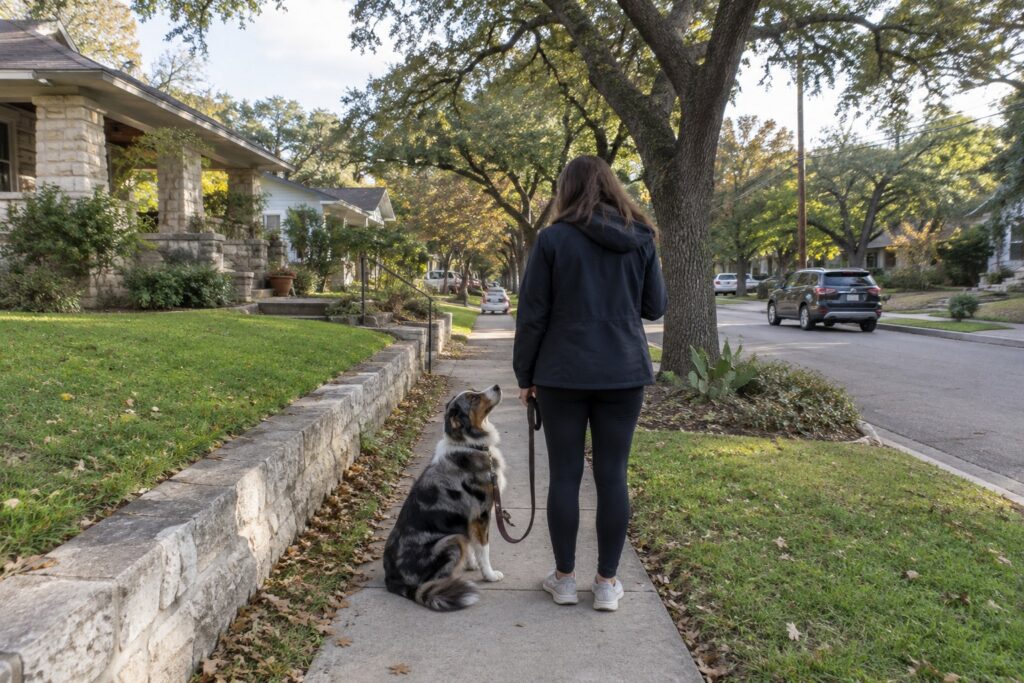

If you are searching for how to stop dog marking in the house, the timing probably is not an accident. Fall brings new decorations, a Christmas tree in the living room, visiting relatives with suitcases, and sometimes a guest dog for Thanksgiving. For a dog that marks, every one of those changes is a fresh invitation to lift a leg on something new.
At All Dogs Unleashed Dog Training Fort Worth, we help owners on the southwest side and across Tarrant County sort out marking from ordinary accidents, then build a plan that actually sticks. That plan usually combines a vet check, thorough cleanup, tight supervision, and structured training, with our two-week Board and Train program for dogs that need a full reset.
Want your home marking-free before the holiday guests show up? Talk with our team about the right plan for your dog.
Key Takeaways
- Marking is a small squirt of urine on an upright surface to leave a scent message, and it is different from a full potty accident.
- Any sudden change in your dog’s urination deserves a veterinary visit first, because infections and other health problems can look like behavior issues.
- Enzyme cleaners, supervision, and limited freedom stop your dog from refreshing old marks while you work on training.
- Holiday changes like new decorations, guest luggage, and visiting dogs are common marking triggers, so prepare before they arrive.
- Our fixed two-week Board and Train program addresses stubborn marking with daily structured training, owner transfer sessions, guaranteed results, and lifetime support.
Marking or Accidents and Why the Difference Matters
Before you can fix the issue, you need to know which problem you have. A dog that empties its bladder on the rug has a different issue than a dog that leaves a few drops on the corner of the couch. The fix for one will not solve the other.
What Marking Looks Like
According to the American Kennel Club’s guide to marking versus peeing, urine marking is a normal dog behavior where a dog pees small amounts on an object, usually a vertical surface. Intact males mark the most, but neutered males and females of either status can mark too. The habit often starts in adolescence, around 6 to 9 months old.
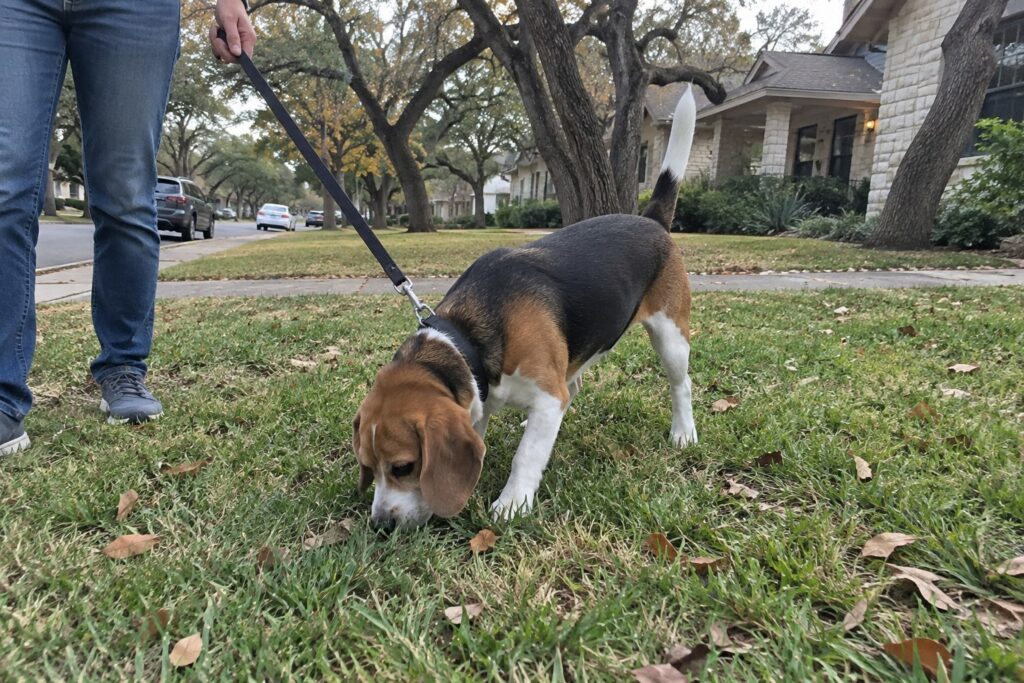
Inside the house, marking tends to show up on door frames, furniture legs, curtains, the corners of beds, and anything that smells new. You will often see a lot of sniffing right before it happens.
What a Potty Accident Looks Like
An accident is usually a full puddle, often on a flat surface like carpet or tile. It tends to happen when a dog cannot get outside in time, has too much freedom before it is reliably house trained, or has a medical issue that makes it go more often.
| Sign | Usually Marking | Usually an Accident |
|---|---|---|
| Amount of urine | A small squirt or a few drops | A full puddle |
| Where it lands | Upright surfaces like door frames, furniture, and bags | Flat floors like carpet, rugs, and tile |
| Body posture | Leg lift or a quick sideways squirt | Full squat |
| What sets it off | New objects, new smells, visitors, other dogs, stress | Long gaps between potty breaks, excitement, too much freedom |
| Bladder status | Can happen right after a walk | Usually a full bladder |
Rule Out Health Problems First
Any time a dog starts urinating in new places, call your veterinarian before you treat it as a training problem. Urinary tract infections, bladder stones, kidney disease, diabetes, and age-related changes can all cause more frequent or urgent urination. Some of these conditions look a lot like marking at first glance.
When to Call the Vet
Book a vet visit if your dog suddenly starts going indoors after being reliable, strains or cries while urinating, has blood in its urine, drinks much more water than usual, or seems to need to go constantly. Senior dogs deserve extra attention here, and our overview of cognitive decline in senior dogs explains how aging can affect house habits.
Talk About Spay and Neuter
Because hormones drive a lot of marking, your veterinarian may recommend spaying or neutering if your dog is still intact. It often reduces marking, but it does not always stop a habit that has already formed, which is why training and cleanup still matter.
Why Dogs Mark More During the Holidays
Once your vet has cleared your dog, look at what is changing around it. Marking is often a way for a dog to make new things smell familiar or to cope with stress, and the stretch from Halloween through New Year’s is full of both.
New Objects and New Smells
A fresh Christmas tree, a stack of wrapped gifts, fall wreaths, and boxes of decorations pulled out of the garage all carry unfamiliar smells. Guest suitcases and shoes carry even more, including the scent of other people’s pets. To a marker, each of these is a blank bulletin board.
Visiting Dogs and Busy Routines
A relative’s dog staying over for Thanksgiving is one of the most common triggers we see, because both dogs may start trading marks around the house. Busy holiday schedules also mean shorter walks, later potty breaks, and less supervision, which gives your dog more chances to practice the habit.
Stress plays a part too. Crowds, loud gatherings, and a disrupted schedule can push anxious dogs to mark. If your dog also struggles when left alone, our tips on helping a dog with separation anxiety may address part of the picture.
If marking has already become a pattern in your home, structured training is the fastest way to break it. Our fixed two-week Board and Train program includes problem behavior correction that targets root causes and triggers instead of just the symptoms.
Clean Up Old Marks the Right Way
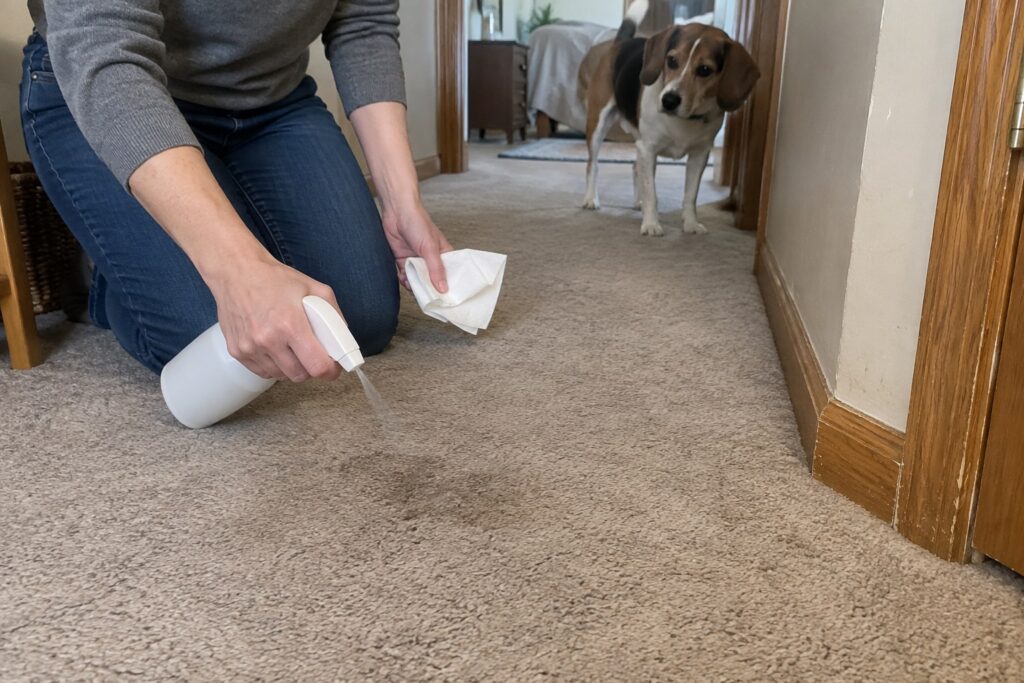
Dogs are drawn back to spots that still smell like urine, even when you cannot smell anything yourself. If old marks are left behind, your dog will keep refreshing them, and training will feel like it is going nowhere.
Use an Enzyme Cleaner
Enzyme cleaners made for pet urine break down the compounds that cause the smell, rather than just covering them up. Soak the spot generously, follow the label’s contact time, and let it air dry. Avoid ammonia-based cleaners, because urine also contains ammonia and the smell can invite your dog to mark the spot again.
Find the Spots You Missed
A small UV flashlight makes dried urine easier to see on walls, baseboards, and furniture. Check the usual targets at dog height: door frames, the corners of couches, curtain hems, and the base of any furniture near entryways.
| Surface | Cleanup Approach | Extra Tip |
|---|---|---|
| Carpet and rugs | Blot, then soak with enzyme cleaner deep enough to reach the pad | Place a piece of furniture or a food bowl over the spot for a while |
| Baseboards and door frames | Spray enzyme cleaner and wipe, then repeat after it dries | Check both sides of doorways that lead outside |
| Upholstered furniture | Test enzyme cleaner on a hidden spot first, then treat | Cover favorite targets with a washable throw during training |
| Tile and hard floors | Clean grout lines well, since urine can soak in | Skip bleach and ammonia cleaners |
| Bags, shoes, and gifts | Keep them off the floor or behind closed doors | Give guests a closet or a luggage rack for suitcases |
How to Stop Dog Marking in the House With Supervision and Training
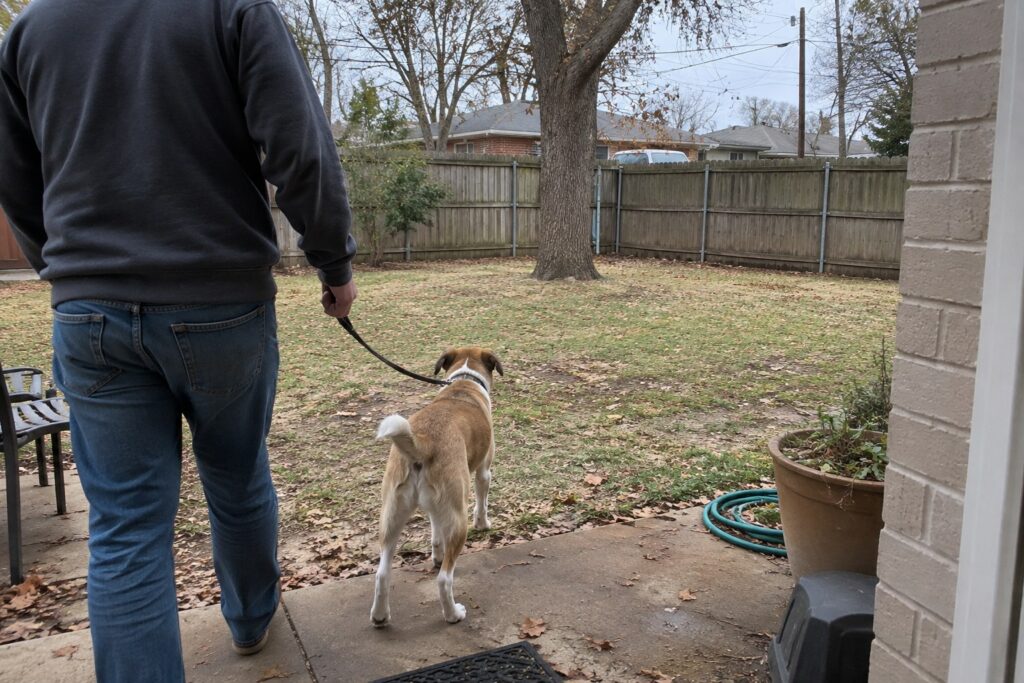
Cleanup removes the old invitations. Supervision and training keep new marks from happening and teach your dog what you want instead. The goal is simple: your dog should have almost no chances to mark indoors, and plenty of chances to be rewarded outside.
Limit Freedom and Supervise Closely
For now, your dog does not need free run of the house. Keep it in the same room as you, use baby gates to close off favorite marking areas, and try a leash or house line so it stays near you. When you cannot watch, use a crate or a small dog-proofed space. A well-introduced crate can be a calm spot, and our list of common crate training mistakes Fort Worth owners make will help you avoid setting it up as a punishment.
Interrupt Calmly and Redirect Outside
Watch for the lead-up: intense sniffing at one spot, circling a new object, or starting to lift a leg. The moment you see it, say your dog’s name or a cue like “outside” in a calm, clear voice, then walk it straight out to its potty area. Reward generously when it goes there. Never punish marking you find later, because your dog will not connect your reaction to something it did minutes or hours ago.
Build Structure Into the Day
Regular potty breaks, especially after meals, naps, play, and when guests arrive, lower the pressure. A reliable place command is also useful, because a dog settled on its bed is not wandering the house sniffing for new targets. Consistency matters just as much. Everyone in the family should follow the same rules, because mixed signals slow training down.
| Situation | What to Do | Why It Helps |
|---|---|---|
| Your dog starts sniffing a door frame | Calmly interrupt and take it outside | Stops the mark and rewards the right spot |
| You find a mark later | Clean it with enzyme cleaner and move on | Punishing after the fact only confuses your dog |
| You are busy cooking or hosting | Use a crate, gate, or place bed | Removes chances to mark while you cannot watch |
| A new object comes into the house | Keep it off the floor at first and supervise closely | Prevents new objects from becoming targets |
| Your dog potties outside | Reward right away with a treat and praise | Builds a strong habit of going in the right place |
Getting Your Home Ready for Holiday Guests
A little planning before guests arrive can prevent most holiday marking. Start about a week ahead so your dog has time to adjust to changes before the house fills up.
Introduce Decorations Gradually
Put up the tree and decorations while you can supervise closely, and consider a baby gate or exercise pen around the base of the tree for the first few weeks. Keep gift bags, shopping bags, and boxes off the floor.
Plan for Luggage and Visiting Dogs
Ask guests to keep suitcases in a closed guest room or on a luggage rack. If a guest dog is coming, keep both dogs supervised, take them out together often, and give each a separate space to rest. If your house will simply be too hectic, our dog boarding in Fort Worth offers 24-hour supervision and individual sleeping quarters in a climate-controlled facility, and you bring your dog’s regular food so its diet stays the same.
When to Call a Professional Trainer
Some dogs stop marking quickly once the vet has cleared them, the old spots are cleaned, and supervision tightens up. Others keep finding new targets no matter what you try. If marking has lasted for months, spikes whenever visitors come over, or comes with other problems like anxiety or pushy behavior around other dogs, it is time for professional help. Our guide to signs your dog needs professional training can help you decide.
Our Two-Week Board and Train Program
For most families, we recommend starting with our two-week Board and Train program. Your dog stays at our facility and trains every day, beginning with a behavioral assessment on arrival. Trainers use a balanced approach that combines positive reinforcement with clear structure, building reliable obedience like place and working on problem behaviors by identifying triggers and addressing root causes.
Near the end of the program, owner transfer sessions teach you the cues, timing, and handling your dog learned, with practice in different environments. You also get detailed written instructions, and every Board and Train graduate is backed by guaranteed results and lifetime support at no additional charge. Affirm financing is available.
In-Home Lessons for Household Habits
Marking happens in specific rooms, around specific objects, and it often helps to work right there. Our in-home dog training and private lessons bring a trainer to your house to address household habits where they happen and coach every family member on the same routine. You can also compare all of our dog training programs in Fort Worth to find the right fit.
Ready to enjoy a marking-free home this holiday season? Call us at (817) 393-6224 to talk through the best option for your dog.
About All Dogs Unleashed Dog Training Fort Worth
All Dogs Unleashed Dog Training Fort Worth helps Tarrant County families build dogs that are easy to live with, including dogs that have picked up habits like marking indoors. Our fixed two-week Board and Train program combines daily structured training, a behavioral assessment on arrival, owner transfer sessions, and detailed written instructions, backed by guaranteed results and lifetime support. We also offer private lessons and in-home training, refresh training, and boarding from our climate-controlled facility at 4011 Benbrook State Rte on the southwest side of Fort Worth.
Frequently Asked Questions
Why is my dog suddenly marking in the house?
Sudden marking often follows a change, like new furniture, decorations, visitors, a new pet, or a move. Stress and reaching adolescence can also trigger it. Because urinary tract infections and other health problems can look like marking, schedule a veterinary visit first. Once your dog is cleared, clean old spots with an enzyme cleaner and supervise closely while you retrain.
Does neutering stop a dog from marking?
Spaying or neutering often reduces marking, because hormones play a big part in the behavior, especially in intact males. It does not always stop a habit that has already formed, though, and neutered dogs can still mark. Talk with your veterinarian about timing, and pair any procedure with cleanup, supervision, and consistent training to break the habit.
Should I punish my dog for marking?
No. Punishing a mark you find later does not work, because your dog cannot connect your reaction to something it did earlier. Harsh reactions can also make some dogs anxious or sneaky about marking. If you catch your dog in the act, calmly interrupt, take it outside, and reward it for going in the right spot.
How long does it take to stop a dog from marking?
It depends on how long the habit has been going on, what triggers it, and how consistent the household is. Some dogs improve within a few weeks of tight supervision and thorough cleanup, while long-standing habits take longer. Our two-week Board and Train program gives stubborn markers a focused reset with daily structured training and owner transfer sessions.
Why does my dog mark when guests come over?
Visitors bring new smells on their shoes, bags, and clothes, and sometimes the scent of their own pets. Some dogs mark to make those smells familiar, while others mark because a busy house feels stressful. Keep luggage behind closed doors, take your dog out when guests arrive, and supervise closely or use a crate during gatherings.
Can a dog trainer help with marking?
Yes. A trainer can help you figure out what triggers the marking and build structure around it, including supervision, place training, and a clear potty routine. At All Dogs Unleashed, we address marking through our two-week Board and Train program and through in-home lessons that work on the habit right where it happens in your house.
Learning how to stop dog marking in the house comes down to a clear order of steps: rule out health problems, clean every old spot, limit your dog’s freedom while you supervise, and reward it for going in the right place. Start before the decorations and guests arrive, and the holidays will be much easier. If you want help, call (817) 393-6224 or reach out online. You can also visit us at our location at 4011 Benbrook State Rte on the southwest side of Fort Worth.
Ready to Get Started with All Dogs Unleashed Dog Training Fort Worth?
Whether your dog needs our full two-week Board and Train program or a few in-home lessons focused on your household routine, our team is ready to help you enjoy a cleaner, calmer holiday season. Call (817) 393-6224 to talk with our team today.