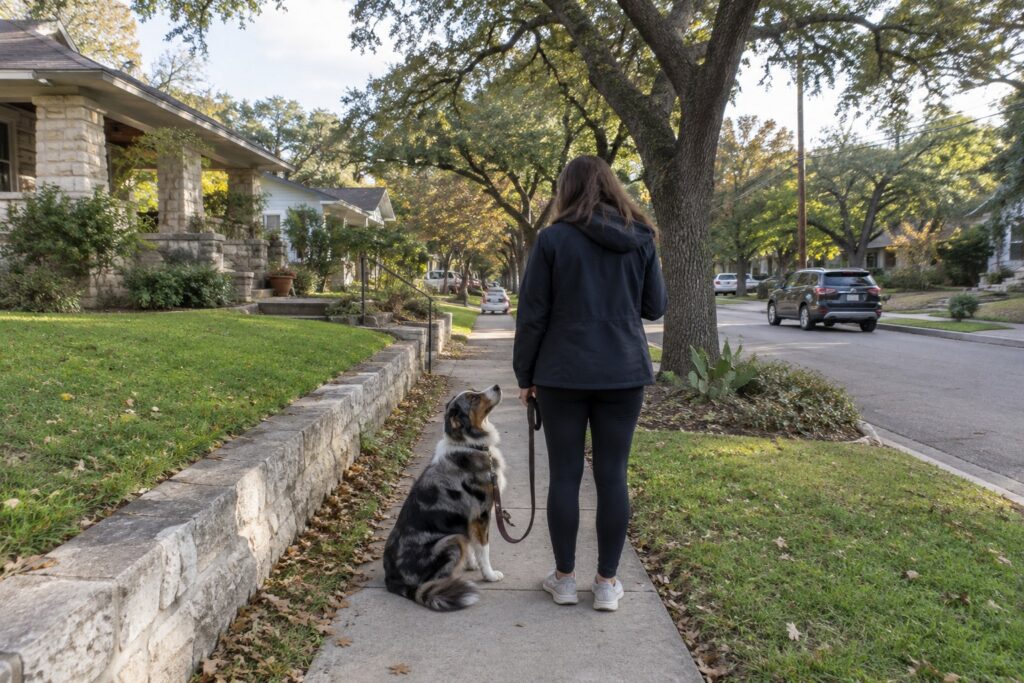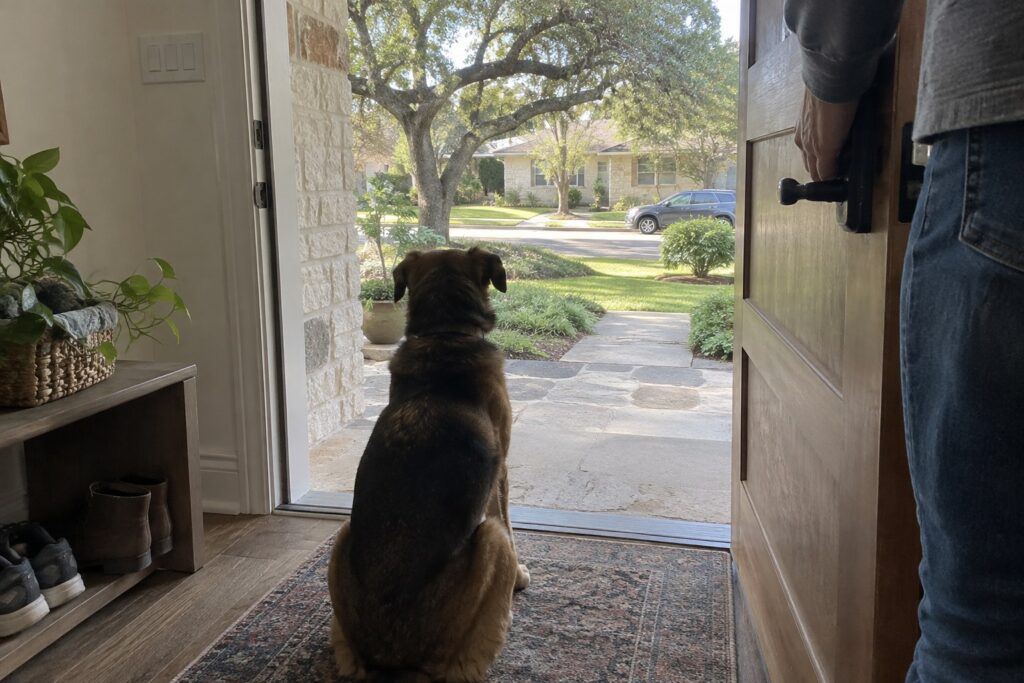

If your dog explodes into barking every time someone rings the bell, Halloween night can feel like a two-hour alarm drill. The good news is that you can stop dog barking at the doorbell with a clear plan, and the weeks before trick-or-treaters and holiday guests arrive are the right time to start. Doorbell barking is a habit, and habits can be changed with management, practice, and a better job for your dog.
At All Dogs Unleashed Dog Training Fort Worth, we work with doorbell barkers, door dashers, and overexcited greeters from all over the southwest side of the city. Most owners start with the home routine below. When the habit is deeply rehearsed, our fixed two-week Board & Train program gives your dog daily structured practice with our trainers and sends you home with a plan you can keep using.
Want a calmer front door before the costumes show up? Talk with our team about what your dog needs.
Key Takeaways
- Dogs bark at the doorbell for different reasons, including alerting, guarding territory, excitement, and fear, and the right fix depends on which one is driving your dog.
- Management tools like baby gates, a leash, and a quiet room keep your dog from rehearsing the barking and from dashing out an open door on Halloween night.
- Pairing the doorbell sound with a trained place command, practiced in small steps over several weeks, gives your dog a calm job to do when the bell rings.
- Current ID tags and an up-to-date microchip registration matter more on Halloween, when the front door opens again and again.
- For persistent barking, our fixed two-week Board & Train program addresses problem behaviors like excessive barking and ends with owner transfer sessions, guaranteed results, and lifetime support.
Why Dogs Bark at the Doorbell
The doorbell is one of the most predictable triggers in your dog’s life. It rings, something exciting or unfamiliar happens on the other side of the door, and your dog learns fast that the sound means action. Over months and years, the bark gets louder and faster because it seems to work: the person at the door eventually goes away or comes inside.
Before you can change the behavior, it helps to know what kind of doorbell barker you live with. Many dogs are a mix, but one motivation usually leads.
Alert Barking
Some dogs simply announce that something happened. They bark a few times, look toward you, and settle once you acknowledge the noise. This is normal dog behavior, and many owners are glad to have it. The goal is not to erase the alert but to put an off switch on it.
Territorial Barking
Territorial barkers treat the front door as a boundary to defend. The bark is often deeper, the body is stiff and forward, and the dog may rush the door or window. These dogs need clear structure and distance from the door while they learn that visitors are not their problem to solve.
Excitement Barking
Social dogs often bark because the doorbell predicts their favorite thing: new people. You will see a wagging tail, spinning, jumping, and high-pitched barking. Excitement barkers usually respond well to a place routine, because they need somewhere to put all that energy.
Fear Barking
Fearful dogs bark to make the scary thing go away. Look for a lowered body, tucked tail, backing up while barking, or hiding afterward. Masks, capes, glowing props, and loud groups of kids can make Halloween especially hard for these dogs, so their plan should lean heavily on management and gentle, gradual exposure.
| Bark Type | Common Cause | Best Fix |
|---|---|---|
| Alert | Announcing a new sound or visitor | Acknowledge once, then cue a trained quiet or place |
| Territorial | Guarding the door, yard, or window | Block door access with gates, build distance, reward calm behavior |
| Excitement | Doorbell predicts guests and attention | Doorbell desensitization plus a reliable place command |
| Fear | Unfamiliar people, costumes, loud noise | Quiet room, gradual exposure, no forced greetings, professional help |
Management Comes First on Busy Nights
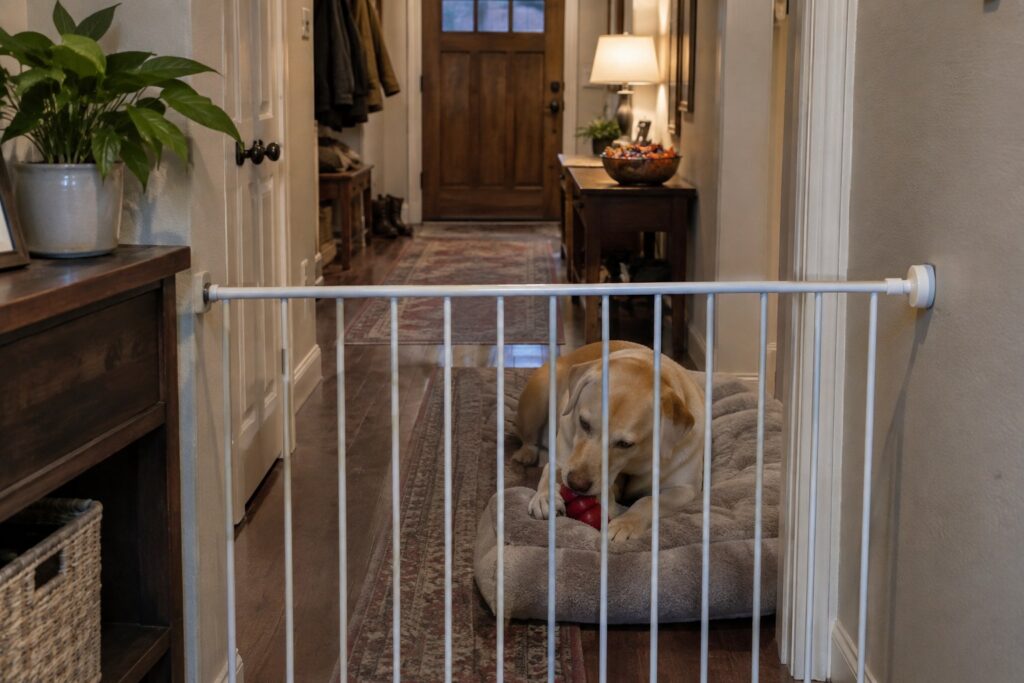
Training takes weeks of repetition, but Halloween arrives on a fixed date. Management is how you keep your dog safe and stop the barking habit from getting stronger while you train. Every time your dog gets to charge the door and bark until the visitor leaves, the behavior gets a little more rewarding.
Baby Gates and a Quiet Room
A gate across a hallway or kitchen doorway keeps your dog out of sight of the front door. For many dogs, a closed bedroom with a comfortable bed, water, and a long-lasting chew is even better. The ASPCA recommends keeping all but the most social pets in a separate, comfortable room away from the front door during peak trick-or-treating hours. Background noise from a fan or radio can soften the sound of the bell and the chatter on the porch.
Keep a Leash on During Arrivals
For holiday guests, clip a regular leash to a flat collar or harness a few minutes before people are due. You can step on the leash or hold it short so your dog cannot rush the door or jump on visitors. Once the first excitement passes, reward calm behavior and let your dog say hello on your terms.
Plan Halloween Night in Advance
Decide ahead of time where your dog will be during trick-or-treating, who will answer the door, and when your dog gets a potty break. Some owners sit on the porch with the candy bowl so the bell never rings at all. Others post a “please knock” note and meet kids at the door. Take your dog out for a walk and a potty break before dark so the evening starts with a tired, relieved dog.
Check ID Tags and Microchip Details
With the door opening dozens of times, escape risk goes up. The AKC recommends keeping pets indoors during trick-or-treating hours, and both the ASPCA and the AVMA stress proper identification, such as a collar tag and a microchip, in case a pet slips out. Check that your dog’s collar tag has your current phone number, and confirm the microchip registry has your up-to-date contact details.
How to Stop Dog Barking at the Doorbell, Step by Step
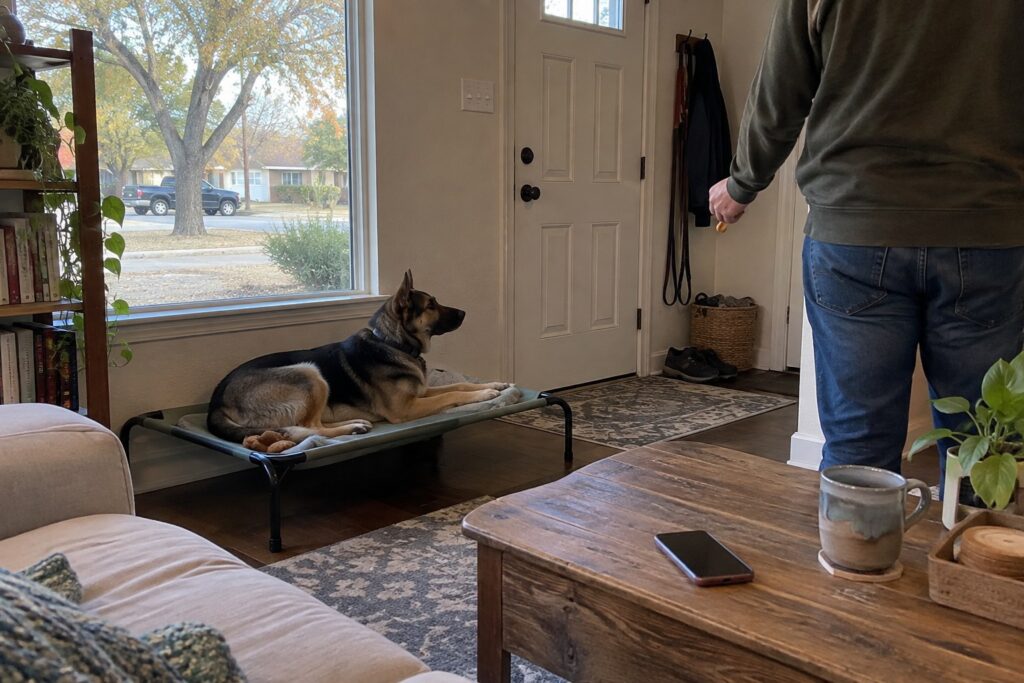
This is the heart of the plan. You will change what the doorbell means to your dog and teach a replacement behavior that is hard to do while barking. Start at least a few weeks before Halloween, keep sessions short, and end each one while your dog is still succeeding.
Step 1: Teach a Solid Place Command
Choose a bed, mat, or raised cot a good distance from the front door. Lure your dog onto it, mark the moment all four paws are on, and reward. Add a word like “place,” then build duration a few seconds at a time. Your dog should learn to stay there until you give a release word. Practice in quiet moments before the doorbell ever enters the picture.
Step 2: Make the Doorbell Boring
Record your doorbell on your phone or use a video of a similar chime. Play it at a very low volume while your dog is relaxed, then immediately give a small treat. Repeat several times per session. The AKC’s doorbell training advice follows the same idea: desensitize your dog to the sound so it stops predicting a big event. Raise the volume only when your dog stays calm at the current level.
Step 3: Link the Bell to Place
Once the recording no longer causes barking, play it and cue “place.” Reward generously when your dog goes to the bed. Over many repetitions, you want the doorbell itself to become the cue to head to place. If your dog barks, lower the volume or go back a step. Barking means the challenge is too hard right now, not that your dog is being stubborn.
Step 4: Add the Real Door
Next, ask a family member to ring the actual bell while you stand near the place bed. Then have them step inside and walk out again while your dog holds place. Gradually add knocking, voices, rustling bags, and a helper wearing a hat or simple costume piece. Each new layer is a separate step, so expect a little regression and slow down when you see it.
Step 5: Practice With Real Visitors
Invite a patient friend or neighbor over for short practice visits. Keep your dog on leash near the place bed, reward quiet, and let the visitor ignore your dog until it settles. Several short visits in a week teach more than one long, chaotic party. By Halloween, your dog should have had many calm doorbell repetitions under its belt.
Ready for a structured plan with daily practice? Our two-week Board & Train program works on excessive barking and door manners with our trainers every day.
Preventing Door Dashing on Halloween
Barking is noisy, but a dog that bolts through an open door is a safety emergency. Halloween combines an open door, dark streets, groups of kids, and cars moving through neighborhoods, which is why door control deserves its own practice.
Teach a Wait at Thresholds
Ask your dog to sit or stand at the door, then reach for the handle. If your dog moves forward, close the door. Open it again only when your dog stays put, and release with a clear word before walking through together. Practice at every door your dog uses, including the back gate and the garage.
Use Physical Barriers as Backup
Even a well-trained dog can make a mistake when the night gets hectic. A gate, a closed interior door, or a crate adds a second layer so a single slip does not turn into a lost dog. If your dog has already learned to slip out the door, in-home dog training lets a trainer work on the problem at your actual front door, with your doorbell and your routine.
Watch the Candy Bowl
Halloween treats are a real hazard. The ASPCA notes that chocolate in all forms, especially dark or baking chocolate, can be very dangerous for dogs, and sugar-free candies with xylitol can cause serious problems. Keep the candy bowl up high, remind kids not to share, and call your veterinarian right away if your dog gets into anything.
What Not to Do About Doorbell Barking
Some common reactions make doorbell barking worse. Avoiding them is just as important as the training steps above.
Yelling Over the Barking
When you shout “quiet” at full volume, many dogs hear you barking along with them. The noise level in the house goes up, arousal goes up, and the doorbell becomes an even bigger event. Stay calm, move toward your dog, and redirect to place with a clear cue and a reward.
Punishing a Fearful Dog
If your dog barks because it is scared, harsh punishment adds more fear to an already frightening moment. That can suppress the warning bark without changing how your dog feels about visitors, which is not a trade you want. Fearful dogs need distance, predictability, and patient exposure. If fear seems severe or sudden, talk with your veterinarian to rule out pain or a medical issue.
Forcing Greetings
Pushing a nervous dog toward a trick-or-treater in a mask, or letting kids crowd a dog that is barking, sets everyone up for trouble. Let your dog observe from a safe distance and choose to approach. Watch for the body language cues covered in our post on dog aggression signs owners often overlook, and end the interaction before your dog gets overwhelmed.
Skipping Costume Caution
If you want your dog in a costume, choose one that does not restrict movement, sight, hearing, or breathing, and has no small pieces to chew off. Try it on for short periods beforehand. Many dogs are happier with a festive bandana or no costume at all, especially on a night that is already stressful.
When to Get Professional Help
Home practice solves a lot of doorbell barking. But if your dog barks nonstop for minutes, lunges at the door, bites at the leash, or cannot calm down even with management in place, the habit may be too ingrained to fix on a deadline. Our post on the signs your dog needs professional training can help you decide.
Board & Train for Persistent Barking
Our Board and Train program in Fort Worth is a fixed two-week program. Your dog stays at our climate-controlled facility and works with our trainers daily, starting with a behavioral assessment on arrival. The program addresses problem behaviors, including excessive barking, by identifying triggers and building reliable obedience like place and wait. Near the end, owner transfer sessions teach you the commands, timing, and techniques your dog learned, with practice in various environments and detailed written instructions to take home. Board & Train comes with guaranteed results and lifetime support at no additional charge.
In-Home Lessons for Door Manners in Your House
Some doorbell problems are tied closely to one house, one entryway, and one family routine. Private lessons at home let a trainer observe the barking as it actually happens and coach you through the fix. In-home sessions also work well as a follow-up for dogs whose owners want extra help at their own front door. You can compare formats on our dog training programs page.
Pick the Right Timing
Because Halloween, Thanksgiving, and the winter holidays come close together, early fall is a smart time to start. A dog that finishes training before the busiest season gets more chances to practice calm doorbell manners with real guests. If your dog is still a puppy, early work on puppy socialization helps prevent doorbell fear from forming in the first place.
Not sure which option fits your dog? Call us at (817) 393-6224 and we will help you choose.
About All Dogs Unleashed Dog Training Fort Worth
All Dogs Unleashed Dog Training Fort Worth helps dogs and owners build calm, reliable manners at home and in public. Our fixed two-week Board & Train program is the core of what we do, with a balanced approach that combines positive reinforcement with clear structure. We also offer private in-home lessons, boarding, and refresh training. For owners dealing with doorbell barking, door dashing, or overexcited greetings, we focus on practical skills that hold up when real guests arrive.
Frequently Asked Questions
Why does my dog go crazy when the doorbell rings?
The doorbell reliably predicts something big, like a stranger, a delivery, or a guest, so your dog learns to react the moment it hears the sound. Depending on the dog, that reaction may come from alerting, guarding territory, excitement, or fear. Each time the barking seems to work, the habit grows stronger, which is why early, consistent training matters.
How long does it take to stop a dog from barking at the doorbell?
It depends on your dog, how long the habit has been rehearsed, and how often you practice. Some dogs improve noticeably within a few weeks of short daily sessions, while others need longer. Start well before Halloween, keep sessions brief and successful, and use management on busy nights so your dog is not practicing the old habit.
Should I let my dog greet trick-or-treaters?
For most dogs, no. The ASPCA recommends keeping all but the most social pets in a room away from the front door during trick-or-treating, and the AKC advises keeping pets indoors. A constant stream of costumed strangers is stressful even for friendly dogs, and every open door is an escape chance. A quiet room with a chew and background noise is usually the kinder choice.
Can I teach an older dog to stop barking at the door?
Yes. Older dogs can absolutely learn new doorbell routines, though a long-rehearsed habit may take more repetition to change. Keep sessions short, use rewards your dog truly values, and check with your veterinarian if your senior dog suddenly becomes more reactive, since hearing loss, vision changes, or pain can all affect how a dog responds to visitors.
Is a bark collar a good fix for doorbell barking?
A device that only interrupts the bark does not teach your dog what to do instead, and it will not help a dog that barks out of fear. Doorbell barking usually improves most when you change what the sound means and train a replacement behavior like place. If you are considering any training tool, get guidance from a qualified professional first.
Does Board and Train work on excessive barking?
Yes. Our fixed two-week Board & Train program addresses problem behaviors, including excessive barking, starting with a behavioral assessment to identify your dog’s triggers. Your dog trains with us daily, and owner transfer sessions near the end teach you how to keep the results going at home. Board & Train includes guaranteed results and lifetime support at no additional charge.
A calm front door does not happen by accident, but it is well within reach for most dogs. With good management, a solid place command, and steady doorbell practice, you can stop dog barking at the doorbell before Halloween and enjoy a quieter holiday season. If you want help, call (817) 393-6224 or reach out online. You can also visit our location at 4011 Benbrook State Rte on the southwest side of Fort Worth.
Ready to Get Started with All Dogs Unleashed Dog Training Fort Worth?
If your dog barks at every chime or bolts the second the door opens, our team can help you build better door manners before the holidays. Call (817) 393-6224 to talk about Board & Train or in-home lessons for your dog.