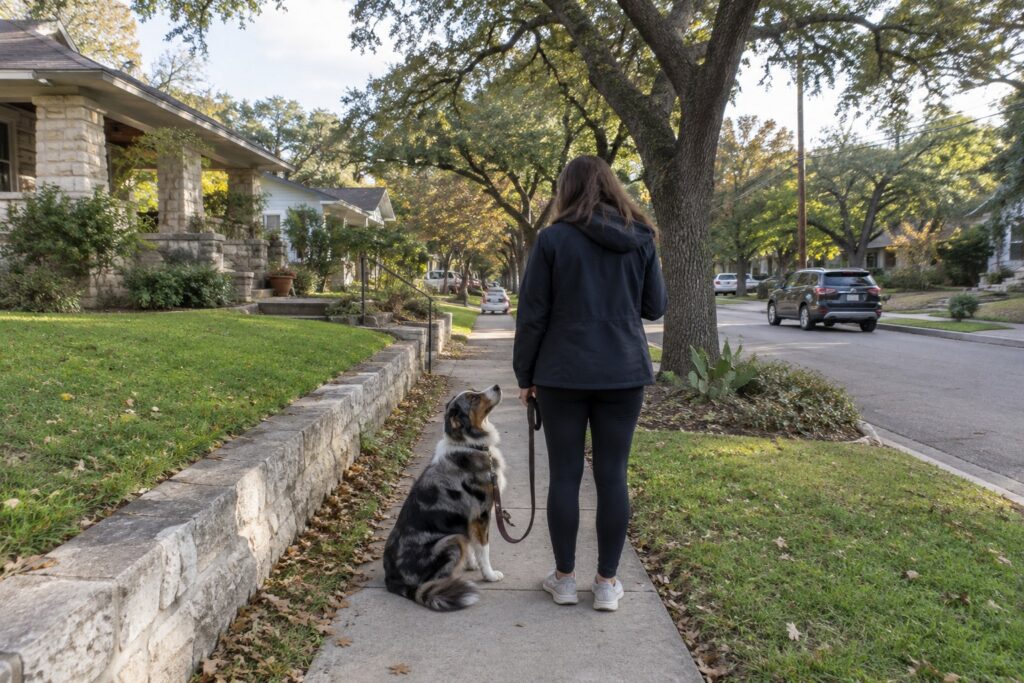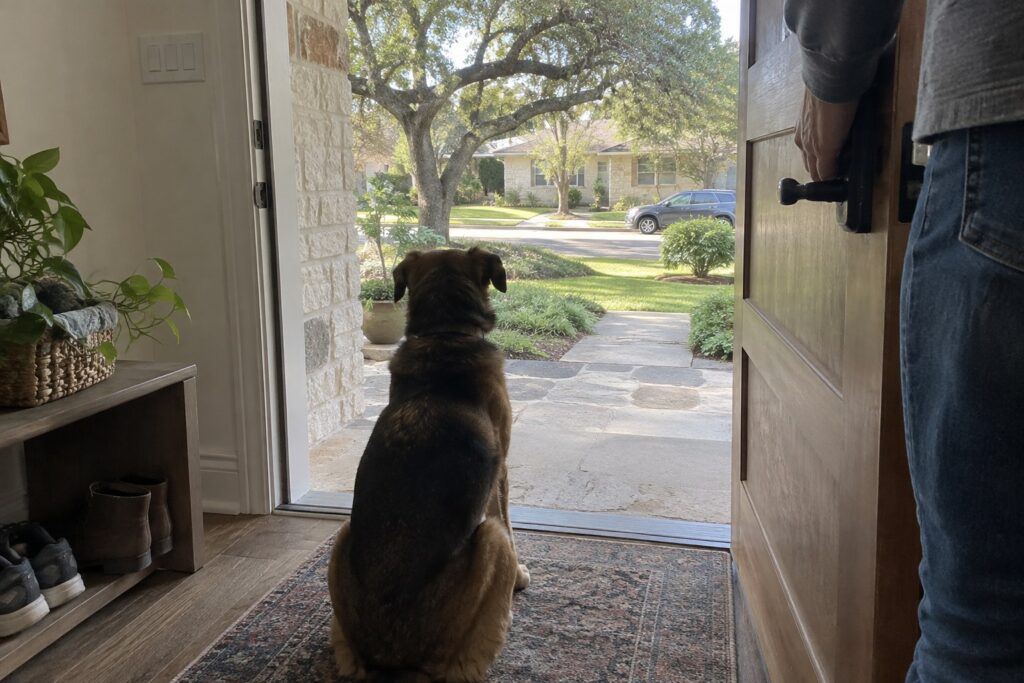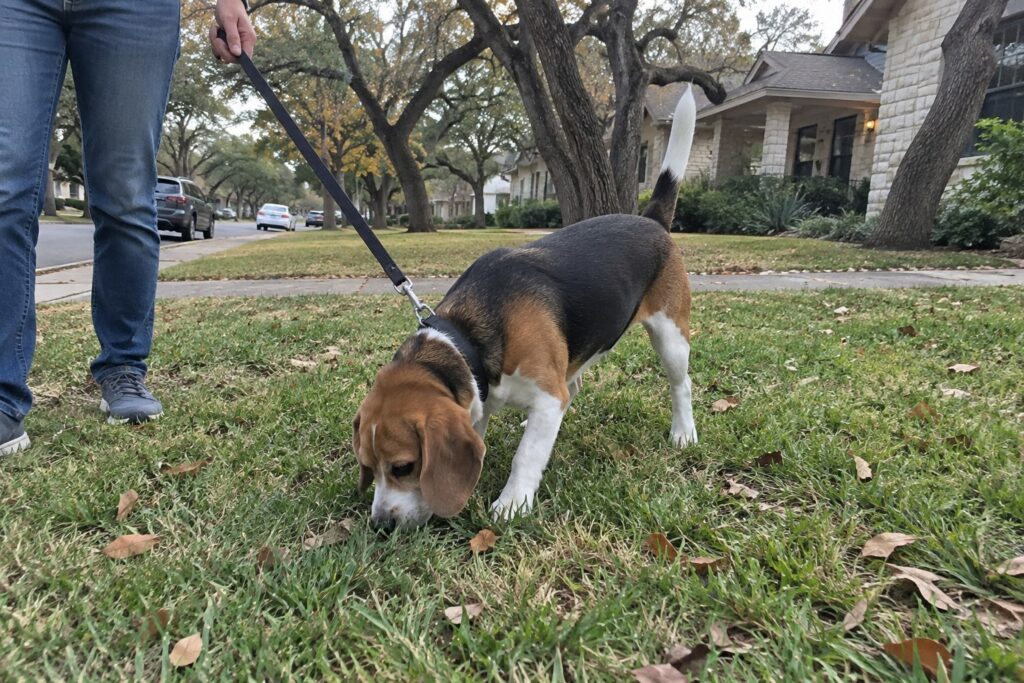

The best time to teach a dog “leave it” is the few weeks before the holidays pile food, candy, and wrappers at nose level. From late October through New Year’s, Denver homes fill with trick-or-treat bowls, Thanksgiving platters, and guests who set plates on the coffee table. Outside, fall trails and city sidewalks collect their own share of things a dog should never swallow.
At All Dogs Unleashed Dog Training Denver, we work on impulse control with dogs every day at our facility at 2301 Blake St, a few blocks from RiNo. Below is the step-by-step method we recommend, how to proof it against real Denver distractions, and how it differs from “drop it.”
Want help building a “leave it” your dog will actually respect around a full holiday table? Our trainers can help.
Key Takeaways
- “Leave it” tells your dog not to touch something in the first place, while “drop it” asks your dog to release something already in its mouth.
- Halloween candy, chocolate, sugar-free treats with xylitol, raisins, and cooked turkey bones are all on veterinary warning lists for the holiday season.
- A reliable “leave it” is built in stages, starting with food in a closed hand and ending with dropped food, trail litter, and wildlife scat on real walks.
- The reward should always come from you, never from the item your dog just left alone, so the dog learns that ignoring temptation pays better than grabbing it.
- Board & Train builds impulse control through daily structured sessions, and in-home lessons let you practice in the exact kitchen and living room where holiday temptations will appear.
Why “Leave It” Matters So Much in a Denver Fall and Holiday Season
A “leave it” that works on an ordinary Tuesday is a good start. The problem is that the holidays are not ordinary. That is the exact moment a half-trained cue falls apart.
Halloween Candy and Wrappers
According to the ASPCA’s Halloween safety tips, chocolate in all forms is toxic to pets, with dark and baking chocolate being the most dangerous. Sugar-free candy and gum can contain xylitol, which the ASPCA notes can cause a dangerous drop in blood sugar and potentially liver damage in dogs. Small boxes of raisins handed out to trick-or-treaters are another risk, since grapes and raisins are linked to kidney damage in dogs.
Wrappers matter too. Foil and cellophane can cause vomiting or an intestinal blockage if swallowed. A dropped candy bag on the porch or a candy bowl on a low table is exactly the kind of moment a solid “leave it” is made for.
Thanksgiving and Holiday Food Hazards
The AVMA’s Thanksgiving pet safety guidance warns owners to keep pets away from turkey bones, fatty skin, gravy, and rich table scraps. Cooked poultry bones can splinter, and fatty foods are hard for dogs to digest and are linked to pancreatitis. Bread dough, onions, garlic, and desserts sweetened with xylitol all belong on the same list.
Management comes first. Keep food off counters, close the trash, and crate or gate your dog when you cannot supervise. “Leave it” is the backup for the moment management fails, like a slice of pie sliding off a paper plate onto the rug.
Trail Litter, Sidewalk Food, and Wildlife Scat
Denver’s walking routes add their own temptations. Sidewalks around RiNo and the Ballpark neighborhood near our facility can have dropped food, takeout containers, and chicken bones on any given walk. Along the South Platte River Trail and Cherry Creek Trail, fall brings picnic scraps, discarded wrappers, and animal droppings.
Wildlife is part of city life here. Colorado Parks and Wildlife notes that coyotes are comfortable in urban settings as long as there is shelter and food, and Denver Parks and Recreation publishes guidance on urban coyotes in city parks. Dogs love to sniff and sometimes eat scat, which is one more reason to have a cue that stops the nose before it gets there. Denver parks also require dogs to be on a leash and under physical control at all times, so most of your “leave it” practice outdoors will happen on leash anyway.
If your dog already has a habit of snatching food from people, pair this work with our advice on eliminating begging behavior in dogs. The two skills support each other.
“Leave It” vs “Drop It” and Why Your Dog Needs Both
Owners often use “leave it” and “drop it” interchangeably, and that confuses dogs. They are two different jobs. “Leave it” happens before your dog commits. “Drop it” happens after the item is already in your dog’s mouth. The AKC puts it simply: if your dog listens to “leave it”, you will not need “drop it”, but “drop it” is still important for the times you did not see the item in time.
| Feature | “Leave It” | “Drop It” |
|---|---|---|
| When you use it | Before your dog touches or picks up the item | After the item is already in your dog’s mouth |
| What your dog does | Turns away and looks back to you | Opens its mouth and releases the item |
| Typical holiday example | A candy bar on the floor or a plate on the coffee table | A stolen napkin or a wrapper already picked up |
| Main skill involved | Impulse control and attention | Willing release and trading |
| Best practice reward | A treat from your hand, never the item | A trade for something better |
| Risk if skipped | More items reach your dog’s mouth | Chasing and struggling over items your dog grabs |
Teach “leave it” first. A dog that reliably leaves things alone gives you far fewer “drop it” emergencies. Once “leave it” is solid, practice a trade-based “drop it” so your dog gives up items willingly rather than running off with them.
One important rule. Never chase your dog or pry dangerous items out of its mouth if your dog guards objects or shows any stiffness, growling, or freezing. That is a sign to stop and get professional help.
How to Teach a Dog Leave It in Five Stages
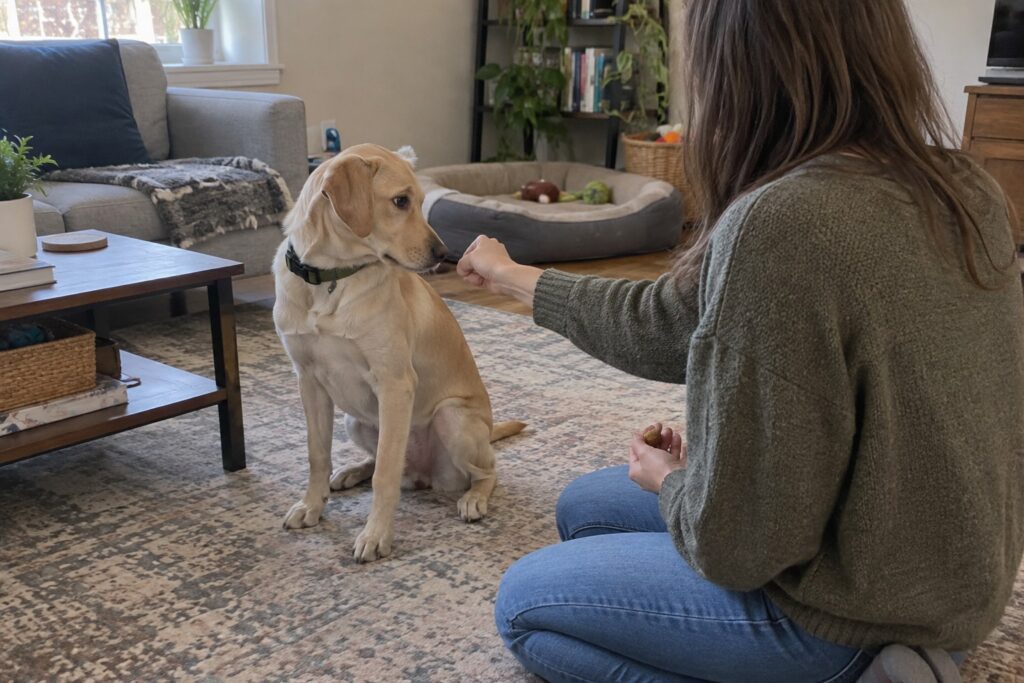
This method follows the same progression recommended by the AKC and the American Veterinary Society of Animal Behavior. Keep sessions short, around five minutes, and end while your dog is still succeeding. Use two kinds of treats: a lower value “bait” treat your dog must leave, and a higher value reward treat that you give from your other hand.
Stage 1, the Closed Fist
Hold a treat in a closed fist near your dog’s nose. Let your dog sniff, lick, and paw. Say nothing and keep your hand still. The instant your dog backs away or looks away, mark it with “yes” and reward with a treat from your other hand. Repeat until your dog pulls back from your fist almost immediately.
Only now add the cue. Say “leave it” once as you present the fist, then mark and reward when your dog disengages.
Stage 2, the Open Palm
Hold the bait treat on an open palm. If your dog moves toward it, close your hand. When your dog holds back, mark and reward from the other hand. Build up until you can hold your palm open for several seconds while your dog looks at you instead of the food.
Stage 3, Food on the Floor
Place a treat on the floor and cover it with your hand or your shoe. Say “leave it.” When your dog stops trying, mark and reward. Gradually uncover the treat for a second, then two, then longer. Stand up, then take a step away. If your dog lunges, cover the treat calmly and make the next rep a little easier.
Stage 4, “Leave It” on Leash
Put your dog on a regular flat collar or harness and a six-foot leash. Place a treat or a toy on the floor just out of reach and walk past it. Say “leave it” before your dog reaches the item, keep the leash loose, and reward when your dog chooses to stay with you. The leash only prevents a mistake. It is not a tool for yanking your dog away.
Stage 5, Real Life Proofing
Move the skill into new rooms, then the yard, then quiet sidewalks. Set up practice items in advance so you control the difficulty.
| Stage | Setup | Move On When |
|---|---|---|
| 1. Closed fist | Treat in hand at nose level | Dog backs away within a second, most reps |
| 2. Open palm | Treat on flat hand | Dog holds back for several seconds |
| 3. Floor | Treat on floor, uncovered in steps | You can stand and step away |
| 4. Leash walk-by | Item on floor, walk past on a loose leash | Dog turns back to you on cue |
| 5. Proofing | New rooms, yard, sidewalk, trail | Dog responds in real settings with distractions |
Want a trainer to handle the repetition while your dog lives and learns in a structured routine? Learn how our two-week program works.
Proofing “Leave It” Against Real Denver Distractions
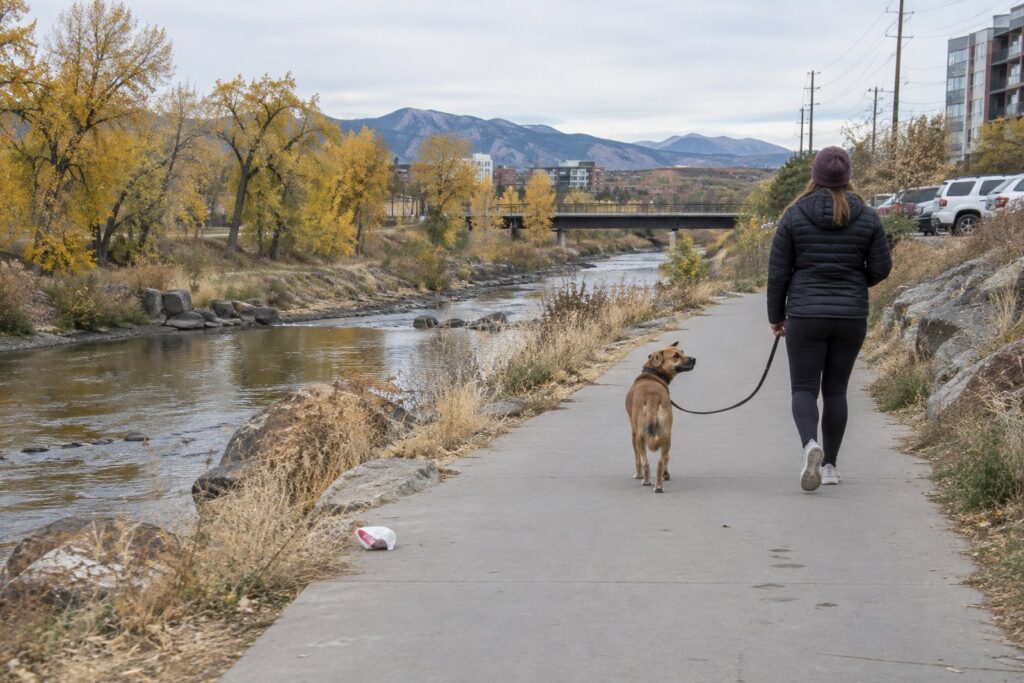
A “leave it” that only works in the kitchen is not finished. Proofing means teaching your dog that the cue means the same thing everywhere, no matter how tempting the item or how busy the setting.
Holiday Rehearsals at Home
Before Halloween, set a bowl of wrapped dog treats on a low table and practice walking your dog past it. Before Thanksgiving, practice with a plate of plain cooked chicken on the coffee table while a family member talks and moves around the room. Dogs that get worked up around guests often need the calm-down work described in our tips on how to curb overexcitement in your dog.
City Sidewalks and Patios
Once your dog is reliable at home, practice on quieter residential blocks before you try busier areas. If you enjoy bringing your dog to outdoor seating areas, “leave it” is what keeps dropped fries and napkins out of your dog’s mouth. Our list of dog-friendly patios and spots in Denver gives you good places to practice once your dog is ready.
Trails and Parks
Trails add movement, smells, and wildlife. Start on wide, less crowded stretches and practice at a distance from anything interesting. Cue “leave it” early, the moment your dog’s head dips toward something on the ground. If you are getting ready for bigger outings, our advice on how to train your dog for Denver hiking trails and mountains covers the other skills your dog needs on the trail.
Common “Leave It” Mistakes That Slow Progress
“Leave it” problems usually trace back to a handful of predictable mistakes.
Rewarding with the Item Your Dog Just Left
If your dog leaves a treat on the floor and then you hand over that same treat, your dog learns that “leave it” means “wait a second, then get it.” The reward should always come from your hand or your pocket. On a walk, the item your dog left behind should never become the prize.
Jumping Ahead Too Fast
Owners often go from a treat on the kitchen floor straight to a sidewalk covered in dropped food. That gap is too big. Raise one layer of difficulty at a time, and if your dog fails twice in a row, go back a step.
Practicing Only When Something Goes Wrong
If “leave it” only comes out when your dog is about to eat something awful, the cue becomes tense and rare. Practice it daily in easy, fun sessions so it stays familiar. For more everyday habits that keep training consistent, see our dog training tips every Denver owner should know.
How Board & Train and In-Home Lessons Build Impulse Control
“Leave it” is really a test of impulse control, and impulse control improves with frequent, consistent repetition.
Board & Train, Daily Structure for Two Weeks
In our Board and Train program in Denver, your dog lives at our facility and works with trainers in daily structured sessions. Each program starts with an intake assessment, and core skills are practiced throughout the day in both indoor and outdoor settings so they carry over to real life. Reactivity and impulse control are part of what our trainers address over the course of the program. In the vast majority of cases, dogs complete the program within the two-week timeframe.
Before your dog goes home, you are invited to a transition session so you understand the commands, techniques, and reinforcement strategies that keep the results going. Every dog that completes Board & Train is backed by guaranteed results and lifetime support at no additional charge. Dogs with a bite history need an evaluation before they can be accepted.
In-Home Lessons, Practice Where the Holidays Happen
Some owners want to learn the skill themselves in the exact spaces where it matters. With in-home dog training in Denver, a trainer works with you in your own kitchen, living room, and neighborhood, or at our facility if you prefer a more controlled setting. Sessions typically range from four to twelve appointments depending on your goals, and we recommend that every household member takes part so the cue sounds and works the same no matter who says it.
| Factor | Board & Train | In-Home Lessons |
|---|---|---|
| Where training happens | At our Denver facility | In your home or at our facility |
| Who does most of the reps | Our trainers, every day | You and your household, with a trainer guiding you |
| Typical length | Two-week program | Typically four to twelve appointments |
| Best fit | Busy owners, persistent scavengers, dogs that need daily structure | Owners who want hands-on coaching in their own space |
| Guaranteed results and lifetime support | Yes, for Board & Train graduates | Not included |
Not sure which option fits your dog? Compare all of our dog training programs in Denver, or call us at (720) 310-7337 to talk through your dog’s habits before the holidays arrive.
About All Dogs Unleashed Dog Training Denver
All Dogs Unleashed Dog Training Denver helps dogs across the metro area build reliable obedience and real-world impulse control. Our two-week Board & Train program gives dogs daily structured sessions at our facility at 2301 Blake St, with guaranteed results and lifetime support for graduates. We also offer private in-home lessons, boarding, and refresh training. Our facility features outdoor turf and both indoor and outdoor play areas, giving dogs a controlled setting to practice skills like “leave it” before heading back into busy Denver homes and neighborhoods.
Frequently Asked Questions
How long does it take a dog to learn “leave it”?
Some dogs grasp the closed fist stage within a few short sessions, but a reliable “leave it” takes longer. The time depends on your dog’s age, food drive, and how consistently you practice. Plan on daily five-minute sessions and gradual proofing in new places. The skill is ready for the holidays when your dog responds the first time around real distractions.
What is the difference between “leave it” and “drop it”?
“Leave it” tells your dog not to touch or pick up something in the first place. “Drop it” asks your dog to release something that is already in its mouth. “Leave it” prevents problems, while “drop it” is the backup when you did not notice an item in time. Teaching both gives you a complete safety plan around food and trash.
Should I give my dog the treat it left alone?
No. Always reward from your hand or treat pouch, never with the item your dog just ignored. If your dog gets the floor treat after waiting, it learns that “leave it” simply means “wait for it.” On walks, the item on the ground should never become the reward. That keeps the cue safe for things like chocolate or bones.
Can an older dog learn “leave it”?
Yes. Adult and senior dogs can learn “leave it” using the same stages as puppies. Older dogs with a long habit of scavenging may need extra repetition and easier setups at first, since the old habit has been rewarded for years. If your older dog has health concerns or dietary restrictions, check with your veterinarian about suitable training treats.
What should I do if my dog eats Halloween candy or a turkey bone?
Call your veterinarian or an animal poison control center right away, even if your dog seems fine. Note what was eaten, roughly how much, and when. Chocolate, xylitol, raisins, and cooked bones can all cause serious problems. Do not try to make your dog vomit unless a veterinarian tells you to. Training helps prevent these moments but never replaces veterinary care.
Is “leave it” part of Board and Train?
Impulse control is part of what our trainers work on during daily structured sessions in the two-week Board & Train program, and every plan is tailored to the goals set during your dog’s intake assessment. Tell us during enrollment if food stealing, trash raiding, or sidewalk scavenging is a concern so trainers can focus on it. Graduates receive guaranteed results and lifetime support.
When you teach a dog “leave it” before the holidays, you give yourself a simple, reliable cue for candy bowls, Thanksgiving plates, and whatever turns up on the trail. If you want help building that skill, call (720) 310-7337 or reach out online to schedule a consultation at our facility at 2301 Blake St in Denver.
Ready to Get Started with All Dogs Unleashed Dog Training Denver?
Get your dog ready for a calmer, safer holiday season. Call (720) 310-7337 to talk with our team about Board & Train or in-home lessons.