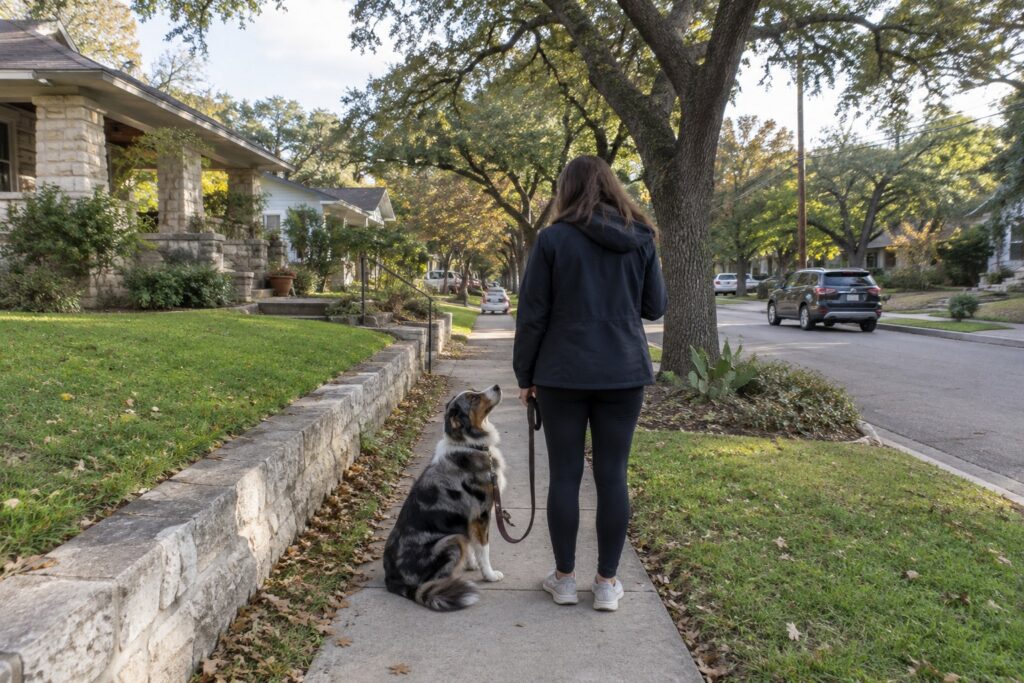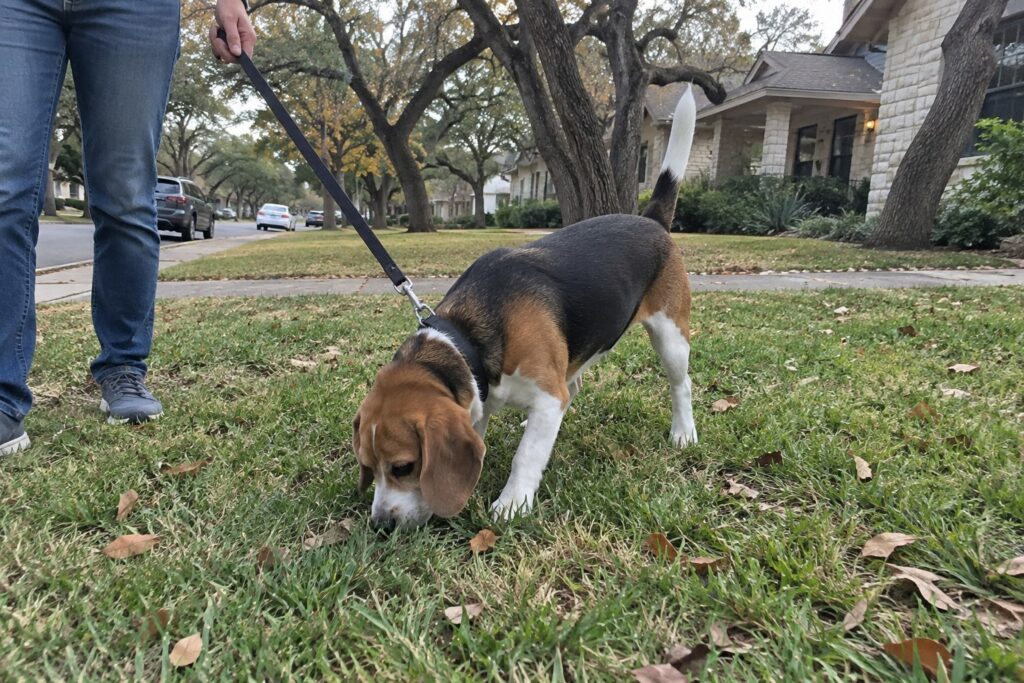

Two dogs that will share a home, or even just share an occasional afternoon at the park, form lasting impressions of each other from the first meeting. A botched introduction can create reactivity, resource guarding, or household tension that takes months to undo. A handled introduction sets a foundation that holds up through years of cohabitation, daily walks, and the dozens of small conflicts that come up between any two dogs sharing space.
Denver makes introductions more complicated than they need to be in some scenarios. Apartment buildings put first meetings in tight elevators and lobbies. Off-leash trail encounters happen at full speed with no buildup. Dog parks pull dogs into mixed groups with no introduction process at all. Families adding a second dog often try to do everything in the living room because the existing dog “should” accept the new arrival. None of these settings produce the results owners are hoping for.
The guide below covers the introduction approach that actually works: pre-meeting preparation, the right environment, structured stages, body language reading, and how to handle the first weeks after the dogs are living together or seeing each other regularly.
Why First Impressions Matter More Than People Realize
Dogs are remarkably sensitive to initial encounters. A negative first meeting (a scuffle, a hard pin, a chase that ended badly) can shape how a dog views the other dog for the entire relationship. Once a dog has decided another dog is a threat, undoing that perception is slow, structured work, and sometimes it doesn’t fully reverse.
Positive first meetings, on the other hand, give two dogs a baseline of “this dog is fine” that holds up through normal household friction. Two dogs who met well at the start can disagree about a chew toy and recover quickly. Two dogs who met badly often can’t.
That asymmetry, easy to break, hard to repair, is why introduction matters more than most owners realize. The cost of slowing down and doing it right is one afternoon. The cost of rushing and doing it wrong can be months of behavior work.
The Three Scenarios This Guide Covers
Introductions look different depending on what comes next:
- Permanent cohabitation. Bringing home a second dog to live with your existing dog. The highest-stakes scenario and the one this guide treats as the main case.
- Ongoing friendship. Introducing two dogs who will see each other regularly but won’t live together, a neighbor’s dog, a family member’s dog, a regular daycare or walk companion.
- One-time on-leash encounters. Quick interactions with strange dogs on sidewalks, trails, and at dog parks. Different rules apply because the goal is brief and neutral, not building a relationship.
The same fundamentals apply across all three scenarios, but the timeline and follow-up vary.
What to Do Before the Introduction
Setup matters as much as the meeting itself.
- Vet check both dogs. A dog who’s in pain, fighting an illness, or due for vaccinations isn’t a dog who should meet a new dog. Hidden medical issues account for a meaningful share of failed introductions, particularly with adult or senior dogs.
- Get the gear right. Well-fitted harnesses on both dogs, six-foot fixed leashes (never retractable), high-value treats, and a backup plan if things go sideways. Two handlers, one per dog, make the entire process safer and more controllable.
- Remove guarding triggers from the home. Pick up food bowls, favorite toys, high-value chews, and beds from areas the dogs will share initially.
- Note both dogs’ baseline. Spend a few minutes before the meeting watching each dog’s normal body language. Soft eyes, loose body, neutral tail.
- Pick the right day. Both dogs should be rested, fed at a normal time, and not coming off a stressful event like a vet visit or a long car ride.
Step 1: Pick Neutral Territory
Neutral territory means a location neither dog has marked, defended, or strongly associates with. Home turf creates an unfair power dynamic, the resident dog is more likely to behave protectively, and the new dog is more likely to feel defensive entering unfamiliar territory.
Good Denver options for neutral meetings:
- Quiet sections of large parks (Wash Park’s eastern edge, Sloan’s Lake’s quieter stretches, sections of Crown Hill Park)
- Low-traffic residential streets away from either dog’s home
- Empty trailheads at off-peak hours
- Open soccer fields and school yards on weekends when school isn’t in session
Locations to avoid: busy dog parks, either dog’s home or yard, areas where either dog has had reactive incidents, tight spaces like apartment lobbies or narrow trails, and anywhere with food, other dogs nearby, or high foot traffic.
Step 2: Parallel Walk Before Any Direct Meeting
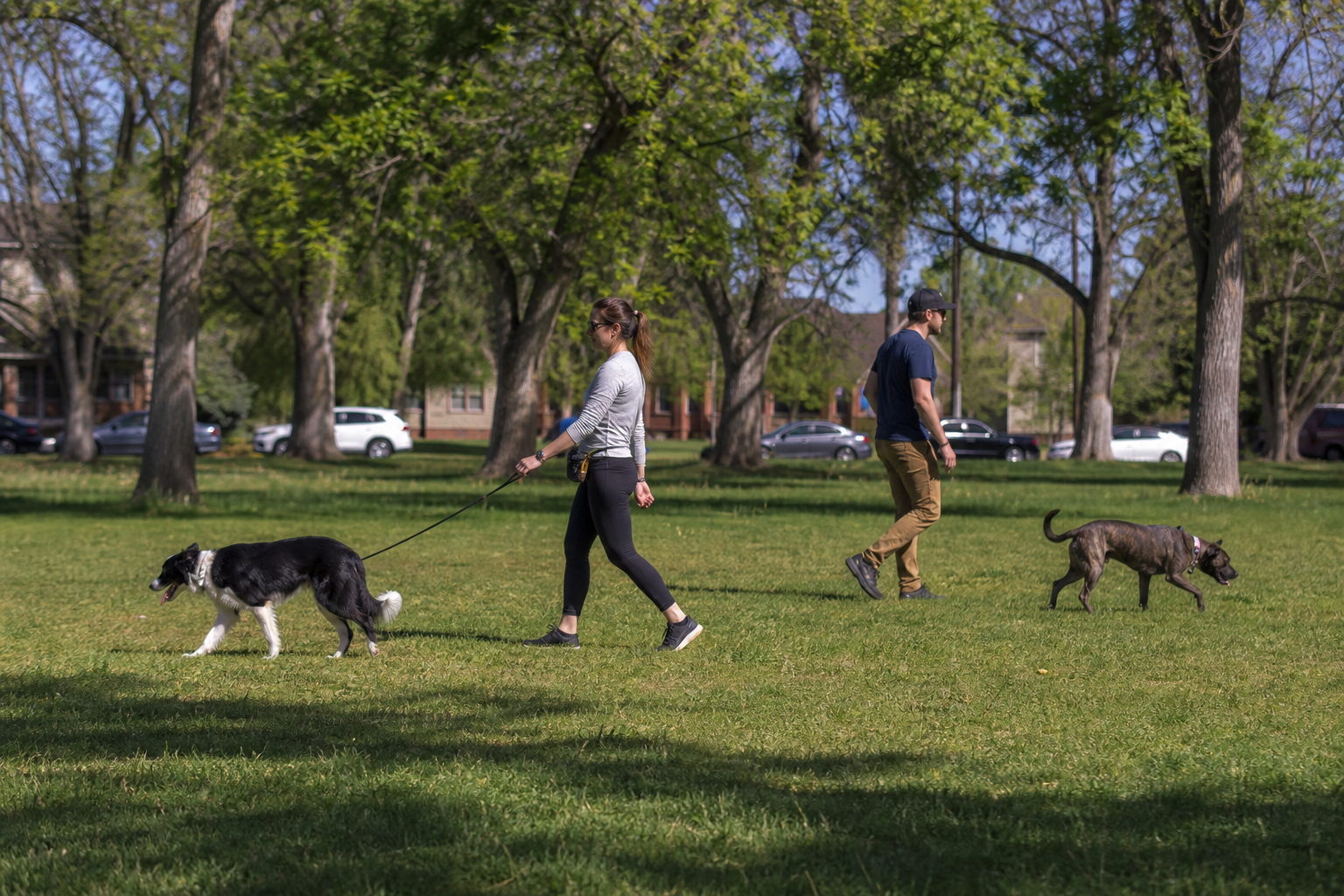
Parallel walking is the most underused tool in dog introductions. It’s also one of the most reliable predictors of how the dogs will get along.
Start with both dogs roughly 15-20 feet apart, walking in the same direction with one handler per dog. Handlers walk between the dogs, creating a buffer. Move at a steady pace. The goal isn’t for the dogs to interact yet, it’s for them to be aware of each other while doing a low-pressure parallel activity.
Watch both dogs as you walk. Loose bodies, occasional glances at each other without staring, normal walking pace, and ability to take treats from their handler are all green lights. Stiff bodies, hard staring, refusal of treats, or attempts to lunge toward or away from the other dog are signals to increase distance.
If both dogs stay relaxed at 15-20 feet for a few minutes, narrow the distance to 10 feet. Then 5 feet. The total parallel walk should run 10-20 minutes before any direct contact, and longer if either dog is showing arousal at any distance.
Step 3: The First Direct Meeting
Once both dogs have been walking calmly at close distance, the first direct meeting follows a specific structure.
- Keep leashes loose. Tight leashes communicate tension to dogs and can trigger defensive responses.
- Approach in a curve, not head-on. Dogs naturally approach each other in curves. Head-on approaches are confrontational. Walk the dogs toward each other on an arcing path rather than directly.
- Allow a brief sniff. Three to five seconds of mutual sniffing is plenty. The goal is short and positive, not extended interaction.
- Walk on. After the brief sniff, both handlers turn and walk in the same direction for another minute. End the first direct interaction while both dogs are still relaxed.
The most common mistake at this stage is letting the first meeting go too long. Two dogs sniffing for 30 seconds with leashes pulled tight is a recipe for one of them to feel cornered and react. End early, walk away, and come back for a second brief interaction after a few minutes of separate movement.
Step 4: Read Body Language Throughout
Body language reading carries the entire introduction. The signals to watch for split into three categories.
Green lights (continue): loose body posture in both dogs, soft eyes and normal blinking, mutual sniffing without freezing, play bows, brief turns away from each other, ability to take treats from the handler.
Yellow lights (slow down, create distance): stiff bodies, hard staring, whale eye, lip licking when no food is present, yawning when neither dog is tired, tucked or excessively high tails, refusal of treats.
Red lights (abort, separate, try again another day): sustained stiff posture with hard staring, growling that doesn’t resolve, raised hackles combined with hard staring, one dog repeatedly trying to escape, snapping or lunging, freezing followed by intense focus.
Step 5: The First Home Visit
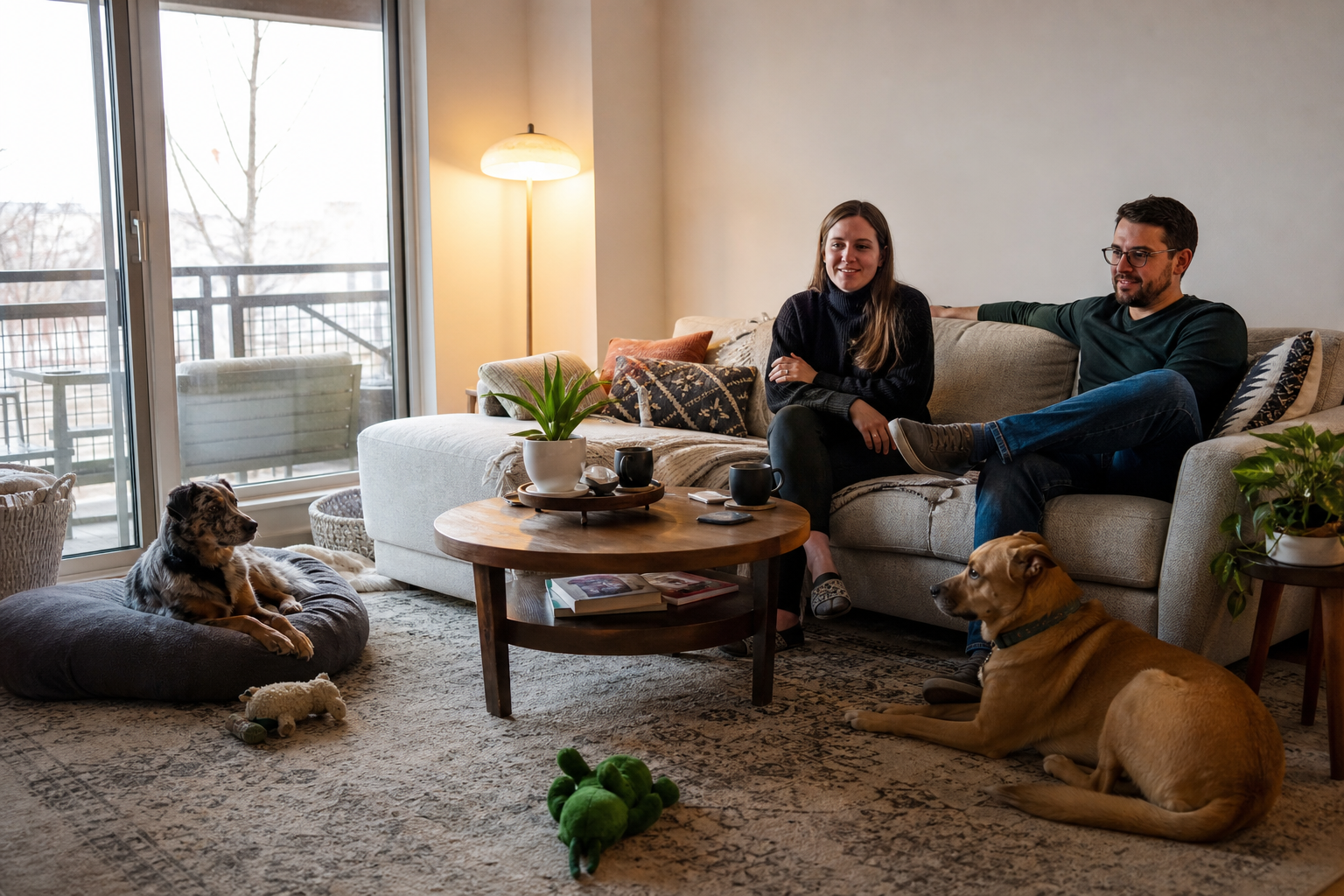
After successful neutral meetings, the transition home (for permanent cohabitation) needs its own structure.
- Walk the dogs together before going inside. Even if you’ve already done the neutral walk, do another 10-15 minutes near the home before entering. This shifts both dogs into “we’re a unit” mode rather than “this is my territory” mode.
- Bring the new dog in first when possible. This lets the new dog acclimate to the space without feeling intruded on by the resident dog.
- Keep first interactions brief and supervised. Both dogs on leashes inside the home for the first hour. Allow short greetings, then redirect to separate activities.
- Set up separate sleeping and eating spaces. Two crates, two beds, two food locations in different rooms. Resource guarding is the single most common source of conflict in new multi-dog households.
- Limit high-arousal triggers initially. No tug-of-war between the two dogs. No high-value chews in shared spaces. No dog park visits together until the dogs have developed a clear positive relationship at home.
The First Two Weeks of Cohabitation
Realistic expectations matter. Most dogs don’t bond in the first week, they tolerate. Real friendship usually develops between weeks 2 and 8, sometimes longer for dogs with established adult personalities.
Week 1. Both dogs are learning the new normal. Tolerance is the goal, not love. Manage actively: supervised interactions, separate spaces for high-value items, parallel activities rather than direct play, controlled walks.
Week 2. Tolerance often shifts to neutral coexistence. The dogs may seek each other out occasionally. First play sessions sometimes appear, usually brief. Watch for resource guarding that wasn’t visible the first week.
Weeks 3-8. Most dogs are developing a real relationship by this point. Some become close friends. Others settle into respectful coexistence. Both are good outcomes. Force-bonding doesn’t work; let the relationship develop naturally.
Red flags during this period: repeated tense moments, resource guarding that’s escalating, one dog consistently avoiding the other, any incident involving teeth or significant body force. These warrant professional support, not “wait and see.”
Introducing Two Dogs on Leashed Walks
On-leash encounters with strange dogs work differently than friendship introductions. The goal is brief, neutral, and forgettable, not building a relationship. Keep leashes loose. Allow a sniff at most. Three seconds, then walk on.
Skip the interaction entirely when either dog is high-arousal, the other dog is showing reactive body language, either owner reports the dog isn’t good with other dogs, the space is too tight for safe separation, or you can’t read the other dog clearly. There’s no obligation to let two dogs meet on the sidewalk.
Common Denver Scenarios
Apartment hallway and elevator encounters. These should never be introduction moments. Confined spaces with no room to retreat are the worst possible environment for first meetings. If two dogs in the same building will be friends, introduce them outside the building first.
Dog park first visits. A dog park is not the place to introduce dogs. The chaotic, off-leash group dynamic puts new dogs in a high-arousal situation with multiple unfamiliar dogs at once.
Mountain trail encounters. Off-leash trail meetings happen fast and can’t be controlled. Step off the trail, ask the other owner to call their dog back if you have any concerns. “He’s friendly” from a stranger doesn’t override your read of the situation.
Family gatherings with multiple dogs. Walk them parallel outside first, then bring them in one at a time, and manage active supervision for the duration. Tired dogs from a group walk behave dramatically better than fresh dogs meeting cold indoors.
Common Mistakes Denver Owners Make
- Doing introductions at the dog park. The single most common mistake.
- Letting dogs meet on tight leashes. Tension on the leash communicates tension to the dog.
- Not having a backup plan. Two adults, two leashes, two clear exit routes are basic safety planning.
- Expecting instant friendship. Most successful introductions look neutral or tolerant in the first week.
- Ignoring early stress signals. Yellow-light signals are the moment to slow down. Pushing through them is how introductions go from yellow to red.
Frequently Asked Questions
How long does it take for two dogs to become friends?
Real friendship typically develops over 2 to 8 weeks of consistent positive interaction. Some dogs bond faster, others take months. The first week is usually tolerance, not friendship. Don’t push for closeness, let the relationship develop on its own timeline with consistent management.
What if the two dogs fight after the introduction?
A single brief scuffle isn’t necessarily a failed introduction. Separate the dogs calmly without punishment, give each space to settle, and review what triggered the conflict. Repeated fights or any incident with significant teeth contact warrant professional support before continuing.
Can I introduce dogs at the dog park?
Not as a first meeting. Dog parks are too chaotic and over-stimulating for an introduction. They work better as a later step, after two dogs have established a positive relationship through structured neutral meetings.
How do I introduce a puppy to my adult dog?
Use the same neutral-territory framework, with extra protection for the puppy. Keep the adult dog on a leash initially. Allow brief interactions and give the adult dog easy ways to disengage. Healthy adults will tolerate puppies and offer gentle corrections; problems usually come from adults with low patience meeting puppies with no impulse control.
When should I get professional help with an introduction?
Bring in professional support before the introduction if either dog has a history of reactivity, aggression, or resource guarding; if previous introductions have failed; or if you’re nervous about your own ability to read the dogs accurately. After the introduction, professional help is warranted if patterns of tension are escalating, if there’s been any incident with teeth contact, or if one dog consistently can’t settle around the other after several weeks.
About All Dogs Unleashed Denver
All Dogs Unleashed works with multi-dog households and families adding new dogs to existing ones across Denver. Our work covers the full introduction arc, neutral meetings, supervised cohabitation, and the behavior coaching that turns two dogs who tolerate each other into two dogs who genuinely share a household. Beyond core training, our Denver location also offers in-home dog training, board and train, dog boarding, and dog daycare for owners who need full-service support during the transition.
Visit us at 2301 Blake St, Denver, CO 80205, or call (720) 310-7337 to learn more about how our trainers can help your dogs build a lasting relationship.
Ready to Set Your Dogs Up for Success?
Bringing home a new dog or pairing two dogs who’ll spend regular time together works best with a structured plan, not a hopeful afternoon. Our Denver dog training programs include multi-dog introduction support, household dynamics coaching, and the foundation training that prevents most conflict before it starts. We offer in-home dog training so we can work with you in your actual environment, and board and train for accelerated results. Contact us or call (720) 310-7337 to get started.