
Every puppy bites. The mouth is their primary tool for exploring the world, communicating with littermates, and managing teething pain. The behavior is universal and developmentally normal, but how owners respond in the first few months determines whether biting disappears naturally by 6 months or hardens into a habit that follows the dog into adulthood.
That distinction matters more in Denver than in most cities. Apartment dwellers with neighbors close by have lower tolerance for noisy puppy play. Dense city environments mean puppies need to learn bite inhibition fast, with guests, building staff, delivery people, and elevator strangers entering their world constantly. And the dogs that don’t learn early become the adult dogs whose mouth use creates real problems on Denver sidewalks, in shared spaces, and around children.
The guide below covers what actually works: the developmental context behind puppy biting, the techniques that produce lasting change, the mistakes that make things worse, and the realistic timeline for when biting fades into normal adult mouth control.
Why Puppies Bite (And Why It’s Normal)
Puppies bite for three legitimate reasons.
Exploration. A puppy’s mouth is their hands. They learn what objects taste like, how textures feel, and what their environment is made of by putting things in their mouth.
Play and communication. Puppies learn social skills from littermates by play biting. When a sibling bites too hard, the other puppy yelps and stops playing. The biter learns that hard pressure ends the fun. This natural feedback loop teaches bite inhibition, the ability to control jaw pressure, which is the single most important social skill a dog can develop. Puppies taken from their litter too early often have weaker bite inhibition.
Teething. Between roughly 3 and 7 months of age, puppies lose their baby teeth and grow in their adult set. The process is uncomfortable, and chewing relieves the pressure. Biting intensifies during this period, often dramatically.
What’s Normal vs. What’s a Problem
Most puppy biting falls within normal developmental range. Normal puppy biting includes gentle mouthing during play, exploring textures and objects with their mouth, increased biting during the teething window (3-7 months), excited nipping during high-energy play, and carrying or tugging on clothing or hands.
Concerning biting includes: hard repeated biting that consistently breaks skin, biting paired with stiff body language or hard staring, growling during biting, biting in clearly non-play contexts, biting that doesn’t respond to consistent redirection over weeks, or biting that escalates in intensity as the puppy ages rather than softening.
The Critical Window: 8 to 16 Weeks
The window from 8 to 16 weeks is the most important period for shaping a dog’s relationship with their own mouth. During these weeks, puppies are still learning bite inhibition. Lessons learned during this window stick for life. Missed lessons are much harder to install later.
This is why training shouldn’t wait. The instinct to “let the puppy be a puppy” for the first few months delays the most important learning window the dog will ever have. Foundation work during this period prevents most adult dog behavior problems before they exist.
The Foundation: Teaching Bite Inhibition
Bite inhibition is the most important skill in this guide. The mechanics are simple: when a puppy bites too hard during play, the play stops immediately. The puppy learns that hard biting ends fun, while softer mouth contact is acceptable. Over weeks, the acceptable pressure level decreases until the puppy is mouthing with essentially no pressure.
The goal isn’t to eliminate mouth contact entirely. It’s to teach the puppy that humans have soft skin and that mouth use must be controlled. A dog with strong bite inhibition who’s startled or frightened as an adult will still moderate their bite, often preventing serious injury. This is a long-term project, not a single training session.
The Yelp-and-Pause Method (And Why It Doesn’t Always Work)
The most-recommended technique for puppy biting is the yelp-and-pause: when the puppy bites you, yelp loudly (mimicking a littermate), then end the interaction briefly. This method works well for soft-tempered breeds and puppies with good early socialization.
However, high-drive breeds, herding breeds, and many terriers can interpret the yelp as exciting rather than corrective. Some puppies escalate when the owner yelps. If you try the yelp method and biting decreases over a few sessions, continue. If biting stays the same or increases, switch to redirection.
The Redirect Method: Replace, Don’t Just Stop
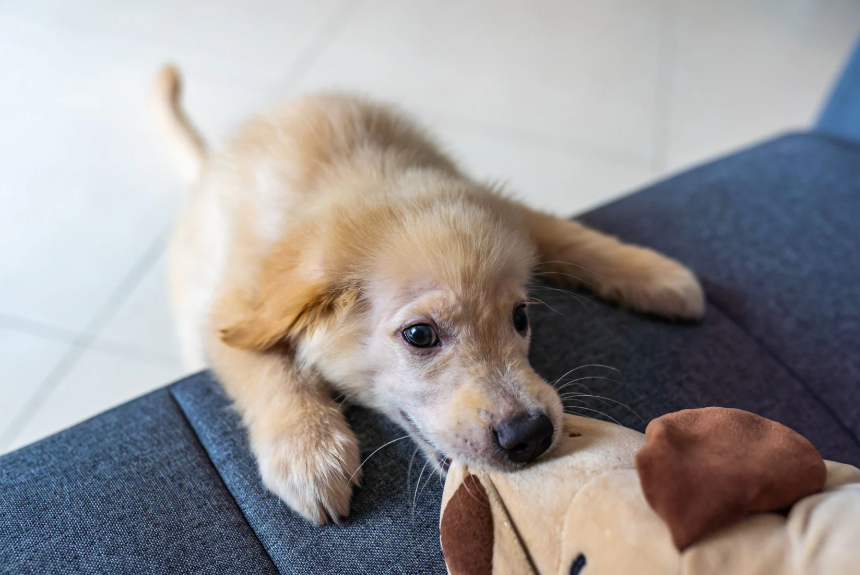
Redirection is the most reliable technique across breeds and temperaments. The structure is simple: the puppy bites you, immediately offer an appropriate chew toy as a replacement, reward and praise the puppy for engaging with the toy, then continue play with the toy, not your hand.
The key word is “replace.” Just removing your hand teaches the puppy that hands disappear when bitten, which can create chasing behavior. Replacing your hand with a chew toy teaches the puppy what they should bite instead. Keep chew toys accessible in every room. A puppy can’t redirect to a toy that’s in a different room.
The other layer is preventive redirection: offer the chew toy before the puppy bites you, especially during high-arousal moments like greetings, post-walk wind-down, and play sessions.
The Time-Out Method: When Redirection Isn’t Enough
Some puppies escalate when they’re overstimulated and won’t disengage even with redirection. For these puppies, brief time-outs work better. When the puppy bites hard despite redirection, calmly remove yourself from the play space for 30 to 60 seconds. No talking, no eye contact, no engagement. Then resume normal interaction.
Time-outs are not punishment. They’re a brief withdrawal of attention. Be consistent, the rules are only as effective as their consistent application. Time-outs work best as a backup to redirection, not a primary method.
What Not to Do
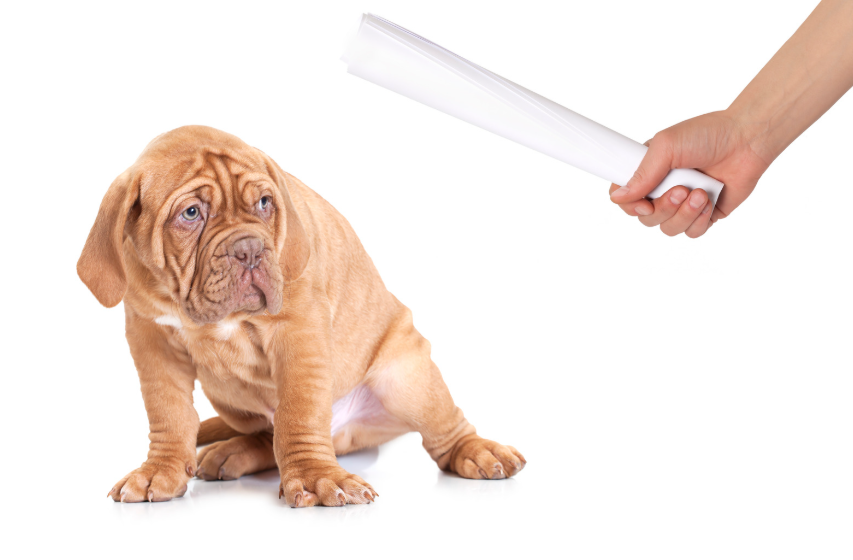
Several common owner responses make biting worse rather than better:
- Yelling, scruffing, or alpha-rolling. Punishment-based responses teach fear, not bite inhibition.
- Pinning the puppy or holding their mouth closed. Both create fear and can actually trigger defensive biting.
- Hitting, tapping the nose, or any physical correction. These produce dogs who are hand-shy and often more reactive as adults.
- Spray bottles as a primary tool. These don’t teach the puppy what they should do instead.
- Ignoring biting and “hoping they grow out of it.” Some do, many don’t. The dogs who arrive at training class at 18 months with significant mouth issues are almost always dogs whose owners didn’t address biting consistently in puppyhood.
- Inconsistency between household members. If one person allows mouth play and another doesn’t, the puppy learns that biting is sometimes okay.
Managing Teething (3 to 7 Months)
The teething phase intensifies biting because the puppy’s gums genuinely hurt. Working with the teething process rather than against it reduces biting significantly.
- Frozen washcloths. Soak a clean washcloth in water, freeze it, and let the puppy chew on it. The cold relieves gum pain.
- Frozen Kongs. Stuff a Kong with wet food, plain yogurt, or peanut butter and freeze it. Provides 20-30 minutes of focused chewing.
- Durable chew toys. Rotate between several appropriate chews to keep interest high. Nylabones, Benebones, and similar options work well.
- Chilled carrots. Refrigerated baby carrots are a low-calorie chew option that most puppies love during teething.
The Denver Apartment Factor
Apartment living shapes puppy biting management in specific ways. Shared walls mean repeated loud yelps during play sessions can generate noise complaints, so redirection and time-outs are quieter and more appropriate for apartment dwellers. Tight indoor spaces give puppies fewer options for cool-down, making crate breaks and structured rest more important. Denver winters limit outdoor time, which often increases indoor play biting, so mental exercise (puzzle feeders, training sessions, scent games) helps offset reduced physical exercise.
When to Bring in a Professional
Most puppy biting resolves with consistent home work. Bring in a trainer if you see biting that escalates despite weeks of consistent application of the techniques above, biting paired with growling or stiff body language, biting in fear contexts rather than play contexts, biting that repeatedly breaks skin past 4 months old, or any biting that frightens you or your household. The earlier the intervention, the easier the work.
What to Expect: A Timeline
- 8 to 12 weeks. Heavy mouth use. Foundation period for bite inhibition. Focus on consistency rather than elimination.
- 3 to 5 months. Biting often peaks during this window as teething intensifies. The hardest period for most owners.
- 5 to 6 months. Most puppies dramatically reduce biting frequency and intensity. Bite inhibition is starting to look solid.
- 6 to 7 months. Most healthy puppies have largely transitioned out of significant biting.
- 8 to 12 months. Adult mouth use is set. Whatever bite inhibition the puppy developed is largely what they’ll have as an adult.
Frequently Asked Questions
When do puppies stop biting?
Most puppies dramatically reduce biting between 5 and 7 months of age, with bite inhibition largely solidifying by 7-8 months. Heavy biting that persists past 8 months usually indicates either inconsistent training or an underlying behavioral issue that needs professional attention.
Is biting worse during teething?
Yes. Biting often peaks between 3 and 5 months as adult teeth come in and the puppy’s gums hurt. Providing appropriate chew options (frozen Kongs, durable chews, chilled carrots) gives the puppy somewhere to direct the urge and reduces biting on hands and clothing.
My puppy is a high-drive breed and yelping makes it worse. What should I try?
Skip the yelp method entirely. High-drive breeds (Border Collies, Aussies, Heelers, Malinois, many terriers) often interpret yelping as exciting rather than corrective. Use redirection with high-value chew toys, time-outs for overstimulated biting, and aggressive management of arousal levels. These breeds usually need more structured rest and more mental exercise than soft-tempered breeds.
When should I start formal puppy training?
The day you bring the puppy home, ideally at 8 weeks. Formal classes typically start once the puppy has completed initial vaccinations (around 12-16 weeks), but training at home should begin immediately. Waiting until the puppy is “older” misses the most critical learning window of the dog’s life.
About All Dogs Unleashed Denver
All Dogs Unleashed works with puppy owners across Denver to build the bite inhibition, impulse control, and household manners that determine what kind of adult dog the puppy becomes. Beyond core training, our Denver location also offers in-home dog training, board and train, dog boarding, and dog daycare for puppy owners who need full-service support.
Visit us at 2301 Blake St, Denver, CO 80205, or call (720) 310-7337 to learn more about how our trainers can help your puppy develop strong bite inhibition.
Ready to Set Your Puppy Up for Success?
Puppy biting is one piece of a larger foundation. Bite inhibition, impulse control, leash skills, socialization, and household manners all develop during the first six months. Our Denver dog training programs cover the full picture for new puppy owners. We offer in-home dog training so we can work with you and your puppy in your actual environment, and board and train for accelerated results when patterns need to shift faster. Contact us or call (720) 310-7337 to get started.