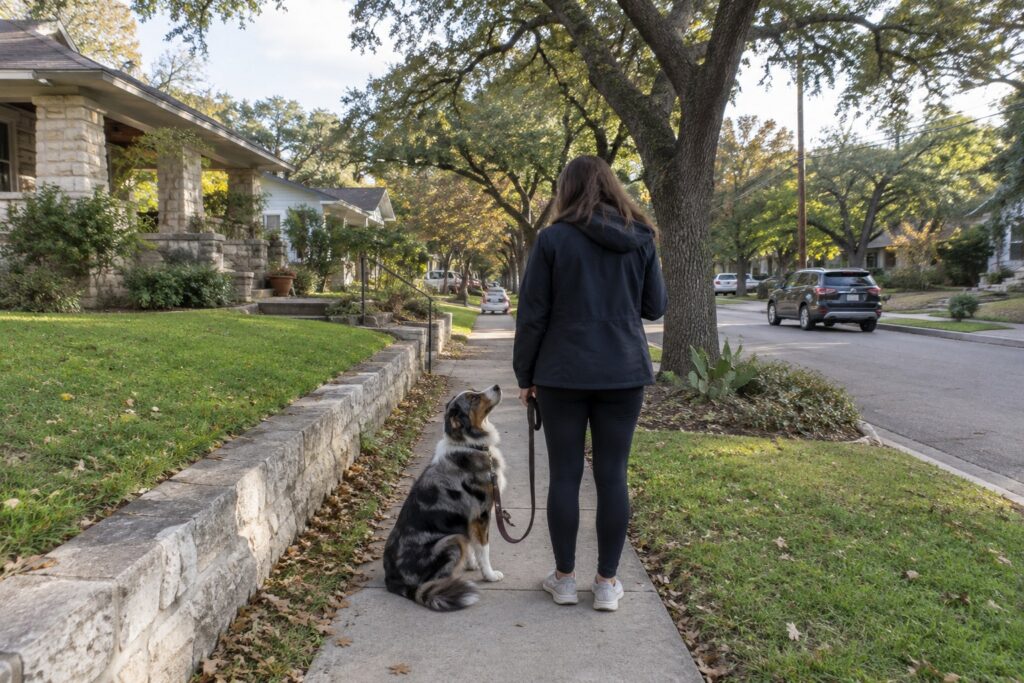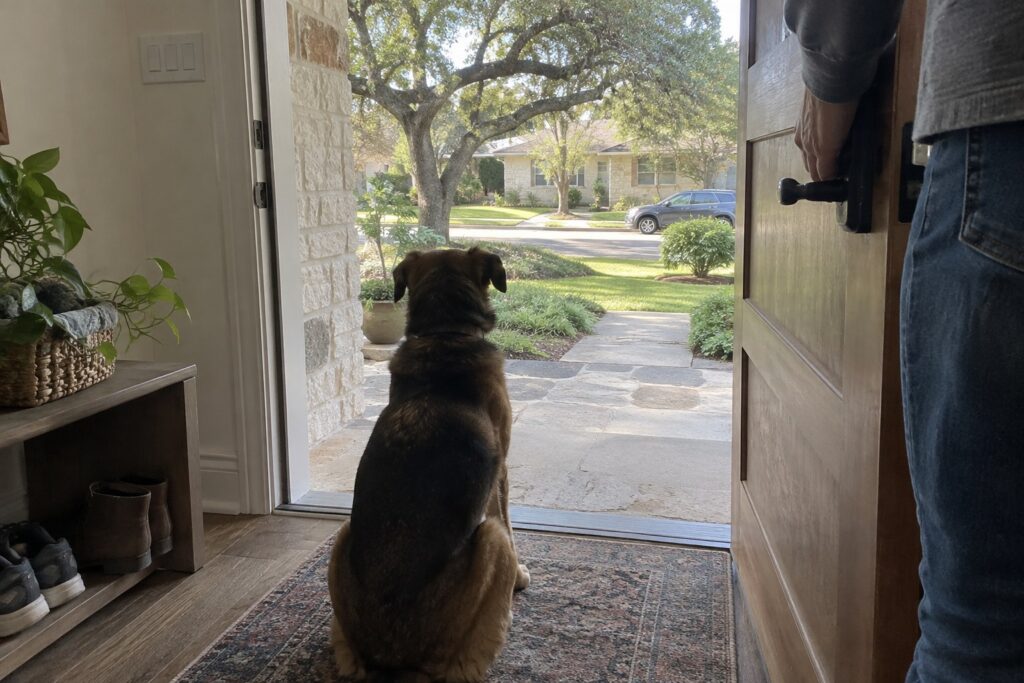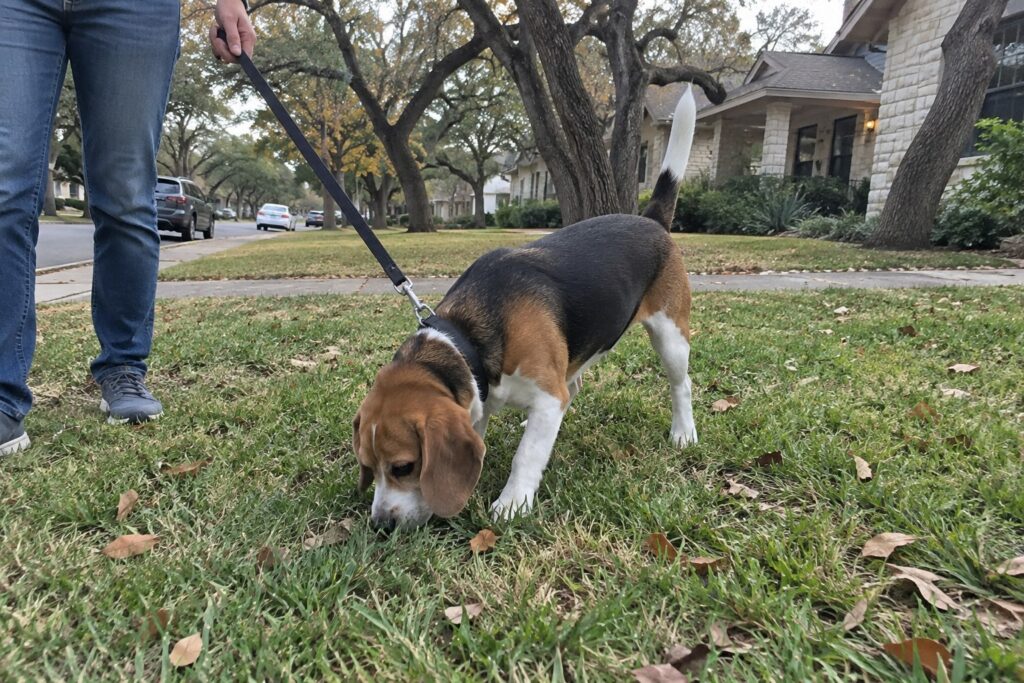

If you have ever wondered how to teach a dog to lay down and actually have it hold up when the doorbell rings, you are asking the right question. A reliable “down” is one of the most useful behaviors a dog can know. It settles a wound-up dog, keeps paws off the dinner table, and gives you a simple way to manage the chaos of a full house.
At All Dogs Unleashed Dog Training Bossier City, we teach “down” to nearly every dog that comes through our doors, from young puppies to adult dogs who never learned to settle. Below we walk through the three main teaching methods, how to build duration, distance, and distractions, and how to fix the most common problems Bossier City owners run into before the holiday guests arrive.
Want a trainer to help your dog learn a calm, dependable “down”? Our two-week Board and Train program builds it daily. Reach out and tell us about your dog.
Key Takeaways
- You can teach “down” by luring with a treat, shaping small steps toward the floor, or capturing the moment your dog lies down on its own.
- Add the verbal cue only after your dog is moving into position reliably, so the word gets attached to the right behavior.
- Build duration, distance, and distractions one at a time, and make it easier again whenever your dog starts to fail.
- Short sessions of a few minutes, repeated through the day, work better than one long and frustrating session.
- A solid “down” on a mat is one of the best tools for keeping a dog calm when Thanksgiving guests fill your Bossier City home.
Why a Reliable Down Matters in a Busy Household
Most owners teach “sit” first and stop there. That is a mistake, because a sitting dog can pop up in a split second. A dog lying down has to make a much bigger decision to get up, which makes “down” a natural off switch for excitement.
A Built-In Calming Position
Lying down is a physically relaxed posture. When you practice it often and pair it with calm praise, many dogs start to settle faster on their own. It is not magic, but it gives an energetic dog something constructive to do instead of bouncing around the kitchen.
Everyday Situations Where Down Helps
Think about the moments when your dog is most likely to get in trouble. A family dinner, a delivery driver at the door, kids playing on the living room floor, or a friend from Barksdale Air Force Base stopping by with their own dog. In each case, a dog in a “down” is a dog that is not jumping, begging, or chasing.
A good “down” also pairs well with leash manners. If your dog pulls toward every squirrel on a neighborhood walk, the skills in our post on how to train a dog to walk on a leash in Bossier work hand in hand with a dog that can lie down and wait at a crosswalk or a park bench.
What You Need Before You Start
- Small, soft, high-value treats your dog loves (tiny pieces, about the size of a pea).
- A quiet room with a non-slip surface, like a rug or a yoga mat.
- A marker word such as “yes” or a clicker to mark the exact moment your dog gets it right.
- A release word such as “free” that tells your dog the exercise is over.
- A dog that is a little hungry and not overtired. Right before a meal is often a good time.
How to Teach a Dog to Lay Down With Three Proven Methods
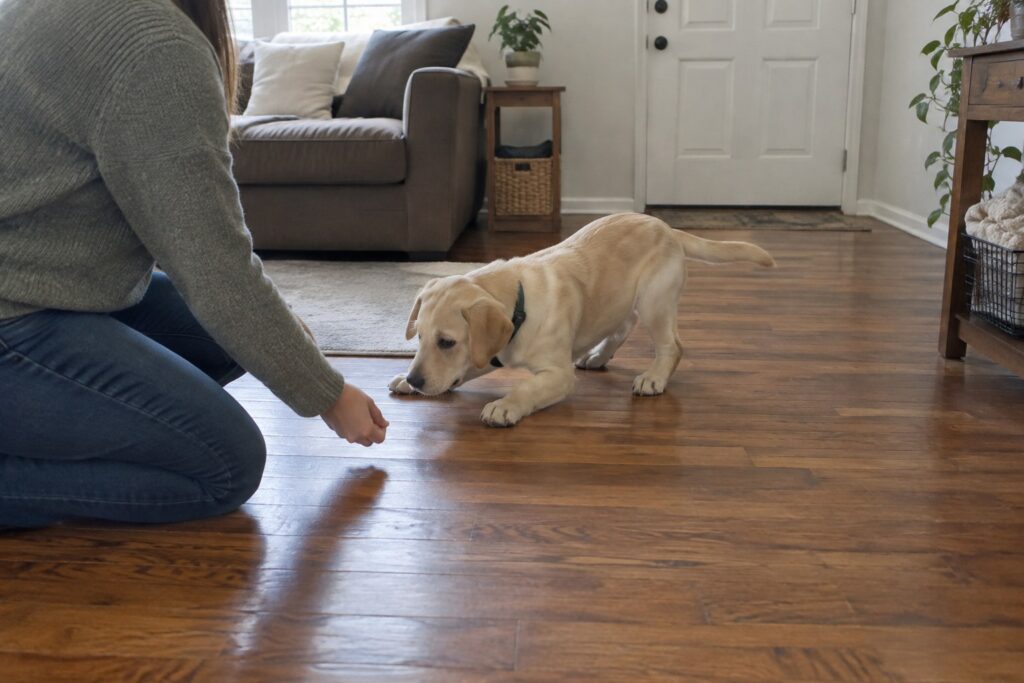
There is no single right way to teach this behavior. Most trainers use one of three approaches, and many dogs do best with a mix. Pick the one that fits your dog’s personality, then switch if you get stuck.
Method 1: Luring
Luring is the fastest method for most dogs. Start with your dog in a “sit.” Hold a treat right at your dog’s nose, then slowly move it straight down toward the floor between the front paws. As the nose follows, slide the treat along the floor slightly toward you, making an L shape.
The moment your dog’s elbows touch the ground, mark with “yes” and give the treat. If your dog stands up instead, you moved too fast or too far. Reset and try again with a slower hand. After five or six successful reps, start doing the same hand motion with no treat in that hand, and reward from your other hand. This keeps the lure from becoming a bribe.
Method 2: Shaping
Shaping works well for dogs that refuse to follow a lure all the way down, or for dogs that get too excited by food in your hand. Instead of waiting for the full behavior, you reward small steps toward it.
- Mark and reward when your dog lowers its head.
- Then mark only when the head drops further and the shoulders dip.
- Then wait for one elbow to bend.
- Finally, reward only the full “down” with both elbows on the floor.
Shaping takes more patience, but dogs who learn this way often understand the behavior deeply, because they figured it out themselves.
Method 3: Capturing
Capturing means waiting for your dog to lie down naturally and rewarding it. Keep a few treats in your pocket during a quiet evening. Every time your dog lies down on its own, calmly mark and drop a treat between its paws. Over a few days, your dog will start offering the position more often to see if it pays.
Capturing is especially good for anxious or sensitive dogs, and for dogs who resist being guided into position. It is slower, but it builds a dog that chooses to settle.
| Method | Best For | Speed | Watch Out For |
|---|---|---|---|
| Luring | Most food-motivated dogs and puppies | Fast | Fading the treat too late so the dog only works when it sees food |
| Shaping | Dogs that pop up when lured, thinkers, excitable eaters | Moderate | Raising criteria too quickly and frustrating the dog |
| Capturing | Sensitive, anxious, or hand-shy dogs | Slower | Missing the moment, so mark the instant elbows touch down |
When to Add the Verbal Cue
Do not say “down” over and over while your dog is still figuring things out. Wait until your dog drops into position reliably with your hand signal, roughly eight out of ten tries. Then say “down” once, right before you give the hand signal. After many repetitions, the word itself will start to predict the behavior, and you can fade the hand signal.
One tip: if you already use “down” to mean “get off the couch” or “stop jumping,” pick a different word for one of those jobs. Using a single word for two behaviors is a common source of confusion. Many owners use “off” for furniture and jumping, and save “down” for lying down.
If you would rather have a professional lay the foundation, our two-week Board and Train program gives your dog multiple structured sessions each day, then teaches you how to handle your dog at home.
Building Duration, Distance, and Distractions
A dog that lies down for one second in your living room has not really learned the behavior yet. Trainers often talk about the three Ds: duration, distance, and distractions. The key rule is to work on only one at a time. When you make one harder, make the others easier.
Duration
Once your dog lies down on cue, start delaying the reward by a second or two. Mark and treat while your dog is still lying down, then use your release word so your dog knows when it is allowed to get up. Slowly build from two seconds to five, then ten, then thirty. Vary the time so your dog does not learn to anticipate the release.
If your dog pops up before you release, calmly guide it back into position without a reward and shorten the next rep. The goal is lots of success, not a test of willpower.
Distance
When your dog can hold a “down” for about thirty seconds with you standing right there, take one step back, then return and reward. Gradually add steps, turn sideways, and later walk around your dog. Always return to your dog to deliver the treat in the early stages, so your dog learns the reward comes to it while it remains lying down.
Distractions
Distractions are where most dogs fall apart. Start small: drop a toy on the floor, knock on a table, or have a family member walk past. Then move to the backyard, the front porch, and eventually quieter areas of a local park. Our list of dog-friendly parks in Bossier City is a good place to find practice spots once your dog is ready for more activity around it.
| Stage | Duration | Distance | Distraction Level |
|---|---|---|---|
| Week 1 | 1 to 5 seconds | Right next to your dog | Quiet room |
| Week 2 | 10 to 30 seconds | 1 to 3 steps | Quiet room or hallway |
| Week 3 | 30 to 60 seconds | Across the room | Family moving around, TV on |
| Week 4 and beyond | 1 to 3 minutes | Short time out of sight | Backyard, porch, calm park areas |
Treat this timeline as a rough example, not a schedule. Some dogs move faster, and many need more time at each stage. Progress at your dog’s pace.
Troubleshooting Common Problems With Down
Even when you know how to teach a dog to lay down, real dogs do not always follow the plan. Here are the problems we see most often and what to do about them.
My Dog Stands Up Instead of Lying Down
This usually means the lure moved too far forward or too fast. Keep the treat close to the paws and move it slowly. You can also sit on the floor with one knee raised and lure your dog under your leg, so it has to lower itself to follow the treat.
My Dog Only Lies Down When It Sees Food
The lure was not faded soon enough. Start rewarding from a pouch or your other hand, and use an empty-hand signal. Mix in praise, a toy, or a quick game as rewards so food is not the only payoff.
My Dog Pops Right Back Up
Reward faster and more often while your dog is in position, and deliver the treat low, between the front paws. If you reward after your dog stands, you are paying for the wrong thing. Make sure you always use the release word so your dog has a clear end point.
My Dog Will Not Lie Down on Certain Surfaces
Some dogs dislike cold tile or slick hardwood floors. Start on a rug or a mat, then move to harder surfaces gradually. On hot Louisiana afternoons, avoid asking your dog to lie on hot pavement or concrete outside, which can be uncomfortable or even painful for paws.
My Dog Seems Stiff or Reluctant
If your dog used to lie down easily and now hesitates, or seems sore when lowering itself, talk to your veterinarian. Joint pain and other medical issues can make the position uncomfortable, especially for older and larger dogs. Training should never push through pain.
My Dog Gets Worked Up and Cannot Focus
Some dogs are simply too excited to think. Give your dog a walk or a short play session first, then train when it is a little calmer. If your dog’s excitement turns into jumping, barking at guests, or worse, it may be time for extra help. Our post on signs your Bossier City dog needs professional behavior training can help you decide.
Using Down to Prepare for Holiday Guests in Bossier City
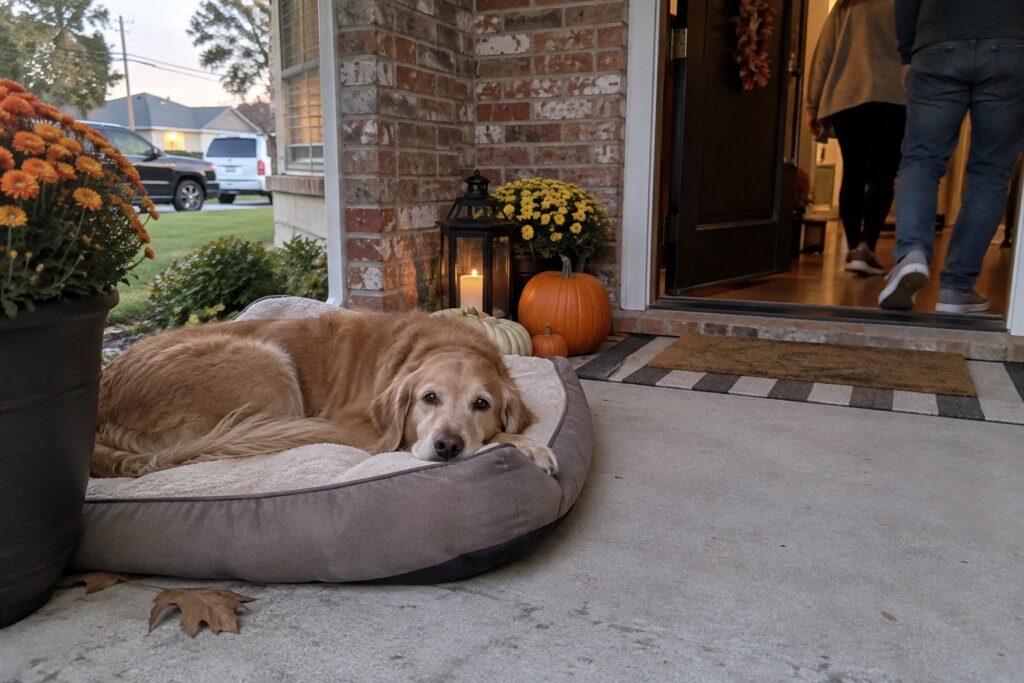
With Halloween on Saturday, October 31, 2026, and Thanksgiving on Thursday, November 26, 2026, many Bossier City homes will soon see more doorbells, costumes, and crowded kitchens. A dependable “down” is one of the best tools you can have for those busy days.
Teach a Place or Mat Down
Choose a bed or mat in a spot where your dog can see the action without being in the middle of it. Practice sending your dog to the mat and asking for a “down,” then reward generously while it remains there. Over time, the mat becomes a familiar, comfortable place to relax.
Practice the Doorbell Routine Early
Do not wait for the first trick-or-treater. Have a family member ring the bell or knock while you ask your dog for a “down” on its mat. Reward calm behavior and keep the early reps short. Weeks of practice before the holidays make the real event much easier.
Use a Crate as a Backup
Some dogs will not be able to hold a “down” with a house full of excited relatives, and that is fine. A comfortable crate in a quiet room is a kind option for those moments. Our post on crate training a dog into a calm routine explains how to make the crate a place your dog actually likes.
Keep Holiday Foods Out of Reach
Even a well-trained dog can grab something off a low coffee table. Many holiday foods are dangerous for dogs. The ASPCA holiday safety tips list risks like chocolate, fatty scraps, and bones. Keep plates high, ask guests not to share food, and call your veterinarian right away if your dog eats something it should not.
When to Get Professional Help
Most dogs can learn a basic “down” at home with patience. But some situations call for a trainer, especially if your dog is reactive, extremely excitable, or simply not progressing after a few weeks of consistent practice.
Board and Train
Our two-week Board and Train program is the core of what we do. Your dog stays at our facility and works through multiple structured training sessions each day. Trainers practice in a variety of settings so behaviors carry over beyond one room. In the final days, we work with you on handler transition so you know how to keep the skills strong at home. Board and Train graduates receive guaranteed results and lifetime support at no additional cost.
Private Lessons and In-Home Training
If you prefer to stay involved in every session, private lessons and in-home dog training let a trainer work with you and your dog directly. In-home sessions are useful for household-specific issues, like a dog that breaks its “down” every time someone walks into the kitchen.
You can compare all of our dog training programs to see which one matches your goals. Have questions about getting your dog to settle? Call us at (318) 562-6536 and we will help you figure out the next step.
About All Dogs Unleashed Dog Training Bossier City
All Dogs Unleashed Dog Training Bossier City helps dogs across Bossier City, Shreveport, and Northwest Louisiana become calm, reliable companions. Our two-week Board and Train program combines multiple structured sessions each day with handler transition training, so skills like a solid “down” carry over to your home. We also offer private lessons, in-home training, boarding, and refresh training. Board and Train graduates receive guaranteed results and lifetime support at no additional cost.
Frequently Asked Questions
How long does it take to teach a dog to lie down?
Many dogs start lying down on a lure within one or two short sessions. Making the behavior reliable on a verbal cue, with duration and distractions, usually takes several weeks of consistent practice. Age, temperament, and how often you train all affect the timeline. Keep sessions short and positive, and progress only when your dog is succeeding most of the time.
Should I push my dog into a down position?
No. Pushing on your dog’s back or pulling its legs can cause discomfort and often makes dogs resist harder. It can also damage trust. Luring, shaping, and capturing teach your dog to move into position on its own, which leads to a more willing and reliable response. If your dog seems physically uncomfortable lying down, check with your veterinarian.
What is the difference between down and off?
“Down” should mean lie down on the floor with elbows touching the ground. “Off” is commonly used to tell a dog to get off furniture or stop jumping on people. Using two different words prevents confusion. If your family uses “down” for both, your dog will struggle to know what you want, so agree on one meaning for each word.
Can older dogs learn to lie down on cue?
Yes. Adult and senior dogs can learn new behaviors at any age. Older dogs may need softer surfaces, shorter sessions, and a bit more patience. Watch for signs of joint pain, like hesitating or groaning when lowering themselves, and talk to your veterinarian if you notice them. Capturing is often a gentle and effective method for older dogs.
Why does my dog lie down at home but not at the park?
Dogs do not generalize well. A behavior learned in your living room is not automatically understood in a new place full of smells, people, and other dogs. Practice in many locations, starting with quiet ones, and lower your expectations each time you add a new setting. Higher-value treats help a lot in busy environments like parks.
Is professional training worth it for a basic down?
For many dogs, home practice is enough. Professional training makes sense when your dog is very excitable, reactive, or not progressing, or when you want a reliable “down” around real distractions quickly. A trainer can spot timing mistakes you might miss and build a strong foundation, then show you how to maintain it at home.
Learning how to teach a dog to lay down is one of the simplest ways to bring more calm into your home, especially when the holidays fill your house with guests. If you want help building a reliable “down” or any other skill, call (318) 562-6536 or reach out online. We would love to meet you and your dog at our facility at 4500 Benton Rd in Bossier City.
Ready to Get Started with All Dogs Unleashed Dog Training Bossier City?
Whether your dog needs a strong foundation or just a little polish, our team is ready to help. Call (318) 562-6536 to talk with us about your dog’s goals.