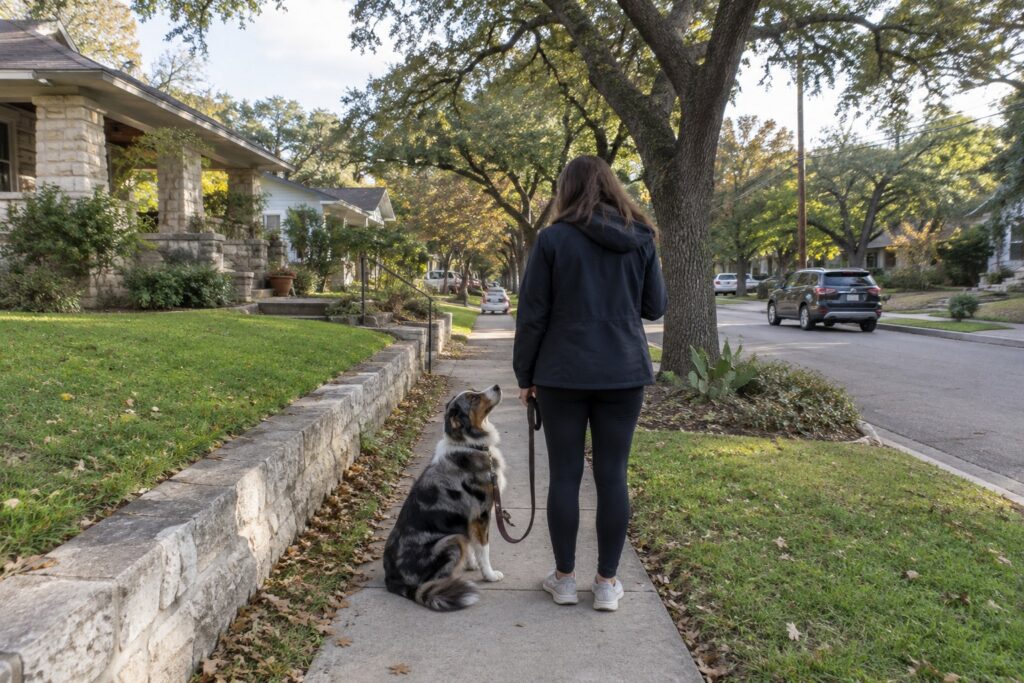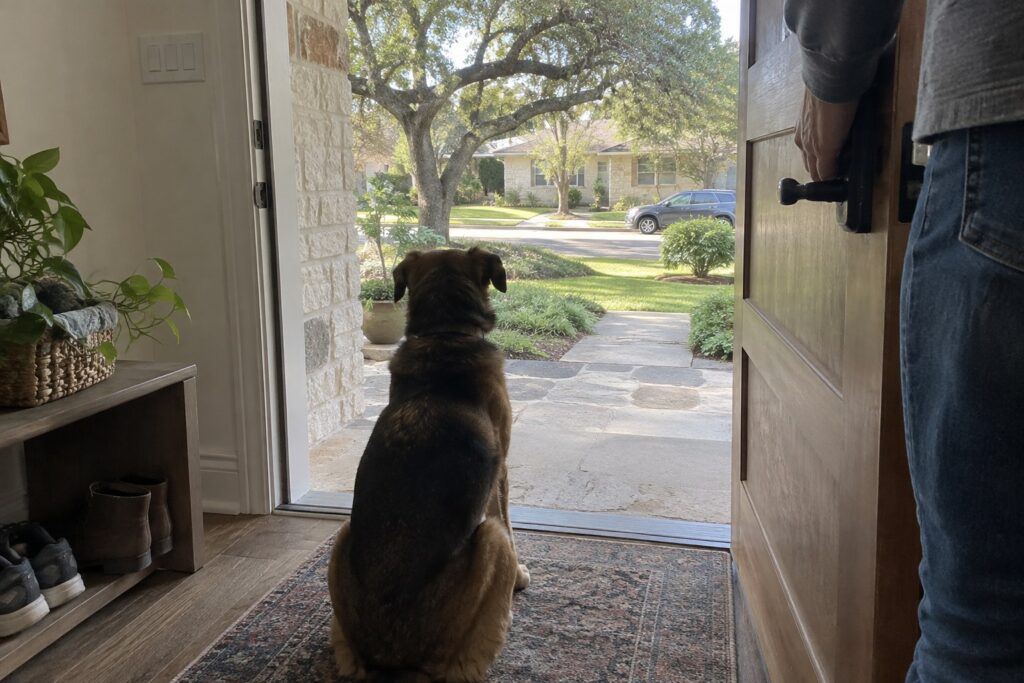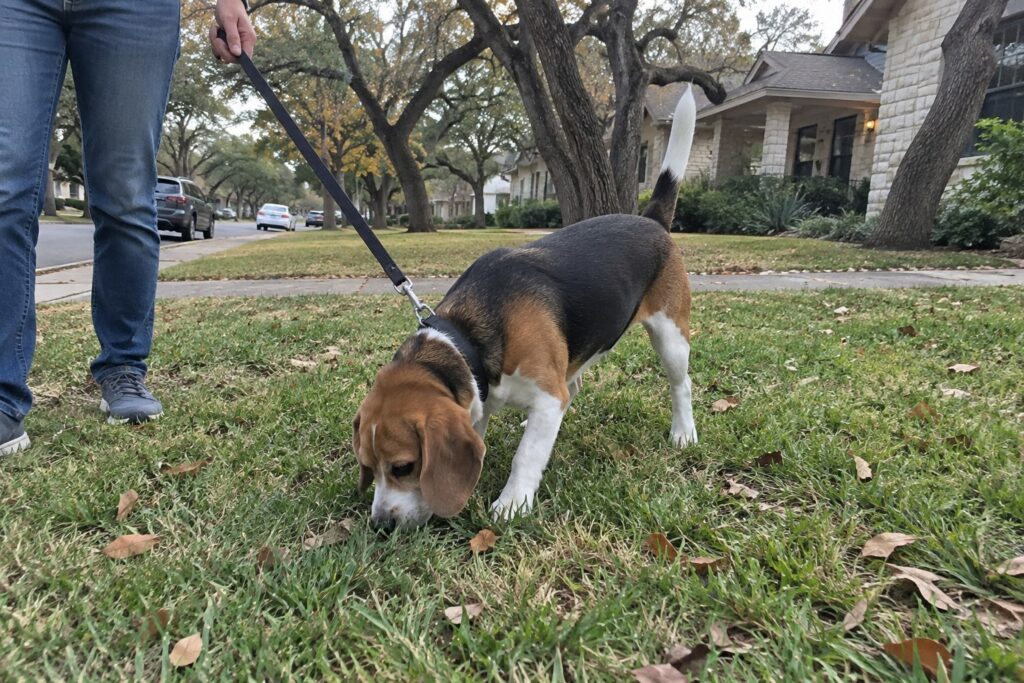

Getting puppy training right from the start makes everything easier, and the right tips can mean the difference between a dog that listens and one that runs the show. At All Dogs Unleashed Dog Training Fort Worth, we work with puppies of all breeds and temperaments across Tarrant County, using a structured, individualized approach that gets real results. Our trainers, including Dana and Chloe, back every program with guaranteed results and lifetime support, so your progress does not stop when the sessions end. Whether your pup is nipping, jumping, or pulling on leash along Trinity Trails, we can help you build the foundation for a well-behaved dog that lasts a lifetime.
Ready to start your puppy off on the right paw? Our team is here to help.
Key Takeaways
- The best puppy training tips focus on consistency, timing, and starting early, ideally before bad habits form.
- Socialization before 16 weeks is critical. Fort Worth environments like busy trails and urban corridors are great real-world classrooms.
- Crate training, house training, nipping, and jumping are the four behavior challenges new puppy owners ask us about most.
- Professional guidance backed by guaranteed results and lifetime support gives your puppy the best long-term outcome.
What Fort Worth Puppy Owners Need to Know Before Training Begins
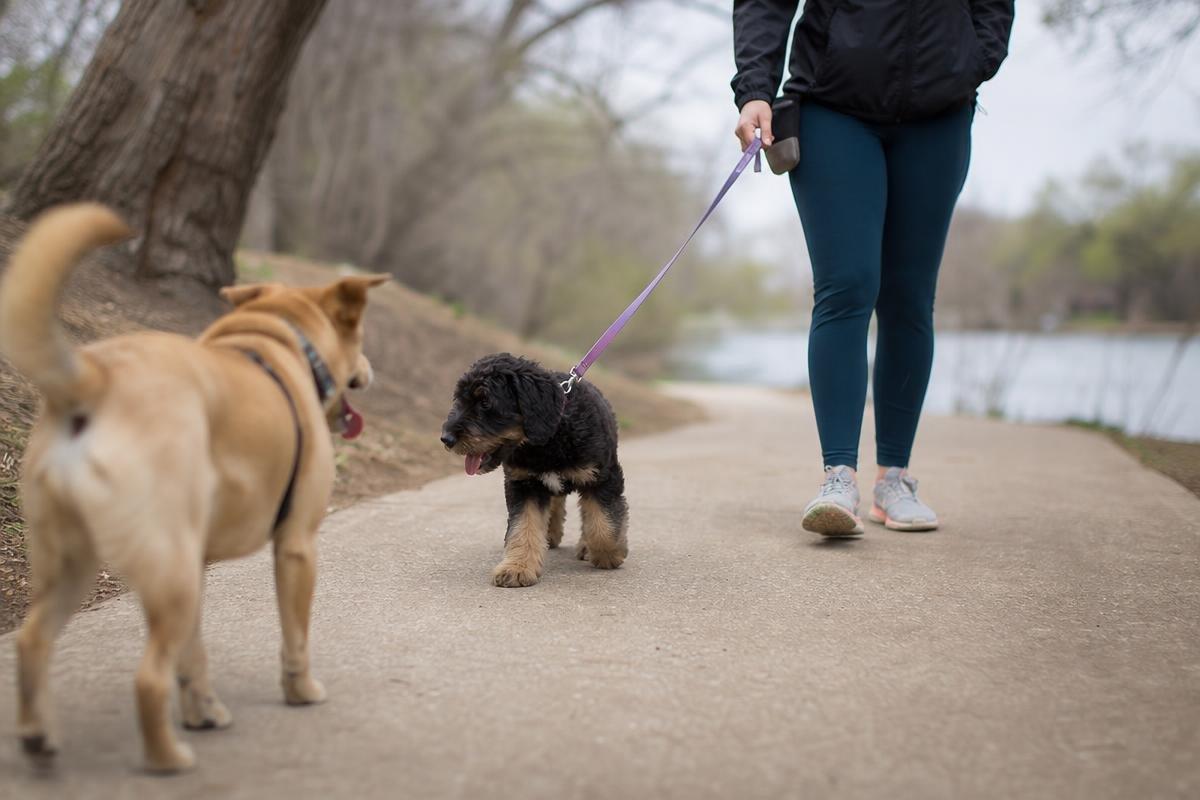
Your new puppy just bolted across the yard, ignored every command, and nearly dragged you down Clearfork Trail toward a cyclist. Sound familiar? The right puppy training tips set the tone for everything that follows.
These tips cover how to train a puppy the right way, built around real life in the Tarrant County area. You will find four core topics: smart socialization, basic commands, the mistakes most owners make, and when to call a professional. These puppy training tips are built for real Fort Worth dogs and the owners who love them. See what local dog owners are saying about results that actually worked.
Why Starting Early Is the Most Important Puppy Training Tip
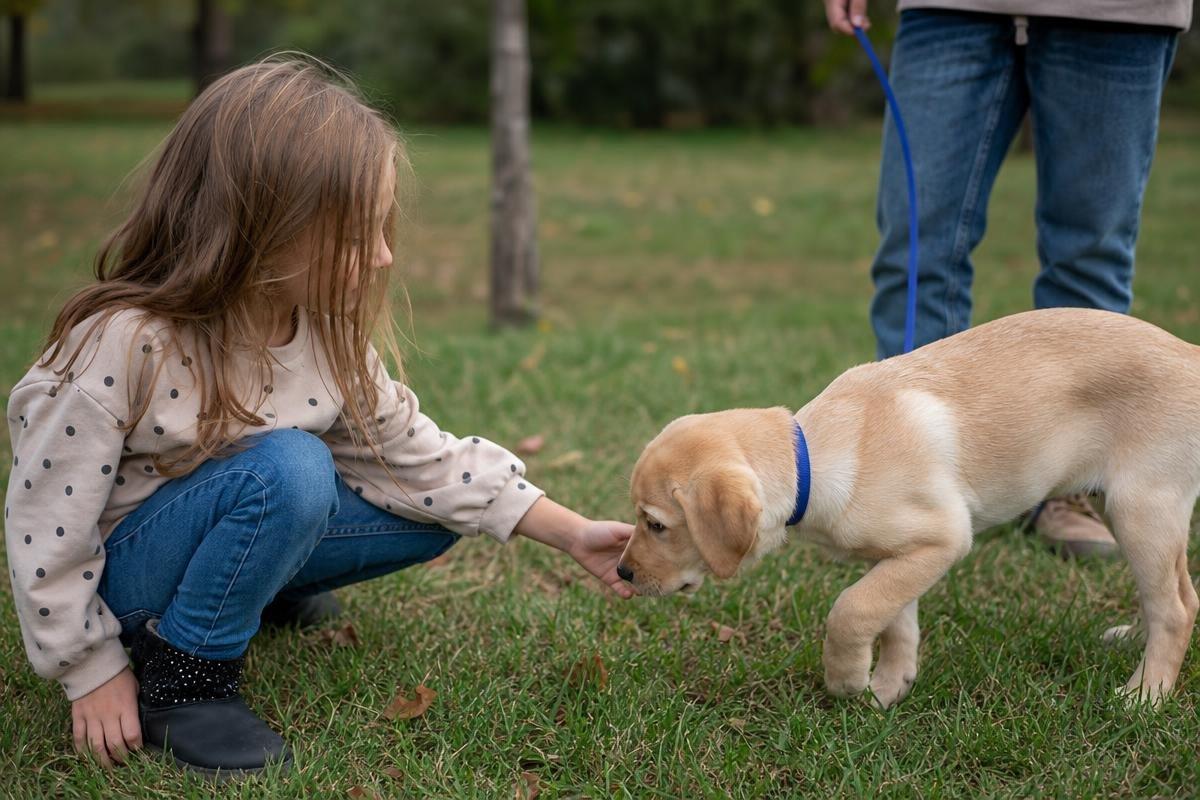
Start training your puppy the day you bring them home. That is not an exaggeration. The brain of a young puppy absorbs new experiences at a rate it will never match again. Every week you wait is a week of that window closing.
The Socialization Window
The critical socialization period runs from roughly 3 to 14 weeks old. During this window, your puppy builds a mental map of what is normal and safe in the world. Positive exposures now shape a calm, confident adult dog. This is when to start training a puppy on the basics of life, not just commands.
Here are the specific exposures you should aim for during this period:
- Strangers of different ages, sizes, and appearances
- Other vaccinated, friendly dogs
- Car rides and travel in a crate
- Leash and collar from the first week
- Household noises like vacuums, doorbells, and TV
- Children playing and moving unpredictably
In the Tarrant County area, you have great options for real-world socialization. Clearfork Trail exposes puppies to cyclists, strollers, and joggers. High-traffic corridors like West 7th bring motorcycles and urban noise. The open shoreline paths around Benbrook Lake add wind, water sounds, and space to move, while the Fort Worth Stockyards area layers in livestock smells and crowd energy that you simply cannot replicate in a backyard. These environments are assets. Use them early.
What Happens When You Wait Too Long
Missing the socialization window does not ruin your dog. It does mean the work ahead requires more patience and structure. Dogs who had limited early exposure often develop fear-based reactivity toward strangers, other dogs, or loud environments. That reactivity is manageable with the right approach, but it takes longer to address than early prevention would have.
If you adopted an older dog or a puppy with a rough start, that is a different path, not a dead end. Our team works with dogs at every stage, and you are always welcome to call us to talk through your specific situation.
The bottom line: start now. Get a puppy training quote and let us help you make the most of this window.
The 5 Basic Commands Every Puppy Should Learn First
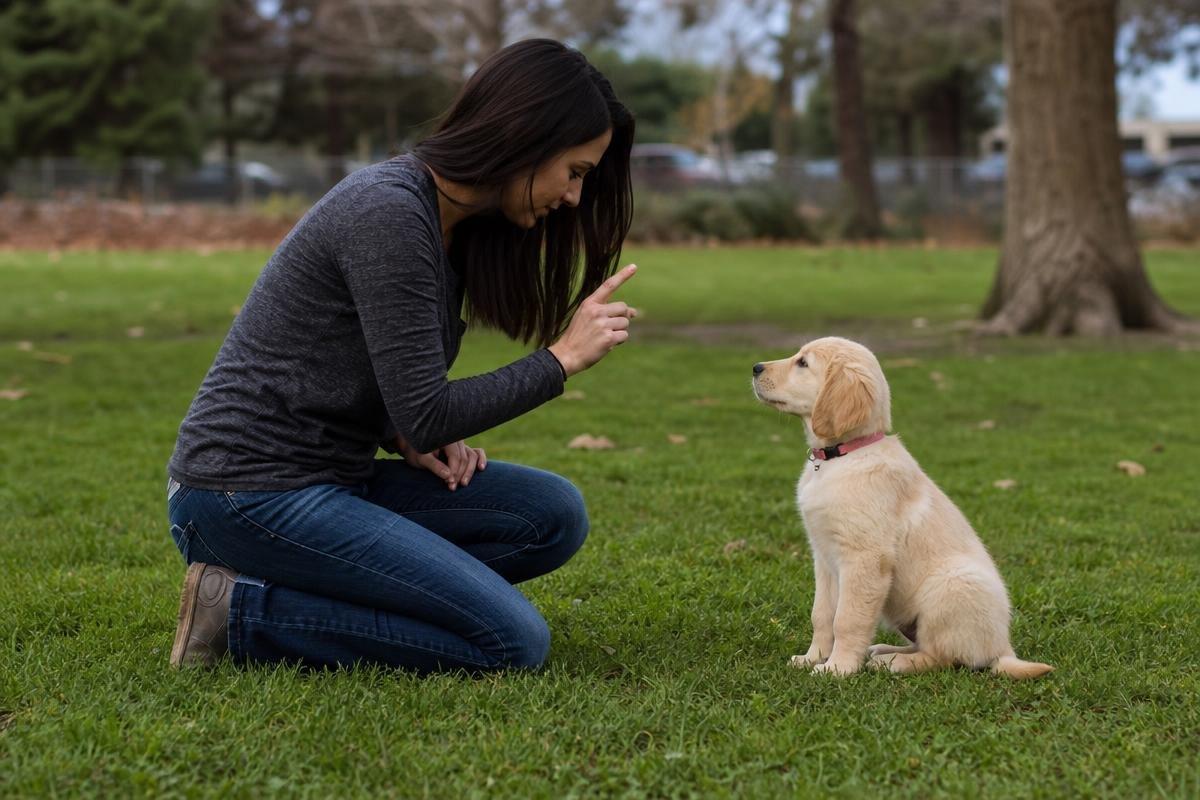
Basic puppy training starts with five commands that build on each other. Get these right and everything else becomes easier. Skip them and you’ll spend months fixing problems that didn’t have to happen. Here they are in the order we teach them:
- Sit for a calm default position and an easy first win.
- Stay to build duration and self-control.
- Come for reliable, safety-critical recall.
- Leave It to build impulse control around temptations.
- Place to give your dog a job and a settle spot.
Sit, Stay, Come
- Sit is always the first command. Hold a treat just above your puppy’s nose and move it slowly back over the head. The rear goes down naturally. Say “Sit” once as it happens, not before. Reward within one to two seconds. Timing is everything at this age. One mistake we see constantly with high-energy Fort Worth breeds like Labs and German Shepherds: owners lure too high and too fast, so the puppy jumps for the treat instead of sitting. Keep the treat low and slow, and if your pup is bouncing off the walls after a hot afternoon indoors, burn a little energy with a short play session before you ask for focus.
- Stay is where most owners rush and fail. Build duration first. Start at two seconds, then four, then eight. Never add distance and duration at the same time. If your puppy breaks, you moved too fast. Back up a step and rebuild.
- Come is the command that keeps dogs safe. Along Trinity Trails, a reliable recall can prevent a real emergency when a cyclist or another dog appears out of nowhere. Always make coming to you the best thing that happens on your puppy’s day. Never call your puppy to you for a bath, nail trim, or anything unpleasant. If you need to do something the dog dislikes, go get them. Protect that recall. Our team can help you build recall that holds up under real Fort Worth park distractions.
Leave It and Place
These two commands do more work than most owners realize. They teach impulse control, which is the foundation of a well-trained dog.
- Leave It: Hold a treat in a closed fist. When your puppy stops nosing at it and backs off, mark and reward with your other hand. On local trails where dropped food, trash, and wildlife encounters are common, this command is not optional.
- Place: Send your puppy to a designated mat and reward for staying there. Start with short durations. Build up to holding Place through a full meal or when guests arrive. It gives your dog a job instead of a reason to jump or bark.
These five commands form the core of how to train a puppy the right way. Want to know if your pup is ready to take it further? Call us at (817) 393-6224 and we’ll tell you exactly where to start.
How Does Positive Reinforcement Actually Work for Puppies?
Positive reinforcement works by pairing a desired behavior with an immediate reward, so your puppy learns that good choices pay off. It sounds simple. The execution is where most owners run into trouble.
Reward Timing
Your puppy lives in the present moment. The reward must arrive within one to two seconds of the behavior, or your puppy connects the treat to whatever it was doing at delivery, not what you wanted.
Here is a common mistake. Your puppy sits. You reach for the treat. By the time it arrives, the puppy has stood back up. You just rewarded standing. This happens dozens of times a day without owners realizing it.
The fix is a marker signal. A sharp “Yes!” or a clicker bridges the gap between the behavior and the treat. The marker fires the instant the behavior happens. That buys you a half-second to reach into your pouch. Your puppy learns that the marker means the reward is coming, and the connection stays clean.
Choosing the Right Reward
Not every reward earns the same effort from your puppy. Match the reward to the difficulty of the task.
- High-value rewards (new or difficult behaviors): small pieces of chicken, cheese, or hot dog
- Low-value rewards (practiced behaviors in calm settings): kibble or a dry biscuit
- Tug or play: some puppies prefer a quick game over food entirely
- Verbal praise: works best as a secondary reward paired with food early on
- Life rewards: opening the door, dropping the leash, letting the puppy greet another dog
If your puppy seems stubborn, the reward is usually too low for what you are asking. Raise the value and watch the response change.
One local note: Tarrant County summers are brutal. Outdoor training sessions in July and August should stay short, and soft treats can melt fast, so pack them in a small cooler pouch. Keep the puppy in shade and hydrated between reps.
Knowing how to train a puppy with these puppy training tips puts you ahead of most owners. If you want a trainer to build this foundation with you, get a puppy training quote and we will walk you through the options.
The 4 Puppy Training Mistakes Fort Worth Owners Make Most Often
Most puppy training problems come down to a handful of very common mistakes. None of them make you a bad owner. All of them are fixable. Here is what we see most often in the Tarrant County area and exactly what to do about it.
Inconsistency
If one family member lets the puppy on the couch and another doesn’t, the puppy doesn’t learn the rule. It learns that the rule depends on who is in the room. Before your puppy comes home, hold a five-minute family meeting and agree on the rules in writing. Everyone enforces the same boundaries, every time.
Training Sessions That Are Too Long
Puppies have attention spans measured in minutes, not hours. A 30-minute training session almost always ends in frustration for both of you. Three focused sessions of three to five minutes each, spread through the day, produce far better results. Set a phone timer and stop while your puppy is still engaged.
Skipping Crate Training
A crate is not a punishment. It is a den, a place your puppy can predict and feel safe in. Skipping it is one of the biggest reasons housebreaking drags on for months. Puppies in busy households near high-traffic areas like Hulen Street benefit especially from having a calm, consistent retreat. Introduce the crate early, keep it positive, and housebreaking speeds up dramatically.
Waiting Until 6 Months to Start
This is the mistake that costs owners the most. The idea that puppies cannot learn until six months old is outdated. Puppies can begin basic obedience work at seven to eight weeks. Waiting means missing the easiest learning window, and it also means missing the critical socialization period before week sixteen. If you are unsure where to start, our Fort Worth dog trainers can build a plan around your puppy’s age and temperament.
Here is a quick summary of all four mistakes and their fixes:
- Inconsistency: Hold a five-minute family rules meeting before the puppy arrives.
- Sessions too long: Switch to three daily sessions of three to five minutes each.
- Skipping the crate: Introduce it early as a safe den, not a timeout spot.
- Waiting too long: Start basic obedience work at seven to eight weeks, not six months.
Seeing these mistakes in your own routine? We can help you reset and get on the right track fast. Call us at (817) 393-6224 to talk through your puppy’s specific challenges.
Puppy Training in Fort Worth: What the Local Environment Demands
Training a puppy here is different from training one in Seattle or Chicago. The heat alone changes everything. Add in the Stockyards, the West 7th corridor, and the noise downtown, and your puppy faces distractions most training guides never mention. These puppy training tips are specific to what you and your dog will actually encounter in Tarrant County.
Heat, Humidity, and Short Training Windows
Summers here regularly push past 100°F from June through September. Puppies overheat faster than adult dogs. Concrete and asphalt hold heat long after the sun goes down, and that matters for small paws too.
Train before 9 a.m. or after 7 p.m. during summer months. Keep sessions to 10 minutes max outdoors. Always bring a water bottle and a collapsible bowl in your training bag. Watch for heavy panting, stumbling, or a puppy that suddenly stops responding. Those are early warning signs, so head straight for shade and water if you spot them.
Distractions Unique to Fort Worth Neighborhoods
Your puppy will encounter things that no generic training guide covers. Tarrant County has its own flavor of chaos, and you need to protect your dog against it.
- Livestock smells and crowd noise near the Stockyards area
- Cyclists, joggers, and strollers along popular trail corridors
- Motorcycles and sirens near the downtown corridor
- Other dogs and off-leash activity at West 7th and Hulen Street parks
- Large crowds at events like those held at Panther Island Pavilion
Start proofing in low-distraction spots first. Build up slowly. A puppy that sits reliably in your living room still needs work before it can hold a seat next to a passing motorcycle.
Dog-Friendly Spots to Practice Real-World Skills
Once your puppy has the basics down, real-world practice is the graduation step. Trinity Park and the trails around Tandy Hills give you foot traffic, open terrain, and unpredictable movement all in one place. These environments test whether your puppy’s recall and leash manners actually hold under pressure.
Puppy socialization tips matter here. Exposure to new environments builds confidence. Introduce each new location gradually and keep early visits short so your puppy leaves on a good note.
When Should You Call a Professional Puppy Trainer in Fort Worth?
Most puppy quirks are normal. Some are warning signs. Knowing the difference saves you weeks of frustration and keeps small problems from becoming big ones.
Signs Your Puppy Needs More Than YouTube Videos
These behaviors are all solvable. None of them mean your dog is broken or that you failed. They just mean your puppy needs a structured, individualized approach that goes deeper than a free tutorial.
- Biting that breaks skin. Normal mouthing is soft and redirectable. Bites that puncture are a different issue entirely.
- Resource guarding food or toys. Growling or snapping when you approach the bowl is not a phase to wait out.
- Extreme fear responses to everyday sounds. Thunder, traffic, the vacuum. Panic that shuts your puppy down completely needs early attention.
- Can’t focus for even 30 seconds. Every puppy is distractible. A puppy that cannot settle at all, even in a quiet room, needs help with impulse control.
- Aggression toward other household pets. Rough play is normal. Sustained stalking or attacks are not.
- Housebreaking accidents past 16 weeks despite consistent effort. If you have followed every tip and your puppy still cannot hold it, a trainer can find what’s missing.
What to Expect From Professional Puppy Training
We work with dogs of all breeds, ages, and temperaments across the Tarrant County area. Every program starts with an assessment of your puppy’s breed tendencies, age, and current behavior. From there, we build structured sessions with clear goals, and we teach you the same skills so the training sticks at home, well beyond the training program. Every program is backed by guaranteed results and lifetime support.
Our team holds 112 five-star Google reviews. Customers regularly mention Dana and Chloe by name, note the regular photo updates during training, and say their dogs came home with noticeably better manners. See what local dog owners are saying before you decide.
If you are seeing any of the signals above, request a puppy training quote and let us take a look. Early intervention is always easier than fixing a habit that has had months to solidify.
Frequently Asked Questions
At what age should I start training my puppy in Fort Worth?
Start at 7 to 8 weeks old. Even a 3-minute session with a 9-week-old builds the foundation for adult behavior. The socialization window closes around 14 weeks, so waiting costs you the most critical learning period your dog will ever have.
How long should puppy training sessions be?
Keep sessions to 3 to 5 minutes, two or three times per day. Always end on a success, not a struggle. Once your puppy reaches 4 to 5 months, sessions can stretch to 10 to 15 minutes as their focus improves.
What is the most important command to teach a puppy first?
Most trainers start with Sit because it is easy to lure and gives your puppy an immediate win. That said, Come (recall) may matter most for safety. Near busy corridors like Hulen Street or off-leash parks in Keller and Arlington, a reliable recall can prevent a serious accident.
How do I stop my puppy from biting and nipping?
Redirect immediately to a chew toy the moment teeth touch skin. If your puppy keeps going, stand up and turn away. Withdraw your attention completely. Consistency across every family member matters here. Most puppies grow out of mouthing by 4 to 5 months, but inconsistent responses drag that timeline out.
Is board and train a good option for puppies?
Yes, especially for busy owners or puppies already showing problem behaviors. Your puppy gets structured, individualized training every day during their stay. We include a full handoff session so the skills transfer to you at home. Owners consistently tell us their dogs came back with noticeably better manners.
How do I find a qualified puppy trainer in Fort Worth, TX?
Look for a structured, individualized approach, clear communication, and ongoing support after the program ends. We serve Tarrant County and the surrounding area, including Keller, Southlake, Arlington, Benbrook, and North Richland Hills. See what local dog owners are saying about our results, then get a puppy training quote in Fort Worth today.
Ready to stop guessing and start seeing real results? All Dogs Unleashed Dog Training Fort Worth works with dogs of all breeds, ages, and temperaments across the greater Tarrant County area. The socialization window does not wait. Call us at (817) 393-6224 and let’s get started.
Ready to Get Started with All Dogs Unleashed Dog Training Fort Worth?
Call (817) 393-6224 to speak with our team directly. We’re ready to answer your questions, walk you through your options, and help you find the right solution for your needs. Whether you’re just starting to plan or ready to move forward, we’ll make the process simple and stress-free.
Reach out today and let’s talk about how we can help.