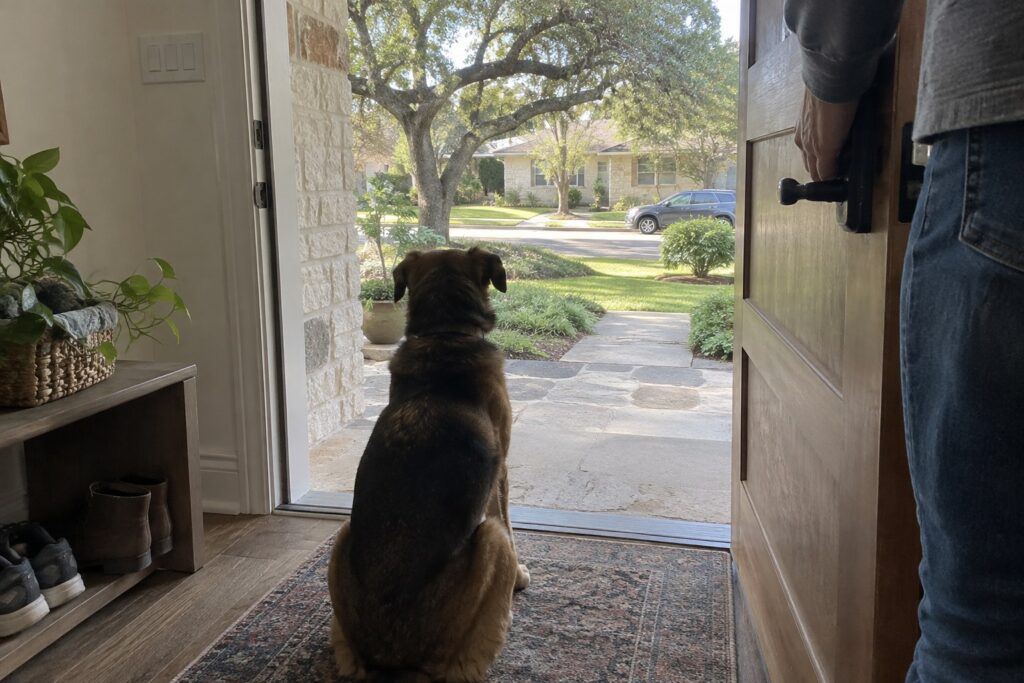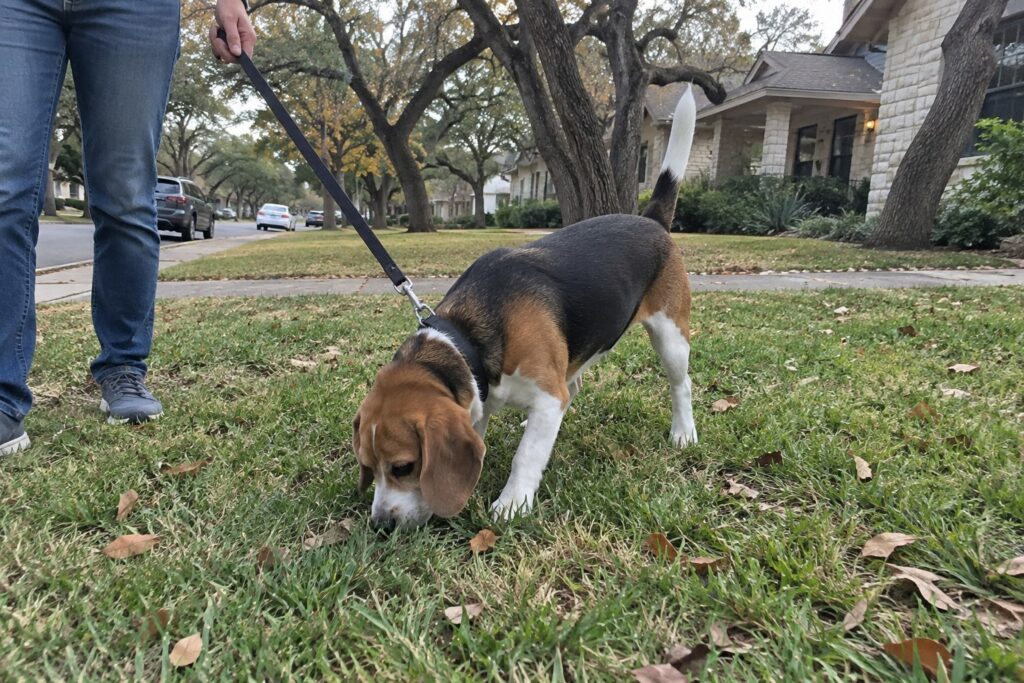

Picture your dog spotting a jackrabbit near the open fields off Benbrook Lake and blowing off every recall you have ever taught. That moment is exactly why so many Fort Worth dog owners start researching e-collar training, and it is one of the most misunderstood tools in the trade. An e-collar can be a remote communication tool when introduced with qualified professional guidance that helps dogs achieve reliable off-leash control in real-world environments like the Trinity Trails and your own backyard.
A structured, individualized approach can help determine whether a remote training tool is appropriate for your dog's needs. Ready to see what e-collar training can do for your dog? Let's talk.
Key Takeaways
- E-collar training should be considered only with qualified professional guidance and an individualized assessment.
- Modern e-collars have adjustable stimulation levels, and professional handling matters when introducing any remote training tool.
- Off-leash reliability in high-distraction environments like Fort Worth's trails and parks is a primary benefit of e-collar work.
- Collar fit, timing, and session length matter, especially during Fort Worth's extreme summer heat.
- Professional guidance is critical. Dogs trained with an e-collar without proper instruction often develop confusion, not confidence.
What Is an E-Collar and How Does It Actually Work?
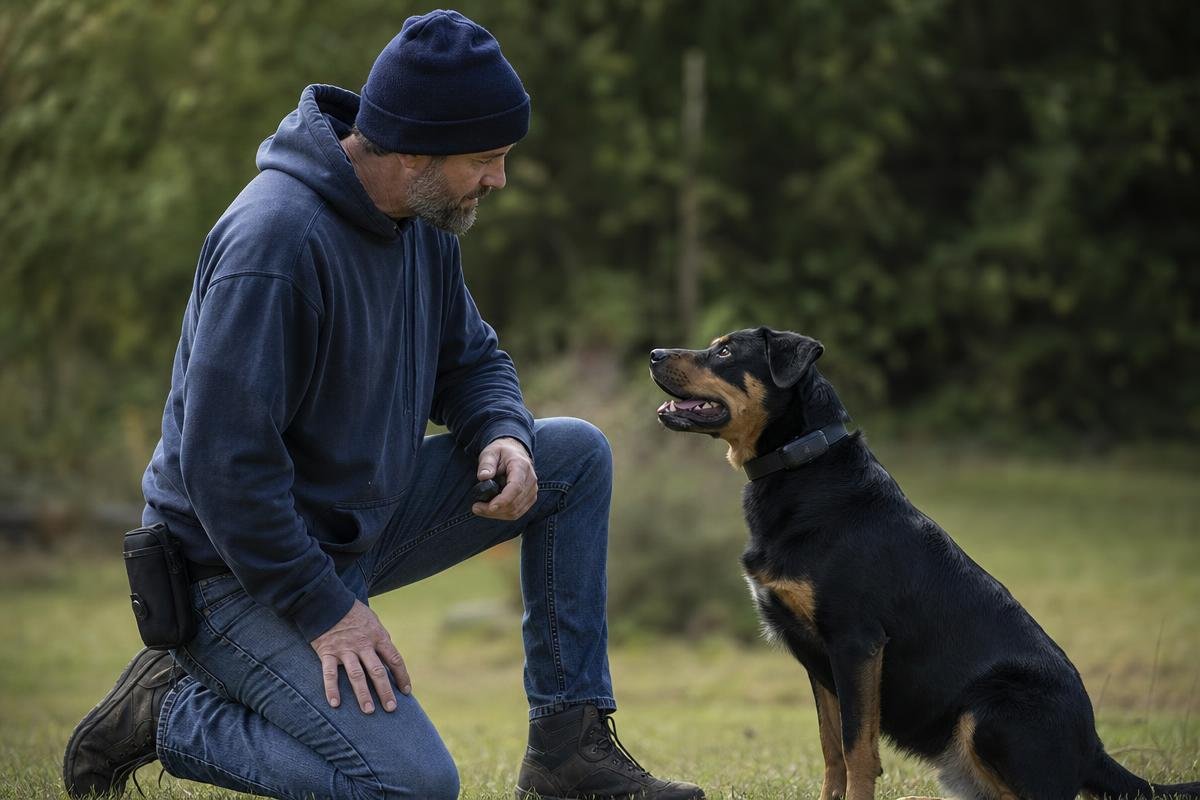
An e-collar, also called a remote training collar, is a receiver worn on your dog's neck paired with a handheld remote. The remote lets a trainer deliver a mild, adjustable electronic stimulation from a distance. Think of it as a tap on the shoulder, not a punishment. It gives you a reliable way to communicate with your dog even when a leash isn't attached and distractions are everywhere, like on the Trinity Trails or in a busy neighborhood park where your dog has learned to tune you out.
The E-Collar as a Communication Tool
The best way to understand what the stimulation feels like is to think about a TENS unit, the kind used in physical therapy. A dog's response to stimulation can vary, which is why professional guidance matters. The dog feels it, notices it, and learns to respond to it. That's the whole point. Remote collar training should be approached carefully, with professional guidance tailored to the individual dog.
Professional trainers may use equipment with adjustable settings, but the right approach depends on the individual dog's needs and professional assessment.
E-collar training is not about correction alone. It's a communication system. Used correctly, it bridges the gap between a dog that listens on a leash and a dog that listens everywhere.
How Stimulation Levels Are Set for Each Dog
The level-finding process is one of the most important steps in remote collar training. A trainer starts at the absolute lowest setting and increases gradually until the dog shows the first subtle awareness response, maybe an ear flick, a slight head turn, or a brief pause. That's the working level. The goal is to use the lowest level appropriate for the individual dog, with professional guidance.
Here's what separates professional use from misuse:
- Professional use starts at the lowest effective level. Misuse starts high and works down.
- Professional use pairs stimulation with a known command. Misuse applies it randomly.
- Professional use requires the dog to already understand the command before the collar is introduced. Misuse skips that foundation entirely.
- Professional use is supervised and adjusted session by session. Misuse is set-it-and-forget-it.
If you are exploring structured training options, consider an individualized assessment for your dog. The right tool, used the right way, makes a real difference.
Is E-Collar Training Safe? Addressing the Most Common Concerns
E-collar use requires an individualized assessment and qualified professional guidance. Improper technique can cause stress or skin irritation, so owners should not introduce a remote training tool without professional instruction.
We hear the skepticism. Fort Worth dog owners are searching Reddit threads and finding conflicting opinions. Some trainers swear by e-collars. Others campaign against them. Our answer is simple: the tool is not the problem. The training behind it is what matters.
What Safe, Professional E-Collar Use Actually Looks Like
E-collar fit, timing, and session length should be discussed with a qualified professional and follow manufacturer guidance.
- Fit should follow the collar manufacturer’s guidance and be checked by a qualified professional.
- Ask a qualified professional how to monitor fit and skin comfort during use.
- Settings should be individualized with qualified professional guidance.
- Any remote-training tool should be introduced only after the dog understands the related command.
Potential uses vary by dog and situation, so an individualized professional assessment should determine whether this tool is appropriate. Not sure if the e-collar is right for your dog? A qualified professional can help you assess whether this tool is appropriate.
When E-Collar Training Is Not the Right First Step
This tool is not appropriate for every dog. Puppies and dogs with medical or behavioral concerns should be assessed individually before any remote tool is considered.
If your dog has a history of fear-based reactivity or came from a difficult background, there may be better starting points. Training a rescue dog often requires a different foundation before any remote tool enters the picture. Red-flag scenarios requiring professional assessment first include active fear responses, unknown bite history, and any medical condition affecting the skin or nervous system.
If you are considering a remote-training tool, seek qualified professional guidance before choosing an approach.
What Results Can You Expect from E-Collar Training?
E-collar training delivers one core outcome above everything else: a dog that responds reliably, even when distractions are pulling hard in the other direction. We're talking about a dog that comes back to you on command with a squirrel darting across the path, a cyclist passing at speed, or another dog barking from 20 feet away. That level of response is what we call reliable off-leash control, and it changes daily life with your dog in a real way.
Reliable Off-Leash Control in Real Fort Worth Environments
Trinity Trails can create a highly distracting environment for a dog, with cyclists, joggers, other dogs, and wildlife competing for attention. That level of activity can make recall challenging. The goal of recall training is a response that remains dependable as distractions increase.
The Benbrook Lake area near our location on Benbrook State Route presents similar challenges: open water, wildlife, and wide open spaces where a dog can cover a lot of ground fast. Results vary by dog, history, and the training plan used.
Behavior Problems E-Collar Training Can Help Address
Remote collar training is not a single-trick solution. It addresses a wide range of everyday behavior problems that make life harder for dog owners across Wedgwood, the Tanglewood area, and the broader southwest side. Here are behavior concerns that may require a structured training plan:
- Ignoring commands around other dogs, people, or wildlife
- Not coming when called, especially in open spaces or large backyards
- Leash pulling on walks, which may benefit from a structured training plan
- Bolting through doors, gates, or out of the car
- Running off in open areas or unfenced yards
- Jumping on guests or family members
- Persistent nuisance barking
One area where expectations matter: e-collar training is not a standalone fix for severe aggression cases. Dogs showing serious signs of dog aggression need a professional assessment first so we can build the right plan. A qualified professional should assess whether a remote-training tool belongs in an individual dog’s plan.
Interested in building more reliable off-leash control with your dog? Call us at (817) 393-6224 and find out which program fits your dog's needs.
How Does Professional E-Collar Training Work Step by Step?
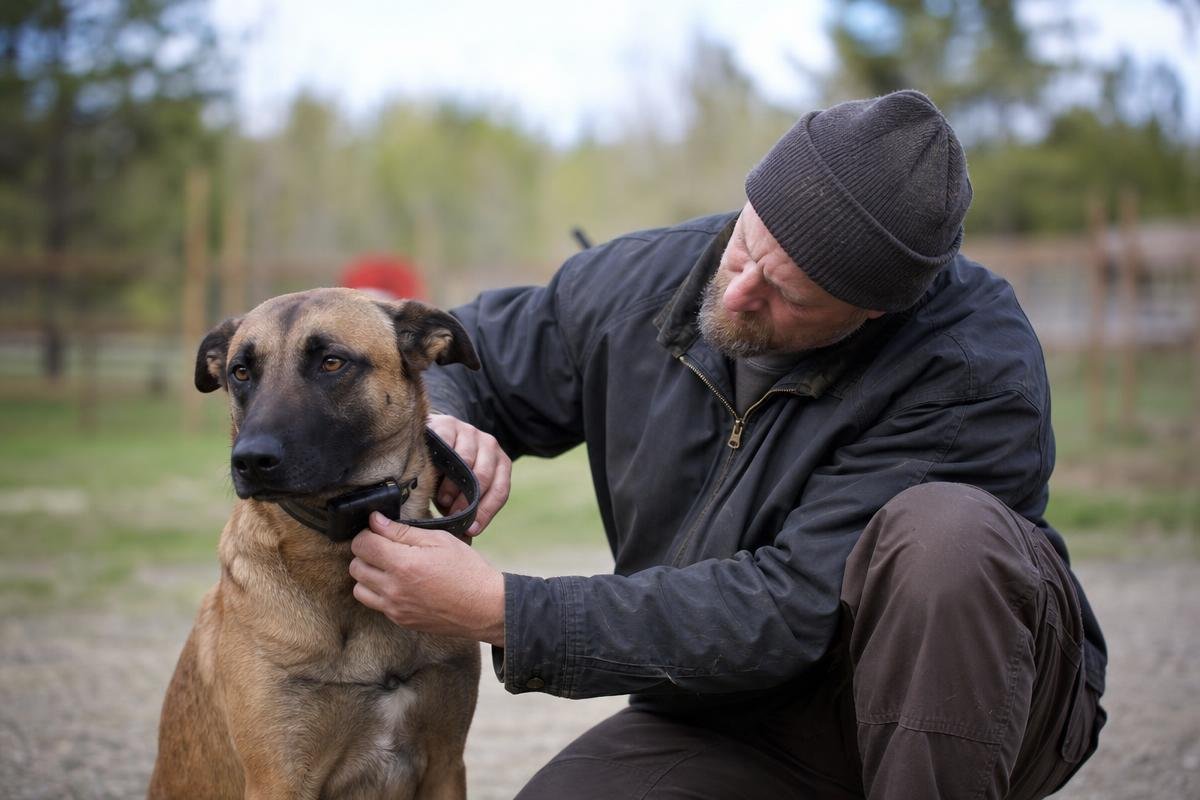
A lot of people buy an e-collar online, guess at the settings, and wonder why their dog is confused or stressed. Professional e-collar training works because every step is deliberate, sequenced, and built around your specific dog. Here is exactly what that process looks like.
Step 1: Finding the Right Working Level
Every dog feels stimulation differently. A qualified trainer may begin at a low setting and monitor the dog’s response carefully. That might be a slight ear flick, a brief head turn, or a small pause in movement. That is the working level. No yelping. No flinching. Just a quiet acknowledgment that the dog felt something.
Getting this wrong in either direction causes real problems. Too low and the dog ignores the signal entirely. Too high and you create stress that undermines the whole program. This is the single biggest reason you cannot just buy a collar and guess. Level-finding requires trained eyes and a calm, methodical approach that takes experience to do correctly.
Step 2: Building the Communication Bridge
The e-collar is never introduced as a correction tool first. A qualified trainer may pair any remote-training tool with commands the dog already knows, so the signal is introduced within a structured plan. Your dog learns that the feeling means something specific. That association has to be solid before any correction use begins.
Professional guidance should include clear instruction on the dog’s learned behaviors and the safe use of any training tools.
Step 3: Proofing in Real-World Environments
Proofing is where the training becomes real. A qualified trainer can introduce distractions progressively, starting in controlled settings and building up gradually. The Benbrook Lake area near our location gives us open spaces and wildlife smells that test recall in a genuine way. The riverside paths and busy trailheads add foot traffic, other dogs, and unpredictable movement that mirrors what your dog faces every day.
This phase can introduce real-world environments gradually as the dog demonstrates reliable responses. That reliability is the whole point of balanced dog training and e-collar training done right.
E-Collar Training for Fort Worth Dogs: Local Conditions That Matter
Training in North Texas is not like training anywhere else. The heat, the terrain, and the sheer variety of distractions here create real challenges that generic advice does not cover. If you live in Wedgwood, the Tanglewood area, or anywhere on the southwest side near Benbrook, you already know what we mean.
North Texas Heat and E-Collar Safety
Summers here regularly push past 100°F from June through September. That matters for e-collar training in a specific way: the receiver sits against your dog's neck, and during long outdoor sessions in direct sun, the contact points can retain heat against the skin. That is not a reason to avoid the tool. It is a reason to use it correctly.
Consider outdoor training during cooler hours, such as early morning, when pavement and trail surfaces are less hot. Hot asphalt and concrete can scorch paw pads and radiate heat up onto a dog's belly, so keeping work off midday pavement is as important as managing the collar itself. Here are practical considerations during summer months:
- Consider cooler hours and check conditions before outdoor training
- Check contact points every 20 to 30 minutes during outdoor work
- Rotate the collar position if sessions run longer than usual
- Keep sessions shorter and focused rather than long and repetitive
Learn the signs of heat stress before summer training begins.
Fort Worth Distractions That Make Off-Leash Training Essential
This area has some of the most demanding real-world training environments you will find anywhere in North Texas. Trinity Trails can put your dog near cyclists, joggers, other dogs, and wildlife. The Clearfork district along the river adds crowds, patio diners, and other leashed dogs, while the Benbrook Lake area, just minutes from our location at 4011 Benbrook State Rte, features open water, geese, and wide open spaces that test even a well-trained dog's recall.
Neighborhoods like Wedgwood and the surrounding southwest side have dense weekend foot traffic and busy park activity. Large backyards out here mean dogs spend real time off leash, where distance communication matters most. That is exactly where a reliable dog training program pays off. If you want to explore these spots safely, choose dog-friendly areas with posted rules.
E-collar training gives you a reliable communication channel even when your dog is 50 yards ahead on the trail. That can be valuable in high-distraction settings.
Frequently Asked Questions
Is an e-collar the same as a shock collar?
The terminology and methods used for remote collars vary. Discuss the tool, its settings, and alternatives with a qualified professional before deciding whether it is appropriate for your dog.
At what age can a dog start e-collar training?
Most professionals recommend waiting until at least 5 to 6 months old. Younger puppies do better with foundational obedience first. If your dog is still under that age, focus on age-appropriate foundational obedience before considering a remote-training tool.
How long does e-collar training take to see results?
Many owners notice meaningful improvement within the first few sessions once the dog understands the collar. Training timelines depend on the dog, its history, and the program selected. Ongoing support can help owners maintain the skills their dog learns.
Can e-collar training work for puppies?
Under 6 months, foundational training without the e-collar is the better starting point. Once your dog is old enough and has basic obedience in place, the collar can be introduced properly. A qualified professional can help determine appropriate timing for your individual dog.
Do I need to use the e-collar forever after training?
Most dogs reach a point where the collar becomes a backup tool, not a daily necessity. The real goal is reliable voice command response. The collar stays available for high-distraction situations, like a busy park in Keller or open spaces near Euless, but many dogs rarely need it after training is complete.
How much does e-collar training cost in Fort Worth?
Costs vary depending on the program format, whether that is board and train or in-home sessions, and the length of the program. We serve Fort Worth and surrounding cities including Arlington, Mansfield, and Keller. Call us directly at (817) 393-6224 for current pricing and to find the right fit for your dog.
If your dog is ignoring commands in the backyard, bolting at the park, or tuning you out the moment a squirrel appears, e-collar training may close that gap. If you are considering e-collar training, seek qualified professional guidance and discuss your dog's needs before choosing a program.
All Dogs Unleashed Dog Training Fort Worth has worked with dogs of every breed, age, and temperament across the area. We are based at 4011 Benbrook State Rte, Fort Worth, TX 76116. Call (817) 393-6224 or visit our site to get started. The goal is a dog that listens when it counts.
Ready to Get Started with All Dogs Unleashed Dog Training Fort Worth?
Call (817) 393-6224 to speak with our team directly. We're ready to answer your questions, walk you through your options, and help you find the right solution for your needs. Whether you're just starting to plan or ready to move forward, we'll make the process simple and stress-free. Reach out today and let's talk about how we can help.