
Anxiety in dogs is more widespread than most owners realize. A 2020 study of more than 13,000 dogs found that roughly 72% showed anxiety-associated behaviors at some point, ranging from mild apprehension to severe phobias. Separation anxiety alone affects an estimated one in seven dogs. Fireworks, thunderstorms, separation, strangers, vet visits, car rides, there are countless triggers, and most dogs encounter several of them regularly.
The challenge is that anxiety in dogs often doesn’t look the way owners expect. Dogs don’t sit on the couch worrying out loud. Their stress shows up in physical symptoms, behavioral changes, and patterns that can look like disobedience, stubbornness, or “weird quirks” until you recognize them for what they are. Once you can read the signs, you can address them. This guide walks through the 9 most common signs of anxiety in dogs, what’s likely causing them, and what Bossier City owners can actually do to help.
Why Anxiety in Dogs Is More Common Than You Think
A few realities worth understanding upfront:
Anxiety isn’t a character flaw or bad training. It’s a real, often physiological, response to perceived threats or stress. Just like humans, some dogs are predisposed to it through genetics. Others develop it from specific experiences. Many dogs accumulate it gradually through repeated stressors that never get addressed.
Untreated anxiety almost always gets worse, not better. A dog that’s mildly afraid of fireworks at age 2 often becomes severely phobic by age 5 if nothing is done. Mild separation anxiety becomes severe panic. Mild leash reactivity becomes daily explosions. The window for relatively easy intervention closes faster than most owners realize.
Anxiety also has real consequences for quality of life, both yours and your dog’s. Chronic stress affects a dog’s immune system, cognitive function, sleep, appetite, and lifespan. It also affects your relationship: a constantly anxious dog is harder to enjoy, harder to take places, and harder to live with.
The good news is that anxiety responds to intervention. Most dogs see meaningful improvement with the right combination of management, training, and (in some cases) veterinary support.
The Different Types of Dog Anxiety
Before identifying signs, it helps to know which type of anxiety you might be dealing with. The most common categories:
- Separation anxiety, distress when left alone or separated from a primary person
- Noise anxiety, fear of fireworks, thunderstorms, vacuums, sirens, or other loud sounds
- Generalized anxiety, chronic, low-level anxiety without a specific trigger
- Social anxiety, fear of strangers, other dogs, or specific types of people
- Age-related anxiety, new anxieties that develop in senior dogs, often tied to cognitive decline
- PTSD or trauma-based anxiety, anxiety stemming from a specific traumatic event or history of mistreatment
- Confinement anxiety, panic specifically when confined to a crate, room, or vehicle
Most anxious dogs experience more than one type. A dog with separation anxiety often also has noise sensitivity. A dog with generalized anxiety may also become reactive in social situations. The categories overlap significantly, which is why intervention often needs to address multiple angles at once.
The 9 Signs of Anxiety to Watch For
Most anxious dogs show some combination of these nine signs. The key is noticing patterns: when do these behaviors occur, what triggers them, and how do they relate to each other.
Sign #1: Excessive Panting When It’s Not Hot
Stress panting is one of the most overlooked signs of canine anxiety. Heavy panting is normal in hot weather, after exercise, or when a dog is excited. But panting that happens when your dog is sitting still in a comfortable room, riding in the car, sitting in the vet’s waiting room, or simply lying near you during a thunderstorm is almost always stress-related.
Watch for the difference between heat panting (open mouth, relaxed tongue, slower rhythm) and stress panting (often more rapid, sometimes with whining mixed in, accompanied by other signs of tension like a stiff body or repeated lip licking).
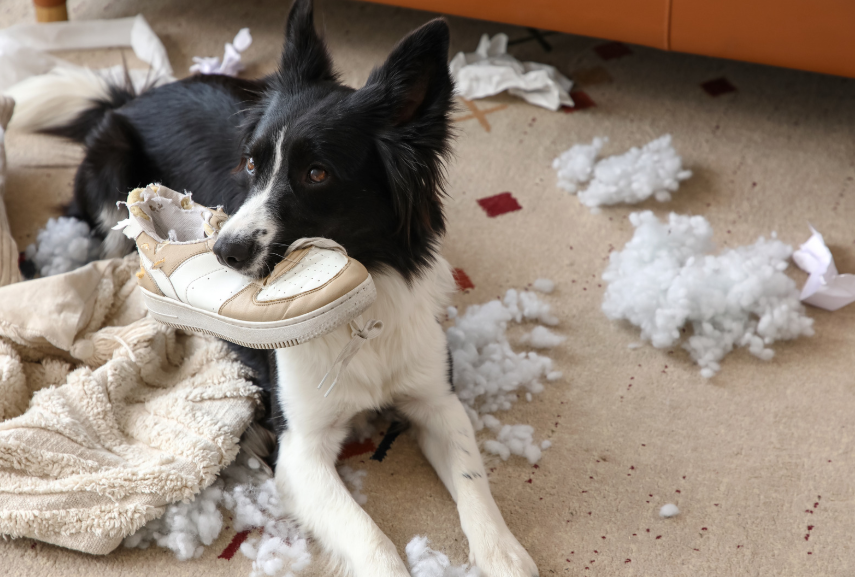
Sign #2: Destructive Behavior, Especially When Alone
Chewing, digging, scratching at doors and windows, shredding pillows, and tearing up baseboards are classic signs of anxiety, especially when they only happen when you’re not home. The destruction often centers around exit points (doors, windows) for dogs trying to escape and reach you, or around items that smell strongly like you (your bed, clothing, or favorite chair).
This is different from puppy chewing or boredom destruction. Anxiety-driven destruction is typically frantic and concentrated in specific areas. Boredom destruction tends to be more random and less intense. Our blog on understanding and eliminating destructive chewing covers how to tell the difference.
Sign #3: Pacing, Restlessness, or Inability to Settle
A dog that can’t lie down and stay there, that follows you from room to room without settling, or that paces in circles or back and forth is often dealing with anxiety. The behavior often intensifies when you’re preparing to leave (putting on shoes, grabbing keys), during storms, or in unfamiliar environments.
A relaxed dog naturally settles into a down position and stays there. An anxious dog physically can’t. Their body is too keyed up to relax.
Sign #4: Excessive Vocalization (Barking, Whining, Howling)
Anxious vocalization sounds different from alert barking or attention-seeking barking. It’s often higher-pitched, more frantic, and harder to interrupt. Whining that doesn’t have a clear cause (your dog isn’t hungry, doesn’t need to go out, isn’t asking for play) is often a stress response.
If your dog barks or howls persistently when left alone, and neighbors have mentioned it, separation anxiety is a strong possibility. If your dog whines during car rides, vet visits, or thunderstorms, the stress is environmental. Our post on why is my dog whining more than normal covers this in more depth.
Sign #5: Trembling, Shaking, or Cowering
Visible shaking is one of the clearest physical signs of fear or anxiety. Some dogs tremble all over. Others shake just in their hindquarters. Cowering, lowering their body close to the ground, tucking the tail, flattening the ears, is the body language of a dog trying to make themselves small in response to a perceived threat.
Trembling can also be triggered by cold or excitement, so context matters. A dog shaking during fireworks is anxious. A dog shaking on a 35-degree morning is probably cold.
Sign #6: Inappropriate Urination or Defecation Indoors
A previously housetrained dog who suddenly starts having accidents indoors is often dealing with anxiety. This is especially common in separation anxiety: the dog works themselves into such a panicked state that they lose control. It can also happen during thunderstorms, fireworks, or other acute stressors.
This isn’t disobedience or revenge (a common misconception). It’s a physiological stress response. Punishing a dog for these accidents makes the underlying anxiety worse, not better. A vet check is also worth doing first to rule out urinary tract infections or other medical causes.
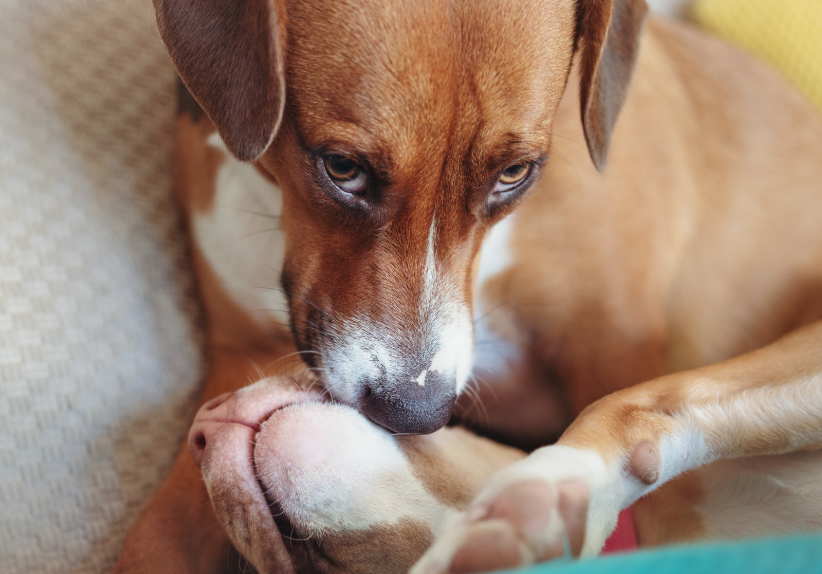
Sign #7: Compulsive Behaviors (Excessive Licking, Tail Chasing)
Repetitive, self-soothing behaviors are often a sign of chronic anxiety. The most common include:
- Excessive licking of paws, legs, or specific spots, sometimes to the point of creating sores (acral lick dermatitis)
- Tail chasing beyond the occasional playful spin
- Spinning or circling repeatedly
- Flank sucking (more common in some breeds, like Doberman Pinschers)
- Light or shadow chasing as an obsession rather than a game
- Pica, eating non-food items like dirt, fabric, or rocks
These behaviors release endorphins that temporarily relieve anxiety, which is why they become compulsive. Once the pattern is established, it can be hard to break without addressing the underlying stress.
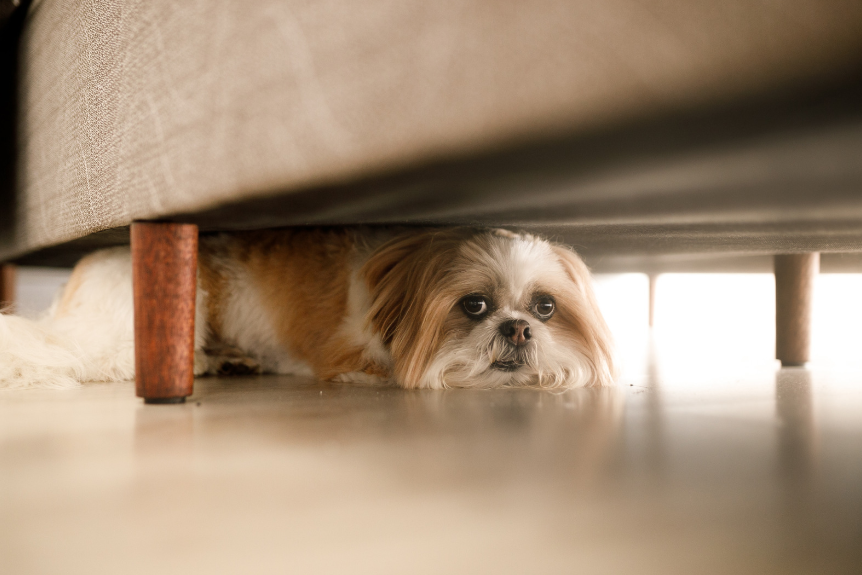
Sign #8: Hiding, Avoidance, or Withdrawal
An anxious dog often retreats to a safe spot when stressed. Hiding under the bed during fireworks. Disappearing into a closet when guests arrive. Refusing to come out from under the couch during thunderstorms. Going into another room when the household gets noisy.
In milder forms, this looks like a dog who consistently avoids certain rooms, certain people, or certain situations. The dog isn’t being antisocial. They’re managing their own stress by removing themselves from the trigger.
Letting an anxious dog hide is generally fine, that’s their coping strategy. Forcing them out of their hiding spot, however, often makes the anxiety worse and damages their trust in you as a safe person.
Sign #9: Aggression That Seems Out of Character
This is the sign owners least want to see, but it’s one of the most important to recognize. A normally friendly dog who suddenly snaps, growls, or shows teeth is often dealing with anxiety, fear, or pain. Fear-based aggression is the most common form of dog aggression and the most often misunderstood.
Look for context. Is the aggression happening when the dog is cornered? When approached during specific activities (eating, sleeping, sitting in a particular spot)? Around specific triggers (men, hats, other dogs, vet techs)? When the dog can’t escape the situation?
Aggression rarely comes out of nowhere. It usually appears after a long sequence of earlier warning signs (the ones above) that weren’t recognized or were actively punished. For a deeper look at body language signals that precede aggression, our piece on reading your dog’s body language is a useful reference. For dogs with significant fear-based or trauma-related aggression, our blog on working with and training a traumatized dog covers the broader rehabilitation approach.
Common Triggers for Bossier City Dogs
Living in Bossier City brings some specific anxiety triggers that owners in other regions might not deal with as frequently. Worth being aware of these:
Fireworks. Bossier City has multiple major fireworks events: Freedom Fest at Cypress Lake and South Bossier Park, Rockets Over the Red, New Year’s Eve celebrations, and the legal fireworks window from July 1–5. These nights are extremely common triggers for noise-related anxiety.
Thunderstorms. Louisiana’s severe weather season (typically late winter through spring) brings frequent thunderstorms. The combination of barometric pressure changes, static electricity, loud thunder, and heavy rain hits sensitive dogs especially hard. Many dogs sense storms approaching well before humans do.
Hurricane evacuations. When evacuation orders come for areas south of us, the disruption to routine, unfamiliar lodging, and stressed family energy all contribute to dog anxiety. Even if Bossier City itself isn’t the evacuation target, family members hosting evacuated relatives or pets creates significant household disruption.
Post-pandemic separation. Many dogs adopted during 2020–2022 grew up with their owners working from home. The transition back to office work has left a generation of dogs struggling with separation anxiety they never had to develop coping skills for.
Summer heat-related stress. Louisiana summers limit outdoor exercise to early mornings or late evenings. Dogs that don’t get adequate physical and mental stimulation accumulate stress that often shows up as anxiety symptoms.
Construction and city noise. The Barksdale Air Force Base flight patterns, ongoing development around East Bank District, and routine traffic noise can all be triggers for noise-sensitive dogs.
What to Do When You Notice the Signs (First Steps)
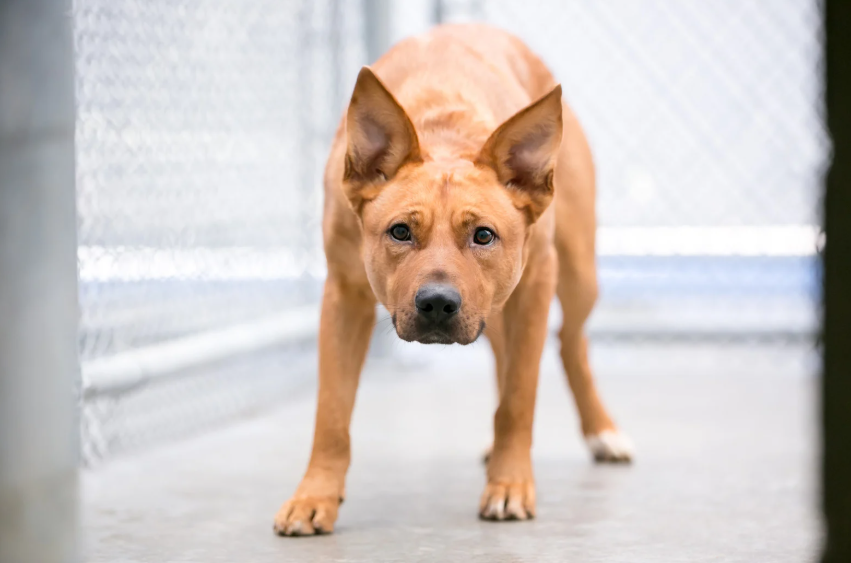
Once you’ve identified anxiety symptoms, the path forward generally follows this sequence:
Step 1: Rule out medical causes. Many anxiety symptoms (sudden hiding, increased irritability, loss of appetite, accidents) can also indicate medical issues. Pain, hormonal imbalances, and cognitive decline can all mimic anxiety. A vet visit should be the first step before assuming the issue is purely behavioral.
Step 2: Identify the pattern. Track when the symptoms occur. What’s happening in the environment? Time of day? Who’s around? Is your dog alone or with you? What just happened or is about to happen? Patterns reveal the trigger, which is the foundation of any treatment plan.
Step 3: Evaluate severity. Mild anxiety (occasional symptoms, dog recovers quickly) often responds to home management. Moderate anxiety (regular symptoms, harder to recover) usually benefits from professional input. Severe anxiety (panic attacks, destruction, self-injury, aggression) needs professional support, often combined with veterinary medication.
Step 4: Decide on the right intervention. Match the level of help to the level of need. Don’t try to manage severe separation anxiety with YouTube videos. Don’t pay for intensive board-and-train programs for mild noise sensitivity that responds to a Thundershirt and a quiet room.
At-Home Management That Actually Helps
For mild to moderate cases, several home strategies make a real difference:
- Maintain a consistent routine. Predictability reduces anxiety. Feed, walk, train, and rest at roughly the same times every day.
- Provide adequate physical exercise. A tired dog has less excess energy to fuel anxiety. Daily walks plus play matters more than people realize.
- Add mental enrichment. Puzzle toys, snuffle mats, scent work, and training sessions all engage the brain and reduce stress.
- Create a designated safe space. A specific room, crate, or corner where your dog can retreat without being disturbed. White noise machines and covered crates often help.
- Use calming aids appropriately. Compression wraps (like Thundershirts), pheromone diffusers (Adaptil), and L-theanine-based calming supplements can help mild cases.
- Practice gradual desensitization to triggers. For specific fears like fireworks or strangers, controlled exposure paired with positive reinforcement gradually reduces the fear response.
- Avoid reinforcing anxious behaviors. Don’t fuss over a panicked dog with high-pitched reassurance. Calm presence helps. Anxious mirroring of their stress doesn’t.
- Make departures and arrivals low-key. For dogs with separation anxiety, dramatic goodbyes and excited reunions intensify the anxiety. Calm, neutral transitions help.
What NOT to Do When Your Dog Is Anxious
Avoid these common mistakes that make anxiety worse:
- Don’t punish anxious behaviors. A fearful dog who’s punished for trembling, hiding, or accidents learns that the trigger is even scarier because now you’re upset too.
- Don’t force exposure. “Flooding” a dog by forcing them into the situation that scares them rarely produces lasting improvement. It usually intensifies the fear.
- Don’t ignore escalating signs. Mild anxiety today is often severe anxiety in six months without intervention. Address it early.
- Don’t rely solely on quick fixes. CBD treats, anti-anxiety supplements, and calming sprays can support a treatment plan but don’t address underlying causes by themselves.
- Don’t give human medications. Many human anxiety medications are toxic to dogs. Anything pharmaceutical should come from your vet.
- Don’t assume your dog will “grow out of it.” Anxiety almost never resolves on its own. It typically gets worse with age and exposure.
- Don’t yell at a barking, anxious dog. Yelling sounds like joining in to your dog and confirms that something is wrong.
When Professional Help Is the Right Call
Some anxiety cases are clearly DIY territory. Others need professional support. Bring in a trainer or veterinary behaviorist when:
- Your dog has true separation panic (destruction, escape attempts, self-injury when alone)
- Aggression has appeared, especially with fear or anxiety underneath it
- Symptoms are getting worse despite consistent home management
- The anxiety is significantly affecting your daily life or your relationship with your dog
- You’re seeing self-harming compulsive behaviors (lick sores, broken teeth from chewing, etc.)
- The dog is a rescue or has known trauma history with severe anxiety
- You’re not sure what you’re dealing with or how to start
For dogs with leash reactivity that’s anxiety-driven specifically, our guide on walking a reactive dog covers the layered approach. For dogs with deeper trauma backgrounds, our piece on working with and training a traumatized dog is the right next read.
Professional support typically includes structured behavior modification work, environmental management strategies, and sometimes coordination with a veterinarian for medication if appropriate. Severe cases often respond best to a combination of training and short-term anti-anxiety medication that gives the dog a baseline calm enough to actually learn new responses to triggers.
The Connection Between Anxiety and Training
Worth understanding clearly: structured training reduces anxiety as a side effect.
A dog with solid obedience foundations is more confident than a dog without them. Clear cues give anxious dogs predictability. Reliable commands give them a way to respond to their environment instead of reacting to it. The relationship-building that happens during good training builds trust between dog and owner, which directly reduces a dog’s stress baseline.
This is why training-based interventions often work for anxiety even when the obedience isn’t directly about the trigger. Working on place commands, recall, and impulse control with an anxious dog often produces noticeable improvement in their general demeanor, because the dog is becoming more confident and the relationship is becoming more stable.
For dogs with significant anxiety, our dog training programs include specific behavior modification work alongside the obedience foundations. In-home dog training is often the right format for anxiety because the work happens in the dog’s actual environment, where the triggers actually are. Board and train can work for severe cases that need an intensive structured reset, though it’s important to discuss the specific anxiety pattern with the trainer first to make sure it’s the right fit.
Frequently Asked Questions
Can dogs grow out of anxiety?
Generally, no. Without intervention, anxiety typically worsens with age. Each anxious episode reinforces the pattern. The good news is that with the right combination of training, management, and (when needed) veterinary support, most dogs see meaningful improvement.
Are anti-anxiety medications safe for dogs?
When prescribed appropriately by a veterinarian, yes. Common medications include fluoxetine (long-term), trazodone (situational), gabapentin (combined with other meds), and Sileo (specifically for noise aversion). These are generally safe and well-tolerated, but they should only be given under veterinary supervision. Never give your dog human anxiety medications.
Does CBD really help with dog anxiety?
The research is still limited. Some dogs seem to respond well to CBD products marketed for pets; others show no effect. If you decide to try CBD, use products specifically formulated for dogs and consult your vet first, especially if your dog is on other medications. CBD shouldn’t replace structured training or prescribed medication for severe anxiety.
How long does it take to see improvement with training?
For mild anxiety, owners often see noticeable improvement in 4–6 weeks of consistent work. Moderate anxiety typically takes 2–4 months. Severe cases (significant separation anxiety, fear-based aggression, deep trauma) often require 6 months to a year or more of structured work. The investment is in long-term quality of life, not quick fixes.
Can certain breeds be more prone to anxiety?
Yes. Some breeds tend toward higher baseline anxiety, including Border Collies, German Shepherds, Vizslas, Cocker Spaniels, Bichon Frisés, and many of the working and herding breeds. That said, individual temperament matters more than breed, and any dog can develop anxiety regardless of genetics.
My dog only has anxiety in specific situations. Is that still a problem?
Situational anxiety (only at the vet, only during fireworks, only on car rides) is still worth addressing, especially if those situations come up regularly. Targeted desensitization and counter-conditioning often work very well for situational anxiety because the trigger is clear. The earlier you address it, the easier it is.
About All Dogs Unleashed
All Dogs Unleashed is a professional dog training facility serving Bossier City, Shreveport, and the surrounding communities. Located at 4500 Benton Rd, Suite 200, Bossier City, LA 71111, our team works extensively with anxious dogs, from mild noise sensitivity to severe separation panic. All Dogs Unleashed believes that anxious dogs deserve patient, structured support, not punishment, not “tough love,” and not dismissal. With the right approach, most anxious dogs can become significantly more confident and comfortable in their daily lives.
Concerned About Your Dog’s Anxiety?
If you’ve recognized several of these signs in your own dog, you’re not alone, and the situation isn’t hopeless. Anxiety responds to the right intervention. The question is figuring out what level of help your specific dog needs and acting on it before patterns deepen.
Call us at (318) 562-6536 or visit our contact page to schedule a consultation. We’ll evaluate your dog, identify the patterns, and recommend the approach most likely to help. Let’s give your dog the calmer, more confident life they deserve.