

“You can’t teach an old dog new tricks” is one of the most persistent and most wrong pieces of advice in dog ownership. Senior dogs absolutely can learn. In some ways, they actually learn better than puppies. They have longer attention spans, better impulse control, and the kind of settled focus that makes training sessions productive instead of chaotic.
The myth holds a lot of Bossier City owners back from getting the help their older dog could genuinely benefit from. A 9-year-old Lab who pulls on the leash, an adopted 7-year-old rescue who panics during fireworks, a 12-year-old who’s developed new anxiety as their hearing fades, none of these are lost causes. Training works at every age. The approach just needs to fit the dog in front of you. Here are five real reasons professional training pays off for older dogs, plus what to expect from the process.
If you’re not yet sure whether your specific dog is even a candidate, our blogs on Is My Dog Too Old for Dog Obedience School? and Training an Older Dog: Is It a Good Idea? cover the decision side of the question.
Reason 1: Mental Stimulation Slows Cognitive Decline
Dogs over the age of 7 face an increasing risk of Canine Cognitive Dysfunction, a condition that affects roughly one in three dogs over 11 and is essentially the canine equivalent of human dementia. Symptoms include disorientation, changes in sleep patterns, increased anxiety, forgetting familiar commands, and general confusion in environments the dog used to navigate easily.
Like with humans, the brain benefits from being used. Dogs who continue learning, problem-solving, and engaging mentally throughout their senior years show slower rates of cognitive decline than dogs whose mental life winds down with their physical activity. Training sessions are genuine mental exercise. Working through a new behavior, recalling cues in a distracting environment, holding a stay through changing conditions, all of it lights up the same problem-solving circuits that protect cognitive function.
This benefit is one of the most under-appreciated reasons to keep training your older dog. Most owners think of training as something you do to fix behaviors. For senior dogs, it’s also preventive medicine.
The training doesn’t have to be complicated. Even teaching a 10-year-old dog new tricks like “spin,” “touch,” or “find it” provides meaningful mental stimulation. The act of learning matters more than what’s being learned.
Reason 2: Bad Habits Can Still Be Replaced With Good Ones
A common assumption is that whatever behaviors your older dog has are now permanent. They’ve been pulling on the leash for eight years, jumping on guests for ten, barking at the doorbell for as long as you’ve owned the house. They are who they are.
This is wrong. Behaviors that have been rehearsed for years are harder to change than fresh ones, but they’re not impossible to change. The dog hasn’t lost their ability to learn. They’ve just developed strong patterns that take longer to override with new ones. With consistent, structured work, even deeply ingrained habits respond to retraining.
Real examples from senior dogs that come through professional programs:
A 9-year-old Lab who pulls hard on the leash can absolutely learn loose-leash walking. It might take 6–8 weeks of consistent work instead of the 2–3 weeks a young puppy might need, but the result is the same. A 12-year-old who barks at every stranger walking past the window can learn to settle calmly with consistent counter-conditioning. A 7-year-old rescue who never learned basic obedience can pick up sit, down, place, and recall in the same timeframe as any other adult.
The key is that “longer” doesn’t mean “impossible.” A senior dog whose owner spent five years giving up on training is exactly the kind of dog who can transform with structured professional support. For a closer look at what command training looks like in practice, our blog on how to teach your dog obedience commands covers the foundation skills.
Reason 3: Training Strengthens the Bond at a Time When It Matters Most
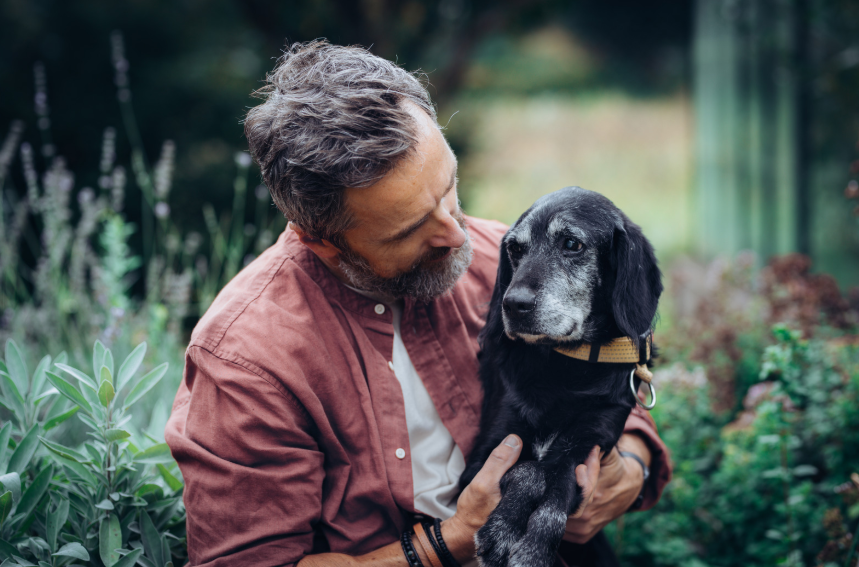
Most dogs go through a predictable arc with their owners. The first year or two is intense: training, puppy classes, daily attention, lots of structured interaction. By year three or four, the routine settles. By year six or seven, many dogs and owners have drifted into a comfortable but less engaged rhythm.
Training brings back the focused, one-on-one time. Even short daily sessions build the kind of communication and trust that gets eroded by years of casual coexistence. For dogs entering their senior years, that re-engagement matters. Older dogs are often described as “becoming distant” or “losing interest”, but in many cases, the disengagement is mutual, and the relationship responds quickly to renewed attention.
This is especially true for adopted senior dogs. Bossier City and Shreveport-area shelters regularly have wonderful senior dogs available for adoption. These dogs come into homes with no shared history, sometimes with trauma backgrounds, often with uncertainty about their new environment. Training is one of the fastest, most reliable ways to build trust with a newly adopted senior. The structure gives the dog clarity. The shared focus builds the relationship. Within weeks, you have a dog who’s bonded to you in a way that’s hard to replicate any other way.
For adopted seniors with deeper history, our post on working with and training a traumatized dog covers the broader rehabilitation approach.
Reason 4: Better Manners Make Senior Care Easier
Senior dogs need more handling than younger dogs. Vet visits become more frequent. Medications need to be administered (often daily). Grooming requires more cooperation as mobility decreases. Some dogs need help with stairs, getting in and out of cars, or navigating slick floors. A few will eventually need lift harnesses, mobility aids, or assistance with daily routines.
A senior dog with foundational obedience and cooperative care training handles all of this dramatically better than a dog without it. The differences are concrete:
A dog who knows “place” can be settled on a vet exam table without struggle. A dog who tolerates handling on cue can be groomed, have their nails trimmed, and have ear medication applied without it becoming a wrestling match. A dog who’s been counter-conditioned to handling stays calm during the kind of body-checks that catch lumps, sores, and other health issues early. A dog with reliable recall is safer when their hearing or vision begins to fade.
This is the kind of training that matters more in your dog’s last years than it ever did in their first. Owners who invest in it report that the senior years feel manageable instead of stressful, and the dog appears more comfortable and confident through the changes their body is going through.
For dogs that already struggle specifically at the vet, our post on my dog hates the vet is a useful place to start.
Reason 5: Reduced Anxiety and Better Emotional Wellbeing
Many older dogs develop new anxieties they didn’t have when they were young. Senior dogs often become more sensitive to noises, more reactive to sudden movements, more anxious in unfamiliar environments, and more prone to separation distress. Some of this is physiological, declining senses, joint pain, and cognitive changes can all increase stress responses. Some of it is psychological. A dog who’s grown more dependent on routine and family becomes more affected when things change.
Structured training reduces that anxiety in ways that many owners don’t anticipate. Clear communication gives anxious dogs predictability. Reliable cues give them a sense of control. The repetition of training routines provides the structure that anxious senior dogs lean on.
The behavioral side matters too. A dog who panics at the doorbell can be retrained to settle on a mat instead. A dog with developing separation anxiety can be desensitized to departures. A dog with new sound sensitivities can be counter-conditioned to specific triggers. None of this happens by accident, but all of it is achievable with structured work.
Older dogs who train regularly often appear to gain confidence as the work progresses. They engage more, settle more easily, and handle change with less stress. The connection to a sense of purpose is real. Senior dogs often become “withdrawn” in part because they’re no longer asked to do anything meaningful. Training gives them a job, even if it’s a small one, and most respond to that.
What Professional Training Looks Like for an Older Dog
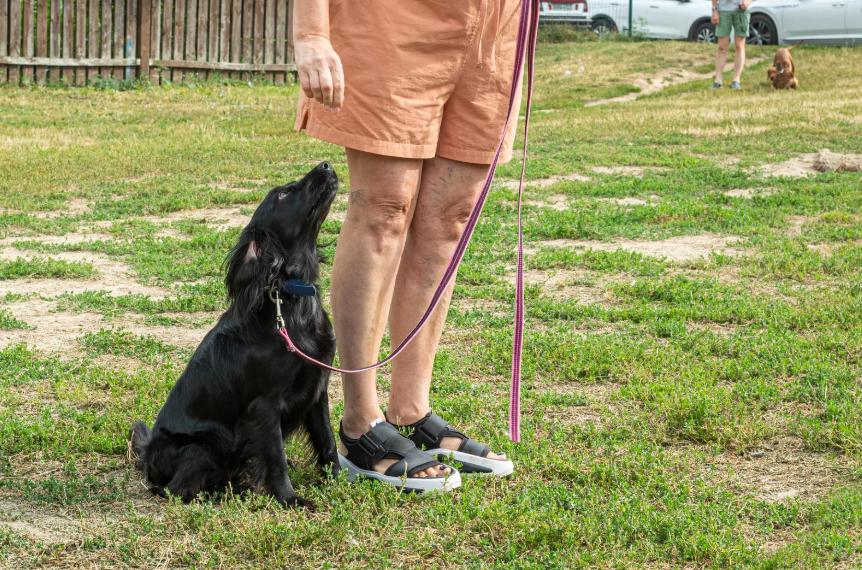
Senior dog training looks different from puppy training in several ways, and a good professional program adjusts accordingly.
Sessions are typically shorter, often 10 to 15 minutes instead of the 30 to 45 minutes a young dog might handle. Older dogs have shorter attention spans and tire faster, so frequent short sessions work better than long ones.
Physical accommodations matter. A dog with hip dysplasia shouldn’t be repeatedly asked for sit-to-stand transitions. A dog with arthritis needs softer surfaces. A dog with mobility issues benefits from training that focuses on stationary behaviors (place, down-stays, focus work) rather than high-impact movements. Any reputable professional trainer will adjust the program to your dog’s physical condition.
Vet input is part of the picture. Before starting an intensive training program with a senior dog, a vet check helps identify any conditions that should shape the approach. Pain management, sensory limitations, and cognitive changes all affect how training should be structured.
Patience and pacing matter more than with younger dogs. An 11-year-old isn’t going to absorb new commands as quickly as a 6-month-old, and pushing harder doesn’t speed things up. The work proceeds at the dog’s pace, with progress measured in weeks and months rather than days.
Rewards often need to be higher value. Many senior dogs are less food-motivated than they were as puppies, so finding the right reinforcement (high-value treats, favorite toys, gentle praise) takes more attention.
Common Concerns Bossier City Owners Have
When owners hesitate to start training their older dog, the concerns usually fall into a few categories:
- “My dog has joint issues.” Training programs adapt. Stationary behaviors, focus work, and gentle handling exercises don’t require physical exertion. A good trainer works around physical limitations, not against them.
- “My dog is anxious.” Anxiety is one of the strongest reasons to train, not a reason to skip it. Structure and clear communication reduce anxiety in most older dogs.
- “My dog is set in his ways.” Patterns that have been rehearsed for years take longer to change but are absolutely changeable. The “set in his ways” feeling is usually about training duration, not training capacity.
- “What if he doesn’t enjoy it?” Most older dogs genuinely enjoy training once they understand the game. The structure, attention, and rewards activate the same drives that puppies have. If a senior seems disinterested, the issue is usually low-value rewards, sessions that are too long, or physical discomfort, not lack of capability.
- “He’s already 10. What’s the point?” Even one or two years of better quality of life is worth it. And many dogs live well into their teens, which is a long time to live with avoidable behavioral or quality-of-life issues.
When to Bring in a Professional
Some senior dog training works fine at home. Other situations call for professional support:
If your dog has serious behavioral issues like aggression, severe anxiety, or reactivity, professional training is the right move. These issues are harder to address as dogs age, not easier, and DIY approaches often make them worse.
If you’ve adopted a senior rescue with unknown history, a professional consultation early on saves a lot of trial and error.
If your dog has stopped responding to training you’ve tried at home, the issue is usually method-related, and a fresh approach from a professional often unlocks progress quickly.
If you’re working through changes related to aging, new anxiety, declining sensory function, mobility issues, a trainer who specializes in older dogs can build a program that fits.
Our dog training programs include senior-appropriate work tailored to each dog’s age, health, and history. In-home dog training is often the best fit for older dogs because the work happens in their familiar environment, which reduces stress and accommodates physical limitations. For dogs that need a more structured reset, board and train can work well, though it’s important to discuss your dog’s specific needs to make sure the program is the right fit.
Frequently Asked Questions
At what age is a dog considered “senior”?
Most veterinarians consider dogs senior at around 7 years for medium-to-large breeds and 9–10 years for small breeds. Giant breeds (Great Danes, Saint Bernards) may be considered senior as early as 5–6 years. The label isn’t as important as recognizing that nutritional, exercise, and training adjustments often start being beneficial around these ages.
Can a dog with arthritis or hip problems still do training?
Yes, with adjustments. Many training behaviors don’t require physical exertion. Place commands, focus work, name recognition, scent work, and other low-impact training are all achievable for dogs with significant mobility limitations. Talk to your vet first to understand what physical limits to respect.
How long does it take to train an older dog?
It depends heavily on what you’re working on and the dog’s history. Basic obedience for a 7-year-old who’s never been formally trained typically takes 8–12 weeks of consistent work to establish solid foundations. Reversing entrenched bad habits usually takes longer. Behavior modification work for anxiety or reactivity often requires several months of consistent effort.
Is professional training expensive?
Costs vary by program type. Group classes are the most affordable, in-home training mid-range, and board-and-train programs the most intensive investment. Many owners find that the lifetime quality-of-life improvement makes professional training worth the cost. A consultation with a trainer typically gives you a clearer picture of what specific outcomes are realistic and what they cost.
Can I train my dog while I’m also working with my vet on a medical issue?
Yes, and you should coordinate the two. Many behavioral issues in senior dogs have a medical component, pain causing irritability, cognitive changes causing confusion, sensory loss causing anxiety. Treating the underlying medical issue while also addressing behavior produces better outcomes than either approach alone. A good trainer will ask about your vet’s input and adjust accordingly.
What if my older dog has been previously trained but has slipped?
Refresher training is one of the easier scenarios. A dog with prior foundational training who’s gotten loose on cues, commands, or manners usually responds quickly to structured retraining. The neural pathways for the original behaviors are still there. They just need to be activated again.
About All Dogs Unleashed
All Dogs Unleashed is a professional dog training facility serving Bossier City, Shreveport, and the surrounding communities. Located at 4500 Benton Rd, Suite 200, Bossier City, LA 71111, our team works with dogs of every age, from puppies through deep senior years. We believe age is rarely the limiting factor in training. The right approach, customized to the dog’s specific needs and physical condition, produces meaningful results at every life stage. All Dogs Unleashed helps Bossier City families build the kind of relationship with their senior dogs that makes the later years rewarding for everyone.
Ready to Help Your Older Dog Live Their Best Years?
It’s not too late, regardless of your dog’s age. Whether you’ve recently adopted a senior, you’re dealing with new behavioral issues that have crept in, or you simply want to invest in the kind of training that improves the day-to-day for both of you, we can help.
Call us at (318) 562-6536 or visit our contact page to schedule a consultation. Let’s give your senior dog the kind of attention, structure, and engagement that helps them thrive through their best years yet.