
Does your dog become agitated the minute you approach your vet’s office? We’ve had many clients tell us “My dog hates the vet!” Chances are, she associates the vet with being poked, prodded, restrained, and separated from you. An over-stressed dog can be difficult to treat and risky to work with. However, the right training can make a difference.
Eliminating Problematic Behaviors
What if your dog’s fear response is affecting more than her own well-being? Behavior like biting, lunging, bolting, and excessive barking can make veterinary care stressful at best and dangerous at worst.
Throughout the training process, you’ll begin to recognize what, specifically, your dog is reacting to. For example, your dog may not be well socialized or she may struggle with separation anxiety, both of which can lead dogs to show aggression toward strangers or try to escape when faced with the unfamiliar. By identifying your dog’s triggers, you can target your training efforts to reduce and, with time, eliminate the behaviors that negatively impact your trips to the vet.
Building Better Communication
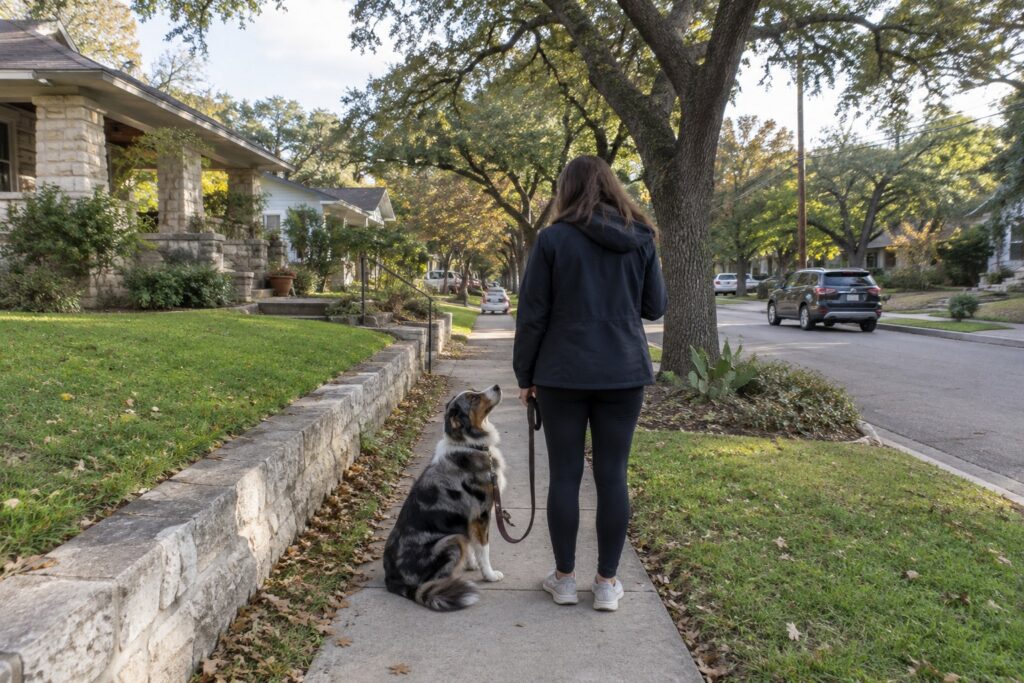
The goal of training is, first and foremost, to teach your dog that no matter what distractions arise, you’re in charge. By working with professional dog trainers, you can also discover new ways to communicate with your dog and get the response you desire.
After completing a robust training program, your dog will look to you for guidance even in the environments she’d prefer to avoid. When she’s primarily focused on you, she’ll be less reactive to external stimuli like other pets and loud noises in the waiting room. She’ll listen to commands like sit, stay, and come as you move through the veterinary office and into the exam room. If you’re calm, she’ll trust that there is no reason to panic.
Improving Socialization
What about vet visits that require separation? Some vets do not allow owners into the exam room while others may restrict owner presence for certain procedures. It’s important that your dog can remain calm without you by her side.
Professional training gives your dog the opportunity to practice safe and positive socialization with other humans and dogs. Socialization will decrease your dog’s wariness toward strangers and make her less reactive when spoken to, left with, and touched by new people.
Desensitization
As training broadens your dog’s ability to face new situations, you can begin to practice desensitization to your vet’s office. This entails making “social calls” on days when your dog isn’t scheduled for treatment.
Start by driving to your vet’s office and getting out of the car, giving your dog positive reinforcement without going inside. Let the office know in advance when you plan on coming in so that the receptionist and vet techs are prepared for your arrival and can shower your dog with positive attention. The goal is to create neutral and positive vet experiences to counterbalance the stressful ones.
Learn more about ADU training programs that can curb those negative behaviors and cultivate stress-free vet visits.